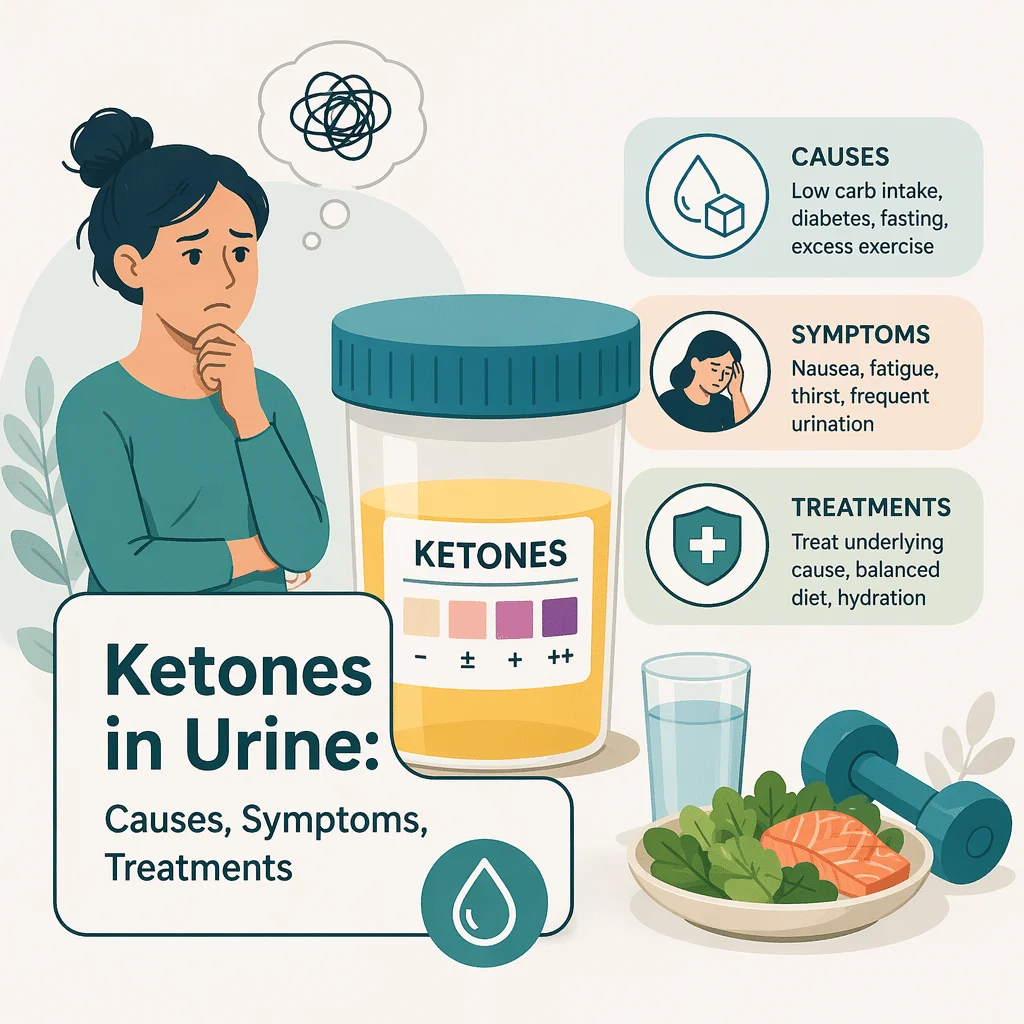
Cetonele în urină înseamnă un singur lucru: corpul tău a ars grăsimi pentru energie în loc de glucoză. Uneori este complet normal — după un post peste noapte, în cadrul unei diete sărace în carbohidrați sau în timpul unei viroze digestive care te-a împiedicat să mănânci. Alteori este primul semn vizibil al unei urgențe medicale cu risc vital numite cetoacidoză. Scopul acestei pagini este să faci această diferență cât mai clară.
În acest articol vei afla ce sunt cetonele, motivele obișnuite pentru care banda de cetone devine pozitivă, combinația de semne care înseamnă că trebuie să suni la 112, de ce cetoacidoza se poate dezvolta chiar și atunci când glicemia pare perfect normală și un lucru pe care bandeleta urinară nu îl poate măsura. Banda de cetone este doar un pătrat pe dipstick; ghidul nostru de citire a rezultatelor sumarului de urină acoperă imaginea completă, pătrat cu pătrat, și colectarea probei. Dacă te simți rău în timp ce citești acest articol, începe cu caseta de urgență de mai jos.
Când cetonele în urină reprezintă o urgență
Sună la 112 sau mergi imediat la camera de gardă
Solicită ajutor de urgență dacă cetonele apar împreună cu oricare dintre următoarele:
- Vărsături sau imposibilitatea de a reține lichide
- Respirație adâncă, rapidă sau dificilă, sau senzație de lipsă de aer
- Respirație cu miros dulce sau fructat, asemănător cu acetonă
- Durere abdominală
- Somnolență, confuzie sau dificultate în a rămâne treaz
Solicită și o evaluare medicală urgentă pentru:
- Cetone împreună cu o valoare ridicată a glicemiei la orice persoană cu diabet
- Stare de rău în timp ce iei un inhibitor SGLT2 (un medicament al cărui nume se termină în „-flozin"), chiar dacă valoarea glicemiei este normală
- Cetone la un copil care nu bea lichide, sau care este somnolent ori vomită
- Vărsăturile persistente în sarcină
Nu aștepta să vezi dacă banda se îmbunătățește. Cetoacidoza se poate agrava în câteva ore.
Majoritatea rezultatelor pozitive pentru cetone nu reprezintă urgențe. Ceea ce transformă o constatare de laborator într-un semnal de alarmă este contextul în care apare: simptomele și situația persoanei respective. O urmă de cetone la cineva care a sărit peste micul dejun și se simte bine este cu totul altceva față de un rezultat moderat la cineva care a vomitat toată noaptea.
Dacă ai diabet, urmează planul pentru zilele de boală stabilit de echipa ta medicală și contacteaz-o atunci când apar cetone. Nu modifica și nu sări peste niciun medicament doar pe baza unui rezultat de pe bandă și a unei pagini web.
Ce sunt cetonele și de ce apar în urină
Organismul tău preferă glucoza ca sursă de energie. Când glucoza nu este disponibilă sau se află în sânge, dar nu poate pătrunde în celule din cauza lipsei de insulină, ficatul descompune grăsimile în schimb. Acest proces, lipoliza, produce trei corpi cetonici: acetoacetat, beta-hidroxibutirat și acetonă.
Cetonele circulă în sânge și sunt filtrate în urină. Un rezultat pozitiv pentru cetone înseamnă, prin urmare, că organismul tău a folosit recent grăsimile ca sursă de energie. Prin el însuși, nu spune nimic despre dacă a fost vorba de o adaptare sănătoasă sau de o criză metabolică.
Două aspecte practice sunt de reținut. Cetonele din urină rămân în urmă față de cele din sânge, astfel că o bandă poate rămâne pozitivă după ce problema s-a rezolvat și poate indica valori scăzute la începutul uneia care abia debutează; momentul recoltării contează. Iar concentrația urinei influențează culoarea pe bandă, ceea ce este unul dintre motivele pentru care banda pentru densitate urinară se află alături de ea.
Motivele obișnuite pentru care banda de cetone devine pozitivă
Cele mai frecvente explicații sunt benigne și de așteptat:
- Un post peste noapte, o masă sărită sau o probă recoltată dimineața după o perioadă lungă fără mâncare
- O dietă săracă în carbohidrați sau ketogenică, ori postul intermitent
- Efort fizic prelungit sau intens, mai ales fără a mânca în prealabil
- Sarcina, în special cu greață matinală și aport redus de alimente
- Orice boală care reduce pofta de mâncare sau provoacă vărsături ori diaree
Niciunul dintre acestea nu este în mod inerent periculos la o persoană sănătoasă care mănâncă și bea normal din nou în decurs de o zi sau două. Deoarece aportul scăzut și pierderea de lichide merg mână în mână, deshidratarea se află adesea în spatele unui rezultat pozitiv și influențează și alți markeri — vezi cum apare în tensiunea arterială și în BUN și creatinina.
Alcool, vărsături severe și boală
Consumul excesiv de alcool cu o alimentație precară poate produce cetoacidoză alcoolică, în care cetonele cresc brusc în timp ce glicemia este adesea normală sau scăzută. Vărsăturile severe sau repetate au un efect similar: elimină atât aportul alimentar, cât și lichidele dintr-o dată, iar producția de cetone se accelerează. Dacă nu poți ține apa jos, este nevoie de o evaluare medicală, nu de o așteptare prudentă — pagina noastră despre vărsături cu bilă explică când acest semn este important.
Cetoacidoza diabetică: urgența pentru care banda de testare face cu adevărat screening
La o persoană cu diabet, cetonele împreună cu o valoare ridicată a glicemiei reprezintă combinația clasică de avertizare. Fără suficientă insulină, glucoza se acumulează în sânge, dar nu poate pătrunde în celule, astfel că ficatul continuă să producă cetone. Cetonele sunt acizi, iar pe măsură ce se acumulează, sângele devine acid. Aceasta este cetoacidoza diabetică, sau DKA.
CAD începe adesea discret, cu sete și urinare frecventă, apoi se manifestă prin greață și vărsături, dureri abdominale, respirație rapidă și profundă, miros de fructe pe respirație, oboseală extremă și, în cele din urmă, confuzie. Este mai frecventă în diabetul de tip 1, dar apare și în tipul 2, și uneori este primul semn al diabetului.
Tratamentul în spital presupune perfuzii intravenoase, corectarea electroliților, insulină sub supraveghere medicală și tratarea cauzei care a declanșat episodul. Nimic din toate acestea nu poate fi replicat acasă, și niciun articol nu ar trebui să îți spună cum să ajustezi insulina. Ce poți face este să recunoști semnele, să faci testele atunci când echipa medicală ți-a recomandat și să mergi la spital din timp. Pentru valorile glicemiei, consultă ghidul nostru despre nivelurile glicemiei și HbA1c.
Cetoacidoza cu glicemie normală: punctul orb al inhibitorilor SGLT2
Acesta este aspectul pe care aproape niciun articol pentru publicul larg nu îl menționează, și cel mai probabil să schimbe un rezultat.
Inhibitorii SGLT2 — medicamentele ale căror denumiri se termină în “-flozin”, precum empagliflozin, dapagliflozin și canagliflozin — sunt prescriși pentru diabet zaharat de tip 2, insuficiență cardiacă și boală cronică de rinichi. Aceștia acționează determinând rinichii să elimine glucoza în urină, motiv pentru care persoanele care îi iau au în mod obișnuit zahăr în urină; pagina noastră despre glucoza în urină explică acest mecanism.
Consecința pentru cetone este următoarea. Deoarece medicamentul elimină glucoza continuu, glicemia rămâne normală sau doar ușor crescută chiar și atunci când organismul a trecut la arderea grăsimilor și produce acid. Astfel, cineva poate dezvolta cetoacidoză completă cu o valoare a glucozei care pare liniștitoare. Clinicienii numesc aceasta cetoacidoză diabetică euglicemică, și este frecvent ratată sau diagnosticată târziu tocmai din acest motiv. Administrația pentru Alimente și Medicamente din SUA (FDA) a impus avertismente privind cetoacidoza pentru această clasă de medicamente, menționând că glicemia la prezentare poate fi mai mică decât se așteptau medicii.
Factorii declanșatori sunt previzibili: boală acută sau infecție, intervenție chirurgicală sau o procedură medicală, post (inclusiv înainte de o operație sau investigație imagistică), deshidratare și o scădere bruscă și semnificativă a aportului de carbohidrați. Au fost raportate cazuri și la persoane cărora li s-au prescris aceste medicamente pentru insuficiență cardiacă și care nu au diabet deloc.
Mesajul practic este scurt. Dacă iei un inhibitor SGLT2 și te simți rău — greață, vărsături, dureri abdominale, oboseală neobișnuită, dificultăți de respirație — “glicemia mea este bine” nu este un motiv de liniște. Cetonele trebuie verificate, de preferință din sânge, și trebuie să contactezi medicul prescriptor sau să soliciți îngrijire urgentă. Nu opri niciodată un inhibitor SGLT2 pe cont propriu; aceasta este decizia medicului. Echipa ta medicală poate întrerupe temporar tratamentul în caz de boală, post sau intervenție chirurgicală planificată, iar ghidurile actuale recomandă oprirea acestor medicamente cu câteva zile înainte de o operație.
Ce nu poate detecta bandeleta urinară: acetoacetat și beta-hidroxibutirat
Iată un detaliu tehnic cu consecințe foarte practice. Banda pentru cetone din urină folosește o reacție cu nitroprusiat care detectează acetoacetatul și, în mică măsură, acetona. Nu detectează deloc beta-hidroxibutiratul — iar beta-hidroxibutiratul este cetona dominantă în cetoacidoză. Din aceasta rezultă două lucruri care îi derutează frecvent pe oameni.
La începutul cetoacidozei, când beta-hidroxibutiratul este crescut și acetoacetatul nu s-a acumulat încă, banda poate da un rezultat subestimat. Un rezultat aparent modest nu exclude o problemă gravă la cineva care are simptome.
În timpul recuperării se întâmplă contrariul. Pe măsură ce tratamentul își face efectul, beta-hidroxibutiratul este reconvertit în acetoacetat — tocmai cetona pe care o măsoară banda. Astfel, testul din urină poate părea că se înrăutățește, în timp ce persoana se recuperează de fapt. O bandă care se închide la culoare nu este dovada că tratamentul eșuează.
De aceea, glucometrele pentru cetone din sânge, care măsoară beta-hidroxibutiratul dintr-o picătură de sânge obținută prin înțeparea degetului, sunt preferate ori de câte ori sunt disponibile și de aceea sunt recomandate persoanelor cu diabet de tip 1 și oricui urmează tratament cu un inhibitor SGLT2. Dacă îți monitorizezi cetonele acasă, întreabă echipa medicală dacă un glucometru pentru sânge ți se potrivește.
Dieta ketogenică și cetoacidoza nu sunt același lucru
Dacă urmezi o dietă ketogenică și banda din urină este pozitivă, acesta este rezultatul așteptat — dieta este concepută să producă acest efect. Cetoza nutrițională și cetoacidoza diferă prin magnitudine, nu doar prin nume: concentrațiile de cetone atinse pe o dietă săracă în carbohidrați, bine gestionată, reprezintă o mică fracțiune din cele din cetoacidoză, iar echilibrul acido-bazic este menținut. O bandă pozitivă în keto, la o persoană care se simte bine, nu este un stadiu incipient al CAD.
Trei precizări merită menționate clar, și niciuna nu reprezintă un argument pro sau contra dietei în sine. În primul rând, simptomele primează față de bandeleta de testare: greața, vărsăturile, durerea abdominală, dificultățile de respirație sau confuzia nu fac parte din cetoza nutrițională și necesită evaluare medicală, indiferent de explicația dietetică.
În al doilea rând, cetoacidoza severă a fost raportată la persoane fără diabet care urmau regimuri alimentare foarte stricte cu conținut scăzut de carbohidrați, combinate cu alți factori de stres metabolic; un caz a implicat o mamă care alăpta, deoarece lactația adaugă o cerere suplimentară mare de combustibil energetic.
În al treilea rând, și cel mai important: dacă ai diabet și iei insulină sau un inhibitor SGLT2, discută orice plan alimentar cu conținut scăzut de carbohidrați sau orice regim de post cu medicul prescriptor înainte de a-l urma. Combinația crește riscul de cetoacidoză, iar schema de tratament poate necesita revizuire de către cel care a prescris-o.
Cetonele în sarcină și la copii
Sarcina schimbă regulile metabolice. Rezistența la insulină crește și descompunerea grăsimilor se accelerează, astfel că cetoza de înfometare se instalează după o perioadă mult mai scurtă fără mâncare, mai ales în trimestrul al treilea. O urmă de cetone pe o probă prenatală de rutină după un post de noapte este frecventă și de obicei fără semnificație.
Cetonele persistente însoțite de vărsături reprezintă o altă situație. Ele pot indica hiperemeza gravidică cu deshidratare, care necesită evaluare și adesea fluide intravenoase, nu doar reasigurare. Orice persoană însărcinată care nu poate reține lichide și are cetone trebuie consultată în aceeași zi. Dacă încă încerci să afli dacă sarcina îți explică simptomele, pagina noastră despre menstruație întârziată cu cinci zile acoperă pașii următori.
La copii, cetonele apar ușor. Rezervele mici de glicogen înseamnă că un copil care a vomitat, are febră sau refuză să mănânce peste noapte poate produce o bandă puternic pozitivă. De obicei, este vorba de o cetoză legată de boală, care se remite odată ce copilul bea și mănâncă, dar copiii se deteriorează mai repede decât adulții. Un copil cu cetone care nu bea, este somnolent, respiră rapid sau vomită în continuare trebuie văzut urgent de un medic, iar diabetul zaharat de tip 1 nou diagnosticat se poate manifesta direct ca DKA.
Cum îți citești rezultatul: ce înseamnă de obicei fiecare situație
Rezultatele cetonelor urinare sunt raportate ca negative, urmă, mici, moderate sau mari. Gradul contează mult mai puțin decât contextul. Tabelul de mai jos prezintă scenariile frecvente.
| Situație | Ce înseamnă de obicei | Ce să faci |
|---|---|---|
| Urmă de cetone după un post de noapte sau o masă sărită, stare generală bună | Cetoză fiziologică normală; organismul a folosit grăsimile pe parcursul nopții | Nimic urgent. Mănâncă și bea normal; menționează la următoarea consultație dacă se repetă |
| Cetone în cadrul unei diete ketogenice, stare generală bună | Efect așteptat al dietei, cu mult sub nivelurile cetoacidozei | Nu este necesară nicio acțiune. Vorbește cu medicul tău prescriptor dacă iei insulină sau un inhibitor SGLT2 |
| Cetone asociate cu o valoare crescută a glicemiei la o persoană cu diabet | Posibilă cetoacidoză diabetică | Urgență medicală. Urmează planul de zile de boală al echipei tale medicale și contactează-i imediat; sună la 112 dacă vomiți, ai dificultăți de respirație sau ești somnolent |
| Cetone cu o valoare normală a glicemiei în timpul unei boli la o persoană care ia un inhibitor SGLT2 | Posibilă cetoacidoză euglicemică; glicemia normală poate induce în eroare | Evaluare urgentă în aceeași zi. Spune ce medicament iei. Nu îl opri singur |
| Cetone asociate cu vărsături în sarcină | Cetoză prin deshidratare și înfometare, posibil hiperemesis | Contactează serviciile de obstetrică în aceeași zi dacă nu poți păstra lichidele |
| Cetone la un copil care este somnolent, respiră rapid sau nu bea | Boală gravă, deshidratare sau diabet de tip 1 nou diagnosticat | Solicită îngrijire medicală urgentă imediat |
Dacă rezultatul provine dintr-o analiză de urină de laborator, citește și restul raportului. Un rezultat pozitiv la leucocit esterază indică o infecție, proteine în urină ridică semne de întrebare legate de rinichi, și sânge în urină este urmărit separat. Așteaptă-te la teste suplimentare, nu la un verdict bazat doar pe bandă: măsurarea cetonelor din sânge, glicemia, funcția renală și electroliții, și gazele sanguine dacă se suspectează cetoacidoza.
Cele mai recente progrese științifice în testarea cetonelor
Cercetările recente s-au concentrat pe cele două probleme în jurul cărora este construit acest articol: cetoacidoza care se ascunde în spatele unei glicemii normale și limitele benzii de urină în sine.
O analiză din 2023 publicată în BMJ Open Diabetes Research and Care a examinat cetoacidoza diabetică euglicemică în era inhibitorilor SGLT2. Cazurile devin tot mai frecvente pe măsură ce aceste medicamente sunt prescrise mai larg, iar principala dificultate este diagnostică: hiperglicemia caracteristică, care îi determină pe medici să se gândească la cetoacidoză, este absentă. Ce înseamnă asta pentru tine: de multe ori pacientul este cel care trebuie să ridice această posibilitate. Să spui „iau un medicament de tip flozin" atunci când te prezinți bolnav poate fi de mare ajutor.
O analiză din 2023 privind măsurarea cetonelor, publicată în Journal of Diabetes Science and Technology, explică de ce banda de urină se comportă astfel. Beta-hidroxibutiratul predomină în sânge în timpul cetoacidozei, acetoacetatul predomină în urină, iar pe măsură ce cetoacidoza se rezolvă, beta-hidroxibutiratul este oxidat în acetoacetat. Din cauza acestui decalaj, autorii notează că testul cetonelor din urină poate arăta valori în creștere chiar și atunci când cetoacidoza se ameliorează. Ce înseamnă asta pentru tine: o bandă cu rezultat agravat în timpul tratamentului nu este dovada că tratamentul eșuează, iar măsurarea beta-hidroxibutiratului din sânge oferă o imagine mult mai actuală.
O analiză narativă din 2024, publicată în Journal of General Internal Medicine, a examinat cetoacidoza euglicemică la persoanele care iau inhibitori SGLT2 și nu au diabet, aceștia fiindu-le prescriși în principal pentru insuficiență cardiacă. În aproape toate cazurile raportate, factorul comun a fost reducerea aportului alimentar: boală acută, post sau intervenție chirurgicală. Ce înseamnă asta pentru tine: riscul este legat de situații, nu doar de diagnostice — dacă iei unul dintre aceste medicamente și încetezi să mănânci din orice motiv, fii atent.
Un ghid clinic din 2024, elaborat de un mare centru medical academic din SUA și publicat în Journal of Cardiothoracic and Vascular Anesthesia, abordează managementul pacienților care iau inhibitori SGLT2 în preajma unei intervenții chirurgicale. Acesta menționează că Food and Drug Administration și-a actualizat recomandarea, astfel încât aceste medicamente să fie întrerupte cu câteva zile înainte de o operație planificată. Ce înseamnă asta pentru tine, concret: spune-le fiecărui chirurg, anestezist și dentist că iei acest medicament, cu mult timp înainte de data programată.
În final, un raport de caz din 2024, publicat în European Journal of Case Reports in Internal Medicine, a descris o cetoacidoză de înfometare cu risc vital la o femeie care alăpta, fără diabet, urmând o dietă ketogenică strictă. Autorii susțin că riscul în perioada postpartum timpurie merită o discuție mai amplă. Ce înseamnă asta pentru tine: nu că dieta este nesigură în general, ci că asocierea unei restricții stricte de carbohidrați cu un consum metabolic ridicat — sarcină, alăptare, boală acută — merită discutată în prealabil cu un medic.
Întrebări frecvente
Sunt cetonele din urină periculoase?
Depinde în totalitate de context. La o persoană care se simte bine și pur și simplu nu a mâncat de ceva timp, face exerciții intense sau urmează o dietă săracă în carbohidrați, cetonele sunt un rezultat metabolic normal și nu sunt periculoase. La o persoană cu diabet care are glicemia ridicată, sau la oricine prezintă vărsături, dureri abdominale, respirație adâncă sau rapidă, respirație cu miros de fructe, somnolență sau confuzie, același rezultat poate semnala cetoacidoza, care este o urgență medicală. Rezultatul de pe bandă singur nu decide nimic. Simptomele, glicemia și medicamentele pe care le iei sunt cele care contează.
Cetonele de pe dieta keto sunt același lucru cu cetoacidoza diabetică?
Nu. Fac parte din aceeași familie chimică, dar la concentrații complet diferite. Cetoza nutrițională pe o dietă ketogenică produce niveluri de cetone care reprezintă o fracțiune mică din cele atinse în cetoacidoză, iar aciditatea sângelui rămâne în limitele normale. Un rezultat pozitiv al benzii de urină pe keto este un rezultat așteptat, nu un stadiu incipient al cetoacidozei diabetice (DKA). Excepția o reprezintă simptomele: greața, vărsăturile, durerea abdominală sau dificultățile de respirație nu fac parte din cetoza nutrițională și necesită evaluare medicală. Dacă iei insulină sau un inhibitor SGLT2, discută dieta cu medicul tău prescriptor înainte de a o urma.
Pot face cetoacidoză cu glicemia normală?
Da. Aceasta se numește cetoacidoză diabetică euglicemică și este cel mai adesea asociată cu inhibitorii SGLT2, medicamentele din clasa „-flozinelor". Deoarece aceste medicamente elimină glucoza prin rinichi, glicemia poate părea normală sau doar ușor crescută, în timp ce cetonele și aciditatea sângelui cresc. Factorii declanșatori frecvenți sunt boala, intervenția chirurgicală, postul, deshidratarea și o scădere bruscă a aportului de carbohidrați. Dacă iei unul dintre aceste medicamente și te simți rău, o glicemie normală nu este un motiv de liniște. Cetonele trebuie verificate și trebuie să ceri sfatul unui medic.
Care este un nivel periculos de cetone în urină?
Laboratoarele raportează de obicei cetonele ca negative, urme, mici, moderate sau mari. Rezultatele moderate sau mari necesită contactarea promptă a unui medic, mai ales în cazul persoanelor cu diabet. Totuși, niciun nivel nu este în mod sigur inofensiv sau periculos prin el însuși, iar un rezultat scăzut în urină nu poate exclude o cetoacidoză incipientă, deoarece banda nu detectează beta-hidroxibutiratul. Măsurarea cetonelor din sânge este cifra mai de încredere. Tratează simptomele ca pe informații mai relevante decât culoarea de pe bandă și contactează echipa medicală dacă nu te simți bine.
Poți avea cetone în urină fără să ai diabet?
Foarte frecvent. Postul, săritul peste mese, o dietă săracă în carbohidrați sau ketogenică, exercițiile fizice prelungite, sarcina cu greață matinală, orice boală însoțită de vărsături sau lipsă de apetit și consumul excesiv de alcool cu puțină mâncare pot produce cetone la o persoană care nu a avut niciodată diabet. Copiii le produc cu deosebită ușurință. Cetoacidoza fără diabet este rară, dar se poate întâmpla: în cetoacidoza alcoolică, în înfometarea severă și la persoanele care iau inhibitori SGLT2 pentru insuficiență cardiacă. Contextul și simptomele determină dacă rezultatul necesită intervenție.
Cum scap de cetonele din urină?
Depinde de cauza apariției lor și nu este întotdeauna ceva ce poți rezolva singur. Dacă motivul este o masă omisă, un post prelungit sau exercițiile fizice, cetonele dispar odată ce mănânci și bei normal din nou. Dacă deshidratarea sau vărsăturile le provoacă, lichidele ajută, dar dacă nu poți tolera lichide, ai nevoie de ajutor medical, nu de măsuri la domiciliu. Dacă ai diabet, nu modifica insulina, alimentația sau alt medicament pentru a corecta un rezultat al benzii. Urmează planul pentru zilele de boală pe care ți l-a dat echipa medicală și contacteaz-o.
Glosar
| Termen | Definiție |
|---|---|
| Cetone (corpii cetonici) | Molecule produse de ficat din grăsimi atunci când glucoza nu este disponibilă sau nu poate fi utilizată. Cele trei sunt acetoacetatul, beta-hidroxibutiratul și acetona |
| Acetoacetat | Cetona pe care o detectează efectiv banda de urină și cea care predomină în urină |
| Beta-hidroxibutirat | Cetona dominantă în sânge în timpul cetoacidozei. Benzile pentru urină nu o detectează; glucometrele pentru cetone din sânge o măsoară |
| Cetoză | O stare de producție crescută, dar controlată de cetone, cum ar fi în timpul postului sau al unei diete ketogenice. Aciditatea sângelui rămâne normală |
| Cetoacidoză | Producție de cetone suficient de mare pentru a acidifica sângele. O urgență medicală care necesită tratament în spital |
| Cetoacidoză diabetică (CAD) | Cetoacidoză cauzată de insulină insuficientă, de obicei însoțită de un nivel ridicat al glicemiei |
| Cetoacidoză euglicemică | Cetoacidoză care apare în timp ce glicemia este normală sau doar ușor crescută, cel mai frecvent la persoanele care iau inhibitori SGLT2 |
| Inhibitor SGLT2 | Un medicament prescris care se termină în “-flozin” și care determină rinichii să elimine glucoza prin urină; utilizat în diabet, insuficiență cardiacă și boli renale |
| Lipoliză | Descompunerea grăsimilor stocate în acizi grași, materia primă pe care ficatul o transformă în cetone |
| Bandelă reactivă (dipstick) | Banda de plastic cu tampoane chimice care își schimbă culoarea în urină, oferind un rezultat rapid și aproximativ |
Surse
- Centers for Disease Control and Prevention. Cetoacidoza diabetică
- MedlinePlus, Biblioteca Națională de Medicină a SUA. Testul cetonelor în urină
- Institutul Național pentru Diabet și Boli Digestive și Renale. Gestionarea diabetului: verificarea urinei pentru cetone
- Chow E, Clement S, Garg R. Euglycemic diabetic ketoacidosis in the era of SGLT-2 inhibitors. BMJ Open Diabetes Research and Care, 2023
- Huang J, Yeung AM, Bergenstal RM, et al. Update on Measuring Ketones. Journal of Diabetes Science and Technology, 2023
- Garg R, Sood N, Bansal O, Hoskote A. Euglycemic Ketoacidosis Associated with SGLT-2 Inhibitors in Non-diabetic Patients: A Narrative Review. Journal of General Internal Medicine, 2024
- Raiten JM, Morlok A, D’Ambrosia S, Ruggero MA, Flood J. Perioperative Management of Patients Receiving Sodium-Glucose Cotransporter 2 Inhibitors. Journal of Cardiothoracic and Vascular Anesthesia, 2024
- Shaikh A, Williams DM, Stephens JW, Edwards R. Starvation Ketoacidosis on the Acute Medical Take: An Easily Missed Complication of the Keto Diet. European Journal of Case Reports in Internal Medicine, 2024
- Abraham L, Ning X, Whitlatch HB. Starvation Ketoacidosis in Pregnancy: An Unusual Presentation and Brief Literature Review. JCEM Case Reports, 2024
Lectură suplimentară
- Rezultatele sumarului de urină: cum să citești fiecare tampon de pe bandă
- Deficit de magneziu: simptome, cauze și tratamente
- Greață nocturnă: cauze, simptome și tratamente
- Diaree după post: cauze și tratamente
- Degetul mare de la picior amorțit: cauze, simptome și tratamente
Înțelege-ți rezultatele analizelor cu AI DiagMe
O sumar de urină vine rareori singur. Cetonele, glucoza și bicarbonatul au sens doar citite împreună cu restul analizelor, iar majoritatea rezultatelor ajung la tine fără nicio explicație. AI DiagMe transformă acele cifre în limbaj simplu, astfel încât să intri la consultație știind deja ce să întrebi. Te ajută să îți înțelegi rezultatele; nu pune diagnostice, nu este destinat urgențelor și nu înlocuiește medicul tău.
Obține interpretarea rezultatelor în câteva minute