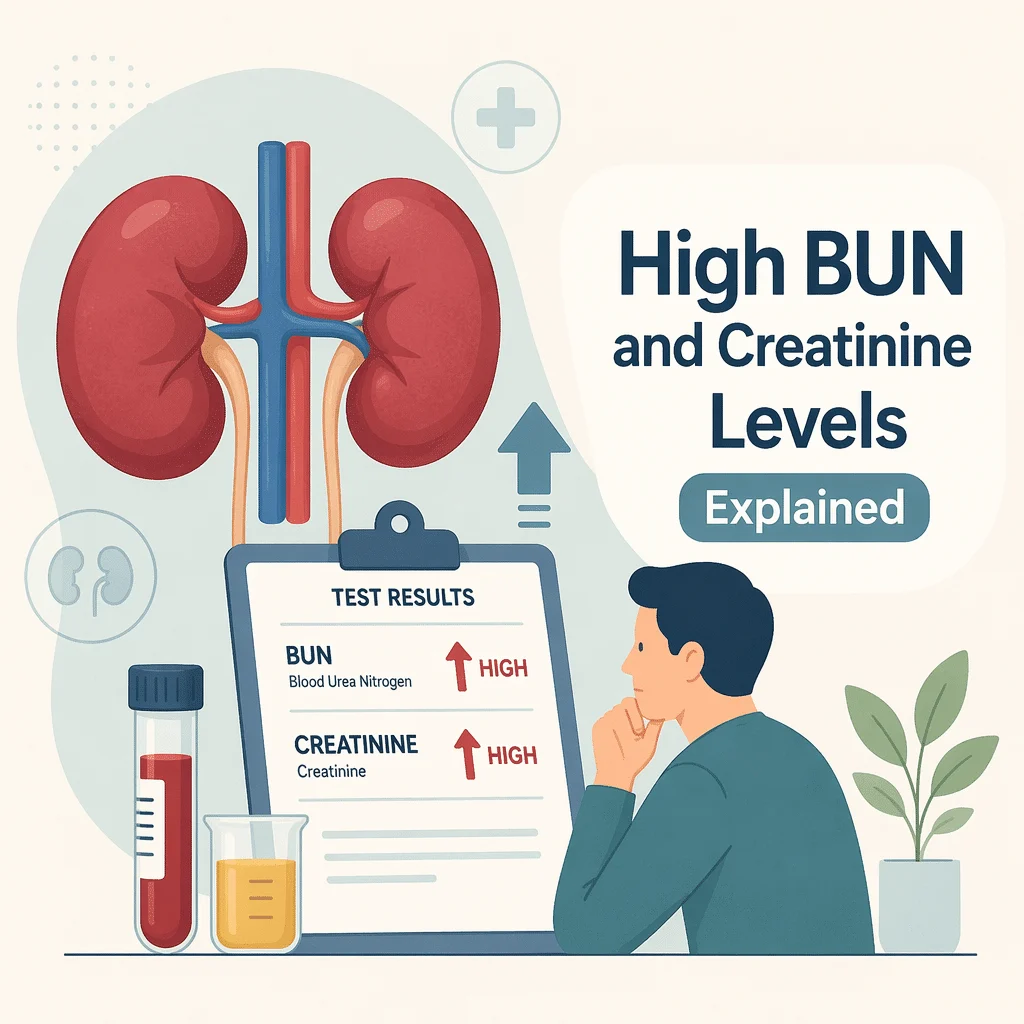
Să vezi BUN și creatinina crescute pe un buletin de analize poate fi îngrijorător, dar aceste două valori spun rareori întreaga poveste de unele singure. BUN (azotul ureic sanguin) și creatinina sunt produse de degradare pe care rinichii le elimină din sânge, iar ambele pot crește din motive care nu au nicio legătură cu afectarea rinichilor: un episod de deshidratare, o masă musculară mare, un medicament nou, o viroză digestivă sau o sesiune intensă de antrenament. Un rezultat ușor crescut cu o explicație evidentă este frecvent și revine adesea la normal odată ce acea cauză este rezolvată.
În acest articol vei afla ce măsoară fiecare test, de ce sunt solicitate împreună, ce factori obișnuiți le cresc valorile, de ce masa musculară face din creatinină un indicator înșelător, cum diferă o modificare bruscă de una de lungă durată și ce va face probabil medicul tău în continuare.
Ce măsoară de fapt BUN și creatinina
Rinichii funcționează ca un filtru continuu. Sângele trece prin milioane de mici unități de filtrare, moleculele de deșeuri sunt eliminate, iar cea mai mare parte a apei este recuperată, în timp ce deșeurile sunt excretate prin urină. BUN și creatinina sunt două dintre aceste molecule de deșeuri, astfel că măsurarea lor oferă o imagine indirectă despre cât de bine funcționează filtrul.
De unde provine BUN
BUN înseamnă azot ureic sanguin. Când organismul tău descompune proteinele — atât din alimente, cât și din reînnoirea normală a propriilor țesuturi — ficatul transformă azotul rămas în uree. Ureea circulă prin sânge până la rinichi și este eliminată prin urină. Testul BUN măsoară azotul conținut în această uree.
Deoarece valoarea depinde atât de cantitatea de proteine procesate, cât și de cât de bine le filtrează rinichii, BUN este sensibil, dar nespecific: poate crește din cauze renale și non-renale deopotrivă. Pagina noastră dedicată explică testul azotului ureic sanguin.
De unde provine creatinina
Creatinina este produsul rezidual al fosfatului de creatină, mica rezervă de energie din celulele musculare. Țesutul muscular se reînnoiește într-un ritm zilnic destul de constant, astfel că o persoană produce creatinină într-un ritm relativ stabil. Rinichii o filtrează, iar nivelul din sânge rămâne rezonabil de constant, cu excepția cazului în care producția se modifică sau filtrarea încetinește.
Această stabilitate face din creatinină un marker de filtrare mai fiabil decât BUN. Totodată, creează cea mai mare capcană în testarea renală, deoarece producția depinde de cantitatea de masă musculară pe care o ai. Pagina dedicată acestui marker descrie testul de creatinină din sânge.
De ce se măsoară BUN și creatinina împreună
Cei doi markeri parcurg rinichiul în mod diferit. Odată filtrată, o parte din uree este reabsorbită în sânge împreună cu apa, iar această proporție crește atunci când organismul încearcă să conserve lichidele. Creatinina este aproape deloc reabsorbită. Astfel, când circulația sângelui spre rinichi scade, ureea tinde să crească mai devreme și mai mult decât creatinina, în timp ce o problemă la nivelul țesutului renal în sine tinde să le modifice pe amândouă în același timp.
Interpretarea celor doi markeri împreună spune mai mult decât interpretarea fiecăruia separat. Ambii apar pe un standard panel de funcție renală, alături de electroliți și o rată de filtrare estimată.
Multe laboratoare raportează și relația aritmetică dintre cele două valori. Acea cifră unică are propria sa logică, utilizări și limitări, și merită mai mult decât un paragraf aici: un articol însoțitor acoperă raportul BUN/creatinină.
Deshidratarea este cea mai frecventă cauză reversibilă
Dacă BUN-ul și creatinina îți ies ridicate și ai fost rău, ai vomitat, ai avut febră, ai transpirat abundent sau pur și simplu ai băut foarte puțin înainte de recoltarea sângelui, deshidratarea este primul lucru la care se va gândi medicul tău. Cu mai puțin lichid în circulație, mai puțin sânge ajunge la rinichi în fiecare minut, filtrarea încetinește, iar rinichii rețin apa și ureea. Markerii de deșeuri cresc chiar dacă țesutul renal este complet sănătos, iar un test repetat câteva zile mai târziu arată adesea valori normale.
Există și alte situații care ridică acești markeri fără ca vreo boală renală să fie prezentă:
- Sângerarea în stomac sau intestin, deoarece sângele digerat reprezintă o cantitate mare de proteine pe care ficatul o transformă în uree
- Un aport foarte ridicat de proteine, inclusiv suplimente proteice consumate în cantități mari
- Stările catabolice în care organismul își descompune propriile țesuturi mai rapid decât de obicei, cum ar fi intervențiile chirurgicale majore, infecțiile severe, arsurile extinse sau un tratament cu corticosteroizi
- Insuficiența cardiacă, care reduce volumul de sânge pe care îl primesc rinichii chiar și atunci când persoana nu este deshidratată
- O obstrucție sub nivelul rinichilor, de exemplu din cauza unei prostate mărite sau a unui calcul, care crește presiunea în unitățile de filtrare
- Leziunile musculare severe, inclusiv rabdomioliza după un traumatism prin strivire sau efort extrem; medicii verifică atunci și creatinfosfokinaza
Un aspect important de reținut: faptul că aportul de proteine influențează BUN-ul nu este un motiv pentru a-ți schimba alimentația. Restricția de proteine este o decizie clinică ce aparține medicului tău și, acolo unde este cazul, unui dietetician renal, deoarece reducerea proteinelor fără supraveghere provoacă malnutriție și pierdere de masă musculară, cu consecințe proprii. Acest articol nu recomandă nicio modificare a dietei.
Problema masei musculare și de ce există eGFR și cistatina C
Iată cel mai important lucru de înțeles despre creatinină: intervalul de referință al laboratorului este o medie a populației, iar tu nu ești o populație. Un tânăr culturist cu multă masă musculară produce zilnic multă creatinină, astfel că nivelul din sânge poate fi peste intervalul tipărit chiar dacă rinichii filtrează perfect. Un bătrân fragil de optzeci de ani, cu foarte puțină masă musculară, produce foarte puțină creatinină, astfel că nivelul poate fi confortabil în interiorul intervalului chiar dacă o parte semnificativă din capacitatea de filtrare s-a pierdut.
Aceeași logică se aplică după o amputație, o boală îndelungată, o boală hepatică avansată sau o pierdere semnificativă în greutate: creatinina subestimează problema.
Din acest motiv există două instrumente. Primul este rata de filtrare glomerulară estimată (eGFR), care introduce creatinina într-o ecuație ajustată în funcție de vârstă și sex pentru a aproxima câți mililitri de sânge filtrează rinichii pe minut. Este un ghid mai bun decât creatinina singură și este cel pe baza căruia medicii stadializează boala renală. Pagina noastră dedicată acestui marker explică rata de filtrare glomerulară estimată.
Al doilea este cistatina C, o proteină mică produsă de aproape toate celulele, la o rată independentă de masa musculară. Când creatinina și cistatina C nu sunt în acord, această discrepanță este în sine informativă, iar masa musculară explică de obicei diferența. Un articol separat analizează pierderea musculară și testul pentru cistatina C.
Merită să știi despre o îmbunătățire importantă. În 2021, un grup de lucru comun al Fundației Naționale pentru Rinichi și al Societății Americane de Nefrologie a recomandat noi ecuații bazate pe creatinină, care nu mai includ un coeficient rasial, împreună cu utilizarea mai largă a cistatinei C. Laboratoarele din SUA le-au adoptat în mare parte, astfel că un eGFR raportat astăzi poate diferi ușor față de unul calculat acum câțiva ani pe baza aceleiași valori a creatininei.
Medicamente care cresc creatinina fără a afecta filtrarea
Unele medicamente fac să crească valoarea creatininei fără ca rinichii să filtreze mai puțin bine. Trimetoprimul și cimetidina sunt exemplele clasice: o mică parte din creatinină părăsește în mod normal sângele printr-o cale de transport activ în tubii renali, nu prin filtrare, iar aceste medicamente blochează această cale. Creatinina din sânge crește, eGFR pare să scadă, iar filtrarea reală rămâne neschimbată. Unele medicamente pentru HIV și cancer se comportă în același mod.
Inhibitorii ECA și blocanții receptorilor de angiotensină acționează diferit. Ei reduc deliberat presiunea din interiorul unităților de filtrare, astfel că o ușoară creștere a creatininei la scurt timp după inițierea sau creșterea dozei este de așteptat și indică adesea că medicamentul își face efectul. Pe termen lung, aceste medicamente protejează rinichii, nu îi afectează.
Alte medicamente pot reduce cu adevărat fluxul de sânge la rinichi sau pot leza țesutul renal — în special antiinflamatoarele nesteroidiene, cum ar fi ibuprofenul și naproxenul, diureticele atunci când pierderea de lichide este prea mare, unele antibiotice și substanțele de contrast utilizate la imagistică, la pacienții vulnerabili.
Această secțiune conține o regulă absolută: nu opri, nu reduce și nu modifica niciodată un medicament prescris doar pentru că ai citit că acesta influențează creatinina. Această decizie aparține medicului care l-a prescris, iar oprirea pe cont propriu a unui inhibitor ECA, a unui blocant al receptorilor de angiotensină sau a unui diuretic poate fi mult mai periculoasă decât valoarea de laborator care a generat îngrijorarea. Prezintă rezultatul și o listă completă a medicamentelor pe care le iei — inclusiv analgezicele fără prescripție și suplimentele — la următoarea consultație.
Brusc sau de lungă durată: de ce contează mai mult evoluția în timp decât valoarea în sine
Medicii sunt mai puțin interesați de cât de mare este o singură valoare și mai mult de cât de repede a ajuns acolo.
Leziunea renală acută descrie o creștere care se dezvoltă în ore sau zile. De obicei are un factor declanșator identificabil, cum ar fi deshidratarea, o infecție severă, pierderea de sânge, o obstrucție sau un medicament, și este frecvent reversibilă dacă factorul declanșator este corectat rapid. Simptomele au mai multe șanse să fie observabile: reducerea cantității de urină, umflături, greață, confuzie.
Boala cronică de rinichi descrie o filtrare redusă care persistă cel puțin trei luni. Se dezvoltă lent, cel mai adesea pe fondul diabetului sau al tensiunii arteriale ridicate, și este notoriu de tăcută: oamenii se simt de obicei complet bine până când o mare parte din funcția renală s-a pierdut. Tocmai această tăcere este motivul pentru care o valoare persistent crescută, sau una care urcă treptat de la un test la altul, merită o evaluare corespunzătoare, nu doar o reasigurare.
De aceea contează atât de mult rezultatele tale anterioare. O creatinină care a rămas la același nivel ușor crescut timp de cinci ani spune o poveste foarte diferită față de aceeași valoare la o persoană al cărei rezultat era normal acum trei luni. Dacă ai analize de sânge anterioare, ia-le cu tine.
Patru tipare frecvente și ce indică ele de obicei
Tabelul de mai jos schițează modul în care medicii interpretează de obicei combinațiile frecvente. Ilustrează raționamentul clinic, fără a înlocui evaluarea propriilor tale rezultate.
| Ce arată rezultatele | Ce indică de obicei | Pasul următor obișnuit |
|---|---|---|
| O valoare ușor crescută cu o explicație evidentă, cum ar fi o boală cu vărsături, vreme caldă sau un antrenament intens în ziua precedentă | O influență temporară, fără legătură cu rinichii, asupra valorilor — cel mai adesea un volum redus de lichide | Repetă analizele de sânge după ce te-ai refăcut și ești bine hidratat |
| Creatinina depășește intervalul tipărit, dar rata estimată de filtrare este normală pentru vârsta și sexul tău | Masă musculară mare sau un medicament care blochează transportul creatininei, nu o filtrare redusă | O revizuire a medicamentelor și, uneori, o măsurare a cistatin C pentru verificare încrucișată |
| Ambii markeri cresc ușor de-a lungul mai multor teste efectuate pe parcursul câtorva luni | Posibilă boală cronică de rinichi, frecvent asociată cu diabetul sau tensiunea arterială | Evoluția ratei de filtrare, un test de albumină în urină și evaluarea controlului tensiunii arteriale și al glicemiei |
| O creștere rapidă în câteva zile, cu urină puțină, umflături sau dificultăți de respirație | Posibilă leziune renală acută | Consultație medicală în aceeași zi, nu o programare de rutină |
Ce face medicul tău în continuare
Repetarea analizei de sânge este primul pas, deoarece o singură valoare poate fi imprecisă și pentru că tratarea unei cauze evidente, cum ar fi deshidratarea, rezolvă adesea problema de la sine. Medicul tău va interpreta rata de filtrare estimată, nu doar creatinina singură, și o va compara cu rezultatele anterioare.
Urmează o probă de urină. Testul-cheie este raportul albumină-creatinină din urină, care detectează cantități mici de albumină care se scurge prin filtrele deteriorate cu mult înainte ca filtrarea în sine să scadă. Deteriorarea și filtrarea sunt axe separate, iar stadializarea le folosește pe amândouă. Pagina noastră explică raportul albumină/creatinină urinar, iar un ghid mai amplu acoperă proteine în urină. Bulele persistente în vasul de toaletă pot fi un indiciu vizibil; discutăm despre urină spumoasă separat.
Chimia sângelui este analizată în paralel, deoarece rinichii care funcționează deficitar au dificultăți în reglarea sărurilor și a acidității. Medicul tău va verifica potasiu și sodiu, plus bicarbonat, calciu, fosfat și hemoglobină atunci când boala pare instalată.
Imagistica este adăugată atunci când o cauză structurală este plauzibilă: o ecografie renală arată dimensiunea și forma rinichilor și detectează obstrucțiile. Trimiterea la un specialist în boli renale urmează atunci când filtrarea este semnificativ redusă, când pierderea de proteine este importantă, când cauza nu este clară sau când declinul este rapid.
Când să ceri ajutor medical
Majoritatea rezultatelor crescute sunt gestionate cu o programare de rutină și o analiză repetată. Câteva nu sunt.
Solicită o evaluare medicală urgentă dacă ai
- Urină foarte puțină sau deloc
- Umflarea picioarelor sau a feței împreună cu dificultăți de respirație, mai ales când ești culcat
- Confuzie bruscă, somnolență sau dificultăți de concentrare
- Vărsături severe sau persistente care te împiedică să ții lichidele
- Durere în piept sau bătăi ale inimii foarte neregulate
- Un rezultat al creatininei care a crescut brusc în câteva zile, sau un mesaj din partea echipei tale medicale care îți cere să te prezinți
În caz contrar, programează o consultație de rutină dacă valorile rămân crescute la repetarea analizei, dacă valoarea continuă să crească sau dacă ai diabet, tensiune arterială ridicată, boli de inimă sau antecedente familiale de insuficiență renală. Depistarea bolii renale din timp, cât timp este încă silențioasă, este tocmai scopul testării.
Cele mai recente progrese științifice în testarea funcției renale
Cercetările din ultimii trei ani s-au concentrat pe o întrebare practică: ce facem când creatinina și cistatina C indică lucruri diferite. Conform PubMed, studiile de mai jos sunt printre cele mai relevante pentru oricine interpretează un rezultat crescut.
O meta-analiză pe participanți individuali din 2025, publicată în JAMA, care a adunat date din peste douăzeci de cohorte de pacienți ambulatori, a constatat că o diferență mare între cele două estimări este departe de a fi rară. A apărut la aproximativ unul din nouă pacienți ambulatori și la unul din trei pacienți spitalizați și a fost asociată cu rate mai ridicate de deces, evenimente cardiovasculare și insuficiență renală ulterioară. Ce înseamnă asta pentru tine: dacă cistatin C și creatinina nu sunt de acord, această discrepanță este un rezultat în sine, nu o eroare de laborator, și merită urmărire.
O revizuire sistematică și meta-analiză din 2025, publicată în Clinical Kidney Journal, care a adunat optsprezece studii, a ajuns la o concluzie consistentă, menționând totodată că cercetătorii nu au căzut încă de acord unde ar trebui să se situeze pragul pentru o diferență semnificativă. Ce înseamnă asta pentru tine: direcția este stabilită, dar pragul exact rămâne nesigur, astfel că interpretarea rămâne o decizie clinică, nu o regulă automată.
Un studiu din 2024 publicat în Journal of Cachexia, Sarcopenia and Muscle a măsurat compoziția corporală direct pe tomografii computerizate la adulți cu cancer. Atât masa musculară scăzută, cât și excesul de grăsime corporală au fost asociate independent cu o diferență semnificativă, iar aceasta s-a accentuat progresiv pe măsură ce masa musculară scădea. Ce înseamnă asta pentru tine: dacă ai pierdut masă musculară din cauza unei boli, a îmbătrânirii sau a inactivității, creatinina singură poate face ca rinichii tăi să pară mai sănătoși decât sunt în realitate.
O analiză din 2024 publicată în Nephrology Dialysis Transplantation a prezentat standardul actual pentru evaluarea filtrării renale. Aceasta subliniază că estimările bazate pe creatinină sunt imprecise la nivel individual din cauza unor factori care nu au legătură cu filtrarea — în special masa musculară atipică — și că cistatina C completează creatinina, fără a o înlocui. Ce înseamnă asta pentru tine: cele mai precise estimări combină de obicei ambii markeri, în loc să aleagă între ei.
În cele din urmă, un articol din 2024 publicat în Health Equity, redactat de Fundația Națională a Rinichiului, a documentat modul în care grupul de lucru comun al NKF și al Societății Americane de Nefrologie a analizat mai mult de douăzeci de abordări înainte de a recomanda ecuațiile de estimare din 2021, fără criteriul rasei, și extinderea testării cistatin C. Ce înseamnă asta pentru tine: ecuația din spatele eGFR-ului tău s-a schimbat în ultimii ani, astfel că nu întotdeauna poți compara direct un rezultat actual cu unul mai vechi, iar medicul tău îți poate spune ce ecuație folosește laboratorul.
Glosar de termeni cheie
| Termen | Definiție |
|---|---|
| Ureea (BUN — azotul ureic sanguin) | Azotul conținut în uree, compusul rezidual pe care ficatul îl produce când proteinele sunt descompuse și pe care rinichii îl elimină prin urină |
| Creatinină | Un produs rezidual generat în ritm constant de țesutul muscular și eliminat din sânge de rinichi |
| eGFR | Rata de filtrare glomerulară estimată: un calcul care transformă creatinina, vârsta și sexul într-o estimare a cantității de sânge pe care rinichii o filtrează în fiecare minut |
| Cistatina C | O proteină mică produsă de majoritatea celulelor într-un ritm care nu depinde de masa musculară, folosită ca marker alternativ sau complementar al filtrării renale |
| Raportul albumină/creatinină în urină | Un test de urină care detectează cantități mici de albumină care se scurge prin filtrele renale deteriorate, adesea înainte ca filtrarea să scadă |
| Leziune renală acută | O scădere a filtrării renale care se instalează în ore sau zile, frecvent reversibilă atunci când cauza declanșatoare este tratată prompt |
| Boala cronică de rinichi | Filtrare renală redusă sau dovezi de afectare renală cu o durată de trei luni sau mai mult |
| Prerenal | O cauză a creșterii markerilor de deșeuri situată înaintea rinichiului, de obicei reprezentată de reducerea fluxului sanguin care ajunge la acesta |
| Secreție tubulară | O cale de transport activ care elimină o mică parte din creatinină din sânge fără filtrare și pe care unele medicamente o blochează |
| Interval de referință | Intervalul de valori întâlnit la majoritatea unei populații de referință sănătoase, care poate să nu se potrivească unei persoane cu o compoziție corporală neobișnuită |
Întrebări frecvente
Deshidratarea crește creatinina sau doar ureea (BUN)?
Le crește pe amândouă, deși nu în aceeași măsură. Deshidratarea reduce volumul de sânge care ajunge la rinichi, astfel că filtrarea încetinește și ambii markeri de deșeuri se acumulează. Ureea crește mai devreme și mai mult, deoarece rinichiul o reabsoarbe împreună cu apa atunci când organismul conservă lichidele, în timp ce creatinina abia dacă este reabsorbită. De aceea, o persoană deshidratată prezintă adesea o uree (BUN) semnificativ crescută, în timp ce creatinina depășește doar ușor valorile normale. Corectarea deficitului de lichide aduce de obicei ambele valori înapoi la normal, ceea ce explică de ce repetarea analizelor după rehidratare este un prim pas atât de standard.
Pot scădea ureea și creatinina crescute dacă beau mai multă apă?
Doar în cazul specific în care deshidratarea a cauzat creșterea. Restabilirea hidratării normale corectează o valoare crescută din cauza lipsei de lichide, iar acesta este un efect real. Însă consumul de apă în exces nu este un tratament pentru bolile renale și consumul unor cantități mari de lichide nu protejează rinichii și nici nu îmbunătățește filtrarea la o persoană care este deja bine hidratată. În anumite afecțiuni, în special insuficiența cardiacă sau boala renală avansată, un aport ridicat de lichide poate fi activ dăunător. Acest articol nu recomandă niciun volum specific de lichide. Întreabă-ți medicul ce este potrivit pentru tine.
Creatinina crescută înseamnă insuficiență renală?
Nu. Insuficiența renală este un stadiu specific, avansat, în care filtrarea a scăzut suficient de mult încât să fie necesară dializa sau un transplant, și nu asta reprezintă majoritatea rezultatelor crescute ale creatininei. O singură valoare ridicată poate reflecta deshidratarea, masa musculară, un medicament, un efort fizic intens recent sau o masă bogată în carne înainte de test. Chiar și o reducere reală a filtrării înseamnă de obicei o boală renală incipientă sau moderată, care poate fi gestionată. Ceea ce contează este dacă valoarea crescută persistă, dacă este în creștere și ce arată rata estimată de filtrare și analizele de urină alături de aceasta.
Poate un efort fizic intens sau o masă bogată în proteine să îmi modifice rezultatele?
Da, temporar. Efortul fizic intens sau neobișnuit descompune mușchii și poate crește creatinina timp de o zi sau două. O porție mare de carne gătită înainte de recoltarea sângelui poate face același lucru, deoarece gătitul transformă o parte din creatina musculară în creatinină, care este apoi absorbită. Un aport ridicat de proteine crește și ureea (BUN). Nimic din toate acestea nu indică afectare renală. Dacă analizele tale au urmat unui antrenament intens sau unei mese copioase cu carne, menționează acest lucru, deoarece medicul tău poate repeta pur și simplu testul în condiții mai obișnuite.
Creatinina mea este normală. Pot totuși să am rinichii afectați?
Da, și aceasta este o limitare importantă. Creatinina rămâne adesea în intervalul de referință în stadiile incipiente ale bolii renale, și rămâne acolo mai ales la persoanele cu masă musculară redusă, cum ar fi adulții în vârstă sau cei fragili. Afectarea renală poate fi prezentă și cu o filtrare normală, manifestându-se în schimb prin scurgerea albuminei în urină. De aceea, raportul albumină/creatinină din urină este verificat alături de analizele de sânge la orice persoană cu risc, și de aceea cistatina C este uneori adăugată atunci când tabloul clinic și creatinina nu se corelează.
Cât de curând ar trebui repetat testul?
Depinde de amploarea modificării și de cauza acesteia, astfel că medicul tău stabilește intervalul. În linii mari, o creștere rapidă este reverificată în câteva zile, o valoare ușor crescută cu o explicație evidentă este adesea reverificată după una sau două săptămâni, odată ce te-ai recuperat, iar o valoare crescută stabilă, de lungă durată, este monitorizată la intervale planificate, nu urgent. Boala cronică de rinichi este definită prin anomalii care persistă cel puțin trei luni, astfel că confirmarea unui diagnostic necesită inevitabil mai mult de un set de rezultate distribuite în timp.
Surse
- Institutul Național pentru Diabet și Boli Digestive și Renale. Teste și diagnostic pentru boala cronică de rinichi. niddk.nih.gov
- MedlinePlus, National Library of Medicine. BUN (Blood Urea Nitrogen). medlineplus.gov
- MedlinePlus, Biblioteca Națională de Medicină. Testul creatininei. medlineplus.gov
- Gounden V, Bhatt H, Jialal I. Renal Function Tests. StatPearls, NCBI Bookshelf. ncbi.nlm.nih.gov
- National Kidney Foundation. Estimated Glomerular Filtration Rate (eGFR). kidney.org
- Estrella MM, Ballew SH, Sang Y, et al. Discordance in Creatinine- and Cystatin C-Based eGFR and Clinical Outcomes: A Meta-Analysis. JAMA, 2025. Retrieved via PubMed. DOI
- Liu Q, Welsh P, Celis-Morales C, et al. Discordance between cystatin C-based and creatinine-based estimated glomerular filtration rate and health outcomes in adults: a systematic review and meta-analysis. Clinical Kidney Journal, 2025. Retrieved via PubMed. DOI
- Hanna PE, Ouyang T, Tahir I, et al. Sarcopenia, adiposity and large discordance between cystatin C and creatinine-based estimated glomerular filtration rate in patients with cancer. Journal of Cachexia, Sarcopenia and Muscle, 2024. Retrieved via PubMed. DOI
- Delanaye P, Pottel H, Cavalier E, et al. Diagnostic standard: assessing glomerular filtration rate. Nephrology Dialysis Transplantation, 2024. Accesat prin PubMed. DOI
- Charles K, Lewis MJ, Montgomery E, Reid M. The 2021 Chronic Kidney Disease Epidemiology Collaboration Race-Free Estimated Glomerular Filtration Rate Equations in Kidney Disease: Leading the Way in Ending Disparities. Health Equity, 2024. Accesat prin PubMed. DOI
Lectură suplimentară
- Panou pentru funcția renală
- Explicarea valorilor scăzute ale ureei (BUN)
- Microalbuminuria ca marker renal
- Deshidratarea și tensiunea arterială
- Electroliții urinari și cum să îi interpretezi
Înțelege-ți rezultatele analizelor cu AI DiagMe
Un raport care conține creatinină, BUN, eGFR și raportul albumină/creatinină din urină poate fi greu de citit când nimeni nu ți-a explicat cum se leagă toate între ele. AI DiagMe transformă aceste valori în limbaj simplu și te ajută să ajungi la consultație cu întrebări mai bune. Te ajută să îți înțelegi rezultatele; nu pune un diagnostic și nu înlocuiește medicul tău.
Obține interpretarea rezultatelor în câteva minute