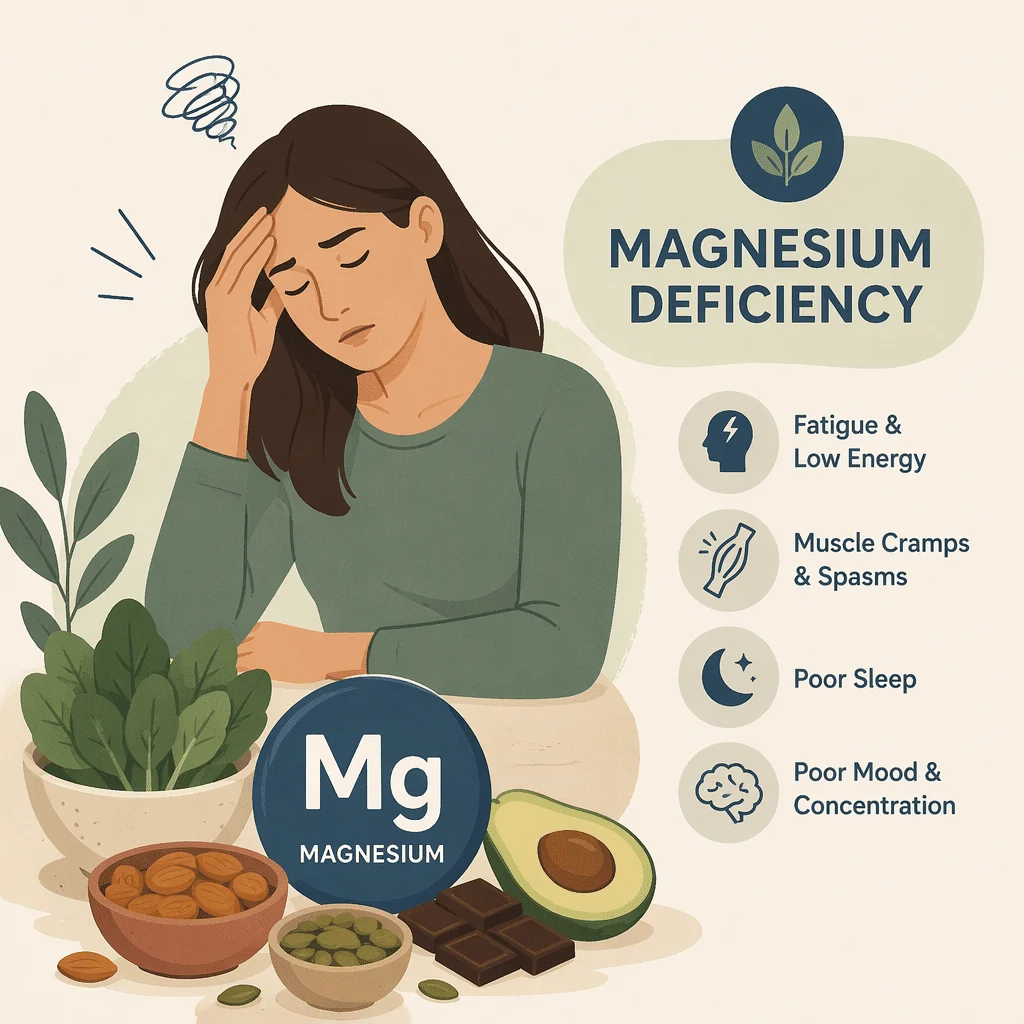
Deficiența de magneziu este una dintre cele mai discutate și mai puțin bine măsurate probleme din nutriție. O parte din explicație este incomodă: analizele de sânge pe care le folosesc cei mai mulți oameni îți spun mult mai puțin decât te-ai aștepta. Doar o mică parte din magneziul din organism circulă în sânge, iar corpul apără cu strictețe această proporție — astfel că un rezultat seric poate părea liniștitor de normal, în timp ce rezervele din celule și oase scad pe tăcute.
În acest articol vei afla ce face magneziul în organism, de ce analiza de sânge este un indicator slab al statusului tău, cine ajunge cu adevărat la deficiență, ce medicamente sunt implicate, de ce magneziul scăzut trage în jos și potasiul și calciul, ce arată dovezile despre suplimente și care simptome necesită evaluare urgentă.
Ce face magneziul în organism
Magneziul este un mineral care acționează ca un cofactor, adică este componenta de care o enzimă are nevoie pentru a funcționa. Biblioteca Națională de Medicină descrie magneziul ca fiind necesar pentru mai mult de 300 de reacții biochimice, iar studiile de specialitate indică un număr și mai mare atunci când sunt luate în calcul toate interacțiunile magneziu-ATP.
În practică, asta înseamnă câteva funcții pe care le poți simți: relaxarea musculară după o contracție, transmiterea stabilă a semnalelor electrice în nervi și în mușchiul cardiac, transformarea alimentelor în energie utilizabilă și sinteza proteinelor și a oaselor. Se află alături de ceilalți minerali cu sarcină electrică pe care corpul tău îi echilibrează în permanență, motiv pentru care apare de obicei pe același formular de analize ca și panelului de electroliți.
Distribuția contează mai mult decât recunosc majoritatea articolelor. Aproximativ jumătate din magneziul din organism este stocat în oase. Cea mai mare parte din rest se află în interiorul celulelor, în special al celulelor musculare. Doar aproximativ 1% circulă în sânge — tocmai compartimentul pe care îl măsoară rezultatul tău de laborator.
De ce analiza de sânge este un indicator slab al statusului tău de magneziu
Aceasta este partea pe care industria suplimentelor o menționează rareori și este cel mai util lucru pe care trebuie să îl înțelegi despre magneziu.
Biroul pentru Suplimente Alimentare al NIH formulează clar această poziție: deoarece cea mai mare parte a magneziului din organism se găsește în interiorul celulelor sau în oase, este dificil să evaluezi statusul magneziului, iar nivelurile serice nu reflectă cu acuratețe cantitatea totală de magneziu din corp sau concentrațiile din țesuturi specifice. Aceeași sursă precizează că o evaluare completă a statusului de magneziu poate necesita atât analize de laborator, cât și o evaluare clinică, și că nicio analiză singulară nu este considerată suficientă prin ea însăși.
Motivul este fiziologic, nu tehnic. Rinichii și intestinul ajustează continuu modul în care organismul gestionează magneziul, pentru a menține nivelul din sânge într-un interval îngust, de obicei între aproximativ 0,7 și 1,1 mmol/L. Când aportul scade sau pierderile cresc, organismul extrage magneziu din oase și celule pentru a apăra nivelul circulant. Valoarea din sânge este ultimul lucru care se modifică, nu primul.
Ce înseamnă asta pentru rezultatul tău
Din aceasta decurg două concluzii, care indică în direcții opuse. Un nivel seric normal de magneziu nu tranșează problema, deci „magneziul meu a ieșit normal" nu este o dovadă că rezervele tale sunt pline. La fel, o valoare ușor scăzută nu este automat o urgență; este un semnal care îl determină pe medicul tău să caute o cauză, nu un diagnostic în sine.
Medicii ocolesc această limitare în loc să o rezolve. Ei interpretează valoarea alături de istoricul tău, medicamentele tale, rezultate corelate precum potasiu și calciu, și uneori o măsurătoare a magneziului urinar care arată dacă rinichii pierd acest mineral. Dacă vrei detalii despre modul în care se efectuează și se raportează măsurătoarea în sine, ghidul nostru despre analiza de sânge pentru magneziu și valorile sale acoperă acest subiect.
Cine ajunge cu adevărat la deficit
Deficiența simptomatică cauzată exclusiv de alimentație este neobișnuită la persoanele altfel sănătoase, deoarece rinichii reduc drastic pierderile urinare atunci când aportul scade. Deficiența reală are aproape întotdeauna o cauză care o determină. NIH Office of Dietary Supplements grupează principalele cauze astfel.
Consumul cronic de alcool este una dintre cele mai frecvente cauze, printr-o combinație de aport insuficient, pierderi intestinale și excreție urinară crescută. Bolile gastrointestinale reprezintă o altă cauză: diareea cronică și malabsorbția grăsimilor în Boala Crohn și boala celiacă epuizează magneziul în timp, iar rezecția sau bypass-ul intestinului subțire, inclusiv unele intervenții de chirurgie bariatrică, au același efect.
Diabet zaharat diabet este o cauză frecvent trecută cu vederea. Glucoza ridicată la nivelul rinichiului crește diureza, iar magneziul este eliminat odată cu urina. Vârsta înaintată crește riscul pe mai multe planuri simultan: aportul alimentar tinde să scadă, absorbția intestinală se reduce, pierderile renale cresc, iar medicamentele care afectează magneziul devin mai frecvente.
Sindromul de realimentare, când nutriția este reluată după o înfometare prelungită sau malnutriție severă, poate scădea brusc magneziul pe măsură ce acesta se deplasează în celule. Bolile critice de aproape orice tip produc același efect, motiv pentru care magneziul este verificat de rutină la terapie intensivă.
Medicamente care scad magneziul
Hipomagneziemia indusă medicamentos este suficient de frecventă încât ar trebui să fie prima întrebare pusă atunci când un rezultat iese scăzut.
Inhibitorii pompei de protoni, medicamentele care suprimă aciditatea gastrică folosite pentru reflux și ulcer, sunt cei mai cunoscuți vinovați. Administrația pentru Alimente și Medicamente din SUA (FDA) a emis o comunicare oficială de siguranță prin care precizează că inhibitorii pompei de protoni eliberați pe bază de rețetă pot cauza un nivel seric scăzut de magneziu atunci când sunt luați pe perioade prelungite, în majoritatea cazurilor mai mult de un an. În aproximativ un sfert dintre cazurile analizate de FDA, suplimentarea cu magneziu singură nu a corectat nivelul, iar medicul prescriptor a trebuit să oprească medicamentul.
Diureticele reprezintă celălalt grup important. Atât diureticele de ansă, cât și diureticele tiazidice cresc pierderea de magneziu prin urină, iar comunicarea FDA le menționează explicit. Pe lângă acestea, mai multe medicamente de chimioterapie și agenți oncologici țintați, în special medicamentele pe bază de platină și anticorpii anti-EGFR, antibioticele aminoglicozidice și inhibitorii de calcineurină utilizați după transplant provoacă, de asemenea, pierderi de magneziu.
O regulă contează mai mult decât toate celelalte și merită spusă fără echivoc: nu opri și nu reduce niciodată din proprie inițiativă un inhibitor de pompă de protoni, un diuretic sau orice alt medicament prescris, doar pentru că ai citit că scade magneziul. Aceste medicamente tratează o afecțiune. Dacă beneficiul depășește în continuare riscul legat de magneziu este o decizie care îi aparține medicului care ți le-a prescris, luată cu rezultatele tale în față. Menționează această asociere la consultație; nu acționa singur pe baza ei.
Legătura dintre potasiu și calciu
Acesta este cel mai util fapt clinic din întreaga temă și explică de ce medicii verifică magneziul în situații care par să nu aibă legătură cu el.
Magneziul scăzut provoacă un potasiu scăzut care refuză să se corecteze. Mecanismul este acum bine descris: magneziul blochează în mod normal un canal de potasiu din tubul renal numit ROMK. Când magneziul scade, acest blocaj este eliberat, canalul se deschide și potasiul se pierde prin urină. Administrarea de suplimente de potasiu în această situație crește în mare parte cantitatea pierdută, deoarece scurgerea este în continuare deschisă. Potasiul nu se va stabiliza până când magneziul nu este refăcut.
Aceeași logică se aplică și calciului. Depleția severă de magneziu suprimă secreția de parathormon și diminuează răspunsul țesuturilor la acesta, producând un calciu scăzut care rezistă în mod similar suplimentării cu calciu până când magneziul este restabilit. Comunicarea de siguranță a FDA a observat exact acest tipar în analiza cazurilor, cu pacienți care prezentau calciu scăzut alături de niveluri normale de parathormon, confirmând magneziul ca problemă principală.
Consecința practică este simplă. Dacă potasiul tău continuă să scadă în ciuda tratamentului sau dacă calciul este scăzut fără o explicație evidentă, este rezonabil să întrebi despre verificarea magneziului. De aceea și un calciul corectat rezultat trebuie interpretat în contextul celorlalți minerali, nu izolat.
Simptome și când apar ele cu adevărat
Răspunsul sincer este că o depleție ușoară nu produce adesea niciun simptom. Simptomele tind să apară abia când deficiența este semnificativă, motiv pentru care magneziul este o explicație puțin probabilă pentru o oboseală vagă și de lungă durată la o persoană fără factori de risc.
Primele semne, atunci când apar, sunt nespecifice: pierderea poftei de mâncare, greață, vărsături, oboseală și slăbiciune. Pe măsură ce deficiența se adâncește, apar semnele neuromusculare, mai caracteristice: amorțeală și furnicături, crampe musculare, contracții involuntare și spasme musculare. Sunt descrise și modificări de personalitate.
Deficiența severă este o situație cu totul diferită. Poate provoca tetanie — adică spasm muscular dureros și prelungit —, convulsii, aritmii cardiace și spasm al arterelor coronare. Acesta este momentul în care magneziul încetează să mai fie o temă de wellness și devine o problemă medicală acută.
Solicită o evaluare medicală urgentă dacă ai oricare dintre următoarele: spasme musculare însoțite de amorțeală sau furnicături în jurul gurii ori la nivelul mâinilor; palpitații sau bătăi neregulate ale inimii; o convulsie; confuzie apărută brusc; sau slăbiciune musculară severă. Simptomele severe sau care se agravează rapid la o persoană cu consum ridicat de alcool, o afecțiune de malabsorbție sau utilizare îndelungată de inhibitori ai pompei de protoni ori diuretice trebuie evaluate în aceeași zi, nu la o programare de rutină.
Ce spune cu adevărat dovezile despre suplimentele de magneziu
Magneziul este promovat pentru somn, anxietate, crampe, migrenă și stare generală de bine. Dovezile din spatele acestor afirmații sunt inegale, și merită să le analizăm separat.
Prevenirea migrenei este domeniul în care semnalul este cel mai puternic. Biroul pentru Suplimente Alimentare al NIH raportează că Academia Americană de Neurologie și Societatea Americană a Cefaleei au concluzionat că magneziul este probabil eficient în prevenirea migrenei. Aceeași sursă adaugă o precizare: dozele utilizate de obicei depășesc nivelul maxim de aport admis, astfel că acest lucru se face doar sub supravegherea unui medic, nu ca măsură luată din proprie inițiativă.
Somnul și anxietatea sunt domeniile în care marketingul a depășit dovezile. Studiile existente sunt de mici dimensiuni, metodologic variate și combină adesea magneziul cu alte ingrediente active, ceea ce face dificilă atribuirea oricărui efect magneziului în sine. Concluzia constantă a recenziilor recente este că nu se pot trage încă concluzii ferme.
Două aspecte suplimentare sunt de natură factuală, nu consultativă. Diferitele săruri de magneziu se comportă diferit: oxidul de magneziu este slab absorbit și are un efect laxativ pronunțat, în timp ce formele precum citratul și glicinatul sunt în general mai bine tolerate. Iar nivelul maxim de aport tolerabil stabilit de Food and Nutrition Board, pe care NIH Office of Dietary Supplements îl indică la 350 mg pe zi de magneziu suplimentar pentru adulți, se aplică doar suplimentelor și medicamentelor care conțin magneziu. Nu se aplică magneziului care apare în mod natural în alimente, motiv pentru care nivelul maxim poate fi sub doza zilnică recomandată fără nicio contradicție.
Nimic din cele de mai sus nu reprezintă o recomandare de a începe, opri sau modifica un supliment. Dacă ai nevoie de magneziu, în ce formă și la ce doză, depinde de cauza deficitului, iar aceasta este o discuție pe care trebuie să o ai cu medicul tău.
Magneziul și funcția renală redusă
Aceasta este principala modalitate prin care magneziul poate provoca daune și merită să fie expusă direct, nu îngropată în text.
Rinichii sănătoși elimină excesul de magneziu prin urină, motiv pentru care magneziul provenit din alimente nu prezintă practic niciun risc pentru persoanele cu funcție renală normală. Când funcția renală este redusă, această eliminare este afectată sau pierdută, iar magneziul se acumulează. NIH Office of Dietary Supplements precizează explicit că riscul de toxicitate a magneziului crește în cazul funcției renale afectate sau al insuficienței renale, deoarece capacitatea de a elimina excesul de magneziu este redusă.
Consecințele unui nivel ridicat de magneziu, sau hipermagneziemie, nu sunt neglijabile. Acestea variază de la tensiune arterială scăzută, greață, vărsături, înroșirea feței și retenție urinară până la slăbiciune musculară, dificultăți de respirație, ritm cardiac neregulat și stop cardiac. Au fost raportate cazuri fatale.
Sursa expunerii nu este întotdeauna un supliment. Laxativele și antiacidele care conțin magneziu se vând fără prescripție medicală, pot fi luate ușor în mod repetat și pot furniza cantități mari. La orice persoană cu boală cronică de rinichi, aceste produse și suplimentele de magneziu reprezintă un risc real și ar trebui folosite doar cu acordul medicului care gestionează boala renală. Dacă nu îți cunoști funcția renală, merită să înțelegi ce reprezintă un panel de funcție renală și un rezultatul creatininei îți spun înainte de a lua în considerare orice produs cu magneziu.
Cum să îți citești rezultatele: ce înseamnă de obicei diferitele valori ale magneziului
Tabelul de mai jos prezintă scenariile frecvente și ce anume determină de obicei fiecare dintre ele. Descrie modul în care medicii gândesc în general aceste tipare; nu înlocuiește interpretarea propriilor tale rezultate.
| Situație | Ce înseamnă de obicei | Pasul următor obișnuit |
|---|---|---|
| Magneziu seric normal, dar ai simptome | Rezultatul nu exclude rezervele epuizate, dar nici nu confirmă magneziul ca fiind cauza simptomelor tale | Discută cu medicul tău alte explicații posibile pentru simptome, în loc să presupui că magneziul este cauza |
| Magneziu scăzut în timp ce iei un inhibitor de pompă de protoni | O asociere medicamentoasă recunoscută, în special după mai mult de un an de utilizare | Semnalează-i acest lucru medicului prescriptor, care decide dacă medicamentul continuă, se schimbă sau se oprește. Nu îl opri singur |
| Magneziu scăzut alături de potasiu care nu se corectează | Tabloul clasic: potasiul se pierde prin urină din cauza nivelului scăzut de magneziu | Consultație medicală, deoarece magneziul trebuie corectat în general înainte ca potasiul să se stabilizeze |
| Magneziu scăzut asociat cu consum ridicat de alcool sau o afecțiune de malabsorbție | O cauză este deja vizibilă, iar deficiența este susceptibilă să reapară cât timp aceasta persistă | Abordează afecțiunea de bază împreună cu echipa ta medicală, nu doar valoarea în sine |
| Orice rezultat al magneziului la o persoană cu boală cronică de rinichi | Interpretarea se schimbă complet, deoarece excesul de magneziu se poate acumula până la niveluri periculoase | Niciun supliment de magneziu, laxativ sau antiacid fără acordul medicului care îți urmărește rinichii |
Cele mai recente progrese științifice în testarea magneziului
Cercetările recente s-au axat mai puțin pe găsirea unui test mai bun și mai mult pe explicarea comportamentului celui existent, precum și pe verificarea afirmațiilor făcute despre suplimente. Cinci publicații din ultimii trei ani oferă o imagine de ansamblu relevantă.
O analiză din 2024 privind biologia magneziului, realizată de Kröse și de Baaij în Nephrology Dialysis Transplantation, a descris modul în care organismul menține magneziul seric într-un interval îngust, identificând proteinele de transport specifice din intestin și tubul renal care îndeplinesc această funcție, și evidențiind consumul de alcool, diabetul de tip 2 și medicamente precum inhibitorii pompei de protoni și diureticele tiazidice drept cauze frecvente ale nivelurilor scăzute. Ce înseamnă asta pentru tine: o valoare normală în sânge reflectă un sistem care lucrează intens pentru a o menține, nu neapărat un organism cu rezerve adecvate.
O analiză a literaturii de specialitate din 2024, realizată de Bobrowicz și colaboratori în Endokrynologia Polska, a descris mecanismul care leagă utilizarea pe termen lung a inhibitorilor pompei de protoni de nivelurile scăzute de magneziu și, ulterior, de potasiu și calciu. Studiul a arătat că un nivel scăzut de magneziu deblochează canalul ROMK din rinichi, determinând pierderea de potasiu — care se agravează, nu se ameliorează, atunci când se suplimentează potasiu — și că suprimă hormonul paratiroidian, producând o scădere a calciului care nu răspunde la suplimentarea cu calciu. Ce înseamnă asta pentru tine: un nivel persistent scăzut de potasiu sau calciu este un motiv să verifici magneziul, nu un motiv să iei mai mult potasiu sau calciu.
O analiză din 2025 realizată de Floris și colaboratori în Biomedicines a examinat nivelurile scăzute de magneziu dobândite în rândul populațiilor spitalizate și a catalogat clasele de medicamente responsabile, inclusiv diuretice, antibiotice, tratamente oncologice și imunosupresoare. Ce înseamnă asta pentru tine: o revizuire a medicației este un prim pas rezonabil atunci când apare o valoare scăzută, iar lista medicamentelor relevante este mai lungă decât inhibitorii pompei de protoni.
În ceea ce privește suplimentele, o revizuire sistematică și meta-analiză doză-răspuns din 2024, realizată de Talandashti și colaboratori în Neurological Sciences, acoperind douăzeci și două de studii randomizate privind suplimentele alimentare pentru prevenirea migrenei, a constatat că magneziul a redus frecvența atacurilor, severitatea acestora și numărul de zile cu migrenă pe lună față de grupul de control, solicitând totodată studii suplimentare de înaltă calitate. Ce înseamnă asta pentru tine: semnalul privind migrena este real, dar modest, iar autorii înșiși consideră că baza de dovezi are nevoie de consolidare. O revizuire sistematică Cochrane privind magneziul în prevenirea migrenei a fost înregistrată în 2025 și este în curs de desfășurare, ceea ce indică în sine că problema nu este considerată închisă.
Prin contrast, o recenzie sistematică din 2024 realizată de Rawji și colegii săi în Cureus a analizat magneziul în raport cu anxietatea autoevaluată și calitatea somnului în cincisprezece studii intervenționale. Majoritatea au raportat o îmbunătățire în cel puțin un parametru, însă autorii au concluzionat că datele eterogene, numărul mic de participanți și variațiile de doze, formule și durate limitează posibilitatea unor concluzii ferme. Ce înseamnă asta pentru tine: afirmațiile din publicitate legate de somn și anxietate se bazează pe dovezi considerabil mai slabe decât datele privind migrena, iar orice decizie de a încerca magneziul din aceste motive ar trebui discutată cu medicul tău, nu luată pe baza reclamelor.
Glosar de termeni cheie
| Termen | Definiție |
|---|---|
| Hipomagneziemie | Un nivel de magneziu în sânge sub intervalul de referință al laboratorului |
| Hipermagneziemie | Un nivel de magneziu peste intervalul de referință, întâlnit cel mai frecvent când funcția renală este redusă |
| Magneziu seric | Magneziul măsurat în partea lichidă a sângelui, reprezentând aproximativ 1 la sută din totalul magneziului din organism |
| Hipokaliemie refractară | Potasiu sanguin scăzut care nu crește în ciuda suplimentării cu potasiu, clasic din cauza nivelului scăzut de magneziu |
| Tetanie | Spasm muscular susținut, involuntar și adesea dureros, cauzat de dezechilibre ale mineralelor |
| Inhibitor de pompă de protoni | O clasă de medicamente care reduc aciditatea gastrică, folosite pentru reflux și ulcer, asociate cu niveluri scăzute de magneziu în cazul utilizării pe termen lung |
| Malabsorbție | Absorbție deficitară a nutrienților la nivelul intestinului, așa cum se întâmplă în boala celiacă, boala Crohn și după unele intervenții chirurgicale intestinale |
| Nivelul maxim tolerabil de aport | Doza zilnică maximă considerată puțin probabil să cauzeze daune; pentru magneziu se aplică suplimentelor și medicamentelor, nu alimentelor |
| Sindromul de realimentare | O modificare periculoasă a mineralelor, inclusiv a magneziului, care apare când alimentația este reluată după o perioadă prelungită de subnutriție |
Întrebări frecvente
Poate analiza de sânge să rateze o deficiență de magneziu?
Da, și acesta este punctul central. Doar aproximativ 1% din magneziul din corpul tău se află în sânge; restul se găsește în oase și în interiorul celulelor. Corpul tău menține nivelul circulant apelând la aceste rezerve, astfel că magneziul seric poate rămâne în limite normale în timp ce magneziul total din organism scade. Oficiul pentru Suplimente Alimentare al NIH afirmă direct că nivelurile serice nu reflectă cu acuratețe magneziul total din organism și că evaluarea statusului magneziului este dificilă. Un rezultat normal nu exclude, prin urmare, o depleție și nu înseamnă că simptomele tale au fost explicate. Este o singură informație pe care medicul tău o interpretează alături de istoricul tău, medicamentele pe care le iei și celelalte rezultate ale tale.
Magneziul ajută la somn?
Afirmația este cu mult înaintea dovezilor. Analizele studiilor existente constată că majoritatea raportează o îmbunătățire a cel puțin unui parametru al somnului, însă studiile sunt mici, folosesc doze, forme și durate diferite și includ frecvent și alte ingrediente active, astfel că îmbunătățirea nu poate fi atribuită cu certitudine magneziului. Cercetătorii concluzionează în mod constant că sunt necesare studii mai mari, randomizate corespunzător, înainte de a putea fi formulate afirmații ferme. Asta nu înseamnă că magneziul nu are niciun efect, dar este departe de certitudinea pe care o vei vedea în reclame. Dacă somnul prost te afectează, merită să discuți cu medicul tău în loc să iei un supliment pornind de la presupunerea că magneziul este piesa lipsă.
Ce formă de magneziu este cea mai bună?
Diferitele săruri de magneziu chiar diferă între ele, iar aceste diferențe merită cunoscute. Oxidul de magneziu este slab absorbit și este forma cel mai des asociată cu efectul laxativ, motiv pentru care este folosit în unele produse laxative. Citratul este mai bine absorbit, dar poate înmuia scaunele. Glicinatul este în general considerat mai bine tolerat la nivel digestiv. Totuși, ce formă ți se potrivește, dacă ai nevoie de una și în ce cantitate depinde în totalitate de cauza nivelului scăzut de magneziu, de funcția renală și de celelalte medicamente pe care le iei. Acest articol nu recomandă niciun produs sau doză. Adresează această întrebare medicului tău sau farmacistului.
De ce îmi verifică medicul magneziul când am potasiul scăzut?
Deoarece magneziul scăzut este o cauză frecventă pentru care potasiul nu se corectează. În mod normal, magneziul blochează un canal de potasiu la nivelul rinichiului; când magneziul scade, canalul se deschide și potasiul se pierde prin urină. Suplimentarea cu potasiu în această situație tinde să crească pierderile, în loc să normalizeze nivelul. Corectarea mai întâi a magneziului permite potasiului să se mențină. Același principiu se aplică și calciului, deoarece depleția severă de magneziu suprimă hormonul paratiroidian și produce un nivel scăzut de calciu care nu răspunde la suplimentarea cu calciu. Este unul dintre cele mai clare exemple ale motivului pentru care mineralele sunt interpretate împreună, nu separat.
Este sigur să iau magneziu dacă am boală renală?
Aceasta necesită un răspuns direct: nu fără acordul medicului care îți gestionează afecțiunea renală. Rinichii sănătoși elimină excesul de magneziu cu ușurință, dar atunci când funcția renală este redusă, această eliminare este afectată și magneziul se acumulează. Un nivel ridicat de magneziu poate cauza tensiune arterială scăzută, slăbiciune musculară, dificultăți de respirație, ritm cardiac neregulat și, în cazuri severe, stop cardiac. Riscul nu se limitează la suplimentele etichetate ca magneziu: multe laxative și antiacide fără prescripție medicală conțin cantități semnificative. Dacă ai boală cronică de rinichi, verifică fiecare produs cu echipa ta medicală înainte de a-l folosi.
Pot face exces de magneziu din alimentație?
La persoanele cu funcție renală normală, practic nu. Absorbția din intestin este limitată, iar rinichii sănătoși elimină surplusul, astfel că magneziul din alimentație — din legume cu frunze verzi, nuci, semințe, leguminoase și cereale integrale — nu prezintă risc de toxicitate. De aceea, nivelul maxim de aport tolerabil publicat de NIH Office of Dietary Supplements se aplică doar suplimentelor de magneziu și medicamentelor care conțin magneziu, nu magneziului prezent în mod natural în alimente. Situația se schimbă dacă funcția renală este redusă și se schimbă în cazul suplimentelor, laxativelor și antiacidelor cu magneziu, care pot furniza cantități mult mai mari decât alimentele.
Surse
- NIH Office of Dietary Supplements. Magnesium: Fact Sheet for Health Professionals
- MedlinePlus, US National Library of Medicine. Magnesium in diet
- US Food and Drug Administration. Drug Safety Communication: Low magnesium levels can be associated with long-term use of proton pump inhibitor drugs
- Kröse JL, de Baaij JHF. Magnesium biology. Nephrology Dialysis Transplantation, 2024
- Bobrowicz M, Pachucki J, Popow M. Hypomagnesaemia leading to parathyroid dysfunction, hypocalcaemia and hypokalaemia as a complication of long-term treatment with a proton pump inhibitor. Endokrynologia Polska, 2024
- Floris M, Angioi A, Lepori N, Piras D, Cabiddu G, Pani A, Rosner MH. The clinical spectrum of acquired hypomagnesemia: from etiology to therapeutic approaches. Biomedicines, 2025
- Talandashti MK, Shahinfar H, Delgarm P, Jazayeri S. Effects of selected dietary supplements on migraine prophylaxis: a systematic review and dose-response meta-analysis of randomized controlled trials. Neurological Sciences, 2024
- Rawji A, Peltier MR, Mourtzanakis K, Awan S, Rana J, Pothen NJ, Afzal S. Examining the effects of supplemental magnesium on self-reported anxiety and sleep quality: a systematic review. Cureus, 2024
- Rodriguez JP, Quarteroni E, Varela LB, Escobar Liquitay CM, Garegnani LI. Magnesium supplementation for migraine prophylaxis (protocol). Cochrane Database of Systematic Reviews, 2025
Lectură suplimentară
- Electroliți urinari: interpretarea rezultatelor analizelor tale
- Niveluri crescute de uree și creatinină explicate
- Analiză de sânge pentru nivelul de zinc
- Analiză de sânge pentru nivelul de cupru
- Analiză de sânge pentru nivelul de seleniu
Înțelege-ți rezultatele analizelor cu AI DiagMe
Magneziul este rareori relevant privit singur. Are mult mai mult sens când îl poți vedea alături de potasiu, calciu și funcția renală — exact așa cum îl citește un medic. AI DiagMe îți explică ce înseamnă aceste valori pe înțelesul tău și te ajută să ajungi la consultație cu întrebări mai bune. Te ajută să-ți înțelegi rezultatele; nu pune diagnostice și nu înlocuiește medicul tău.
Obține interpretarea rezultatelor în câteva minute