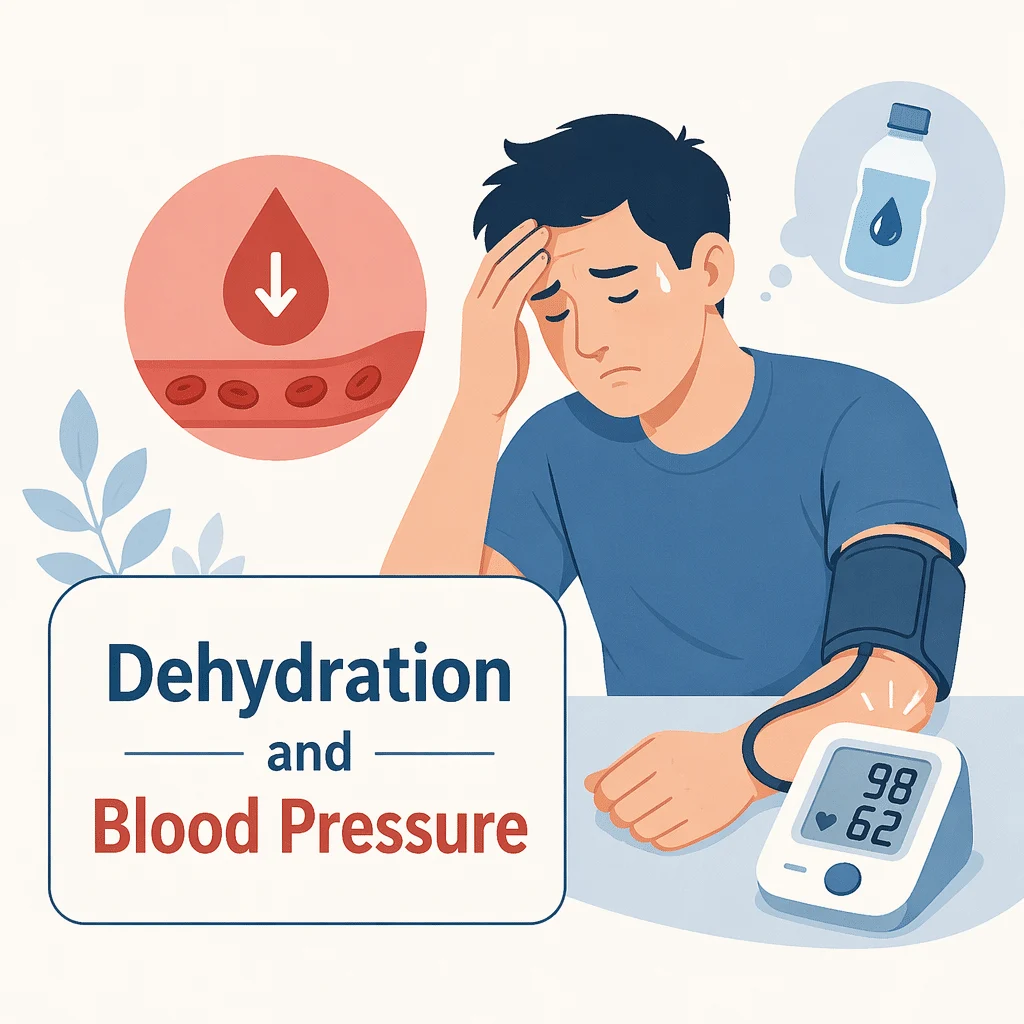
Majoritatea oamenilor cred că deshidratarea scade tensiunea arterială. Aceasta este doar jumătate din poveste. Pierderea mare de lichide o coboară, dar legătura dintre deshidratare și tensiunea arterială funcționează în ambele direcții: când pierderile sunt ușoare, organismul își apără tensiunea atât de eficient încât o măsurătoare poate ieși normală sau chiar puțin mai mare decât de obicei. Un singur număr nu îți poate spune dacă ești deshidratat.
În acest articol vei afla ce face pierderea de lichide circulației tale, de ce pierderile mari scad tensiunea arterială în timp ce deshidratarea ușoară o poate crește ușor, de ce amețeala la ridicarea în picioare contează mai mult decât orice măsurătoare izolată, cine este cu adevărat expus riscului, ce este un plan pentru zilele de boală și de ce aparține medicului tău, de câte lichide au oamenii cu adevărat nevoie și când să ceri ajutor.
Ce face deshidratarea circulației tale
Deshidratarea înseamnă că organismul tău a pierdut mai multă apă și săruri decât a primit. Ceea ce contează pentru tensiunea arterială este ce se întâmplă în interiorul vaselor de sânge. Plasma, partea lichidă a sângelui, se reduce prima. Mai puțin lichid în sistem înseamnă că mai puțin sânge se întoarce la inimă între bătăi, astfel că inima are mai puțin de pompat cu fiecare contracție.
Tensiunea arterială reprezintă, în esență, cantitatea de sânge pompată de inimă înmulțită cu gradul de contracție al arterelor. Dacă reduci volumul pompat, presiunea scade — în condiții egale. Dar condițiile nu sunt niciodată egale. Senzorii din arterele gâtului și din inimă sesizează modificarea în câteva secunde și declanșează corecții: inima accelerează, sistemul nervos simpatic contractă arterele mici, iar rinichii rețin sodiu și apă cu ajutorul unor hormoni, printre care aldosteron. Hipofiza eliberează vasopresină, numită și hormon antidiuretic, care concentrează urina și contractă vasele de sânge. Prin urmare, deshidratarea nu scade pur și simplu tensiunea arterială: scade volumul de sânge, iar organismul compensează cât poate. Ceea ce măsori este rezultatul net al acestui echilibru fragil.
De ce deshidratarea poate scădea tensiunea arterială și de ce deshidratarea ușoară o poate crește
Când pierderea de lichide scade tensiunea
Pierderea semnificativă de lichide câștigă lupta. Odată ce s-a pierdut suficient volum, mecanismele compensatorii nu mai pot ține pasul și tensiunea arterială scade într-un mod pe care îl simți. Acest lucru se întâmplă în caz de vărsături repetate, o zi sau mai mult de diaree, expunere prelungită la căldură, arsuri extinse sau sângerări. Medicii numesc această stare depleție volemică.
Tabloul clasic include amețeală, slăbiciune și un puls rapid, dar slab. Pielea poate fi rece și umedă, deoarece sângele este deviat spre creier și inimă. Dacă pierderile continuă, starea evoluează spre șoc, în care organele nu mai primesc suficient flux sanguin — de aceea deshidratarea severă nu este niciodată o problemă care poate fi ignorată sau amânată.
De ce deshidratarea ușoară poate crește ușor tensiunea
Acum vine partea care îi surprinde pe mulți. Când pierderea de lichide este modestă, mecanismele compensatorii nu se limitează doar să mențină echilibrul — pot chiar să-l depășească. Eliberarea de vasopresină și creșterea tonusului simpatic îngustează vasele de sânge, mărind rezistența împotriva căreia pompează inima. La o persoană care a pierdut doar puțin lichid, acest lucru poate compensa mai mult decât scăderea mică de volum.
Consecința practică este că o persoană ușor deshidratată poate înregistra o tensiune arterială normală sau cu câteva puncte peste valoarea sa obișnuită, nu sub ea. Aceasta este o reacție de scurtă durată la o situație temporară. Nu este o cauză a tensiune arterială mare, și nu acesta este motivul pentru care cineva dezvoltă hipertensiune, dar este suficient pentru a face regula populară nesigură.
De ce nu poți evalua hidratarea după valoarea tensiunii arteriale
Dacă pui laolaltă cele două aspecte, concluzia este incomodă, dar utilă: o măsurătoare a tensiunii arteriale este un test slab pentru hidratare, iar hidratarea este un predictor slab al tensiunii arteriale. O valoare normală nu exclude deshidratarea, deoarece mecanismele compensatorii pot masca problema. O valoare crescută nu o confirmă. Iar o valoare scăzută are cauze fără legătură cu lichidele, inclusiv medicamente, tulburări de ritm cardiac și recuperarea după o operație, așa cum descrie articolul nostru despre tensiunea arterială scăzută după operație descrie. Tabelul de mai jos este un ghid orientativ, nu un instrument de diagnostic.
| Situație | Ce se întâmplă de obicei cu tensiunea arterială | Ce să faci |
|---|---|---|
| Pierdere ușoară de lichide la un adult altfel sănătos | Adesea neschimbată, uneori puțin mai mare decât de obicei, deoarece hormonii și nervii contractă vasele de sânge | Bea când îți este sete și continuă-ți activitatea; nu interpreta această valoare ca pe o măsură a hidratării |
| Vărsături sau diaree care durează o zi | Poate scădea, de obicei însoțită de o puls mai rapid; scăderea este adesea mai evidentă în poziție verticală | Bea lichide treptat, urmărește semnalele de alarmă de mai jos și contactează un medic dacă nu poți păstra lichidele în stomac |
| Amețeală la ridicarea în picioare la o persoană în vârstă | O scădere măsurabilă între poziția culcat și cea în picioare, cunoscută sub numele de hipotensiune ortostatică | Semnalează-o unui medic, mai ales după o cădere; este nevoie de o evaluare corespunzătoare, nu de autodiagnosticare |
| Deshidratare în timp ce urmezi un tratament cu diuretic, inhibitor ECA, ARB sau inhibitor SGLT2 | Poate scădea brusc, iar analizele de sânge pentru rinichi se pot înrăutăți în același timp | Urmează planul pentru zilele de boală pe care ți l-a dat medicul prescriptor; dacă nu ai primit niciodată unul, întreabă medicul sau farmacistul |
| Consum foarte mare de lichide în timpul unui efort de anduranță | Tensiunea se schimbă adesea puțin, dar sodiul din sânge poate scădea la niveluri periculoase | Bea când îți este sete, nu după un program fix; tratează confuzia, durerile de cap sau vărsăturile apărute în timpul unui efort prelungit ca situații urgente |
Hipotensiunea ortostatică: unde apare cu adevărat
Dacă deshidratarea se manifestă prin tensiunea arterială, de obicei o face la ridicarea în picioare. Hipotensiunea ortostatică reprezintă o scădere a tensiunii atunci când treci din poziția culcat sau așezat în poziția în picioare. Gravitația atrage sângele spre picioare în momentul în care te ridici, iar circulația are o fracțiune de secundă să compenseze. Cu mai puțin lichid în sistem, acest lucru devine mai dificil.
Simptomele sunt ușor de recunoscut: amețeală în secundele de după ridicarea în picioare, vedere încetoșată sau care se întunecă, instabilitate, uneori leșin. Simptomele care apar doar în poziție verticală și dispar când te așezi sau te culci reprezintă tiparul caracteristic. Senzația persistentă de rotire, fără legătură cu postura, indică altă cauză, iar ghidul nostru despre vertij acoperă acele cauze.
Medicii o măsoară luând tensiunea arterială după câteva minute în care pacientul stă culcat sau așezat liniștit, apoi din nou după ridicarea în picioare, de obicei la aproximativ un minut și la trei minute. Compararea celor două valori evidențiază scăderea; o singură măsurătoare în poziție șezândă o poate ascunde. Aceasta este o evaluare clinică, nu un test de acasă, deoarece tehnica contează și cineva ar trebui să fie prezent în cazul în care persoana se simte pe punctul de a leșina.
Motivul pentru care contează este riscul de căderi. La persoanele în vârstă, hipotensiunea ortostatică este un factor recunoscut care contribuie la căderi și la fracturile care urmează, și este adesea primul indiciu practic că cineva s-a deshidratat. O cădere după ridicarea în picioare este un motiv să mergi la medic, nu doar un motiv să fii mai atent pe scări.
Cine prezintă cel mai mare risc
Adulții în vârstă
Îmbătrânirea modifică hidratarea în două moduri care se amplifică reciproc. Senzația de sete se diminuează, astfel că semnalul intern apare mai târziu și mai slab. În același timp, rinichii concentrează urina mai puțin eficient, deci se pierde mai multă apă chiar și atunci când organismul încearcă să o conserve. Cantitatea totală de apă din corp este mai mică de la bun început, astfel că orice pierdere consumă o parte mai mare din rezervă.
Deshidratarea la persoanele în vârstă se instalează astfel în tăcere, fără o sete intensă, și reprezintă un motiv frecvent de internare în spital. Confuzia sau somnolența pot fi primele semne, nu gura uscată, iar rudele sunt adesea primele care observă. Institutul Național pentru Îmbătrânire din SUA menționează că diureticele și unele medicamente pentru inimă și tensiune arterială îngreunează și răcorirea organismului pe timp de căldură.
Persoanele care iau medicamente ce influențează echilibrul hidric
Mai multe grupe de medicamente larg prescrise cresc riscul de deshidratare sau de scădere bruscă a tensiunii arteriale și a funcției renale în cursul unei boli acute. Diureticele, numite adesea „pastile pentru apă", cresc în mod intenționat cantitatea de urină eliminată. Inhibitorii ECA și blocanții receptorilor de angiotensină (BRA) modifică sistemul hormonal pe care rinichiul îl folosește pentru a-și menține fluxul sangvin. Inhibitorii SGLT2, utilizați în diabet și în bolile de inimă și de rinichi, acționează parțial prin creșterea pierderii de apă prin urină. Antiinflamatoarele analgezice, precum ibuprofenul și naproxenul, adaugă și ele la acest risc. Nimic din toate acestea nu înseamnă că aceste medicamente sunt periculoase; în condiții normale, ele protejează inima și rinichii, de aceea sunt prescrise. Problema apare atunci când se combină cu o boală acută care deshidratează organismul.
Persoanele cu diabet, boli de rinichi, dializă sau insuficiență cardiacă
Pentru unele persoane, echilibrul hidric este un calcul clinic atent, iar sfatul general de a bea mai mult poate fi exact greșit. În insuficiența cardiacă dificultatea este adesea excesul de lichide, nu lipsa lor, iar mulți pacienți au o limită stabilită deliberat. Persoanele aflate la dializă au monitorizate îndeaproape câștigurile de lichide dintre ședințe, iar în boala renală avansată aportul este individualizat. Un diabet necontrolat acționează invers, deoarece glucoza ridicată atrage apa în urină. Dacă te afli în oricare dintre aceste grupuri, obiectivul tău este cel stabilit de echipa ta medicală.
Medicamente, boli și planuri pentru zilele de boală
Această parte este cu adevărat utilă și aproape niciodată explicată pacienților. Ghidurile din mai multe țări recomandă ca persoanele care iau anumite medicamente cu risc mai ridicat să primească un plan pentru zilele de boală: un acord stabilit în prealabil cu medicul prescriptor despre ce trebuie făcut în caz de vărsături, diaree sau febră.
Logica este simplă. Când ești deshidratat, fluxul de sânge prin rinichi scade. Rinichii sănătoși se protejează de obicei singuri, dar unele medicamente interferează cu mecanismele pe care le folosesc. Continuarea acelor medicamente în timp ce organismul este deshidratat poate împinge rinichii spre o leziune renală acută. Unii medici prescriptori stabilesc, prin urmare, ca anumite medicamente să fie suspendate temporar și reluate odată ce alimentația și hidratarea revin la normal.
Această decizie aparține medicului tău prescriptor. Depinde de medicamentele pe care le iei, de funcția rinichilor tăi și de boala în sine, și nicio pagină web nu poate lua această decizie în locul tău. Nimic din acest articol nu reprezintă o instrucțiune de a opri, suspenda sau modifica vreun medicament, și nu trebuie să schimbi o rețetă pe cont propriu.
Ceea ce merită făcut este să ai această discuție înainte de a te îmbolnăvi. Institutul Național pentru Diabet și Boli Digestive și Renale recomandă să îți întrebi medicul sau farmacistul, din timp, întrebări de genul: dacă mă îmbolnăvesc, există medicamente pe care nu ar trebui să le iau în timp ce sunt bolnav? Dacă trebuie să suspend ceva, când ar trebui să îl reiau? Ce pot lua pentru durere sau febră? Dacă am diaree sau vărsături, se schimbă modul în care iau medicamentele pentru tensiune arterială? Dacă nimeni nu ți-a oferit vreodată un plan, acesta este un motiv bun să ridici subiectul la următoarea consultație sau la farmacie.
Dacă ești deja bolnav și nu știi ce să faci, nu ghici. Contactează medicul prescriptor, farmacistul sau serviciul medical obișnuit și întreabă-i direct.
De câtă apă au oamenii cu adevărat nevoie și de ce mai mult nu este întotdeauna mai bine
Regula binecunoscută a opt pahare pe zi nu are nicio dovadă solidă în spate. Nu există un aport fix universal care să se potrivească tuturor, iar cifra pare să fi intrat în folclor prin repetare, nu prin cercetare. Necesarul variază în funcție de greutatea corporală, activitate fizică, climă, alimentație, sarcină, febră și starea de sănătate, iar o mare parte din apa de care avem nevoie provine din alimente, nu din băuturi.
Pentru majoritatea oamenilor sănătoși, două ghiduri practice de zi cu zi sunt rezonabile: setea, un semnal funcțional la adulți chiar dacă devine mai puțin fiabil odată cu vârsta, și culoarea urinei. CDC sugerează că urina galben deschis sau transparentă înseamnă de obicei că bei suficiente lichide. Niciunul nu este precis, iar și alte lucruri pot schimba culoarea urinei, dar împreună sunt suficiente.
Mitul imaginii în oglindă merită la fel de multă atenție. A bea mult mai mult decât poate elimina organismul, mai ales rapid, diluează sodiul din sânge. Aceasta este hiponatremia și poate provoca greață, dureri de cap, confuzie, convulsii și, în cazuri grave, deces. Este cel mai bine cunoscută la sportivii de anduranță, unde consumul mare de lichide în timpul unui eveniment lung se combină cu eliberarea de vasopresină indusă de efort pentru a reține apa, dar apare și în competiții mai scurte și în sporturile de echipă. Mai mult nu înseamnă automat mai sigur.
Două precauții. Soluțiile de rehidratare orală sunt utilizate pe scară largă după vărsături și diaree, dar proporțiile lor sunt calibrate cu precizie, iar o variantă preparată acasă cu raporturile greșite poate face rău, deci folosește un produs gata preparat sau întreabă un farmacist. Iar comprimatele de sare nu sunt un remediu casnic, după cum notează MedlinePlus, deoarece pot provoca complicații grave.
Ce verifică medicul
Evaluarea hidratării este o apreciere complexă, nu un singur test. Un medic începe la patul pacientului: tensiunea arterială în poziție culcată sau așezată și apoi în picioare, frecvența și caracterul pulsului, elasticitatea pielii, umiditatea gurii, reumplerea capilară și, la copii, fontanela și prezența lacrimilor. Sunt așteptate și întrebări despre vărsături, diaree, febră, expunere la căldură, apetit și fiecare medicament pe care îl iei.
Analizele de sânge completează tabloul clinic. Sodiu arată dacă pierderea a fost de apă, de sare sau de ambele și identifică problema de diluție menționată mai sus. Potasiu se modifică adesea în caz de vărsături, diaree și utilizare de diuretice. Ureea și creatinina arată cum fac față rinichii; în depleția de volum, ureea crește disproporționat față de creatinină, de aceea Raportul BUN/creatinină este informativ și de aceea BUN și creatinina crescute împreună necesită o analiză mai atentă. Urina concentrată cu densitate specifică ridicată sugerează că rinichii rețin apa intens, iar glicemia este de obicei verificată și ea.
Când să ceri ajutor
Majoritatea pierderilor ușoare de lichide se rezolvă cu înghițituri mici și constante și cu timp. Semnele de mai jos sunt diferite și necesită îngrijire medicală, nu mai multe lichide acasă.
Semne de alarmă: solicită ajutor medical
- Leșin sau senzația că ești pe punctul de a leșina
- Confuzie, somnolență neobișnuită sau dificultate în a trezi pe cineva
- Absența urinării timp de mai multe ore
- Puls rapid și slab, cu pielea rece și umedă
- Imposibilitatea de a reține orice lichid
- Durere în piept sau dificultăți de respirație
- Amețeală la ridicarea în picioare la o persoană în vârstă, mai ales dacă a căzut
- La sugari și copii mici: ochi înfundați, absența lacrimilor la plâns, mult mai puține scutece ude decât de obicei sau moliciune neobișnuită
Sună la serviciile de urgență dacă apar pierderea cunoștinței, convulsii sau semne de șoc: piele rece și umedă, puls rapid și slab, respirație accelerată.
Cele mai recente progrese științifice în cercetarea hidratării și a tensiunii arteriale
O analiză din 2026 privind hipotensiunea ortostatică, publicată în JAMA Internal Medicine, o descrie ca fiind frecventă, dar adesea nerecunoscută, mai comună odată cu înaintarea în vârstă și asociată cu căderi, o calitate mai slabă a vieții și o mortalitate mai ridicată. Autorii pledează pentru testarea grupurilor cu risc crescut chiar și în absența simptomelor, inclusiv a adulților fragili de peste șaptezeci de ani și a celor cu căderi inexplicabile, și subliniază că tratamentul vizează ameliorarea simptomelor și prevenirea căderilor, nu atingerea unei anumite valori. Ce înseamnă asta pentru tine: dacă te simți amețit când te ridici în picioare, merită să menționezi asta medicului, chiar dacă tensiunea ta obișnuită pare normală.
O analiză sistematică și meta-analiză din 2024, publicată în Journals of Gerontology, a sintetizat un volum mare de cercetări privind problemele cardiace și circulatorii și căderile la persoanele de peste cincizeci de ani. Mai multe afecțiuni au fost asociate în mod constant cu riscul de cădere, printre care și hipotensiunea ortostatică, iar această lucrare a contribuit la elaborarea Ghidurilor Mondiale pentru prevenirea căderilor la adulții în vârstă. Ce înseamnă asta pentru tine: medicii tratează amețeala la ridicarea în picioare ca un factor de risc real pentru căderi.
Un raport din 2026 publicat în International Journal of Clinical Pharmacy a descris un program olandez de îngrijire primară bazat pe recomandări pentru zilele de boală: ajustarea temporară a medicamentelor cu risc crescut în perioadele cu risc sporit de deshidratare, cum ar fi diareea, febra sau vărsăturile, pentru a preveni leziunile renale acute. Gradul de conștientizare era scăzut atât în rândul pacienților, cât și al profesioniștilor, iar informațiile scrise și verbale nu îi determinau în mod fiabil pe pacienți să raporteze zilele de boală. Ce înseamnă asta pentru tine: mulți dintre cei care ar trebui să aibă un astfel de plan nu îl au, așa că este rezonabil să discuți acest subiect cu medicul prescriptor sau cu farmacistul tău.
O analiză din 2026 privind hiponatremia asociată efortului fizic, publicată în Journal of Endocrinological Investigation, a explicat mecanismul: aceasta apare în principal din cauza consumului de lichide în exces față de capacitatea organismului de a le elimina, combinat cu eliberarea de vasopresină declanșată de efortul în sine, și nu din cauza sodiului pierdut prin transpirație. Considerată cândva specifică ultramaratoanelor, este acum recunoscută și în sporturile de echipă și la competițiile de durată mai scurtă. Autorii concluzionează că recomandarea de a bea înainte de a simți sete ar trebui înlocuită cu recomandarea de a bea atunci când simți sete.
O recenzie narativă din 2025, publicată în revista Nutrients, a comparat aportul de lichide programat, în care volumele sunt prescrise pe baza ratei estimate de transpirație, cu hidratarea ghidată de sete în alergările de ultra-anduranță. Niciuna dintre metode nu s-a dovedit universal superioară. Hidratarea ghidată de sete s-a dovedit sigură și eficientă pentru mulți atleți experimentați în teren, deși poate fi insuficientă pentru cei cu rate de transpirație foarte ridicate sau cu senzație de sete diminuată. Ce înseamnă asta pentru tine: chiar și acolo unde aportul de lichide este studiat cel mai intens, nu există o singură cifră corectă.
Glosar
| Termen | Definiție |
|---|---|
| Vasopresina (hormonul antidiuretic) | Un hormon hipofizar care determină rinichii să rețină apa și îngustează vasele de sânge, ajutând la menținerea tensiunii arteriale atunci când lichidele sunt insuficiente |
| Depleția de volum | Pierderea de lichid din interiorul vaselor de sânge, starea care stă la baza majorității efectelor deshidratării asupra tensiunii arteriale |
| Hipotensiune ortostatică | O scădere a tensiunii arteriale la trecerea din poziția culcat sau șezând în poziție verticală, care provoacă adesea amețeli, vedere încețoșată sau leșin |
| Tonusul simpatic | Nivelul de fond al activității nervoase de tip luptă sau fugă, care determină cât de strâns sunt contractate arteriolele |
| Hiponatremie | O concentrație a sodiului în sânge sub intervalul normal, care poate apărea după consumul unui volum de lichide mult mai mare decât poate elimina organismul |
| Leziune renală acută | O scădere bruscă a capacității rinichilor de a filtra sângele, uneori declanșată de deshidratare combinată cu anumite medicamente |
| Diuretic | Un medicament, numit adesea pastilă diuretică, care crește cantitatea de urină produsă de rinichi |
| Plan pentru zilele de boală | Un acord stabilit în prealabil cu medicul prescriptor privind modul de gestionare a anumitor medicamente în timpul unei boli care provoacă pierderi de lichide |
| Soluție de rehidratare orală | O băutură preparată cu un echilibru calibrat de săruri și zahăr, folosită pentru a înlocui lichidele pierdute prin vărsături sau diaree |
| Densitate urinară | O măsurătoare a urinei care reflectă cât de concentrată este aceasta, folosită ca indiciu pentru cât de intens conservă rinichii apa |
Întrebări frecvente
Poate deshidratarea să cauzeze tensiune arterială crescută?
Deshidratarea ușoară poate crește ușor tensiunea arterială, da. Pe măsură ce lichidul scade, organismul eliberează vasopresină și crește activitatea nervilor simpatici, ambele îngustând vasele de sânge. La cineva care a pierdut doar puțin lichid, această contracție suplimentară poate depăși mica pierdere de volum, astfel că valoarea măsurată iese normală sau ușor peste cifra obișnuită. Este un răspuns temporar și protector la o situație trecătoare. Nu provoacă hipertensiune susținută și nu este un motiv de îngrijorare pentru o singură valoare crescută înregistrată într-o zi călduroasă.
Consumul de apă scade tensiunea arterială?
Nu ca tratament pentru tensiunea arterială mare. Dacă cineva este cu adevărat deshidratat, refacerea lichidelor restabilește circulația normală, iar orice creștere compensatorie a tensiunii se normalizează odată cu aceasta. Dar la o persoană care este deja bine hidratată, consumul suplimentar de apă nu este o metodă de reducere a tensiunii arteriale și nu trebuie folosit niciodată ca substitut pentru tratamentul prescris. Abordările consacrate ale hipertensiunii includ dieta, activitatea fizică, greutatea corporală, consumul de alcool, aportul de sodiu și, acolo unde este indicat, medicamentele stabilite împreună cu medicul.
Câtă apă ar trebui să beau pe zi?
Nu există o cifră unică corectă, iar regula des repetată a opt pahare pe zi nu este susținută de dovezi. Necesarul variază în funcție de greutatea corporală, nivelul de activitate fizică, climă, alimentație, sarcină, boli și o serie de afecțiuni medicale, iar o parte importantă din aportul zilnic de apă provine din alimente. Pentru majoritatea adulților sănătoși, a bea atunci când simți sete și a urmări ca urina să fie de culoare deschisă sunt ghiduri practice rezonabile pentru viața de zi cu zi. Dacă ai insuficiență cardiacă, boli de rinichi sau ești la dializă, urmează în schimb ținta specifică stabilită de echipa ta medicală.
Poate deshidratarea să îmi crească pulsul, pe lângă modificarea tensiunii arteriale?
Da, iar pulsul este adesea primul semn mai sensibil. Când volumul circulant scade, una dintre primele reacții ale organismului este să bată mai repede pentru a menține cantitatea de sânge pompată pe minut. Un puls în creștere combinat cu o tensiune arterială care nu a scăzut încă este un tipar frecvent în pierderea timpurie de lichide. Un puls rapid care se simte slab sau firav, mai ales însoțit de piele rece și umedă, este mai îngrijorător și necesită o evaluare medicală promptă.
Cafeaua, ceaiul și alcoolul contează pentru aportul meu de lichide?
Cafeaua și ceaiul contribuie la aportul de lichide. Cofeina are un efect diuretic ușor, dar la persoanele care o consumă în mod regulat, contribuția netă a unei băuturi cu cofeină rămâne pozitivă, deci o ceașcă de ceai nu îți face rău. Alcoolul este diferit: suprimă vasopresina, ceea ce crește producția de urină și poate lăsa organismul cu mai puțin lichid decât a avut la început. Pe vreme caldă sau în timpul activității fizice, agențiile de sănătate, inclusiv CDC și National Institute on Aging, recomandă limitarea consumului de alcool din acest motiv.
Poate un test de sânge să arate că sunt deshidratat?
Analizele de sânge susțin evaluarea, fără a o tranșa definitiv. Sodiul, ureea și creatinina și raportul dintre ele, împreună cu concentrația urinei, oferă medicului informații utile despre starea de hidratare și modul în care răspund rinichii. Rezultatele sunt însă interpretate împreună cu examinarea clinică, simptomele tale, medicamentele pe care le iei și valorile tale obișnuite de referință. Nicio valoare singulară nu confirmă sau exclude deshidratarea de una singură, iar un sumar de urină face adesea parte din același set de analize.
Surse
- National Heart, Lung, and Blood Institute. Low Blood Pressure.
- National Institute of Diabetes and Digestive and Kidney Diseases. Keeping Kidneys Safe: Smart Choices about Medicines.
- National Institute on Aging. Hot Weather Safety for Older Adults.
- Centrele pentru Controlul și Prevenirea Bolilor (Centers for Disease Control and Prevention). Despre căldură și sănătatea ta.
- MedlinePlus, U.S. National Library of Medicine. Dehydration.
- Moloney D, Youssef A, Okamoto LE. Management of Orthostatic Hypotension: A Review. JAMA Internal Medicine. 2026. https://doi.org/10.1001/jamainternmed.2026.0284
- Bourke R, Doody P, Perez S, Moloney D, Lipsitz LA, Kenny RA. Cardiovascular Disorders and Falls Among Older Adults: A Systematic Review and Meta-Analysis. The Journals of Gerontology Series A. 2024;79(2). https://doi.org/10.1093/gerona/glad221
- Coppes T, Koster ES, Philbert D, van Gelder T, Bouvy ML. ESCP best practice: development, implementation and evaluation of sick day guidance in primary care in the Netherlands. International Journal of Clinical Pharmacy. 2026;48(2):667-676. https://doi.org/10.1007/s11096-026-02097-0
- Altieri B, Aini I, Cannavale G, Magnelli C, Mancini C, Zamponi V, Isidori AM, Colao A, Faggiano A, Peri A. Pathophysiology and treatment of exercise-associated hyponatremia. Journal of Endocrinological Investigation. 2026;49(1):1-10. https://doi.org/10.1007/s40618-025-02673-7
- Wierick SC, Perez RI, Zhao X, McDermott BP. Hydration Strategies in Ultra-Endurance Running: A Narrative Review of Programmed Versus Thirst-Driven Approaches. Nutrients. 2025;17(22):3526. https://doi.org/10.3390/nu17223526
Lectură suplimentară
- Electroliți urinari: interpretarea rezultatelor analizelor tale
- Panoul electroliților explicat
- Calculii renali: cauze, simptome și tratamente
- Deficit de magneziu: simptome, cauze și tratamente
- Valorile normale ale pH-ului urinar: cauze și semnificație
Înțelege-ți rezultatele analizelor cu AI DiagMe
Când echilibrul hidric este pus sub semnul întrebării, valorile pe care medicul tău le urmărește sunt de obicei sodiul, potasiul, ureea și creatinina, iar formulările din buletin sunt rareori scrise pentru pacienți. AI DiagMe traduce aceste rezultate într-un limbaj simplu, astfel încât să poți înțelege ce s-a măsurat și de ce. Te ajută să înțelegi un buletin de analize; nu pune diagnostice, nu evaluează hidratarea sau tensiunea arterială și nu înlocuiește medicul tău.
Obține interpretarea rezultatelor în câteva minute