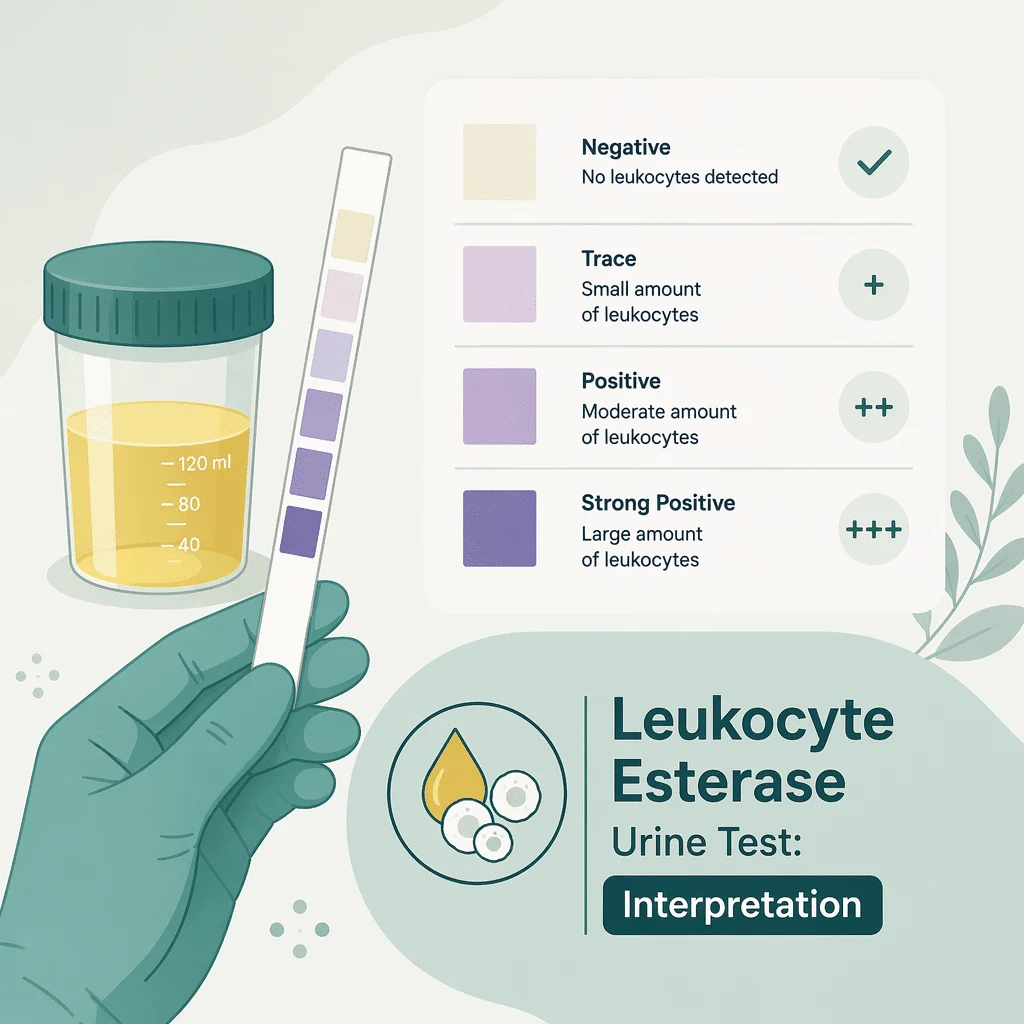
Un rând dintr-un buletin de analize care arată “esterază leucocitară: pozitiv” este unul dintre cele mai greșit înțelese rezultate din medicina de rutină. Banda nu detectează bacterii. Esteraza leucocitară din urină este o enzimă produsă de neutrofile — globulele albe care ajung primele oriunde există iritație tisulară — astfel că o schimbare de culoare pe bandă înseamnă că sunt prezente globule albe și că ceva în tractul urinar este inflamat. Nu indică o cauză anume și, prin ea însăși, nu înseamnă “infecție”. În acest articol vei afla ce este această enzimă și ce poate sau nu poate indica banda, cum se schimbă interpretarea atunci când este citită împreună cu nitriții, de ce simptomele tale sunt cele care decid ce înseamnă rezultatul, ce poate face banda să fie greșită în ambele sensuri și ce este piuria sterilă: globule albe în urină cu o cultură care nu crește nimic.
Ce este esteraza leucocitară și ce detectează banda reactivă
Neutrofilele stochează esteraza leucocitară în granulele lor. Când se dezintegrează — ceea ce se întâmplă rapid odată ce plutesc în urină — enzima este eliberată. Banda de testare conține o substanță chimică pe care această enzimă o descompune, iar produsul acestei reacții schimbă culoarea benzii din crem în violet. Intensitatea culorii este raportată ca negativ, urmă sau de la un plus la trei plusuri.
Din aceasta decurg două consecințe care stau la baza tuturor informațiilor de pe această pagină. Prima este că banda măsoară o enzimă, nu o celulă intactă, deci poate indica un rezultat pozitiv chiar și atunci când globulele albe s-au dezintegrat între toaletă și masa de laborator. A doua este mai importantă: nimic din acea reacție chimică nu implică bacterii în niciun moment.
Un rezultat pozitiv al benzii îți spune, prin urmare, că globule albe au trecut prin urină. Indică prezența unei inflamații undeva între rinichi și deschiderea uretrei. Nu îți spune ce a cauzat acea inflamație și nu poate face diferența între o infecție și o iritație, un calcul, un rinichi inflamat sau celule care nu provin deloc din tractul urinar.
Pozitiv nu înseamnă același lucru cu infectat
Oamenii sunt informați că analiza de urină a ieșit pozitivă și înțeleg în mod firesc “ai o infecție”. Banda nu poate face o astfel de afirmație. Este o analiză de screening: rapidă, ieftină și deliberat sensibilă, concepută pentru a identifica probele care merită examinate, nu pentru a tranșa un diagnostic. Și gradul de diluție al probei influențează rezultatul — de aceea concentrația urinei tale, abordată în ghidul despre densitate urinară, influențează modul în care se citește fiecare bandă de pe strip.
Interpretarea esterazei leucocitare împreună cu nitritul
Banda pentru nitrit se află alături de cea pentru esteraza leucocitară dintr-un motiv. Niciuna nu este prea utilă singură, iar cele două se interpretează împreună pe bandă.
Nitritul nu este ceva pe care corpul tău îl produce. Urina conține în mod normal nitrați proveniți din alimente, iar multe bacterii gram-negative, în special Escherichia coli, au o enzimă care transformă acești nitrați în nitriți. Banda detectează nitritul, deci este o amprentă indirectă a anumitor bacterii, nu o măsurătoare a globulelor albe.
Trebuie îndeplinite două condiții înainte ca aceasta să se coloreze. Bacteriile prezente trebuie să aparțină unei specii care reduce nitratul, iar urina trebuie să fi stat în vezică suficient de mult timp — câteva ore — pentru ca nitritul să se acumuleze în cantitate suficientă. Această a doua condiție explică de ce primul eșantion de dimineață este mai informativ decât unul recoltat la douăzeci de minute după ultima vizită la toaletă.
Mai mulți germeni care provoacă cu adevărat infecții urinare nu produc deloc nitrit. Speciile de Enterococcus, Staphylococcus saprophyticus — o cauză frecventă de cistită la femeile tinere — și Pseudomonas lasă acea bandă necolorată. Rezultatul practic este că nitritul este un test specific, dar insensibil: un nitrit pozitiv are o valoare reală, în timp ce un nitrit negativ dovedește foarte puțin. Prin urmare, esteraza leucocitară pozitivă cu nitritul negativ — cea mai frecventă combinație — este mult mai puțin concludentă decât cred majoritatea oamenilor; detaliile despre cea de-a doua bandă se găsesc în ghidul despre nitriți în urină.
| Rezultat și simptome | Ce sugerează de obicei | Pasul următor obișnuit |
|---|---|---|
| Esteraza leucocitară pozitivă, nitrit pozitiv, cu senzație de arsură sau urgență urinară | Tabloul cel mai sugestiv pentru o infecție urinară bacteriană | Evaluare clinică; de obicei se trimite o urocultură, iar decizia se ia adesea înainte ca rezultatul să revină |
| Esteraza leucocitară pozitivă, nitrit negativ, cu simptome | Foarte frecvent și mult mai puțin specific; compatibil cu o infecție cauzată de un organism care nu produce nitrit, dar și cu o piurie sterilă | Urocultura este de obicei testul decisiv; poate fi luată în considerare și testarea pentru o infecție cu transmitere sexuală |
| Esteraza leucocitară negativă, nitrit pozitiv, fără simptome | Rar; adesea un eșantion care a stat prea mult timp, sau bacterii prezente fără inflamație | Repetarea recoltării printr-o probă curată de mijlocul jetului, în loc să se acționeze pe baza primei probe |
| Esteraza leucocitară pozitivă, fără niciun simptom urinar | O situație complet diferită, care nu reprezintă un diagnostic de infecție | Discuție în context, nu o decizie bazată exclusiv pe banda de testare |
| Ambele benzi negative, dar cu simptome urinare clare | O bandă negativă nu exclude infecția, mai ales în prezența vitaminei C, a urinei foarte diluate sau a unei boli în stadiu incipient | Evaluare pe baza simptomelor; trimiterea unei uroculturi rămâne utilă |
| Oricare dintre benzi pozitivă, cu febră și durere în spate sau în flanc | Posibilă infecție renală, care se comportă diferit față de o infecție a vezicii urinare | Evaluare urgentă în aceeași zi |
Ce adaugă benzile vecine
Restul benzii se citește în același timp. O bandă pozitivă pentru sânge alături de globule albe este frecventă în infecții, dar are propria listă lungă de explicații, prezentate în ghidul despre sânge în urină. O urmă de proteine însoțește adesea inflamația și rareori are o semnificație importantă în sine; glucoză în urină ridică întrebări legate de glicemie sau de un medicament, nu de o infecție; iar corpi cetonici reflectă de obicei faptul că nu ai mâncat, nu ceva ce se întâmplă în vezica urinară.
De ce simptomele tale schimbă semnificația rezultatului
Tamponul are o culoare. Ceea ce îl transformă în informație este ceea ce simți. Senzația de arsură sau înțepătură la urinare, nevoia de a merge la toaletă mult mai des sau mai urgent decât de obicei și o durere surdă în partea de jos a abdomenului sunt simptomele care fac ca un rezultat pozitiv la esteraza leucocitară să merite atenție. La cineva care descrie aceste simptome, tamponul confirmă ceea ce povestea sugerează deja, iar pașii următori vin rapid.
O bandă pozitivă la o persoană fără niciun simptom urinar este o situație diferită, cu un răspuns diferit, iar acest caz este tratat în ghidul despre citirea unui raport complet de sumar de urină.
Greșeala opusă merită menționată la fel de clar. Dacă ai simptome urinare, un rezultat negativ sau cu urme la bandeleta reactivă nu este un motiv să stai acasă. O infecție care se extinde de la vezică spre rinichi, numită pielonefrită, poate deveni gravă în decurs de o zi, iar bandeleta nu este suficient de sensibilă pentru a fi tratată ca un semnal că poți aștepta.
Piuria sterilă: celule albe cu cultură negativă
Piuria înseamnă prezența celulelor albe în urină. Piuria sterilă înseamnă că acestea sunt prezente, confirmate la microscop, dar cultura de urină nu a crescut nimic. Este frecventă, prost explicată și cel mai util lucru de înțeles atunci când esteraza leucocitară rămâne pozitivă în mod persistent.
O urocultură nu este o căutare generală a vieții microbiene. Este un test specific: o picătură măsurată de urină întinsă pe medii de cultură alese pentru a favoriza creșterea bacteriilor urinare obișnuite, citită după un interval de timp stabilit, față de un prag de numărare. Orice crește lent, necesită condiții diferite, trăiește în interiorul celulelor sau a fost deja inhibat de un antibiotic pur și simplu nu va apărea pe placă.
Cauze importante de știut
- O infecție urinară tratată recent sau parțial. Una sau două zile de antibiotice pot împiedica bacteriile să crească pe o placă de cultură, în timp ce inflamația pe care au provocat-o este încă în desfășurare.
- O infecție cu transmitere sexuală, în special chlamydia și gonoreea care provoacă uretrită, adică inflamația uretrei. Aceasta este cauza cel mai des ratată, în special la adulții tineri, deoarece produce senzație de arsură și urinări frecvente care seamănă exact cu cistita, în timp ce urocultura revine negativă. O urocultură nu o detectează; pentru asta este nevoie de un test specific, de obicei un test de amplificare a acizilor nucleici pe o probă de urină. Ghidurile noastre despre chlamydia și testarea pentru gonoree explică ce presupune și testarea pentru o infecție cu transmitere sexuală este adesea oferită în același timp testarea HIV și un testul RPR pentru sifilis.
- Calculii renali. O piatră care își croiește drum în jos zgârie mucoasa și atrage celule albe fără nicio bacterie implicată; imaginea de ansamblu se găsește în ghidul despre calculilor renali.
- Cistita interstițială, numită și sindromul durerii vezicale, o afecțiune cronică de durere vezicală care se diagnostichează în mare parte prin excluderea altor cauze.
- Un cateter urinar sau o procedură recentă, cum ar fi cistoscopia. Instrumentarea irită mecanic mucoasa, iar celulele albe apar ca urmare.
- Boala glomerulară, adică inflamația unităților de filtrare din rinichi, care de obicei arată și proteine sau sânge pe bandeletă.
- Tuberculoza tractului urinar. Acesta este răspunsul clasic din manuale, rar întâlnit în cele mai multe situații, dar real, și nu va crește niciodată pe o cultură de rutină, deoarece necesită teste specifice.
- Contaminarea din zona genitală. Aceasta este cea mai frecventă explicație dintre toate: celulele vaginale, secrețiile sau celulele cutanate colectate odată cu proba aduc celule albe care nu s-au aflat niciodată în vezică.
Ce nu înseamnă o cultură negativă
Nu înseamnă că totul este în regulă, și nu înseamnă că simptomele ți le-ai imaginat. Această recadrare contează, deoarece foarte mulți oameni pleacă de la o consultație cu o cultură negativă și cu vaga senzație că nu au fost crezuți.
O cultură negativă elimină o explicație dintr-o listă de opt. Este o informație cu adevărat utilă, deoarece face puțin probabilă cistita bacteriană obișnuită, dar în sine nu închide nimic. Dacă ai simptome și celule albe cu o cultură care nu a crescut nimic, întrebarea productivă nu este dacă testul a greșit, ci care dintre celelalte cauze a fost investigată — și la un adult activ sexual, posibilitatea unei infecții cu transmitere sexuală netestată merită ridicată cu voce tare.
Ce cauzează un fals pozitiv sau un fals negativ
Cel mai frecvent fals pozitiv este contaminarea. Celulele vaginale și secrețiile conțin celule albe, iar o probă recoltată fără a elimina primul jet de urină le va include. Un raport care arată celule albe alături de un număr mare de celule epiteliale scuamoase descrie de obicei modul de recoltare, nu starea vezicii.
O probă lăsată să stea este cealaltă cauză frecventă. Celulele albe se dezintegrează, orice bacterii prezente se înmulțesc, iar compoziția chimică se modifică. Un recipient care a stat pe blat câteva ore descrie exact această situație.
Rezultatele fals negative sunt discutate mai rar și contează mai mult atunci când ai simptome. Vitamina C în doze mari interferează cu mai multe reacții ale bandeletei. O concentrație ridicată de glucoză, o concentrație ridicată de proteine și urina foarte concentrată pot fiecare să suprime reacția la esteraza leucocitară. La fel pot face și unele antibiotice, inclusiv nitrofurantoina și tetraciclinele — acesta este unul dintre motivele pentru care o bandeletă recoltată după ce tratamentul a început este greu de interpretat. Urina foarte diluată acționează invers, diluând un rezultat real sub pragul de detecție. Dacă iei suplimente, menționează acest lucru înainte de recoltarea probei, nu după ce rezultatul este discutat.
Ce confirmă tabloul clinic: microscopia și urocultura
Două teste confirmă diagnosticul. Microscopia centrifughează proba și numără ce este efectiv prezent: celule albe, celule roșii, bacterii, cilindri și celule epiteliale. Transformă o citire enzimatică într-un număr de celule și semnalează contaminarea în același timp.
O urocultură identifică microorganismul și testează la ce antibiotice răspunde. Durează aproximativ o zi sau două, uneori mai mult când sunt necesare teste suplimentare. La cineva cu simptome clare, decizia de tratament se ia adesea înainte de sosirea rezultatului și se revizuiește când acesta vine — această succesiune este o practică normală, nu o scurtătură.
Două aspecte merită menționate clar. O urocultura nu va detecta chlamydia sau gonoreea, deci dacă acestea sunt posibile, testul trebuie solicitat explicit. Iar antibioticele rămase dintr-un tratament anterior sunt o idee proastă din toate punctele de vedere: medicamentul greșit pentru microorganismul greșit, o cantitate necunoscută rămasă, o cultură care nu mai poate fi interpretată și riscul unei reacții, cum ar fi o alergie la penicilină fără ca nimeni să știe ce s-a luat.
Produsele cu merișoare și D-manoza sunt menționate frecvent în acest punct. Dovezile existente se referă la prevenirea infecțiilor recurente la anumite grupuri și sunt modeste chiar și în acest context; niciunul dintre ele nu s-a dovedit eficient în tratarea unei infecții deja instalate și niciunul nu modifică ce arată testul cu bandelete.
Când să consulți un medic
Majoritatea rezultatelor pozitive la leucocit esterază sunt gestionate la o consultație obișnuită. Câteva nu ar trebui să aștepte.
Semne de alarmă: solicită îngrijire medicală urgentă
- Febră, frisoane sau tremurături însoțite de durere în spate sau în flanc, care pot indica o infecție renală
- Vărsături sau imposibilitatea de a reține lichide
- Confuzie bruscă la un adult în vârstă care se simte și rău
- Sânge vizibil în urină
- Sarcina cu orice simptom urinar
- Imposibilitatea de a urina
- Simptome care nu se ameliorează după un tratament
În afara acestora, senzația de arsură, urgența sau frecvența urinară care nu se ameliorează de la sine reprezintă un motiv pentru a programa o consultație, nu pentru a aștepta. Merită să raportezi și simptomele care persistă după tratament: acesta este unul dintre principalele moduri prin care piuria sterilă este în cele din urmă recunoscută.
Cele mai recente progrese științifice în testarea celulelor albe din urină
Cercetările recente s-au îndepărtat de îmbunătățirea benzii reactive în sine și s-au orientat spre o întrebare mai dificilă: ce ar trebui făcut atunci când banda și cultura nu sunt de acord? Cinci studii indexate în PubMed arată unde se află domeniul în prezent.
Un studiu de acuratețe diagnostică publicat în Archives of Academic Emergency Medicine a comparat bandelete reactive și o colorație Gram cu urocultura la adulți cărora li s-a efectuat urocultură într-un laborator de spital. Ce s-a constatat: leucocit esteraza singură a ratat o parte semnificativă din infecțiile confirmate și a semnalat și persoane care nu aveau nicio infecție; niciun test individual nu a performat la fel de bine ca bandelete și colorația Gram interpretate împreună. Ce înseamnă asta pentru tine: o singură banderetă nu este un diagnostic, iar motivul pentru care medicul tău analizează mai multe rezultate simultan este că tocmai combinația lor oferă informații relevante.
Un studiu prospectiv pe patru ani publicat în Indian Journal of Medical Microbiology a examinat pacienți spitalizați cu piurie sterilă, definită ca prezența celulelor albe la microscopie fără creștere bacteriană. Ce s-a constatat: o minoritate semnificativă prezenta un microorganism atipic pe care o cultură standard nu îl poate detecta, cel mai frecvent fiind Chlamydia trachomatis; parteneri sexuali multipli sau intervenții chirurgicale pelviene anterioare creșteau probabilitatea. Tuberculoza genitourinară a apărut și ea, dar era rară în acea populație. Ce înseamnă asta pentru tine: celulele albe cu cultură negativă sunt un semnal să lărgești căutarea, nu să închizi dosarul.
O evaluare a serviciului pe cincisprezece luni, publicată în Enfermedades Infecciosas y Microbiologia Clinica, a aplicat screeningul PCR pe urină combinată unor probe de la persoane cu simptome urinare, celule albe și cultură negativă. Ce s-a descoperit: aproximativ unul din zece dintre acești pacienți avea o infecție cu transmitere sexuală nediagnosticată, cel mai frecvent chlamydia, urmată de Trichomonas vaginalis, Mycoplasma genitalium și gonoree. Ce înseamnă asta pentru tine: dacă ai simptome asemănătoare cistitei și o cultură negativă, este o întrebare rezonabilă și justificată din punct de vedere clinic să întrebi dacă s-a testat și pentru o infecție cu transmitere sexuală.
Un studiu publicat în World Journal of Urology a secvențiat materialul genetic din urina pacienților la care cultura nu crescuse nimic, comparând cazurile cu și fără piurie. Ce s-a descoperit: o varietate de bacterii și chiar virusuri au apărut în probele cu cultură negativă, iar anumite microorganisme au fost asociate cu prezența celulelor albe. Ce înseamnă asta pentru tine: o cultură negativă înseamnă că pe placa de rutină nu a crescut nimic, nu că urina ta era sterilă.
În final, un studiu observațional pe douăsprezece luni, publicat în Topics in Spinal Cord Injury Rehabilitation, a urmărit utilizatori pe termen lung de cateter urinar permanent care și-au testat singuri urina săptămânal. Ce s-a descoperit: rezultatele pozitive pentru esteraza leucocitară și nitriți erau aproape norma în fiecare săptămână și nu corelau cu starea în care se simțeau efectiv persoanele, în timp ce o bandă negativă la cineva fără simptome era combinația mai informativă. Ce înseamnă asta pentru tine: cu un cateter montat, un rezultat pozitiv singur nu spune aproape nimic, iar simptomele sunt cele care contează.
Întrebări frecvente
Esteraza leucocitară înseamnă că am o infecție urinară?
Nu prin ea însăși. Banda detectează o enzimă eliberată de globulele albe, astfel că un rezultat pozitiv înseamnă că există celule albe în urină și că ceva este inflamat. Infecția este cel mai frecvent motiv, dar nu este singurul, iar banda nu poate face diferența între cauze. Ceea ce înclină balanța este restul tabloului clinic: dacă ai senzație de arsură, urgență urinară, urinări frecvente sau durere în abdomenul inferior, dacă și banda pentru nitriți este pozitivă și ce crește în final cultura. Un rezultat pozitiv la o persoană fără simptome urinare este o situație cu totul diferită. Doar un medic care îți cunoaște simptomele poate decide ce ar trebui să urmeze după acest rezultat.
Care este diferența dintre esteraza leucocitară și globulele albe din urină?
Sunt două modalități de a măsura același lucru la niveluri diferite de precizie. Esteraza leucocitară este un test chimic pe banda reactivă: detectează o enzimă eliberată de globulele albe, inclusiv atunci când celulele în sine s-au dezintegrat deja. Numărul de globule albe provine din microscopie, unde un specialist de laborator examinează sedimentul centrifugat și numără celulele intacte pe câmp vizual. Banda reactivă este mai rapidă și mai ieftină; microscopul este mai precis și raportează în același timp și alte informații utile, cum ar fi celulele epiteliale care indică o contaminare. Rezultatele conțin adesea ambele valori, iar uneori acestea nu coincid.
Ce înseamnă o urmă de esterază leucocitară în urină?
„Urmă" este cea mai slabă schimbare de culoare pe care o înregistrează banda, iar în sine reprezintă un semnal slab. La o persoană fără simptome, aceasta reflectă frecvent o cantitate mică de contaminare, o probă concentrată sau nimic identificabil. La o persoană cu simptome urinare clare, același rezultat de tip „urmă" poate face parte dintr-un tablou real, deoarece banda nu este suficient de precisă pentru a exclude ceva. Răspunsul util nu este să evaluezi urma, ci să te uiți la restul rezultatelor și la cum te simți, și să repeți testul pe o probă colectată corect dacă există vreo îndoială.
Ce se întâmplă dacă urocultura mea a fost negativă, dar am în continuare simptome?
Această combinație are un nume, piurie sterilă, și este recunoscută, nu ignorată. O cultură standard este concepută pentru a detecta bacteriile urinare comune la un anumit prag; nu poate depista chlamydia sau gonoreea, poate rata o infecție deja parțial tratată și nu spune nimic despre calculi, sindromul de durere vezicală, iritația cauzată de cateter sau inflamația din interiorul rinichiului. O cultură negativă elimină o explicație dintr-o listă; nu înseamnă că totul este în regulă și nu înseamnă că ți-ai imaginat simptomele. Dacă simptomele persistă, întreabă care dintre celelalte cauze au fost luate în considerare și dacă testarea pentru o infecție cu transmitere sexuală este indicată.
Poate vitamina C să influențeze rezultatul?
Da, și în direcția la care lumea se așteaptă cel mai puțin. Acidul ascorbic interferează cu mai multe reacții chimice de pe o bandă de testare și poate transforma un rezultat cu adevărat pozitiv într-unul negativ. Acesta este un fals negativ: ascunde rezultatele în loc să le inventeze. Suplimentele în doze mari sunt de obicei vinovate, deși comprimatele efervescente și unele băuturi conțin suficient acid ascorbic pentru a conta. Urina foarte concentrată, un nivel ridicat de glucoză, un nivel ridicat de proteine și anumite antibiotice pot suprima reacția în același mod. Menționează orice supliment înainte de a da proba, astfel încât un rezultat negativ să poată fi interpretat ținând cont de acest lucru și repetat dacă este necesar.
De ce raportul meu spune că esteraza leucocitară este anormală?
Laboratoarele marchează orice rezultat diferit de negativ ca anormal, deoarece negativul este rezultatul așteptat în urina unui tract urinar sănătos. Marcajul este o convenție de formatare, nu o indicație a gravității, și apare indiferent dacă valoarea este la limită sau de trei plusuri. Merită citit împreună cu banda pentru nitriți, numărul de celule la microscopie (dacă s-a efectuat) și simptomele tale. Un marcaj anormal fără simptome și fără confirmare la microscopie este departe de a fi un diagnostic, în timp ce același marcaj la o persoană cu senzație de arsură și febră este un motiv să mergi la medic în aceeași zi.
Glosar de termeni cheie
| Termen | Definiție |
|---|---|
| Leucocit esteraza | O enzimă eliberată de globulele albe, detectată printr-o bandă reactivă, care indică inflamație în tractul urinar, nu neapărat o infecție |
| Neutrofil | Tipul de globule albe care ajunge primul la țesuturile inflamate sau infectate și care conține esteraza leucocitară în granulele sale |
| Piurie | Globule albe prezente în urină, confirmate de obicei prin numărarea lor la microscop |
| Piurie sterilă | Globule albe în urină împreună cu o urocultură care nu a evidențiat bacterii, situație care are propria sa listă de cauze posibile |
| Nitriți | O substanță chimică produsă atunci când anumite bacterii transformă nitrații alimentari din urina care a stat în vezică mai multe ore |
| Urocultura | Un test de laborator care cultivă bacterii dintr-o probă de urină pentru a identifica microorganismul și a testa la ce antibiotice răspunde |
| Uretrită | Inflamația uretrei, tubul prin care urina iese din corp, cauzată adesea de o infecție cu transmitere sexuală |
| Test de amplificare a acizilor nucleici | Un test care detectează materialul genetic al unui microorganism, cum ar fi chlamydia, pe care o cultură urinară de rutină nu îl poate evidenția |
| Eșantion de urină din mijlocul jetului, recoltat curat | O metodă de recoltare în care prima parte a jetului urinar este eliminată în toaletă pentru a reduce contaminarea cu celule de pe piele și din zona genitală |
| Pielonefrită | Infecție care a ajuns la rinichi, manifestată de obicei prin febră și durere în spate sau în flanc, care necesită evaluare medicală promptă |
Surse
- Centers for Disease Control and Prevention. Despre chlamydia
- National Institute of Diabetes and Digestive and Kidney Diseases. Infecția vezicii urinare (infecție de tract urinar) la adulți
- National Institute of Diabetes and Digestive and Kidney Diseases. Diagnosticul cistitei interstițiale
- MedlinePlus, US National Library of Medicine. Infecția de tract urinar la adulți
- Solorzano C, Camila Rubio M, Licht-Ardila M, et al. Performance of Gram Stain, Leukocyte Esterase, and Nitrite in Predicting the Presence of Urinary Tract Infections: A Diagnostic Accuracy Study. Archives of Academic Emergency Medicine. 2025. Indexed in PubMed. https://doi.org/10.22037/aaemj.v13i1.2619
- Aggarwal A, Biswal D, Rawre J, et al. Prevalence of Chlamydia trachomatis, Ureaplasma spp., Mycoplasma hominis and Mycoplasma genitalium in patients with sterile pyuria. Indian Journal of Medical Microbiology. 2025. Indexed in PubMed. https://doi.org/10.1016/j.ijmmb.2025.101030
- Gil P, Villarruel K, Guillem J, et al. Detection of undiagnosed STIs in patients with suspected UTI using pooled urine PCR screening. Enfermedades Infecciosas y Microbiologia Clinica (English Edition). 2026. Indexed in PubMed. https://doi.org/10.1016/j.eimce.2026.503161
- Li J, et al. The role of urine microbiota in culture-negative patients with pyuria. World Journal of Urology. 2025. Indexed in PubMed. https://doi.org/10.1007/s00345-025-05620-6
- Rounds AK, Tractenberg RE, Groah SL, et al. Urinary Symptoms Are Unrelated to Leukocyte Esterase and Nitrite Among Indwelling Catheter Users. Topics in Spinal Cord Injury Rehabilitation. 2023. Indexed in PubMed. https://doi.org/10.46292/sci22-00095
Lectură suplimentară
- Cristale în urină: cauze și riscuri
- Valorile normale ale pH-ului urinar și ce le poate modifica
- Valori crescute ale CRP: cauze, simptome și tratamente
- Limfocite crescute: cauze, simptome și tratamente
- Infecție urinară: simptome, cauze și analize
Un buletin de analiză de urină afișează leucocit esteraza, nitritul și alte câteva markeri pe câte un rând, fără contextul care decide ce înseamnă fiecare dintre ei. AI DiagMe îți citește buletinul pe înțelesul tău, inclusiv cum se corelează un rezultat al leucocit esterazei cu nitritul și ce poate sau nu poate adăuga o urocultura. Te ajută să înțelegi ce ai în față și ce să întrebi. Nu pune un diagnostic de infecție și nu înlocuiește medicul tău.
Înțelege-ți rezultatele analizelor cu AI DiagMe
Obține interpretarea rezultatelor în câteva minute