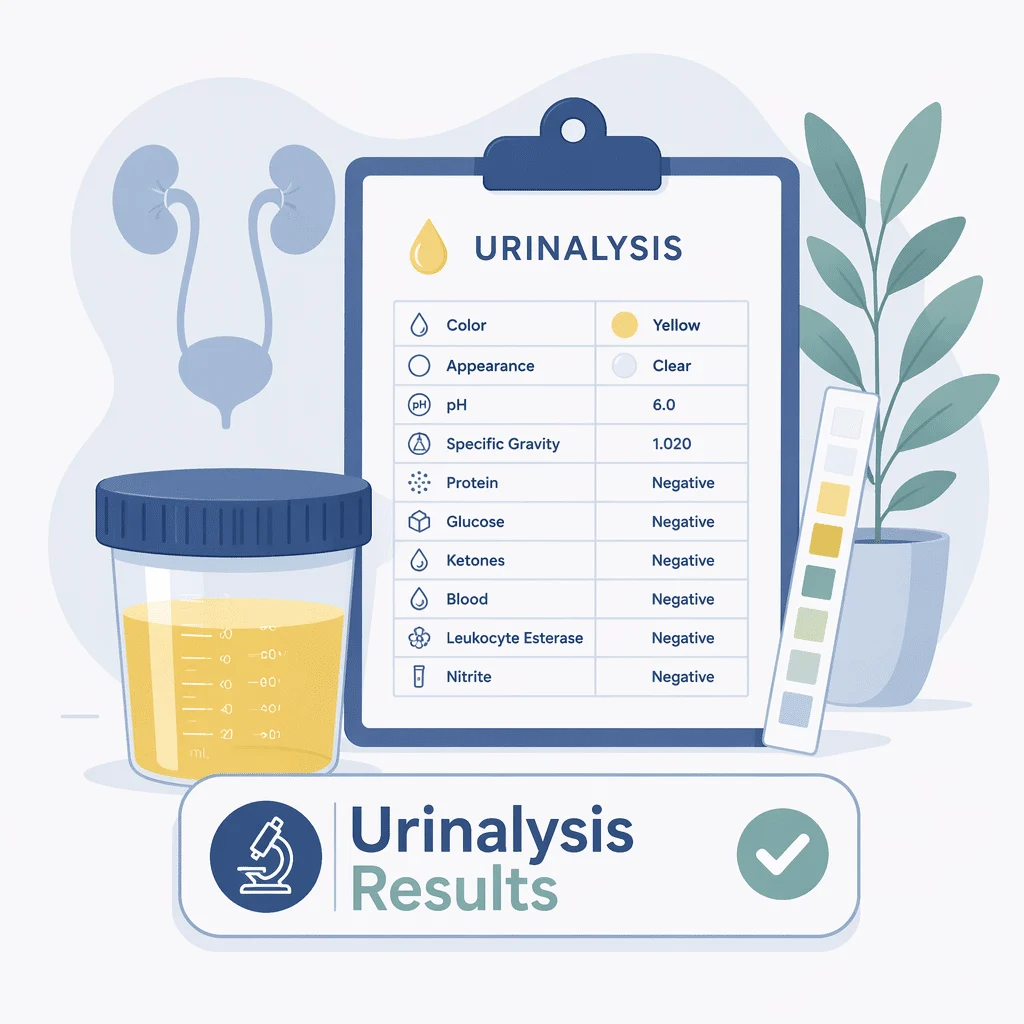
Rezultatele sumarului de urină pot părea un zid de abrevieri: SG, pH, LE, NIT, urmate de un șir de plusuri și minusuri. În practică, analiza de urină cuprinde trei examinări separate raportate pe o singură foaie, iar majoritatea liniilor capătă sens abia când sunt citite alături de simptomele pe care le ai. În acest articol vei afla care sunt cele trei părți ale sumarului de urină, ce măsoară fiecare pad al dipstick-ului, ce poate face ca o bandă să dea un rezultat greșit și ce tipare merită să fie luate în seamă. Vei afla și cel mai puțin comunicat aspect din testarea urinei: bacteriile găsite la o persoană fără simptome urinare nu reprezintă de obicei o infecție și, de regulă, nu ar trebui tratate cu antibiotice.
Ce include de fapt un sumar de urină
Sumarului de urină nu este un singur test, ci până la trei examinări ale aceluiași eșantion, tipărite împreună, fiecare răspunzând la o întrebare diferită. Să știi care parte a generat un anumit rând este cel mai rapid mod de a înțelege rezultatul tău.
1. Examinarea vizuală
Cineva înregistrează culoarea și claritatea. Aceasta este cea mai rudimentară parte a testului și cea mai ușor de interpretat greșit acasă, deoarece alimentele, suplimentele și medicamentele pot schimba nuanța. Turbiditatea singură nu este un diagnostic: poate proveni din cristale, mucus, celule sau pur și simplu dintr-o probă concentrată.
2. Testul cu bandelete reactive (chimic)
O bandeletă de plastic cu până la zece zone chimice este introdusă în urină. Fiecare zonă își schimbă culoarea în prezența unei anumite substanțe, iar rezultatul este înregistrat ca negativ, urme sau de la unu la patru plusuri. Bandeleta reactivă este un instrument de screening: rapid, ieftin și aproximativ, conceput să indice ce merită verificat, nu să confirme.
3. Examinarea microscopică (sedimentul urinar)
Urina este centrifugată, iar sedimentul este examinat pentru hematii, leucocite, bacterii, cilindri și cristale în urină, care au propriile cauze și semnificații. Multe laboratoare efectuează acest pas doar când bandeleta reactivă este anormală, de aceea multe rezultate conțin doar coloana bandeletei și nimic altceva. Dacă al tău menționează sânge sau proteine, dar nu arată nicio microscopie, merită să întrebi despre asta.
Dipstick-ul, pad cu pad
Iată la ce servește fiecare zonă, în una sau două rânduri. Fiecare are propriul ghid detaliat unde găsești toate informațiile.
- Greutatea specifică: cât de concentrată este urina, comparativ cu apa. O valoare ridicată înseamnă de obicei că erai deshidratat când ai dat proba, o valoare scăzută că ai băut mult lichid, iar aceasta influențează și celelalte paduri.
- pH: cât de acidă sau alcalină este urina, care variază în funcție de dietă, medicamente și cât timp a stat proba. Vezi niveluri normale ale pH-ului urinar și ce le modifică.
- Proteine: detectează în principal albumina, iar o urmă izolată este frecventă și adesea fără semnificație. Rezultatele persistente sunt tratate în proteine în urină.
- Glucoza: zahăr în urină, ceea ce înseamnă de obicei că nivelul din sânge a depășit pragul pe care rinichiul îl poate reabsorbi, cu excepția cazului în care un medicament o provoacă. Vezi nivelurile de glucoză.
- Corpii cetonici: apar când organismul arde grăsimi în loc de zahăr, ceea ce se întâmplă în post, diete sărace în carbohidrați și în caz de boală. Vezi cetone în urină.
- Sânge: reacționează la hemoglobină și mioglobină, nu la globulele roșii întregi, de aceea dă rezultat pozitiv mult mai des decât confirmă microscopia. Vezi hematurie.
- Esteraza leucocitară: o enzimă eliberată de globulele albe, deci sugerează o inflamație undeva în tractul urinar, nu neapărat o infecție. Vezi esteraza leucocitară.
- Nitriți: devin pozitivi când anumite bacterii au avut câteva ore în vezică pentru a converti nitrații alimentari, astfel că pot rata multe infecții și pot fi pozitivi fără ca o infecție să fie prezentă. Vezi nitriți în urină.
- Bilirubina: un pigment provenit din globulele roșii degradate care nu ar trebui să ajungă în urină; când apare, întrebarea se referă de obicei la ficat sau la căile biliare.
- Urobilinogen: un pigment înrudit al cărui rezultat este notoriu de nesigur și rareori interpretat singur; detaliile se găsesc în urobilinogen în urină.
Tipare care merită recunoscute
| Constatare | Ce înseamnă de obicei | Ce să faci |
|---|---|---|
| Urme de sânge, fără simptome | Foarte frecvent și adesea temporar; efortul fizic, menstruația și iritațiile minore îl pot produce | Întreabă dacă microscopia a confirmat-o și dacă merită să repeți analiza pe un eșantion recoltat în afara acestor factori declanșatori |
| Proteine o singură dată, fără simptome | Apare adesea după efort fizic, febră sau o zi lungă în picioare | Întreabă despre repetarea analizei pe prima urină de dimineață și despre un test de raport dacă apare în continuare |
| Glucoză prezentă | Reflectă de obicei o glicemie crescută, dar este așteptat și inofensiv în cazul medicamentelor din clasa inhibitorilor SGLT2 | Adu lista medicamentelor tale; întreabă dacă este indicat un test de glicemie sau HbA1c |
| Nitriți sau esteraza leucocitară pozitivă, fără simptome urinare | Bacterii sau globule albe prezente fără simptome de infecție, cunoscută ca bacteriurie asimptomatică | În afara sarcinii și a anumitor proceduri urologice, nu este nevoie de antibiotic; întreabă de ce a fost testat urina |
| Nitriți pozitivi cu senzație de arsură și febră | Compatibil cu o infecție urinară care necesită evaluare | Contactează un medic prompt, fără să aștepți să vezi dacă trece de la sine |
| Corpi cetonici cu glucoză crescută la o persoană cu diabet | Poate semnala cetoacidoză diabetică, care se dezvoltă rapid | Mergi la urgențe în aceeași zi |
Ce înseamnă și ce nu înseamnă un rezultat pozitiv pentru bacterii
Aceasta este cea mai importantă secțiune de pe pagină. Prezența bacteriilor în vezica urinară fără a provoca vreo boală se numește bacteriurie asimptomatică și este frecventă: la persoanele în vârstă, la cei cu diabet, la oricine are un cateter urinar și la un număr considerabil de femei sănătoase. Aceasta produce exact același tablou pe bandeleta reactivă ca o infecție, deoarece banda nu poate determina dacă bacteriile provoacă vreun rău.
Un rezultat pozitiv la nitriti sau la esteraza leucocitară la o persoană fără simptome urinare nu înseamnă, prin urmare, o infecție urinară. Cu excepția a două situații bine definite, tratamentul cu antibiotice nu ajută și poate face rău: bacterii rezistente, efecte secundare, reacții alergice precum alergie la penicilină, și infecția cu Clostridioides difficile, o infecție intestinală gravă legată de antibiotice. Excepțiile sunt sarcina și perioada dinaintea anumitor proceduri urologice care afectează mucoasa tractului urinar. Acestea sunt recomandările Societății de Boli Infecțioase din America și ale Grupului de Lucru pentru Servicii Preventive din SUA privind screeningul.
Urina nu ar trebui testată când nu există simptome
Cel mai simplu mod de a evita un rezultat inutil este să nu îl generezi. În majoritatea situațiilor, în afara sarcinii, a verificărilor pre-procedură și a monitorizărilor specifice pe care medicul tău ți le-a explicat, nu există niciun motiv să testezi urina cuiva fără simptome urinare. Odată ce un rezultat pozitiv apare în fișă, este greu de ignorat și tinde să atragă o prescripție de antibiotic de care nu are nevoie. Întrebarea “ce vom face diferit în funcție de rezultat?” este o întrebare legitimă înainte de a preda recipientul.
Simptomele sunt cele care dau sens unui rezultat urinar: senzație de arsură sau înțepătură la urinare, nevoia de a merge la toaletă mult mai des sau mai urgent decât de obicei, durere în partea inferioară a abdomenului sau durere în spate ori în flanc însoțită de febră. Dacă ai aceste simptome, nu este un motiv să stai acasă. Mergi la un consult.
De ce contează cel mai mult la persoanele în vârstă
Bacteriile în urină devin tot mai frecvente odată cu vârsta, iar în căminele de bătrâni sunt aproape o constantă. Când o persoană în vârstă devine confuză, somnoroasă sau nesigură pe picioare, urina este adesea primul lucru analizat, rezultatul benzii reactive iese pozitiv și confuzia este pusă pe seama unei infecții urinare. Fără simptome urinare sau febră, această legătură este de obicei greșită, iar tratamentul întârzie căutarea cauzei reale: un medicament nou, deshidratare, durere, constipație, somn insuficient sau o infecție în altă parte. Nimic din toate acestea nu înseamnă că o persoană în vârstă bolnavă trebuie lăsată fără ajutor. Înseamnă că rezultatul analizei de urină nu ar trebui să pună capăt investigației.
Merită spus clar, pe același subiect, că merișorul: dovezile privesc prevenția la persoanele cu infecții urinare repetate, și chiar și acolo sunt modeste. Nu este un tratament și nu înlocuiește consultul medical.
Ce poate face ca o banderetă reactivă să dea un rezultat greșit
Benzile reactive sunt chimie, iar chimia poate fi influențată de diverși factori. Iată interferențele care merită cunoscute, deoarece cele mai multe sunt lucruri pe care le poți menționa înainte de recoltarea probei.
- Vitamina C. Acidul ascorbic blochează reacțiile de pe câmpurile pentru sânge și glucoză, astfel că un supliment în doze mari, o băutură carbogazoasă sau un plic care conține vitamina C pot transforma un rezultat cu adevărat pozitiv în unul negativ. Acesta este un fals negativ: ascunde rezultatele în loc să le inventeze. Menționează suplimentele înainte de a da proba.
- Menstruația, exercițiul fizic intens și contactul sexual recent. Toate trei pot introduce sânge sau proteine pe bandă la o persoană perfect sănătoasă. Recoltarea probei în afara acestor momente, acolo unde este posibil, evită un întreg ciclu de investigații suplimentare.
- Concentrația urinei. O urină foarte concentrată exagerează toate valorile de pe bandă; o urină foarte diluată poate coborî un rezultat real sub pragul de detecție. Hidratarea și momentul recoltării influențează ce arată analiza ta.
- O probă lăsată să stea. pH-ul crește, globulele roșii și albe se dezintegrează, iar bacteriile prezente se înmulțesc. O probă care stă ore întregi înainte de a ajunge la laborator descrie recipientul, nu vezica urinară.
- Culoarea din medicamente și alimente. Rifampicina și fenazopiridina colorează urina în portocaliu sau roșu, nitrofurantoina o poate închide la culoare până la maro, iar sfecla roșie poate produce o nuanță roz care pare îngrijorătoare, dar nu este sânge. Acestea pot face dificilă citirea benzilor reactive, însă nu indică sângerare.
Sângele pe banda reactivă: când contează
Câmpul pentru sânge este cel mai frecvent pozitiv câmp de pe banderetă și cel mai des interpretat greșit. Reacționează la hemoglobină, nu la globulele roșii intacte, astfel că devine pozitiv pentru lucruri care nu implică deloc sângerare, iar o mare parte din rezultatele pozitive nu sunt confirmate atunci când cineva examinează efectiv proba la microscop.
Distincția care contează are trei etape. Un test dipstick pozitiv izolat, fără simptome și fără nimic la microscopie, este de obicei tranzitoriu și nu necesită investigații suplimentare. Hematurie microscopică, adică globule roșii confirmate la microscop și care persistă la o probă repetată, necesită evaluare, iar cât de amănunțită este aceasta depinde de vârstă, istoricul de fumat și alți factori de risc. Sângele vizibil în urină, care o colorează în roz, roșu sau maro-închis (ca cola), necesită întotdeauna evaluare, indiferent de vârstă și chiar dacă apare o singură dată și dispare.
Explicațiile pot varia de la benigne la grave: o infecție urinară, efort fizic intens, calculilor renali, o prostată mărită, inflamație la nivelul rinichiului și, mai rar, o tumoră. Tocmai această varietate justifică pasul de confirmare și explică de ce nici panica, nici ignorarea nu sunt răspunsuri potrivite la un singur semn pozitiv.
Proteinele, glucoza și corpii cetonici în context
Proteina detectată la dipstick este frecventă și, de obicei, inofensivă la o singură citire. Efortul fizic, febra, expunerea la frig și chiar statul în picioare timp îndelungat pot determina eliminarea unei cantități mici de proteine, care dispare ulterior. Ceea ce contează este persistența. Când proteina continuă să apară, următorul pas este de obicei măsurarea corectă a acesteia pe o probă punctuală, ca raport față de creatinină, care corectează gradul de diluție al urinei; test de creatinină urinară explică cum funcționează această corecție. Proteina persistentă însoțită de umflarea gleznelor este o situație diferită față de o urmă izolată după o alergare.
Glucoza în urină înseamnă de obicei că glicemia a depășit nivelul pe care rinichiul îl poate reabsorbi, motiv pentru care ridică semne de întrebare legate de diabet. Există acum o excepție importantă. Inhibitorii SGLT2, o clasă de medicamente larg utilizată pentru diabetul de tip 2, insuficiența cardiacă și boala cronică de rinichi, acționează tocmai prin determinarea rinichiului să elimine glucoza în urină. Dacă iei unul dintre aceste medicamente, glucoza de pe banda ta reactivă înseamnă că medicamentul își face efectul, nu că există un semnal de alarmă, și nu ar trebui să declanșeze de la sine o investigație pentru diabet. Spune-i celui care citește rezultatul că urmezi acest tratament.
Corpii cetonici arată că organismul folosește grăsimile drept combustibil în loc de zahăr. Postul, o dietă săracă în carbohidrați, greața din sarcină, vărsăturile sau orice boală care te împiedică să mănânci îi pot produce, și în acest context sunt de așteptat. Excepția este critică: la o persoană cu diabet, corpii cetonici asociați cu o glicemie crescută pot indica cetoacidoză diabetică, care se poate dezvolta în câteva ore și reprezintă o urgență medicală, nu ceva de urmărit acasă.
Cum să recoltezi o probă care merită analizată
Jumătate dintre problemele de interferență menționate mai sus sunt de fapt probleme de recoltare. O probă de urină din jetul mijlociu, recoltată corect, înseamnă să te speli pe mâini, să cureți zona genitală, să lași prima parte a jetului să curgă în toaletă și abia apoi să colectezi în recipientul steril. Prima parte a jetului antrenează celule de pe piele și din zona genitală, precum și bacterii, iar omiterea acestui pas este cel mai frecvent motiv pentru care o probă trebuie repetată.
Du recipientul la laborator cât mai repede, sau întreabă dacă trebuie păstrat la frigider în caz de întârziere. Pentru unele analize, inclusiv proteinele, se preferă prima urină de dimineață, deoarece a stat în vezică peste noapte și este suficient de concentrată pentru ca și cantitățile mici să fie detectate. În final, menționează ce iei: suplimentele, în special vitamina C, și medicamentele care colorează urina merită amintite înainte ca bandeleta să fie introdusă în probă, nu după.
Când să consulți un medic
Majoritatea rezultatelor unei analize de urină sunt gestionate la următoarea consultație de rutină. Un număr mic nu sunt, și acestea nu ar trebui să aștepte un apel de urmărire.
Solicită îngrijire medicală urgentă dacă ai oricare dintre următoarele:
- Sânge vizibil în urină, la orice vârstă, chiar dacă apare o singură dată și dispare
- Febră însoțită de durere în spate sau în lateral
- Imposibilitatea completă de a urina
- Senzație de arsură la urinare însoțită de febră, vărsături sau stare generală foarte proastă
- Cetone cu o valoare ridicată a glucozei la o persoană cu diabet – aceasta este o urgență
- Sarcină cu orice simptom urinar
- Umflarea picioarelor, mâinilor sau feței împreună cu urină persistentă spumoasă
Cele mai recente progrese științifice în testarea urinei
Cercetările recente s-au concentrat mai puțin pe benzi noi și mai mult pe o întrebare mai dificilă: când merită să generezi și să acționezi pe baza unui rezultat al analizei de urină? Cinci studii indexate în PubMed arată unde a ajuns domeniul.
O analiză sistematică și meta-analiză publicată în Clinical Microbiology and Infection a adunat studii despre bandeletele pentru leucocit-esterază și nitriți la persoane de 60 de ani și peste, comparate cu urocultura. Ce s-a descoperit: bandeleta ratează rar prezența bacteriilor, dar semnalează un număr mare de persoane care nu au nicio infecție, astfel că capacitatea sa de a confirma o infecție este slabă. Deoarece prezența bacteriilor fără infecție este atât de frecventă la această vârstă, autorii au concluzionat că o bandeletă pozitivă nu confirmă o infecție urinară la adulții în vârstă. Ce înseamnă asta pentru tine: un rezultat pozitiv la bandeletă la o rudă în vârstă, fără simptome urinare clare, nu reprezintă un diagnostic.
Un studiu publicat în Urology a analizat datele din peste o sută de sisteme de sănătate din Statele Unite, privind adulți la care bandeleta a fost pozitivă pentru sânge. Ce s-a descoperit: acolo unde s-a efectuat o examinare microscopică de confirmare a urinei, majoritatea acelor rezultate pozitive nu au fost confirmate. Unele persoane au ajuns la investigații imagistice sau cistoscopie – o examinare a vezicii cu o cameră – fără acest pas de confirmare, în timp ce mulți dintre cei cu hematurie microscopică cu adevărat confirmată nu au beneficiat de niciun follow-up. Ce înseamnă asta pentru tine: un rezultat pozitiv la bandeletă pentru sânge este un semnal de confirmare, în ambele sensuri.
Un studiu realizat într-un spital și publicat în Antimicrobial Stewardship and Healthcare Epidemiology a testat un instrument cu trei întrebări pentru a decide dacă un rezultat urinar justifică administrarea de antibiotice. Ce s-a descoperit: o parte semnificativă din tratamentele cu antibiotice prescrise pentru o infecție urinară corespundea de fapt definiției bacteriuriei asimptomatice, iar analiza urinei nu putea face diferența între cele două, deoarece celulele albe în urină erau aproape la fel de frecvente la persoanele cu bacterii și fără simptome ca și la cele cu o infecție reală. Ce înseamnă asta pentru tine: bandeleta nu poate pune diagnosticul; simptomele tale sunt cele care contează.
O analiză publicată în Infectious Disease Clinics of North America a întrebat ce reduce cu adevărat tratamentele inutile. Concluzia: intervențiile care funcționează cel mai bine acționează înainte ca rezultatul să existe — prin a nu recolta urină când nu există simptome și prin schimbarea modului în care laboratoarele raportează bacteriile, astfel încât numărul să nu pară o instrucțiune de tratament. Ce înseamnă asta pentru tine: „de ce mi se analizează urina?" este o întrebare legitimă, nu una incomodă.
În final, un studiu publicat în American Journal of Obstetrics and Gynecology MFM a analizat consultațiile antenatale de rutină, unde testul cu bandelete este standard. Concluzia: o bandeletă pozitivă pentru esteraza leucocitară era adesea folosită singură pentru a justifica tratamentul, iar un algoritm structurat a crescut numărul de uroculturi de confirmare, reducând în același timp prescripțiile inutile. Ce înseamnă asta pentru tine: sarcina este una dintre puținele situații în care bacteriile fără simptome sunt tratate, dar decizia ar trebui să se bazeze pe o urocultura, nu pe o schimbare de culoare.
Întrebări frecvente
Un test de urină pozitiv înseamnă că am nevoie de antibiotice?
De obicei, nu. O bandă pozitivă pentru nitriți sau esteraza leucocitară îți spune că sunt prezente bacterii sau globule albe, nu că acestea cauzează o boală. Dacă nu ai simptome urinare, acel rezultat este cel mai probabil bacteriurie asimptomatică și, în afara sarcinii și a perioadei dinaintea anumitor proceduri urologice, antibioticele nu îmbunătățesc nimic și prezintă riscuri reale. Dacă ai simptome precum arsuri, urgență urinară sau febră cu dureri de spate, același rezultat înseamnă ceva complet diferit și ar trebui să fii evaluat. Decizia aparține unui medic care îți cunoaște simptomele, nu benzii de testare.
Ce înseamnă urme de sânge în urină?
Urme de sânge reprezintă unul dintre cele mai frecvente rezultate la testul cu bandelete și este adesea tranzitoriu. Efortul fizic, menstruația, contactul sexual recent și iritațiile minore îl pot produce, iar banda reacționează la hemoglobină, nu la globulele roșii întregi, deci devine pozitivă cu ușurință. Pasul următor util este confirmarea: un examen microscopic și, adesea, o probă repetată, evitând factorii declanșatori menționați. Globulele roșii confirmate care apar în mod repetat justifică o evaluare, iar sângele vizibil cu ochiul liber necesită întotdeauna investigații. O singură urmă fără simptome și fără confirmare la microscopie nu reprezintă, de obicei, începutul unei probleme.
Poate vitamina C să influențeze un test de urină?
Da, și în direcția la care lumea se așteaptă cel mai puțin. Acidul ascorbic interferează cu reacțiile chimice de pe benzile pentru sânge și glucoză și poate transforma un rezultat cu adevărat pozitiv într-unul negativ. Acesta este un fals negativ: ascunde rezultate reale în loc să genereze alarme false. Suplimentele în doze mari sunt de obicei vinovate, dar comprimatele efervescente și unele băuturi conțin suficient acid ascorbic pentru a conta. Menționează orice supliment pe care îl iei înainte de a da proba, astfel încât un rezultat negativ să poată fi interpretat ținând cont de acest lucru și repetat dacă este necesar.
De ce nu a fost examinată urina mea la microscop?
Multe laboratoare efectuează microscopia doar atunci când bandeleta indică ceva. Este mai lentă și mai laborioasă decât testul cu bandeletă, așa că este rezervată probelor unde poate schimba ceva. Dacă raportul tău arată sânge, proteine sau celule albe la bandeletă, dar nu există o coloană de microscopie, merită să întrebi dacă sedimentul a fost examinat — mai ales în cazul sângelui, unde pasul de confirmare decide dacă este nevoie de investigații suplimentare.
Trebuie să folosesc prima urină de dimineață?
Pentru unele teste, da. Urina care a stat în vezică peste noapte este mai concentrată, astfel că mici cantități de proteine sau alte substanțe au mai multe șanse să fie detectate, în loc să fie diluate sub pragul de detecție. Pentru alte scopuri, orice probă recoltată corect este potrivită. Dacă nu ți s-a specificat, întreabă când primești recipientul, deoarece recoltarea unui tip greșit de probă este un motiv frecvent pentru care testul trebuie repetat.
Îmi pot testa singur urina acasă cu o bandeletă?
O bandeletă de testare acasă are aceleași limitări ca una folosită în cabinet, plus câteva proprii: interpretarea culorilor cu ochiul liber este nesigură, bandeleta se degradează dacă recipientul rămâne deschis și nu există microscopie pentru a confirma ceva. Nu îți poate spune dacă ai o infecție, deoarece nu poate face diferența între bacteriile care provoacă boala și cele care sunt pur și simplu prezente. Dacă ai simptome urinare, contactează un medic în loc să te testezi singur. Dacă nu ai niciun simptom, un rezultat al bandeleteei este puțin probabil să te ajute și poate duce la un tratament de care nu ai nevoie.
Glosar de termeni cheie
| Termen | Definiție |
|---|---|
| Analiză de urină | Un set de până la trei examinări ale unei probe de urină: aspect vizual, o bandeletă chimică și examinarea microscopică a sedimentului |
| Bandeletă reactivă (strip reactiv) | O bandeletă de plastic cu zone chimice care își schimbă culoarea în prezența unor substanțe specifice, citită ca negativă, urmă sau un număr de plusuri |
| Densitate urinară | O măsură a gradului de concentrare a urinei față de apă, care reflectă hidratarea și influențează celelalte valori |
| Leucocit esteraza | O enzimă eliberată de globulele albe, care indică inflamație în tractul urinar, nu neapărat o infecție |
| Nitriți | O substanță chimică produsă atunci când anumite bacterii transformă nitrații alimentari din urina care a stat în vezică mai multe ore |
| Bacteriuria asimptomatică | Bacterii prezente în urina unei persoane fără simptome urinare, situație frecventă care nu reprezintă o infecție |
| Hematurie microscopică | Globule roșii în urină vizibile doar la microscop, spre deosebire de sângele observabil cu ochiul liber |
| Eșantion de urină din mijlocul jetului, recoltat curat | O metodă de recoltare în care prima parte a jetului urinar este eliminată pentru a reduce contaminarea cu celule de pe piele și din zona genitală |
| Raportul proteină-creatinină | Un calcul efectuat pe o probă de urină spontană care corectează cantitatea de proteine în funcție de gradul de diluție sau concentrare a probei |
| Sediment | Materialul solid rămas după centrifugarea urinei, care conține celule, cilindri, cristale și eventuale bacterii |
Surse
- MedlinePlus, Biblioteca Națională de Medicină a SUA. Urinalysis
- Centers for Disease Control and Prevention. Urinary Tract Infection Basics
- National Institute of Diabetes and Digestive and Kidney Diseases. Chronic Kidney Disease Tests and Diagnosis
- US Preventive Services Task Force. Asymptomatic Bacteriuria in Adults: Screening
- Nicolle LE, Gupta K, Bradley SF, et al. Clinical Practice Guideline for the Management of Asymptomatic Bacteriuria: 2019 Update by the Infectious Diseases Society of America. Clinical Infectious Diseases. 2019. Indexed in PubMed. https://doi.org/10.1093/cid/ciy1121
- Moragas A, Monfa R, Garcia-Sangenis A, Llor C. Accuracy of leukocyte esterase and nitrite tests for diagnosing bacteriuria in older adults: a systematic review and meta-analysis. Clinical Microbiology and Infection. 2026. Indexed in PubMed. https://doi.org/10.1016/j.cmi.2025.08.027
- Lan TL, Baer BR, Raman JD. Confirmatory Microscopic Urinalysis After Positive Dipstick Microhematuria: Adherence Patterns and Quality Improvement. Urology. 2025. Indexed in PubMed. https://doi.org/10.1016/j.urology.2025.09.007
- Gilboa M, Boatwright R, Salazar V, et al. Development and validation of an antimicrobial stewardship clinical decision-support tool to improve the management of urinary tract infections versus asymptomatic bacteriuria in hospitalized patients. Antimicrobial Stewardship and Healthcare Epidemiology. 2024. Indexed in PubMed. https://doi.org/10.1017/ash.2024.433
- Nicolle LE. Reducing Treatment of Asymptomatic Bacteriuria: What Works? Infectious Disease Clinics of North America. 2024. Indexed in PubMed. https://doi.org/10.1016/j.idc.2024.03.005
- Bergbower SB, Saad AF, Williams-Bouyer NM, Rajendran R. Implementation of an algorithm for testing, diagnosis, and antibiotic stewardship of asymptomatic bacteriuria in pregnancy. American Journal of Obstetrics and Gynecology MFM. 2024. Indexed in PubMed. https://doi.org/10.1016/j.ajogmf.2024.101516
Lectură suplimentară
- Urina spumoasă explicată: cauze și riscuri
- Ghid test de sarcină: acuratețe și interpretare
- Niveluri crescute de uree și creatinină explicate
- Valori crescute ale CRP: cauze, simptome și tratamente
- Culoarea urinei: cauze și modificări
Un raport de sumar de urină include proteine, sânge, glucoză și câțiva alți markeri pe o singură pagină, adesea fără contextul care decide ce înseamnă fiecare dintre ei. AI DiagMe îți citește raportul pe înțelesul tău, inclusiv cum se încadrează un rezultat de proteine sau creatinină în restul analizelor. Te ajută să înțelegi ce ai în față și ce să întrebi; nu diagnostichează infecții sau boli renale și nu înlocuiește medicul tău.
Înțelege-ți rezultatele analizelor cu AI DiagMe
Obține interpretarea rezultatelor în câteva minute