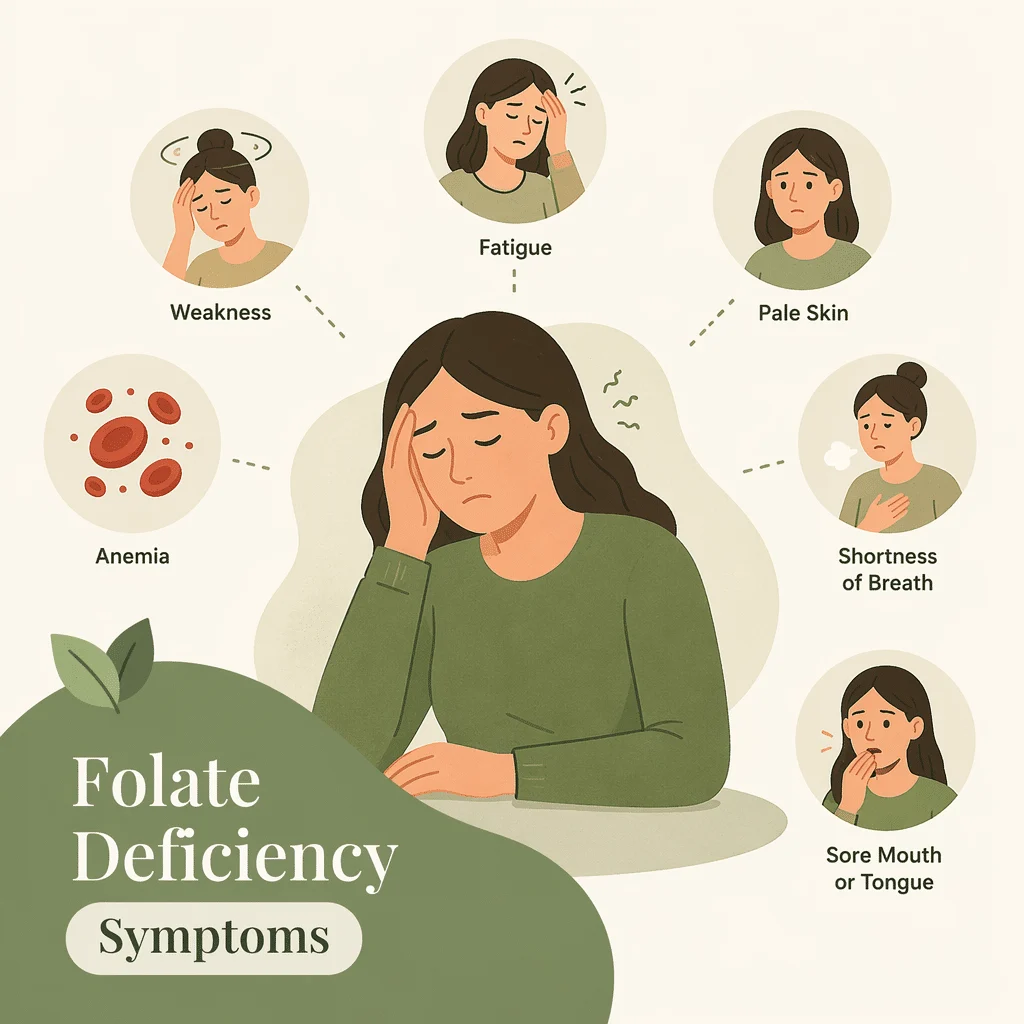
Simptomele deficienței de folat sunt ușor de trecut cu vederea, deoarece apar treptat și seamănă cu o oboseală obișnuită. Folatul este vitamina B9, nutrientul de care corpul tău are nevoie pentru a construi ADN și a produce globule roșii; când nivelul scade, țesuturile care se reînnoiesc cel mai rapid sunt primele afectate. Înainte să iei un supliment de acid folic, există un lucru esențial pe care trebuie să-l știi. Deficiența de folat și deficiența de vitamina B12 arată aproape identic pe o hemogramă, iar tratarea celei greșite poate permite instalarea silențioasă a unor leziuni nervoase permanente.
În acest articol vei afla ce face folatul în organism, ce simptome sugerează un deficit, de ce vitamina B12 trebuie verificată mai întâi, ce cauze merită investigate, ce recomandă autoritățile de sănătate publică din SUA înainte de sarcină, cum a schimbat fortifierea alimentelor tabloul și ce simptome necesită o evaluare medicală, nu un supliment.
Ce este folatul și ce face
Folatul este vitamina B9, o vitamină hidrosolubilă care se găsește în mod natural în legumele cu frunze verzi, fasole, citrice, ficat și produse din cereale îmbogățite. Acidul folic este forma sintetică folosită în suplimente și adăugată în făină, pâine, paste și cereale pentru micul dejun. Organismul le transformă pe ambele în formele active pe care le utilizează.
Rolul principal al folatului este de a furniza blocurile chimice necesare pentru sinteza ADN-ului. Orice celulă care se divide trebuie mai întâi să-și copieze ADN-ul, astfel că folatul este esențial acolo unde celulele se reînnoiesc rapid: măduva osoasă, mucoasa gurii și a intestinului, și fătul în dezvoltare.
Măduva osoasă resimte cel mai devreme efectele. Fără suficient folat, globulele roșii aflate în formare nu pot finaliza copierea ADN-ului, astfel că ele continuă să crească în timp ce nucleii rămân în urmă. Măduva eliberează mai puține globule roșii decât în mod normal, iar cele care ajung în sânge sunt anormal de mari. Pe o hemoleucogramă completă aceasta se manifestă ca anemie cu un volum eritrocitar mediu crescut, sau MCV crescut. Medicii numesc acest tablou anemie megaloblastică.
Simptomele deficienței de folat și de ce o deficiență ușoară trece neobservată
Majoritatea simptomelor pe care le observă oamenii țin de anemie, nu de lipsa vitaminei în sine. Simptomele se instalează treptat, în săptămâni sau luni, așa că sunt adesea puse pe seama stresului, somnului prost sau îmbătrânirii.
- Oboseală care nu dispare după odihnă
- Dificultăți de respirație la efort, cum ar fi urcatul scărilor sau căratul cumpărăturilor
- Paloare, cel mai vizibilă la nivelul gingiilor, al patului unghial și al interiorului pleoapei inferioare
- Afte bucale și o limbă dureroasă, netedă și roșie, cunoscută sub numele de glosită
- Iritabilitate, dispoziție scăzută și dificultăți de concentrare
- Palpitații sau bătăi rapide ale inimii, odată ce anemia este mai avansată
Două lucruri merită spuse clar. Deficitul ușor de folat este adesea silențios: valorile pot scădea sub normal fără niciun simptom, iar descoperirea apare frecvent la un test efectuat dintr-un alt motiv. Energia normală nu îl exclude; oboseala nu îl confirmă.
Al doilea lucru este că niciunul dintre aceste simptome nu este specific deficitului de folat. Feritină scăzută, bolile tiroidiene, infecțiile cronice și alte forme de anemie toate provoacă oboseală, dificultăți de respirație și paloare. O listă de simptome orientează spre un test de sânge. Nu îl înlocuiește niciodată.
De ce trebuie verificată vitamina B12 înainte de tratarea deficitului de folat
Acesta este cel mai important lucru de pe această pagină.
Deficiența de folat și deficiența de vitamina B12 produc același tablou la hemogramă. Ambele cauzează anemie megaloblastică, cu globule roșii mari și un VEM crescut. Privind doar hemograma, nimeni nu le poate diferenția. Cele două vitamine funcționează în pereche în același lanț metabolic, astfel că lipsa oricăreia dintre ele blochează producția de globule roșii în același mod.
Aceasta este partea periculoasă. Administrarea de acid folic unei persoane a cărei problemă reală este deficiența de vitamina B12 poate corecta anemia. Numărul de celule sanguine se îmbunătățește, oboseala dispare și persoana se simte mai bine. Între timp, leziunile neurologice cauzate de deficiența de vitamina B12 continuă nestingherite și pot deveni permanente. Aceste leziuni se manifestă prin amorțeală și furnicături la picioare și mâini, nesiguranță la mers și probleme de memorie sau de gândire. Singurul rezultat care ar fi tras un semnal de alarmă a fost, practic, neutralizat.
De aceea, vitamina B12 este măsurată împreună cu folatul ori de câte ori se descoperă o anemie megaloblastică, și de aceea ordinea contează: trebuie stabilit care vitamină lipsește înainte de a se suplimenta orice. Tocmai de aceea nimeni nu ar trebui să se automedicamenteze cu acid folic din farmacie doar pe baza unei liste de simptome. Simptomele se suprapun aproape complet, suplimentul este ieftin și se vinde fără rețetă, iar prejudiciul este silențios pe tot parcursul producerii lui.
Dacă iei deja un supliment care conține acid folic și tot te simți rău, menționează acest lucru la consultație. Un rezultat normal sau crescut al folatului la cineva care ia suplimente nu înseamnă că totul este în regulă, iar Rezultatele B12 trebuie citite și în acest context. Simptomele neurologice în special, cum ar fi un deget de la picior persistent amorțit, orientează departe de folat și spre vitamina B12 scăzută, și trebuie evaluate înainte de a începe orice supliment.
Cauzele care merită investigate
Organismul stochează puțin folat, astfel că nivelurile pot scădea în câteva săptămâni de la un aport redus, iar cifra în sine îți spune puțin. Ceea ce contează este cauza din spatele ei, iar cauzele se împart în patru grupe.
Alimentația și alcoolul
O dietă săracă în legume cu frunze verzi, leguminoase și cereale fortificate este cea mai frecventă cauză la nivel mondial. Folatul este și fragil: fierberea îndelungată și lumina îl distrug, astfel că legumele fierte excesiv furnizează mult mai puțin decât ar sugera ingredientul crud. Consumul excesiv de alcool este un factor major, deoarece alcoolul interferează cu absorbția folatului și cu modul în care organismul îl procesează.
Probleme de absorbție
Folatul este absorbit în intestinul subțire superior, astfel că orice afecțiune care deteriorează această porțiune a intestinului reduce absorbția. Boala celiacă este exemplul clasic și rămâne adesea nediagnosticată ani de zile. Boala Crohn și alte boli inflamatorii intestinale produc același efect, iar chirurgia bariatrică reduce permanent atât aportul, cât și suprafața de absorbție.
Necesar crescut
Sarcina și alăptarea cresc semnificativ necesarul, la fel ca orice situație care accelerează înnoirea globulelor roșii, cum ar fi hemoliza, în care globulele roșii sunt distruse mai repede decât le poate înlocui măduva osoasă. Persoanele aflate la dializă pierd folat în timpul tratamentului și sunt monitorizate în acest sens.
Medicamente care interferează cu folatul
Această categorie este ușor de trecut cu vederea. Mai multe medicamente utilizate pe scară largă blochează metabolismul folatului sau reduc absorbția acestuia:
- Metotrexatul, utilizat pentru artrita reumatoidă, psoriazis și unele tipuri de cancer, care acționează prin blocarea unei enzime implicate în metabolismul folatului
- Sulfasalazina, utilizată în bolile inflamatorii intestinale și artrita inflamatorie
- Trimetoprimul, inclusiv combinația trimetoprim-sulfametoxazol
- Fenitoina și alte medicamente antiepileptice, inclusiv carbamazepina și valproatul
- Consumul cronic excesiv de alcool, care acționează ca un efect de tip medicamentos pe lângă cel alimentar
Dacă iei vreunul dintre acestea, este o informație pentru medicul tău prescriptor, nu un motiv de acțiune. Nu opri și nu reduce niciodată metotrexatul, un antiepileptic sau orice alt medicament prescris din cauza unui rezultat al folaților. Aceste interacțiuni sunt bine cunoscute și sunt gestionate în mod deliberat.
Folatul în sarcină și defectele de tub neural
Sarcina este singurul context în care o cantitate specifică își are locul într-un articol ca acesta, deoarece este o recomandare de sănătate publică la nivel populațional, nu un tratament.
Tubul neural devine creierul și măduva spinării și se închide în primele câteva săptămâni după concepție, de obicei înainte ca o persoană să știe că este însărcinată. Aproximativ jumătate din sarcinile din Statele Unite sunt neplanificate, astfel că așteptarea unui test pozitiv este prea târziu.
Din acest motiv, Centrele pentru Controlul și Prevenirea Bolilor recomandă ca toate femeile care ar putea rămâne însărcinate să ia 400 de micrograme de acid folic în fiecare zi, începând înainte de concepție și continuând în primele luni de sarcină. US Preventive Services Task Force susține aceeași recomandare. Aceasta se aplică indiferent dacă sarcina este planificată sau nu.
Există două excepții importante. Persoanele care au avut o sarcină anterioară afectată de un defect de tub neural și persoanele care urmează anumite tratamente, cum ar fi unele antiepileptice, au nevoie de o cantitate diferită și mai mare, pe care doar medicul lor o poate stabili. Nimic din cele de față nu se aplică tratamentului unei deficiențe deja instalate, unde doza și durata sunt stabilite de un medic după ce vitamina B12 a fost verificată.
Fortifierea: ce s-a schimbat după 1998
În 1998, Statele Unite au început să impună adăugarea acidului folic în produsele din cereale îmbogățite, inclusiv făină, pâine, paste, mălai și orez. Este una dintre cele mai de succes politici nutriționale implementate vreodată: ratele defectelor de tub neural au scăzut semnificativ ulterior, iar zeci de țări au adoptat de atunci fortifierea obligatorie a unui aliment de bază.
Fortifierea are o consecință mai puțin vizibilă. Deficiența alimentară de folați a devenit cu adevărat rară în Statele Unite, astfel că atunci când apare astăzi un rezultat scăzut, este mai probabil să fie identificată o cauză specifică: malabsorbție, un medicament, consum excesiv de alcool sau un necesar crescut. Un rezultat scăzut este un semnal de investigat, nu pur și simplu de suplimentat.
Testarea MTHFR și metilfolatul, abordate cu calm
Dacă ai căutat informații despre folați online, ai întâlnit cu siguranță afirmația că o variantă a genei MTHFR înseamnă că nu poți procesa acidul folic și că trebuie să cumperi metilfolat în schimb. Această afirmație este peste tot și merită un răspuns calm.
MTHFR este o genă care codifică o enzimă din calea metabolică a folatului. Variantele comune, în special C677T, sunt cu adevărat frecvente: mai mulți oameni din Statele Unite poartă cel puțin o copie decât nu poartă. A purta una este ceva obișnuit, nu un diagnostic.
CDC afirmă că persoanele cu o variantă MTHFR pot procesa toate tipurile de folat, inclusiv acidul folic, și că cantitatea de acid folic consumată contează mai mult pentru nivelul de folat din sânge decât genotipul MTHFR. Testarea de rutină pentru MTHFR nu este recomandată de principalele organisme de genetică și de laborator în acest scop, iar variantele comune nu justifică o suplimentare specială la majoritatea oamenilor. Acidul folic rămâne, de asemenea, singura formă cu dovezi directe din studii clinice în spatele recomandării privind defectele de tub neural.
Nimic din toate acestea nu face marketingul malicios sau metilfolatul dăunător. Înseamnă că testul schimbă rareori ce ar trebui să facă cineva și că a plăti mai mult pentru o formă diferită pe baza unui rezultat genetic nu este susținut de dovezi.
Ce va face medicul tău în continuare
Confirmarea deficienței este partea simplă, iar testul de sânge pentru folat în sine este tratat separat în ghidul nostru dedicat testul de sânge pentru acid folic, inclusiv diferența dintre folatul seric și folatul eritrocitar. Aici ne concentrăm pe ce se întâmplă în jurul acestui rezultat.
Așteaptă-te la trei lucruri. Vitamina B12 va fi verificată în același timp. Hemograma va fi analizată pentru anemie și dimensiunea globulelor roșii. Și medicul tău va căuta o cauză: un istoric alimentar și de consum de alcool, o revizuire completă a medicamentelor și adesea serologie pentru boala celiacă cum ar fi un test tTG-IgA. Analizele pentru fier sunt adesea adăugate, deoarece deficiențele apar împreună. Homocisteină este uneori măsurată când tabloul clinic este neclar, iar un rezultat precum globulină scăzută poate oferi informații suplimentare despre nutriție și absorbția intestinală.
Odată ce cauza este cunoscută, tratarea deficienței de folat este simplă. Ce alege un medic și pentru cât timp depinde de cauză, de rezultatul vitaminei B12 și de dacă sarcina este un factor de luat în considerare.
| Situație | Ce înseamnă de obicei | Ce să faci |
|---|---|---|
| Folat scăzut, vitamina B12 normală | O deficiență reală de folat, de obicei de origine alimentară, de absorbție sau legată de medicamente | Mergi la medic pentru a identifica cauza; tratamentul urmează din aceasta |
| Folat scăzut, vitamina B12 scăzută sau la limită | Ambele vitamine pot fi scăzute, iar deficiența de B12 trebuie și ea tratată | Nu începe acid folic singur; această combinație necesită evaluare prealabilă |
| Folat normal în timp ce iei suplimente, simptomele continuă | Suplimentul poate normaliza valoarea în timp ce altceva cauzează simptomele | Spune-i medicului tău ce iei și de cât timp; B12 și fierul merită verificate |
| Planifici o sarcină | Statusul folatului contează înainte de concepție, nu după un test pozitiv | Urmează recomandarea de sănătate publică de mai sus la o consultație preconceptuală |
| Iei metotrexat, sulfasalazină sau un antiepileptic | Medicamentul interferează cu folatul; acest lucru este așteptat și gestionat | Nu schimba niciodată doza singur; întreabă cum este monitorizat folatul tău |
Semne de alarmă: consultă un medic înainte de a lua orice
Unele simptome nu sunt deloc simptome de deficit de folat, iar a apela la acid folic în aceste situații este exact ceea ce acest articol există pentru a preveni.
Solicită o evaluare medicală promptă și nu începe un supliment de acid folic înainte, dacă ai:
- Amorțeală, furnicături sau senzație de arsură în mâini sau picioare
- Instabilitate la mers sau o schimbare în felul în care mergi
- Probleme noi de memorie, confuzie sau o schimbare marcată în gândire
- Dificultăți de respirație în repaus, dureri în piept sau leșin
- Limbă dureroasă însoțită de pierdere în greutate și diaree persistentă
- Sarcină sau planuri pentru una, după o sarcină anterioară afectată de un defect de tub neural
Primele trei indică mai degrabă deficiența de vitamina B12 decât de folat, iar momentul apariției contează. Durerea în piept, leșinul sau dificultățile de respirație în repaus necesită îngrijire medicală în aceeași zi.
Cele mai recente progrese științifice în testarea folatului
Cercetările publicate după 2023 au clarificat mai multe aspecte menționate mai sus. Fiecare studiu de mai jos este listat în surse.
O analiză din 2024 publicată în Food and Nutrition Bulletin, coordonată de Joshua W. Miller, a reexaminat exact acest risc. Ce s-a descoperit: dovezile clinice și epidemiologice arată că un aport ridicat de acid folic combinat cu un nivel scăzut de vitamina B12 este asociat cu scoruri mai slabe la testele cognitive și cu markeri care sugerează că deficitul de B12 se agravează, nu doar că este mascat. Ce înseamnă asta pentru tine: problema mascării este reală și astăzi, și de aceea medicul tău dorește un rezultat al vitaminei B12 înainte de a trata deficitul de folat.
O analiză din 2023 realizată de Vijaya Kancherla în Child's Nervous System a sintetizat datele globale privind prevenirea defectelor de tub neural. Ce s-a descoperit: insuficiența de folat la mamă înainte și în primele săptămâni de sarcină este cel mai frecvent și cel mai prevenibil factor de risc pentru defectele de tub neural, iar tubul neural se formează în aproximativ 28 de zile de la concepție, înainte ca majoritatea femeilor să știe că sunt însărcinate. Ce înseamnă asta pentru tine: tocmai de aceea recomandarea se adresează tuturor femeilor care ar putea rămâne însărcinate.
O analiză bazată pe dovezi din 2024, publicată în Nutrients și coordonată de Maria de Lourdes Samaniego-Vaesken, a comparat acidul folic cu 5-metiltetrahidrofolatul, comercializat sub numele de metilfolat. Ce s-a descoperit: acidul folic are un rol bine stabilit în prevenirea defectelor de tub neural, în timp ce studiile clinice care să demonstreze eficacitatea, momentul optim de administrare și siguranța metilfolatului în același scop lipsesc în continuare. Ce înseamnă asta pentru tine: metilfolatul nu este o alternativă superioară dovedită, iar marketingul depășește cu mult dovezile existente.
Un studiu transversal din 2024 publicat în American Journal of the Medical Sciences, coordonat de Aakash V. Patel, a analizat persoane cu artrită reumatoidă care luau metotrexat împreună cu acid folic. Ce s-a descoperit: homocisteina crescută era semnificativ mai frecventă în acel grup față de persoanele cu artrită reumatoidă aflate pe alte tratamente, iar homocisteina este un indicator sensibil al statusului vitaminei B12. Ce înseamnă asta pentru tine: dacă urmezi tratament cu metotrexat, atât folatul, cât și vitamina B12 merită monitorizate, împreună cu echipa ta de reumatologie.
Un studiu prospectiv din 2025 publicat în Nutrients, coordonat de Maria Humiecka, a urmărit pacienți timp de zece ani după chirurgia bariatrică. Ce s-a descoperit: deficitul de acid folic, deficitul de vitamina B12 și deficitul de fier au devenit semnificativ mai frecvente pe parcursul perioadei de urmărire. Ce înseamnă asta pentru tine: după o gastrectomie sleeve sau un bypass gastric, monitorizarea nutrienților este un angajament pe termen lung, iar folatul face parte din aceasta.
Glosar de termeni cheie
| Termen | Definiție |
|---|---|
| Folat (vitamina B9) | O vitamină B hidrosolubilă, prezentă în mod natural în alimente, necesară pentru sinteza ADN-ului și formarea globulelor roșii |
| Acidul folic | Forma sintetică a vitaminei B9 folosită în suplimente și adăugată în produsele din cereale îmbogățite |
| Anemie megaloblastică | Anemie în care globulele roșii sunt anormal de mari din cauza opririi producției de ADN, de obicei din cauza unui nivel scăzut de folat sau vitamina B12 |
| VEM | Volumul corpuscular mediu, adică dimensiunea medie a unui globul roșu, raportat în cadrul hemogramei complete |
| Glosită | O limbă dureroasă, netedă și neobișnuit de roșie, semn recunoscut al deficitului de folat sau vitamina B12 |
| Defect de tub neural | Un defect congenital al creierului sau coloanei vertebrale, cum ar fi spina bifida sau anencefalia, care apare în primele săptămâni de sarcină |
| Fortifiere | Adăugarea unui nutrient într-un aliment de bază prin lege sau politică, ca în cazul acidului folic în produsele din cereale îmbogățite din SUA |
| Malabsorbție | Absorbție redusă a nutrienților la nivelul intestinului, de exemplu în boala celiacă sau după o intervenție chirurgicală bariatrică |
| MTHFR | O genă care codifică o enzimă din calea metabolică a folatului; variantele comune sunt obișnuite și rareori modifică tratamentul |
| Homocisteină | Un aminoacid care crește atunci când folatul sau vitamina B12 sunt scăzute, uneori măsurat când rezultatele sunt neclare |
Întrebări frecvente
Ar trebui să iau pur și simplu acid folic dacă am simptome de deficiență de folat?
Nu, și acesta este principalul mesaj de siguranță al acestui articol. Deficiența de folat și deficiența de vitamina B12 provoacă aceleași simptome și același tablou al hemogramei. Acidul folic luat de cineva care are de fapt o lipsă de vitamina B12 poate corecta anemia și îl poate face să se simtă mai bine, în timp ce leziunile nervoase cauzate de deficiența de B12 continuă și pot deveni permanente. Măsoară folatul și vitamina B12 împreună, apoi tratează ceea ce arată rezultatele, medicul tău fiind cel care decide ce este necesar.
Care este diferența dintre folat și acid folic?
Folatul este termenul general pentru vitamina B9, incluzând formele care se găsesc în mod natural în legumele cu frunze verzi, fasole, citrice și ficat. Acidul folic este forma sintetică folosită în suplimente și adăugată în alimentele fortifiate, cum ar fi făina, pâinea și cerealele de mic dejun. Acidul folic este mai stabil și mai bine absorbit, și este forma cu dovezi directe din studii clinice în spatele recomandării privind defectele de tub neural. Organismul le convertește pe ambele în formele active pe care le utilizează.
Am nevoie de un test genetic MTHFR?
În ceea ce privește folatul, aproape sigur că nu. Variantele comune ale genei MTHFR sunt răspândite, iar CDC afirmă că persoanele care le poartă pot procesa toate formele de folat, inclusiv acidul folic. Cantitatea de acid folic pe care o consumi influențează nivelul de folat din sânge mai mult decât genotipul tău MTHFR. Principalele organisme de genetică nu recomandă testarea de rutină MTHFR în acest scop. Dacă un membru al familiei a fost informat despre o afecțiune rară legată de MTHFR, aceasta este o situație diferită și necesită consiliere genetică.
Poate un nivel scăzut de folat să cauzeze amorțeală sau furnicături în mâini și picioare?
Amorțeala, furnicăturile și instabilitatea la mers sunt mult mai caracteristice deficienței de vitamina B12 decât deficienței de folat și sunt exact simptomele care fac autotratamentul cu acid folic riscant. Dacă le ai, merită să fie evaluate înainte de a începe orice supliment, nu după. Alte cauze, precum diabetul, compresia nervoasă și bolile tiroidiene, merită și ele excluse, așa că descrie-i medicului tău tiparul și momentul apariției simptomelor.
Poți avea un nivel scăzut de folat fără anemie?
Da, și este frecvent. Folatul scade în sânge înainte ca măduva osoasă să întâmpine probleme, astfel că un rezultat scăzut poate apărea în timp ce hemograma este încă complet normală. Mulți oameni cu folat ușor scăzut nu au niciun simptom, iar descoperirea iese la iveală în urma unui test efectuat pentru altceva. Acesta nu este un motiv să ignori situația; este un motiv să cauți cauza cu calm, nu să începi suplimentele în grabă.
Este complicat să tratezi deficiența de folat?
De obicei nu, odată ce au fost răspuns la două întrebări: care este rezultatul vitaminei B12 și ce a cauzat scăderea folatului. Când cauza este alimentară, soluția este adesea simplă. Când este vorba de boala celiacă, boală inflamatorie intestinală, chirurgie bariatrică sau un medicament precum metotrexatul, situația de bază este cea care trebuie cu adevărat gestionată, iar folatul este tratat ca parte a acesteia. Hemogramele sunt de obicei reverificați pentru a confirma răspunsul la tratament.
Surse
- Centrele pentru Controlul și Prevenirea Bolilor. Despre acidul folic
- Centrele pentru Controlul și Prevenirea Bolilor. Varianta genei MTHFR și informații despre acidul folic
- Institutele Naționale de Sănătate, Oficiul pentru Suplimente Alimentare. Folat: Fișă informativă pentru profesioniștii din sănătate
- MedlinePlus, Biblioteca Națională de Medicină a SUA. Deficiența de folat
- Grupul de Lucru pentru Servicii Preventive din SUA. Suplimentarea cu acid folic pentru prevenirea defectelor de tub neural: Medicație preventivă
- Miller JW, Smith A, Troen AM, Mason JB, Jacques PF, Selhub J. Excesul de acid folic și deficiența de vitamina B12: implicații clinice? Food and Nutrition Bulletin. 2024. https://doi.org/10.1177/03795721241229503
- Kancherla V. Defectele de tub neural: o analiză a prevalenței globale, cauzelor și prevenției primare. Child’s Nervous System. 2023. https://doi.org/10.1007/s00381-023-05910-7
- Samaniego-Vaesken ML, Morais-Moreno C, Carretero-Krug A, Puga AM, Montero-Bravo AM, Partearroyo T, Varela-Moreiras G. Suplimentarea cu acid folic sau 5-metiltetrahidrofolat și prevenirea defectelor de tub neural: o analiză narativă bazată pe dovezi. Nutrients. 2024. https://doi.org/10.3390/nu16183154
- Patel AV, Morgan SL, Green R, Danila MI, Merriman TR, Wanzeck K, Ahmed H, Gaffo AL. Statusul vitaminei B12 și hiperhomocisteinemia la pacienții cu artrită reumatoidă tratați cu metotrexat și acid folic. The American Journal of the Medical Sciences. 2024. https://doi.org/10.1016/j.amjms.2024.03.020
- Humiecka M, Sawicka A, Kedzierska K, Binda A, Jaworski P, Tarnowski W, Jankowski P. Prevalența deficiențelor nutriționale după chirurgia bariatrică: observație prospectivă pe termen lung. Nutrients. 2025. https://doi.org/10.3390/nu17162599
Lectură suplimentară
- Acidul folic (folat sau vitamina B9): înțelege-ți analizele de sânge
- Niveluri ridicate de folat: cauze, simptome și riscuri
- Rezultatele analizei de sânge pentru vitamina B12 explicate
- Vitamina B12: beneficii, surse și valori normale
- Intoleranța la gluten și boala celiacă
Înțelege-ți rezultatele analizelor cu AI DiagMe
Un rezultat al folatului rareori stă singur. Se citește alături de vitamina B12 și alături de valorile globulelor roșii din hemoleucograma ta completă, care include și MCV. AI DiagMe te ajută să înțelegi ce înseamnă acele valori și ce întrebări să aduci la consultație. Nu diagnostichează deficitul de folat și nu înlocuiește medicul tău.
Obține interpretarea rezultatelor în câteva minute