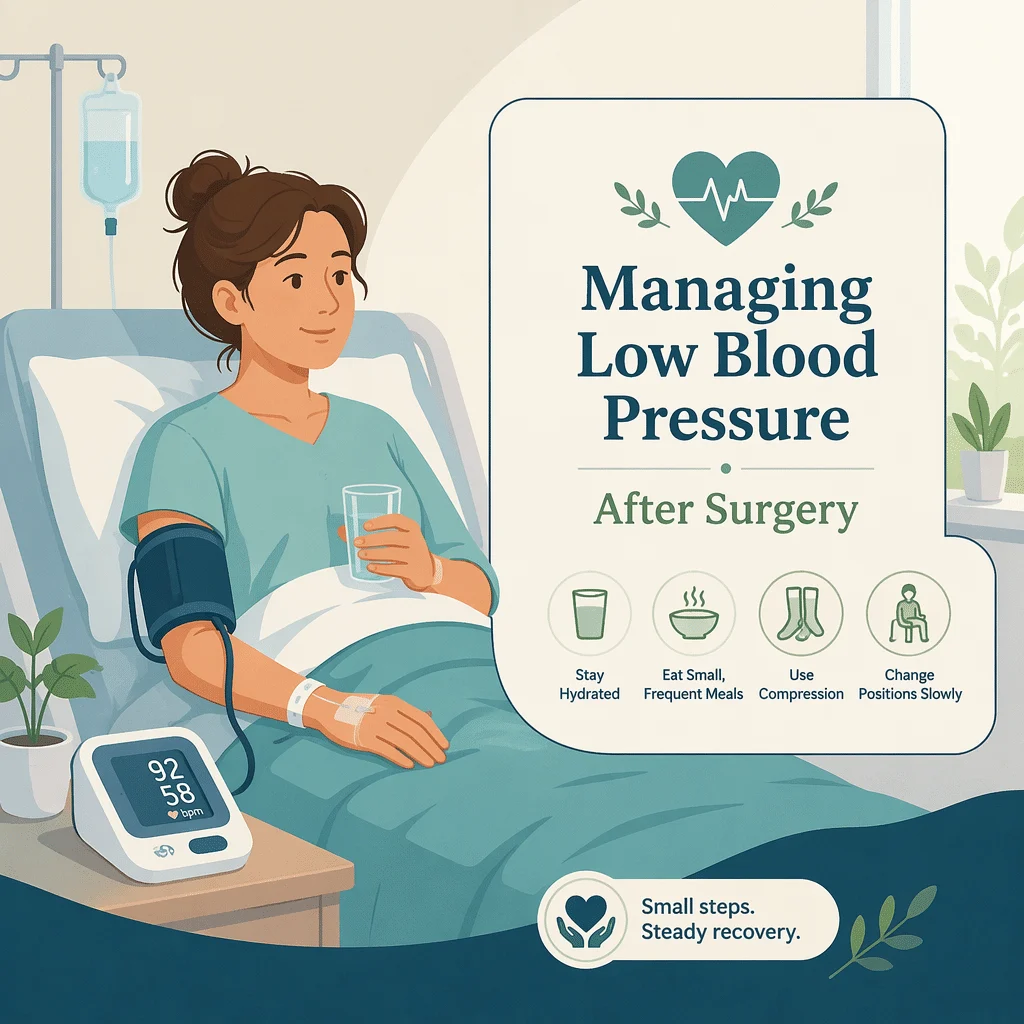
Tensiunea arterială scăzută după operație este unul dintre lucrurile pe care echipa de recuperare le urmărește cel mai atent, și în majoritatea cazurilor este o parte de scurtă durată, așteptată, a trezirii dintr-o intervenție chirurgicală. Anestezia relaxează vasele de sânge, lichidele din corp se redistribuie, iar medicamentele pentru durere adaugă și ele un efect propriu, astfel că o valoare sub nivelul tău obișnuit timp de câteva ore nu este, de regulă, un motiv de îngrijorare. Ceea ce contează este tendința: cât de mult a scăzut, cum te simți și dacă revine la normal. În acest articol vei afla ce înseamnă o tensiune scăzută, ce valori și simptome sunt așteptate în fiecare zi de recuperare, cauzele pe care echipa chirurgicală le caută, testele de laborator folosite pentru a le identifica și semnele de alarmă care necesită ajutor urgent, nu doar supraveghere.
Ce înseamnă tensiunea arterială scăzută după operație
Tensiunea arterială este exprimată prin două cifre: presiunea sistolică, când inima se contractă, și presiunea diastolică, când se relaxează. MedlinePlus descrie hipotensiunea ca o valoare de aproximativ 90/60 mm Hg sau mai mică, precizând totodată că o valoare scăzută devine o problemă doar atunci când provoacă simptome precum amețeli sau leșin. Acest ultim aspect este esențial pentru a-ți înțelege propriile valori după o intervenție chirurgicală.
În sala de operații și în unitatea de recuperare, medicii urmăresc de obicei un al treilea număr: presiunea arterială medie, sau PAM, adică presiunea medie pe parcursul unui ciclu cardiac complet. O PAM de 65 mm Hg sau mai mare este ținta pe care majoritatea echipelor o urmăresc în timpul și imediat după o intervenție chirurgicală majoră. O singură valoare sub intervalul tău obișnuit este mult mai puțin relevantă decât o tendință, de aceea asistentele înregistrează valorile la câteva minute interval la început, apoi le espaciază pe măsură ce starea ta se stabilizează.
Valorile tale de bază contează mai mult decât un număr din manual
Cineva care are în mod normal 100/65 mm Hg se poate simți perfect bine la 95/60 după o operație. Cineva tratat pentru hipertensiune, cu valori obișnuite de 150/90, se poate simți amețit și rău la 110/70, chiar dacă acea valoare pare liniștitoare pe hârtie. Echipele compară, prin urmare, valorile tale postoperatorii cu valorile de referință înregistrate înainte de operație, iar o scădere de aproximativ o cincime față de acea valoare de bază atrage atenția chiar dacă numărul absolut pare acceptabil. Ghidul nostru explică analizele de sânge efectuate înainte de operație, care ajută la stabilirea acestei imagini de referință.
Valori așteptate față de valori îngrijorătoare, zi de zi
Același număr poate fi normal în după-amiaza operației și îngrijorător o săptămână mai târziu. Acest tabel prezintă tiparul general descris de majoritatea unităților de recuperare. Nu înlocuiește instrucțiunile de externare pe care ți le-a dat echipa ta, care au întotdeauna prioritate.
| Timp după operație | De obicei așteptat | Anunță echipa imediat |
|---|---|---|
| Primele câteva ore, unitatea de recuperare | O valoare ușor sub nivelul tău obișnuit, în timp ce ești treaz, cald, fără transpirație și urinezi normal | Confuzie, durere în piept, piele rece și umedă sau o valoare care continuă să scadă la fiecare măsurătoare |
| Primele 24 până la 48 de ore, secție | Amețeală ușoară și trecătoare la primele ori când te ridici în șezut sau în picioare, care dispare în unul-două minute | Leșin, cădere, dificultăți de respirație în repaus sau urină foarte puțină timp de mai multe ore |
| Zilele 2 până la 5 | Amețeală ușoară la ridicarea în picioare, care dispare pe măsură ce bei mai multe lichide și te miști mai mult | Amețeală însoțită de febră, o plagă caldă sau cu secreții, palpitații sau scaune negre și moi |
| Primele două săptămâni acasă | Valorile revin spre intervalul pe care îl aveai înainte de operație | Leșin repetat sau aproape de leșin, valori care rămân mult sub nivelul tău obișnuit sau simptome noi după reluarea unui medicament |
Ce cauzează tensiunea arterială scăzută după operație
Hipotensiunea postoperatorie este rareori o problemă unică. De obicei, mai multe efecte mici se cumulează, motiv pentru care echipa medicală urmărește la fel de atent momentul apariției, nu doar cifra în sine.
Anestezia și dilatarea vaselor de sânge
Anestezicele generale și regionale relaxează musculatura pereților arteriali. Vasele se dilată, același volum de sânge umple un spațiu mai mare și tensiunea scade. Acest efect dispare în câteva ore, pe măsură ce medicamentele se elimină din organism, și este cel mai frecvent motiv pentru o valoare scăzută în sala de trezire.
Pierderea de sânge și volumul circulator scăzut
Intervenția chirurgicală reduce volumul de lichid din circulație prin sângerare, drenuri, evaporare dintr-un câmp operator deschis și orele de post de dinainte. Un volum mai mic înseamnă o tensiune mai mică. Dacă sângerarea continuă după operație, tensiunea scade în timp ce ritmul cardiac crește pentru a compensa, iar aceasta este situația pe care echipele medicale vor cel mai mult să o depisteze din timp. Articolul nostru acoperă simptomele și cauzele anemiei, ceea ce produce în cele din urmă o pierdere semnificativă de sânge.
Analgezicele, epiduralele și blocurile spinale
Analgezicele opioide scad tensiunea arterială în două moduri: dilată vasele și reduc răspunsul de stres al organismului. Anestezia epidurală și spinală blochează nervii care mențin vasele din partea inferioară a corpului contractate, astfel că tensiunea poate scădea de fiecare dată când blocul este reîncărcat; ridicarea în picioare în timp ce blocul este activ este un moment frecvent pentru o scădere bruscă.
Infecții, probleme cardiace și cauze suprarenale
Începând aproximativ din a doua zi, o tensiune în scădere ridică suspiciunea de infecție. În sepsis, vasele se dilată și devin permeabile, iar tensiunea scade în ciuda unui puls rapid și a febrei. Cauzele cardiace sunt mai puțin frecvente, dar mai urgente: o tulburare de ritm, o pompă slăbită sau leziuni ale mușchiului cardiac în jurul momentului intervenției. Rareori, glandele suprarenale nu pot produce suficient cortizol pentru a menține tensiunea arterială, situație suspectată atunci când tensiunea nu răspunde la administrarea de lichide. Echipa noastră explică cauzele cortizolului scăzut dimineața, testul folosit pentru a investiga această posibilitate.
Medicamentul tău pentru tensiune arterială reluat prea devreme
Mulți pacienți ajung la operație luând deja tratament pentru hipertensiune. Aceste medicamente sunt adesea suspendate în jurul intervenției și reluate odată ce mănânci, bei și ești stabil. Reluate prea devreme, într-o circulație care încă se reechilibrează, pot provoca o scădere bruscă. De aceea, fișa ta de medicație este verificată în raport cu valorile tensionale, iar decizia aparține echipei medicale. Biblioteca noastră acoperă cauzele și tratamentul tensiunii arteriale ridicate mai în detaliu.
| Cauza probabilă | Momentul apariției simptomelor | Ce verifică de obicei echipa medicală |
|---|---|---|
| Anestezia care dilată vasele | De la câteva minute până la câteva ore după operație | Măsurători repetate, schimbarea poziției, un test de umplere volemică, răspunsul la o doză mică de medicament vasopresor |
| Pierderea de sânge și volumul scăzut | Primele ore până la aproximativ 48 de ore | Hemoglobina și hematocritul, pierderile prin plăgi și drenuri, frecvența cardiacă, diureza |
| Analgezice opioide | Ori de câte ori se administrează sau se crește o doză | Momentul administrării față de valori, frecvența respiratorie, gradul de somnolență |
| Anestezie epidurală sau spinală | Pe durata blocului, de obicei 12 până la 48 de ore | Nivelul până la care s-a extins blocul, lichidele administrate, valorile când te ridici în șezut |
| Infecție sau sepsis | De obicei din ziua a 2-a | Temperatură, număr de leucocite, CRP, lactat, hemoculturi și culturi din plagă |
| Problemă de ritm cardiac sau de mușchi cardiac | Oricând, cel mai frecvent în zilele 1–3 | ECG, troponină, ecocardiogramă dacă este necesar |
| Insuficiență suprarenală | Neobișnuit; ore până la zile, de obicei când lichidele nu ajută | Cortizol, sodiu și potasiu |
| Medicamentul obișnuit pentru tensiune arterială a fost reluat | În câteva ore de la prima doză reluată | Fișa de medicație comparată cu valorile, măsurători în ortostatism și clinostatism |
Hipotensiunea ortostatică: amețeala când te ridici în picioare
Majoritatea persoanelor care se recuperează acasă nu văd o valoare periculos de scăzută pe un monitor. Simt câteva secunde de amețeală cenușie, ca o încetoșare, exact în momentul în care se ridică din pat. Aceasta este hipotensiunea ortostatică, numită uneori hipotensiune posturală: când te ridici în picioare, gravitația atrage aproximativ jumătate de litru de sânge spre picioare, iar reflexul care în mod normal contractă vasele de sânge este mai lent decât de obicei după o intervenție chirurgicală.
Trei lucruri fac ca acel reflex să fie lent în primele săptămâni: ai mai puțin lichid circulant decât în mod normal, ai stat culcat mult mai mult decât de obicei, iar medicamentele pentru durere sau somn îi diminuează răspunsul. Deshidratarea înrăutățește totul, iar acest ghid explică legătura dintre deshidratare și tensiunea arterială.
Cum te ridici în siguranță în timpul recuperării
- Stai pe marginea patului și numără încet până la treizeci înainte de a te ridica.
- Mișcă gleznele și contractă mușchii gambei de câteva ori înainte de a te ridica.
- Ridică-te ținându-te de ceva solid și așteaptă un moment înainte de a merge.
- Ai pe cineva lângă tine la primele câteva încercări după ce ajungi acasă.
- Hidratează-te conform planului dat de echipa medicală, mai ales pe vreme caldă.
- Ridică-te încet după un duș fierbinte sau o masă copioasă, deoarece ambele dilată vasele de sânge.
Dacă amețeala te face să te încetoșezi, să te clatini sau să te așezi înapoi de fiecare dată, anunță echipa medicală. Există risc de cădere și poate exista o cauză tratabilă.
Analize de laborator folosite pentru a găsi cauza
Monitorul îi arată echipei că tensiunea este scăzută. Analizele de sânge le spun de ce. Majoritatea acestor teste sunt recoltate împreună, dintr-o singură probă.
- Hemoglobina și hematocritul arată dacă pierderea de sânge explică scăderea tensiunii și dacă trebuie luată în considerare o transfuzie. Echipa noastră detaliază cum să citești o hemogramă completă, care le conține pe ambele.
- Sodiul, potasiul și ceilalți electroliți arată cum s-au redistribuit lichidele și sărurile de la operație încoace. O pagină separată explică rezultatele unei ionograme.
- Creatinina și ureea arată cum fac față rinichii, deoarece aceștia sunt primii afectați când tensiunea rămâne scăzută. Descriem de asemenea testele din panelul de funcție renală, iar un alt articol explică semnificația raportului uree/creatinină, care crește adesea când volumul circulator este scăzut.
- Lactatul crește atunci când țesuturile nu primesc suficient oxigen, ajutând astfel echipa să evalueze cât de gravă este cu adevărat o tensiune scăzută.
- Numărul de globule albe și proteina C reactivă indică o posibilă infecție. Biblioteca noastră explică cum să citești un rezultat CRP, iar un alt articol acoperă cauzele neutrofilelor crescute.
- Cortizolul se măsoară atunci când se suspectează insuficiență suprarenală, de obicei pentru că lichidele și medicamentele nu au efectul așteptat.
- Troponina este verificată dacă inima este o posibilă cauză. O pagină dedicată explică rolul troponinei ca marker cardiac.
Când tensiunea arterială scăzută după operație reprezintă o urgență
Sună la serviciile de urgență sau mergi direct la camera de gardă dacă o valoare scăzută este însoțită de oricare dintre următoarele semne. National Heart, Lung, and Blood Institute recomandă să suni la 112 pentru semnele de șoc, care includ piele rece și transpirată, respirație rapidă, o nuanță albăstruie a pielii și un puls slab și rapid.
- Confuzie bruscă, somnolență din care ești greu de trezit sau vorbire neclară.
- Durere în piept, dificultăți severe de respirație sau bătăi ale inimii puternice și rapide.
- Leșin sau prăbușire când încerci să te ridici.
- Piele rece, palidă, cenușie sau umedă, mai ales însoțită de frisoane.
- Urină foarte puțină sau deloc timp de șase până la opt ore.
- O valoare care scade la fiecare măsurătoare în loc să se stabilizeze.
- Amețeală însoțită de febră, frisoane puternice sau o plagă care este fierbinte, umflată sau secretă.
- Sângerare abundentă din plagă, vărsături cu sânge sau scaune negre și gudronate.
Dacă amețeala este ușoară și dispare când te așezi, contactează echipa chirurgicală în aceeași zi, în loc să aștepți programarea planificată. Ei îți pot spune dacă simptomele corespund tipului de operație pe care ai avut-o.
Cum se tratează și de ce nu trebuie să îți ajustezi singur medicamentele
Tratamentul urmează cauza. Poziția culcată cu picioarele ridicate câștigă timp. Perfuzia intravenoasă reface circulația și este de obicei primul pas. Dacă lichidul singur nu este suficient, se poate administra printr-o perfuzie, într-un mediu monitorizat, un medicament care contractă vasele de sânge, numit vasopresor. Sângerarea poate necesita o transfuzie sau revenirea în sala de operație. Infecția necesită antibiotice și controlul sursei, iar o cauză cardiacă necesită tratament cardiac.
O regulă este mai importantă decât toate celelalte pentru cei care citesc aceste informații acasă: nu începe, nu opri, nu sări peste doze, nu înjumătăți și nu reiei niciun medicament pe cont propriu din cauza unei valori a tensiunii arteriale. Aceasta include tabletele obișnuite pentru hipertensiune, diureticul și medicamentul pentru durere. Decizia de a întrerupe, relua sau modifica un medicament după operație aparține echipei tale chirurgicale, de anestezie sau medicale, care evaluează împreună intervenția, rinichii, inima și celelalte medicamente ale tale. Aduce valorile măsurate și lista completă a medicamentelor la discuție și lasă-i pe ei să decidă.
Cele mai recente progrese științifice
Cercetările din 2023 încoace au rafinat modul în care echipele medicale gestionează tensiunea arterială în jurul unei intervenții chirurgicale. Nimic din acestea nu schimbă ce faci tu acasă, dar explică ce se întâmplă în jurul tău.
Întreruperea tabletelor pentru tensiune înainte de operație
Un studiu randomizat amplu, publicat în JAMA în 2024, care a inclus peste două mii de pacienți din patruzeci de spitale din Franța, a analizat inhibitorii sistemului renină-angiotensină, o clasă frecventă de medicamente pentru tensiunea arterială care include inhibitorii ECA și sartanii (ARB). Continuarea acestora până în ziua intervenției nu a cauzat mai multe complicații în ansamblu față de întreruperea lor cu două zile înainte, însă episoadele de tensiune scăzută în timpul operației au fost mai frecvente la cei care au continuat tratamentul. Ce înseamnă asta pentru tine: dacă echipa medicală îți oprește un medicament înainte de operație, este o decizie deliberată și calculată, nu un semn că ceva a mers prost.
Amețeala la ridicarea în picioare este frecventă și insuficient definită
O recenzie sistematică și meta-analiză publicată în 2023 a adunat douăzeci și unu de studii care acopereau mai mult de paisprezece mii de persoane care suferiseră o înlocuire de șold sau genunchi. Senzația de leșin sau amețeală la prima ridicare în picioare era frecventă, deși ratele raportate variau considerabil, deoarece cercetătorii nu conveniseră asupra unei definiții unice. Câteva dintre studii indicau controlul bun al durerii în timpul primei deplasări ca factor relevant, o constatare pe care autorii o consideră preliminară. Ce înseamnă asta pentru tine: senzația de leșin la prima ridicare în picioare după o intervenție chirurgicală articulară este descrisă de cercetare ca ceva obișnuit. Spune-o cu voce tare, în loc să treci peste ea.
Perfuziile care susțin tensiunea arterială variază mult de la un spital la altul
Un studiu observațional internațional publicat în 2025, care a acoperit mai mult de douăzeci și cinci de mii de pacienți din patruzeci și două de țări, a constatat că aproximativ patru din o sută de persoane au primit o perfuzie continuă de susținere a tensiunii arteriale după o intervenție chirurgicală non-cardiacă. Rata a variat de la zero la aproape unul din cinci, în funcție de spital, o diferență pe care caracteristicile pacienților nu o explicau. Cei care au primit o astfel de perfuzie au avut rezultate generale mai proaste, dar, deoarece acesta a fost un studiu observațional și nu un studiu clinic controlat, nu se poate demonstra că medicamentul a cauzat diferența; necesitatea unei astfel de perfuzii este mai degrabă un indicator al unei recuperări dificile. Ce înseamnă asta pentru tine: practicile variază și este rezonabil să întrebi de ce un anumit tip de suport este sau nu este utilizat.
Țintele personalizate de tensiune nu s-au dovedit încă superioare
Într-un studiu german din 2025 pe pacienți cu risc crescut supuși unor intervenții abdominale majore, stabilirea țintei de tensiune pe baza mediei nocturne individuale nu a redus leziunile renale, leziunile cardiace sau decesele în prima săptămână față de ținta standard folosită în îngrijirea de rutină. O analiză cumulată a zece studii randomizate, publicată în 2023, nu a găsit nici o creștere a deceselor atunci când s-a acceptat o tensiune ușor mai scăzută în timpul operației, în loc să fie crescută forțat. Ce înseamnă asta pentru tine: țintele cunoscute pe care echipa ta le folosește deja rezistă la testare, iar o valoare moderat scăzută pe monitor în timpul operației nu este, prin ea însăși, dovada că ceva a mers prost.
Glosar
| Termen | Definiție |
|---|---|
| Hipotensiune | Termenul medical pentru tensiunea arterială scăzută. De obicei descrie o valoare de aproximativ 90/60 mm Hg sau mai mică, dar contează cel mai mult atunci când provoacă simptome. |
| Presiunea arterială medie (PAM) | Presiunea medie din arterele tale pe parcursul unui bătăi complete ale inimii. Este valoarea urmărită cel mai îndeaproape de echipele de anestezie și terapie intensivă. |
| Hipotensiune ortostatică | O scădere a tensiunii arteriale care apare atunci când te ridici în picioare, provocând amețeală trecătoare sau vedere încetoșată. Se mai numește și hipotensiune ortostatică. |
| Hipovolemie | Prea puțin lichid care circulă în vasele de sânge, de obicei din cauza sângerării, postului, drenurilor sau pierderii de lichide. Un volum mai mic înseamnă o presiune mai mică. |
| Vasodilatație | Lărgirea vaselor de sânge. Aceeași cantitate de sânge umple un spațiu mai mare, astfel că presiunea din interior scade. |
| Vasopresor | Un medicament administrat prin perfuzie care contractă vasele de sânge pentru a crește tensiunea arterială. Este utilizat în medii monitorizate, cum ar fi unitățile de terapie postoperatorie. |
| Insuficiență suprarenală | O stare în care glandele suprarenale nu produc suficient cortizol, un hormon necesar pentru menținerea tensiunii arteriale în situații de stres, cum ar fi intervenția chirurgicală. |
| Lactat | O substanță care se acumulează în sânge atunci când țesuturile sunt lipsite de oxigen. Un nivel în creștere sugerează că tensiunea scăzută afectează organele. |
| Hematocrit | Proporția din sângele tău formată din globule roșii. Scade după o sângerare semnificativă și se interpretează împreună cu hemoglobina. |
Întrebări frecvente
Cât durează tensiunea arterială scăzută după operație?
Pentru majoritatea oamenilor, scăderea tensiunii cauzată de anestezie dispare în câteva ore, iar valorile revin aproape de normal în una până la trei zile. Amețeala la ridicarea în picioare durează adesea mai mult, ameliorându-se în una până la două săptămâni, pe măsură ce echilibrul hidric, activitatea și somnul revin la normal. Operațiile mai mari, spitalizările mai lungi și vârsta înaintată prelungesc toate acest interval. Ceea ce nu este normal este o valoare care continuă să scadă sau una care rămâne clar sub nivelul tău obișnuit timp de câteva săptămâni fără o explicație. Acest tipar merită o analiză a medicamentelor tale, a aportului de lichide și a analizelor de sânge, nu mai multă așteptare.
Ce înseamnă o tensiune arterială periculos de scăzută după operație?
Nu există o valoare limită unică, deoarece simptomele contează mai mult decât cifra în sine. O tensiune sistolică sub 90 mm Hg este, de obicei, pragul la care echipa medicală intervine, iar o presiune arterială medie sub 65 mm Hg este limita pe care majoritatea unităților de terapie intensivă o tratează. În practică, orice valoare însoțită de confuzie, durere în piept, leșin, piele rece și umedă sau o cantitate foarte mică de urină este considerată periculoasă indiferent de cifra afișată, iar orice valoare care continuă să scadă la fiecare măsurătoare este tratată ca urgență chiar dacă nu a depășit încă un prag.
De ce scade tensiunea arterială după operație?
De obicei, mai multe cauze acționează simultan. Medicamentele anestezice relaxează pereții arterelor, astfel încât sângele umple un spațiu mai larg. Postul, sângerarea, drenurile și evaporarea din câmpul operator lasă mai puțin lichid în circulație. Analgezicele opioide, anestezia epidurală sau rahianestezia adaugă și ele un efect de scădere a tensiunii. Mai târziu, în perioada de recuperare, o infecție, o problemă cardiacă sau reluarea medicamentelor tale obișnuite pentru tensiune pot deveni principalii factori declanșatori. De aceea, momentul în care apare scăderea tensiunii spune echipei medicale aproape la fel de multe ca valoarea în sine.
Este normală tensiunea arterială scăzută la două săptămâni după operație?
O amețeală ușoară la ridicarea în picioare la două săptămâni după o operație majoră este frecventă, mai ales dacă mănânci și bei mai puțin decât de obicei, te miști mai puțin sau încă iei medicamente pentru durere. O valoare care rămâne mult sub nivelul tău de dinaintea operației merită investigată, deoarece până atunci efectul anesteziei a dispărut de mult. Explicațiile obișnuite sunt aportul scăzut de lichide, recuperarea lentă după pierderea de sânge sau medicamentele pentru tensiune care nu mai sunt potrivite stării tale actuale. Toate trei trebuie evaluate de echipa medicală, nu ajustate de tine.
Poate tensiunea arterială scăzută după o intervenție chirurgicală să fie amenințătoare de viață?
Poate fi, de aceea este monitorizată atât de atent, dar marea majoritate a episoadelor sunt ușoare și se rezolvă cu schimbarea poziției, lichide și timp. Tensiunea devine periculoasă atunci când este suficient de scăzută, pentru suficient de mult timp, încât să priveze organele de oxigen — ceea ce se întâmplă în hemoragii severe, sepsis și șoc. Aceste situații se anunță cu mai mult decât un număr: gândire confuză, piele rece și umedă, dificultăți de respirație, puls accelerat și o scădere bruscă a cantității de urină. Recunoașterea timpurie a acestei combinații este cea care schimbă evoluția.
Afectează tensiunea arterială scăzută după operație adulții în vârstă în mod diferit?
Adulții în vârstă sunt mai susceptibili, din mai multe motive care se cumulează. Vasele de sânge sunt mai rigide și mai lente în a se contracta când te ridici în picioare, rinichii rețin sarea și apa mai puțin eficient, iar mulți pacienți vârstnici iau medicamente pentru tensiune, diuretice sau medicamente pentru prostată care scad și mai mult tensiunea. Consecințele sunt, de asemenea, mai grave, deoarece o căzătură la această vârstă poate însemna o fractură pe lângă o operație recentă. Schimbările lente ale poziției, atenția sporită la hidratare și revizuirea medicației împreună cu echipa medicală capătă o importanță mai mare.
Surse
- National Heart, Lung, and Blood Institute — Low Blood Pressure, National Institutes of Health https://www.nhlbi.nih.gov/health/low-blood-pressure
- MedlinePlus — Tensiune arterială scăzută (hipotensiune), Biblioteca Națională de Medicină a SUA https://medlineplus.gov/lowbloodpressure.html
- Cleveland Clinic — Tensiunea arterială scăzută (hipotensiunea) https://my.clevelandclinic.org/health/diseases/21156-low-blood-pressure-hypotension
- Legrand M, Falcone J, Cholley B, et al. — Continuarea vs întreruperea inhibitorilor sistemului renină-angiotensină înainte de intervenții chirurgicale majore non-cardiace: Studiul clinic randomizat Stop-or-Not — JAMA, 2024 https://pubmed.ncbi.nlm.nih.gov/39212270/
- de Campos TF, Vertzyas N, Wolden M, et al. — Evenimente de tip intoleranță ortostatică după artroplastia de șold și genunchi: O revizuire sistematică și meta-analiză — The Journal of Bone and Joint Surgery, 2023 https://pubmed.ncbi.nlm.nih.gov/36723468/
- Jammer I, Martin P, Wunsch H, et al. — Utilizarea vasopresoarelor după chirurgia non-cardiacă: un studiu observațional internațional — British Journal of Anaesthesia, 2025 https://pubmed.ncbi.nlm.nih.gov/40796492/
- Saugel B, Meidert AS, Brunkhorst FM, et al. — Managementul individualizat al tensiunii arteriale perioperatorii la pacienții supuși unei intervenții chirurgicale abdominale majore: Studiul clinic randomizat IMPROVE-multi — JAMA, 2025 https://pubmed.ncbi.nlm.nih.gov/41076588/
- D’Amico F, Fominskiy EV, Turi S, et al. — Hipotensiunea intraoperatorie și rezultatele postoperatorii: o meta-analiză a studiilor randomizate — British Journal of Anaesthesia, 2023 https://pubmed.ncbi.nlm.nih.gov/37739903/
Lectură suplimentară
- Panoul de markeri cardiaci: troponina, BNP și CK explicate
- Panou suprarenal: cortizol, ACTH, aldosteron și DHEA
- Panoul de studii ale fierului: feritină, fier seric și saturația transferinei
- Albumină scăzută: cauze, simptome și riscuri
- Nivelul hemoglobinei: ce înseamnă rezultatele analizelor tale de sânge
Înțelege-ți rezultatele analizelor cu AI DiagMe
După o operație, motivul din spatele unei valori scăzute este adesea scris în analizele tale de sânge, nu pe monitor. Hemoglobina și hematocritul arată cât sânge ai pierdut, sodiul și potasiul arată cum s-au redistribuit lichidele din corp, creatinina arată cum au reacționat rinichii la tensiunea scăzută, iar numărul de globule albe împreună cu CRP pot indica o infecție. AI DiagMe îți explică acele valori pe înțelesul tău, astfel încât să ajungi la consultul de control știind exact ce întrebări să pui. Te ajută să înțelegi rezultatele; nu pune un diagnostic și nu înlocuiește echipa ta chirurgicală.
Obține interpretarea rezultatelor în câteva minute