

























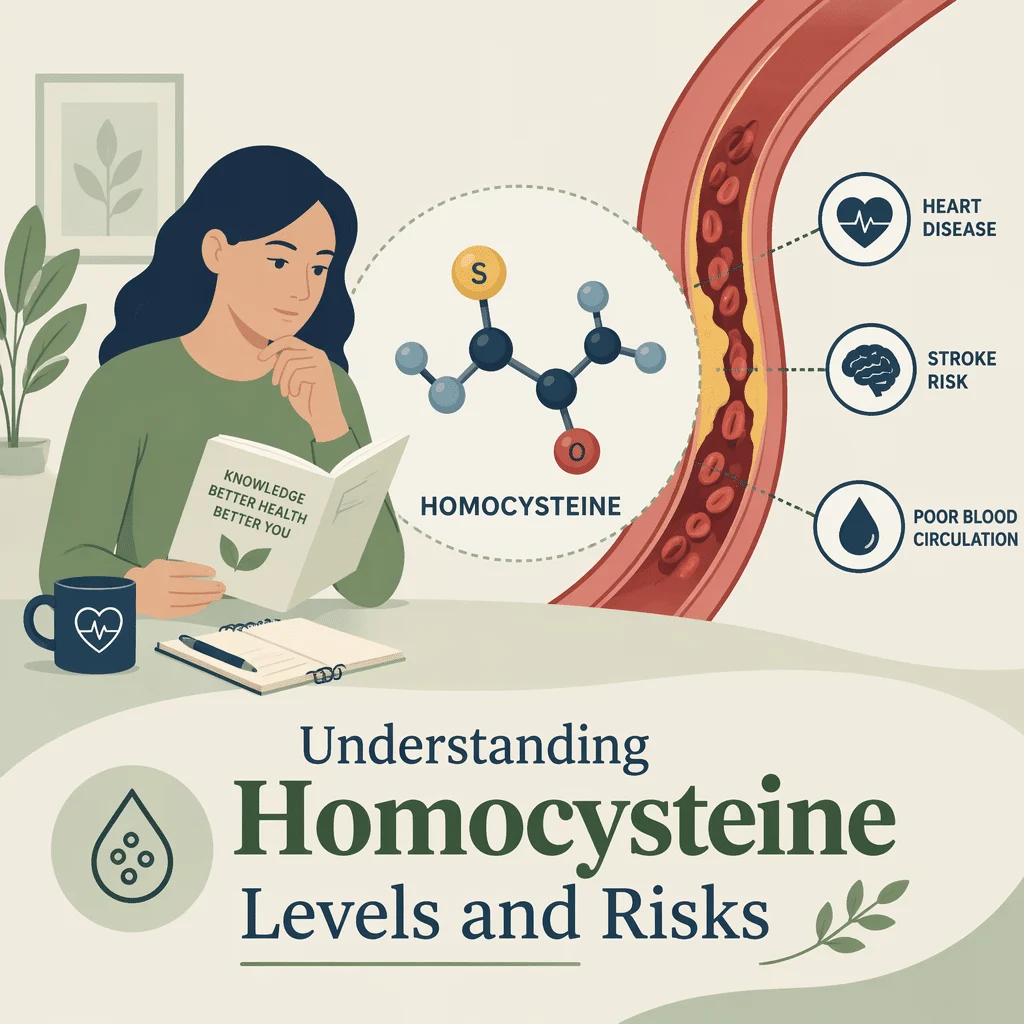
Homocisteina este una dintre cele mai puțin înțelese valori din medicina de laborator. Homocisteina este un aminoacid obișnuit pe care corpul tău îl produce zilnic, iar eliminarea sa depinde de căi metabolice care au nevoie de vitamina B12, folat și vitamina B6. Când oricare dintre acestea scade, nivelul crește. Timp de două decenii, homocisteina părea o cauză tratabilă a infarctelor și accidentelor vasculare cerebrale, până când studii randomizate de amploare au reușit să scadă valoarea, fără ca infarctele să dispară odată cu ea.
Un rezultat sub interval ridică o întrebare diferită — vezi ce înseamnă de fapt nivelurile scăzute de homocisteină.
În acest articol vei afla ce este homocisteina, ce o crește, ce au arătat cu adevărat acele studii și situațiile în care testul este cu adevărat justificat. Dacă rezultatul tău a ieșit crescut, merită să urmărești asta. Dar de obicei este un semnal care indică altceva, nu un verdict despre inima ta.
Ce este homocisteina și cum este eliminată din sânge
Homocisteina se formează când corpul tău descompune metionina, un aminoacid pe care îl obții din proteinele din alimentație. Este un intermediar normal, nu un produs rezidual și nici o toxină. Aproape toată cantitatea este procesată în câteva secunde.
Există două căi de eliminare. Remetilarea convertește homocisteina înapoi în metionină și are nevoie atât de folat, cât și de vitamina B12. Transsulfurarea o direcționează în schimb spre cisteină și are nevoie de vitamina B6.
Acesta este motivul principal pentru care există acest test. Homocisteina se află la o intersecție unde sunt necesare trei vitamine B distincte, astfel că lipsa oricăreia dintre ele blochează „traficul" și nivelul crește. Asta o face un detector sensibil al unei probleme metabolice. Prin ea însăși, nu este neapărat o cauză de boală. Majoritatea laboratoarelor din SUA semnalează un nivel total de homocisteină peste aproximativ 15 micromoli pe litru, deși valorile limită variază, iar nivelurile cresc odată cu vârsta.
Ce altceva ridică homocisteina în afară de deficitul de vitamine B
Deficitul de vitamine este cea mai cunoscută cauză, dar a presupune că un rezultat crescut înseamnă neapărat o deficiență este o greșeală frecventă.
Boala renală, cea mai importantă cauză non-vitaminică
Rinichii fac cea mai mare parte din munca de eliminare a homocisteinei. Când funcția renală scade, homocisteina crește devreme, adesea înainte ca alți markeri să arate valori îngrijorătoare, iar în boala cronică de rinichi instalată, un nivel crescut este aproape de așteptat. De aceea, un rezultat crescut ar trebui să determine verificarea funcției renale, și de aceea ghidul nostru despre niveluri ridicate de BUN și creatinină este adesea pagina mai utilă de citit în continuare.
Tiroida, stilul de viață, vârsta și sexul
O tiroidă hipoactivă crește homocisteina, iar corectarea acesteia aduce nivelul înapoi la normal, deci un Testul TSH face parte din aceeași discuție. Fumatul îl crește, la fel și consumul excesiv de alcool și obiceiul de a bea multă cafea. Nivelurile cresc odată cu vârsta, iar bărbații au în general valori mai mari decât femeile până după menopauză. Niciunul dintre acestea nu este o boală. Sunt pur și simplu motivul pentru care orice rezultat individual are nevoie de context.
Medicamente care îl cresc
Mai multe medicamente utilizate pe scară largă cresc homocisteina ca efect secundar al modului în care acționează. Metotrexatul blochează direct metabolismul folaților. Metformina reduce absorbția vitaminei B12 în timp, pe parcursul mai multor ani. Unele medicamente antiepileptic interferează cu folatii. Oxidul nitros inactivează complet vitamina B12, motiv pentru care homocisteina crește brusc la persoanele care îl folosesc în scop recreațional.
Dacă iei oricare dintre acestea, o homocisteină crescută este previzibilă, nu îngrijorătoare. Este un motiv să îl întrebi pe medicul tău prescriptor dacă ar trebui verificate nivelurile de vitamine — și niciodată un motiv să oprești sau să modifici din proprie inițiativă un medicament prescris.
MTHFR, în trei propoziții
MTHFR este o enzimă din calea metabolică a folaților, iar două variante comune ale genei sale îi reduc ușor activitatea, ceea ce crește puțin homocisteina la persoanele care le poartă. Deoarece aceste variante sunt extrem de frecvente, prezența uneia este ceva obișnuit, iar principalele organizații de genetică nu recomandă testarea pentru ele în afara cercetării sau a unor investigații metabolice specifice. Prezența unei variante nu justifică, prin ea însăși, o suplimentare specială sau o dietă diferită. Marketingul construit în jurul MTHFR și al metilfolaților aparține mai degrabă subiectului folaților decât acestuia, iar ghidul nostru despre deficit de folat tratează subiectul în mod corespunzător.
Povestea asociere versus cauzalitate, explicată simplu
Ce au descoperit studiile observaționale
Începând cu anii 1990, studiu după studiu a raportat același tipar. Persoanele cu homocisteină mai ridicată aveau mai multe atacuri de cord, mai multe accidente vasculare cerebrale, mai multă arteriopatie periferică și mai multă demență. Asocierea era consistentă, apărea în mai multe țări și rezista ajustărilor pentru factorii de risc obișnuiți. Exista și un mecanism plauzibil, implicând lezarea peretelui interior al vaselor de sânge.
Pune toate acestea laolaltă și obții ceea ce pare a fi o țintă ideală: un test ieftin pentru a identifica persoanele cu risc și vitamine ieftine pentru a aduce numărul în jos. Testarea homocisteinei a fost adăugată în pachetele de analize de wellness exact pe această logică.
Ce s-a întâmplat când nivelul a fost efectiv redus
Apoi au apărut rezultatele studiilor randomizate, și acestea au fost de mari dimensiuni. Zeci de mii de persoane au primit acid folic, cu sau fără vitamina B12 și B6, sau placebo, și au fost urmărite timp de ani de zile. Vitaminele au funcționat, în sensul restrâns că au redus în mod fiabil homocisteina. Ceea ce nu au reușit să facă a fost să reducă atacurile de cord sau decesele cardiovasculare.
Acesta este un rezultat important, și nu doar în ceea ce privește homocisteina. Este una dintre cele mai clare demonstrații din medicină că un tratament care îmbunătățește o valoare nu îmbunătățește automat și starea pacientului. Nivelul a scăzut. Rezultatele clinice au rămas neschimbate. Interpretarea cea mai rezonabilă este că o homocisteină crescută este, în mare parte, un marker al altceva — o deficiență de vitamine, rinichi afectați sau vârstă înaintată — și nu cauza directă a leziunilor.
Semnalul legat de accident vascular cerebral, prezentat corect, fără înfrumusețări
Există un fir nerezolvat, care merită descris cu onestitate în loc să fie trecut cu vederea. Accidentul vascular cerebral s-a comportat diferit față de infarctul miocardic în această literatură de specialitate. Analizele cumulate ale studiilor au evidențiat o reducere modestă a AVC-ului cu acid folic, iar studiile genetice indică același lucru pentru un subtip de AVC — cel cauzat de afectarea vaselor mici din profunzimea creierului.
Două aspecte temperează această concluzie. În primul rând, beneficiul a fost concentrat în populații unde acidul folic nu este adăugat în făină, adică la persoane cu un deficit ușor de folat de la bun început. Statele Unite îmbogățesc produsele din cereale cu acid folic din 1998, iar în populațiile cu fortifiere efectul dispare în mare măsură. În al doilea rând, chiar și acolo unde semnalul pentru AVC este prezent, acesta nu s-a extins la boala coronariană, boala arterială periferică sau mortalitatea generală.
Prin urmare, concluzia corectă nu este că homocisteina este irelevantă. Este că un efect limitat asupra unui subtip de accident vascular cerebral, la persoane cu aport scăzut de folat, a fost generalizat într-o afirmație despre bolile cardiovasculare pe care dovezile nu o susțin. Modul în care se estimează cu adevărat riscul cardiovascular este un subiect separat, tratat în ghidul nostru despre raporturile colesterolului și ce înseamnă ele.
Unde este cu adevărat util testul pentru homocisteină
Nimic din toate acestea nu face testul inutil. Îl face un test cu utilizări specifice, pe care le îndeplinește bine.
Depistarea deficienței de vitamina B12 sau de folat
Aceasta este utilizarea de zi cu zi. Homocisteina crește devreme când oricare dintre vitamine este insuficientă — adesea înainte ca nivelul seric al vitaminei să pară convingător anormal și cu mult înainte ca globulele roșii să își schimbe dimensiunea. Când un B12 seric revine la limită și simptomele se potrivesc, homocisteina ajută să se stabilească dacă există un deficit real la nivel tisular. Ghidul nostru despre vitamina B12 scăzută acoperă în detaliu această decizie, inclusiv cum se compară homocisteina cu acidul metilmalonic.
Un aspect important de reținut: homocisteina crește atât în deficiența de B12, cât și în cea de folat, deci singură nu poate indica care dintre ele lipsește. De aceea, de obicei se efectuează și un test de sânge pentru folat în paralel, iar un VEM crescut se interpretează împreună cu ambele.
Homocistinuria, situația în care testul este cu adevărat diagnostic
Homocistinuria este o boală ereditară rară în care enzima care convertește în mod normal homocisteina mai departe funcționează cu mare dificultate. Nivelurile nu sunt ușor crescute, ci extrem de ridicate, iar consecințele sunt vizibile: luxația cristalinului, miopie severă, constituție înaltă și slabă cu membre lungi, oase fragile, dificultăți de învățare la unele persoane și o tendință serioasă de a forma cheaguri de sânge la vârstă tânără.
Acesta este singurul context în care homocisteina nu este un marker, ci un diagnostic. Nou-născuții din Statele Unite sunt testați pentru aceasta, astfel că este de obicei depistată în perioada sugarului, nu după un cheag la un adolescent. Tratamentul este specializat, pe tot parcursul vieții și coordonat de o echipă de specialiști în metabolism, și nu are nimic în comun cu administrarea unui supliment pentru o valoare ușor crescută.
Investigarea cheagurilor inexplicabile la o persoană tânără
Un cheag sau un accident vascular cerebral la cineva de douăzeci sau treizeci de ani, fără o explicație evidentă, declanșează o investigație amplă, iar homocisteina face adesea parte din ea. Nu este folosită acolo pentru a estima riscul, ci pentru a căuta homocistinuria sau o cauză metabolică severă care ar schimba abordarea terapeutică. În acest context, un rezultat semnificativ crescut contează cu adevărat.
De ce homocisteina nu este un test de screening de rutină
Homocisteina nu face parte dintr-un panel standard de analize și nu este recomandată ca test de screening cardiovascular general. Aceasta este o poziție deliberată, nu o omisiune, și decurge direct din rezultatele studiilor clinice.
Problema cu adăugarea ei la un control de rutină nu este costul eprubetei. Este ceea ce urmează. Un rezultat ușor crescut la o persoană fără simptome reflectă de obicei vârsta, dieta, funcția renală sau modul în care a fost manipulată proba, și generează îngrijorare, teste repetate și adesea suplimente inutile, fără dovezi că persoana ajunge să fie mai sănătoasă. Între timp, factorii care influențează cu adevărat riscul cardiovascular, cum ar fi tensiunea arterială, fumatul, diabetul și Colesterol LDL, sunt deja măsurabile și deja acționabile. Dacă o clinică oferă homocisteina în cadrul unui pachet de sănătate cardiovasculară, întreabă ce s-ar schimba în funcție de rezultat.
Manipularea probei și valoarea fals crescută despre care nimeni nu te avertizează
Un detaliu practic explică un număr surprinzător de rezultate neașteptat de mari. Homocisteina se măsoară în plasmă, dar globulele roșii continuă să o elibereze în plasmă după ce sângele a fost recoltat. Dacă eprubeta stă la temperatura camerei înainte ca celulele să fie separate, nivelul crește treptat, iar o probă lăsată câteva ore poate indica o valoare semnificativ mai mare decât același sânge procesat rapid. Laboratoarele răcesc probele, separă plasma rapid sau folosesc eprubete cu un stabilizator, dar un punct de recoltare aglomerat într-o vineri după-amiază nu respectă întotdeauna aceste condiții.
Așadar, dacă un prim rezultat este neașteptat de mare și nimic altceva nu explică asta, este o întrebare îndreptățită — nu o mofturire — să întrebi dacă proba a fost manipulată corect și dacă ar trebui repetată.
Ce să faci dacă rezultatul homocisteinei tale este crescut
Un rezultat crescut nu este ceva de ignorat, dar nici un motiv de panică. Este un semnal că trebuie să cauți ce anume indică: vitamina B12 și folatul, funcția renală, funcția tiroidiană și medicamentele pe care le iei. Tabelul de mai jos arată cum același număr înseamnă lucruri diferite în situații diferite.
| Situația ta | Ce reflectă de obicei | Ce merită verificat |
|---|---|---|
| Ușor crescut, cu vitamina B12 la limita inferioară | Un deficit real de B12 pe care nivelul seric îl subestima | Folat, acid metilmalonic sau B12 activ, plus cauza deficienței |
| Crescut, cu boală renală cunoscută sau suspectată | Eliminare renală redusă, ceea ce este de așteptat, nu surprinzător | Creatinină, rata de filtrare estimată și proteine în urină, gestionate ca boală renală |
| Crescut, fără simptome, B12 și folat normale | Adesea vârsta, sexul, fumatul, alcoolul sau o probă procesată cu întârziere, mai degrabă decât o boală | Funcția renală și tiroidiană, și dacă merită repetată analiza cu o probă manipulată corect |
| Foarte crescută, la o persoană tânără cu un cheag | Posibilă homocistinurie sau altă cauză metabolică severă | Evaluare urgentă de specialitate, studii ale aminoacizilor și testare genetică |
| Crescut în timp ce iei metotrexat sau metformină | Un efect cunoscut al medicamentului asupra folatului sau vitaminei B12 | Nivelurile de vitamine, discutate cu medicul tău prescriptor; nu opri niciodată medicamentul pe cont propriu |
Ceea ce lipsește în mod deliberat din această listă este administrarea de vitamine B pentru a reduce valoarea. O deficiență reală are propriul tratament și propriul follow-up, iar ce formă și ce cale de administrare se folosesc este decizia medicului prescriptor, în funcție de cauză. A lua vitamine pur și simplu pentru a modifica valoarea este strategia pe care studiile au testat-o și nu au susținut-o.
Semne de alarmă: când să ceri ajutor imediat
- Slăbiciune sau amorțeală bruscă pe o parte a corpului, față asimetrică sau dificultăți de vorbire ori de înțelegere a vorbirii: sună la 112. Acestea sunt semne de accident vascular cerebral și timpul este esențial.
- Durere în piept, presiune în piept sau lipsă bruscă de aer: sună la 112.
- Durere și umflătură la un gambă, sau lipsă de aer însoțită de durere în piept care se agravează la inspirație: mergi urgent la medic, deoarece acestea pot indica un cheag de sânge.
- Amorțeală nouă, furnicături sau nesiguranță la mers: solicită o evaluare promptă, deoarece acestea pot indica o deficiență de vitamina B12 care afectează nervii.
- Un rezultat foarte ridicat al homocisteinei, sau un cheag ori un istoric familial de homocistinurie la o persoană tânără: acestea necesită evaluare de specialitate, nu supraveghere pasivă.
Simptomele nervoase aparțin unui medic, nu raftului cu suplimente, deoarece întârzierea este cea care determină dacă se recuperează. Un deget amorțit este un lucru mic care, uneori, înseamnă ceva.
Cele mai recente progrese științifice în cercetarea homocisteinei
O meta-analiză sistematică din 2024, publicată în Clinical Nutrition și coordonată de Nan Zhang, a adunat date din 21 de studii randomizate care au inclus peste o sută de mii de participanți. Concluzie: acidul folic a redus riscul de accident vascular cerebral în general, însă beneficiul s-a concentrat în țările unde făina nu este îmbogățită cu acid folic și a dispărut în mare parte în populațiile unde aceasta este fortifiată. Ce înseamnă asta pentru tine: Statele Unite fortifiază cerealele din 1998, astfel că grupul cu cele mai mari șanse de a beneficia nu este cel american.
O recenzie sistematică și meta-analiză din 2025, publicată în BMC Nutrition și coordonată de Patricia Ghattas Hasbun, a adunat 45 de studii și aproape o sută de mii de participanți. Concluzie: acidul folic a redus riscul de accident vascular cerebral și, marginal, bolile cardiovasculare în general, dar nu a avut niciun efect asupra deceselor, bolii coronariene sau bolii arteriale periferice. Ce înseamnă asta pentru tine: orice efect este limitat și specific accidentului vascular cerebral, nu reprezintă o protecție generală pentru inimă.
O analiză sistematică din 2025 publicată în Nutrition and Metabolism, coordonată de Xiuyuan Zhu, a sintetizat 33 de studii de randomizare mendeliană — o metodă genetică ce testează cauzalitatea folosind variante moștenite, nu comparații de stil de viață. Concluzie: nivelurile genetic mai ridicate de homocisteină au fost asociate cu mai multe tipuri de accident vascular cerebral, în special cu accidentul vascular cerebral de vas mic, dar nu cu boala coronariană. Ce înseamnă asta pentru tine: chiar și dovezile genetice separă accidentul vascular cerebral de infarctul miocardic — o distincție pe care marketingul suplimentelor tinde să o estompeze.
Un studiu din 2025, publicat în Neurology și coordonat de Mengmeng Wang, a folosit varianta comună MTHFR ca experiment natural în populații din Asia de Est și Europa. Concluzie: activitatea redusă a MTHFR, care crește homocisteina, a fost asociată specific cu accidentul vascular cerebral de tip vase mici și nu cu cel de tip arteră mare sau cardioembolie. Ce înseamnă asta pentru tine: dacă homocisteina produce daune, se pare că acționează asupra celor mai mici vase din creier — o afirmație mult mai restrânsă decât cea care i se atribuie de obicei.
O recenzie sistematică și meta-analiză din 2025, publicată în Nutrition Reviews și coordonată de Jade Berg, a combinat 17 studii randomizate pe mai mult de cinci mii de adulți în vârstă. Concluzie: suplimentarea cu vitamine din complexul B a produs cel mult un beneficiu foarte mic asupra gândirii și memoriei, iar efectul aparent s-a diminuat odată ce studiile mai slabe au fost excluse. Ce înseamnă asta pentru tine: în ceea ce privește demența, orice efect este atât de mic încât este greu de observat la nivel individual.
Glosar de termeni cheie
| Termen | Definiție |
|---|---|
| Homocisteină | Un aminoacid produs atunci când organismul descompune metionina, eliminat în mod normal în câteva secunde |
| Metionina | Un aminoacid obținut din proteinele alimentare; homocisteina se formează în procesul de descompunere a acestuia |
| Hiperhomocisteinemie | Termenul medical pentru un nivel crescut de homocisteină în sânge, indiferent de cauză |
| Homocistinurie | O boală ereditară rară care provoacă niveluri extrem de ridicate de homocisteină, cu probleme oculare, scheletice și de coagulare |
| MTHFR | O enzimă din calea folaților; variantele genetice comune îi reduc activitatea și cresc ușor nivelul homocisteinei |
| Acid metilmalonic | O substanță care crește specific în deficiența de vitamina B12, măsurată adesea alături de homocisteină |
| Marker | O măsurătoare care reflectă un proces fără a-l cauza neapărat |
| Randomizare mendeliană | O metodă care folosește variante genetice moștenite pentru a testa dacă o expunere cauzează un rezultat |
| Fortifierea cu acid folic | Adăugarea acidului folic în făină și produse din cereale, obligatorie în Statele Unite din 1998 |
| Micromoli pe litru | Unitatea folosită de laboratoare pentru a raporta concentrația homocisteinei |
Întrebări frecvente
Ar trebui să îmi testez homocisteina?
Nu ca o verificare de rutină a inimii tale. Homocisteina nu face parte dintr-un set standard de analize și nu este recomandată ca test general de screening cardiovascular, deoarece scăderea ei nu s-a dovedit a preveni infarctele. Devine utilă în situații specifice: când se suspectează o deficiență de vitamina B12 sau folat, iar nivelurile vitaminelor în sine sunt ambigue, când se ia în considerare homocistinuria și când o persoană tânără are un cheag inexplicabil. Dacă o clinică o include într-un pachet de wellness, o întrebare rezonabilă este ce s-ar schimba concret în funcție de rezultat.
Vitaminele B scad homocisteina?
Da, în mod cert. Acidul folic, vitamina B12 și vitamina B6 scad toate homocisteina, și tocmai asta face această poveste instructivă. Studii randomizate de mari dimensiuni au administrat aceste vitamine la zeci de mii de persoane, le-au redus homocisteina și nu au constatat nicio scădere a infarctelor sau a deceselor cardiovasculare. O reducere modestă a accidentelor vasculare cerebrale a fost observată, în principal în țările care nu îmbogățesc făina cu acid folic. Deci vitaminele modifică într-adevăr valoarea. Modificarea valorii nu este același lucru cu îmbunătățirea sănătății tale, și acesta este punctul esențial.
Homocisteina crescută este periculoasă?
Depinde enorm de cât de ridicat este nivelul și de cauza acestuia. Un nivel ușor crescut la un adult fără simptome este un semnal pentru a verifica vitamina B12, folatul, funcția renală și funcția tiroidiană. Nu este o urgență și nu reprezintă o predicție despre sănătatea inimii tale. Nivelurile extrem de ridicate întâlnite în homocistinurie sunt cu totul altceva și implică un risc serios de cheaguri la persoanele tinere. Între aceste extreme, nivelul este mai bine interpretat ca o informație despre metabolismul tău, nu ca un scor al riscului cardiovascular.
Ce cauzează homocisteina crescută în afară de deficiența de vitamine?
Boala cronică de rinichi este cel mai important factor, deoarece rinichii realizează cea mai mare parte a eliminării. O tiroidă hipoactivă îl crește. La fel și fumatul, consumul excesiv de alcool și obiceiul de a bea multă cafea. Nivelurile cresc odată cu vârsta și sunt în general mai ridicate la bărbați. Mai multe medicamente îl cresc de asemenea, printre care metotrexatul, metforminul administrat pe termen lung, unele medicamente antiepileptice și oxidul de azot. Iar o probă lăsată să stea înainte ca laboratorul să o proceseze poate da un rezultat fals crescut. Este o listă lungă, motiv pentru care contextul contează mai mult decât cifra în sine.
Ce alimente cresc homocisteina?
Niciun aliment obișnuit nu crește homocisteina într-un mod semnificativ. Influența alimentației merge în sens invers: tiparele alimentare sărace în folat, vitamina B12 sau vitamina B6 reduc capacitatea organismului de a o elimina, astfel că nivelul crește treptat. Vitamina B12 provine aproape exclusiv din alimente de origine animală și produse îmbogățite, folatul din legume cu frunze verzi, leguminoase și cereale îmbogățite. Un aport foarte ridicat de proteine furnizează mai multă metionină, dar la persoanele cu metabolism normal efectul este nesemnificativ pe termen lung. Urmărirea unui anumit nivel de homocisteină prin dietă nu este un scop util în sine.
Un rezultat crescut al homocisteinei poate fi eronat?
Da, și acest lucru este subestimat. Homocisteina este măsurată în plasmă, iar globulele roșii continuă să o elibereze în plasmă după ce sângele este recoltat. Dacă proba nu este răcită sau separată prompt, rezultatul crește, iar o probă procesată cu întârziere poate indica o valoare semnificativ mai mare decât același sânge procesat imediat. Dacă un rezultat izolat crescut nu se potrivește cu nimic altceva din tabloul tău clinic, este o întrebare justificată să îi adresezi medicului tău dacă proba a fost manipulată corect și dacă o repetare a testului merită.
Surse
- MedlinePlus, Biblioteca Națională de Medicină a SUA. Testul pentru homocisteină. https://medlineplus.gov/lab-tests/homocysteine-test/
- MedlinePlus Genetics, Biblioteca Națională de Medicină a SUA. Homocistinuria. https://medlineplus.gov/genetics/condition/homocystinuria/
- National Institutes of Health, Office of Dietary Supplements. Vitamin B6: Fact Sheet for Health Professionals. https://ods.od.nih.gov/factsheets/VitaminB6-HealthProfessional/
- Sacharow SJ, Levy HL. Homocystinuria Caused by Cystathionine Beta-Synthase Deficiency. GeneReviews, University of Washington, Seattle. https://www.ncbi.nlm.nih.gov/books/NBK1524/
- Zhang N, Zhou Z, Chi X, Fan F, Li S, Song Y, Zhang Y, Qin X, Sun N, Wang X, Huo Y, Li J. Folic acid supplementation for stroke prevention: a systematic review and meta-analysis of 21 randomized clinical trials worldwide. Clinical Nutrition. 2024. https://doi.org/10.1016/j.clnu.2024.05.034
- Ghattas Hasbun P, Calderon Martinez E, Arvelaez Pascucci J, Livier Castillo J, Alonso-Ramirez A, Giron De Marza MM, Martinez Illan J, Sosaya Zuniga B, Camacho Davila K, Flores Monar G, Sanchez Cruz C. Efficacy of folic acid supplementation in the prevention of cardiovascular disease: a systematic review and meta-analysis of randomized controlled trials. BMC Nutrition. 2025. https://doi.org/10.1186/s40795-025-01178-z
- Zhu X, Wei J, Li J, Zuo S, Wang J, Liu N. The causal role of homocysteine in multiple diseases: a systematic review of Mendelian randomization studies. Nutrition and Metabolism. 2025. https://doi.org/10.1186/s12986-025-00933-0
- Wang M, Daghlas I, Zhang Z, Gill D, Liu D. MTHFR polymorphisms, homocysteine elevation, and ischemic stroke susceptibility in East Asian and European populations. Neurology. 2025. https://doi.org/10.1212/WNL.0000000000210245
- Berg J, Grant R, Siervo M, Stephan BCM, Tully PJ. Efficacy of B vitamin supplementation on global cognitive function in older adults: a systematic review and meta-analysis. Nutrition Reviews. 2025. https://doi.org/10.1093/nutrit/nuaf155
Lectură suplimentară
- Vitamina B12 scăzută: simptome, cauze și afectarea nervilor
- Deficiența de folat: simptome, cauze și tratamente
- Analiză de sânge pentru acid folic: ce înseamnă rezultatul
- Niveluri ridicate de B12: cauze, simptome și riscuri
- Valori crescute ale CRP: cauze, simptome și tratamente
Înțelege-ți rezultatele analizelor cu AI DiagMe
Un rezultat al homocisteinei nu stă aproape niciodată singur. Are sens doar alături de vitamina B12, folat, analizele renale și cele tiroidiene, iar semnificația lui depinde de modul în care aceste valori se raportează unele la altele și la simptomele tale. AI DiagMe îți citește buletinul de analize și îți explică pe înțeles la ce se referă fiecare valoare și ce întrebări merită să ridici cu medicul tău. Te ajută să îți înțelegi rezultatele. Nu pune diagnostice, nu evaluează riscul tău cardiovascular și nu înlocuiește medicul.
Obține interpretarea rezultatelor în câteva minute