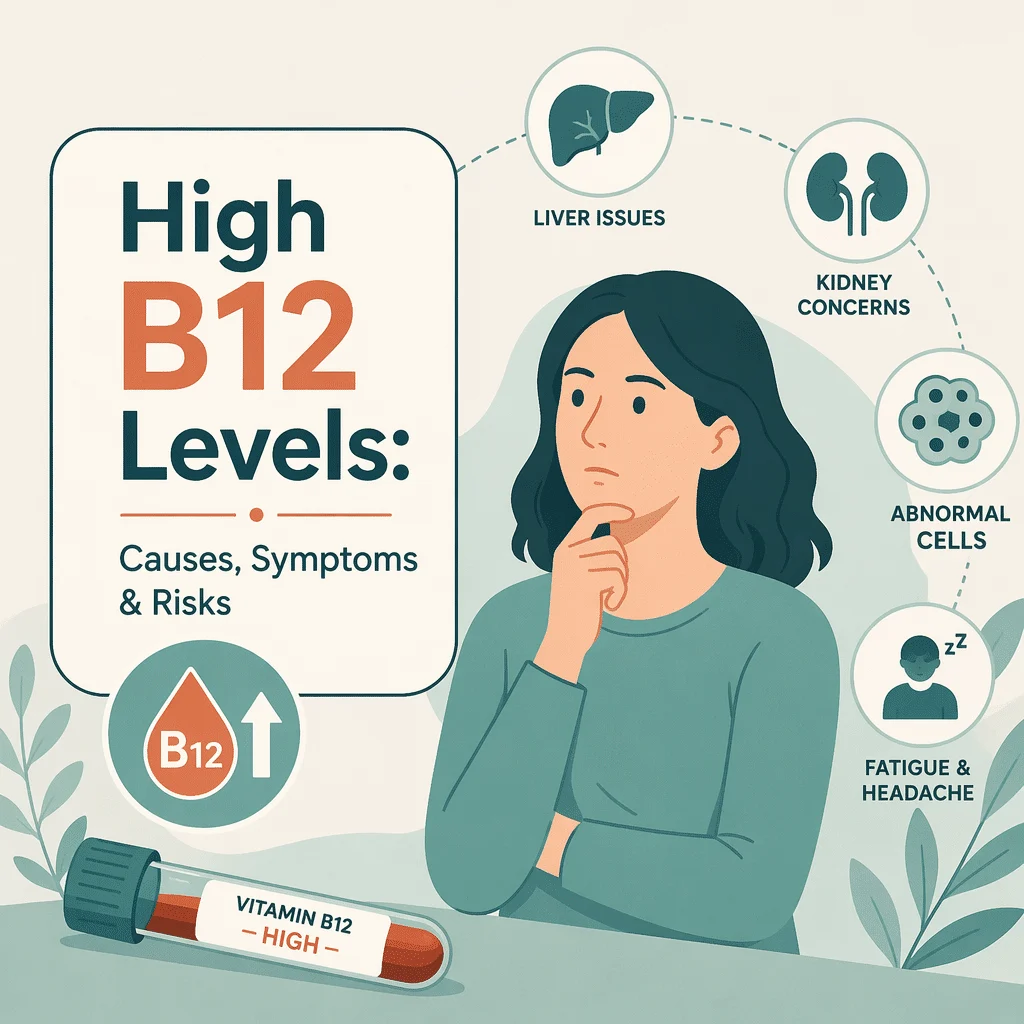
Dacă o analiză arată niveluri ridicate de B12, cea mai probabilă explicație este și cea mai liniștitoare: vitamina B12 intră în corpul tău din exterior. Suplimentele orale, tabletele cu complex de vitamine B, multivitaminele, cerealele și laptele vegetal îmbogățite, băuturile energizante și, mai ales, injecțiile cu B12 cresc toate această valoare. Exact pentru asta sunt concepute.
Excesul de vitamina B12 din suplimente nu este considerat toxic. Organismul elimină ceea ce nu poate folosi, motiv pentru care nu a fost stabilită niciodată o limită maximă de aport pentru aceasta.
Un al doilea scenariu merită atenție calmă: un nivel ridicat de B12 la cineva care nu ia nimic. Aceasta nu este un diagnostic, dar merită o discuție cu medicul.
În acest articol vei afla de ce suplimentele și injecțiile cresc B12 și de ce acest lucru este inofensiv, cum circulă B12 în sânge și de ce o valoare totală poate induce în eroare, la ce poate indica o creștere inexplicabilă, ce înseamnă deficiența funcțională în ciuda unui rezultat ridicat, ce face medicul în continuare și când să ceri sfat.
Ce înseamnă un B12 crescut în buletinul de analize
Vitamina B12, numită și cobalamină, se măsoară în ser, adică în partea lichidă a sângelui rămasă după coagulare. Majoritatea laboratoarelor din Statele Unite raportează un interval de referință de aproximativ 160 până la 950 pg/mL, deși valorile exacte diferă de la un laborator la altul, astfel că un rezultat trebuie interpretat în raport cu intervalul tipărit pe propriul tău test de vitamina B12 din sânge raport.
O valoare peste acest interval se numește hipercobalamiemie. Descrie un număr, nu o boală, și spre deosebire de un potasiu sau calciu ridicat, nu afectează în sine țesuturile.
Mulți oameni caută simptomele unui nivel ridicat de B12. Răspunsul sincer este că un B12 crescut, în sine, de obicei nu provoacă niciunul: orice simptome ai putea avea sunt mult mai probabil legate de cauza care a dus la creștere, nu de vitamina în sine.
De ce suplimentele și injecțiile cresc B12 și de ce acest lucru nu este dăunător
De departe, cel mai frecvent motiv pentru niveluri ridicate de B12 este suplimentarea. Aceasta nu este un efect secundar sau o greșeală, ci rezultatul așteptat al administrării acestei vitamine.
Comprimate, produse cu complex B și alimente îmbogățite
Adulții au nevoie de aproximativ 2,4 micrograme de vitamina B12 pe zi, conform National Institutes of Health Office of Dietary Supplements. Comprimatele disponibile fără prescripție medicală conțin frecvent de sute sau mii de ori această cantitate. Doar o mică parte dintr-o doză orală mare este absorbită prin calea obișnuită bazată pe receptori, dar surplusul care traversează peretele intestinal prin difuzie simplă este suficient pentru a ridica valoarea serică cu mult peste intervalul de referință.
Cerealele de mic dejun îmbogățite, drojdia nutrițională, băuturile vegetale, pudra proteică și băuturile energizante contribuie discret. Mulți oameni convinși că nu iau suplimente primesc de fapt o doză zilnică substanțială dintr-un produs îmbogățit pe care îl consideră aliment obișnuit, așa cum explică ghidul nostru despre sursele de vitamina B12 prezintă.
Injecțiile cu B12
B12 intramuscular ocolește complet sistemul digestiv. O singură injecție poate ridica nivelul seric la mii de unități și îl poate menține crescut timp de săptămâni sau luni. Dacă ai făcut o injecție în ultimul an, un rezultat crescut este de așteptat și nu necesită nicio altă explicație.
Acest lucru contează în practică. Injecțiile sunt de obicei prescrise pentru o deficiență diagnosticată, uneori pe viață, cum este cazul anemiei pernicioase sau după o intervenție chirurgicală pe stomac. Oprirea lor pentru că un test de urmărire pare prea ridicat ar fi o greșeală, iar netratată deficiența de vitamina B12 poate provoca leziuni nervoase permanente. Numai medicul prescriptor poate lua această decizie.
Există o limită superioară pentru B12?
Vitamina B12 nu are un Nivel Superior Tolerabil de Aport. The Office of Dietary Supplements afirmă că nu a fost stabilită nicio limită, deoarece B12 este considerată sigură chiar și în doze mari, rinichii eliminând surplusul prin urină. Un nivel ridicat cauzat de aport este, prin urmare, o observație contabilă, nu o problemă de sănătate.
Cum circulă B12 în sângele tău și de ce un test total de B12 poate induce în eroare
Vitamina B12 nu circulă liberă în plasmă. Este transportată de două proteine purtătoare, iar diferența dintre ele explică cea mai mare parte a confuziei legate de acest test.
Haptocorrina, cunoscută și sub numele de transcobalamina I, transportă marea majoritate a B12 circulante, de obicei aproximativ trei sferturi din aceasta. Acea fracțiune reprezintă un rezervor inactiv pe care celulele tale nu îl pot absorbi.
Transcobalamina transportă cota mai mică rămasă, iar aceasta este fracțiunea pe care celulele o pot absorbi și utiliza. Laboratoarele o raportează uneori separat ca B12 activ sau holotranscobalamină.
Un test standard de B12 seric măsoară ambele fracțiuni împreună, astfel că un rezultat total reflectă în principal cantitatea de haptocorrină care circulă în sânge — iar haptocorrina este produsă de globulele albe. Orice factor care stimulează producția de globule albe sau eliberează B12 legată de haptocorrină dintr-un organ afectat crește valoarea totală, fără a indica dacă țesuturile tale dispun de suficientă vitamină utilizabilă.
La ce poate indica un B12 crescut fără o cauză evidentă
Dacă nu iei suplimente, nu ai primit injecții, nu consumi produse puternic fortifiate și B12-ul tău este în mod repetat ridicat, acest tipar merită investigat. Este un semnal de laborator recunoscut, dar subestimat. Trei sisteme de organe apar cel mai frecvent.
Ficatul
Ficatul este principalul depozit de B12 al organismului. Când celulele hepatice sunt afectate de alcool, hepatită virală, steatoză hepatică sau ciroză, B12-ul stocat se scurge în sânge, iar ficatul elimină haptocorrina mai puțin eficient. MedlinePlus menționează bolile hepatice, inclusiv ciroza și hepatita, printre cauzele recunoscute ale unui nivel crescut de B12. Într-un studiu realizat într-un spital spaniol pe adulți cu B12 foarte ridicat și fără suplimentare, boala hepatică structurală era prezentă la aproximativ un sfert dintre cazuri. De aceea teste ale funcției hepatice sunt de obicei solicitate împreună cu un test B12 repetat.
Măduva osoasă
Deoarece haptocorrina este produsă de globulele albe, afecțiunile în care măduva osoasă supraproduce aceste celule cresc valoarea totală a B12. MedlinePlus menționează în mod specific tulburările mieloproliferative, inclusiv policitemia vera și leucemia mieloidă cronică leucemie.
În aceste afecțiuni, B12-ul ridicat nu apare aproape niciodată singur. hemoleucograma completă este de obicei anormal și el, cu un număr crescut de globule albe, trombocite sau hematocrit. Un B12 ridicat cu o hemogramă complet normală este mult mai puțin îngrijorător decât unul asociat cu valori anormale ale hemogramei.
Rinichii
Rinichii reprezintă principala cale prin care excesul de B12 părăsește organismul. Când funcția renală scade, eliminarea încetinește și nivelul crește treptat. De obicei este o creștere modestă la cineva deja cunoscut cu boală cronică de rinichi, apărând alături de alte modificări în panel de funcție renală.
B12 ridicat și cancer: ce arată cu adevărat cercetările
Mai multe studii observaționale au constatat că, printre persoanele cu un B12 inexplicabil ridicat — adică crescut fără suplimente sau injecții care să justifice acest lucru — un cancer este diagnosticat ulterior mai frecvent decât la persoanele cu un B12 normal. Asocierea este reală și a fost reprodusă suficient de des încât medicii interniști scriu despre ea de ani de zile.
Acum proporția, deoarece trei lucruri sunt adevărate în același timp. În primul rând, asocierea provine din grupuri de pacienți, în mare parte populații spitalicești deja suficient de bolnave pentru a li se recolta sânge. Nu este un test de screening, nu a fost niciodată validat ca atare și nicio ghidare medicală nu recomandă măsurarea B12 pentru depistarea cancerului.
În al doilea rând, majoritatea persoanelor cu B12 crescut nu au cancer și nu îl vor dezvolta. În cohortele studiate, marea majoritate a rezultatelor crescute au fost explicate prin suplimentare, prin boli hepatice sau prin nimic identificabil.
În al treilea rând, atunci când se descoperă o malignitate, aceasta este cel mai adesea un cancer hepatic sau un cancer de sânge — cele două categorii care explică și biologia: una implică organul care stochează B12, cealaltă celulele care produc proteina sa transportoare.
Concluzia este simplă. Un nivel crescut de B12 fără o cauză evidentă este un motiv să menționezi rezultatul medicului tău și să faci un set de analize de bază. Nu este un motiv să te gândești la ce e mai rău și nu este un test pentru cancer.
Deficit funcțional de B12 în ciuda unui nivel ridicat
B12 seric este un marker slab pentru a determina dacă țesuturile tale au suficientă vitamină utilizabilă. Deoarece cea mai mare parte din ceea ce măsoară testul este B12 legat de haptocorină inactivă, este pe deplin posibil să ai un B12 total normal sau chiar ridicat, în timp ce celulele tale sunt deficitare din punct de vedere funcțional. Simptomele neurologice la o persoană al cărei B12 pare normal sunt exemplul clasic.
Alte două analize de sânge răspund la întrebarea la care nivelul de B12 nu poate răspunde. Acidul metilmalonic, prescurtat de obicei MMA, și homocisteina sunt substanțe pe care organismul le elimină cu ajutorul enzimelor dependente de B12. Dacă B12-ul utilizabil este insuficient, ambele se acumulează. Un MMA crescut, în special, este modalitatea standard de a confirma că un deficit este real la nivel celular.
Folatul contează și el în acest context, deoarece homocisteina crește și atunci când folatul este scăzut, motiv pentru care un test de sânge pentru folat este adesea efectuat în paralel. Deoarece ambele vitamine influențează dimensiunea globulelor roșii, un VEM poate fi, de asemenea, un indiciu atunci când B12-ul pare în regulă.
Prin urmare, dacă ai simptome compatibile cu deficitul de B12 și un B12 seric ridicat, cele două date nu se contrazic. Un medic poate verifica în mod justificat MMA și homocisteina, în loc să excludă această posibilitate pe baza valorii totale.
Ce să faci când B12 este crescut
Înțelege-ți situația dintr-o privire
Tabelul de mai jos acoperă cele patru situații care explică aproape orice rezultat crescut al B12.
| Situația ta | Ce înseamnă de obicei | Ce să faci |
|---|---|---|
| Iei un supliment de B12 sau complex de vitamine B, un multivitamin sau consumi alimente și băuturi îmbogățite cu B12 | Un rezultat așteptat. B12-ul din suplimente crește nivelul seric în mod intenționat, iar surplusul este eliminat prin urină. | Nimic urgent. Spune-i medicului tău exact ce iei, pentru ca rezultatul să poată fi interpretat corect. Nu modifica singur o doză prescrisă. |
| Ai făcut injecții cu B12 în ultimul an | Așteptat, adesea timp de luni după ultima doză, deoarece injecțiile ocolesc tractul digestiv și pot ridica nivelurile foarte mult. | Continuă tratamentul conform prescripției. Doar medicul prescriptor poate modifica sau opri o injecție administrată pentru un deficit diagnosticat. |
| Nu iei B12 sub nicio formă, iar nivelul este crescut | O creștere inexplicabilă. De obicei benignă, dar este un semnal recunoscut care merită investigat. | Programează o consultație de rutină. Așteaptă-te la repetarea B12, la o hemogramă completă și la teste ale funcției hepatice. |
| B12 crescut alături de hemogramă sau analize hepatice anormale | Combinația este mult mai informativă decât B12-ul singur și orientează spre ficat sau măduvă osoasă. | Mergi la medic cât mai curând, fără să aștepți. Poate urma o trimitere la un hematolog sau la un specialist hepatolog. |
Ce face de obicei medicul în continuare
Primul pas nu este aproape niciodată o altă analiză de sânge. Este o discuție.
Medicul tău te va întreba ce iei: vitamine pe rețetă, comprimate fără prescripție, multivitamine, injecții în orice moment al ultimului an, shake-uri proteice, cereale îmbogățite, băuturi energizante. Această întrebare rezolvă majoritatea cazurilor pe loc, fără a fi nevoie de investigații suplimentare.
Dacă nimic nu explică rezultatul, o etapă următoare rezonabilă include de obicei repetarea B12 pentru a confirma că rezultatul nu este izolat, o hemogramă completă și enzime hepatice precum ALT și AST. Funcția renală este adesea verificată în același timp.
În funcție de rezultatele acestora, medicul poate recomanda imagistică abdominală sau te poate îndruma către un hematolog sau un specialist în boli hepatice. Dacă simptomele tale sugerează o deficiență în ciuda valorii ridicate, se pot adăuga testele MMA și homocisteină.
Ce nu va face de obicei un medic este să trateze valoarea B12 în sine. Nu există nimic de redus și niciun medicament pentru asta: efortul este îndreptat spre explicarea cauzei, nu spre valoare.
Când să mergi la medic
Semne care necesită consultul unui medic
- Scădere inexplicabilă în greutate
- Transpirații nocturne
- Vânătăi sau sângerări neobișnuite
- Oboseală persistentă însoțită de o hemogramă completă anormală
- Îngălbenirea pielii sau a ochilor ori umflarea abdomenului
- Un nivel ridicat de B12 la o persoană care nu ia suplimente, nu face injecții și nu consumă produse îmbogățite
În afara acestor situații, un nivel ridicat de B12 la cineva care ia un supliment nu reprezintă o urgență. Menționează acest lucru la următoarea vizită de rutină, pentru a putea fi interpretat în context.
Cele mai recente progrese științifice în înțelegerea nivelului ridicat de B12
Cercetările publicate după 2023 indică două direcții simultan: liniștire în privința suplimentelor și o imagine mai clară a situațiilor în care o valoare crescută merită atenție. Conform PubMed:
O analiză sistematică privind B12 crescut, cancer și mortalitate (2024)
Ce s-a descoperit: o echipă de la Pontificia Universidad Javeriana din Bogotá a analizat treisprezece studii efectuate pe adulți cu niveluri anormal de ridicate de B12. Dintre cele care au examinat cancerul, un nivel crescut de B12 a fost asociat în mod constant cu o probabilitate mai mare ca un cancer să fie prezent sau diagnosticat ulterior. Legătura cu rata generală a mortalității a fost mult mai puțin consistentă.
Ce înseamnă asta pentru tine: asocierea apare în mod repetat în studii independente, motiv pentru care medicii iau în serios o creștere fără cauză aparentă. Însă o asociere observată la grupuri de pacienți este departe de a fi o predicție pentru o persoană anume, iar autorii subliniază că există multiple cauze ale unui B12 crescut și că efectele sale nu sunt clar stabilite.
Un studiu de cohortă privind descoperirile incidentale dintr-un spital universitar spaniol (2023)
Ce s-a constatat: dintr-un grup de 4.800 de persoane la care s-a măsurat vitamina B12, aproximativ 7 din 100 aveau un nivel peste 1.000 pg/mL. După excluderea celor care luau suplimente de B12 și a celor cu cancer deja diagnosticat, 250 de pacienți au fost urmăriți timp de aproximativ doi ani. O boală hepatică structurală a fost depistată la aproximativ un sfert dintre ei. Un cancer de organ solid a fost diagnosticat la aproximativ unul din cinci, iar un cancer de sânge la aproximativ unul din paisprezece, cel mai adesea în primul an.
Ce înseamnă asta pentru tine: aceasta a fost o populație spitalicească, astfel că procentele sunt mult mai mari decât în cazul unei persoane sănătoase care face un control de rutină. Lecția utilă se referă la momentul apariției. Dacă o creștere inexplicabilă urmează să fie semnificativă, ea tinde să se manifeste în aproximativ un an — de aceea medicul poate opta pur și simplu pentru o monitorizare periodică, în loc de o investigare imediată.
Deficiența funcțională de cobalamină în populația generală din Statele Unite (2024)
Ce s-a constatat: cercetătorii care au analizat datele a peste 22.000 de adulți din Ancheta Națională de Sănătate și Nutriție (NHANES) au definit deficiența funcțională de cobalamină ca o creștere a acidului metilmalonic în ciuda unui nivel seric de B12 peste 400 pg/mL. Aproximativ 4,5 din 100 de adulți se încadrau în acest tipar — de aproximativ două ori mai mulți decât cei cu deficiență clasică de B12 scăzut — și aceasta a fost asociată cu o mortalitate mai mare pe termen lung, în timp ce deficiența clasică nu a prezentat această asociere, după ajustarea pentru alți factori.
Ce înseamnă asta pentru tine: o valoare B12 aparent normală nu garantează că celulele tale primesc ce au nevoie. Dacă ai simptome care sugerează o deficiență, este rezonabil să îi ceri medicului tău să verifice acidul metilmalonic, chiar și atunci când B12 pare în regulă.
Cobalamina crescută la copii (2025)
Ce s-a constatat: o analiză retrospectivă a 388 de copii cu un nivel foarte ridicat de B12 la un spital mare din Ankara. Suplimentarea a explicat aproape jumătate din cazuri, iar mai mult de 8 din 10 copii nu prezentau niciun simptom. Cinci copii fără suplimentare și fără o boală cronică cunoscută au primit ulterior un diagnostic de malignitate, inclusiv leucemie mieloidă cronică.
Ce înseamnă asta pentru tine: același mesaj în două părți se aplică și în cazul copiilor. Majoritatea rezultatelor ridicate sunt explicate de tratament și sunt inofensive, dar un nivel persistent crescut fără nicio explicație ar trebui monitorizat, nu ignorat.
Glosar de termeni cheie
| Termen | Definiție |
|---|---|
| Cobalamina | Denumirea chimică a vitaminei B12. |
| Hipercobalamiemie | Termenul medical pentru un nivel de vitamina B12 care depășește intervalul de referință al laboratorului. |
| Haptocorină | O proteină transportoare produsă de globulele albe care transportă cea mai mare parte a B12 din sânge într-o formă pe care celulele nu o pot utiliza. |
| Transcobalamina | Proteina transportoare care livrează fracția mai mică și utilizabilă de B12 către celule; uneori raportată ca B12 activ. |
| Acid metilmalonic (MMA) | O substanță care se acumulează atunci când celulele nu dispun de B12 utilizabil, folosită pentru a confirma o deficiență reală. |
| Homocisteină | Un aminoacid care crește atunci când B12 sau folatul este insuficient la nivel celular. |
| Tulburare mieloproliferativă | Un grup de afecțiuni ale măduvei osoase în care se produc prea multe celule sanguine. |
| Ser | Partea lichidă a sângelui care rămâne după coagulare și în care se măsoară vitamina B12. |
| Interval de referință | Intervalul de valori pe care un laborator îl consideră tipic pentru propriul test și pentru populația sa. |
| Anemie pernicioasă | O afecțiune autoimună care blochează absorbția B12 și este tratată de obicei cu injecții pe toată durata vieții. |
Întrebări frecvente
Poți avea prea mult B12?
Nu în modul în care oamenii se tem de obicei. Vitamina B12 este solubilă în apă, iar rinichii elimină surplusul prin urină în loc să îl stocheze. Oficiul pentru Suplimente Alimentare al Institutelor Naționale de Sănătate nu a stabilit un Nivel Maxim Tolerabil de Aport pentru B12 tocmai pentru că nu există dovezi fiabile privind efectele nocive ale unui aport ridicat la persoanele sănătoase. Prin urmare, o valoare crescută cauzată de tablete, alimente îmbogățite sau injecții nu reprezintă în sine o problemă de toxicitate. Ceea ce contează este dacă în spatele rezultatului se află altceva decât aportul.
Un nivel ridicat de B12 înseamnă cancer?
Nu. Majoritatea persoanelor cu B12 ridicat nu au cancer. Studiile efectuate pe pacienți spitalizați au arătat că o creștere inexplicabilă, care nu poate fi pusă pe seama unui supliment sau a unei injecții, este asociată cu o probabilitate mai mare de a fi diagnosticat cu cancer, cel mai adesea hepatic sau hematologic. Această asociere este un motiv să menționezi rezultatul medicului tău și să repeți testul, să faci o hemogramă completă și analize hepatice. Nu este un test pentru cancer, nu a fost niciodată validat ca atare și nu spune nimic definitiv despre nicio persoană în parte.
Ar trebui să opresc suplimentul de B12 pentru că nivelul meu este ridicat?
Vorbește mai întâi cu medicul tău și nu opri o injecție prescrisă pentru o deficiență diagnosticată. Injecțiile cu B12 sunt adesea administrate pentru afecțiuni precum anemia pernicioasă sau după intervenții chirurgicale gastrice, iar oprirea lor poate permite apariția leziunilor nervoase. În cazul unui comprimat fără prescripție pe care îl iei fără un motiv medical, medicul tău poate sugera să îl întrerupi temporar și să repeți testul mai târziu, pentru ca rezultatul să poată fi interpretat corect. Această decizie aparține persoanei care îți cunoaște istoricul medical.
Poate un nivel ridicat de B12 să cauzeze simptome?
Foarte rar prin ele însele. Un nivel crescut de B12 în ser nu dăunează țesuturilor și nu este asociat cu un set recognoscibil de simptome. Dacă te simți rău în același timp cu un rezultat ridicat, simptomele sunt mult mai probabil cauzate de ceea ce a dus la această creștere — cum ar fi o boală hepatică sau o afecțiune hematologică — decât de vitamina în sine. Unele persoane raportează acnee sau o senzație de înroșire a pielii după injecții cu doze mari, dar aceasta este legată de injecție, nu de nivelul din sânge.
Cât timp durează până scad nivelurile ridicate de B12?
Depinde de sursă. După oprirea comprimatelor orale, nivelurile scad de obicei în câteva săptămâni până la câteva luni. După injecții, scăderea este mai lentă, iar nivelul poate rămâne peste intervalul de referință timp de șase luni sau mai mult după ultima doză. De aceea, medicii preferă adesea să aștepte și să repete testul, în loc să acționeze pe baza unei singure valori. Dacă nivelul rămâne ridicat fără niciun aport de B12, această persistență este aspectul care merită investigat.
Poate un rezultat ridicat de B12 să fie o eroare de laborator?
Se poate întâmpla. Interferențele de analiză, manipularea probei și administrarea unui supliment cu puțin timp înainte de recoltarea sângelui pot distorsiona un rezultat, iar laboratoarele diferite folosesc metode și intervale de referință diferite. Un singur rezultat neașteptat este rareori luat în considerare de unul singur. Confirmarea printr-o probă repetată, de preferință la același laborator, este un prim pas standard și logic înainte ca cineva să înceapă să caute o cauză subiacentă.
Surse
- National Institutes of Health, Office of Dietary Supplements. Vitamin B12: Fact Sheet for Health Professionals
- MedlinePlus, National Library of Medicine. Vitamin B12 level
- National Institute of Diabetes and Digestive and Kidney Diseases. Cirrhosis
- Amado-Garzon SB, Molina-Pimienta L, Vejarano-Pombo A, Velez-Bonilla M, Moreno-Chaparro J, Buitrago-Lopez A. Elevated Vitamin B12, Risk of Cancer, and Mortality: A Systematic Review. Cancer Investigation, 2024. https://doi.org/10.1080/07357907.2024.2366907
- Pardo Lledias J, Martin Millan M, Mazariegos Cano JA, Aimar Marco C, Arias Martinez N, San Pedro Careaga B, Urizar Ursua E, Insua Garcia MC, Lavin Gomez BA, Hernandez Hernandez JL. Incidental detection of raised serum levels of vitamin B12 and its association with neoplasms. Revista Clinica Espanola, 2023. https://doi.org/10.1016/j.rceng.2023.12.002
- Liu Y, Gao Y, Liu Y, Zhang Y, Wang S, Yu B. Prevalence of Functional Cobalamin Deficiency and Relevant Mortality Risk in the General Population: An Unheeded Phenotype Distinct from Cobalamin Deficiency. Journal of the American Nutrition Association, 2024. https://doi.org/10.1080/27697061.2024.2412594
- Kalayci F, Yigit M, Kalyoncu Arican GM, Gokdol MY, Tekin MY, Kalayci OK, Celebier K, Kacar D, Yarali N. Elevated serum cobalamin levels in childhood: a retrospective analysis. BMC Pediatrics, 2025. https://doi.org/10.1186/s12887-025-06304-1
Lectură suplimentară
- Analiză de sânge vitamina B12: înțelege-ți rezultatele
- Analiză de sânge pentru acid folic
- Valori MCV crescute: cauze și simptome
- Teste pentru funcția hepatică
- Hemoleucogramă completă
Înțelege-ți rezultatele analizelor cu AI DiagMe
Un nivel ridicat de B12 rareori are sens privit singur. Se interpretează cu totul altfel alături de o hemogramă completă, de testele funcției hepatice, de un rezultat pentru folat și de lista suplimentelor pe care le iei efectiv. AI DiagMe îți pune valoarea de vitamina B12 înapoi în acest context, explicat pe înțelesul tău, astfel încât să poți vedea ce întrebări merită ridicate. Te ajută să îți înțelegi rezultatele — nu pune diagnostice și nu înlocuiește medicul tău.
Obține interpretarea rezultatelor în câteva minute