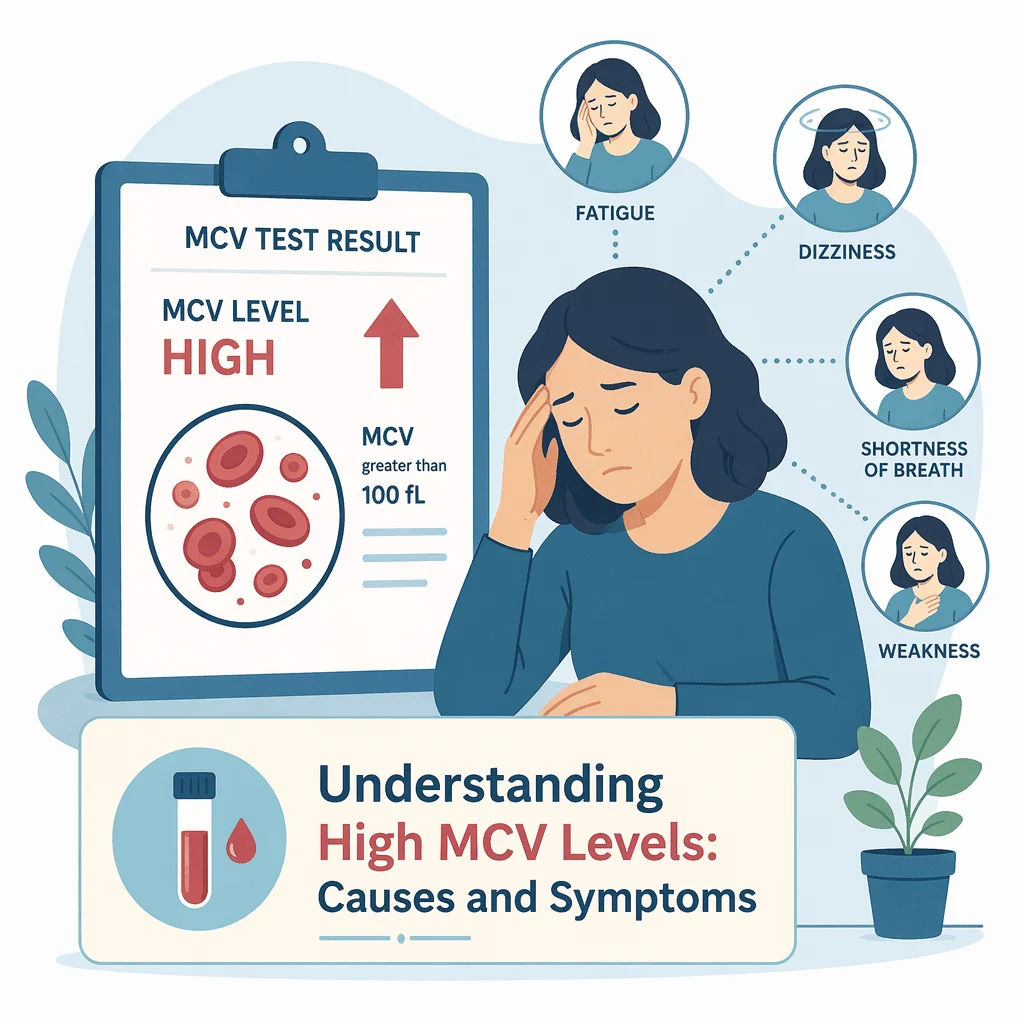
Să vezi un MCV crescut marcat în rezultatele analizelor de sânge poate fi îngrijorător, mai ales când buletinul îți oferă doar un număr, fără nicio explicație. La majoritatea oamenilor, un MCV ușor crescut are o explicație comună și reversibilă, iar cifra în sine nu reprezintă un diagnostic. Este un indiciu care îi spune medicului tău ce întrebări să pună în continuare.
În acest articol vei afla ce măsoară de fapt MCV, de ce este o medie și ce poate ascunde acea medie, lista realistă a cauzelor în ordinea frecvenței lor, situațiile care merită cu adevărat o investigație atentă și exact ce verifică de obicei un medic în continuare.
Ce măsoară MCV și de ce este doar o medie
MCV este abrevierea de la mean corpuscular volume (volumul corpuscular mediu). Reprezintă dimensiunea medie a globulelor tale roșii, exprimată în femtolitri (fL), și apare în mod standard în cadrul unei hemoleucogramă completă. Majoritatea laboratoarelor consideră intervalul normal pentru adulți ca fiind aproximativ 80–100 fL, deși valorile exacte tipărite pe buletinul tău aparțin aparatului care a analizat proba.
Când media depășește aproximativ 100 fL, laboratoarele descriu aceasta drept macrocitoza: globule roșii mai mari decât era de așteptat. Când se situează sub interval, este vorba de microcitoza. Niciunul dintre acești termeni nu reprezintă un diagnostic. Sunt descrieri ale formei și dimensiunii care indică diferite categorii de cauze.
Poți citi mai multe despre această măsurătoare în ghidul nostru despre analizele MCV din sânge, și despre constatarea opusă în articolul nostru despre un MCV scăzut.
De ce un MCV normal nu dovedește că totul este în regulă
Iată ce nu explică niciodată majoritatea buletinelor. O medie netezește extremele. Dacă ai o deficiență de fier care face unele globule roșii mai mici, în același timp cu o deficiență de vitamina B12 sau folat care le face pe altele mai mari, cele două pot trage media în direcții opuse și se pot anula reciproc. MCV-ul revine cu o valoare perfect normală, în timp ce două probleme separate se ascund în spatele ei.
De aceea, RDW contează atât de mult. RDW înseamnă lățimea distribuției eritrocitelor și măsoară cât de mult variază dimensiunile acestora, nu care este media lor. Un RDW crescut alături de un MCV normal sau la limită este un semnal clasic că poate fi vorba de un tablou mixt, și acesta este unul dintre motivele pentru care medicii analizează frotiul de sânge, care arată celulele în mod direct.
Concluzia practică funcționează în ambele sensuri. Un MCV crescut nu dovedește că ceva grav este în neregulă, iar un MCV normal nu dovedește că totul este în ordine. Ambele trebuie interpretate în context, alături de vitamina B12, folat, markeri ai fierului precum saturație a fierului, și restul hemogramei.
Alcoolul: cea mai frecventă explicație singulară în multe populații
În foarte multe populații adulte, alcoolul este cel mai frecvent motiv pentru un MCV crescut. Alcoolul are un efect direct asupra eritrocitelor aflate în curs de dezvoltare în măduva osoasă, iar modificarea dimensiunii celulare poate apărea cu mult înainte ca vreun prejudiciu să se reflecte în enzimele hepatice sau la ecografie. Un MCV crescut la o persoană cu teste hepatice complet normale este un tablou familiar, nu o contradicție.
Acest lucru este menționat aici ca un fapt fiziologic, nu ca o judecată de valoare. Un consum care pare obișnuit pentru o persoană poate fi totuși suficient pentru a crește ușor dimensiunea medie a celulelor, iar acest marker nu spune nimic despre caracterul nimănui. Ceea ce face este să schimbe investigațiile: dacă medicul tău știe aproximativ cât bei, poate evalua corect această explicație în loc să solicite o serie mai lungă de analize pentru a exclude posibilități care nu au fost niciodată probabile.
A fi sincer cu privire la consumul de alcool în acea discuție economisește cu adevărat timp, iar conversația este confidențială. Deoarece MCV răspunde lent, o schimbare a consumului durează săptămâni sau luni până să apară la o hemogramă repetată, întrucât celulele deja aflate în circulație trebuie mai întâi înlocuite.
Deficiența de vitamina B12 și folat
Vitamina B12 și folatul sunt ambele necesare pentru sinteza ADN-ului în interiorul eritrocitelor aflate în curs de dezvoltare. Când oricare dintre ele este insuficient, nucleul celulei se maturizează mai lent decât conținutul său, iar celula este eliberată mai mare decât ar trebui. Laboratoarele numesc aceasta un tablou megaloblastic, și este una dintre cauzele clasice ale unui MCV crescut.
Motivele unui deficit variază. Absorbția B12 este un proces în două etape, care are loc în stomac și intestinul subțire, astfel că anemia pernicioasă, gastrita atrofică, boala celiacă, boala Crohn, intervențiile chirurgicale anterioare pe stomac sau intestin și medicamentele antiacide luate pe termen lung pot interfera cu aceasta. O dietă săracă în alimente de origine animală sau care le exclude complet reprezintă o altă cauză. Folatul poate scădea din cauza unui aport insuficient, în sarcină, în urma administrării anumitor medicamente sau atunci când absorbția este afectată.
Testarea presupune de obicei măsurarea ambilor parametri împreună, deoarece tratamentul diferă. Paginile noastre despre test de vitamina B12 din sânge și test de sânge pentru folat explică cum arată acele rezultate, iar un rezultat crescut al B12 are propriul set separat de explicații.
De ce să nu începi administrarea de B12 sau folat pe cont propriu
Acesta este cel mai important aspect de siguranță de pe această pagină și este unul bine stabilit.
Folatul administrat singur poate corecta parțial tabloul sanguin cauzat de un deficit de B12. Globulele roșii revin spre dimensiunea normală, VEM scade, numărul lor începe să pară liniștitor, iar anemia se ameliorează. Însă folatul nu face nimic pentru leziunile nervoase pe care le provoacă deficitul de B12. Problemele neurologice — cum ar fi amorțeala, furnicăturile, instabilitatea la mers și modificările de memorie — pot continua să progreseze în tăcere, în timp ce analizele de sânge care ar fi tras un semnal de alarmă au fost mascate.
Acesta este motivul pentru care nu trebuie să te suplimentezi singur. Nu pentru că vitaminele ar fi periculoase, ci pentru că administrarea lor înainte de identificarea cauzei poate elimina tocmai semnalul de care medicul tău are nevoie și poate întârzia tratamentul unei probleme în care momentul contează. Măsoară mai întâi nivelurile, apoi lasă un medic să decidă ce anume să iei, dacă este cazul, și în ce formă. Simptomele neurologice, în special, sunt tratate ca un motiv de acțiune rapidă, nu de așteptare.
Medicamente care cresc VEM
O serie de medicamente utilizate pe scară largă cresc VEM, de obicei prin interferarea cu sinteza ADN-ului în măduva osoasă sau cu metabolismul B12. Exemple frecvente includ metotrexatul, hidroxiureea, azatioprina, mai multe anticonvulsivante, unele antiretrovirale folosite în tratamentul HIV și mulți agenți chimioterapeutici. Metformina acționează diferit, reducând absorbția vitaminei B12 în timp, motiv pentru care nivelurile de B12 sunt adesea verificate la persoanele care iau metformină pe termen lung.
În aceste situații, un VEM crescut este adesea un efect așteptat și monitorizat, nu un semnal de alarmă — medicamentul își face efectul.
Nu opri sau modifica niciodată un medicament prescris din cauza unui rezultat MCV. Această decizie aparține medicului prescriptor, care poate cântări motivul pentru care îl iei față de modificarea hemogramei și poate decide dacă este nevoie de ajustări, dacă trebuie verificat nivelul unui nutrient sau dacă rezultatul trebuie doar urmărit în timp. Este cu adevărat util să aduci la consultație o listă completă cu tot ce iei, inclusiv suplimente și produse fără prescripție.
Cauze tiroidiene și hepatice
O tiroidă hipoactivă încetinește metabolismul în tot organismul, iar producția de globule roșii nu face excepție. Hipotiroidismul este o cauză recunoscută și ușor de investigat a unui MCV ușor crescut, motiv pentru care un Testul TSH apare de obicei printre primele analize. Tratarea problemei tiroidiene normalizează în general MCV-ul în lunile următoare.
Boala hepatică crește MCV-ul printr-un mecanism diferit. Modificările grăsimilor care alcătuiesc membrana globulelor roșii determină celulele să capete o suprafață mai mare și să fie citite ca mai mari de analizor. Acest lucru se poate întâmpla în orice boală hepatică, nu doar în cea legată de alcool, astfel că teste ale funcției hepatice sunt incluse alături de testul tiroidian în majoritatea evaluărilor standard.
Când un MCV crescut este de fapt un semn bun
Nu orice MCV crescut reflectă o problemă de producție. Uneori reflectă o producție care lucrează intens.
Globulele roșii tinere, numite reticulocite, sunt mai mari decât cele mature. Când măduva osoasă își intensifică producția după o hemoragie, după ce tratamentul pentru o deficiență de fier sau vitamine a început să funcționeze, sau ca răspuns la hemoliză — adică distrugerea globulelor roșii mai rapid decât de obicei — fluxul sanguin se umple cu aceste celule tinere și mai mari, iar dimensiunea medie crește. Un MCV crescut în acest context înseamnă că măduva răspunde bine.
De aceea, numărul de reticulocite este un test inițial atât de util. El diferențiază o măduvă care produce activ de una care produce insuficient, iar cele două situații duc în direcții complet diferite. Sarcina poate, de asemenea, să crească ușor MCV-ul, parțial prin modificările volumului sanguin și ale necesarului de folat.
Când un MCV crescut indică spre măduva osoasă
Această secțiune trebuie prezentată clar și fără dramatism, deoarece acesta este motivul pentru care medicii nu ignoră pur și simplu o macrocitoza persistentă.
Sindromul mielodisplazic, uneori abreviat SMD, este un grup de afecțiuni în care măduva osoasă produce celule sanguine care nu se maturizează corespunzător. Este o afecțiune rară, întâlnită în principal la adulții în vârstă, iar un VEM crescut este uneori prima anomalie observată într-o analiză de sânge de rutină. Alte afecțiuni ale măduvei osoase se pot manifesta în mod similar.
Elementele care îl determină pe medic să investigheze mai atent sunt specifice, nu generale. O macrocitoza care persistă luni de zile fără o explicație găsită. Un VEM crescut la un adult în vârstă. Și, cel mai important, un VEM crescut însoțit de modificări ale celorlalte linii celulare: o scădere a număr de trombocite, un număr scăzut de globule albe sau o anemie inexplicabilă care se dezvoltă în același timp. Un singur indice anormal izolat este un semnal mult mai slab decât mai mulți indici care se modifică simultan.
Pe de altă parte, majoritatea persoanelor cu VEM crescut au una dintre cauzele obișnuite descrise mai sus, iar identificarea acesteia necesită de obicei câteva analize de sânge simple. Investigațiile au rolul de a identifica eficient explicația frecventă și de a o detecta pe cea rară atunci când explicațiile comune nu se potrivesc.
Ce face medicul tău în continuare
Succesiunea investigațiilor este destul de standard și implică în mare parte sânge deja recoltat sau un singur eșantion suplimentar.
În primul rând, repetă hemoleucograma. Valorile anormale izolate pot apărea, iar modul de manipulare a probei poate modifica indicii eritrocitari. Un rezultat care se normalizează la repetare nu necesită nicio investigație suplimentară.
Apoi, privește tabloul de ansamblu al hemoleucogramei: RDW-ul, hemoglobina, globulele albe și trombocitele. Frotiul de sânge periferic, în care un specialist examinează celulele la microscop, oferă informații pe care niciun analizor nu le poate furniza: neutrofilele hipersegmentate sugerează o problemă cu vitamina B12 sau folatul, celulele în țintă indică o afecțiune hepatică, iar modificările displazice orientează spre altceva.
Urmează analizele țintite: vitamina B12 și folatul, TSH-ul, testele funcției hepatice și numărul de reticulocite. Alături de acestea, o listă sinceră a medicamentelor și o relatare sinceră a consumului de alcool. Împreună, aceste cinci sau șase informații explică marea majoritate a rezultatelor cu VEM crescut. Doar atunci când acestea revin fără modificări semnificative, iar macrocitoza persistă, medicul ar putea lua în considerare trimiterea la un hematolog pentru o evaluare suplimentară.
| Tiparul din rezultatele tale | La ce indică de obicei | Pasul următor tipic |
|---|---|---|
| VEM ușor crescut cu o explicație deja cunoscută (alcool, un medicament din lista curentă, boală tiroidiană tratată) | Cauza cunoscută, cel mai adesea | Repetă hemoleucograma mai târziu; nu este necesară o investigație separată dacă nu se modifică |
| VEM crescut cu vitamina B12 scăzută sau folat scăzut | Un tablou megaloblastic cauzat de deficiență | Identifică de ce absorbția sau aportul este insuficient și tratează sub supraveghere medicală |
| MCV crescut cu B12 și folat normale | Alcool, ficat, tiroidă, medicamente sau un răspuns al măduvei | TSH, teste ale funcției hepatice, număr de reticulocite, revizuirea medicamentelor și a consumului de alcool |
| MCV crescut cu trombocite scăzute sau globule albe scăzute | Mai mult de o linie celulară afectată, deci măduva osoasă în sine este pusă sub semnul întrebării | Frotiu de sânge și evaluare medicală promptă, adesea cu implicarea unui hematolog |
| MCV crescut la scurt timp după o hemoragie, o intervenție chirurgicală sau începerea tratamentului pentru anemie | Reticulocitoză: celule tinere, mai mari, care înlocuiesc pierderile | Număr de reticulocite pentru confirmare, apoi reverificare după stabilizarea recuperării |
Acest tabel descrie doar asocieri frecvente. Nu poate indica care situație ți se aplică și nu înlocuiește interpretarea rezultatelor tale complete de către un medic.
Semne de alarmă: când să ceri sfat medical mai devreme
Contactează un medic prompt, fără să aștepți o programare de rutină, dacă un MCV crescut este însoțit de oricare dintre următoarele.
- Dificultăți de respirație în repaus sau la efort minim, dureri în piept, palpitații sau leșin, care pot însoți o anemie semnificativă.
- Amorțeală, furnicături, instabilitate la mers sau modificări ale memoriei ori concentrării, care pot reflecta afectarea nervilor din cauza deficitului de vitamina B12.
- Vânătăi inexplicabile, sângerări ale gingiilor sau epistaxis, ori infecții repetate sau neobișnuit de severe, care sugerează că și alte linii de celule sanguine ar putea fi afectate.
- O macrocitoză care persistă la teste repetate fără o cauză identificată, în special la un adult în vârstă.
Durerea în piept, dificultățile severe de respirație sau leșinul trebuie tratate ca urgențe.
Cele mai recente progrese științifice în înțelegerea MCV-ului crescut
Cercetările recente au rafinat, și în unele privințe au nuanțat, modul în care este interpretat un MCV crescut. Conform studiilor indexate în PubMed, următoarele sunt printre cele mai utile descoperiri pentru pacienți.
Un studiu din 2025 publicat în British Journal of Haematology a secvențiat toți participanții cu vârsta de 60 de ani și peste cu un MCV peste 100 fL dintr-o cohortă populațională olandeză de mari dimensiuni, căutând hematopoieză clonală — modificările genetice timpurii ale celulelor formatoare de sânge care pot preceda o boală a măduvei osoase. Concluzia: macrocitoza în sine nu a fost asociată cu hematopoieza clonală sau cu alte anomalii ale hemogramei. Un RDW crescut a fost. Ce înseamnă asta pentru tine: un MCV izolat crescut la un adult în vârstă, cu restul hemogramei normal, este considerabil mai puțin îngrijorător decât se sugerează uneori, iar tabloul de ansamblu al hemogramei contează mai mult decât orice indice individual.
O analiză din 2026 pe mai mult de 380.000 de adulți din Stockholm Early Detection of Cancer Study a urmărit ce se întâmplă după apariția unei anemii nou diagnosticate. Ce s-a descoperit: anemia nou apărută a fost asociată cu un risc pe termen scurt crescut de diagnostic de cancer și de deces din orice cauză, anemia microcitară fiind cel mai puternic legată de cancer, în timp ce anemia macrocitară a fost mai strâns asociată cu alte boli sistemice și a necesitat o evaluare mai amplă. Ce înseamnă asta pentru tine: descoperirea se referă la anemia nou apărută, nu la un MCV crescut izolat, și explică de ce medicul tratează o hemoglobină în scădere ca pe ceva ce trebuie investigat, nu monitorizat la nesfârșit.
Un studiu de cohortă din 2026, realizat într-un centru de referință din Mexic, a analizat 270 de adulți cu deficit confirmat de vitamina B12. Ce s-a descoperit: anemia pernicioasă a fost cea mai frecventă cauză, iar pacienții cu deficit datorat altor cauze aveau un MCV median în limite normale. Ce înseamnă asta pentru tine: un MCV normal nu exclude deficitul de B12, așa că dacă ai simptome sugestive, cere să ți se măsoare nivelul în loc să presupui că dimensiunea normală a celulelor rezolvă problema.
O analiză din 2025 publicată în Minerva Gastroenterology a evaluat markerii de laborator folosiți pentru detectarea consumului excesiv de alcool. Ce s-a descoperit: MCV crește proporțional cu cantitatea de alcool consumată, însă niciun marker de laborator luat separat nu este suficient de fiabil, iar cea mai bună abordare combină mai mulți markeri cu istoricul clinic. Ce înseamnă asta pentru tine: un rezultat al MCV nu poate dovedi sau infirma nimic legat de consumul de alcool, tocmai de aceea o discuție sinceră cu medicul tău este mai utilă decât cifra în sine.
Un studiu suedez pe populația generală, realizat pe 537.230 de adulți și publicat în Clinical Gastroenterology and Hepatology, a urmărit care markeri de sânge de rutină au prezis apariția ulterioară a cirozei hepatice alcoolice. Ce s-a descoperit: MCV s-a numărat printre cei mai puternici predictori pe parcursul a cinci ani, alături de AST și gama-glutamil transferază, însă valoarea predictivă pozitivă a fost scăzută, astfel că majoritatea persoanelor cu valoare crescută nu au dezvoltat ciroză. Ce înseamnă asta pentru tine: un MCV crescut merită explicat, dar nu reprezintă un pronostic.
Glosar de termeni cheie
| Termen | Definiție |
|---|---|
| VEM (volumul eritrocitar mediu) | Dimensiunea medie a globulelor roșii, exprimată în femtolitri (fL), raportată în cadrul hemoleucogramei complete. |
| Macrocitoză | Termenul de laborator pentru globulele roșii mai mari decât normal, de obicei un MCV peste aproximativ 100 fL. |
| RDW (lărgimea distribuției globulelor roșii) | O măsură a gradului în care globulele tale roșii variază ca dimensiune, nu a dimensiunii lor medii. |
| Megaloblastic | Un model în care celulele cresc mai mari deoarece producția de ADN este încetinită, clasic din cauza deficitului de vitamina B12 sau folat. |
| Reticulocit | Un globul roșu tânăr, mai mare decât unul matur; un număr crescut înseamnă că măduva osoasă produce activ. |
| Hemoliză | Distrugerea globulelor roșii mai rapid decât de obicei, ceea ce determină măduva osoasă să elibereze mai multe celule tinere. |
| Frotiu de sânge | O picătură de sânge examinată la microscop pentru a evalua forma și aspectul celulelor individuale. |
| Anemie pernicioasă | O afecțiune autoimună care blochează absorbția vitaminei B12 prin împiedicarea stomacului să producă factorul intrinsec. |
| Sindrom mielodisplazic | Un grup rar de afecțiuni ale măduvei osoase, întâlnit mai ales la adulții în vârstă, în care celulele sanguine nu se maturizează normal. |
| Linie celulară | Una dintre cele trei familii de celule sanguine: globule roșii, globule albe și trombocite. |
Întrebări frecvente
Un VEM crescut este grav?
De obicei, nu în sine. Un VEM ușor crescut este o descoperire frecventă și, la majoritatea oamenilor, se datorează unor cauze obișnuite și reversibile, cum ar fi consumul de alcool, un medicament, o problemă tiroidiană sau hepatică, ori un deficit de vitamine. Ceea ce schimbă tabloul este persistența și contextul: o macrocitoza care rămâne crescută la analize repetate fără o cauză identificată, sau una care apare alături de un număr scăzut de trombocite, un număr scăzut de globule albe sau o anemie nouă, merită o evaluare corespunzătoare. Medicul tău analizează întreaga hemogramă și istoricul tău, nu doar un singur număr.
Ar trebui să iau vitamina B12 dacă am VEM-ul crescut?
Nu pe cont propriu. Există un motiv specific pentru aceasta. Folatul luat singur poate îmbunătăți tabloul sanguin cauzat de un deficit de vitamina B12, astfel încât VEM-ul scade și analizele par mai bune, în timp ce leziunile nervoase provocate de deficitul de B12 continuă să progreseze necontrolat. Suplimentele luate înainte de testare pot, de asemenea, să denatureze rezultatele de care medicul tău are nevoie pentru a identifica cauza. Cere mai întâi măsurarea vitaminei B12 și a folatului. Dacă se confirmă un deficit, medicul tău va decide ce să iei, în ce formă și la ce doză, și va căuta motivul pentru care s-a dezvoltat.
Alcoolul cauzează un VEM crescut?
Da, și în multe populații adulte este cea mai frecventă explicație unică. Alcoolul acționează direct asupra globulelor roșii în formare din măduva osoasă, ceea ce poate crește MCV-ul înainte ca vreo afectare hepatică să apară în analize sau la imagistică. Relația este dependentă de doză, dar acest marker nu este suficient de precis pentru a estima consumul cuiva pe baza unui număr, iar un MCV crescut în sine nu dovedește nimic despre băut. Să îi spui medicului tău sincer cât bei este cel mai rapid mod de a obține o interpretare corectă a rezultatului și de a evita un șir lung de investigații inutile.
Ce valoare a MCV este considerată prea mare?
Majoritatea laboratoarelor semnalează rezultatele de peste aproximativ 100 fL, dar limita exactă tipărită pe buletinul tău aparține acelui laborator și analizorului său, iar valorile de referință diferă ușor între ele. Medicii acordă mai multă atenție cât de mult depășește valoarea intervalul normal și dacă este stabilă, în creștere sau în scădere, decât unui prag unic. O valoare cu câteva puncte peste interval, cu toate celelalte normale, se interpretează foarte diferit față de o valoare semnificativ crescută însoțită de modificări ale altor parametri ai hemogramei.
Cât timp durează până scade un MCV crescut?
Lent, deoarece globulele roșii trăiesc aproximativ trei până la patru luni, iar celulele deja aflate în circulație trebuie înlocuite înainte ca media să se modifice. Indiferent dacă este vorba de tratarea unui deficit de vitamine, de o schimbare a consumului de alcool sau de efectul unui tratament tiroidian, MCV-ul se modifică în săptămâni sau luni, nu în zile. De aceea medicii programează de obicei o hemogramă de control la câteva luni distanță, în loc să o repete imediat, și de aceea un rezultat nemodificat la două săptămâni nu înseamnă mare lucru.
Pot avea un MCV crescut fără să fiu anemic?
Da, și este frecvent. MCV descrie dimensiunea globulelor tale roșii, în timp ce anemia descrie faptul că ai prea puține sau prea puțină hemoglobină. Cele două se măsoară separat și pot evolua independent. Un MCV crescut cu hemoglobina normală este adesea o formă precoce sau ușoară a acelorași cauze subiacente și merită totuși explicat, deoarece identificarea unui deficit de vitamine sau a unei probleme tiroidiene în acel stadiu este mai ușoară decât să aștepți până se instalează anemia.
Surse
- MCV (Volumul Eritrocitar Mediu) — MedlinePlus, Biblioteca Națională de Medicină a SUA
- Anemia — Institutul Național pentru Inimă, Plămâni și Sânge (NHLBI), Institutele Naționale de Sănătate
- Fișă informativă despre Vitamina B12 pentru consumatori — Biroul de Suplimente Alimentare al NIH
- Tratamentul Sindroamelor Mielodisplazice (PDQ) — Institutul Național al Cancerului
- Salzbrunn JB, van Zeventer IA, de Graaf AO, et al. Clonal haematopoiesis associates with distinct cytometric changes of red blood cells and platelets. British Journal of Haematology, 2025. Identificat prin PubMed. https://doi.org/10.1111/bjh.70031
- Nemlander E, Abedi E, Hasselström J, Ljungman P, Rosenblad A, Carlsson AC. Incident anaemia as a marker of cancer and all-cause mortality: evidence from 380 114 adults in the population-based Stockholm Early Detection of Cancer Study (STEADY-CAN) cohort. BMJ Oncology, 2026. Identificat prin PubMed. https://doi.org/10.1136/bmjonc-2025-001038
- Moreno-Mirón JM, Tavira-Carbajal DL, Sánchez-Martínez D, et al. Pernicious anemia predominates among Mexican adults with vitamin B12 deficiency: clinical and laboratory findings from a tertiary referral center. Revista de Investigación Clínica, 2026. Identificat prin PubMed. https://doi.org/10.1016/j.ric.2026.100041
- Caputo F, Casabianca A, Lungaro L, et al. Available markers of excessive alcohol use. Minerva Gastroenterology, 2025. Identificat prin PubMed. https://doi.org/10.23736/S2724-5985.25.03884-7
- Jakobsson G, Talbäck M, Hammar N, Shang Y, Hagström H. Biomarkers for Prediction of Alcohol-Related Liver Cirrhosis: A General Population-Based Swedish Study of 537,250 Individuals. Clinical Gastroenterology and Hepatology, 2025. Identificat prin PubMed. https://doi.org/10.1016/j.cgh.2024.07.009
Lectură suplimentară
- Analiza MCV din sânge explicată
- Analiza RDW: ce înseamnă variația dimensiunii globulelor roșii
- VEM scăzut: cauze, simptome și tratamente
- Reticulocite: ghidul complet al analizei tale de sânge
- Anemie: simptome, cauze și analize
Un MCV crescut are rareori sens privit singur. Se interpretează foarte diferit în funcție de hemoglobina ta, de RDW, de numărul de trombocite și leucocite, și de dacă vitamina B12 și folatul au fost măsurate în același timp. AI DiagMe citește hemoleucograma completă în ansamblu și îți explică pe înțeles ce înseamnă fiecare valoare și ce întrebări merită ridicate. Te ajută să îți înțelegi rezultatele; nu pune diagnostice și nu înlocuiește medicul tău.
Înțelege-ți rezultatele analizelor cu AI DiagMe
Obține interpretarea rezultatelor în câteva minute