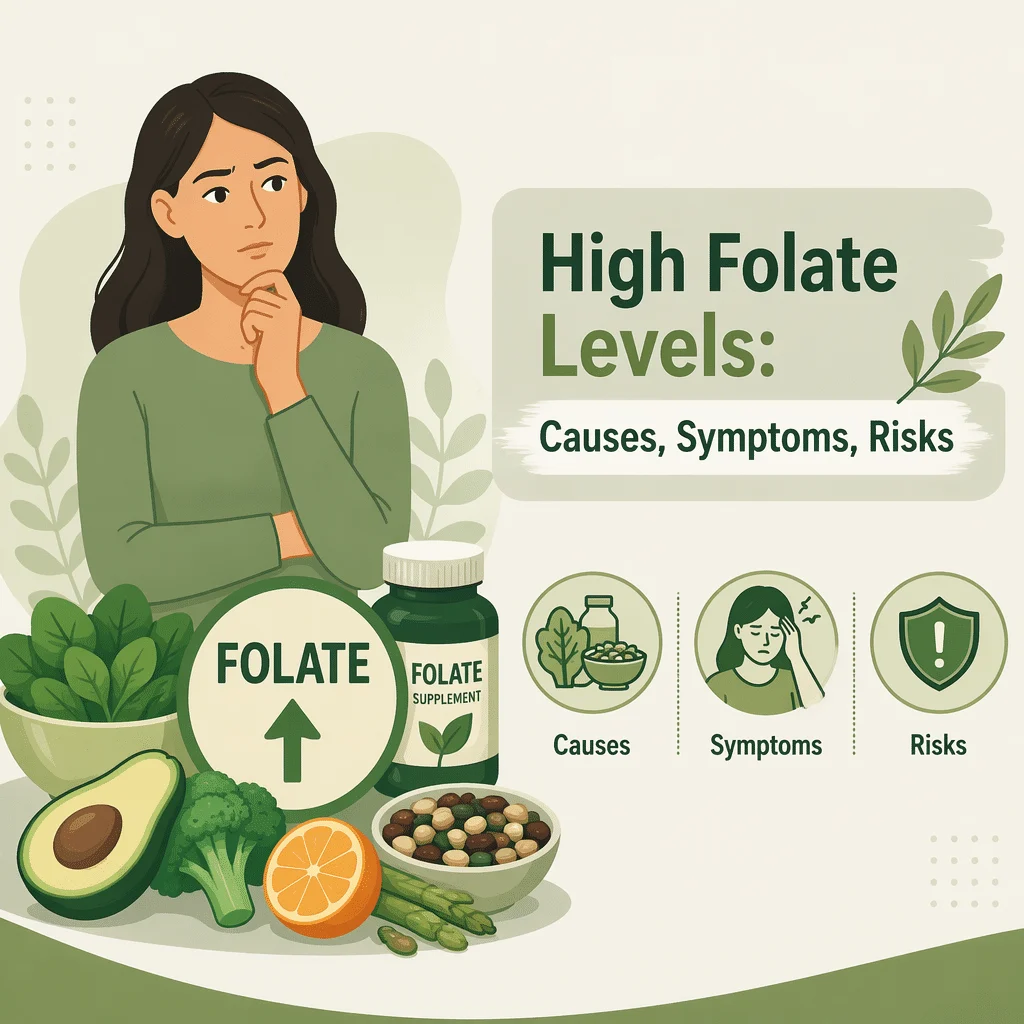
Un nivel crescut de folat la analizele de sânge înseamnă de obicei un singur lucru simplu: organismul tău a primit recent o cantitate mare de folat, cel mai adesea dintr-un supliment sau din alimente îmbogățite. Spre deosebire de un rezultat scăzut, o valoare ridicată este rareori o boală în sine, iar pentru folatul din alimente nu a fost stabilit niciun nivel toxic. Există totuși o consecință importantă, ușor de trecut cu vederea: un nivel generos de folat poate masca semnele de laborator ale deficienței de vitamina B12, în timp ce leziunile nervoase continuă în tăcere.
În acest articol vei afla ce măsoară de fapt acest test, de ce folatul seric este un marker slab luat singur, în ce situații un rezultat crescut devine un indiciu util și ce analize suplimentare ar trebui făcute alături de el.
Ce măsoară de fapt un nivel crescut de folat
Folatul este vitamina B9. Laboratoarele îl măsoară în două locuri foarte diferite, iar această distincție explică cea mai mare parte a confuziei legate de un rezultat crescut.
Folatul seric măsoară vitamina care circulă în momentul de față în partea lichidă a sângelui tău. Conform Oficiului pentru Suplimente Alimentare al Institutelor Naționale de Sănătate (NIH), o concentrație peste 3 ng/mL indică un nivel adecvat, însă acest marker este sensibil la aportul recent, deci este posibil să nu reflecte statusul tău pe termen lung. Un singur comprimat de vitamine înainte de recoltarea sângelui poate crește valoarea.
Folatul din globulele roșii este diferit. Globulele roșii absorb folat doar în timp ce se formează în măduva osoasă, apoi păstrează acea „fotografie" pe toată durata lor de viață, de aproximativ trei până la patru luni. Aceeași sursă NIH precizează că folatul eritrocitar este o măsură pe termen lung a aportului, o concentrație peste 140 ng/mL indicând un status adecvat. De aceea, un medic care investighează o problemă de stocare solicită varianta din globulele roșii.
Niciuna dintre cele două măsurători nu are o limită superioară agreată care să definească „prea mult". Multe analizoare raportează orice valoare ce depășește plafonul lor de măsurare ca „mai mare decât" o valoare fixă, astfel că un rezultat marcat ca ridicat poate însemna doar că testul a ieșit din intervalul de măsurare. Echipa noastră explică testul de sânge pentru acid folic și intervalele sale de referință.
| Caracteristică | Folatul seric | Folatul din globulele roșii |
|---|---|---|
| Ce reflectă | Folatul circulant în prezent | Folatul încorporat în globulele roșii pe măsură ce s-au format |
| Intervalul de timp acoperit | Ultimele câteva ore până la câteva zile | Ultimele trei până la patru luni |
| Influențat de suplimentul luat ieri | Da, puternic | Abia |
| Cel mai util pentru | O primă evaluare rapidă și ieftină | Evaluarea rezervelor reale de folat |
| Principala limitare | Aportul recent îl distorsionează | Transfuzia sau reînnoirea rapidă a celulelor îl distorsionează |
De ce rezultatele la folat ies ridicate
În Statele Unite, o valoare ridicată a folatului este de obicei consecința firească a două obiceiuri care se suprapun, nu un semn de boală.
Suplimentele sunt principala cauză
Multivitaminele, vitaminele prenatale, produsele cu complex B și comprimatele de acid folic cresc toate folatul seric, iar dozele se cumulează atunci când mai multe sunt luate împreună. Oficiul pentru Suplimente Alimentare al NIH raportează că aproximativ 5% dintre adulții cu vârsta de 51 de ani și peste depășesc nivelul maxim tolerabil de aport de 1.000 mcg de acid folic pe zi, în principal din cauza suplimentelor, și că între 30 și 66% dintre copiii cu vârste între 1 și 13 ani care iau suplimente cu acid folic depășesc limita specifică vârstei lor. Această limită se referă doar la acidul folic din suplimente și din alimentele îmbogățite, nu la folatul care apare în mod natural în alimente.
Alimentele îmbogățite ridică nivelul întregii populații
Începând cu ianuarie 1998, Administrația pentru Alimente și Medicamente (FDA) a obligat producătorii să adauge 140 mcg de acid folic la 100 g în pâine, cereale, făinuri, mălai, paste și orez îmbogățite, pentru a reduce riscul defectelor de tub neural. NIH estimează că această măsură a crescut aportul mediu de acid folic în Statele Unite cu aproximativ 190 mcg pe zi, iar în aprilie 2016 agenția a autorizat și îmbogățirea voluntară a făinii de mălai. Un rezultat moderat crescut al folaților este acum ceva obișnuit, nu ceva ieșit din comun.
Folatul și acidul folic nu sunt aceeași moleculă
Folatul este termenul general pentru vitamină în toate formele sale. Acidul folic este forma sintetică folosită în suplimente și produse îmbogățite, iar organismul trebuie să îl convertească înainte ca celulele să îl poată utiliza. Folatul natural din alimente, abundent în spanac, ficat, sparanghel, fasole și citrice, este procesat diferit. Ambele îți cresc rezultatul la analiză, dar doar acidul folic se acumulează neconvertit.
Momentul recoltării sângelui
Deoarece folatul seric reflectă aportul recent, este suficient să îți iei vitamina în dimineața analizei pentru a obține o valoare crescută. Dacă rezultatul te-a surprins, verifică mai întâi momentul ultimei doze.
Cum pot nivelurile ridicate de folat să mascheze o deficiență de vitamina B12
Acesta este singurul risc real asociat unui rezultat crescut al folaților — și este un risc de interpretare, nu al vitaminei în sine.
Folatul și vitamina B12 funcționează în pereche în măduva osoasă. Când oricare dintre ele este insuficient, globulele roșii sunt produse anormal de mari — un tipar numit anemie megaloblastică, care apare ca un volum eritrocitar mediu crescut la hemoleucogramă. B12 are și un al doilea rol pe care folatul nu îl poate prelua: menținerea tecii de mielină care izolează nervii.
Iată capcana. Oficiul pentru Suplimente Alimentare al NIH explică că folatul poate corecta anemia megaloblastică cauzată de deficiența de vitamina B12, dar nu și leziunile neurologice, și că specialiștii sunt de mult timp îngrijorați că un aport ridicat de suplimente de acid folic ar putea masca o deficiență de B12 până când consecințele neurologice devin ireversibile. Fișa informativă adaugă că întrebările legate de acest subiect rămân deschise. În practică: o persoană cu o problemă netratată de B12 ia un multivitamin cu acid folic, hemoleucograma se normalizează, cel mai vizibil semnal de alarmă se stinge, iar amorțeala, mersul nesigur sau tulburările de memorie progresează neobservate.
Soluția constă într-un obicei de laborator, nu într-un tratament: folatul nu trebuie interpretat niciodată singur. Echipa noastră explică cum să citești un test de sânge pentru vitamina B12. Când hemoleucograma pare înșelător de normală, biblioteca noastră descrie simptomele deficienței de vitamina B12 care contează cel mai mult. Dacă iei acid folic și ai orice simptom legat de nervi, această combinație merită o discuție cu medicul tău, nu liniștire pe baza unei hemoglobine normale.
Când un rezultat crescut al folaților este un indiciu pentru altceva
Uneori, valoarea nu este explicată de alimentație sau suplimente. Câteva situații clinice pot crește folatul de la sine, fiecare indicând ceva diferit.
- Deficiența netratată de vitamina B12, inclusiv anemia pernicioasă. Celulele au nevoie de B12 pentru a transforma folatul în forma sa utilizabilă, astfel că atunci când B12 lipsește, folatul se poate acumula în circulație. Un folat crescut alături de un B12 scăzut sau la limită este o combinație care trebuie investigată, nu ignorată.
- Suprapopularea bacteriană a intestinului subțire. Unele bacterii intestinale produc folat, iar când se înmulțesc în zona greșită a intestinului, acel folat este absorbit. Balonarea, diareea și modificările de greutate alături de un rezultat crescut pot indica această cauză.
- Funcția renală redusă. Rinichii elimină folatul, astfel că o clearance diminuată lasă mai mult în circulație. Pentru a verifica dacă filtrarea explică tabloul clinic, medicul tău poate recomanda un panel de funcție renală.
- Transfuzie recentă sau distrugere accelerată a globulelor roșii. Acestea distorsionează în special folatul eritrocitar, deoarece celulele măsurate nu au fost toate produse de măduva ta osoasă.
- Malabsorbție sub tratament. Persoanele care se recuperează după o tulburare de absorbție netratată primesc adesea suplimente în doze mari, iar unul dintre motivele frecvente pentru care folatul era scăzut de la bun început este explicat în biblioteca noastră, care acoperă boala celiacă și intoleranța la gluten.
Niciunul dintre acestea nu se diagnostichează doar pe baza valorii folatului. Fiecare este un motiv pentru a citi rezultatele din context, nu doar linia marcată în izolare, iar ghidul nostru explică cum să citești o hemogramă completă.
Întrebarea despre acidul folic nemetabolizat, spusă pe față
Acidul folic trebuie convertit de o enzimă numită dihidrofolat reductază înainte ca celulele tale să îl poată folosi. Biroul pentru Suplimente Alimentare al NIH menționează că această enzimă variază considerabil de la o persoană la alta și că, atunci când capacitatea ei este depășită, acidul folic neconvertit circulă în sânge. Cercetătorii îl numesc acid folic nemetabolizat.
Este un fenomen real, măsurabil. Ce înseamnă el pentru sănătate nu este stabilit. Aceeași sursă NIH afirmă clar că nu se știe dacă acidul folic nemetabolizat are vreo activitate biologică sau dacă poate fi folosit ca marker al statusului folatului. Studiile ulterioare au asociat concentrații mai mari cu diverse rezultate, însă sunt în mare parte observaționale sau de mici dimensiuni și nu constituie un consens.
Poziția rezonabilă nu este nici alarmă, nici ignorare. Este prudent să rămâi în limita superioară de 1.000 mcg pe zi de acid folic din suplimente și alimente îmbogățite, ceea ce este perfect compatibil cu doza zilnică de 400 mcg recomandată persoanelor care ar putea rămâne însărcinate. Folatul din alimente nu intră în această limită. Dacă iei mai multe produse simultan, este mai util să aduni conținutul de acid folic al acestora decât să oprești totul.
Ce să faci când folatul este crescut
Nu există niciun tratament care să vizeze scăderea folatului și, de obicei, nu este necesar. Ceea ce contează este urmărirea ulterioară.
Verifică ce iei
Listează fiecare supliment, inclusiv jeleurile, pulberile de verdeață și băuturile îmbogățite, și adună cantitatea de acid folic. Nu opri un medicament prescris pe cont propriu: poate susține o sarcină, proteja împotriva unei deficiențe cunoscute sau compensa un medicament precum metotrexatul. Deoarece vitamina este solubilă în apă, nivelurile scad în câteva săptămâni odată ce aportul se reduce.
Solicită analizele complementare potrivite
O valoare a folatului devine informativă doar în context. Combinația la care apelează cei mai mulți clinicieni include vitamina B12 și, când B12 se situează în zona gri, acidul metilmalonic și homocisteina ca teste de confirmare de linia a doua. Acidul metilmalonic crește specific în deficiența de B12, fiind cel mai discriminant dintre cele două. Biblioteca noastră explică ce dezvăluie nivelurile de homocisteină despre ambele vitamine. O hemoleucogramă completă cu volumul eritrocitar mediu completează tabloul, iar echipa noastră detaliază cauzele unui VEM crescut. Când mai mulți nutrienți sunt în discuție, AI DiagMe interpretează și un panel complet de vitamine și nutrienți.
Când să mergi la medic
- Amorțeală, furnicături, senzație de arsură la picioare, mers nesigur sau dificultăți noi de memorie, mai ales dacă iei acid folic.
- Un rezultat ridicat al folaților împreună cu un nivel scăzut sau la limită al vitaminei B12.
- Un rezultat ridicat al folaților însoțit de balonare persistentă, diaree sau scădere inexplicabilă în greutate.
- Un rezultat ridicat al folaților la o persoană care nu ia suplimente și nu consumă cantități neobișnuite de alimente fortifiate.
- Oboseală, lipsă de aer sau paloare care persistă în ciuda unui hemoleucogramă aparent normală; biblioteca noastră acoperă tipurile diferite de anemie care se ascund în spatele unui rezultat mediu.
Rezultatele opuse merită o lectură separată: biblioteca noastră detaliază simptomele deficienței de folat, iar echipa noastră acoperă cauzele nivelurilor crescute de B12.
Cele mai recente progrese științifice
Cercetările publicate în ultimii trei ani au rafinat, mai degrabă decât au răsturnat, imaginea de mai sus. Iată ce adaugă acestea, pe înțelesul tuturor.
Folatul crescut este frecvent acolo unde făina este fortifiată
Un studiu național pe mai mult de 7.000 de copii brazilieni cu vârste între 6 și 59 de luni, publicat în 2023, a găsit concentrații ridicate de folați la aproximativ o treime dintre ei, în timp ce deficiența reală era rară. Copiii cu folați ridicați nu aveau mai multe șanse să fie deficitari în vitamina B12; dacă ceva, aveau mai puține șanse. Ce înseamnă asta pentru tine: acolo unde făina este fortifiată, un nivel ridicat de folați este un rezultat normal la nivel de populație, nu un semnal de alarmă, și nu indică prin el însuși o problemă ascunsă de B12. B12 trebuie totuși măsurată pentru a ști cu certitudine.
Politica de fortifiere nu schimbă întotdeauna situația
Cercetătorii de la Centers for Disease Control and Prevention au analizat date dintr-un sondaj realizat în Statele Unite în 2024, pentru a vedea dacă fortifierea voluntară a făinii de mălai (masa) a îmbunătățit nivelul de folat la femeile hispanice de vârstă fertilă. Nu a îmbunătățit. Ce înseamnă asta pentru tine: rezultatul tău reflectă ce mănânci și ce iei tu personal, nu ce permite politica de sănătate publică.
Acidul folic suplimentar nu aduce niciun beneficiu cognitiv în plus față de fortifiere
O revizuire sistematică și meta-analiză din 2024 — un studiu care reunește rezultatele mai multor studii anterioare — a analizat suplimentele de vitamine din grupul B pe bază de folați și abilitățile cognitive la adulții în vârstă. Suplimentarea a îmbunătățit măsurătorile cognitive în țările fără fortifiere obligatorie, dar nu a arătat niciun efect semnificativ acolo unde fortifierea este obligatorie. Ce înseamnă asta pentru tine: dacă mănânci deja cereale fortifiate, acidul folic suplimentar este puțin probabil să îți îmbunătățească memoria, eliminând astfel un motiv frecvent pentru doze mari.
Forma de folat influențează cât rămâne neconvertit
Un studiu randomizat de 24 de săptămâni publicat în 2026 a comparat un multivitamin prenatal care conținea 5-metiltetrahidrofolat — forma deja convertită — cu unul care conținea acid folic standard. Varianta alternativă a menținut nivelul de folați, lăsând în același timp mai puțin acid folic nemetabolizat în circulația mamei și a bebelușului. Autorii menționează că sunt necesare mai multe cercetări pentru a ști dacă acest lucru contează pentru sănătate, iar unii dintre ei erau angajați ai producătorului de suplimente. Ce înseamnă asta pentru tine: forma suplimentului merită discutată cu medicul tău obstetrician — nu este un motiv să faci schimbări pe cont propriu.
Două întrebări deschise, raportate ca atare
Un raport din 2026 a asociat niveluri mai ridicate de acid folic nemetabolizat la mame în timpul sarcinii cu un risc mai mare de alergii la copiii lor; este o asociere observațională într-o singură populație și necesită confirmare. În privința riscului de cancer, care îngrijorează mulți cititori, o analiză din 2025 pe un grup de populație din Statele Unite, constituit înainte de fortifierea alimentelor, a constatat că un aport mai mare de folat era asociat cu mai puține decese prin cancer colorectal — în direcție opusă față de teama existentă —, deși numărul deceselor înregistrate a fost mic, astfel că precizia rezultatelor este limitată. Ce înseamnă asta pentru tine: ambele întrebări rămân nerezolvate și niciuna nu justifică panica sau o regulă generală împotriva acidului folic.
Glosar
| Termen | Definiție |
|---|---|
| Folatul | Vitamina B9. Denumirea generică a vitaminei în orice formă, din alimente sau suplimente. |
| Acidul folic | Forma sintetică folosită în suplimente și alimente fortifiate. Organismul trebuie să o convertească înainte ca celulele să o poată utiliza. |
| Folatul seric | Folatul care circulă în partea lichidă a sângelui. Reflectă aportul din ultimele câteva ore până la câteva zile. |
| Folatul din globulele roșii | Folatul stocat în interiorul globulelor roșii. Reflectă ultimele trei până la patru luni și reprezintă măsurătoarea mai bună a rezervelor. |
| Acid folic nemetabolizat | Acid folic care circulă neconvertit atunci când enzima responsabilă de conversie este depășită. Semnificația sa pentru sănătate nu a fost stabilită. |
| Anemie megaloblastică | Anemie în care globulele roșii sunt produse anormal de mari, cauzată de un deficit de folat sau vitamina B12. |
| Volumul eritrocitar mediu (MCV) | Dimensiunea medie a globulelor roșii, raportată în cadrul hemoleucogramei. Crește în anemia megaloblastică. |
| Acid metilmalonic (MMA) | O substanță care se acumulează atunci când vitamina B12 lipsește. Confirmă un deficit atunci când rezultatul B12 este la limită. |
| Homocisteină | Un aminoacid care crește atunci când folatul sau vitamina B12 este scăzut. Este sensibil, dar nu face distincție între cele două. |
| Nivelul maxim tolerabil de aport | Doza zilnică maximă considerată puțin probabil să cauzeze efecte adverse. Pentru acidul folic la adulți, aceasta este de 1.000 mcg pe zi. |
Întrebări frecvente
Nivelurile ridicate de folat sunt periculoase?
În sine, în general nu. Nu au fost stabilite efecte adverse pentru folatul obținut din alimente, iar organismul elimină ceea ce nu are nevoie. Îngrijorarea recunoscută este indirectă: un nivel ridicat de folat poate normaliza tabloul sanguin al unui deficit de vitamina B12, în timp ce leziunile nervoase continuă. De aceea, acest rezultat necesită măsurarea vitaminei B12, nu tratarea folatului în sine.
Ce înseamnă un nivel de folat mai mare de 20?
De obicei, înseamnă că rezultatul a depășit limita superioară de măsurare a analizorului, astfel că laboratorul îl raportează ca „mai mare decât" un număr fix, în loc de o valoare exactă. Este o informație despre metoda de analiză, nu o indicație a severității. Laboratoare diferite folosesc praguri diferite, astfel că același sânge ar putea fi raportat diferit în două locuri. La o persoană care ia un multivitamin, acesta este un rezultat așteptat și nu reprezintă, prin el însuși, un motiv de îngrijorare.
Poți avea niveluri ridicate de folat fără să iei suplimente?
Da. Produsele din cereale îmbogățite singure pot ridica rezultatul, mai ales la cineva care mănâncă multă pâine, paste, orez sau cereale pentru micul dejun. Dincolo de dietă, o deficiență netratată de vitamina B12, suprapopularea bacteriană a intestinului subțire și eliminarea renală redusă pot fiecare să crească folatul circulant. Dacă nu iei nimic și nu mănânci nimic neobișnuit, aceasta este exact situația în care rezultatul merită o analiză atentă, nu doar o reasigurare.
Care este un nivel ridicat de folat pentru o femeie?
Nu există un prag separat pentru femei și nici un nivel maxim acceptat prin consens. Laboratoarele definesc adecvarea la limita inferioară, iar NIH consideră că un folat seric peste 3 ng/mL este adecvat. Sarcina este singurul context în care interpretarea se schimbă, deoarece o doză zilnică de 400 mcg de acid folic este recomandată în mod deliberat înainte și în timpul sarcinii timpurii pentru a preveni defectele de tub neural, astfel că un nivel crescut este efectul dorit al unei îngrijiri corespunzătoare.
Nivelurile ridicate de folat cauzează cancer?
Dovezile nu susțin această concluzie. Relația dintre folat și cancer a fost studiată timp de decenii și rămâne neconcludentă, studiile individuale indicând direcții diferite. O analiză din 2025 a unui cohort din Statele Unite, alcătuit înainte de îmbogățirea alimentelor, a constatat că un aport mai mare de folat este asociat cu mai puține decese prin cancer colorectal. Rămânerea în limita zilnică superioară de 1.000 mcg de acid folic este o precauție rezonabilă cât timp cercetările continuă.
Există un tratament pentru nivelurile ridicate de folat?
Nu există un tratament specific și, de obicei, nu este necesar niciunul. Pașii practici sunt să revizuiești aportul de suplimente, să verifici statusul vitaminei B12 și să tratezi orice afecțiune subiacentă identificată. Deoarece folatul este solubil în apă, nivelurile scad de la sine în câteva săptămâni odată ce aportul scade. Nu opri niciodată un supliment de acid folic prescris fără sfatul medicului, deoarece acesta protejează adesea împotriva unor consecințe mai grave.
Surse
- National Institutes of Health, Office of Dietary Supplements — Folate: Fact Sheet for Health Professionals — ods.od.nih.gov
- Centers for Disease Control and Prevention — Despre acidul folic — cdc.gov
- MedlinePlus, U.S. National Library of Medicine — Folic Acid — medlineplus.gov
- Salvatte K, Farias DR, Normando P, et al. — High serum folate concentration, vitamin B12 deficiency, and anthropometric nutritional status in Brazilian children aged 6-59 months — The Journal of Nutrition, 2023 — pubmed.ncbi.nlm.nih.gov
- Wang A, Fothergill A, Yeung LF, Crider KS, Williams JL — Update on the impact of voluntary folic acid fortification of corn masa flour on red blood cell folate concentrations, NHANES 2011-March 2020 — Birth Defects Research, 2024 — pubmed.ncbi.nlm.nih.gov
- Zhang L, Chen X, Chen Y, et al. — Eficacitatea intervenției cu vitamine B pe bază de folat asupra funcției cognitive a persoanelor în vârstă în contextul politicii obligatorii de fortifiere cu acid folic: o revizuire sistematică și meta-analiză — Nutrients, 2024 — pubmed.ncbi.nlm.nih.gov
- Draicchio F, Hausser J, Sharafi M, et al. — Using 6S-5-methyltetrahydrofolate instead of folic acid in prenatal multivitamin reduces unmetabolized folic acid concentrations in the mother-fetus dyad: a 24-week randomized controlled trial — Frontiers in Nutrition, 2026 — pubmed.ncbi.nlm.nih.gov
- Tan T, Liu J, Zhao Y, et al. — Nivelurile ridicate de acid folic nemetabolizat la mamă în timpul sarcinii cresc riscul de alergii la copii — Clinical and Experimental Allergy, 2026 — pubmed.ncbi.nlm.nih.gov
- Bhattachary A, Tabi M, Yin J, Cowan L, Zhang J — Folate intake, tissue levels, and colorectal cancer deaths in a national cohort established before folic acid fortification — European Journal of Nutrition, 2025 — pubmed.ncbi.nlm.nih.gov
Lectură suplimentară
- Analiza MCV: ce măsoară și ce înseamnă rezultatele
- Numărul de globule roșii: ce înseamnă rezultatele tale RBC
- Deficiența de vitamina B12: simptome, cauze, analize și tratament
- Analize de sânge în sarcină: ce se verifică și ce înseamnă rezultatele
- Nivelul hemoglobinei: ce înseamnă rezultatele analizelor tale de sânge
Înțelege-ți rezultatele analizelor cu AI DiagMe
Un rezultat al folatului are sens doar alături de valorile tipărite în jurul lui, și exact acolo un buletin de analize devine greu de citit pe cont propriu. AI DiagMe transformă documentul tău de laborator în limbaj clar, conectând folatul cu vitamina B12, cu dimensiunea globulelor tale roșii și cu hemoleucograma, astfel încât să poți vedea care valori sunt legate între ele. Te ajută să înțelegi ce ai în față și să pregătești întrebări mai bune. Nu pune diagnostice și nu înlocuiește medicul tău.
Obține interpretarea rezultatelor în câteva minute