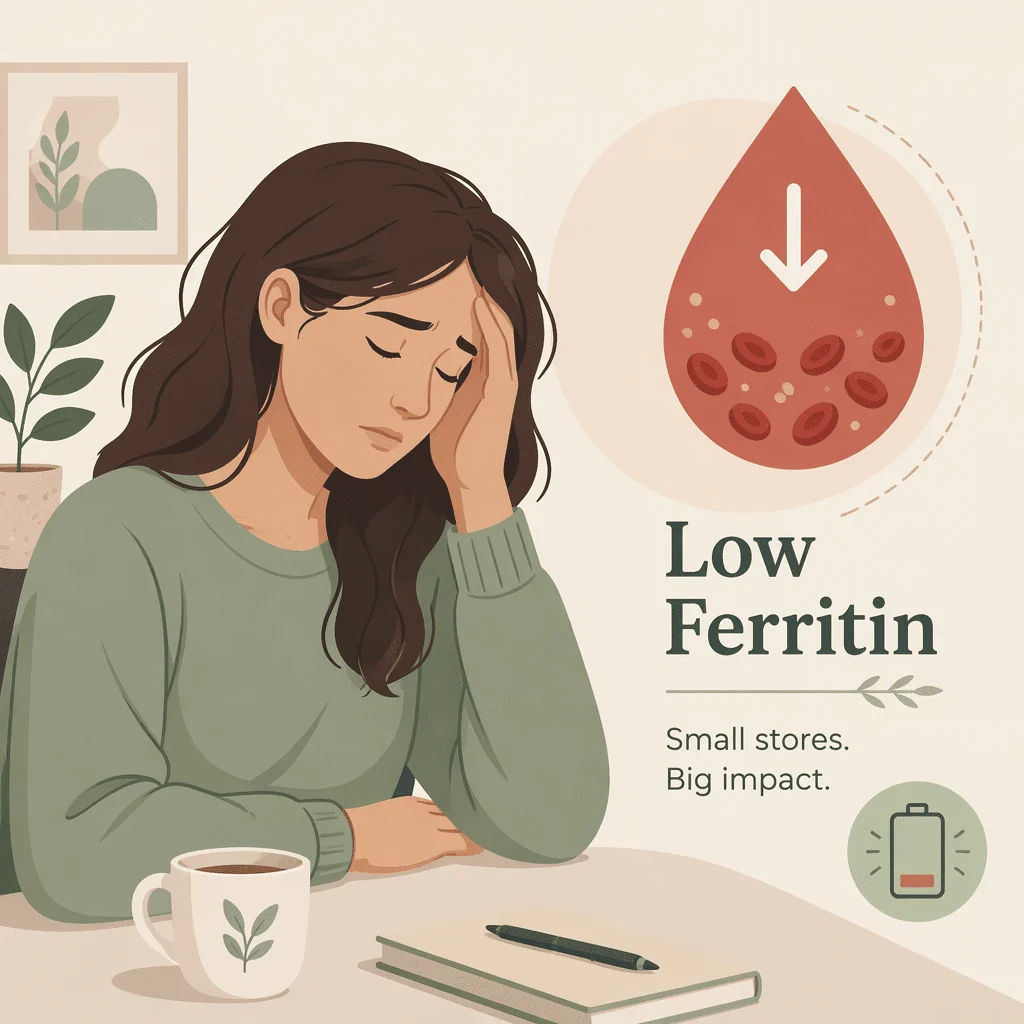
Un rezultat scăzut al feritinei este unul dintre cele mai utile rezultate ale unui test de sânge de rutină și, totodată, unul dintre cele mai frecvent sub-explicate. Feritina este proteina care stochează fierul în celulele tale, astfel că un nivel scăzut al feritinei înseamnă că rezervele de fier se epuizează. Este un rezultat remarcabil de specific: aproape nimic altceva în medicina de zi cu zi nu îl scade.
În acest articol vei afla ce măsoară feritina, de ce o valoare scăzută indică atât de direct o deficiență de fier și de ce o feritină aparent normală poate ascunde totuși o deficiență atunci când există inflamație. Vei afla, de asemenea, de ce deficiența de fier fără anemie este reală și simptomatică, ce cauze merită investigate, de ce un rezultat inexplicabil poate justifica uneori o evaluare a tractului digestiv și ce se întâmplă mai departe.
Ce este feritina și de ce un rezultat scăzut este atât de relevant
Fierul liber în organism este periculos, așa că organismul îl ține aproape în totalitate depozitat în siguranță. Feritina este containerul de stocare: o proteină cu structură cavă care reține fierul în interiorul celulelor, în principal în ficat, splină și măduva osoasă. O cantitate mică ajunge în sânge proporțional cu cât este depozitat, iar această fracțiune circulantă este cea pe care o măsoară analizele de sânge pentru feritină. Este cel mai apropiat indicator pe care medicina de rutină îl are față de o citire directă a rezervelor de fier din organism.
Iată un lucru care merită spus direct, deoarece multe articole îl ocolesc: un nivel cu adevărat scăzut al feritinei este practic diagnostic pentru deficiența de fier. Nicio altă afecțiune comună nu îl scade. Nici bolile de rinichi. Nici bolile tiroidiene. Nici deficiențele de vitamine. Dacă feritina ta este scăzută, ai un deficit de fier. Această specificitate este neobișnuită în rândul analizelor de sânge și de aceea feritina se află în fruntea oricărei investigații raționale a fierului.
Ceilalți markeri ai fierului răspund la întrebări mai specifice. Fier seric arată cât circulă în prezent și variază în funcție de mese și de ora din zi. Transferina și capacitatea totală de legare a fierului descriu sistemul de transport, acoperite în ghidul nostru despre transferină și transportul fierului. Procentul din acea proteină care transportă în prezent fier este un număr separat, cu propria sa interpretare, explicat în articolul nostru despre nivelurile de saturație a fierului și cauzele acestora. Feritina reflectă rezervele și se modifică prima.
Deficiența de fier fără anemie: de ce “hemoleucograma ta este normală” nu spune totul
Deficiența de fier este un proces gradual, nu un eveniment brusc. Mai întâi se golesc rezervele. Feritina scade. Abia mai târziu, odată ce rezervele sunt cu adevărat epuizate, măduva osoasă începe să producă globule roșii mai mici și mai palide decât ar trebui, și abia atunci hemoglobina coboară sub valorile de referință. Anemia este ultimul capitol, nu primul.
Acest lucru contează în practică, deoarece multor persoane li se spune că hemoleucograma completă este bine și sunt trimise acasă, fără ca feritina să fi fost verificată sau să fi fost trecută cu vederea în liniște. Simptomele lor hemoglobina chiar este normal. Rezervele lor de fier nu sunt.
Deficiența de fier fără anemie este frecventă și nu este o simplă curiozitate de laborator fără consecințe. Fierul este necesar mușchilor și țesutului cerebral, nu doar globulelor roșii, astfel că oamenii se pot simți clar rău în timp ce hemoleucograma lor se încadrează confortabil în limite normale. Dacă ai fost ignorat pe baza unei hemoleucograme normale, merită să ridici din nou această problemă, întrebând specific despre feritină.
Un indiciu legat de numărul în sine: pe măsură ce deficiența se adâncește, globulele roșii se micșorează, astfel că un volum mediu celular în scădere susține tabloul clinic. A MCV crescut indică altceva, de obicei spre vitamina B12 sau folat. Dar dimensiunea celulelor se modifică târziu. Feritina se modifică prima.
De ce o ferritină normală poate ascunde totuși o deficiență de fier
Acesta este cel mai frecvent mod în care deficiența de fier trece neobservată.
Feritina este un reactant de fază acută. Organismul o crește deliberat în timpul inflamației, infecțiilor, leziunilor, bolilor hepatice și malignităților, ca parte a unui răspuns defensiv care retrage fierul din circulație și îl îndepărtează de organismele invadatoare. Consecința este incomodă, dar inevitabilă: inflamația crește feritina indiferent de cantitatea de fier stocată efectiv.
Astfel, o persoană poate avea rezervele cu adevărat epuizate și o ferritină care apare ca perfect normală, deoarece artrita reumatoidă, boala inflamatorie intestinală, boala cronică de rinichi, obezitatea sau o infecție recentă au crescut artificial valoarea. Testul nu a funcționat greșit. El măsoară două lucruri în același timp, iar doar unul dintre ele este fierul.
Medicii gestionează acest lucru în două moduri. În primul rând, ridică pragul: la o persoană cu o afecțiune inflamatorie recunoscută, o valoare a feritinei care ar fi liniștitoare la o persoană sănătoasă este tratată ca potențial compatibilă cu deficiența, aplicându-se valori-limită mai ridicate. În al doilea rând, inflamația este măsurată direct, de aceea proteina C reactivă este atât de des solicitat alături de ferritină. Un rezultat CRP îi spune medicului cât de mult să relativizeze valoarea ferritinei.
Concluzia este simplă. O ferritină scăzută este aproape concludentă. O ferritină normală este liniștitoare doar dacă nu există inflamație în fundal. Dacă ai o afecțiune inflamatorie cronică și simptome persistente, o ferritină în intervalul mediu nu închide întrebarea.
Simptome pe care oamenii le observă efectiv
Deoarece fierul face mai mult decât să transporte oxigen, rezervele scăzute produc un set dispersat de simptome, ușor de ignorat. Oboseala este simptomul cel mai frecvent menționat, dar de un tip specific: nu atât somnolență, cât mai degrabă senzația că un efort obișnuit costă mai mult decât înainte.
Toleranța scăzută la efort este frecventă și adesea primul lucru pe care îl observă sportivii, manifestându-se prin recuperare mai lentă și picioare grele cu mult înainte ca performanța să scadă în mod măsurabil. Căderea părului, unghiile fragile și crăpăturile de la colțurile gurii apar în mod regulat. Picioarele neliniștite — acea senzație chinuitoare de a mișca picioarele noaptea — au o asociere bine recunoscută cu rezervele scăzute de fier. Pica, dorința de a mesteca gheață sau alte obiecte care nu sunt alimente, este neobișnuită, dar puternic sugestivă. Ceața mentală și starea de spirit scăzută completează lista. Odată ce se instalează anemia, apare tabloul mai familiar: paloare, dificultăți de respirație la efort, palpitații și amețeli.
Cauzele care merită investigate
Identificarea motivului pentru care a scăzut ferritina contează cel puțin la fel de mult ca înlocuirea fierului, deoarece fierul administrat fără a aborda cauza pur și simplu se epuizează din nou.
Pierderea de sânge menstruală
Sângerările menstruale abundente reprezintă cea mai frecventă cauză a deficienței de fier la femeile în premenopauză și sunt normalizate în mod curent atât de paciente, cât și de medici. Multe persoane nu știu cu adevărat că menstruațiile lor sunt abundente, deoarece nu au cu ce să le compare și sângerează astfel încă din adolescență.
Câteva semne practice: nevoia de a schimba protecția la fiecare oră sau două, scurgeri pe haine sau lenjerie de pat, eliminarea de cheaguri mai mari decât o monedă, sângerare mai mult de șapte zile sau planificarea vieții în jurul ciclului menstrual. Dacă vreunul dintre acestea te descrie, menționează-l la consultație, deoarece sângerarea în sine poate fi adesea tratată, iar tratarea ei este frecvent ceea ce rezolvă în cele din urmă problema fierului.
Cerere crescută și donarea de sânge
Sarcina aproape dublează necesarul de fier, pe măsură ce volumul sanguin crește și fătul își formează propriile rezerve — de aceea statusul fierului este monitorizat în cadrul îngrijirii prenatale. Donarea regulată de sânge epuizează treptat rezervele, iar donatorii fideli pot ajunge la valori scăzute chiar dacă hemoglobina la screening este normală. Puseele de creștere la adolescenți și antrenamentul de anduranță cresc și ele necesarul.
Probleme de absorbție și alimentație
Fierul este absorbit în porțiunea superioară a intestinului subțire, iar acest proces are nevoie de acid gastric. Boala celiacă afectează exact acea porțiune a intestinului unde are loc absorbția, iar deficiența de fier inexplicabilă este o prezentare clasică — uneori fără niciun simptom digestiv. Aceasta este depistată inițial cu serologie pentru boala celiacă.
Infecția cu Helicobacter pylori a mucoasei gastrice interferează cu absorbția fierului și poate provoca sângerări minore. Inhibitorii de pompă de protoni luați pe termen lung reduc acidul gastric și, odată cu acesta, absorbția fierului. Chirurgia bariatrică micșorează sau ocolește suprafața de absorbție, motiv pentru care fierul este monitorizat pe tot parcursul vieții după intervenție. Alimentația contează și ea: fierul din plante este absorbit mult mai puțin eficient decât cel din carne, astfel că dietele vegetariene și vegane cresc semnificativ necesarul de fier.
Pierderi de sânge la nivelul tractului gastrointestinal
Sângerarea lentă și continuă din orice segment al tractului digestiv este o cauză majoră și, de cele mai multe ori, este invizibilă. Sângele pierdut câte puțin nu modifică aspectul scaunului și poate să nu existe durere, arsuri sau schimbări ale tranzitului intestinal. Singurul semn poate fi feritina. Ulcerele, gastrita, bolile inflamatorii intestinale, boala diverticulară, vasele de sânge anormale din intestin, polipii și cancerul de colon pot provoca toate acest lucru, iar utilizarea regulată de aspirină sau antiinflamatoare crește riscul.
Când medicul tău poate recomanda o investigație gastrointestinală
La un bărbat de orice vârstă sau la o femeie după menopauză, deficiența de fier nu are o explicație obișnuită: nu există o pierdere lunară de sânge care să o justifice. Când apare în aceste grupuri fără o cauză evidentă, ghidurile marilor sisteme de sănătate recomandă investigarea tractului digestiv, de obicei printr-o endoscopie a tractului digestiv superior și o colonoscopie. Scopul este identificarea unei surse de sângerare, iar unul dintre lucrurile căutate este cancer colorectal, care pot cauza deficit de fier cu mult înainte de apariția oricăror simptome intestinale.
Citește asta ca o asigurare legată de procedură, nu ca un semnal de alarmă privind rezultatul. Majoritatea persoanelor investigate în acest mod nu au cancer. Recomandarea există tocmai pentru că există cauze tratabile frecvente, iar cele grave sunt descoperite devreme atunci când se caută. Dacă medicul tău propune aceste teste, urmează practica standard — nu reacționează la ceva îngrijorător pe care nu ți l-a spus.
Aceeași logică se aplică mai puțin automat femeilor premenopauză, unde menstruațiile abundente explică de obicei situația. Dar nu este o scutire generală. Dacă sângerarea este redusă, dacă fierul nu se menține după suplimentare, sau dacă există simptome digestive ori antecedente familiale de cancer de colon, intestinul merită totuși investigat.
Cum interpretezi o ferritină scăzută în context
Același număr are o semnificație diferită în funcție de persoana căreia îi aparține. Acestea sunt tiparele care apar cel mai frecvent.
| Situație | Ce înseamnă de obicei | Pasul următor obișnuit |
|---|---|---|
| Feritină scăzută cu hemoglobină normală | Rezervele de fier sunt epuizate, dar deficiența nu a ajuns încă la stadiul de anemie. Simptomele sunt totuși posibile. | Identifică cauza și discută cu medicul tău dacă este necesară suplimentarea. |
| Feritină la limita inferioară a normalului cu CRP crescut | Inflamația poate menține feritina artificial ridicată. Deficiența de fier nu poate fi exclusă pe baza acestui rezultat. | Medicul tău poate aplica un prag mai ridicat pentru feritină și poate solicita teste suplimentare de fier înainte de a lua o decizie. |
| Feritină scăzută la o femeie premenopauză cu menstruații abundente | Pierderea de sânge prin menstruație este cea mai probabilă explicație și, adesea, singura explicație. | Tratează sângerarea în sine, concomitent cu refacerea rezervelor de fier. |
| Feritină scăzută la un bărbat sau la o femeie la menopauză fără o cauză evidentă | Trebuie luată în considerare o posibilă pierdere de sânge la nivelul tractului digestiv, deoarece nu există o explicație obișnuită. | Medicul tău va recomanda de obicei investigarea stomacului și a intestinului. |
Ce urmează și de ce cauza contează la fel de mult ca fierul
Tratamentul deficienței de fier are două componente, iar doar una dintre ele implică fierul.
Prima constă în identificarea și rezolvarea cauzei. Menstruațiile abundente pot fi tratate. Boala celiacă răspunde la o dietă fără gluten. Helicobacter pylori poate fi eradicat. O leziune sângerândă poate fi tratată. Fără acest pas, suplimentarea cu fier devine o rutină fără sfârșit.
A doua constă în refacerea rezervelor. Fierul poate fi administrat oral sau intravenos, iar alegerea între cele două este o decizie clinică ce depinde de cât de scăzute sunt rezervele, de cât de bine absoarbe intestinul, de toleranța persoanei la fierul oral și de cât de rapid este necesară corectarea. Fierul intravenos este rezervat, în general, cazurilor în care fierul oral nu poate fi administrat sau nu este tolerat și se administrează într-un cadru supravegheat.
În mod deliberat, acest articol nu oferă doze, scheme de tratament sau recomandări de produse. Suplimentarea cu fier este o decizie medicală, nu una pe care să o iei singur. A lua fier fără să ai nevoie nu este inofensiv: excesul de fier se acumulează în ficat, inimă și pancreas și provoacă leziuni — aceasta este tocmai problema în cazul hemocromatozei ereditare. La fel de important, automedicația maschează rezultatele: feritina ta revine la normal, toată lumea se relaxează, iar leziunea care a cauzat sângerarea nu este niciodată descoperită.
Indiferent de decizia luată, sunt de așteptat analize de urmărire. Feritina este reverificată pentru a confirma că rezervele se refac, și din nou după încheierea tratamentului. O feritină care scade din nou este o informație importantă, deoarece înseamnă că pierderea continuă.
Semne de alarmă care necesită consultarea unui medic
Consultă un medic de urgență dacă ai feritina scăzută împreună cu oricare dintre următoarele:
- Scaune negre, gudronate sau sânge vizibil în scaun
- Vărsături cu sânge sau vărsături care arată ca zaț de cafea
- Scădere în greutate neintenționată
- Dificultăți de respirație în repaus sau la efort minim, sau dureri în piept
- Leșin sau episoade repetate în care simți că ești pe punctul de a leșina
- Deficiență de fier la un bărbat sau la o femeie după menopauză, fără o cauză evidentă
Solicită îngrijiri de urgență în caz de sângerare abundentă vizibilă, vărsături cu sânge, durere în piept sau pierderea cunoștinței.
Cele mai recente progrese științifice în testarea feritinei
Cercetările recente au convergit spre o întrebare practică: pragurile pentru feritină utilizate de laboratoare sunt stabilite prea jos și câte deficiențe sunt astfel ratate?
Un studiu multinațional desfășurat în douăsprezece țări a adoptat o abordare nouă față de pragul de referință. În loc să se bazeze pe opinii ale experților, cercetătorii au căutat nivelul de ferritină la care hemoglobina începe efectiv să scadă și la care organismul semnalează că îi lipsește fierul. Aceste puncte de inflexiune s-au situat semnificativ mai sus decât ghidurile internaționale actuale, iar aplicarea lor a dublat aproximativ prevalența măsurată a deficitului de fier la femei și copii mici. Ce înseamnă asta pentru tine: un rezultat marcat ca normal, dar aflat aproape de limita inferioară a intervalului, merită să fie discutat cu medicul.
O analiză de laborator din 2025 a ajuns la o concluzie similară dintr-o altă perspectivă. Construind intervale de referință pe baza pacienților confirmați ca având rezerve de fier normale, și nu pe baza populației generale, autorii au descoperit că limitele inferioare folosite de multe laboratoare sunt trase în jos de includerea persoanelor care aveau, fără să știe, un deficit de fier. Ridicarea pragului a îmbunătățit semnificativ detectarea, cu cel mai mare câștig în rândul femeilor. Ce înseamnă asta pentru tine: intervalele de referință descriu ce este frecvent, nu ce este sănătos.
O analiză din 2025 a markerilor de laborator ai statusului fierului a explicat de ce acest lucru este dificil în practică. S-a subliniat că feritina funcționează bine în cazurile simple, dar slab atunci când există inflamație, și că pragul diagnostic variază considerabil între ghidurile specifice diferitelor boli tocmai din acest motiv. Ce înseamnă asta pentru tine: dacă ai o afecțiune inflamatorie sau cronică, medicul tău poate evalua feritina ta în raport cu un alt standard și poate adăuga alți markeri.
Referitor la simptome, o analiză sistematică și meta-analiză din 2025 a adunat date din studii privind suplimentarea cu fier la persoane cu deficit de fier, dar fără anemie – în principal adulți cu menstruație, copii și adolescenți. Analizând studiile randomizate controlate cu placebo, fierul a îmbunătățit oboseala, simptomele de anxietate, starea fizică generală și anumite aspecte ale memoriei, fără niciun beneficiu la participanții care nu aveau deficit. Ce înseamnă asta pentru tine: deficitul de fier înainte de instalarea anemiei poate afecta cu adevărat modul în care te simți și gândești.
În final, o analiză privind feritina serică și bolile colonice a examinat relația dintre deficitul de fier și patologia intestinală. S-a confirmat că deficitul de fier este cel mai frecvent semn al bolii colonice care apare în afara intestinului și că atât endoscopia superioară, cât și colonoscopia sunt recomandate în general pentru deficitul de fier inexplicabil, în special la bărbați și la femeile la menopauză. Ce înseamnă asta pentru tine: investigarea este bazată pe dovezi și de rutină.
Glosar de termeni cheie
| Termen | Definiție |
|---|---|
| Feritină | Proteina care depozitează fierul în interiorul celulelor. Cantitatea din sânge reflectă rezervele de fier ale organismului. |
| Rezervele de fier | Rezerva de fier stocată în ficat, splină și măduva osoasă, la care organismul apelează atunci când aportul nu acoperă necesarul. |
| Reactant de fază acută | O substanță al cărei nivel sanguin se modifică în timpul inflamației sau infecției. Feritina crește, ceea ce poate masca un deficit. |
| Deficit de fier | O stare în care fierul din organism este insuficient pentru funcționarea normală, cu sau fără prezența anemiei. |
| Anemie feriprivă | Stadiul avansat, în care lipsa fierului a redus hemoglobina sub valorile normale. |
| Hemoglobină | Proteina care conține fier din globulele roșii și care transportă oxigenul în tot organismul. |
| Volum eritrocitar mediu (MCV) | Dimensiunea medie a globulelor roșii. Scade în deficitul de fier instalat, dar doar în stadii târzii. |
| proteina C reactivă (PCR) | Un marker sanguin al inflamației, măsurat adesea alături de feritină pentru a ajuta la interpretarea acesteia. |
| Endoscopie | O examinare cu cameră a tractului digestiv, folosită pentru a identifica o sursă de sângerare. |
| Pica | O poftă de a mesteca sau mânca substanțe care nu sunt alimente, cum ar fi gheața, uneori asociată cu rezerve scăzute de fier. |
Întrebări frecvente
Pot avea feritina scăzută cu o hemogramă normală?
Da, și aceasta este una dintre cele mai frecvente neînțelegeri legate de fier. Feritina măsoară rezerva ta, în timp ce hemoleucograma măsoară produsul final. Organismul protejează producția de hemoglobină cât mai mult posibil, consumând mai întâi rezervele, astfel că feritina scade cu mult înainte ca globulele roșii să fie afectate. O hemoleucogramă normală nu exclude, prin urmare, deficitul de fier și nu înseamnă că simptomele tale nu au o explicație. Dacă feritina ta este scăzută și te simți obosit, ai dificultăți de respirație la efort sau te simți „ceățos" mental, aceasta este o combinație recunoscută care merită discutată, nu ignorată.
Ar trebui să iau pur și simplu un supliment de fier?
Nu fără a ști de ce feritina ta este scăzută și nu fără sfatul medicului. Există două motive. În primul rând, fierul în exces nu este inofensiv: se acumulează în ficat, inimă și pancreas și provoacă leziuni în timp, deci trebuie luat doar când există o nevoie demonstrată. În al doilea rând, și mai important, corectarea valorii fără a identifica cauza ascunde problema. Dacă o sângerare lentă la nivelul tubului digestiv îți epuizează fierul, un supliment îți va crește feritina în timp ce cauza de bază continuă necontrolată. Medicul tău este cel care decide dacă, cum și pentru cât timp trebuie suplimentat fierul.
Cât timp durează recuperarea după feritina scăzută?
Mai mult decât se așteaptă majoritatea oamenilor. Simptomele încep adesea să se amelioreze în câteva săptămâni de la un tratament eficient, dar refacerea rezervelor este mai lentă decât corectarea hemoglobinei, iar reumplerea unui depozit gol durează de obicei câteva luni. De aceea tratamentul este continuat de obicei o perioadă după ce analizele de sânge se normalizează, și de aceea feritina este reverificată ulterior. Dacă feritina scade din nou după oprirea tratamentului, aceasta este o informație importantă, deoarece indică faptul că pierderea de fond nu a fost rezolvată.
Ce înseamnă un nivel de ferritină periculos de scăzut?
Nu există o valoare unică de la care situația devine periculoasă, iar intervalele de referință diferă de la un laborator la altul. Ceea ce contează mai mult este combinația: cât de scăzută este valoarea, dacă hemoglobina a scăzut, cum te simți și dacă există o inflamație care distorsionează rezultatul. Valori foarte scăzute însoțite de dificultăți de respirație, dureri în piept, leșin sau sângerare vizibilă necesită o evaluare medicală promptă. O valoare ușor scăzută la o persoană care se simte relativ bine merită în continuare explicată, dar nu este o urgență. Interpretează-ți rezultatul împreună cu medicul care ți-a recomandat analiza.
De ce am feritina scăzută când fierul seric este normal?
Acest tipar este frecvent și de obicei real. Fierul seric reflectă ceea ce circulă în sânge în momentul recoltării și variază considerabil în funcție de mese, suplimente și ora din zi. Feritina reflectă rezerva din spatele acestei circulații. La începutul deficitului de fier, organismul depune efort pentru a menține fierul circulant în limite normale chiar și pe măsură ce rezervele se golesc, astfel că un fier seric normal cu o ferritină scăzută înseamnă de obicei că rezerva este epuizată, dar aprovizionarea zilnică se menține. Feritina este mai informativă dintre cele două.
Trebuie să fiu pe nemâncate înainte de analizele de sânge pentru feritină?
Practica variază și ar trebui să urmezi instrucțiunile indicate pe formularul de recoltare. Unii medici cer o probă de dimineață sau pe nemâncate, mai ales când fierul seric este măsurat în același timp, deoarece fierul circulant variază pe parcursul zilei. Feritina în sine este mai stabilă. De obicei, este mai important să menționezi orice suplimente de fier pe care le iei și orice infecție sau boală recentă, deoarece ambele pot modifica rezultatele și modul în care acestea trebuie interpretate.
Surse
- MedlinePlus, Biblioteca Națională de Medicină a SUA — Testul de sânge pentru ferritină
- NIH Office of Dietary Supplements — Fier: Fișă informativă pentru consumatori
- National Institute of Diabetes and Digestive and Kidney Diseases — Boala celiacă
- Addo OY, Mei Z, Jefferds MED, et al. Physiologically based serum ferritin thresholds for iron deficiency among women and children from Africa, Asia, Europe, and central America: a multinational comparative study. The Lancet Global Health, 2025 (via PubMed)
- Troike KM, McShane AJ. Re-evaluating ferritin thresholds to diagnose iron deficiency. Clinical Biochemistry, 2025 (via PubMed)
- Girelli D, Marchi G, Busti F, Chesini F, Castagna A. Diagnostics: Markers of Body Iron Status. Advances in Experimental Medicine and Biology, 2025 (via PubMed)
- Fiani D, Chahine S, Zaboube M, Solmi M, Powers JM, Calarge C. Psychiatric and cognitive outcomes of iron supplementation in non-anemic children, adolescents, and menstruating adults: a meta-analysis and systematic review. Neuroscience and Biobehavioral Reviews, 2025 (via PubMed)
- Urback AL, Martens K, McMurry HS, Sharma A, Citti C, DeLoughery TG, Shatzel JJ. Serum ferritin and risk of colonic neoplasia: implications for the workup and treatment of iron deficiency. European Journal of Haematology, 2024 (via PubMed)
Lectură suplimentară
- Saturația transferinei explicată: valori și cauze
- Transferina: rolul său în transportul fierului
- Feritina crescută: cauze, simptome și riscuri
- Panoul de analize pentru fier: ce arată fiecare test
- Anemie: simptome, cauze și analize
Înțelege-ți rezultatele analizelor cu AI DiagMe
Feritina ta apare rareori singură. De obicei se află pe un buletin alături de o hemogramă completă, un CRP și o saturație a transferinei, iar semnificația fiecărei valori depinde de celelalte. AI DiagMe citește aceste rezultate împreună și le explică pe înțelesul tău, astfel încât să ajungi la consultație știind exact ce întrebări să pui. Te ajută să îți înțelegi analizele; nu pune diagnostice și nu înlocuiește medicul tău.
Obține interpretarea rezultatelor în câteva minute