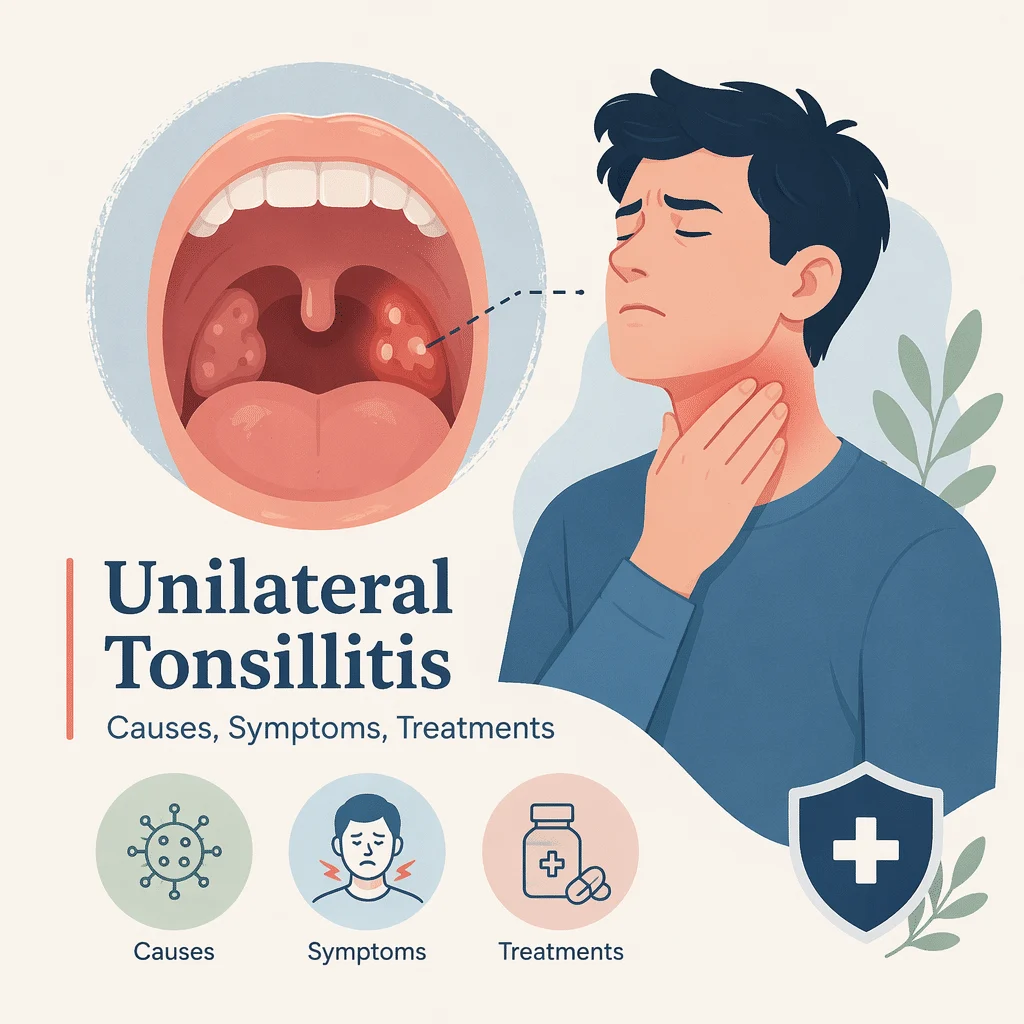
Amigdalita unilaterală este o inflamație care afectează o singură amigdală, în timp ce cealaltă rămâne normală, iar acest detaliu schimbă ceea ce caută medicul. O durere în gât pe ambele părți indică de obicei o infecție virală sau bacteriană obișnuită. Când doare doar o parte, lista explicațiilor posibile se lărgește: o colecție de puroi lângă amigdală, un calcul amigdalian blocat, o infecție de lungă durată în criptele amigdaliene sau, mult mai rar, o formațiune care necesită evaluare de specialitate. Majoritatea durerilor de gât unilaterale sunt totuși infecții obișnuite care se rezolvă în una-două săptămâni. În acest articol vei afla ce cauzează amigdalita unilaterală, care semne de alarmă necesită consultarea medicului în aceeași zi, cum diferențiază medicii posibilitățile, ce analize de laborator ajută și când asimetria persistentă a amigdalelor merită o consultație la medicul ORL.
De ce amigdalita unilaterală este evaluată diferit
Amigdalele palatine sunt două mase de țesut imunitar situate de o parte și de alta a fundului gâtului. Ele vin în contact cu același aer, aceleași alimente și aceiași germeni în același timp, astfel că o infecție care le atinge le inflamează de obicei pe amândouă. Când inflamația se oprește la linia mediană, ceva acționează doar pe o singură parte.
Ce îi spune unui medic o durere pe o singură parte
Asimetria este un semnal despre mecanism, nu despre gravitate. O colecție localizată de puroi, un calcul blocat într-o singură criptă sau țesut care crește într-o singură amigdală sunt prin natura lor unilaterale. Un virus care circulă în sânge nu este. De aceea, un medic care examinează o durere în gât unilaterală pune un set diferit de întrebări: cât de repede a apărut, poți deschide gura complet, ți s-a schimbat vocea și de cât timp există această diferență.
Umflarea simetrică este o problemă separată
Amigdalele mărite pe ambele părți care se ating la mijloc reprezintă o afecțiune diferită, cu cauze diferite și un protocol de investigare diferit. Echipa noastră abordează cauzele și gradele de severitate ale amigdalelor care se ating. Acest articol tratează doar tabloul unilateral.
Ce cauzează amigdalita unilaterală
Infecții virale
Virusurile provoacă majoritatea durerilor în gât. De obicei afectează ambele părți, dar la începutul bolii o amigdală poate părea mai inflamată decât cealaltă, iar durerea se simte adesea mai intensă pe partea pe care dormi sau spre care înghiți. Durerile în gât de cauză virală se instalează treptat, în una-două zile, sunt însoțite de nas înfundat sau tuse și trec de la sine.
Infecție bacteriană cu streptococ de grup A
Angina streptococică se manifestă clasic prin febră, durere la înghițit, amigdale roșii și umflate și depozite albe de puroi. Poate debuta asimetric. Potrivit Centrelor pentru Controlul și Prevenirea Bolilor, streptococul este responsabil de aproximativ 1 din 10 dureri în gât la adulți și 3 din 10 la copii, deci majoritatea durerilor în gât, chiar și cele cu aspect convingător, nu sunt cauzate de streptococ.
Calculi amigdalieni (dopuri de amigdale)
Amigdalolitele sunt dopuri întărite de resturi și bacterii care se fixează într-o criptă amigdaliană. Un singur calcul într-o criptă produce exact tiparul pe care oamenii îl descriu: o iritație persistentă pe o singură parte, senzația că ceva este blocat, respirație urât mirositoare și uneori o pată albă vizibilă. Ghidul nostru explică simptomele calculilor amigdalieni ascunși.
Abcesul periamigdalian
Un abces peritonsilar, cunoscut istoric sub numele de chinsie (quinsy), este o colecție de puroi între amigdală și peretele muscular din spatele acesteia. Este cea mai importantă cauză tratabilă de durere severă în gât pe o singură parte și reprezintă o urgență care necesită intervenție în aceeași zi, nu o situație de așteptare. Apare adesea după o durere în gât care părea să se amelioreze, dar care s-a agravat brusc pe o parte.
Mononucleoza infecțioasă
Mononucleoza, cauzată de virusul Epstein-Barr, produce o umflare dramatică a amigdalelor, un depozit gros alb-cenușiu, ganglioni cervicali măriți și oboseală profundă. Umflarea este adesea suficient de asimetrică pentru a părea unilaterală la prima vedere. Mononucleoza durează de obicei mult mai mult decât o durere obișnuită în gât.
Cauze mai puțin frecvente
Inflamația cronică a unei amigdale, o infecție dentară care se extinde spre posterior, un ulcer viral sau o criptă iritată pot fi toate localizate pe o singură parte. Echipa noastră descrie, de asemenea, aspectul neregulat al gâtului cu aspect de piatră de pavaj, pe care pacienții o confundă uneori cu o infecție unilaterală.
Semne de alarmă care necesită îngrijire urgentă
Următoarele semne sugerează un abces peritonsilar sau o infecție profundă a gâtului în extindere. Nu sunt motive să aștepți până dimineața. Mergi urgent la medic sau la urgențe dacă o durere în gât pe o singură parte este însoțită de oricare dintre acestea.
- Imposibilitatea de a deschide gura complet sau durere la încercarea de a o deschide. Medicii numesc aceasta trismus, iar conform StatPearls apare în aproape toate abcesele peritonsilare.
- O voce înăbușită, îngroșată, adesea descrisă ca „vocea cu cartof fierbinte în gură".
- Salivație excesivă sau incapacitatea de a înghiți propria salivă.
- Uvula, micul apendice care atârnă în spatele gâtului, împinsă spre partea opusă.
- Durere severă pe o parte însoțită de febră mare.
- Orice dificultate de respirație, respirație zgomotoasă sau nevoia de a sta în poziție șezândă și de a te apleca în față pentru a respira confortabil.
- Umflarea gâtului sau durere și rigiditate la întoarcerea capului.
Dificultatea de respirație este cea mai urgentă dintre toate. Siguranța căilor respiratorii este evaluată înaintea oricărei investigații imagistice sau analize de sânge.
Cum se deosebesc cauzele posibile
Cinci caracteristici ajută cel mai mult la diferențierea cauzelor frecvente ale unei dureri în gât pe o singură parte: cât de repede a apărut, dacă există febră, dacă gura se deschide normal, dacă vocea s-a schimbat și cât timp a durat. Tabelul de mai jos este un ghid orientativ, nu un diagnostic.
| Caracteristică | Infecție virală | Infecție streptococică | Abcesul periamigdalian | Asimetrie persistentă |
|---|---|---|---|---|
| Viteza de instalare | Se instalează în una-două zile | Destul de brusc, în decurs de o zi | Rapid, adesea agravându-se în câteva ore după apariția durerii în gât | Foarte lentă, observată în decurs de săptămâni sau luni |
| Febră | Absentă sau ușoară | Adesea prezentă | De obicei prezentă și ridicată | De obicei niciuna |
| Deschiderea gurii | Normal | Normală sau ușor dureroasă | Limitată și dureroasă, uneori aproape imposibilă | Normal |
| Vocea | Normal | Normală sau ușor răgușită | Înfundată, ca și cum ai vorbi cu gura plină | Normal |
| Evoluție tipică | Se ameliorează în cinci până la șapte zile | Se ameliorează în una-două zile de la începerea antibioticelor | Nu se ameliorează fără tratament medical sau drenaj | Neschimbată timp de săptămâni, fără infecție |
Când asimetria persistentă a amigdalelor necesită consultul unui medic ORL
Aceasta este întrebarea care aduce cei mai mulți oameni pe această pagină noaptea târziu, așa că merită un răspuns clar. O durere în gât pe o singură parte care apare cu febră și trece în două săptămâni este o infecție. Mărirea persistentă și nedureroasă a unei singure amigdale la un adult, fără nicio infecție care să o explice, este cea care poate semnala uneori altceva, inclusiv cancer amigdalian. Cancerele din această zonă sunt frecvent asociate cu virusul papiloma uman, iar National Cancer Institute include amigdalele printre localizările în care se dezvoltă cancerul orofaringian. Ghidul nostru acoperă transmiterea și prevenirea HPV.
Două aspecte ajută la o perspectivă corectă. În primul rând, ochiul liber nu este de încredere: într-un studiu multicentric pe amigdale îndepărtate pentru asimetrie suspectată, o treime dintre amigdalele care păreau mai mari nu erau de fapt mai mari la măsurare. În al doilea rând, în seriile publicate de mărire unilaterală a amigdalelor, practic fiecare caz care s-a dovedit a fi grav prezenta semne de alarmă suplimentare pe lângă umflătură, nu umflătură izolată.
Programează o consultație ORL non-urgentă dacă mărirea pe o singură parte este însoțită de oricare dintre următoarele:
- Asimetrie care persistă câteva săptămâni fără o durere în gât sau o infecție care să o explice.
- Mărire nedureroasă sau care crește în loc să rămână stabilă.
- O umflătură la nivelul gâtului sau un ganglion cervical care nu dispare.
- Pierdere inexplicabilă în greutate, transpirații nocturne abundente sau febră persistentă.
- Durere de ureche pe aceeași parte cu amigdala afectată, cu un examen al urechii normal.
- Salivă cu sânge, o pată albă, un ulcer sau o modificare vizibilă a suprafeței amigdalei.
- Dificultate la înghițit care se agravează sau o schimbare în vorbire.
Ganglionii limfatici umflați la nivelul gâtului pot însoți atât infecțiile obișnuite, cât și afecțiunile limfatice. Această resursă descrie primele simptome ale limfomului. Durerea de ureche care iradiază din gât este frecventă și de obicei inofensivă, dar o infecție reală a urechii arată diferit la examinare; echipa noastră explică semnele unei infecții a urechii medii.
Ce analize de laborator sunt utile în amigdalita unilaterală
Nicio analiză de sânge nu diagnostichează prin ea însăși o durere în gât unilaterală. Testele sunt folosite pentru a răspunde la întrebări specifice: este bacteriană, este mononucleoză și cât de mare este inflamația.
Testul rapid pentru streptococ și cultura faringiană
Un tampon de pe amigdală oferă un rezultat în câteva minute. O cultură faringiană durează una-două zile și depistează cazurile pe care testul rapid le ratează. Un rezultat pozitiv identifică o durere în gât pentru care antibioticele vor scurta evoluția bolii.
Hemoleucogramă completă cu formulă leucocitară
Acest test numără globulele albe care luptă împotriva infecției și le clasifică după tip. O creștere a neutrofilelor indică mai degrabă o infecție bacteriană; o creștere a limfocitelor, în special a celor atipice, indică mai degrabă o infecție virală și ridică posibilitatea mononucleozei. Ghidul nostru explică cum să citești o hemogramă completă, iar echipa noastră detaliază cauzele numărului crescut de neutrofile alături de semnificația unui număr crescut de limfocite.
Testul monospot și serologia pentru virusul Epstein-Barr
Testul monospot detectează anticorpii produși în cursul mononucleozei. Poate fi fals negativ în prima săptămână, de aceea serologia pentru virusul Epstein-Barr este utilizată atunci când tabloul clinic este sugestiv, dar monospot-ul este negativ. Confirmarea mononucleozei are importanță practică: schimbă recomandările privind sporturile de contact și antibioticele care trebuie evitate.
proteina C reactivă
PCR crește odată cu inflamația și scade pe măsură ce aceasta se remite. Nu identifică o cauză, dar un nivel semnificativ crescut la o persoană cu durere unilaterală severă susține un proces bacterian important, cum ar fi un abces. Acest articol acoperă markerul de inflamație proteina C reactivă în detaliu.
Investigații imagistice
Când se suspectează un abces, ecografia efectuată la patul pacientului poate confirma rapid prezența unei colecții de puroi, iar tomografia computerizată cu contrast este folosită atunci când tabloul clinic este neclar sau poate fi implicat un spațiu mai profund al gâtului.
Cum se tratează amigdalita unilaterală
Tratamentul urmează cauza, nu partea afectată.
- Durerile în gât de cauză virală necesită calmarea durerii, hidratare și odihnă. Antibioticele nu ajută și nu sunt prescrise.
- Infecția confirmată cu streptococ se tratează cu un antibiotic cu spectru îngust, de obicei penicilină sau amoxicilină. Simptomele se ameliorează de obicei în una-două zile, iar tratamentul complet se finalizează indiferent de evoluție.
- Un abces peritonsilar se tratează cu antibiotice intravenoase, controlul durerii și drenaj prin aspirație cu ac sau o mică incizie atunci când există o colecție bine delimitată. Majoritatea persoanelor se ameliorează în câteva zile.
- Amigdalitele cronice cu dopuri (cripte amigdaliene) sunt de obicei gestionate prin gargară și îndepărtare blândă. Dopurile recurente care provoacă simptome persistente sunt uneori tratate printr-o procedură de netezire a criptelor.
- Amigdalectomia este luată în considerare în cazul infecțiilor frecvent recurente, al abceselor repetate sau al obstrucției, iar îndepărtarea în scop diagnostic este rezervată asimetriei însoțite de semne de alarmă.
Măsurile la domiciliu care ajută cu adevărat sunt simple: gargară cu apă sărată caldă, alimente reci sau moi, lichide suficiente și analgezice fără prescripție medicală luate conform indicațiilor.
Cele mai recente progrese științifice
Cercetările recente s-au concentrat pe o întrebare practică: care amigdale unilaterale necesită cu adevărat intervenție chirurgicală și care pot fi urmărite în siguranță.
Asimetria izolată, fără alte semne, este de obicei inofensivă
O analiză din 2025, care a acoperit șaptesprezece ani de chirurgie amigdaliană la copii într-un spital pediatric din Marea Britanie, a examinat fiecare copil operat pentru mărirea unilaterală a amigdalei. Dintre mai mult de trei sute de copii, limfomul a fost descoperit la aproximativ unul din optzeci, iar fiecare dintre acești copii prezenta și alte semne de alarmă în acel moment: un ganglion cervical mărit în toate cazurile și, adesea, o amigdală cu aspect vizibil anormal, sforăit sau dificultăți la înghițit. Ce înseamnă asta pentru tine: mărirea unilaterală izolată, fără niciun alt semn asociat, este tiparul pe care autorii recomandă să îl urmărești, nu să îl operezi.
Amigdala care pare mai mare adesea nu este
Un studiu multicentric pe 323 de pacienți ale căror amigdale au fost îndepărtate pentru asimetrie suspectată a comparat ceea ce clinicienii au observat cu ceea ce s-a măsurat ulterior. În aproximativ o treime din cazuri, amigdala considerată mai mare la inspecție vizuală s-a dovedit a fi cea mai mică. Mărirea rapidă, nu mărirea în sine, a fost caracteristica asociată cu un rezultat grav. Ce înseamnă asta pentru tine: impresia vizuală din oglinda din baie este o măsurătoare nesigură, iar modificarea în timp contează mult mai mult decât o singură privire.
Abcesele gâtului au devenit mai frecvente după pandemie
Un studiu realizat în două centre din SUA a constatat că abcesele capului și gâtului la copii, inclusiv abcesele periamigdaliene, au devenit de aproximativ trei ori mai frecvente după ridicarea restricțiilor din pandemie față de perioada anterioară. Aceasta este o observație timpurie din două spitale, nu un recensământ național, astfel că amploarea creșterii rămâne incertă. Ce înseamnă asta pentru tine: o durere severă în gât, pe o singură parte, merită luată în serios, iar medicii văd tot mai multe astfel de infecții față de trecut.
Ecografia la patul bolnavului schimbă modul în care sunt confirmate abcesele
O analiză din 2026 privind infecțiile profunde ale gâtului la copii a concluzionat că ecografia efectuată la patul pacientului este suficient de precisă pentru a confirma un abces periamigdalian în majoritatea cazurilor, rezervând tomografia computerizată pentru situațiile neclare sau mai complexe. Analiza reafirmă și ordinea priorităților: căile respiratorii sunt evaluate mai întâi, înainte de orice investigație imagistică. Ce înseamnă asta pentru tine: confirmarea unui abces nu mai necesită de obicei o scanare, ceea ce scutește atât de radiații, cât și de timp.
Glosar
| Termen | Definiție |
|---|---|
| Unilateral | Afectează doar o parte a corpului. Opusul, bilateral, înseamnă ambele părți. |
| Amigdalele palatine | Cele două mase de țesut imunitar vizibile pe fiecare parte a gâtului, în spate. Acestea sunt amigdalele la care se referă oamenii în vorbirea de zi cu zi. |
| Abcesul periamigdalian | O colecție de puroi între amigdală și peretele muscular din vecinătatea ei. Se mai numește și quinsy. Necesită îngrijire medicală în aceeași zi. |
| Trismus | Deschiderea limitată a gurii, cauzată de spasmul sau inflamația mușchilor masticatori. |
| Tonzilolith | Un calcul amigdalian. Un dop întărit de resturi, celule și bacterii prins într-o criptă amigdaliană. |
| Criptă | Unul dintre pliurile adânci de pe suprafața amigdalei, unde se pot acumula resturi și bacterii. |
| Otalgie | Durere de ureche. Când provine din gât și nu din ureche în sine, se numește otalgie referită. |
| Limfadenopatie cervicală | Umflarea ganglionilor limfatici din gât, de obicei un răspuns normal al organismului la o infecție din apropiere. |
| Orofaringele | Partea de mijloc a gâtului, situată în spatele gurii. Include amigdalele, palatul moale și baza limbii. |
| Exsudat | Depunerea albă sau gălbuie vizibilă pe o amigdală infectată, formată din lichid, celule imunitare și resturi celulare. |
Întrebări frecvente
Amigdalita unilaterală este frecventă?
Durerea în gât pe o singură parte este foarte frecventă, iar o infecție cu adevărat unilaterală reprezintă o variație normală, nu o raritate. Multe infecții bilaterale încep și ele pe o singură parte și se extind în una-două zile. Ceea ce este mai puțin obișnuit este situația care îngrijorează cel mai mult: o amigdală care rămâne vizibil mărită timp de săptămâni, fără durere și fără nicio infecție care să explice acest lucru. Acel tipar este neobișnuit și merită consultat de un medic, nu urmărit acasă.
Poți avea amigdalită unilaterală fără febră?
Da. Multe dureri în gât de cauză virală produc febră mică sau deloc, iar calculii amigdalieni și iritația cronică a criptelor de obicei nu provoacă febră. Absența febrei este un semn liniștitor împotriva unei infecții bacteriene în extindere, dar nu exclude un calcul amigdalian sau o asimetrie persistentă. Dacă o durere în gât pe o singură parte nu este însoțită de febră, dar persistă mai mult de două săptămâni, merită un consult medical chiar dacă te simți bine în rest.
De ce o durere în gât pe o singură parte provoacă durere de ureche pe aceeași parte?
Gâtul și urechea împart aceleași căi nervoase, astfel că creierul poate interpreta greșit un semnal venit de la o amigdală inflamată ca provenind din urechea de pe acea parte. Aceasta se numește durere referită și este unul dintre cele mai frecvente tipare în problemele de gât unilaterale. Urechea în sine este de obicei complet normală la examinare. Durerea de ureche devine mai îngrijorătoare atunci când persistă alături de o amigdală mărită și nedureroasă, nu alături de o durere evidentă în gât.
Amigdalita este contagioasă și când este afectată doar o parte?
Depinde în totalitate de cauză, nu de numărul de părți implicate. Infecțiile virale și streptococice sunt contagioase și se transmit prin picături rezultate din tuse, strănut și contact apropiat. Streptococul nu mai este, în general, contagios după aproximativ 24 de ore de tratament cu antibiotice. Depozitele amigdaliene, inflamația cronică a criptelor și asimetria amigdalelor nu sunt deloc contagioase, deoarece nu este implicată nicio infecție transmisibilă.
Poate COVID-19 să provoace durere în gât pe o singură parte?
COVID-19 provoacă frecvent durere în gât și, ca în cazul altor infecții virale, aceasta poate fi mai intensă pe o parte, mai ales în prima zi sau două. În sine, durerea în gât pe o singură parte nu diferențiază COVID-19 de orice alt virus. Testarea este singura modalitate de a afla. Semnele care ar schimba planul de tratament sunt aceleași indiferent de virusul implicat: dificultate la deschiderea gurii, voce înfundată, salivație excesivă sau dificultăți de respirație.
O amigdală arată mai mare decât cealaltă de câteva luni. Ar trebui să mă îngrijorez?
O asimetrie stabilă, de lungă durată, fără alte simptome, este de obicei inofensivă, iar studiile sugerează că diferența este adesea mai mică decât pare în oglindă. Ceea ce contează sunt semnele însoțitoare și modificările: o amigdală mărită însoțită de un ganglion la nivelul gâtului, scădere în greutate, durere de ureche pe o singură parte, sângerare sau o modificare vizibilă a suprafeței, ori una care crește în mod evident, ar trebui evaluată de un medic ORL. Asimetria stabilă și fără simptome este, în general, monitorizată, nu tratată chirurgical.
Surse
- MedlinePlus, National Library of Medicine — Tonsillitis — https://medlineplus.gov/tonsillitis.html
- Centers for Disease Control and Prevention — About Strep Throat — https://www.cdc.gov/group-a-strep/about/strep-throat.html
- National Cancer Institute — Oropharyngeal Cancer Treatment (PDQ), Patient Version — https://www.cancer.gov/types/head-and-neck/patient/adult/oropharyngeal-treatment-pdq
- Gupta G, McDowell RH — Peritonsillar Abscess — StatPearls, NCBI Bookshelf — https://www.ncbi.nlm.nih.gov/books/NBK519520/
- Nelson A, Bujoreanu I, Gaskin J — Clinical significance and diagnostic approach for paediatric unilateral tonsillar enlargement: insights from a retrospective analysis — Annals of the Royal College of Surgeons of England, 2025 — https://doi.org/10.1308/rcsann.2024.0113
- Edwards D, Sheehan S, Ingrams D — Unilateral tonsil enlargement in children and adults: is routine histology tonsillectomy warranted? A multi-centre series of 323 patients — The Journal of Laryngology and Otology, 2022 — https://doi.org/10.1017/S002221512200216X
- DiBlasi M, Higgins RC, Welch N, Jones D, Chang AJ — Increased Pediatric Head and Neck Abscesses Following the COVID-19 Pandemic — The Laryngoscope, 2026 — https://doi.org/10.1002/lary.70742
- Darawish SM, Shahid MA, Aziz N, et al. — Infecții profunde ale spațiului cervical la copii: urgențe periamigdaliene, retrofaringiene, parafaringiene și angina Ludwig în departamentul de urgențe pediatrice — American Journal of Otolaryngology, 2026 — https://doi.org/10.1016/j.amjoto.2026.104864
Lectură suplimentară
- Herpesul faringian: simptome, cauze și tratamente
- HPV pe limbă: simptome, riscuri, tratamente
- Sinuzită: simptome, cauze și tratamente
- Apneea în somn: înțelegere, diagnostic și tratament
- Viteza de sedimentare a hematiilor (VSH): înțelegerea acestui marker
Înțelege-ți rezultatele analizelor cu AI DiagMe
O durere în gât pe o singură parte este adesea evaluată printr-un exudat faringian și câteva analize de sânge, iar valorile obținute pot fi greu de interpretat. AI DiagMe îți citește rezultatele și le explică pe înțelesul tău — fie că este vorba de o hemoleucogramă completă care arată ce tip de globule albe sunt crescute, de un nivel al proteinei C-reactive care reflectă gradul de inflamație sau de teste de anticorpi pentru mononucleoză. Te ajută să înțelegi ce spun rezultatele tale și ce întrebări să pui. Nu pune diagnostice și nu înlocuiește medicul tău.
Obține interpretarea rezultatelor în câteva minute