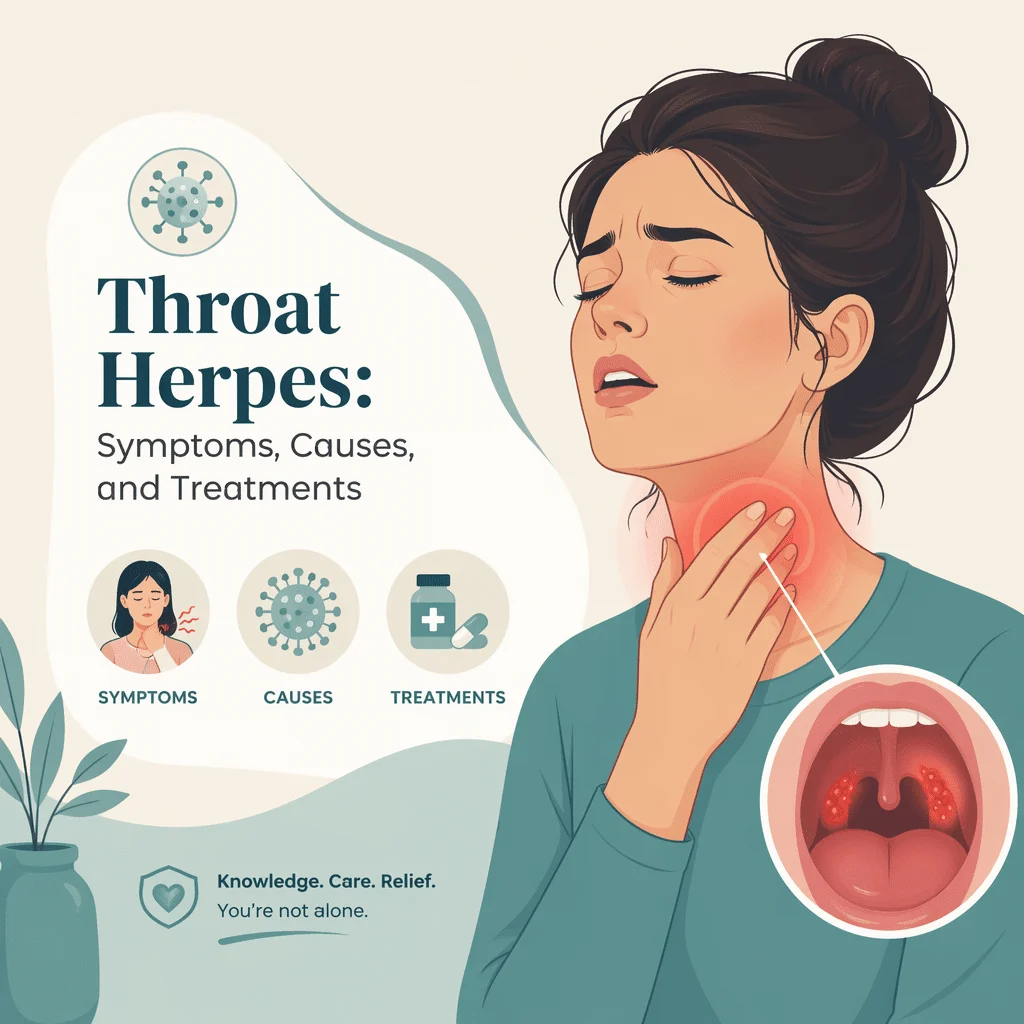
Herpesul în gât este denumirea populară pentru o infecție a gâtului și a fundului gurii cauzată de virusul herpes simplex. Dacă această expresie te-a îngrijorat, iată cel mai important lucru de reținut de pe această pagină: virusul responsabil pentru majoritatea cazurilor de herpes oral și faringian este HSV-1, iar majoritatea persoanelor care îl poartă l-au contractat în copilăria timpurie prin contact complet obișnuit — un sărut de la un membru al familiei, o lingură folosită în comun, o cană trecută din mână în mână la masa familiei. Institutul Național de Cercetare Dentară și Craniofacială estimează că aproape 90% dintre adulții din SUA au fost infectați cu acesta, iar majoritatea nu știu niciodată. Faptul că porți acest virus nu spune nimic despre tine ca persoană.
În acest articol vei afla ce este de fapt herpesul în gât, cum diferă o primă infecție de recidivele ulterioare, cu ce afecțiuni foarte comune este confundat, cum le deosebesc medicii cu adevărat, ce presupune tratamentul și care sunt semnele de alarmă ce indică necesitatea unui consult urgent.
Ce este de fapt herpesul în gât
Herpesul simplex este un virus care infectează pielea și mucoasa umedă a gurii, gâtului și organelor genitale. Când se instalează în țesuturile din partea posterioară a gurii și în gâtul superior, clinicienii îl numesc faringită herpetică. Când afectează și gingiile, limba, interiorul obrajilor și buzele — ceea ce este tiparul obișnuit la un copil mic care întâlnește virusul pentru prima dată — se numește gingivostomatită herpetică.
Virusul face ceva neobișnuit după prima infecție: în loc să fie eliminat, călătorește de-a lungul unui nerv și se instalează liniștit într-un ganglion nervos de la baza craniului. Rămâne acolo toată viața. De cele mai multe ori nu produce nimic. Uneori revine pe nerv spre suprafață, ceea ce provoacă un herpes labial sau, mai rar, leziuni mai adânc în gură și gât.
Această rezidență pe viață explică de ce nu există un tratament curativ și, totodată, de ce expresia „a avea herpes" descrie atât de prost realitatea majorității oamenilor. Pentru marea majoritate, este un pasager inactiv care se manifestă rar sau niciodată.
HSV-1 și HSV-2, explicate fără stigmat
Există două virusuri herpes simplex înrudite îndeaproape, iar denumirile lor au cauzat multă suferință inutilă.
HSV-1 este cauza obișnuită a herpesului oral și faringian. Este extrem de răspândit în întreaga lume și, după cum Centrele pentru Controlul și Prevenirea Bolilor afirmă clar, majoritatea persoanelor cu herpes oral îl contractează în copilărie sau la vârsta adultă tânără prin contact non-sexual cu saliva. HSV-2 cauzează mai frecvent infecții în zona genitală.
De ce tipul contează mai puțin decât se crede
Acesta este aspectul care îi derutează pe mulți. Cele două virusuri nu sunt limitate la teritoriile lor tradiționale. Oricare dintre tipuri poate infecta oricare dintre locații. HSV-1 de la un herpes labial poate fi transmis la organele genitale, iar HSV-2 poate fi transmis la gură și gât, prin contact oral-genital în oricare direcție. CDC descrie acest lucru deschis, și acesta este motivul pentru care o parte semnificativă din cazurile de herpes genital la prima infecție este cauzată acum de HSV-1, nu de HSV-2.
Acesta este un fapt despre modul în care un virus se comportă pe mucoase. Nu spune nimic despre viața privată a nimănui și nu te obligă să explici sau să justifici nimic. Un exudat faringian care evidențiază HSV-1 îți spune ce virus este prezent. Nu poate indica când l-ai contractat, de la cine sau în ce mod — și niciun test nu poate face asta.
Prima infecție față de o recidivă
Primul episod este de obicei cel mai dificil
O infecție primară — prima întâlnire dintre o persoană și virus — tinde să fie cea mai neplăcută. Mici vezicule grupate apar pe mucoasa gurii și a gâtului, se sparg în una-două zile și lasă ulcere superficiale, dureroase. Pe lângă acestea, oamenii descriu frecvent o durere severă în gât, durere la înghițire disproporționată față de aspectul gâtului, febră, o stare generală de epuizare și ganglioni limfatici sensibili și umflați la nivelul gâtului. Simptomele se agravează de obicei pe parcursul câtorva zile, apoi se ameliorează în una-două săptămâni.
Recurențele sunt de obicei mai ușoare și apar de obicei în altă parte
Episoadele ulterioare se comportă diferit. Sunt mai scurte, mai puțin dureroase și, la majoritatea oamenilor, se manifestă sub forma unui herpes labial pe buze sau în jurul lor, nu ca răni în gât. Mulți oameni simt o senzație de furnicătură sau arsură cu o zi înainte să apară ceva vizibil. Recurențele faringiene — episoadele care apar cu adevărat în fundul gâtului — sunt mult mai rare la persoanele cu un sistem imunitar sănătos.
Cum arată la copiii mici
La copiii mici și preșcolari, o primă infecție produce adesea o gingivostomatită severă: gingii umflate și sângerânde, ulcerații pe limbă și pe interiorul obrajilor, salivație excesivă, refuzul de a mânca sau bea, febră și iritabilitate. Arată îngrijorător, dar de obicei se rezolvă de la sine. Riscul practic nu este virusul în sine, ci deshidratarea, deoarece un copil care are dureri în gură pur și simplu va înceta să bea. Urmărirea aportului de lichide este principala sarcină a părinților, iar deshidratarea poate afecta întregul organism, nu doar gura.
Afecțiunile similare și de ce nu poți face diferența doar privind
Un gât dureros cu ulcere sau pete albe are o listă lungă de cauze posibile, iar câteva dintre ele arată surprinzător de similar din exterior. Principalii candidați sunt: infecția streptococică a gâtului, mononucleoza infecțioasă cauzată de virusul Epstein-Barr, herpangina și boala mână-picior-gură cauzate de coxsackievirusuri, ulcerele aftoase (ulcere bucale fără nicio cauză infecțioasă), și candidoza orală cauzată de o supracreștere a levurii Candida.
Oamenii încearcă de obicei să rezolve asta comparând fotografii online. Nu funcționează, și motivul merită spus clar: chiar și medicii cu experiență care examinează un gât în persoană nu pot separa cu certitudine aceste afecțiuni după aspect. Unele tipare sunt sugestive — un grup de ulcerații mici pe palatul moale și pe arcadele amigdaliene, un gât roșu-aprins cu depozite, o aspect neregulat, ca o pavea în partea posterioară a gâtului, sau umflătură doar pe o parte — dar niciunul dintre ele nu este decisiv.
| Caracteristică | Herpes faringian (HSV) | Angină streptococică | Mononucleoză infecțioasă (EBV) | Herpangina / boala mână-picior-gură |
|---|---|---|---|---|
| Vârsta tipică | Copii mici pentru primul episod; orice vârstă pentru episoadele ulterioare | Cel mai frecvent la copiii de vârstă școlară, dar și la adulți | Adolescenți și adulți tineri | Cel mai adesea sub 5 ani, frecvent în focare de vară |
| Cum arată gâtul | Vezicule mici grupate care se transformă în ulcere superficiale; gingiile sunt adesea inflamate în primul episod | Amigdale roșii și umflate, adesea cu depozite albe sau gălbui; gingii normale | Amigdale foarte mărite cu un depozit gros gri-albicios | Ulcerații mici, dispersate pe palatul moale și în fundul gâtului; partea din față a gurii de obicei neafectată |
| Alte funcții | Febră, ganglioni cervicali sensibili, uneori herpes labial; fără tuse | Febră bruscă, ganglioni cervicali sensibili, fără tuse; uneori o erupție cutanată fină | Oboseală prelungită, ganglioni măriți în mai multe zone, uneori splină mărită | Febră; în boala mână-picior-gură, pete pe mâini, picioare și fese |
| Ce stabilește de obicei diagnosticul | Un tampon dintr-o leziune trimis pentru PCR | Test rapid pentru streptococ sau cultură faringiană | Analize de sânge, inclusiv testul monospot și anticorpi EBV | De obicei tabloul clinic; PCR din tampon faringian dacă este necesar |
Cum se diagnostichează de fapt herpesul faringian
Diagnosticul începe cu o discuție și un examen clinic, dar răspunsul vine de obicei dintr-un test.
Metoda cea mai directă este un tampon frecat pe o leziune proaspătă și trimis pentru PCR, o tehnică de laborator care detectează materialul genetic al virusului. PCR este rapidă și sensibilă și identifică ce tip de herpes simplex este prezent. Cultura virală mai veche este încă folosită uneori, dar este mai lentă și ratează mai multe cazuri. Deoarece streptococul este cauza care schimbă cel mai mult tratamentul, un test rapid pentru streptococ sau o cultură faringiană se efectuează adesea în același timp.
Analizele de sânge joacă un rol de susținere, nu unul principal. O hemoleucogramă completă poate indica mai degrabă o infecție virală decât una bacteriană, iar limfocite crescute sunt o descoperire clasică în mononucleoza infecțioasă. proteina C reactivă oferă o măsură aproximativă a gradului de inflamație prezent, dar nu identifică o cauză.
Serologie — testarea anticorpilor — merită o mențiune atentă. anticorpi IgG îți arată că sistemul imunitar a întâlnit un virus la un moment dat în trecut, ceea ce în cazul HSV-1 este valabil pentru majoritatea populației. anticorpi IgM sunt adesea interpretați ca indicând o infecție „recentă", dar sunt nesiguri pentru herpes și pot induce în eroare în ambele sensuri. Un test de sânge nu poate confirma că leziunile din gâtul tău de acum sunt herpes. Doar un tampon din acele leziuni poate face asta.
Ce presupune tratamentul
Există două obiective paralele: acționarea asupra virusului și posibilitatea de a mânca și bea.
Medicamentele antivirale orale sunt clasa de medicamente folosite împotriva herpesului simplex — aciclovir și rudele sale valaciclovir și famciclovir. Acestea nu elimină virusul, iar dacă sunt potrivite, care anume, la ce doză și pentru cât timp reprezintă o decizie de prescriere care aparține unui medic care te-a evaluat. Ceea ce este consistent în toate dovezile este că antiviralele funcționează cel mai bine când sunt începute devreme în cursul unui episod, ceea ce este un argument pentru a solicita sfat medical prompt, nu pentru automedicație.
Îngrijirea simptomatică nu este un detaliu secundar. Durerea este cea care îi împiedică pe oameni să bea lichide, iar hidratarea insuficientă este cea care transformă o boală neplăcută într-o problemă medicală. Măsurile generale descrise de NIDCR și MedlinePlus includ menținerea unui aport constant de lichide, alegerea alimentelor moi, bland, reci, evitarea oricărui aliment picant, acid sau foarte fierbinte și îngrijirea blândă a igienei orale în jurul leziunilor. Preparatele anestezice sau de acoperire și calmantele pentru durere sunt utilizate pe scară largă; un farmacist sau un medic poate sfătui ce este potrivit pentru tine sau copilul tău și în ce cantitate.
Cine prezintă un risc mai mare de boală severă
Pentru majoritatea persoanelor sănătoase, herpesul faringian este dureros și apoi trece. Un grup mai restrâns are nevoie de un prag mai scăzut pentru a fi consultat.
Persoanele al căror sistem imunitar este suprimat — prin chimioterapie, transplant de organ sau de celule stem, corticosteroizi pe termen lung sau alte medicamente imunosupresoare, sau infecție HIV avansată — pot dezvolta o infecție herpetică mai extinsă, mai lentă în vindecare, care poate coborî din gât în esofag. Esofagita herpetică provoacă înghițire dureroasă și dificilă și necesită, în general, o evaluare promptă de specialitate, de obicei cu o examinare endoscopică și o biopsie, precum și tratament cu antivirale.
Nou-născuții reprezintă o categorie separată și importantă: infecția cu herpes în primele săptămâni de viață este tratată ca o urgență medicală. Dacă ai un herpes labial, sfatul standard este să nu săruți un nou-născut și să te speli pe mâini cu atenție.
Semne de alarmă: când să ceri ajutor fără să aștepți
Majoritatea durerilor în gât se rezolvă de la sine. Aceste semne sunt cele care ar trebui să te determine să contactezi un medic sau, acolo unde este indicat, serviciile de urgență.
Solicită ajutor medical prompt dacă se aplică oricare dintre următoarele.
- Incapacitatea de a înghiți lichide sau semne de deshidratare — la un copil, aceasta înseamnă absența urinării, lipsa lacrimilor la plâns, gură uscată, somnolență neobișnuită sau moliciune.
- Dificultăți de respirație sau salivație excesivă combinată cu incapacitatea de a înghiți — aceasta poate semnala afectarea căilor respiratorii și reprezintă o urgență.
- Gât rigid însoțit de febră sau durere de cap severă cu sensibilitate la lumină.
- Simptome la o persoană cu sistemul imunitar slăbit sau la un nou-născut.
- Un prim episod cu simptome foarte severe, febră mare sau durere care nu poate fi controlată acasă.
- Simptome care nu se ameliorează după aproximativ zece zile sau care se agravează în mod evident în loc să se îmbunătățească.
O durere în gât nu poate fi diagnosticată de pe o pagină web. Dacă ceva nu pare în regulă sau este mai rău decât te așteptai, acesta este motiv suficient pentru a fi consultat în persoană.
Cele mai recente progrese științifice în înțelegerea herpesului faringian
Cercetările recente, indexate în PubMed, au clarificat mai multe aspecte practice. Referințele complete apar în secțiunea Surse de mai jos.
Cât de frecvent este HSV-1 și cum se schimbă această situație. O recenzie sistematică cu meta-analiză realizată de AlMukdad și colegi a adunat date canadiene din mai multe decenii și a constatat că HSV-1 este prezent la o proporție mare din adulții sănătoși și devine tot mai frecvent odată cu înaintarea în vârstă. De asemenea, a identificat o schimbare: tot mai puțini oameni intră în contact cu virusul în copilărie, în timp ce tot mai mulți îl dobândesc mai târziu, iar o parte tot mai mare din cazurile de herpes genital la prima infecție este cauzată acum de HSV-1, nu de HSV-2. Ce înseamnă asta pentru tine: vechea regulă simplificată — „tipul 1 este oral, tipul 2 este genital" — devine tot mai puțin exactă, iar pentru că tot mai puțini oameni întâlnesc HSV-1 în copilăria mică, mai mulți adulți trăiesc acum o primă infecție la o vârstă la care aceasta tinde să fie mai severă.
Ce ajută cu adevărat în primul episod. O recenzie sistematică realizată de Coppola și colegi a analizat modul în care este tratată gingivostomatita herpetică primară — prima infecție în formă completă, întâlnită mai ales la copii. Autorii au constatat că majoritatea tratamentelor folosite în mod curent vizează simptomele, nu virusul, că dovezile care susțin tratamentul antiviral pentru accelerarea vindecării sunt slabe și că diagnosticul este adesea întârziat cu câteva zile, ceea ce reduce eficiența oricărui antiviral. Au mai observat că durerea poate limita atât de mult alimentația și hidratarea, încât unii copii au nevoie de îngrijire în spital. Ce înseamnă asta pentru tine: consultul medical timpuriu contează dacă se ia în calcul tratamentul antiviral, iar menținerea unui aport suficient de lichide nu este o măsură de confort minoră — este obiectivul principal.
De ce întrebarea “seamănă cu angina streptococică?” este greșită. O recenzie sistematică cu meta-analiză realizată de Kanagasabai și colegi a evaluat scorurile Centor și McIsaac — regulile clinice standard bazate pe simptome și examinare fizică pentru a prezice infecția streptococică a gâtului. Concluzia a fost directă: la praguri stricte, prea multe cazuri reale sunt ratate, iar la praguri largi, prea mulți oameni fără streptococ primesc antibiotice. Ce înseamnă asta pentru tine: dacă medici specializați care examinează gâtul în persoană nu pot separa cu certitudine cauzele bacteriene de cele virale doar după aspect, compararea gâtului tău cu fotografii de pe internet nu va oferi un răspuns. Un tampon faringian sau un test rapid este ceea ce dă un răspuns clar.
Când herpesul coboară mai adânc. O analiză a esofagitei infecțioase realizată de Kim și Lee prezintă principalele cauze infecțioase ale inflamației esofagului, cu herpesul simplex printre cele mai frecvente cauze virale, alături de citomegalovirus, și Candida drept cea mai comună cauză fungică. Aceste infecții apar în mare parte la persoanele cu sistemul imunitar slăbit, sunt identificate prin examinare endoscopică directă cu biopsie și sunt tratate cu medicamente antivirale sau antifungice țintite. Ce înseamnă asta pentru tine: dacă sistemul tău imunitar este slăbit și înghițitul devine dureros sau dificil, acesta este un motiv să te prezinți la medic, nu să aștepți să treacă de la sine.
Întrebări frecvente
Cum am făcut herpes în gât?
Cel mai probabil cu ani în urmă, fără să observi, și prin contact obișnuit de zi cu zi. HSV-1 se transmite prin salivă și prin contact direct cu pielea sau mucoasa bucală. CDC precizează că majoritatea persoanelor cu herpes oral îl dobândesc în copilărie sau la vârsta adultă tânără prin contact non-sexual — săruturi de la membrii familiei, pahare și tacâmuri folosite în comun, mâini și jucării printre copiii mici. Poate fi transmis și prin contact oral-genital în ambele direcții, dar aceasta este una dintre mai multe căi posibile, nu cea prezumată. Nu există nicio modalitate de a stabili când sau de la cine l-ai dobândit și nu trebuie să fi făcut nimic greșit pentru ca acest lucru să se fi întâmplat.
Este herpesul faringian contagios și cât timp?
Da, cât timp sunt prezente leziunile. Lichidul din vezicule și saliva în timpul unui episod activ conțin virusul, iar perioada de contagiozitate maximă durează de la primele furnicături până când leziunile s-au vindecat complet — de obicei una până la două săptămâni în cazul primului episod și mai puțin în cazul recurențelor. Virusul poate fi eliminat intermitent și atunci când nu există niciun simptom, motiv pentru care transmiterea are loc adesea între persoane care nu știau că ceva era activ. În timpul unui episod, evitarea săruturilor și a folosirii în comun a paharelor, sticlelor, tacâmurilor sau produselor de buze este măsura practică recomandată.
Este angină streptococică sau herpes?
Nu se poate stabili doar prin examinare vizuală, nici măcar de către un medic. Unele semne înclină spre o parte: angina streptococică aduce clasic febră bruscă, ganglioni cervicali sensibili și absența tusei, în timp ce herpesul aduce mai frecvent vezicule grupate și ulcerații care afectează gingiile și interiorul gurii, nu doar gâtul. Totuși, suprapunerea este semnificativă, iar o concluzie greșită în oricare dintre direcții are consecințe — streptococul netratat poate duce la complicații, în timp ce antibioticele nu au niciun efect asupra unei dureri în gât de cauză virală. Un test rapid pentru streptococ, o cultură faringiană sau un tampon viral sunt cele care rezolvă dilema, iar toate sunt ușor de efectuat.
Cât durează până se vindecă herpesul faringian?
Un prim episod se instalează de obicei în câteva zile, apoi se ameliorează în una-două săptămâni, ulcerațiile vindecându-se fără cicatrici. Recurențele sunt de obicei mai scurte, adesea sub o săptămână. Să te simți obosit o perioadă după aceea este normal și nu înseamnă că ceva a mers prost. Ce nu este normal este ca simptomele să stagneze sau să se agraveze după aproximativ zece zile, sau durerea să fie atât de intensă încât să nu poți ține lichide — oricare dintre acestea necesită o consultație medicală, nu mai multă așteptare.
Mai pot să-mi sărut partenerul sau să împart mâncare cu el?
Cât timp ai răni active, este înțelept să eviți săruturile, sexul oral și să nu împărtășești nimic ce ajunge în apropierea gurii — căni, sticle, tacâmuri, balsam de buze, periuțe de dinți. Spală-ți mâinile după ce atingi rănile și fii deosebit de atent în jurul nou-născuților și al oricărei persoane cu sistemul imunitar slăbit. Între episoade, viața obișnuită își reia cursul. Deoarece virusul poate fi eliminat ocazional fără simptome, nicio măsură nu elimină complet riscul — și este mai bine să știi asta decât să-ți faci griji.
Un test de sânge pozitiv pentru herpes înseamnă că am herpes în gât?
Nu. Un rezultat pozitiv la IgG HSV-1 înseamnă că sistemul tău imunitar a întâlnit virusul la un moment dat, ceea ce este valabil pentru majoritatea adulților. Nu spune nimic despre dacă rănile din gâtul tău de azi sunt cauzate de herpes, când ai fost infectat sau unde se află virusul în corpul tău. Dacă o infecție actuală a gâtului trebuie identificată, un tampon prelevat dintr-o rană activă și trimis pentru PCR este testul care răspunde la această întrebare. Această distincție contează, deoarece rezultatele anticorpilor sunt o sursă frecventă de alarmă nejustificată.
Glosar de termeni cheie
| Termen | Definiție |
|---|---|
| Virusul herpes simplex (HSV) | Un virus frecvent cu două tipuri, HSV-1 și HSV-2, care infectează pielea și mucoasele gurii, gâtului și organelor genitale, rămânând apoi în stare latentă în țesutul nervos. |
| Faringită herpetică | Inflamarea gâtului cauzată de virusul herpes simplex, care produce vezicule și ulcere superficiale. |
| Gingivostomatită | Inflamarea și ulcerarea extinsă a gingiilor și a mucoasei bucale, tabloul obișnuit al unei prime infecții cu HSV-1 la un copil mic. |
| Infecție primară | Prima dată când o persoană este infectată cu un virus, înainte ca orice imunitate să se fi dezvoltat; de obicei cel mai simptomatic episod. |
| Recidivă | Un episod ulterior cauzat de reactivarea aceluiași virus latent, în general mai scurt și mai ușor decât primul. |
| Eliminare virală | Eliberarea de particule virale infecțioase, care poate avea loc cu sau fără răni vizibile. |
| PCR (reacția în lanț a polimerazei) | O metodă de laborator care detectează materialul genetic al unui virus dintr-o probă, utilizată pe tampoane prelevate de pe leziuni pentru a identifica HSV și tipul acestuia. |
| Serologie | Testarea sângelui pentru anticorpi, care arată expunerea anterioară la un virus, nu ceea ce cauzează simptomele în prezent. |
| Ulcer aftos | Un ulcer bucal frecvent, numit și afte, care se formează în interiorul gurii, nu are o cauză infecțioasă și nu este contagios. |
| Esofagită | Inflamarea esofagului, pe care virusul herpes simplex o poate provoca în principal la persoanele cu sistemul imunitar slăbit. |
Surse
- Centers for Disease Control and Prevention. Despre herpesul genital. https://www.cdc.gov/herpes/about/index.html
- MedlinePlus, Biblioteca Națională de Medicină. Herpes labial (Herpes oral). https://medlineplus.gov/coldsores.html
- Institutul Național de Cercetare Dentară și Craniofacială. Vezicule febrile & Afte bucale. https://www.nidcr.nih.gov/health-info/fever-blisters-canker-sores
- AlMukdad S, Harfouche M, Farooqui US, Aldos L, Abu-Raddad LJ. Epidemiology of herpes simplex virus type 1 in Canada: systematic review, meta-analyses, and meta-regressions. Frontiers in Public Health. 2023;11:1118249. https://doi.org/10.3389/fpubh.2023.1118249
- Coppola N, Cantile T, Adamo D, Canfora F, Baldares S, Riccitiello F, Musella G, Mignogna MD, Leuci S. Supportive care and antiviral treatments in primary herpetic gingivostomatitis: a systematic review. Clinical Oral Investigations. 2023;27(11):6333-6344. https://doi.org/10.1007/s00784-023-05250-5
- Kanagasabai A, Evans C, Jones HE, Hay AD, Dawson S, Savović J, Elwenspoek MMC. Systematic review and meta-analysis of the accuracy of McIsaac and Centor score in patients presenting to secondary care with pharyngitis. Clinical Microbiology and Infection. 2024;30(4):445-452. https://doi.org/10.1016/j.cmi.2023.12.025
- Kim NY, Lee J. Infective Esophagitis. The Korean Journal of Helicobacter and Upper Gastrointestinal Research. 2025;25(2):108-116. https://doi.org/10.7704/kjhugr.2025.0007
Lectură suplimentară
- Flegmă cu gust neplăcut: cauze și tratamente
- O sinuzita este contagioasă? Cauze și riscuri
- Amigdale hipertrofiate: cauze, simptome și tratamente
- Pastile pentru tuse: beneficii, utilizări și riscuri
- Limfocitele explicate: gardienii sistemului tău imunitar
Înțelege-ți rezultatele analizelor cu AI DiagMe
Dacă un medic investighează o durere în gât severă sau persistentă, poate solicita un tampon faringian, o hemoleucogramă completă sau serologie virală. Aceste rezultate ajung adesea sub forma unei pagini de cifre fără nicio explicație atașată.
AI DiagMe te ajută să înțelegi rezultatele analizelor de sânge după ce le primești, în limbaj simplu, astfel încât să poți ajunge la următoarea consultație cu întrebări mai bune. Nu pune diagnostice, nu îți poate examina gâtul și nu înlocuiește medicul tău.
Obține interpretarea rezultatelor în câteva minute