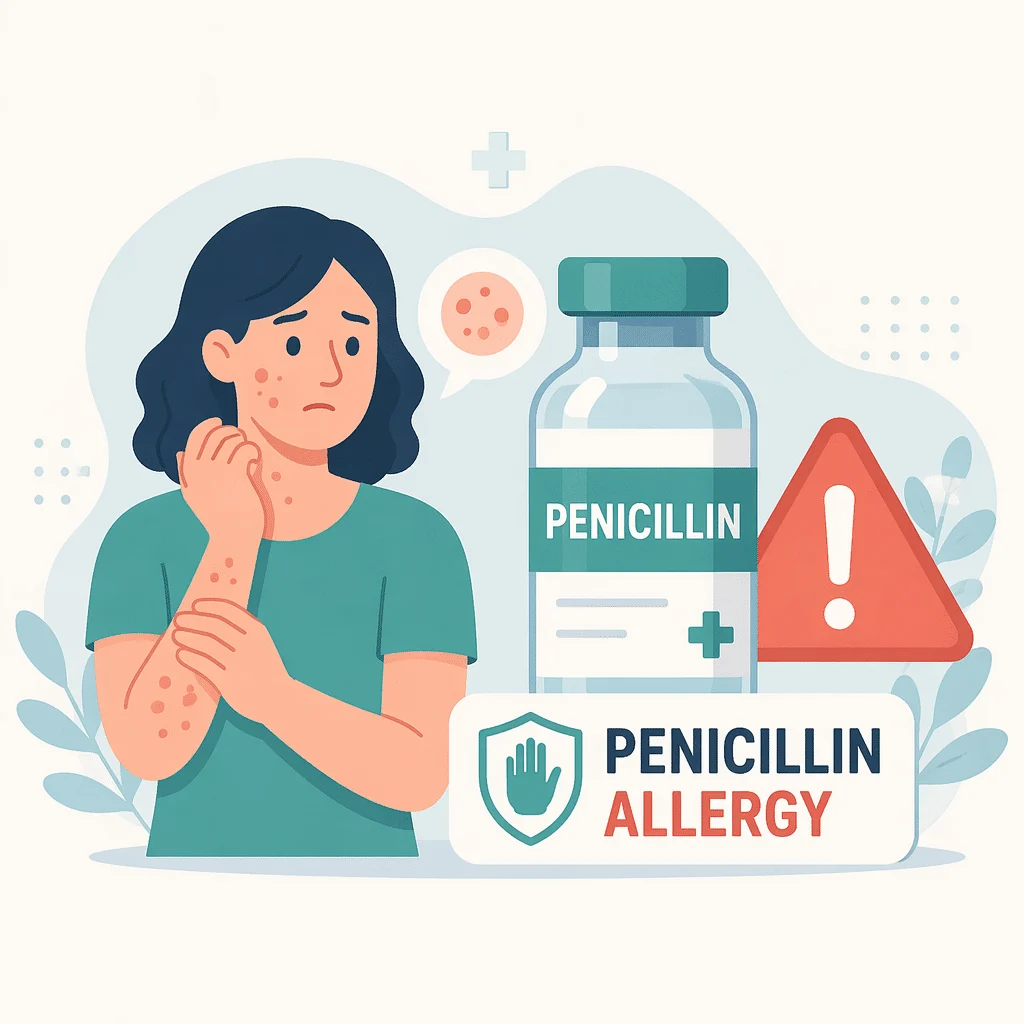
Aproximativ unul din zece oameni poartă eticheta de alergie la penicilină, iar atunci când aceste etichete sunt verificate în mod formal, aproximativ 90 până la 95 la sută dintre ele se dovedesc a fi greșite. Centrele pentru Controlul și Prevenirea Bolilor din SUA afirmă clar: aproximativ 10% dintre pacienții americani declară o alergie la un antibiotic din clasa penicilinei, totuși mai puțin de 1% sunt cu adevărat alergici. Această diferență contează, deoarece o etichetă inexactă te împinge în tăcere spre antibiotice de a doua alegere, care adesea funcționează mai puțin bine și prezintă mai multe riscuri.
În acest articol vei afla cum arată o alergie reală la penicilină, de ce atât de multe etichete sunt inexacte, ce prejudicii documentate cauzează o etichetă incorectă, cum dispare alergia în timp, ce înseamnă cu adevărat reactivitatea încrucișată cu cefalosporinele și cum este evaluată corect alergia. Dacă ai o reacție chiar acum, mergi direct la caseta de urgență de mai jos.
Ce este alergia la penicilină și ce nu este
O alergie la penicilină este o reacție imunitară la penicilină sau la un antibiotic înrudit. Sistemul tău imunitar interpretează greșit medicamentul ca pe o amenințare și declanșează o apărare împotriva lui. Aceasta nu este același lucru cu un efect secundar. Greața, crampele stomacale, scaunele moi, candidoza sau durerile de cap după antibiotice sunt cu adevărat neplăcute, dar nu implică sistemul imunitar și nu reprezintă o alergie. Mulți oameni care evită penicilinele toată viața evită de fapt un efect secundar pe care l-au avut cu zeci de ani în urmă.
Penicilinele fac parte dintr-o familie mai largă numită antibiotice beta-lactamice, care include și amoxicilina, cefalosporinele și carbapenemele. Aceste medicamente au în comun o structură chimică numită inelul beta-lactamic, dar fiecare are lanțuri laterale diferite atașate acestui nucleu. Acele lanțuri laterale contează mult mai mult decât inelul comun atunci când medicii stabilesc ce alte antibiotice sunt sigure pentru tine.
Cele trei reacții foarte diferite care sunt numite toate “alergie”
Reacțiile imediate sunt determinate de anticorpii IgE. De obicei apar în decurs de o oră de la o doză și se manifestă prin urticarie, umflarea buzelor sau a pleoapelor, respirație șuierătoare, vărsături sau, în cel mai grav caz, anafilaxie — o reacție generalizată care afectează respirația și tensiunea arterială. Acestea sunt reacțiile pe care testul cutanat la penicilină este conceput să le detecteze.
Reacțiile întârziate sunt determinate de limfocitele T, nu de anticorpi. Apar de obicei la câteva zile după începerea unui tratament și se manifestă cel mai adesea sub forma unei erupții cutanate plate, cu pete roz pe trunchi și membre. Majoritatea sunt ușoare, se remit de la sine și reprezintă cel mai frecvent motiv pentru care o erupție din copilărie erupție cutanată este înregistrată în fișa medicală ca alergie pe viață.
Reacțiile cutanate adverse severe reprezintă o categorie cu totul diferită. Sindromul Stevens-Johnson, necroliza epidermică toxică și DRESS (reacție medicamentoasă cu eozinofilie și simptome sistemice) implică vezicule pe piele, ulcerații ale mucoaselor, febră și afectarea organelor. CDC precizează explicit că pacienții cu acest istoric nu trebuie să facă niciodată test cutanat sau provocare orală cu medicamentul respectiv. Spre deosebire de o erupție benignă din copilărie, aceste reacții reprezintă un motiv absolut și permanent de a nu mai lua niciodată acel antibiotic.
Urgență: solicită ajutor imediat
Sună la 112 (sau la numărul local de urgență) și folosește un autoinjector cu epinefrină (adrenalină) dacă ți-a fost prescris, dacă după administrarea oricărui antibiotic ai:
- Dificultăți de respirație, senzație de apăsare în piept, respirație șuierătoare sau zgomotoasă (stridor)
- Umflarea gâtului, limbii, buzelor sau feței
- Urticarie generalizată însoțită de amețeală, leșin sau palpitații
- Vărsături sau dureri abdominale severe însoțite de erupție cutanată
- O senzație bruscă de moarte iminentă, confuzie sau slăbiciune extremă
Oprește medicamentul și solicită îngrijire medicală urgentă în aceeași zi dacă dezvolți:
- O erupție cutanată cu vezicule, care se descuamează sau este dureroasă, nu pruriginoasă
- Ulcerații sau leziuni la nivelul gurii, ochilor sau organelor genitale
- Febră însoțită de o erupție cutanată extinsă sau ganglioni umflați cu erupție
- Umflarea feței cu febră, stare generală foarte alterată sau îngălbenirea ochilor
De ce majoritatea etichetelor de alergie la penicilină se dovedesc a fi greșite
Etichetele de alergie la penicilină sunt rareori greșeli deliberate. Ele se acumulează prin prudență clinică obișnuită. Un copil dezvoltă o erupție cutanată în ziua a patra a unui tratament cu antibiotic, antibioticul este învinuit, cuvântul „alergie" intră în fișă și nimeni nu îl mai revizuiește timp de patruzeci de ani. CDC listează trei surse recurente de etichete incorecte: erupții cutanate virale din trecut, un istoric familial de alergie la penicilină în loc de unul personal și intoleranțe precum diareea înregistrate drept alergie.
Problema erupției cutanate virale merită o mențiune specială, deoarece este cea mai frecventă cauză individuală. Copiii fac infecții virale frecvente, aceste infecții provoacă adesea erupții cutanate, iar copiii care le au primesc deseori antibiotice. Erupția care apare ulterior este, de cele mai multe ori, cauzată de virus, nu de medicament. Acest lucru este cel mai bine cunoscut în cazul amoxicilinei administrate în timpul mononucleozei infecțioase, iar ghidul nostru însoțitor despre alergie la amoxicilină acoperă acel tipar specific și modul în care trebuie gestionată erupția cutanată la amoxicilină la copii.
Celălalt factor tăcut este că nimeni nu este responsabil pentru eliminarea unei etichete odată ce aceasta a fost adăugată. Alergiile la antibiotice sunt copiate fidel din fișă în fișă. Eliminarea uneia necesită ca cineva să o pună la îndoială, iar până de curând puține sisteme au făcut din asta responsabilitatea cuiva.
Ce înseamnă probabil reacția ta
Tabelul de mai jos este un ghid aproximativ despre cum gândesc clinicienii în privința unui istoric de reacție. Nu înlocuiește o evaluare medicală și nu ar trebui să îl folosești pentru a decide să iei un medicament la care ești etichetat/ă ca alergic/ă.
| Ce s-a întâmplat când l-ai luat | Ce înseamnă de obicei | Ce să faci |
|---|---|---|
| Greață, disconfort gastric, diaree sau candidoză orală | Un efect secundar, nu o alergie. Nu este implicată nicio reacție imunitară | Cere medicului tău să o reclasifice ca intoleranță, nu ca alergie |
| O erupție plată, cu pete, apărută la câteva zile de la începerea tratamentului, la un copil, în timpul unei boli | De cele mai multe ori, infecția și nu medicamentul, sau o reacție ușoară întârziată | De obicei risc scăzut. Solicită o evaluare formală pentru eliminarea etichetei |
| Urticarie sau umflătură apărute în decurs de o oră de la administrarea unei doze | Posibilă alergie imediată mediată de IgE | Necesită evaluare de specialitate, de obicei cu teste cutanate înainte de orice provocare |
| Dificultăți de respirație, colaps sau ai avut nevoie de tratament de urgență | Posibilă anafilaxie, tratată ca un istoric de risc ridicat | Continuă să eviți medicamentul. Solicită trimitere la un specialist în alergii la medicamente |
| Erupție cu vezicule sau descuamare, ulcerații bucale, febră sau afectare de organ | O reacție cutanată adversă severă, precum SJS, TEN sau DRESS | Nu reprovoca niciodată. Aceasta este o contraindicație permanentă. Păstrează documentația |
De ce o etichetă incorectă de alergie la penicilină cauzează daune reale
Este tentant să crezi că evitarea penicilinei „de precauție" este alegerea prudentă. Dovezile spun altceva. Când o alergie la penicilină apare în fișă, medicii prescriptori apelează la alternative precum clindamicina, vancomicina, fluorochinolonele sau macrolidele. Aceste medicamente au adesea un spectru mai larg, sunt mai puțin eficiente pentru infecția specifică tratată și au propriile efecte toxice.
Consecințele măsurate sunt consistente în toate studiile. Persoanele cu o etichetă de alergie la penicilină au o rată mai mare de infecție a plăgii operatorii după intervenții chirurgicale, mai multe infecții cu Clostridioides difficile, mai multe infecții cu organisme rezistente, precum MRSA și enterococi rezistenți la vancomicină, și spitalizări mai lungi. NIH a citat alergologi care descriu mai multe consultații ambulatorii, mai multe vizite la camera de gardă și o mortalitate mai ridicată în rândul pacienților care poartă această etichetă.
De aceea eliminarea etichetelor incorecte — un proces pe care clinicienii îl numesc „delabeling" — a devenit o prioritate de sănătate publică, nu doar un subiect de nișă în alergologie. Îmbunătățește îngrijirea individuală și reduce utilizarea antibioticelor cu spectru larg care alimentează rezistența la nivelul întregii populații. Contează și înainte de o intervenție chirurgicală planificată, când antibioticul preventiv standard este de obicei o beta-lactamă. Dacă urmează să ai o operație, merită să aduci în discuție acest aspect alături de analize de sânge înainte de operație.
Alergia la penicilină dispare de obicei în timp
O alergie veritabilă imediată la penicilină nu este neapărat permanentă. Anticorpii IgE responsabili de reacțiile imediate scad în timp. Conform NIH, aproape jumătate dintre persoanele cu o alergie confirmată la penicilină o pierd în decurs de cinci ani, iar după aproximativ zece ani, circa 80% nu mai reacționează. CDC subliniază același lucru: IgE specifice alergiei pot scădea în timp, astfel că pacienții pot ajunge să tolereze antibioticele înrudite cu penicilina mai târziu în viață.
Consecința practică este directă. Dacă eticheta ta datează din copilărie sau dintr-un eveniment de acum mai bine de un deceniu, merită să fie reexaminată, nu luată de bună. O etichetă veche este cel mai puternic argument pentru a cere o evaluare, nu pentru a continua să eviți medicamentul pe termen nelimitat. Acest lucru nu se aplică reacțiilor cutanate adverse severe, care nu dispar și nu sunt niciodată retestate.
Cefalosporinele și reactivitatea încrucișată: imaginea reală
Generații de clinicieni au fost învățați că aproximativ 10% dintre pacienții alergici la penicilină reacționează și la cefalosporine. Această cifră provine din studii mai vechi care utilizau preparate de cefalosporină contaminate cu urme de penicilină și este considerată acum o supraestimare semnificativă.
Înțelegerea modernă este că reactivitatea încrucișată este determinată de similitudinea lanțurilor laterale, nu de inelul beta-lactamic comun. Cefalosporinele ale căror lanțuri laterale seamănă cu cele ale penicilinei sau amoxicilinei prezintă un risc semnificativ de reactivitate încrucișată. Cefalosporinele cu lanțuri laterale structural diferite prezintă un risc foarte mic. De aceea, evitarea generalizată a tuturor beta-lactaminelor după o reacție la penicilină nu mai este practica standard, și de aceea un farmacist sau un alergolog poate identifica adesea alternative complet sigure în cadrul aceleiași familii largi de medicamente.
Nimic din toate acestea nu înseamnă că ar trebui să experimentezi pe cont propriu. Înseamnă că „alergie la penicilină, deci evită toți antibioticele înrudite pentru totdeauna" este o recomandare depășită și că medicamentul specific și lanțul lateral specific sunt întrebările pe care merită să le adresezi medicului tău prescriptor.
Cum este evaluată în realitate o alergie la penicilină
Evaluarea se desfășoară în etape și, pentru majoritatea oamenilor, durează mai puțin decât se așteaptă.
Pasul unu: stratificarea riscului pe baza istoricului tău
Un clinician adresează întrebări structurate: cu cât timp în urmă a apărut reacția, care au fost simptomele concrete, câte doze luaseși, dacă ai avut nevoie de tratament sau de îngrijire spitalicească și dacă ai mai luat penicilină de atunci. Există instrumente validate de evaluare tocmai în acest scop. Răspunsurile te plasează într-un grup de risc scăzut, moderat sau ridicat, iar această clasificare determină tot ce urmează. Un număr semnificativ de persoane sunt „deetichhetate" chiar în această etapă, pe baza istoricului medical, fără niciun test.
Pasul doi: testarea cutanată acolo unde este indicată
Testarea cutanată la penicilină introduce în piele reactivi diluați de penicilină în două etape, alături de un control negativ cu ser fiziologic și un control pozitiv cu histamină. Efectuată corect, este foarte specifică pentru detectarea reacțiilor mediate de IgE. Este utilizată pentru istoricuri cu risc moderat și ridicat, iar un test cutanat negativ este confirmat de obicei printr-o doză orală ulterioară. Analizele de sânge care măsoară IgE există, dar sunt mult mai puțin fiabile pentru penicilină și nu înlocuiesc testarea cutanată. Un medic poate verifica, de asemenea, triptaza serică, un marker care crește temporar în timpul reacțiilor alergice severe.
Pasul trei: provocare orală supravegheată pentru pacienții cu risc scăzut
Pentru pacienții evaluați ca risc scăzut, o provocare orală directă înseamnă administrarea unei singure doze controlate de amoxicilină sub supraveghere medicală și monitorizarea timp de o perioadă stabilită ulterior. Locul dispune de medicație de urgență și personal calificat. Această abordare s-a extins din clinicile specializate de alergologie în secțiile de spital, clinicile preoperatorii și medicina primară, ceea ce a făcut posibilă „deetichetarea" la scară largă.
Regula care contează cel mai mult: nu testa niciodată singur
Nu lua penicilină sau orice antibiotic la care ești etichetat(ă) ca alergic(ă) acasă, pentru a vedea ce se întâmplă. Nici o doză mică, nici un comprimat vechi rămas, nici „doar ca să verifici". O provocare medicamentoasă este sigură doar pentru că are loc într-un cadru medical supravegheat, cu facilități de resuscitare și personal care poate trata anafilaxia în câteva secunde. Eliminarea acestui cadru elimină întreaga marjă de siguranță. Solicită o evaluare. Nu te autotesta.
Ce să faci dacă ai o etichetă de alergie la penicilină
Începe prin a nota ce îți amintești: vârsta ta la momentul respectiv, numele medicamentului dacă îl știi, cum arăta reacția, cât timp după doză a apărut și dacă ai avut nevoie de tratament. Acel scurt istoric este cel mai util lucru pe care îl poți aduce la o consultație și stă la baza evaluării riscului.
Apoi întreabă-ți medicul de familie direct dacă poți fi evaluat pentru alergie la penicilină sau dacă poți fi îndrumat către un serviciu de alergologie. Momente potrivite pentru a ridica această problemă includ înainte de o intervenție chirurgicală planificată, înainte de o procedură stomatologică și ori de câte ori ți se prescrie un antibiotic de linia a doua pentru o infecție comună, cum ar fi infecție a urechii severă sau un infecții sinusale.
Între timp, păstrează eticheta. Nu o elimina singur din evidențele farmaciei sau din aplicațiile medicale până când un medic nu te-a declarat oficial liber de alergie și continuă să informezi fiecare medic nou, dentist și farmacist despre ea. Dacă ai avut anafilaxie, poartă documentația necesară și orice autoinjector prescris. Este corect să eviți medicamentul cât aștepți evaluarea. Nu este corect să îl eviți pentru totdeauna fără să pui vreodată întrebarea.
Cele mai recente progrese științifice în testarea alergiei la penicilină
Cercetările de după 2023 s-au concentrat mai puțin pe modul în care apare alergia și mai mult pe cum să se elimine în siguranță etichetele incorecte la scară largă.
O analiză sistematică și meta-analiză din 2025, publicată în The Journal of Infection, a adunat rezultate din zeci de țări pentru a măsura cât de frecventă este alergia raportată la penicilină. S-a constatat că eticheta este purtată de aproape unul din zece adulți la nivel mondial, că este înregistrată mult mai frecvent în țările cu venituri ridicate și că marea majoritate a acestor etichete nu reflectă o alergie reală. Ce înseamnă asta pentru tine: eticheta este comună, iar faptul că o ai îți spune foarte puțin despre dacă ești cu adevărat alergic.
O analiză sistematică din 2023, publicată în The Journal of Allergy and Clinical Immunology: In Practice, a examinat o populație foarte mare de pacienți pentru a cuantifica povara alergiei la antibiotice raportate de pacienți. S-a constatat că pacienții cu această etichetă primesc frecvent antibiotice care se abat de la ghidurile de prescriere, cu un consum mai mare de chinolone, macrolide și carbapeneme și un consum mai redus de beta-lactamine, ceea ce se traduce prin rezultate clinice mai slabe. Ce înseamnă asta pentru tine: eticheta schimbă ce ți se prescrie, și nu în avantajul tău.
Studiul randomizat PALACE, publicat în JAMA Internal Medicine în 2023, a testat dacă adulții cu un istoric de risc scăzut pot sări complet peste testarea cutanată. Participanții din America de Nord și Australia au fost repartizați aleatoriu fie la o provocare orală directă cu penicilină, fie la protocolul standard de testare cutanată urmată de provocare. Reacțiile au fost rare și la fel de puțin frecvente în ambele grupuri, fără niciun eveniment advers grav. Ce înseamnă asta pentru tine: dacă istoricul tău indică un risc scăzut, o singură doză administrată sub supraveghere medicală poate fi tot ce este necesar.
O analiză sistematică realizată pentru un ghid al Organizației Mondiale a Sănătății, publicată în Clinical Reviews in Allergy and Immunology în 2024, a adunat studii care comparau provocarea orală directă cu testarea cutanată urmată de administrarea medicamentului. Reacții imediate minore au apărut la o mică minoritate și au fost de fapt mai puțin frecvente în grupul cu provocare directă, fără niciun caz de anafilaxie și nicio deces înregistrat. Ce înseamnă asta pentru tine: evaluarea supravegheată este sigură, iar teama de testare este în general mai mare decât riscul real.
Studiul pilot randomizat PREPARE, publicat în JAMA Surgery în 2025, a mutat evaluarea în clinicile preoperatorii conduse de anestezologi, în locul clinicilor de alergologie. Majoritatea pacienților cu risc scăzut au fost evaluați cu succes și eliberați de eticheta de alergie înainte de operație, nu au apărut evenimente adverse grave, iar intervenția chirurgicală nu a fost amânată. Ce înseamnă asta pentru tine: consultația preoperatorie poate fi un loc practic pentru a rezolva această problemă, fără a fi nevoie de o trimitere separată la un specialist.
Întrebări frecvente despre alergia la penicilină
Poți scăpa de alergia la penicilină cu vârsta?
Da, și la majoritatea oamenilor se întâmplă asta. Anticorpii IgE responsabili de reacțiile imediate scad în timp. NIH raportează că aproape jumătate dintre persoanele cu o alergie confirmată la penicilină o pierd în decurs de cinci ani, iar după aproximativ zece ani, aproximativ 80% nu mai reacționează. De aceea, o etichetă pusă în copilărie sau în urma unui episod de acum mai bine de un deceniu merită reevaluată, nu considerată permanentă. Excepția o reprezintă reacțiile cutanate adverse severe, precum sindromul Stevens-Johnson, necroliza epidermică toxică sau DRESS. Acestea nu dispar, nu se retestează niciodată și rămân un motiv pe viață pentru a evita medicamentul.
Cum mă testez pentru alergia la penicilină?
Cere medicului tău de familie să evalueze eticheta de alergie la penicilină sau să te trimită la un serviciu de alergologie. Primul pas este un istoric structurat: cu cât timp în urmă a apărut reacția, ce s-a întâmplat, cât de repede după doză și dacă ai avut nevoie de tratament. Acestea te plasează într-o categorie de risc. Istoricele cu risc scăzut pot duce la eliminarea etichetei pe baza istoricului singur sau cu o singură doză orală supravegheată. Istoricele cu risc moderat și ridicat beneficiază de obicei mai întâi de testare cutanată la penicilină, urmată de o doză orală dacă testul cutanat este negativ. Tot mai des, acest lucru se face în secțiile de spital, în clinicile preoperatorii și în medicina de familie, nu doar în clinicile specializate de alergologie.
Este sigur să iei penicilină acasă ca să vezi dacă ai o reacție?
Nu. În niciun caz, sub nicio formă. Un test de provocare la medicament este sigur doar pentru că se desfășoară într-un cadru medical supravegheat, unde personalul poate recunoaște anafilaxia și o poate trata în câteva secunde, cu medicamente de urgență și echipament de resuscitare la îndemână. Dacă iei o doză acasă, elimini complet această plasă de siguranță, iar anafilaxia poate evolua de la primul simptom la o stare care pune viața în pericol în câteva minute. Acest lucru este valabil atât pentru o doză mică de „test", cât și pentru tablete rămase dintr-un tratament anterior, la fel ca pentru un tratament complet. Soluția corectă este să ceri o evaluare formală, nu să experimentezi pe cont propriu.
Am avut doar diaree și disconfort stomacal. Înseamnă că sunt alergic la penicilină?
Aproape sigur că nu. Disconfortul gastrointestinal, candidoza, durerile de cap și gustul metalic sunt efecte secundare ale antibioticelor, nu reacții imune, iar CDC menționează în mod explicit că intoleranța, cum ar fi diareea, este o sursă frecventă de etichete incorecte de alergie. Merită totuși să îi spui medicului tău, deoarece poate influența alegerea antibioticului din motive de confort, însă ar trebui înregistrat ca intoleranță, nu ca alergie. Cere corectarea fișei tale medicale. Dacă un efect secundar este înregistrat ca alergie, îți vor fi limitate opțiunile de tratament viitoare fără niciun beneficiu clinic.
Pot lua o cefalosporină dacă am eticheta de alergie la penicilină?
Adesea da, dar aceasta este o decizie pentru medicul tău prescriptor, nu pentru tine. Vechea teorie că aproximativ 10% dintre pacienții alergici la penicilină prezintă reacție încrucișată cu cefalosporinele este acum considerată o supraestimare semnificativă. Înțelegerea modernă este că reactivitatea încrucișată depinde de cât de asemănătoare este lanțul lateral al medicamentului cu penicilina sau amoxicilina, nu de inelul beta-lactamic comun. Cefalosporinele cu lanțuri laterale diferite prezintă un risc foarte mic. Un farmacist sau un alergolog poate analiza medicamentul specific care ți-a fost recomandat și te poate sfătui. Nu face niciodată această substituție pe cont propriu și nu lua niciodată un antibiotic rămas din altă cură presupunând că este în regulă.
Care sunt antibioticele alternative pentru alergia la penicilină și sunt la fel de eficiente?
Alternativele utilizate frecvent includ macrolidele, clindamicina, doxiciclina, fluorochinolonele și vancomicina. Acestea sunt eficiente pentru multe infecții, dar în cazul unor afecțiuni penicilina este cu adevărat medicamentul mai potrivit, iar alternativele tind să aibă un spectru mai larg și mai multe efecte secundare. Cercetările asociază eticheta de alergie la penicilină cu mai multe infecții ale plăgii operatorii, mai multe infecții cu Clostridioides difficile, mai mulți germeni rezistenți și spitalizări mai lungi. Acesta nu este un argument pentru a lua o penicilină la care ai putea fi alergic. Este un argument pentru a afla dacă ești cu adevărat alergic, astfel încât cel mai bun medicament să îți fie disponibil atunci când contează.
Glosar de termeni cheie
| Termen | Definiție |
|---|---|
| Anafilaxia | O reacție alergică bruscă, generalizată, care afectează respirația și tensiunea arterială și necesită tratament de urgență |
| Beta-lactamic | Nucleul chimic comun penicilinelor, cefalosporinelor și carbapenemilor, care dă numele acestei familii de antibiotice |
| Lanț lateral | Grupul chimic variabil atașat la nucleul beta-lactamic, principalul factor care determină reactivitatea încrucișată dintre medicamente |
| IgE | Anticorpul responsabil de reacțiile alergice imediate, care apar de obicei în decurs de o oră de la administrarea dozei |
| Deetichietare (delabeling) | Procesul medical formal de evaluare a etichetei de alergie și de eliminare a acesteia din fișa pacientului atunci când nu este corectă |
| Stratificarea riscului | Clasificarea pacienților în categorii de risc scăzut, moderat sau ridicat pe baza istoricului de reacții, pentru a decide ce investigații sunt necesare |
| Testarea cutanată la penicilină | Un test în doi pași care plasează reagenți diluați de penicilină în piele pentru a detecta alergia imediată mediată de IgE |
| Provocare orală directă | O singură doză controlată de amoxicilină administrată sub supraveghere medicală pentru a confirma că un pacient cu risc scăzut nu este alergic |
| DRESS | Reacție medicamentoasă cu eozinofilie și simptome sistemice: o reacție tardivă severă cu febră, erupție cutanată și afectare de organ |
| Sindromul Stevens-Johnson | O reacție rară și severă care provoacă vezicule pe piele și ulcerații ale gurii, ochilor și organelor genitale; o contraindicație permanentă |
Înțelege-ți rezultatele analizelor cu AI DiagMe
Alergia la penicilină este diagnosticată clinic, pe baza istoricului reacțiilor tale și a testelor supravegheate, nu printr-un test de sânge de rutină. Dacă un medic investighează, poate solicita teste precum IgE specific pentru medicament, triptaza serică după o reacție severă sau o hemogramă completă pentru a evalua eozinofilele. AI DiagMe te ajută să înțelegi ce înseamnă acele valori, astfel încât să poți purta o discuție mai bună cu medicul tău. Nu diagnostichează și nu exclude o alergie și nu trebuie folosit niciodată în situații de urgență.
Obține interpretarea rezultatelor în câteva minute
Lectură suplimentară
- Test de sânge pentru alergii: ce arată rezultatele IgE specific
- Analiză de sânge pentru triptaza serică – explicații
- Hemogramă completă: cum îți citești rezultatele
- CRP, markerul de inflamație proteina C reactivă
- Antibiotice și constipație: cauze și management
Surse
- Centers for Disease Control and Prevention. Caracteristici clinice ale alergiei la penicilină. cdc.gov
- National Institutes of Health, NIH News in Health. Alergii la medicamente: la ce să fii atent. newsinhealth.nih.gov
- MedlinePlus, Biblioteca Națională de Medicină a SUA. Alergii la medicamente. medlineplus.gov
- Luintel A, Healy J, Blank M, et al. Prevalența globală a alergiei raportate la penicilină: o revizuire sistematică și meta-analiză. The Journal of Infection, 2025. doi.org/10.1016/j.jinf.2025.106429
- Arnold A, Coventry LL, Foster MJ, Koplin JJ, Lucas M. Povara alergiilor autoreportate la antibiotice în sistemul de sănătate și cum poate fi abordată: o revizuire sistematică a dovezilor. The Journal of Allergy and Clinical Immunology: In Practice, 2023. doi.org/10.1016/j.jaip.2023.06.025
- Copaescu AM, Vogrin S, James F, et al. Eficacitatea unei reguli de decizie clinică pentru a permite provocarea orală directă la pacienții cu alergie la penicilină cu risc scăzut: studiul clinic randomizat PALACE. JAMA Internal Medicine, 2023. doi.org/10.1001/jamainternmed.2023.2986
- Providencia R, Aali G, Zhu F, et al. Testarea și eliminarea etichetei de alergie la penicilină pentru pacienții cărora li se prescrie penicilină: o revizuire sistematică pentru un ghid al Organizației Mondiale a Sănătății. Clinical Reviews in Allergy and Immunology, 2024. doi.org/10.1007/s12016-024-08988-2
- De Luca JF, Vogrin S, Holmes NE, et al. Evaluarea și testarea alergiei perioperatorii la antibiotice de tip penicilină și cefalosporină: studiul clinic pilot randomizat PREPARE. JAMA Surgery, 2025. doi.org/10.1001/jamasurg.2025.0279