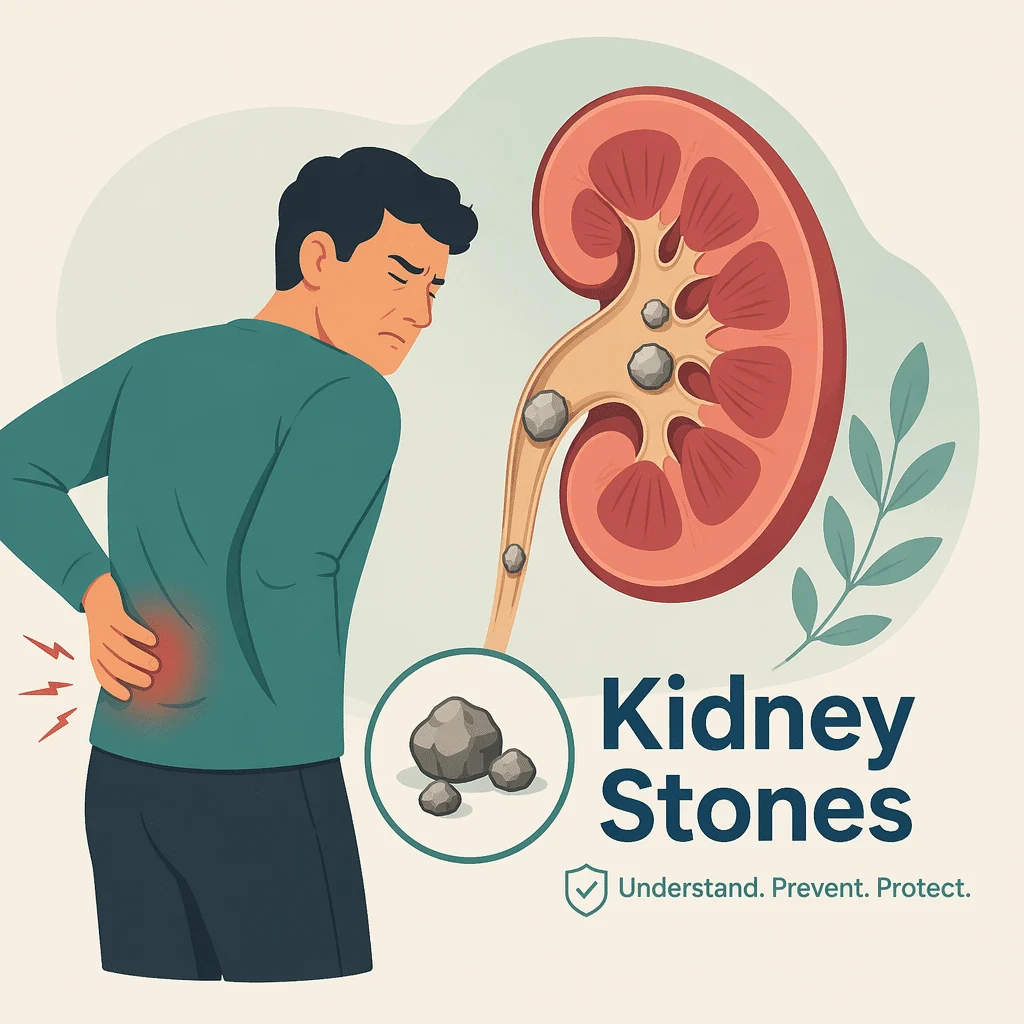
Calculii renali sunt depozite cristaline dure care se formează în interiorul rinichiului, iar atunci când unul ajunge în tubul îngust care drenează rinichiul, provoacă una dintre cele mai intense dureri din medicină. Sunt frecvenți: aproximativ 11% dintre bărbați și 6% dintre femei din Statele Unite au cel puțin un calcul la un moment dat, conform Institutului Național pentru Diabet și Boli Digestive și Renale. Sunt și recidivanți, deoarece un calcul crește semnificativ riscul apariției altuia.
În acest articol vei afla cum se simte cu adevărat un atac de calcul renal, inclusiv detaliul care îl diferențiază de alte dureri abdominale severe, ce tipuri de calculi există și ce le provoacă, cum este confirmat un calcul, cum sunt tratați calculii și ce măsuri de prevenție sunt cu adevărat eficiente. Articolul corectează și cel mai frecvent sfat greșit legat de calculi: eliminarea calciului din dietă.
Citește mai întâi caseta de urgență de mai jos: febra însoțită de durere în flanc și un calcul renal suspectat nu este ceva ce poți aștepta să treacă acasă.
Urgență: când un calcul renal devine periculos
Febra sau frisoanele însoțite de durere în flanc și un calcul renal suspectat reprezintă o urgență urologică. Un rinichi blocat și infectat în același timp poate evolua spre sepsis cu risc vital în câteva ore și necesită drenaj urgent; antibioticele singure nu sunt suficiente. Mergi la camera de urgență sau sună la 112 dacă te simți foarte rău.
Mergi de urgență la spital și dacă:
- Nu poți urina deloc.
- Vomezi atât de mult încât nu poți păstra lichidele.
- Durerea ta este severă și nu este controlată de ceea ce ți-a prescris medicul.
- Ai un singur rinichi sau un rinichi transplantat și suspectezi o obstrucție.
- Ești însărcinată și ai durere în flanc care ar putea fi un calcul.
- Te simți confuz(ă), ai frisoane sau transpirații reci, sau inima îți bate repede.
Ce este un calcul renal și tipurile care contează
Urina transportă minerale dizolvate și deșeuri. Când devine concentrată sau echilibrul dintre substanțele care formează calculi și inhibitorii naturali se dezechilibrează, acele minerale cristalizează și se lipesc împreună, crescând în câteva săptămâni într-o masă solidă. Medicii numesc aceasta nefrolitiază.
Un calcul aflat liniștit în rinichi nu provoacă adesea nimic. Problemele apar când acesta intră în ureter, tubul dintre rinichi și vezică, unde poate bloca fluxul de urină și declanșa durere. Tipul calculului contează, deoarece determină prevenția: analiza de laborator a unui calcul eliminat este cel mai util lucru pe care îl poți afla vreodată despre propriul tău risc.
Calculi de oxalat de calciu și fosfat de calciu
Calculii de calciu sunt de departe cei mai frecvenți, iar cei de oxalat de calciu sunt mai numeroși decât cei de fosfat de calciu. Se formează atunci când urina conține prea mult calciu sau oxalat, sau prea puțin citrat — un inhibitor natural care împiedică combinarea celor două.
Calculii de fosfat de calciu apar mai frecvent când urina este persistent alcalină și sunt mai des asociați cu acidoza tubulară renală sau cu hiperparatiroidismul. Ghidul nostru despre pH-ul normal al urinei explică cum aciditatea este legată de tipul de calculi.
Calculi de acid uric, struvit și cistină
Calculii de acid uric se formează în urină persistent acidă și sunt asociați cu gută, rezistența la insulină, obezitatea și dietele bogate în carne și fructe de mare. Sunt singurul tip frecvent care poate fi uneori dizolvat prin tratament medicamentos.
Calculii de struvit sunt calculi de infecție: anumite bacterii descompun ureea și alcalinizează urina, permițând cristalizarea fosfatului de magneziu și amoniu. Cresc rapid și apar în urma unor infecțiile tractului urinar.
Calculii de cistină sunt rari și au cauze genetice. În cistinurie, un defect de transport moștenit permite aminoacidului cistină să se scurgă în urină, unde se dizolvă greu; de obicei apar de la vârste tinere și recidivează toată viața.
Cum se simte cu adevărat un atac de calcul renal
Colica renală, durerea cauzată de un calcul care coboară prin ureter, apare brusc, adesea noaptea, și atinge intensitatea maximă în câteva minute. Este localizată în flanc sau în partea laterală a spatelui, sub coaste, și iradiază înainte și în jos spre zona inghinală, spre testicul la bărbați sau spre labii la femei. Vine în valuri, atingând o intensitate pe care mulți o descriu ca mai puternică decât durerile de naștere. Greața și vărsăturile sunt frecvente, deoarece rinichiul și intestinul împart aceleași căi nervoase.
Iată un detaliu pe care clinicienii îl știu, dar pacienții rareori îl aud: cineva cu colică renală nu se poate odihni. Umblă încoace și încolo, se zvârcolește și schimbă poziția în continuu, incapabil să stea nemișcat. Aceasta este aproape opusul peritonitei – inflamarea peritoneului în cazul unui apendice perforat – unde orice mișcare doare și oamenii stau complet înțepeniți. Niciunul dintre aceste tablouri nu confirmă singur diagnosticul, dar agitația însoțită de durere severă pe o parte a flancului indică puternic prezența unui calcul.
Urina poate părea roz, roșie sau maro, iar sângele microscopic este și mai frecvent; articolul nostru despre sânge în urină explică de ce. Odată ce calculul se apropie de vezică, nevoia constantă de a urina este tipică.
| Situație | Ce înseamnă de obicei | Ce să faci |
|---|---|---|
| Durere bruscă și severă în flanc, cu iradiere spre inghinal | Colică renală clasică, cauzată de un calcul în ureter | Evaluare urgentă în aceeași zi pentru controlul durerii și imagistică |
| Durere în flanc însoțită de febră sau frisoane | Posibilă obstrucție renală cu infecție | Mergi de urgență la camera de gardă; sună la 112 dacă te simți foarte rău |
| Calcul deja diagnosticat, în curs de eliminare la domiciliu | Evoluție obișnuită pentru mulți calculi mici | Urmează planul medicului tău; filtrează urina și păstrează calculul |
| Doi sau mai mulți calculi în timp | Litiază renală recurentă cu o cauză subiacentă tratabilă | Întreabă despre analiza calculului și o evaluare a urinei pe 24 de ore |
| Calcul suspectat în sarcină | Situație cu risc mai mare pentru mamă și sarcină | Consultație obstetricală și urologică în aceeași zi; ecografie în primul rând |
Cine face calculi renali și de ce
Cel mai mare factor de risc este hidratarea insuficientă. Urina concentrată lasă cristalele cu mai puțină apă în care să rămână dizolvate, de aceea calculii sunt mai frecvenți în climatele calde și la persoanele al căror loc de muncă le face să transpire mult — de la bucătari și acoperitori până la muncitorii din turnătorii — și de aceea atacurile se grupează vara.
Alimentația contribuie în mod specific: sodiul în exces determină eliminarea mai multor cantități de calciu în urină, proteinele animale în cantitate mare cresc încărcătura acidă și nivelul de acid uric, iar băuturile îndulcite cu zahăr sunt asociate cu un risc mai ridicat.
Mai multe afecțiuni cresc riscul: obezitatea, diabetul zaharat de tip 2, guta și hiperparatiroidismul primar, în care o glandă hiperactivă determină creșterea calciului în sânge și apoi în urină. Boala inflamatorie intestinală, diareea cronică și chirurgia bariatrică cu bypass intestinal provoacă hiperoxalurie enterică: malabsorbția grăsimilor lasă oxalat liber în intestin, care este absorbit și eliminat prin urină. Hormonul paratiroidian, calciul seric și acidul uric sunt analizele uzuale.
Unele medicamente contribuie, printre care topiramatul, anumiți inhibitori de protează HIV, antiacidele pe bază de calciu în cantități mari și diureticele pe termen lung; istoricul familial contează și el. Aproximativ jumătate dintre persoanele care formează un calcul vor forma un altul în aproximativ zece ani – tocmai de aceea prevenția este atât de importantă.
Febra asociată cu un calcul: urgența care nu poate aștepta
Majoritatea crizelor de litiază renală sunt extrem de dureroase, dar nu periculoase. Una face excepție. Când un calcul blochează un ureter și urina din spatele lui se infectează, rinichiul devine o pungă închisă, sub presiune, plină cu puroi, care forțează bacteriile și toxinele să intre în fluxul sangvin. Aceasta este pielonefrita obstructivă și poate evolua spre șoc septic în câteva ore, chiar și la un adult anterior sănătos. Febra sau frisoanele puternice însoțite de durere în flanc reprezintă semnalul de alarmă.
Răspunsul nu constă doar în antibiotice, deoarece acestea nu pot atinge concentrații utile în interiorul unui sistem obstruat. Rinichiul trebuie drenat urgent, fie cu un stent introdus pe ureter, fie cu un tub de nefrostomie prin spate. Tratarea calculului în sine este amânată până când infecția se remite.
Dacă ai durere în flanc și orice fel de febră, nu aștepta să treacă de la sine. Consultă un medic în aceeași zi.
Cum se diagnostichează calculii renali
CT-ul abdomino-pelvin fără contrast este testul de referință. Identifică aproape orice calcul, arată dimensiunea și poziția acestuia, evidențiază obstrucția și exclude alte cauze ale durerii în flanc.
Ecografia este adesea prima opțiune în sarcină și la pacienții mai tineri, deoarece nu folosește radiații. Este mai puțin precisă pentru calculii ureterali mici, dar evidențiază în mod fiabil umflarea rinichiului în spatele unei obstrucții, de obicei suficient pentru a ghida pasul următor.
Analiza urinei se efectuează în aproape fiecare caz, căutând globule roșii, semne de infecție și cristale; ghidul nostru despre cristale urinare la microscopie explică ce înseamnă și ce nu înseamnă aceste rezultate. Analizele de sânge includ de obicei funcția renală, calciul și acidul uric, iar articolul nostru despre BUN și creatinină crescute te poate ajuta să le înțelegi.
Dacă un calcul este eliminat, trimite-l la analiză; costul este redus, iar rezultatul schimbă complet strategia de prevenție. Pentru calculii recurenți, un prim calcul apărut la vârstă tânără, un singur rinichi sau un istoric familial puternic, medicii adaugă o evaluare metabolică: o colectare de urină pe 24 de ore, care măsoară volumul, calciul, oxalatul, citratul, acidul uric, sodiul, pH-ul și test de creatinină urinară, care confirmă că recoltarea a fost completă.
Cum se tratează calculii renali
Cele descrise mai jos prezintă opțiunile disponibile; nu reprezintă un plan de tratament, iar orice decizie aparține unui medic care te-a examinat și ți-a văzut investigațiile imagistice. Controlul durerii vine pe primul loc, iar alegerea medicamentului depinde de funcția rinichilor tăi, de alte medicamente pe care le iei și de istoricul tău medical. De aceea, niciun articol nu ar trebui să îți indice un analgezic sau o doză anume.
Majoritatea calculilor mici se elimină spontan, cu timp, hidratare și analgezice. Dimensiunea și poziția calculului influențează șansele: cu cât calculul este mai mic și mai jos plasat, cu atât mai bine. Medicul tău poate recomanda terapia de expulzie medicamentoasă — un alfa-blocant care relaxează ureterul inferior — considerată în general pentru calculii mai mari situați în treimea inferioară a ureterului, nu pentru orice calcul.
Când un calcul nu se elimină de la sine, există trei proceduri principale. Litotripsia extracorporeală cu unde de șoc focalizează energie acustică din exteriorul corpului pentru a fragmenta calculul, nu necesită incizie și este potrivită pentru calculii mai mici din rinichi și din ureterul superior. Ureteroscopia introduce un telescop subțire prin vezică și fragmentează calculul cu laser, putând ajunge la nivelul întregului ureter și al rinichiului, cu cele mai mari șanse de a-l elimina complet într-o singură ședință. Nefrolitotomia percutanată creează un mic canal prin spate până în rinichi, pentru calculii mari sau cei de tip coraliform.
Un rinichi obstruat și infectat se tratează diferit: mai întâi drenaj, apoi calculul.
Prevenirea următorului calcul renal
Prevenția este componenta îngrijirii calculilor cu cele mai solide dovezi, iar o măsură se impune înaintea tuturor: să bei suficient pentru a produce un volum bun de urină diluată, de culoare deschisă, pe parcursul întregii zile și nopți. Urina diluată nu atinge ușor suprasaturarea, iar cristalele nu se pot forma acolo unde nu există suprasaturare. Medicul tău ar trebui să îți stabilească volumul țintă, deoarece acesta depinde de funcția rinichilor și a inimii tale, precum și de cât lichid pierzi prin transpirație.
Pe lângă hidratare, măsurile cu dovezi solide includ reducerea sodiului, menținerea unui consum moderat de proteine animale, scăderea excesului de greutate și limitarea băuturilor îndulcite cu zahăr. Restricționarea oxalatului merită aplicată doar dacă formezi calculi de oxalat de calciu și analiza urinei pe 24 de ore arată oxalat crescut; evitarea generalizată a spanacului, nucilor și rubarbei nu ajută pe nimeni altcineva.
Unele persoane au nevoie și de prevenție medicamentoasă adaptată tipului de calcul: diuretice tiazidice pentru calciu urinar crescut, citrat de potasiu pentru citrat scăzut sau calculi de acid uric, alopurinol pentru acid uric crescut. Acestea sunt medicamente cu efecte secundare reale, alese pe baza rezultatelor tale urinare.
Greșeala legată de calciul din alimentație
Iată greșeala pe care majoritatea articolelor o fac: restricționarea calciului din alimentație crește riscul de pietre la rinichi din oxalat de calciu. Nu îl reduce.
Motivul este mecanic. Calciul consumat în timpul mesei leagă oxalatul în intestin, formând un compus care nu este absorbit și este eliminat prin scaun. Dacă elimini calciul, oxalatul este absorbit în schimb, ajunge la rinichi și este excretat în urină, liber să se combine cu calciul și să cristalizeze. Așa cum precizează Institutul Național pentru Diabet și Boli Digestive și Renale, calciul din alimente nu îți crește riscul de a face calculi de oxalat de calciu, iar în cantitățile potrivite, calciul blochează alte substanțe din tractul digestiv care duc la formarea calculilor (NIDDK, Alimentație, Dietă și Nutriție pentru Calculii Renali).
Suplimentele de calciu sunt o altă problemă. Luate cu mâncare, se comportă similar cu calciul din alimentație; luate între mese, fără oxalat cu care să se lege, calciul suplimentar este absorbit și crește în schimb calciul urinar. Dacă iei calciu sau vitamina D suplimente și formezi pietre, discută acest lucru cu medicul tău.
Suc de lămâie, oțet de mere și cure de curățare a pietrelor
Citratul nu este un remediu popular fără bază. El inhibă cu adevărat formarea pietrelor, legând calciul din urină și interferând cu creșterea cristalelor — de aceea citratul de potasiu este un medicament eliberat pe rețetă. Lămâile sunt bogate în citrat, iar studii mici privind terapia cu limonadă au arătat creșteri modeste ale citratului urinar la unii pacienți. Este un lucru rezonabil și ieftin pe care să îl discuți cu medicul tău, și nimic mai mult.
Ceea ce sucul de lămâie nu face este să dizolve un calcul de calciu. Nicio băutură nu poate face asta. Singurii calculi dizolvați pe cale medicală sunt cei de acid uric și unii calculi de cistină, iar acest lucru este realizat de un medic care alcalinizează urina cu medicamente prescrise și monitorizează rezultatul.
Oțetul de mere nu are nicio dovadă clinică în tratamentul calculilor renali. Nici curele comerciale de curățare a rinichilor și protocoalele de eliminare a pietrelor nu au, iar unele conțin ingrediente bogate în oxalat sau plante diuretice care înrăutățesc situația. Recenziile recente ale dovezilor au semnalat, de asemenea, mai multe efecte secundare minore în cazul sucului de lămâie față de placebo. Tratează aceste remedii ca nedemonstrate și consideră o piatră suspectată o problemă medicală.
Cele mai recente progrese științifice în tratamentul calculilor renali
O analiză a dovezilor finanțată federal, publicată în Annals of Internal Medicine în 2026 de Asher și colaboratori, a reunit 31 de studii privind prevenirea recurenței calculilor. A constatat că un aport crescut de apă și o dietă cu calciu normal până la ridicat, plus proteine scăzute și sodiu scăzut, pot reduce recurența, alături de tiazide, terapie alcalină și alopurinol, deși certitudinea dovezilor a fost scăzută în toate cazurile. A asociat, de asemenea, sucul de lămâie cu mai multe evenimente adverse minore. Ce înseamnă asta pentru tine: lichidele și dieta rămân cele mai bine susținute lucruri pe care le poți face, iar calciul normal face parte din acest sfat, nu este o excepție.
Studiul NOSTONE, publicat în New England Journal of Medicine în 2023 de Dhayat și colaboratori, a testat hidroclotiazida față de placebo la persoane cu calculi de calciu recurenți. Pe parcursul a trei doze și aproape trei ani de urmărire, recurența nu a fost semnificativ diferită față de placebo, în timp ce potasiul scăzut, guta nou apărută și diabetul nou apărut au fost mai frecvente la cei care au luat medicamentul. Ce înseamnă asta pentru tine: o tiazidă nu mai este o prescripție automată, și este perfect justificat să întrebi de ce a fost aleasă pentru profilul tău urinar.
O analiză din 2024 publicată în Current Opinion in Nephrology and Hypertension de Bargagli și colaboratori a adăugat o meta-analiză a tuturor studiilor controlate cu placebo privind monoterapia cu tiazide, nu a găsit niciun avantaj semnificativ și a pledat pentru o utilizare mai restrânsă. Ce înseamnă asta pentru tine: prevenția se îndreaptă spre un tratament adaptat chimiei urinare măsurate individual, nu aplicat tuturor.
O analiză sistematică și meta-analiză din 2025, publicată în European Urology Focus de Nedbal și colaboratorii, din secția de endourologie a Asociației Europene de Urologie, a comparat ureteroscopia flexibilă cu litotripsia prin unde de șoc pe o populație cumulată foarte mare. Ureteroscopia a eliminat calculii mai frecvent și a necesitat mai rar tratament repetat, cu complicații, durată de spitalizare și costuri comparabile. Ce înseamnă asta pentru tine: dacă ți se oferă ambele opțiuni, întreabă cât de probabil este ca fiecare să elimine calculul tău într-o singură ședință, nu doar care pare mai puțin invazivă.
În final, un studiu spitalicesc din 2025, publicat în BMC Urology de Hsu și colaboratorii, a urmărit persoane internate cu sepsis cauzat de un calcul obstructiv în ureterul superior. Cei la care s-a efectuat drenaj de urgență timpuriu au ajuns mai repede la tratamentul definitiv și au fost externați mai devreme. Ce înseamnă asta pentru tine: confirmă informația din caseta de mai sus — un rinichi infectat și blocat se drenează mai întâi, iar calculul se tratează ulterior.
Glosar de termeni cheie
| Termen | Definiție |
|---|---|
| Colică renală | Durerea de tip colică cauzată de un calcul care coboară prin ureter, resimțită în flanc și iradiind spre zona inghinală. |
| Ureter | Tubul îngust care transportă urina de la fiecare rinichi la vezică, și locul unde de obicei se blochează un calcul. |
| Nefrolitiază | Denumirea medicală a bolii calculilor renali. |
| Oxalat | Un compus prezent în unele alimente de origine vegetală care leagă calciul; în cantitate prea mare în urină, favorizează formarea celui mai frecvent tip de calcul. |
| Citrat | Un inhibitor natural din urină care leagă calciul și încetinește creșterea cristalelor; nivelurile scăzute cresc riscul de calculi. |
| Hidronefroză | Dilatarea rinichiului cauzată de acumularea urinei în spatele unui obstacol. |
| Litotripsie prin unde de șoc | O procedură care fragmentează un calcul cu energie acustică focalizată, aplicată din exteriorul corpului. |
| Ureteroscopie | O procedură prin care un telescop subțire este introdus pe căile urinare pentru a fragmenta sau extrage un calcul cu ajutorul unui laser. |
| Nefrolitotomie percutanată | Îndepărtarea unui calcul de mari dimensiuni printr-un canal mic creat prin spate, până la rinichi. |
| Colectare de urină pe 24 de ore | O colectare completă a urinei pe parcursul unei zile întregi, analizată pentru a identifica cauza metabolică a calculilor recurenți. |
Întrebări frecvente
Cât durează eliminarea unui calcul renal?
Depinde în principal de dimensiune și poziție, și nimeni nu poate garanta că un calcul va fi eliminat spontan. Calculii foarte mici situați jos în ureter se elimină adesea în una-două săptămâni; cei mai mari pot dura câteva săptămâni, iar calculii care depășesc o anumită dimensiune necesită de obicei o procedură. Medicii stabilesc de obicei o limită de timp pentru supraveghere și așteptare, deoarece un ureter blocat prea mult timp poate afecta rinichiul din amonte. Dacă durerea se agravează, dacă faci febră sau dacă nu s-a întâmplat nimic în intervalul stabilit de medicul tău, întoarce-te mai devreme, nu mai târziu.
Ar trebui să elimin calciul din alimentație dacă am calculi renali?
Nu, și aceasta este cea mai frecventă greșeală. O dietă săracă în calciu crește riscul de calculi de oxalat de calciu, deoarece calciul din alimentație leagă oxalatul în intestin, astfel încât acesta este eliminat prin scaun în loc să ajungă în urină. Dacă reduci calciul din dietă, mai mult oxalat este absorbit și excretat, ceea ce este exact efectul nedorit. Un aport normal de calciu din alimentație este protector și îți protejează și oasele. Suplimentele de calciu sunt o altă poveste: luate între mese pot crește calciul urinar, așa că întreabă-ți medicul înainte să începi sau să oprești unul.
Sucul de lămâie dizolvă calculii renali?
Nu. Nicio băutură nu dizolvă un calcul de calciu. Sâmburele de adevăr este că citratul, pe care lămâile îl conțin în cantitate mare, inhibă cu adevărat formarea calculilor, iar citratul de potasiu este un medicament preventiv real, prescris de medici. Studii mici privind terapia cu limonadă au arătat creșteri modeste ale citratului urinar la unii pacienți, deci merită să discuți cu medicul tău ca o completare ieftină a aportului de lichide. Nu este un tratament pentru un calcul pe care îl ai deja, iar o analiză recentă a dovezilor a constatat că regimurile cu suc de lămâie au cauzat mai multe efecte secundare minore decât placebo.
Poate un calcul renal să îmi afecteze rinichiul?
De obicei nu, dacă este tratată în timp rezonabil. Riscul apare în cazul obstrucției prelungite și al infecției. Un ureter blocat timp de săptămâni poate provoca pierderea permanentă a funcției acelui rinichi, iar un rinichi obstruat care se infectează reprezintă o urgență medicală. Persoanele cu un singur rinichi, cu rinichi transplantat sau cu boală renală preexistentă au o marjă mai mică și sunt tratate mai urgent. De aceea, sfatul este întotdeauna să consulți un medic dacă suspectezi un calcul, în loc să înduri durerea.
Ar trebui să recuperez calculul și ce se întâmplă cu el după aceea?
Da. Filtrează urina printr-un filtru oferit de clinică sau printr-o plasă fină și păstrează orice reziduu solid, chiar dacă arată ca un grăunte de nisip. Laboratorul analizează din ce este alcătuit, iar rezultatul conturează întregul tău plan de prevenție: sfaturi privind oxalatul pentru un tip, alcalinizarea urinei pentru altul, controlul infecțiilor pentru un al treilea. Absența durerii nu confirmă că piatra a fost eliminată, așa că de obicei se programează și o investigație imagistică de urmărire.
Pot avea un calcul renal dacă analiza de urină este normală?
Da. Majoritatea persoanelor cu colică renală au sânge în urină, dar o minoritate semnificativă nu prezintă acest semn, mai ales când un calcul blochează complet ureterul. Prin urmare, o analiză de urină normală nu exclude prezența unui calcul, iar investigația imagistică tranșează problema. Și inversul este valabil: sângele în urină are multe cauze în afara calculilor, deci acest semn singur nu confirmă prezența lor.
Surse
Detaliile studiilor și referințele bibliografice au fost preluate din PubMed.
- National Institute of Diabetes and Digestive and Kidney Diseases (NIDDK) – Definiție & Informații despre calculii renali
- National Institute of Diabetes and Digestive and Kidney Diseases (NIDDK) – Alimentație, Dietă & Nutriție pentru calculii renali
- MedlinePlus, U.S. National Library of Medicine – Calculi renali
- American Urological Association – Ghid clinic pentru managementul medical al calculilor renali
- Asher GN, Viprakasit DP, Aymes SE, Lusk JB, Ross S, Baker C, Rains C, Wright ST, Kahwati LC. Prevention of Recurrent Nephrolithiasis in Adults and Children: A Systematic Review. Ann Intern Med. 2026;179(5):696-707. https://doi.org/10.7326/ANNALS-25-04452
- Dhayat NA, Bonny O, Roth B, Christe A, Ritter A, Mohebbi N, et al. Hydrochlorothiazide and Prevention of Kidney-Stone Recurrence. N Engl J Med. 2023;388(9):781-791. https://doi.org/10.1056/NEJMoa2209275
- Bargagli M, Trelle S, Bonny O, Fuster DG. Thiazides for kidney stone recurrence prevention. Curr Opin Nephrol Hypertens. 2024;33(4):427-432. https://doi.org/10.1097/MNH.0000000000000990
- Nedbal C, Geraghty R, Tramanzoli P, Sessa D, Gauhar V, Galosi AB, Gregori A, Somani BK. Cost and Effectiveness of Flexible Ureteroscopy Versus Shockwave Lithotripsy for Urolithiasis: A Systematic Review and Meta-analysis by the European Association of Urology Endourology Section. Eur Urol Focus. 2025;11(6):1012-1022. https://doi.org/10.1016/j.euf.2025.06.004
- Hsu JT, Lin CM, Hung SF, Chung SD, Cheng PY. Optimizing antibiotic duration and percutaneous nephrostomy timing in urosepsis complicated by upper ureteral stones: a retrospective study. BMC Urol. 2025;25(1):182. https://doi.org/10.1186/s12894-025-01868-7
Lectură suplimentară
- Urina spumoasă explicată: cauze și riscuri
- Deficit de magneziu: simptome, cauze și tratamente
- Electroliți urinari: interpretarea rezultatelor analizelor tale
- Panoul funcției renale: ce măsoară
- Culoarea urinei: cauze și modificări
O evaluare pentru calculi renali produce de obicei mai multe valori deodată: o sumar de urină, creatinină și funcție renală, calciu și acid uric din sânge, și ulterior o colectare de urină pe 24 de ore. AI DiagMe citește aceste rezultate și îți explică pe înțeles ce măsoară fiecare valoare și de ce ți-a recomandat-o medicul. Te ajută să îți înțelegi rezultatele și să pregătești întrebări mai bune. Nu pune diagnosticul de calculi renali și nu înlocuiește medicul tău.
Înțelege-ți rezultatele analizelor cu AI DiagMe
Obține interpretarea rezultatelor în câteva minute