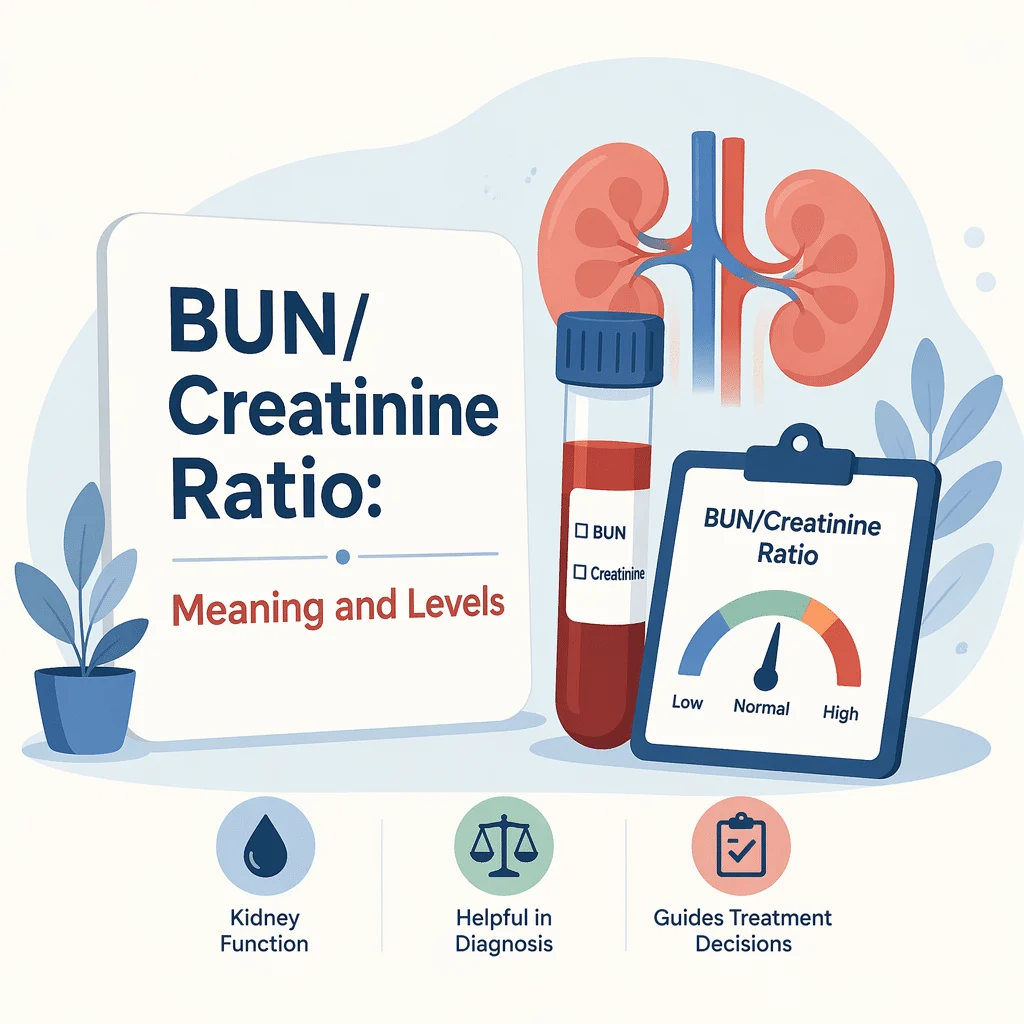
Raportul BUN/creatinină este un singur număr obținut printr-un calcul simplu: rezultatul azotului ureic din sânge împărțit la rezultatul creatininei. Medicii îl calculează deoarece aceste două produse reziduale nu evoluează întotdeauna în același ritm, iar diferența dintre ele poate indica unde se află o problemă, nu doar că există una. Un raport cuprins între 10:1 și 20:1 este considerat în general normal. O valoare mai mare ridică adesea întrebarea dacă fluxul de sânge care ajunge la rinichi este redus. O valoare mai mică ridică adesea întrebarea dacă producția de uree este scăzută. Toate acestea sunt cu adevărat utile, dar niciunul dintre ele nu reprezintă un diagnostic.
În acest articol vei afla cum se calculează raportul, inclusiv o capcană legată de unități de măsură care îi surprinde pe cititorii din afara Statelor Unite, de ce îl calculează medicii, ce sugerează un rezultat crescut și unul scăzut, ce examinează medicii alături de el, când poate induce în eroare și care simptome înseamnă că nu trebuie să aștepți.
Ce este de fapt raportul uree/creatinină
Raportul este o comparație, nu o măsurătoare. Nimic din corpul tău nu produce un „raport". Un laborator măsoară două substanțe din același eșantion de sânge, iar fie analizorul, fie medicul împarte una la cealaltă. Un azot ureic din sânge de 18 mg/dL cu o creatinină de 1,0 mg/dL dă un raport de 18:1; un azot ureic de 30 mg/dL cu aceeași creatinină dă 30:1.
Acest calcul contează deoarece cele două substanțe părăsesc fluxul sanguin pe căi parțial diferite. Creatinina este filtrată de rinichi și rămâne în mare parte în urină. Ureea este și ea filtrată, dar o parte variabilă este reabsorbită înapoi în sânge, iar această parte crește atunci când rinichiul lucrează pentru a conserva apa și sărurile. Astfel, când circulația spre rinichi scade, ureea crește mai repede decât creatinina și raportul se lărgește. Acest singur mecanism explică cea mai mare parte din ceea ce urmează.
Câteva cuvinte despre cei doi indicatori
Azotul ureic din sânge (BUN) reflectă azotul conținut în uree, compusul rezidual pe care ficatul îl produce atunci când descompune proteinele. Creatinina este produsul rezidual rezultat din uzura zilnică a mușchilor. Ambii sunt eliminați în mare parte de rinichi, motiv pentru care apar împreună într-un panel de funcție renală. Pentru o explicație detaliată a fiecărui marker în parte, consultă paginile noastre dedicate, care acoperă testul azotului ureic din sânge și markerul creatinină din sânge, iar un articol dedicat acoperă niveluri ridicate de BUN și creatinină în detaliu.
Capcana unităților de măsură: mg/dL față de mmol/L
Toate valorile de referință ale raportului pe care le vei găsi online presupun că ambele valori sunt exprimate în mg/dL, convenția folosită în Statele Unite. Mare parte din restul lumii raportează ureea în mmol/L și creatinina în µmol/L și adesea raportează ureea în sine, nu azotul ureic. Dacă împarți aceste numere, obții ceva complet diferit — de obicei în jur de 0,04 până la 0,1, ceea ce pare alarmant față de „10 până la 20", dar nu înseamnă nimic de genul acesta.
Aceasta este o sursă frecventă de îngrijorare inutilă. Dacă raportul tău arată ureea în mmol/L, intervalul de 10:1 până la 20:1 nu se aplică calculelor tale. Unele laboratoare din afara Statelor Unite raportează raportul uree-creatinină cu propriul interval de referință, adesea indicat între 40 și 100 în unități molare. Verifică unitățile tipărite lângă valorile tale înainte de a face orice comparație.
De ce calculează medicii acest raport
Creatinina singură îți spune că filtrarea a scăzut; nu îți spune de ce. Motivul clasic pentru care se analizează raportul este de a ajuta la clasificarea acestui „de ce" în categorii largi: o problemă înainte de rinichi, în interiorul rinichiului sau după acesta.
Prerenal înseamnă că țesutul renal este intact, dar nu primește suficient sânge, fie pentru că există prea puțin lichid în circulație, fie pentru că inima nu îl pompează eficient. Intrinsec înseamnă că țesutul de filtrare în sine este deteriorat. Postrenal înseamnă că urina nu poate fi drenată, de obicei din cauza unei obstrucții. Fiecare categorie necesită pași diferiți, iar identificarea corectă a categoriei de la început schimbă ce face un medic în ora următoare.
Raportul contribuie deoarece reabsorbția ureei este sensibilă la circulație într-un mod în care creatinina nu este. O creștere a raportului indică, în mod slab, categoria prerenal. Aceasta este întreaga sa valoare diagnostică: un indiciu într-o direcție, aplicat alături de tensiunea arterială, puls, constatările examinării, testele de urină și evoluția față de rezultatele anterioare.
Intervalul tipic și de ce este mai puțin precis decât pare
Majoritatea referințelor din Statele Unite indică un interval normal pentru adulți de aproximativ 10:1 până la 20:1, iar MedlinePlus listează „raportul BUN față de creatinină" printre denumirile standard de raportare pentru testul azotului ureic. Unele surse îngustează acest interval, altele îl lărgesc. Pragurile de peste 20:1 pentru „ridicat" și sub 10:1 pentru „scăzut" sunt convenții, nu limite biologice măsurate.
Trei observații contează mai mult decât cifrele. Laboratoarele diferă prin metodă și prin intervalul pe care îl tipăresc, deci intervalul din raportul tău este cel care se aplică. Vârsta, sexul, masa musculară și dimensiunea corporală influențează creatinina de bază și, prin urmare, raportul, fără ca ceva să fie în neregulă. Iar un raport care se încadrează perfect în interval nu îți oferă nicio asigurare dacă creatinina în sine crește: ambele valori pot crește împreună și menține raportul stabil în timp ce filtrarea scade.
Ca să fiu direct: un raport în afara intervalului menționat nu reprezintă un diagnostic, nu poate fi interpretat separat de valorile individuale ale ureei și creatininei și nu înseamnă mare lucru fără tabloul clinic și evoluția în timp. Compararea cu un prag nu este ceea ce acest număr îți permite să faci.
Ce sugerează un raport uree/creatinină crescut
Un raport crescut, în mod convențional peste aproximativ 20:1, înseamnă că ureea a crescut disproporționat față de creatinină. Explicațiile se împart în două categorii: rinichiul este insuficient perfuzat sau organismul produce uree în exces.
Stări prerenale: rinichiul este în regulă, fluxul nu este
Când volumul circulant scade, rinichiul reține apa și sărurile în mod agresiv, iar reabsorbția ureei crește odată cu aceasta. Pierderea de lichide prin vărsături, diaree, febră, transpirație sau tratament cu diuretice produce exact acest tablou — de aceea volumul redus determină și el creșterea modificări ale tensiunii arteriale în timpul deshidratării. Pierderea semnificativă de sânge produce același efect prin reducerea volumului circulant. Scăderea debitului cardiac generează același tablou fără ca vreun lichid să fie pierdut, motiv pentru care un raport crescut este frecvent la persoanele care trăiesc cu insuficiența cardiacă. Bolile hepatice severe cu redistribuire de lichide și orice stare de șoc pot produce același efect.
Semnul hemoragiei digestive superioare
Sângerarea în stomac sau în porțiunea superioară a intestinului subțire crește raportul în două moduri. Reduce volumul circulant ca orice hemoragie și aduce o cantitate mare de proteine — sânge digerat — în intestin, unde este absorbit și transformat în uree de către ficat. Ureea crește astfel brusc, în timp ce creatinina abia se modifică.
Din punct de vedere clinic, acest lucru este cu adevărat util: un raport semnificativ crescut la cineva care elimină scaune negre și gudronate orientează suspiciunea spre tractul digestiv superior, nu spre intestinul inferior, și se corelează firesc cu evoluția hemoglobinei pe un hemoleucogramă completă. Scaunele închise la culoare au și explicații mult mai banale, prezentate în pagina noastră despre puncte negre în scaun — dar asociate cu un raport crescut și cu orice simptom de pierdere de sânge, nu este ceva de ignorat.
Semne de alarmă care nu trebuie ignorate
Solicită îngrijire de urgență imediat — sună la numărul local de urgență — dacă un raport uree/creatinină crescut este însoțit de oricare dintre următoarele:
- Scaune negre, gudronate sau lipicioase
- Vărsături cu sânge sau vărsături care arată ca zaț de cafea
- Eliminare de sânge vizibil pe cale rectală
- Amețeli, leșin, paloare marcată, puls accelerat sau piele rece și umedă
- Dureri abdominale severe sau confuzie și somnolență
- Urină foarte puțină sau absența completă a urinei
Acestea pot semnala o hemoragie activă sau o prăbușire a circulației. Au nevoie de evaluare acum, nu la o programare săptămâna viitoare. Nu aștepta să vezi dacă următoarea analiză arată mai bine.
Alte motive pentru care ureea crește mai repede decât creatinina
Nu orice raport crescut implică o perfuzie deficitară. Corticosteroizii cresc degradarea proteinelor și, prin urmare, producția de uree, la fel ca orice stare puternic catabolică, cum ar fi infecția severă, arsurile majore sau traumatismele. Un aport foarte ridicat de proteine, inclusiv alimentația enterală în spital, crește ureea fără a afecta creatinina, iar antibioticele din clasa tetraciclinelor pot acționa similar. Masa musculară foarte redusă lărgește raportul din cealaltă direcție, menținând creatinina scăzută.
Ce sugerează un raport uree/creatinină scăzut
Un raport scăzut, în mod convențional sub aproximativ 10:1, înseamnă că ureea este neobișnuit de scăzută față de creatinină. Și în acest caz există două categorii: prea puțină uree produsă sau reținută, sau creatinina crescută disproporționat.
Producția redusă de uree reprezintă grupul mai mare. Ureea este sintetizată de ficat, astfel că o boală hepatică semnificativă o scade — de aceea un rezultat anormal al teste ale funcției hepatice alături de un raport scăzut merită atenție. Un aport scăzut de proteine și malnutriția produc același efect prin reducerea materiei prime disponibile, iar un testului de albumin din sânge însoțește adesea acest tablou. Sarcina scade ureea prin creșterea volumului plasmatic. Ureea poate fi și pur și simplu eliminată: dializa o îndepărtează eficient, iar stările de retenție hidrică, cum ar fi SIADH, o diluează.
Cealaltă cale este o creștere disproporționată a creatininei. Rabdomioliza — degradarea mușchiului scheletic după traumatisme prin strivire, efort extrem sau anumite reacții medicamentoase — inundă sângele cu creatinină, în timp ce ureea rămâne în urmă. În acest caz, enzima măsurată de Analiză de sânge CPK – creatinkinaza crește abrupt și este mult mai informativă decât raportul. O masă musculară foarte mare produce o versiune mai ușoară, fără nicio boală. Un raport scăzut este rareori îngrijorător în sine; este un semnal să te uiți la ficat, la nutriție și să verifici dacă creatinina este valoarea care s-a modificat.
Interpretarea raportului în context
Tabelul de mai jos arată cum aceeași direcție de modificare poate semnifica lucruri diferite în funcție de contextul clinic. Descrie raționamentul clinic tipic și nu este un instrument pentru evaluarea propriului rezultat.
| Direcția raportului și contextul clinic | Ce indică | Ce se întâmplă de obicei în continuare |
|---|---|---|
| Crescut, creatinina normală sau ușor ridicată, pierdere recentă de lichide | Flux sanguin redus spre rinichi, țesut intact | Anamneză, examen clinic, evaluarea statusului hidric, repetarea analizei de sânge |
| Crescut, cu scaune negre și gudronate sau vărsături cu sânge | Posibilă sângerare în tractul digestiv superior | Evaluare de urgență, hemoleucogramă completă, endoscopie |
| Crescut, în timpul tratamentului cu steroizi, alimentației prin sondă sau bolilor severe | Producție crescută de uree, mai degrabă decât o problemă renală | Revizuirea tratamentului și a contextului nutrițional, repetarea testelor |
| Crescut, cu creatinină clar ridicată și analize de urină anormale | Afectare a țesutului renal alături de perfuzie redusă | Sumar de urină, chimia urinei, imagistică, consultul unui specialist nefrolog |
| Scăzut, cu albumină redusă sau enzime hepatice anormale | Producție redusă de uree de către ficat sau aport scăzut de proteine | Evaluare hepatică, revizuire nutrițională |
| Scăzut, cu creatinină brusc crescută, dureri musculare, urină închisă la culoare | Distrugere musculară care crește creatinina în mod disproporționat | Testarea creatinkinazei, analiza urinei, consultație medicală urgentă |
| În intervalul normal, dar creatinina în creștere de-a lungul săptămânilor | Un raport aparent normal în timp ce filtrarea scade | Monitorizarea tendinței, rata de filtrare estimată, testarea albuminei urinare |
De ce raportul nu tranșează nimic de unul singur
Două lucruri sunt adevărate în același timp: raportul conține informații reale, dar performanța sa este modestă atunci când trebuie să decidă ceva de unul singur. Studiile care l-au testat ca discriminator independent constată în mod repetat că este acceptabil pentru a confirma o posibilitate când valorile sunt extreme, și slab pentru a o exclude când nu sunt.
Prin urmare, evaluarea modernă se bazează pe imaginea de ansamblu. Anamneza și examenul clinic sunt pe primul loc. Urmează analiza urinei, unde o bandeletă reactivă și microscopia pot evidenția sânge, proteine sau cilindri celulari care indică leziuni ale țesutului renal — motiv pentru care o valoare persistent urină spumoasă merită menționată unui medic. Apoi chimia urinei, unde sodiul urinar și excreția fracționată a sodiului explorează aceeași fiziologie mai direct; pagina noastră acoperă electroliții urinari în detaliu. Imagistica urmează dacă se suspectează o obstrucție.
Multe laboratoare nu mai tipăresc raportul în mod curent, tocmai din acest motiv: un număr derivat cu o acuratețe limitată ca indicator independent invită la suprainterpretare. Absența lui din analizele tale este o convenție de raportare, nu ceva ascuns intenționat.
Când raportul poate induce în eroare
Câteva situații obișnuite distorsionează raportul suficient de mult încât să îl facă inutil. Masa musculară foarte scăzută menține creatinina la un nivel redus și umflă raportul fără nicio problemă circulatorie; masa musculară foarte mare produce efectul invers. Boala cronică de rinichi stabilă poate prezenta ambele valori crescute și un raport aparent normal. Unele medicamente cresc creatinina prin blocarea secreției sale în urină, fără a modifica filtrarea, îngustând artificial raportul. Iar raportul descrie întotdeauna un singur moment: tendința în timp bate oricând o fotografie instantanee.
Cele mai recente progrese științifice în interpretarea raportului BUN/creatinină
Cercetările publicate între 2023 și 2026 converg spre un mesaj consistent: raportul are valoare prognostică în mai multe afecțiuni, dar acuratețea sa diagnostică luată singură este cel mult moderată. Studiile de mai jos sunt extrase din PubMed.
Cât de bine localizează raportul o sângerare gastrointestinală
O recenzie sistematică și meta-analiză publicată în 2026 a reunit șaptesprezece studii de acuratețe diagnostică pentru a testa dacă raportul poate distinge sângerările digestive superioare de cele inferioare. Ce s-a descoperit: la pragul cu cea mai bună performanță, raportul a identificat aproximativ două treimi din sângerările superioare, excluzând corect aproximativ șapte din zece sângerări inferioare. La pragul mai strict, cel mai frecvent citat, raportul a devenit mult mai bun la confirmarea unei surse superioare, dar a ratat majoritatea cazurilor. Autorii au descris discriminarea globală ca fiind moderată. Ce înseamnă asta pentru tine: un raport ridicat crește cu adevărat probabilitatea unei sângerări din tractul digestiv superior și este ieftin și disponibil imediat, motiv pentru care echipele de urgență îl folosesc pentru triajul precoce. Un raport care nu este ridicat nu exclude o sângerare superioară, de aceea endoscopia rămâne metoda de referință.
Dacă raportul prezice cine are nevoie de intervenție
Un studiu observațional din 2024 realizat pe 466 de pacienți din departamentele de urgență cu sângerare digestivă superioară acută a urmărit dacă raportul poate prezice cine va necesita o procedură activă. Ce s-a descoperit: raportul a fost asociat independent cu necesitatea unei intervenții, dar capacitatea sa de discriminare, luată singură, era doar ușor mai bună decât întâmplarea. Combinat într-un model cu hemoglobina și un istoric de sângerare variceală, performanța s-a îmbunătățit considerabil. Ce înseamnă asta pentru tine: raportul adaugă valoare atunci când este unul dintre mai mulți parametri, și foarte puțin atunci când este folosit singur.
Unde o valoare-limită dintr-un singur centru diferă de dovezile cumulate
Un studiu retrospectiv din 2025 realizat pe 300 de pacienți internați cu sângerare digestivă acută a raportat un prag care a separat sângerările superioare de cele inferioare cu sensibilitate și specificitate foarte ridicate și a constatat că pacienții cu valori peste acest prag au necesitat mai frecvent transfuzie și tratament endoscopic. Ce s-a descoperit: performanță impresionantă într-o singură populație spitalicească. Ce înseamnă asta pentru tine: pragurile stabilite într-un singur centru arată de obicei mai bine decât se dovedesc a fi odată reunite din mai multe contexte, așa cum arată meta-analiza de mai sus. Autorii înșiși au solicitat praguri standardizate înainte de o utilizare mai largă, deci tratează cu prudență orice cifră specifică privind „raportul diagnostic”.
Raportul ca marker prognostic în insuficiența cardiacă
O analiză sistematică și meta-analiză publicată în 2024 a combinat paisprezece studii efectuate pe persoane cu insuficiență cardiacă. Ce s-a descoperit: un raport mai mare a fost asociat în mod constant cu un risc mai mare de deces din orice cauză, atât în insuficiența cardiacă acută, cât și în cea cronică și în toate grupele de vârstă, deși aceeași analiză nu l-a confirmat ca predictor al decesului de cauză cardiovasculară specifică sau al reinternărilor. Un studiu de cohortă separat din 2023, realizat pe 504 persoane cu insuficiență cardiacă cronică, a raportat aceeași direcție a asocierii. Ce înseamnă asta pentru tine: în acest context, raportul se comportă ca un marker al gradului de suprasolicitare a circulației, nu ca un test renal, și evaluează riscul la nivel de populație, nu evoluția individuală a unei singure persoane.
De ce nici „valoarea mică înseamnă că ești în siguranță" nu este valabilă
O analiză din 2025 realizată pe 1.358 de femei care au suferit o intervenție de bypass coronarian a examinat raportul în raport cu supraviețuirea la cinci ani. Ce s-a descoperit: relația nu a fost liniară, iar femeile din grupul cu cel mai mic raport au avut un risc de deces semnificativ mai mare decât cele din grupul cu cel mai mare raport. Ce înseamnă asta pentru tine: un raport ridicat nu este singura direcție care merită atenție. În unele populații, un raport scăzut semnalează fragilitate, nutriție deficitară sau rezervă musculară și hepatică redusă. Contextul determină semnificația.
Ce înseamnă toate acestea la un loc
Aceeași limitare apare în toate aceste studii. Raportul este reproductibil, ieftin și disponibil în câteva minute, iar variațiile sale au direcții interpretabile. Este totodată influențat simultan de masa musculară, alimentație, funcția hepatică, medicație și hidratare — tocmai de aceea nu poate susține singur un diagnostic.
Glosar de termeni cheie
| Termen | Definiție |
|---|---|
| BUN | Azotul ureic din sânge: azotul conținut în uree, compusul rezidual pe care ficatul îl produce din descompunerea proteinelor. |
| Creatinină | Un produs rezidual al uzurii musculare zilnice, eliminat de rinichi și folosit pentru estimarea filtrării. |
| Prerenal | O problemă apărută înaintea rinichiului, de obicei din cauza unui flux sanguin insuficient care ajunge la țesutul renal intact. |
| Intrinsecă (renală) | O problemă la nivelul țesutului renal în sine, cum ar fi afectarea unităților de filtrare sau a tubilor. |
| Postrenală | O problemă apărută după rinichi, de obicei o obstrucție care împiedică scurgerea urinei. |
| Azotemie | Acumularea în sânge a produșilor reziduali azotați, cum ar fi ureea și creatinina. |
| Reabsorbție tubulară | Procesul prin care rinichiul preia substanțele filtrate, inclusiv ureea și apa, înapoi în sânge. |
| Excreția fracționată a sodiului | Un calcul bazat pe sodiul din sânge și urină care ajută la diferențierea fluxului sanguin renal redus de afectarea țesutului renal. |
| Rabdomioliza | Distrugerea rapidă a mușchiului scheletic care eliberează creatinină și enzime musculare în sânge. |
| Melenă | Scaun negru, ca smoala, cauzat de sânge digerat, de obicei provenit dintr-o sângerare la nivelul tractului digestiv superior. |
Întrebări frecvente
Ce înseamnă un raport BUN/creatinină crescut?
Înseamnă că ureea a crescut mai mult decât creatinina. Cele mai frecvente explicații sunt reducerea fluxului de sânge care ajunge la rinichi — din cauza pierderii de lichide, a pierderii de sânge sau a unei inimi care nu pompează eficient — și producția crescută de uree din tratamentul cu steroizi, un aport ridicat de proteine sau o boală catabolică severă. Sângerarea în tractul digestiv superior îl crește prin ambele mecanisme simultan. Ceea ce nu înseamnă este că s-a stabilit un diagnostic specific. Aceeași valoare are o semnificație diferită la un alergător de maraton, la o persoană fragilă de 85 de ani și la cineva care varsă sânge — doar valorile individuale coroborate cu tabloul clinic le pot diferenția.
Un raport BUN/creatinină scăzut este îngrijorător?
De obicei, nu este îngrijorător în sine. Un raport scăzut reflectă cel mai adesea o producție redusă de uree, din cauza bolilor hepatice, a unui aport scăzut de proteine, a malnutriției sau a sarcinii, ori eliminarea ureei, cum se întâmplă în cazul dializei. Poate apărea și atunci când creatinina este valoarea care a crescut, în special după o degradare musculară semnificativă. În sine, este un semnal de a analiza testele hepatice, nutriția și evoluția creatininei, nu o constatare care impune acțiune izolată. Discută-l cu medicul care a solicitat analizele, în loc să acționezi pe baza cifrei singure.
Deshidratarea modifică raportul BUN/creatinină?
Da, și este unul dintre cele mai constante efecte. Când volumul de lichid circulant scade, rinichiul reabsoarbe mai multă apă și sare, iar ureea este transportată înapoi în sânge odată cu acestea. Creatinina este mult mai puțin afectată de acest proces, astfel că ureea crește mai rapid și raportul se lărgește. De aceea, un raport crescut este adesea primul lucru luat în considerare după vărsături, diaree, febră sau tratament cu diuretice. Tabloul se inversează de obicei pe măsură ce echilibrul hidric este restabilit. Nu folosi aceasta ca motiv pentru a schimba din proprie inițiativă cât bei — această decizie aparține medicului tău, mai ales dacă ai boli de inimă sau de rinichi.
Pot calcula singur raportul din buletinul meu de analize?
Din punct de vedere aritmetic, da, dacă ambele valori sunt exprimate în mg/dL: împarte azotul ureic din sânge (BUN) la creatinină. Problema nu este calculul, ci interpretarea. Dacă analizele tale exprimă ureea în mmol/L, așa cum fac majoritatea laboratoarelor din afara Statelor Unite, intervalul obișnuit de 10:1 până la 20:1 nu se aplică, iar valoarea calculată va părea complet anormală fără niciun motiv real. Chiar și cu unitățile corecte, rezultatul nu poate fi interpretat fără valorile individuale, medicamentele pe care le iei, masa ta musculară și evoluția acestor valori față de analizele anterioare.
De ce laboratorul meu nu a raportat raportul uree/creatinină?
Multe laboratoare au încetat să îl mai tipărească ca element standard. Motivul este că o valoare derivată cu o acuratețe modestă ca indicator independent tinde să fie suprainterpretată, iar ambele valori sursă se află deja în buletin. Absența sa nu reprezintă o omisiune și nu a fost ascuns nimic. Dacă un medic dorește raportul pentru o întrebare specifică, îl poate calcula în câteva secunde din valorile pe care le ai deja.
Raportul meu este normal — înseamnă că rinichii mei sunt în regulă?
Nu neapărat. Atât BUN, cât și creatinina pot crește împreună, menținând raportul în intervalul obișnuit, în timp ce filtrarea scade treptat. Acest lucru este frecvent în boala cronică de rinichi stabilă. Un raport normal nu poate exclude nici problemele structurale care apar la testele de urină sau la imagistică, nu în analizele de sânge. Raportul descrie relația dintre două cifre, nu sănătatea organului, iar o creatinină în creștere pe parcursul lunilor contează mult mai mult decât un raport care arată bine astăzi.
Surse
- MedlinePlus, National Library of Medicine. BUN (Blood Urea Nitrogen). https://medlineplus.gov/lab-tests/bun-blood-urea-nitrogen/
- Institutul Național pentru Diabet și Boli Digestive și Renale (NIDDK). Teste și Diagnostic pentru Boala Cronică de Rinichi. https://www.niddk.nih.gov/health-information/kidney-disease/chronic-kidney-disease-ckd/tests-diagnosis
- Centers for Disease Control and Prevention. Testing for Chronic Kidney Disease. https://www.cdc.gov/kidney-disease/testing/
- Simadibrata DM, Koo TH, Murlidhar M, Lamichhane R, Rampengan DDCH, Danpanichkul P, Wong RCK. Blood Urea Nitrogen-to-Creatinine Ratio to Differentiate Upper From Lower Gastrointestinal Bleeding: A Systematic Review and Meta-Analysis. Journal of Gastroenterology and Hepatology, 2026. https://doi.org/10.1111/jgh.70224
- Liu H, Li Y, Liu C, Liu Z, Chen K. Diagnosis Value of the Blood Urea Nitrogen-to-Creatinine Ratio in Determining the Need for Intervention of Acute Upper Gastrointestinal Bleeding. Digestive Diseases, 2024. https://doi.org/10.1159/000538366
- Calim A. The role of BUN/creatinine ratio in determining the severity of gastrointestinal bleeding and bleeding localization. Northern Clinics of Istanbul, 2025. https://doi.org/10.14744/nci.2025.34366
- Zhou Y, Zhao Q, Liu Z, Gao W. Blood urea nitrogen/creatinine ratio in heart failure: Systematic review and meta-analysis. PLOS ONE, 2024. https://doi.org/10.1371/journal.pone.0303870
- Wang Y, Xu X, Shi S, Gao X, Li Y, Wu H, Song Q, Zhang B. Raportul azot ureic sanguin/creatinină și supraviețuirea pe termen lung la pacienții cu insuficiență cardiacă cronică. European Journal of Medical Research, 2023. https://doi.org/10.1186/s40001-023-01066-x
- Zhang K, Zhang R, Li B, Cui D. Asocierea dintre raportul uree/creatinină din sânge și evoluția pe termen lung la femeile supuse intervenției de bypass aortocoronarian. BMC Nephrology, 2025. https://doi.org/10.1186/s12882-025-04283-0
Lectură suplimentară
- Ce este rata de filtrare glomerulară estimată
- Ce include un panou metabolic complet
- Valori scăzute ale ureei sanguine: cauze și riscuri
- Ghid privind nivelurile de creatinină urinară
- Urină spumoasă: cauze și riscuri
Înțelege-ți rezultatele analizelor cu AI DiagMe
Raportul BUN/creatinină are sens doar alături de valorile din care provine. AI DiagMe îți citește analizele în ansamblu — BUN, creatinină, rata de filtrare estimată, hemoleucogramă completă — și îți explică pe înțeles ce descrie fiecare valoare și cum se leagă între ele. Te ajută să îți înțelegi rezultatele și să pregătești întrebări mai bune pentru consultație. Nu pune diagnostice, nu exclude afecțiuni și nu tratează nimic, și nu înlocuiește medicul tău.
Obține interpretarea rezultatelor în câteva minute