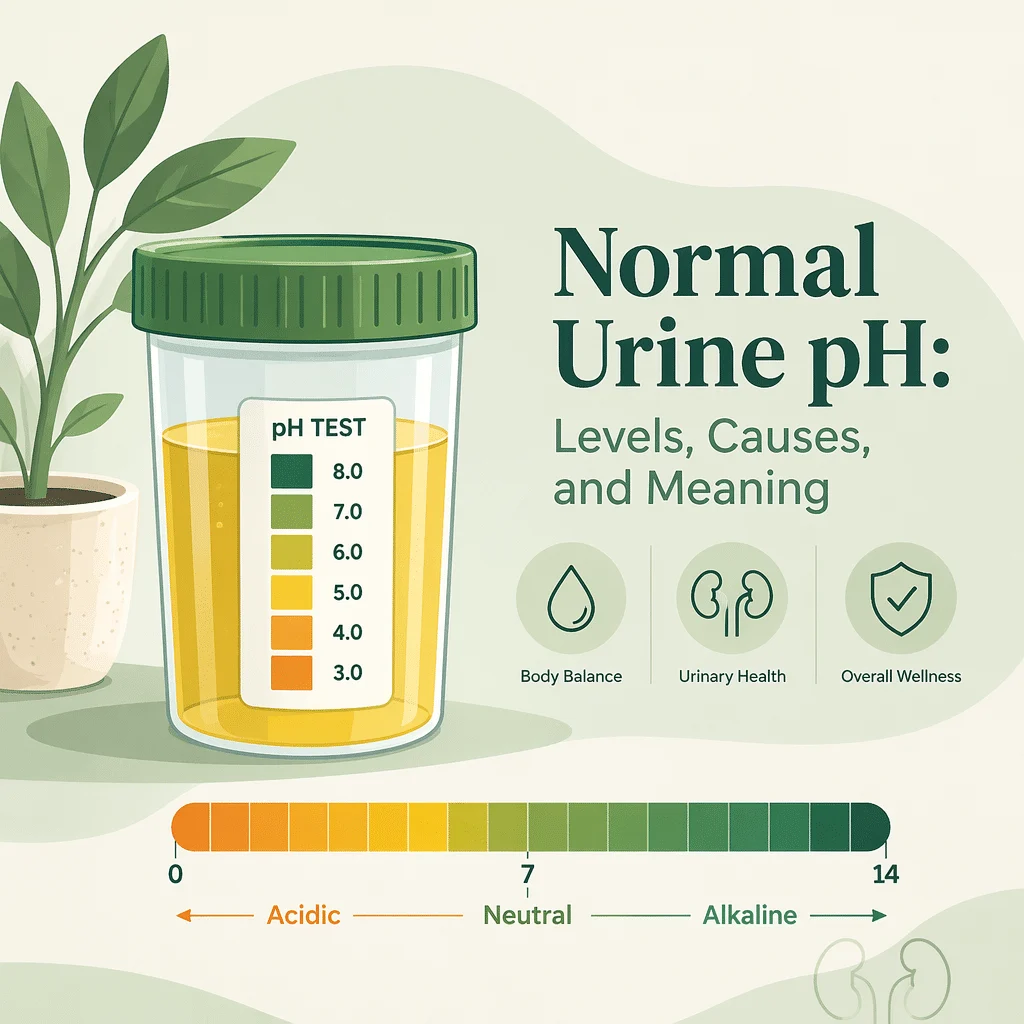
pH-ul normal al urinei se situează undeva între aproximativ 4,5 și 8,0, iar la majoritatea oamenilor se menține în jurul valorii de 6. Acesta este un interval larg, și este normal să fie așa. Rinichii tăi ajustează pH-ul urinei în sus și în jos pe tot parcursul zilei, pe măsură ce echilibrează încărcătura acidă provenită din alimentație, lichide și propriul metabolism. Un singur număr pe un buletin de analize reprezintă o imagine a unui singur moment, nu un verdict asupra sănătății tale.
În acest articol vei afla ce măsoară pH-ul urinar, de ce urina este mai acidă dimineața și mai alcalină după masă, ce îl modifică cu adevărat și situațiile în care are o importanță clinică reală: calculii renali, anumite infecții urinare și tulburările rare ale tubilor renali. Vei găsi, de asemenea, un răspuns clar la întrebarea despre dieta alcalină.
Ce măsoară pH-ul urinar și care este intervalul normal
pH-ul este o scară de la 0 la 14 care descrie cât de acidă sau alcalină este un lichid. Șapte este neutru, sub 7 este acid, peste 7 este alcalin. pH-ul urinar îți arată cât de mult acid au eliminat rinichii tăi în urină în momentul în care a fost recoltată proba.
Se măsoară pe o mică bandă colorată a unui test-stick, de obicei ca parte a unui sumar de urină, sau cu un pH-metru de laborator atunci când precizia contează. Pagina MedlinePlus despre testul pH-ului urinar indică valori normale între pH 4,6 și 8,0; majoritatea laboratoarelor menționează un interval similar, de aproximativ 4,5 până la 8,0.
Urina sănătoasă se situează de obicei ușor pe partea acidă, în jurul valorii de 6, deoarece o dietă occidentală tipică lasă organismul cu o mică încărcătură netă de acid în fiecare zi, iar rinichii o elimină. O urină ușor acidă este un semn că sistemul funcționează corect, nu o problemă care trebuie corectată.
De ce pH-ul urinar variază pe parcursul zilei
pH-ul urinei nu este o caracteristică personală fixă. Variază în mod previzibil, iar cei doi factori principali sunt ora din zi și ultima masă. Pe parcursul nopții nu mănânci nimic, respirația încetinește puțin și acidul se acumulează treptat. Rinichii îl elimină în timp ce dormi, motiv pentru care prima urină a dimineții este, de obicei, cel mai acid eșantion pe care îl produci în cursul zilei.
După masă se întâmplă contrariul. Pentru a digera alimentele, stomacul secretă acid clorhidric, iar pentru fiecare unitate de acid pe care o trimite în stomac, eliberează o unitate de bicarbonat în sânge. Rinichii excretă acel bicarbonat, iar urina devine mai alcalină timp de una sau două ore. Clinicienii numesc acest fenomen valul alcalin postprandial. Este complet normal și este cel mai frecvent motiv pentru care o bandă de testare de acasă indică „alcalin" la o persoană perfect sănătoasă.
Momentul recoltării contează, prin urmare, mai mult decât valoarea în sine, la fel cum culoarea urinei variază pe parcursul zilei în funcție de hidratare.
| Rezultat | Ce înseamnă de obicei | Ce să faci |
|---|---|---|
| Acid, în jur de 5,0–6,0, dimineața devreme | Așteptat după un post de noapte, pe măsură ce rinichii elimină acidul acumulat în timpul somnului | Nimic. Rezultatul obișnuit la persoanele sănătoase |
| Alcalin, 7,0 sau mai mult, la una-două ore după masă | Valul alcalin normal, pe măsură ce rinichii excretă bicarbonatul eliberat în timpul digestiei | Nimic. Notează ora recoltării înainte de a trage concluzii din valoare |
| Persistent alcalin, cu senzație de arsură, urgență urinară sau urină tulbure | Posibil infecție cu un organism care descompune ureea, deși există și alte explicații frecvente | Consultă un medic. O urocultura, nu o bandă de pH, lămurește situația |
| Persistent acid, sub 5,5, cu antecedente de calculi renali | Condiții care favorizează calculii de acid uric și cistină, slab solubili în urină acidă | Discută cu medicul tău despre o evaluare metabolică pentru calculi renali |
| Alcalin într-un eșantion lăsat câteva ore | Adesea un rezultat fals, deoarece bacteriile din eșantion descompun ureea și cresc pH-ul | Repetă testul pe un eșantion proaspăt, analizat imediat |
Ce face urina mai acidă sau mai alcalină
Alimente și băuturi
Proteinele animale sunt principalul factor de acidifiere. Carnea, peștele, ouăle și brânza sunt bogate în aminoacizi cu sulf, iar descompunerea lor generează acid pe care rinichii trebuie să îl elimine, scăzând pH-ul urinei. Fructele și legumele au efectul opus: sărurile lor organice sunt metabolizate în bicarbonat, iar pH-ul urinei crește. Recomandările NIDDK privind alimentația și calculii renali reflectă aceeași chimie.
Aceste efecte sunt reale, dar de scurtă durată. Apar în câteva ore și dispar odată ce masa a fost procesată.
Lichide, boli și metabolism
Deshidratarea concentrează urina și o împinge spre zona acidă. Vărsăturile prelungite privează organismul de acidul gastric și tind să lase urina mai alcalină. Diareea are efectul opus: intestinul pierde bicarbonat, sângele devine mai acid, iar rinichiul elimină mai mult acid în urină. Diabetul necontrolat, postul prelungit și alimentația foarte săracă în carbohidrați produc cetone în urină și un rezultat net acid.
Medicamente
Mai multe medicamente modifică pH-ul urinar în mod intenționat. Acetazolamida, citratul de potasiu și bicarbonatul de sodiu îl cresc, la fel și diureticele tiazidice. Clorura de amoniu, metenamina și vitamina C în doze mari îl scad. MedlinePlus menționează exact aceste substanțe ca medicamente pe care un medic le poate întrerupe temporar înainte de un test de pH urinar și adaugă un avertisment important: nu opri niciodată un medicament prescris din proprie inițiativă. Și reversul este la fel de important. Niciunul dintre aceste produse nu trebuie luat pentru a modifica pH-ul urinar dacă nu a fost prescris de un medic care urmărește rezultatele.
pH-ul urinar și calculii renali
Acesta este contextul în care pH-ul urinar își justifică cu adevărat locul pe un buletin de analize. Dacă un mineral rămâne dizolvat sau se depune ca solid depinde în mare măsură de aciditatea urinei, iar diferitele tipuri de calculi au preferințe opuse.
Urina persistent acidă, mai ales sub aproximativ 5,5, favorizează calculii de acid uric și de cistină. Acidul uric se dizolvă greu în urina acidă, motiv pentru care persoanele cu gută, obezitate, diabet zaharat de tip 2 sau diaree cronică prezintă un risc mai mare. Urina persistent alcalină favorizează cealaltă categorie: calculii de fosfat de calciu și calculii de struvit, aceștia din urmă asociați cu infecțiile.
Creșterea intenționată a pH-ului urinar, cunoscută sub numele de alcalinizare urinară, este un tratament consacrat pentru calculii de acid uric. Citratul de potasiu este agentul utilizat de obicei, iar NIDDK îl include printre medicamentele prescrise pentru prevenirea calculilor. Folosit corect, poate dizolva calculii de acid uric existenți fără intervenție chirurgicală, iar ceea ce îl face eficient este măsurarea repetată a pH-ului urinar cu ajustarea dozei de către un medic. Dacă se merge prea departe, o problemă este înlocuită cu alta, deoarece urina puternic alcalină favorizează în schimb calculii de fosfat de calciu. Acesta este un tratament prescris și monitorizat, nu ceva de încercat cu bicarbonat de sodiu din cămară.
Ghidurile noastre despre calculilor renalitău, test de acid uric din sânge și test de calciu din sânge acoperă imaginea de ansamblu. pH-ul urinar influențează și ce cristale apar la microscop pe o lamă de sumar de urină; formele, tipurile și semnificația lor sunt tratate separat în ghidul nostru despre cristale în urină.
pH-ul urinar și infecția urinară: ce poate și ce nu poate indica
Unele bacterii produc o enzimă numită urează, care descompune ureea în amoniac. Amoniacul este alcalin, astfel că aceste microorganisme cresc pH-ul urinei. Proteus este exemplul clasic, iar anumite specii de Klebsiella și stafilococi fac același lucru. Acesta este și mecanismul din spatele calculilor de struvit, care cresc rapid în urina infectată și alcalină.
Prin urmare, o urină persistent alcalină la o persoană cu simptome urinare este un semn care merită menționat medicului. Nu este un diagnostic, iar această distincție contează mai mult decât aproape orice altceva de pe această pagină. Majoritatea infecțiilor urinare sunt cauzate de Escherichia coli, care nu produce urează, astfel că pH-ul este adesea complet normal. Între timp, multe probe alcaline provin de la persoane fără nicio infecție. pH-ul urinar nu confirmă și nici nu exclude o infecție.
Markerii de pe bandeleta urinară care au valoare diagnostică sunt nitrați și esteraza leucocitară, iar răspunsul definitiv vine din urocultura. Te rog să nu folosești o bandeletă de pH de uz casnic pentru a decide dacă ai o infecție urinară, sau dacă aceasta se ameliorează. Infecțiile netratate pot urca la rinichi, iar o valoare de pH aparent liniștitoare nu reprezintă o garanție.
Când un pH urinar anormal indică o problemă renală
Există o situație în care pH-ul urinar devine un semnal diagnostic cu adevărat important, și aceasta depinde de context, nu de cifra în sine. În mod normal, când sângele devine prea acid, rinichiul răspunde prin eliminarea unui surplus de acid. Sângele se îmbunătățește, urina devine mai acidă. În acidoza tubulară renală, tubulii care îndeplinesc această funcție sunt defectuoși. Rezultatul este o neconcordanță care nu ar trebui să existe: aciditate în sânge, dar urină care rămâne persistent alcalină. Un medic care observă această combinație știe că tubulii renali nu răspund corespunzător și va investiga.
Forma distală, numită uneori tipul 1, se prezintă clasic cu urină alcalină, nivel scăzut de potasiuîn sânge, depozite de calciu în rinichi și calculi recurenți de fosfat de calciu. Poate fi ereditară sau dobândită, iar la copii poate afecta creșterea și sănătatea oaselor.
Din aceasta decurg două concluzii. Un pH urinar ridicat în sine înseamnă foarte puțin; devine semnificativ doar alături de analize de sânge care arată acidoză. Diagnosticul se stabilește pe baza gazelor sanguine, a electroliților și, uneori, a unor teste specializate efectuate în clinică. pH-ul urinar nu este un mod de a te autoscreena pentru boli renale și nu trebuie folosit niciodată pentru a monitoriza acasă o boală renală deja diagnosticată.
De ce o probă recoltată cu întârziere poate da un pH urinar fals crescut
Iată un aspect practic care explică un număr surprinzător de rezultate neobișnuite. Urina nu este sterilă odată ce părăsește corpul, iar chiar și câteva bacterii vor începe să descompună ureea în amoniac dacă proba stă la temperatura camerei, astfel că pH-ul crește treptat, oră de oră. Dioxidul de carbon dizolvat se evaporă și el dintr-un recipient deschis, ridicând și mai mult valoarea. De aceea laboratoarele cer testare promptă, refrigerare sau tuburi cu conservant. O probă care a stat într-o geantă toată după-amiaza îți poate spune mai multe despre drumul ei decât despre rinichii tăi, așa că repetarea unui rezultat surprinzător pe o probă proaspătă este primul pas logic.
Ce face și ce nu face dieta alcalină
Dacă ai ajuns aici după ce ai citit despre diete alcaline sau apă alcalină, nu ești singurul, iar întrebarea merită un răspuns clar, nu ironii.
Afirmația este că alimentația modernă acidifică organismul și că restabilirea alcalinității previne sau tratează cancerul, artrita sau osteoporoza. Fiziologia nu susține acest lucru. pH-ul sângelui este menținut într-un interval extrem de îngust, aproximativ 7,35–7,45. Plămânii îl reglează în câteva minute, ajustând cantitatea de dioxid de carbon eliminată prin respirație; rinichii îl reglează în câteva ore prin excreția de bicarbonat și acizi. O abatere semnificativă de la acest interval reprezintă o urgență medicală, nu ceva ce poate provoca o alegere alimentară.
pH-ul urinei este sursa confuziei. Mănâncă o salată mare și urina ta va deveni într-adevăr mai alcalină. Acesta este rinichiul care elimină excesul de baze pentru a proteja sângele: dovadă că sistemul funcționează exact cum trebuie, nu că organismul a fost alcalinizat. Iar benzile de pH vândute pentru monitorizarea „alcalinității corpului" măsoară urina, nu sângele. Ele arată ce au eliminat tocmai rinichii tăi.
Apa alcalină se lovește de aceeași problemă. Indiferent de pH-ul din sticlă, aceasta întâlnește acidul gastric în câteva minute și este neutralizată înainte de absorbție. Nicio dietă sau băutură nu a demonstrat că tratează sau previne cancerul prin intermediul pH-ului; pagina Institutului Național al Cancerului despre miturile frecvente legate de cancer este o resursă utilă pentru a corecta afirmațiile despre dietă și cancer în general.
Nimic din toate acestea nu înseamnă că tiparul alimentar este lipsit de valoare. Majoritatea dietelor alcaline presupun mai multe legume și fructe, mai puține carne procesată și afumată și mai puțină sare — sfaturi solide pentru tensiunea arterială, greutate, aportul de fibre și potasiu. Poți păstra alimentele și renunța la teorie fără să pierzi nimic.
Există o excepție reală care merită menționată cu precizie. La persoanele care suferă deja de boală cronică de rinichi cu acidoză metabolică, medicii folosesc baze ca tratament, sub formă de comprimate de bicarbonat sau o dietă deliberat bogată în fructe și legume. Aceasta este o intervenție supravegheată medical, destinată rinichilor care nu mai pot elimina acidul, nu o practică de wellness pentru persoanele sănătoase.
Când să mergi la medic pentru pH-ul urinar
Un pH urinar anormal izolat, fără simptome și fără antecedente de calculi sau boli renale, aproape niciodată nu necesită acțiune în sine; menționează-l la următoarea consultație, împreună cu restul analizei de urină. Solicită totuși o reevaluare dacă această valoare persistă în mai multe probe colectate corect, dacă ai avut calculi sau dacă observi alte modificări, cum ar fi urină persistent spumoasă.
Semne de alarmă: consultă un medic
- Febră însoțită de durere în spate sau în flanc
- Sânge în urină sau urină cu aspect roz, roșu sau maroniu
- Durere severă, unilaterală, în zona lombară, care apare în valuri
- Imposibilitatea completă de a urina
- Infecții urinare repetate
Aceste semne pot indica o posibilă infecție, obstrucție sau un calcul în mișcare și necesită o evaluare promptă, nu o altă bandeletă de testare.
Cele mai recente progrese științifice în testarea pH-ului urinar
Cercetările recente au clarificat în ce situații pH-ul urinar este util și unde este suprainterpretat. Studiile de mai jos au fost identificate prin PubMed și sunt legate prin DOI în secțiunea Surse.
Alcalinizarea funcționează pentru calculii de acid uric, atunci când este monitorizată
Ce s-a constatat: într-o serie mare raportată în Canadian Urological Association Journal în 2024, adulților cu calculi de acid uric li s-a administrat citrat de potasiu, o sare alcalinizantă prescrisă, cu monitorizare regulată a pH-ului urinar. Majoritatea calculilor s-au dizolvat complet fără intervenție chirurgicală, iar tratamentul a fost bine tolerat.
Ce înseamnă asta pentru tine: creșterea pH-ului urinar este un tratament real și eficient pentru un anumit tip de calculi. Autorii precizează explicit că funcționează deoarece pH-ul este măsurat în mod repetat și doza este ajustată în consecință. Acesta este un proces clinic, nu un remediu casnic.
În cazul infecțiilor urinare, pH-ul nu este indicatorul relevant
Ce s-a constatat: un studiu multicentric publicat în Pediatrics în 2025 a comparat testele rapide cu bandelete cu analiza de urină de laborator la mii de sugari cu febră. Bandeleta a avut performanțe cel puțin la fel de bune în identificarea infecției urinare, iar semnalele relevante au fost esteraza leucocitară și nitritul.
Ce înseamnă asta pentru tine: chiar și acolo unde bandeleta urinară este cel mai frecvent utilizată, pH-ul urinar nu joacă niciun rol diagnostic în depistarea infecțiilor. Celelalte zone ale bandelei și urocultura sunt cele care răspund la această întrebare.
Cât timp stă proba înainte de analiză influențează rezultatul
Ce s-a constatat: un studiu realizat într-un spital și publicat în European Journal of Clinical Microbiology and Infectious Diseases în 2024 a urmărit cât timp au așteptat probele de urină înainte de procesare. Probele care au stat mai mult au prezentat o probabilitate mai mare de creștere bacteriană, iar tuburile de transport cu conservant au redus acest efect pentru probele procesate în cursul aceleiași zile lucrătoare.
Ce înseamnă asta pentru tine: deoarece aceeași creștere bacteriană care falsifică o urocultură determină și creșterea pH-ului, întârzierea procesării este un motiv subestimat pentru o valoare neașteptat de alcalină. Este rezonabil să întrebi cât de repede va fi analizată proba ta.
Unde ideea dietei alcaline are o bază reală
Ce s-a descoperit: o analiză sistematică și meta-analiză publicată în Nephrology Dialysis Transplantation în 2025 a reunit studii realizate pe adulți cu boală cronică de rinichi și acidoză metabolică. Dietele concepute să reducă încărcătura acidă alimentară, în principal prin adăugarea de fructe și legume, au îmbunătățit nivelul bicarbonatului din sânge și indicatorii filtrării renale față de îngrijirea obișnuită, fără a afecta nutriția sau a crește potasiul. Autorii menționează că studiile de bază au fost de mici dimensiuni și eterogene.
Ce înseamnă asta pentru tine: aceasta este cea mai apropiată variantă științifică a dietei alcaline și arată unde ideea se confirmă și unde nu. Beneficiul a apărut la persoanele ai căror rinichi nu mai puteau elimina acidul în mod corespunzător, sub supraveghere medicală.
Întrebări frecvente
Ce înseamnă un pH urinar crescut?
Cel mai adesea, înseamnă foarte puțin. O valoare de 7,0 sau mai mare este frecventă după masă, în special după una vegetariană, și este rezultatul normal al mareei alcaline fiziologice. Poate apărea și atunci când proba a fost lăsată să stea, când cineva a vomitat sau în cazul unei infecții cu un organism care descompune ureea. Urina persistent alcalină contează mai mult, mai ales dacă este însoțită de simptome urinare, antecedente de calculi de fosfat de calciu sau struvit ori de analize de sânge care indică acidoză. Medicul o interpretează în acest context mai larg, nu ca un rezultat izolat.
Poate pH-ul urinar să îmi spună dacă am o infecție urinară?
Nu, și acesta este un aspect important. Majoritatea infecțiilor urinare sunt cauzate de microorganisme care nu modifică deloc pH-ul urinar, astfel că un pH normal nu oferă nicio garanție. În același timp, urina alcalină este frecventă și la persoanele fără infecție. Folosirea unei benzi de pH pentru a decide dacă ai o infecție riscă să provoace îngrijorare inutilă și, mai periculos, să întârzie tratarea unei infecții reale care s-ar putea extinde la rinichi. Dacă ai senzație de arsură, urgență urinară, febră sau durere în flanc, consultă un medic. O urocultură identifică microorganismul și ghidează tratamentul.
Apa alcalină schimbă pH-ul corpului tău?
Nu în niciun mod semnificativ. pH-ul sângelui este menținut între aproximativ 7,35 și 7,45 de plămâni și rinichi și nu se modifică în funcție de ce bei. Apa alcalină întâlnește acidul gastric în câteva minute și este neutralizată înainte de a fi absorbită. Este posibil să observi că pH-ul urinar crește după aceea, dar asta reflectă faptul că rinichii elimină excesul de baze, nu că organismul devine alcalin. Mulți oameni consumă apă alcalină cu bune intenții, iar a bea mai multă apă este cu adevărat benefic pentru prevenirea calculilor renali. Beneficiul vine din apă, nu din pH.
Ce cauzează un pH urinar scăzut?
O probă recoltată dimineața devreme este de obicei cea mai acidă din zi, deci o valoare scăzută în acel moment este de așteptat. În plus, o dietă bogată în carne, pește, ouă și brânzeturi scade pH-ul urinar, la fel ca și deshidratarea. Diareea, postul prelungit, alimentația foarte săracă în carbohidrați și diabetul slab controlat îl coboară și mai mult. Unele medicamente, inclusiv vitamina C în doze mari și clorura de amoniu, au același efect. Urina constant acidă contează cel mai mult la persoanele care formează calculi de acid uric sau cistină — aceasta este o discuție de purtat cu medicul, nu ceva de corectat pe cont propriu.
Ar trebui să îmi testez pH-ul urinar acasă?
Pentru majoritatea oamenilor, nu există niciun motiv. Benzile de testare de acasă sunt ieftine și ușor de interpretat greșit, iar o singură valoare nu oferă aproape nicio informație fără contextul clinic din jur. Excepția este persoana aflată sub supravegherea unui specialist pentru calculi renali, căreia i se poate cere să monitorizeze pH-ul urinar pentru a ajusta un tratament prescris. Aceasta înseamnă monitorizare la indicația medicului, cu un obiectiv stabilit de clinician. Testarea din proprie inițiativă pentru a ghida dieta sau suplimentele nu este utilă și poate induce în eroare.
Poate pH-ul urinar să arate dacă rinichii mei sunt sănătoși?
Nu. pH-ul urinar nu spune nimic despre cât de bine filtrează rinichii. Funcția renală se evaluează prin creatinina din sânge și rata de filtrare estimată, precum și prin măsurarea albuminei sau proteinelor din urină. pH-ul urinar devine relevant doar pentru întrebări specifice, cum ar fi identificarea acidozei tubulare renale, unde este interpretat alături de analize de sânge, sau ghidarea tratamentului calculilor. Dacă ești îngrijorat de rinichii tăi, solicită analizele de sânge și urină corespunzătoare, în loc să urmărești o bandă de pH.
Glosar de termeni cheie
| Termen | Definiție |
|---|---|
| pH | O scară de la 0 la 14 care descrie cât de acidă sau alcalină este o soluție, cu 7 ca valoare neutră |
| Analiză de urină | Un set de analize urinare care acoperă aspectul, chimia (inclusiv pH-ul) și examinarea la microscop |
| Bandeleta reactivă | O bandă de plastic cu zone colorate care își schimbă nuanța pentru a estima mai mulți parametri urinari simultan |
| Valul alcalin | Creșterea normală a pH-ului urinar timp de una-două ore după masă, cauzată de bicarbonatul eliberat în timpul digestiei |
| Ureaza | O enzimă bacteriană care descompune ureea în amoniac, crescând pH-ul urinar |
| Alcalinizarea urinei | Un tratament prescris și monitorizat care crește pH-ul urinar, în principal pentru a dizolva sau preveni calculii de acid uric |
| Acidoză metabolică | O stare în care sângele conține prea mult acid, diagnosticată prin analize de sânge, nu prin analize de urină |
| Acidoză tubulară renală | O afecțiune în care tubii renali nu pot elimina acidul în mod normal, lăsând urina inadecvat alcalină în ciuda acidului din sânge |
| Calcul de struvită | O piatră formată din fosfat de magneziu și amoniu, care se formează în urină alcalină, de obicei asociată cu o infecție |
| Probă recoltată prin tehnica curată | O metodă de colectare a urinei care reduce contaminarea de la piele și zonele înconjurătoare |
Surse
- MedlinePlus, Biblioteca Națională de Medicină a SUA. Testul pH-ului urinar.
- Institutul Național pentru Diabet și Boli Digestive și Renale. Alimentație, dietă și nutriție pentru calculii renali.
- Institutul Național pentru Diabet și Boli Digestive și Renale. Tratamentul calculilor renali.
- Institutul Național pentru Cancer. Mituri și concepții greșite frecvente despre cancer.
- Normand M, Haymann JP, Daudon M. Tratamentul medical al calculilor renali de acid uric. Canadian Urological Association Journal, 2024. https://doi.org/10.5489/cuaj.8774
- Hunt KM, Green RS, Sartori LF, et al. Testul dipstick urinar pentru diagnosticul infecției urinare la sugarii febrili cu vârsta între 2 și 6 luni. Pediatrics, 2025. https://doi.org/10.1542/peds.2024-068671
- Ben-David D, Cohen Y, Zohar I, Maor Y, Schwartz O. Impactul tuburilor cu acid boric asupra culturilor bacteriene urinare cantitative la pacienții spitalizați. European Journal of Clinical Microbiology and Infectious Diseases, 2024. https://doi.org/10.1007/s10096-024-04874-z
- Mahboobi S, Mollard R, Tangri N, et al. Efectele intervențiilor dietetice asupra acidozei metabolice în boala cronică de rinichi: o revizuire sistematică și meta-analiză. Nephrology Dialysis Transplantation, 2025. https://doi.org/10.1093/ndt/gfae200
Lectură suplimentară
- Creatinina urinară: ghid și interpretare
- Raportul BUN/creatinină: semnificație și valori
- Niveluri crescute de uree și creatinină explicate
- Bacteriurie: simptome, cauze și tratament
- Deficit de magneziu: simptome, cauze și tratamente
Înțelege-ți rezultatele analizelor cu AI DiagMe
O sumar de urină vine rareori cu valoarea pH-ului urinar singură. De obicei apare alături de creatinină, acid uric și alte câteva valori, iar semnificația constă în modul în care se corelează între ele. AI DiagMe îți citește buletinul de analize și îți explică fiecare linie pe înțelesul tău, inclusiv ce indică și ce nu indică un anumit pH urinar. Este un instrument care te ajută să îți înțelegi rezultatele și să pregătești întrebări mai bune pentru medic. Nu pune diagnostice și nu înlocuiește medicul tău.
Obține interpretarea rezultatelor în câteva minute