Normal albumin levels in blood usually fall between 3.5 and 5.5 grams per deciliter (g/dL), and that single number carries more information than most people expect. Albumin is the most abundant protein circulating in your bloodstream, and its concentration reflects how your liver is working, whether your kidneys are holding on to protein, how much inflammation is present, and even how hydrated you were when the sample was drawn. In this article you will learn what the reference range actually means, why it shifts with pregnancy and age, what pushes a result below or above it, how laboratories measure albumin, and why serum albumin and urine albumin are two different tests that answer two different questions.
What albumin does and why the number matters
Albumin is produced almost entirely by your liver and released into the bloodstream, where it does two jobs at once. First, it holds fluid inside your blood vessels through a pulling force called oncotic pressure. When albumin drops far enough, fluid leaks into the surrounding tissue, which is why very low values are associated with swelling in the ankles, legs, or abdomen. Second, albumin is the body’s general-purpose carrier: calcium, bilirubin, hormones, fatty acids, and many prescription drugs travel through the blood attached to it.
Albumin also turns over slowly. Once released, it stays in circulation for roughly three to four weeks, so the value on your report reflects weeks of liver output and protein loss rather than what you ate yesterday. That slow turnover is exactly what makes albumin useful as a background signal about your general health, and exactly why it is a poor way to track changes from one week to the next.
Where albumin appears on your lab report
Albumin is reported on a comprehensive metabolic panel and on most liver panels, usually printed next to total protein and globulin. Our guide explains every result on a comprehensive metabolic panel. Because total protein is simply albumin plus globulins, many labs also print a calculated ratio underneath; a companion article covers the albumin to globulin ratio and how to read it.
Normal albumin levels: reference ranges and how they shift
Cleveland Clinic reports an adult range of 3.5 to 5.5 g/dL, while the StatPearls physiology reference used widely in US medical training gives 3.5 to 5 g/dL. Both are correct. Reference intervals are set by each laboratory using its own instruments and its own local population, so the range printed on your report is the one that applies to your result. A value of 3.4 g/dL means something different depending on whether your lab’s lower limit is 3.5 or 3.2.
Several ordinary situations move albumin without any disease being present:
- Pregnancy lowers the result, because blood volume expands faster than protein production and dilutes the concentration. Cleveland Clinic also lists birth control pills among the medications that can lower albumin.
- Hydration works in the opposite direction. Dehydration concentrates the blood, so albumin rises even though the liver is producing exactly the same amount.
- Age matters indirectly. Results in the lower part of the range become more common with age, largely because the chronic inflammatory conditions that suppress albumin production also become more common.
- Sample handling has a small effect. Prolonged standing before the draw, or a tourniquet left in place too long, shifts fluid out of the vessel and nudges the concentration upward.
None of these situations require treatment. They are reasons to interpret a borderline result in context rather than as a verdict.
What pushes albumin outside the normal range
Low albumin, or hypoalbuminemia
A low result has four broad mechanisms: the liver makes less, the kidneys lose albumin in urine, the gut loses it or fails to absorb the building blocks, or inflammation redirects the liver’s priorities. MedlinePlus lists liver disease including severe cirrhosis, hepatitis and fatty liver disease; kidney disease; malnutrition or a diet short on protein; infection; digestive diseases such as Crohn’s disease and malabsorption; burns over a large area; and thyroid disease among the causes of a low albumin.
The inflammation mechanism is the one most often missed. During an inflammatory response the liver shifts production toward other proteins, albumin breakdown speeds up, and blood vessels become leakier so albumin escapes into the tissues. StatPearls describes all three of those effects. This is why an infection, an autoimmune flare, or recent surgery can lower albumin in someone who eats perfectly well. Our team details the causes and symptoms of low albumin, and another article explains the mechanisms behind hypoalbuminemia. Because inflammation is so often involved, an inflammatory marker is usually ordered alongside; our guide explains the C-reactive protein inflammation marker.
High albumin, or hyperalbuminemia
High albumin is a much shorter story. There is no common condition in which the liver meaningfully overproduces albumin, so a high value almost always means the fluid it is dissolved in has shrunk. MedlinePlus states that a higher than normal result may be a sign of dehydration, which may be caused by severe diarrhea or other conditions, and Cleveland Clinic gives the same explanation.
In practice a high albumin is a hydration finding rather than a protein finding, and it usually settles once fluid balance is restored. Repeating the test after rehydrating is more informative than treating the number itself. This companion guide covers the causes and risks of high albumin.
Reading an abnormal albumin result by organ system
Albumin rarely stands alone. What makes a result interpretable is the pattern it forms with the tests printed around it. The table below groups the usual explanations for an abnormal albumin by the system involved, along with the follow-up test a clinician typically reaches for.
| System involved | Direction of albumin | Clue elsewhere on the panel | Usual follow-up test |
|---|---|---|---|
| Liver | Low | ALT, AST, ALP or bilirubin abnormal; total protein also low | Full liver panel, clotting time, liver imaging |
| Kidney | Low | Creatinine or eGFR abnormal; protein detected in urine | Urine albumin-to-creatinine ratio, kidney panel |
| Digestive tract | Low | Iron, vitamin B12 or calcium low; diarrhea or weight loss | Celiac and inflammatory bowel workup, stool testing |
| Inflammation or infection | Low | CRP raised; globulins raised, so the ratio falls | CRP, complete blood count, targeted infection workup |
| Nutrition | Low, and late | Often normal early; other nutritional markers fall first | Dietary assessment, prealbumin |
| Hydration | High | Sodium, urea and hematocrit raised in the same direction | Repeat testing after rehydration |
Reading the panel this way explains why two people with the same albumin value can be told very different things. Our team explains how to read a liver panel and how to read a kidney function panel, the two panels most often ordered next.
Serum albumin and urine albumin are two different tests
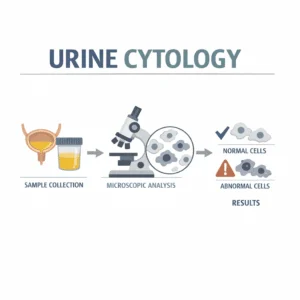
This is the most common confusion around albumin, and it changes the meaning of a result completely. Serum albumin, the 3.5 to 5.5 g/dL number, measures how much albumin is circulating in your blood. Urine albumin measures how much is escaping through your kidney filters into your urine. They are separate tests run on separate samples, reported in different units, and a reassuring result on one says nothing about the other.
What the urine albumin test measures
Healthy kidney filters keep albumin in the blood, so only traces reach the urine. When those filters are damaged, albumin leaks through, and that leak is one of the earliest detectable signs of kidney disease, often appearing years before the filtration rate falls. Because urine concentration varies through the day, laboratories divide the albumin by the creatinine in the same sample to produce the urine albumin-to-creatinine ratio, or ACR. The National Institute of Diabetes and Digestive and Kidney Diseases states that health care providers consider a urine albumin-to-creatinine ratio above 30 mg/g higher than normal.
Our team explains what urine creatinine measures, and this article covers the causes of protein in urine. If your report mentions microalbumin, that is an older name for the same urine test, not a different substance.
Why the two results can move in opposite directions
In nephrotic syndrome, damaged filters release large amounts of albumin into the urine. Urine albumin is very high and serum albumin is very low at the same time, and the swelling that follows comes from the fall in blood albumin rather than from the urine finding itself. Reading only one of the two tests would give you half the picture. This is also why normal albumin levels in blood do not rule out early kidney damage: at that stage the kidney is leaking a small amount, and the liver is easily replacing it.
How labs measure albumin, and why numbers differ between labs
Serum albumin is measured on an automated chemistry analyzer using a color-change reaction: a dye binds to albumin, and the intensity of the color is proportional to how much is present. Different manufacturers use different dyes and reagents, and each laboratory calibrates against its own population, which is why two labs can report the same sample as 3.6 and 3.8 g/dL. Small differences between laboratories are expected; large ones are not.
Urine albumin needs a different approach entirely, because the quantities involved are far smaller than in blood. Those assays use antibodies that detect albumin specifically at very low concentrations, which is another reason you cannot infer a urine result from a blood result or the reverse. When you compare values over time, compare results from the same laboratory whenever possible. Our reference chart explains the normal ranges for common blood tests.
What normal albumin levels cannot tell you, and when to see a doctor
Albumin was used for decades as a nutrition marker, and the habit persists on lab reports and in patient leaflets. On its own it is no longer a reliable one. In someone who is unwell, a low albumin usually reflects inflammation rather than what is on their plate, and simply eating more protein does not reliably raise it. Albumin is also a poor short-term monitor, because its slow turnover means it responds over weeks. And normal albumin levels do not, by themselves, confirm that your liver and kidneys are healthy; they only mean this particular signal is unremarkable.
Speak to a doctor promptly if a low albumin appears alongside swelling in your ankles, legs or abdomen, foamy urine, yellowing of the skin or eyes, unexplained weight loss, or persistent diarrhea. A high albumin with signs of dehydration deserves attention too, particularly in older adults. A single mildly abnormal albumin in someone who feels well is usually repeated before anything else is done. When total protein is abnormal and albumin alone does not explain it, another article covers the results of a protein electrophoresis test.
Latest scientific advances
Research published since 2023 has shifted how specialists read a low albumin. Here is what the recent work shows, in plain terms.
Albumin is being reclassified as an inflammation marker
A 2023 review in the Journal of Clinical Medicine went through the published literature on albumin in prognostic scores and found authors roughly split between treating it as a nutrition marker and treating it as an inflammation marker. The review concluded that when albumin is low, the more useful reflex is to look for inflammation. What this means for you: if your albumin comes back low, expect your doctor to search for an underlying medical or inflammatory cause first, rather than assuming a diet problem.
Low albumin predicts how patients do during serious illness
Two recent studies illustrate the pattern. A 2026 analysis of 1,074 patients hospitalized with COVID-19 found that a lower albumin on admission was independently linked to worse outcomes, even after accounting for inflammatory markers, meaning albumin added information those tests did not. A 2026 systematic review pooling nine studies and 1,863 patients who had surgery for infective endocarditis, an infection of the heart valves, found that those who did not survive had lower albumin before the operation. What this means for you: albumin is used as a general resilience signal in serious illness, not as a test that diagnoses anything by itself, and neither study shows that raising albumin changes the outcome.
Urine albumin is now central to kidney disease staging
The executive summary of the KDIGO 2024 chronic kidney disease guideline, published in Kidney International, confirms that kidney disease is defined and staged using both the filtration rate and the urine albumin level, not filtration alone. What this means for you: if you live with diabetes, high blood pressure, or a family history of kidney disease, a urine albumin-to-creatinine ratio belongs in your routine monitoring, and a normal blood albumin does not replace it.
Corrected calcium becomes unreliable when albumin is low
Because a large share of the calcium in blood travels attached to albumin, labs often report a corrected calcium adjusted for the albumin level. A 2026 study of 647 participants compared those formulas against a direct measurement and found they lose accuracy in precisely the situation where they are used most, when albumin falls below about 3.0 g/dL. What this means for you: if your albumin is low and your calcium looks abnormal, it is reasonable to ask your care team whether a direct ionized calcium measurement would be clearer. This is a technical point to raise with them, not something to act on alone.
Albumin infusion in advanced liver disease
In advanced cirrhosis, albumin is sometimes given intravenously as a treatment rather than measured as a test. A 2025 study reported that albumin infusion reduced several complications, including circulatory problems after fluid is drained from the abdomen, acute kidney injury, and low blood sodium. This remains an early body of evidence built on modest numbers of patients. What this means for you: this is a hospital treatment for a specific, advanced condition. It is not an argument for albumin supplements, and no oral product reproduces it.
Glossary
| Term | Definition |
|---|---|
| Albumin | The most abundant protein in blood, made by the liver. It keeps fluid inside the vessels and carries calcium, hormones and many medications. |
| Hypoalbuminemia | An albumin level below the laboratory’s reference range. It is a finding, not a diagnosis, and it has many possible causes. |
| Hyperalbuminemia | An albumin level above the reference range. In practice it nearly always reflects dehydration rather than excess protein production. |
| Oncotic pressure | The pulling force that proteins in blood exert to keep water inside the vessels. Albumin supplies most of it. |
| Serum | The clear liquid left after blood has clotted and the cells are removed. Most chemistry tests, including albumin, are run on it. |
| Reference range | The interval of values a laboratory considers usual for its population and equipment. It varies slightly from lab to lab. |
| Urine albumin-to-creatinine ratio (ACR) | A urine test that divides albumin by creatinine to correct for how dilute the sample is. It is a standard early marker of kidney damage. |
| Albuminuria | Albumin escaping into the urine in more than trace amounts. Older reports may call small quantities microalbumin. |
| Nephrotic syndrome | A kidney disorder in which large amounts of protein are lost in the urine, blood albumin falls, and swelling develops. |
| Corrected calcium | A calculated calcium value adjusted for the albumin level, since much of the calcium in blood is bound to albumin. |
Frequently asked questions
What is considered a low albumin level?
Most US laboratories flag a result below 3.5 g/dL as low, though the exact cutoff is printed on your own report and varies slightly between labs. A value just under the line in someone who feels well is common and is usually repeated rather than investigated straight away. Values well below the range, particularly under 3.0 g/dL, are taken more seriously and prompt a search for a cause such as liver disease, kidney protein loss, gut disease, or ongoing inflammation. The number alone does not identify which one.
What are the symptoms of high albumin levels?
High albumin itself does not cause symptoms. What you may notice are the symptoms of the dehydration behind it: thirst, dry mouth, dark or reduced urine, headache, dizziness on standing, and fatigue. If the high value follows a stomach bug, heavy sweating, or a period of drinking too little, rehydrating and repeating the test usually resolves the question. Persistently high albumin with no explanation is unusual and worth discussing with your doctor, who will look at sodium, urea, and hematocrit at the same time.
Do normal albumin levels change with age?
Most laboratories apply the same adult reference range across adulthood, so the printed range generally does not change with age. What changes is where people sit within it: results toward the lower end become more common in later life, largely because chronic inflammatory conditions become more common. Newborns and infants are reported against their own separate intervals. A gradual drift downward over years is worth mentioning to your doctor, especially alongside weight loss or reduced appetite, but a single mid-range value at any age is reassuring.
How can you increase albumin levels?
It depends entirely on why the level is low, which is why the cause matters more than the number. If inflammation or infection is driving it, treating that condition is what brings albumin back up, and extra dietary protein on its own will not. If the loss is through the kidneys or the gut, the treatment targets that leak. If intake really is inadequate, a dietitian can build an adequate protein and calorie plan. Albumin responds over weeks rather than days, so retesting too early is unhelpful. No supplement raises blood albumin directly.
How does albumin affect calcium levels?
Roughly half the calcium in blood travels bound to albumin, and standard calcium tests measure both the bound and the free portions together. When albumin is low, the total calcium reads low even though the active, free calcium may be perfectly normal. Labs handle this with a corrected calcium formula, but recent research shows those formulas lose accuracy when albumin is well below the range. In that situation an ionized calcium test, which measures the free portion directly, gives a clearer answer.
Can albumin levels fluctuate between two tests?
Yes, and modest movement is normal. Hydration status, posture before the draw, an intercurrent infection, pregnancy, and even a change of laboratory can each shift the value by a small amount. A swing of a tenth or two of a g/dL between visits is rarely meaningful on its own. What matters is the direction of travel over several tests and whether the rest of the panel moves with it. Consistent results from the same laboratory are the easiest to compare.
Sources
- MedlinePlus, National Library of Medicine — Albumin Blood Test — medlineplus.gov
- National Institute of Diabetes and Digestive and Kidney Diseases — Albuminuria: Albumin in the Urine — niddk.nih.gov
- Moman RN, Gupta N, Singh C, Varacallo MA — Physiology, Albumin — StatPearls, NCBI Bookshelf — ncbi.nlm.nih.gov
- Cleveland Clinic — Albumin Blood Test: What It Is, Procedure and Results — my.clevelandclinic.org
- Gradel KO — Interpretations of the Role of Plasma Albumin in Prognostic Indices: A Literature Review — Journal of Clinical Medicine, 2023 — doi.org/10.3390/jcm12196132
- Levin A, Ahmed SB, Carrero JJ, et al. — Executive summary of the KDIGO 2024 Clinical Practice Guideline for the Evaluation and Management of Chronic Kidney Disease — Kidney International, 2024 — doi.org/10.1016/j.kint.2023.10.016
- Al-Aghbari N, et al. — Serum albumin and blood urea as independent predictors of in-hospital mortality in hospitalized COVID-19 patients — PLOS One, 2026 — doi.org/10.1371/journal.pone.0353456
- Thet MS, et al. — Influence of preoperative albumin on mortality following surgery for infective endocarditis: a systematic review and meta-analysis — Perfusion, 2026 — doi.org/10.1177/02676591261468731
- Miyauchi H, et al. — Clinical Relevance of Calcium Measures: QT-Based Comparison of Ionized, Total, and Albumin-Corrected Calcium — Kidney360, 2026 — doi.org/10.34067/KID.0000001236
- Ahmed A, et al. — Efficacy of Human Albumin Infusion in Advanced Cirrhosis and Acute-on-Chronic Liver Failure — Cureus, 2025 — doi.org/10.7759/cureus.93157
Further reading
- How to read your blood test results
- What abnormal blood test results mean
- A guide to interpreting urinalysis results
- The causes and risks of foamy urine
- The causes and warning signs of high ALT
Understand your lab results with AI DiagMe
An albumin value only becomes useful next to the results printed around it: total protein, liver enzymes, creatinine, and the urine albumin-to-creatinine ratio. AI DiagMe reads your full report and explains, in plain language, what normal albumin levels look like on your panel, which values sit outside your laboratory’s range, and which combinations are worth raising at your next appointment. It is built to help you understand your results and prepare better questions. It does not make a diagnosis and it does not replace your doctor.
Get your results interpreted in minutes