






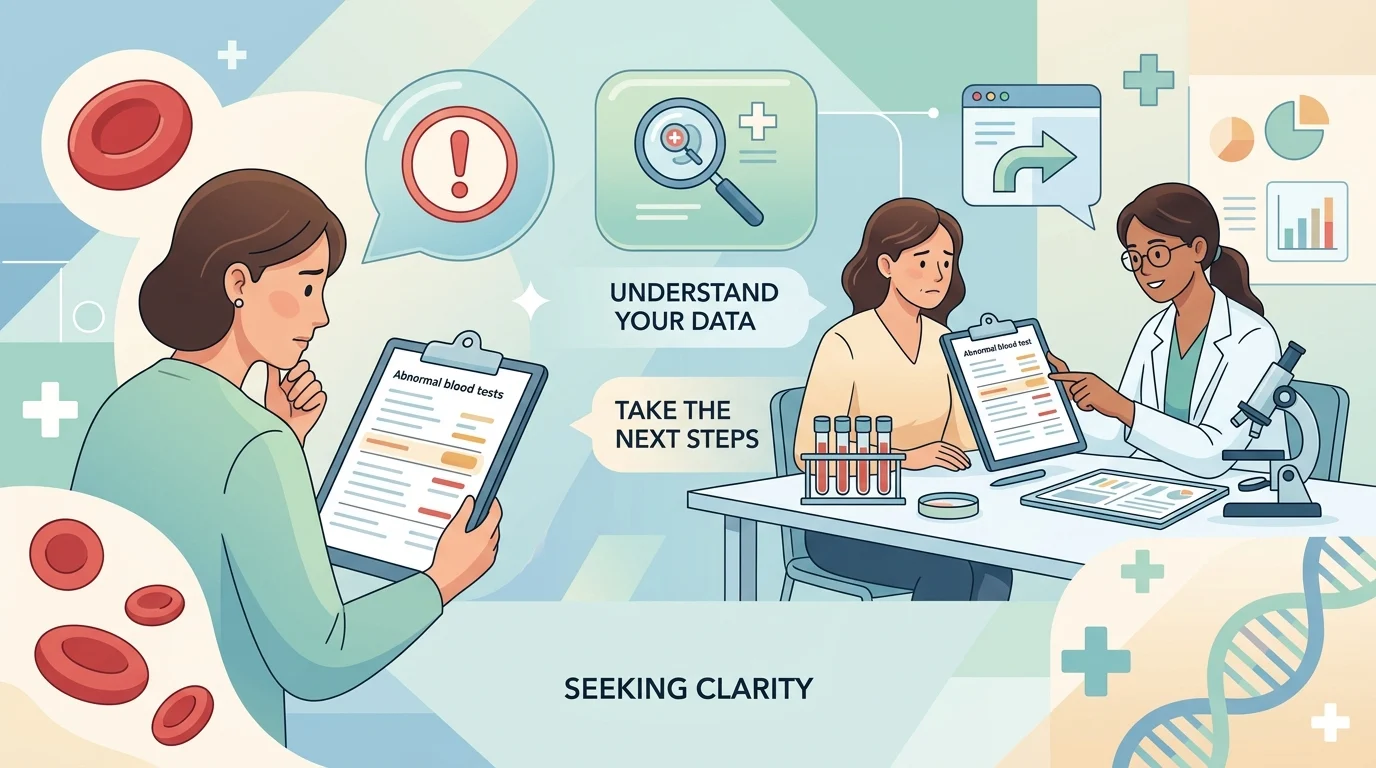
Abnormal blood test results are one of the most common reasons people feel a jolt of worry after a routine check-up. You open your report or patient portal, spot a value flagged “high” or “low,” and immediately wonder whether something is wrong. Here is the reassuring truth: an out-of-range number is a signal to look closer, not a diagnosis. Most flagged values are mild, temporary, or explained by everyday factors rather than disease. This guide explains, in plain language, what “abnormal” really means, what can push a result outside its range, how to tell a minor flag from a value that needs prompt attention, and the practical steps to take next. You will also learn when an abnormal result genuinely warrants a call to your doctor.

What does “abnormal” actually mean on a blood test?
When a result is labelled abnormal, it simply means the number falls outside the reference range printed next to it. That range is not a strict border between healthy and sick. Laboratories build each range by testing large groups of healthy people and keeping the middle portion of their results, usually the central 95%.
That detail matters more than it first appears. Because the range is built to cover most, but not all, healthy people, about 1 in 20 perfectly healthy individuals will have at least one value fall outside it by chance. Research aimed at clinicians, published in The BMJ, makes the same point: by definition, around 5% of healthy people sit just outside the reference interval for any given test. When a typical panel measures a dozen or more substances at once, the odds that at least one comes back flagged, with nothing wrong, are surprisingly high.
So a flag tells you a value sits outside the expected band. It does not tell you that you have a disease. As both the National Library of Medicine’s MedlinePlus and Cleveland Clinic stress, a blood test result is not a diagnosis, and an abnormal value may not mean a serious condition at all. Results within range are not a guarantee of health either, which is why doctors read the whole picture rather than a single line.
It also helps to understand the labels themselves. Many reports place a small flag, often an “H,” “L,” or asterisk, beside any value outside the range. If those codes look unfamiliar, our guide to common lab test abbreviations explains what they stand for, and our walkthrough on how to read your full blood test report covers the layout line by line.
Key point: an abnormal flag is an invitation to look closer with your doctor, not a verdict. The size of the change, your symptoms, and the pattern across several markers matter far more than any single number.
What can cause abnormal blood test results?
This is the question most people search for first, and the honest answer is that many ordinary things can move a value before any illness is involved. Broadly, causes fall into two groups: everyday factors you can often explain away, and genuine medical causes that deserve follow-up.

Everyday and preparation-related causes
Many results drift outside their range for reasons that have nothing to do with disease. The table below covers the most common everyday influences.
| Everyday cause | How it can shift your results |
|---|---|
| Not fasting when asked | Glucose and blood fats can read higher than your true baseline |
| Dehydration | Concentrates the blood and can nudge several values upward at once |
| Hard exercise before the test | Can temporarily raise muscle and liver enzymes |
| Time of day | Some markers, such as iron and certain hormones, rise and fall through the day |
| Menstrual cycle or pregnancy | Changes the expected range for several markers |
| Medicines and supplements | Many can move specific values up or down |
| Alcohol in the day or two before | Can affect liver markers and other results |
| Normal lab variation | A repeat sample can land slightly differently purely by chance |
Dehydration is a good example of how a harmless state can skew a panel: when you are low on fluid, your blood is more concentrated, so values tied to hydration can read high until you drink and rest. MedlinePlus lists similar everyday influences, including food and drink, medicines, supplements, recent strenuous exercise, and whether you followed any fasting instructions. If a single value looks off after one of these situations, it is often a temporary fluctuation rather than a sign of illness.
Medical causes
Other times, an abnormal result does reflect something happening in the body. Common medical reasons include an infection or active inflammation, which can raise white blood cells or a marker such as C-reactive protein (CRP); a nutritional shortfall, such as low iron leading to anemia; an organ working harder than usual, which can show up in liver or kidney markers; or a longer-term condition such as diabetes or a thyroid disorder. These causes are exactly why doctors investigate meaningful abnormalities rather than ignoring them. The goal is not to alarm you, but to match the pattern of results to your symptoms and history.
How serious is it? Slightly abnormal versus critical values
Not every flag carries the same weight, and knowing the difference is the fastest way to calm unnecessary worry. Results sit on a spectrum, from a barely out-of-range number to a rare value that prompts an urgent phone call.
| Level | What it usually looks like | Typical response |
|---|---|---|
| Minor flag | Slightly above or below the range, with no symptoms | Often simply rechecked later; rarely urgent |
| Moderate abnormality | Further from the range, or several related markers off together | Your doctor reviews it and may order follow-up tests |
| Critical (“panic”) value | A result unusual enough to be dangerous | The lab alerts your clinician quickly, sometimes for urgent treatment |
A slightly abnormal result, with no symptoms and no concerning trend, is the most common scenario by far. Doctors frequently repeat such a test after a few weeks to see whether it settles on its own. A critical value, by contrast, is a result the laboratory considers immediately risky, such as a dangerously high or low level of a salt that affects heart rhythm, a very high blood sugar, or a very low red-cell count. For these, the lab does not wait for the next appointment; it contacts your clinician so they can reach you promptly. The reassuring takeaway is that the vast majority of flagged results are mild and need a closer look, not an emergency.
Common abnormal results by body system
Because a single panel can touch many organs, it helps to know what an out-of-range value tends to point to in each area. The notes below are general signposts, not diagnoses.
Blood count: a complete blood count (CBC) looks at red cells, white cells, and platelets. A low red-cell count or hemoglobin is the classic sign of anemia, while a temporary rise in white cells often tracks an infection.
Liver markers: enzymes such as ALT and AST appear on liver function tests and can rise when liver cells are irritated, sometimes simply after alcohol or strenuous exercise rather than disease.
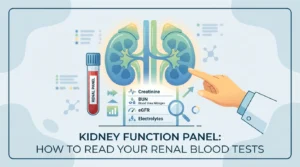
Kidney markers: creatinine, eGFR, and BUN on a kidney function panel estimate how well the kidneys filter waste. Dehydration is a frequent, reversible cause of a mildly raised reading.
Blood sugar: a high glucose or HbA1c on a diabetes blood test may flag diabetes or prediabetes, though a non-fasting sample can read higher than your true baseline.
Thyroid and hormones: an out-of-range TSH on a thyroid panel can help explain symptoms such as fatigue, weight changes, or low mood.
Immune and inflammation markers: a positive antinuclear antibody (ANA) test or a raised inflammation marker is interpreted alongside your symptoms, since both can be present without serious disease.
The same principle runs through every system: one marker rarely tells the whole story, and the pattern across related values matters most.
What to do about abnormal blood test results
When your results come back with a flag, a calm, methodical approach beats both panic and avoidance. The steps below help you respond well.
- Read the whole report, not one line. Patterns across several markers, combined with your symptoms, are far more meaningful than any single flagged value.
- Notice how far the value is from the range. A number just outside the band is very different from one that is markedly off.
- Account for everyday factors. Ask yourself whether you fasted, were well hydrated, exercised hard, or started a new medicine before the test.
- Wait for, or ask for, your clinician’s reading. A flag can look alarming out of context; your doctor weighs it against your history. If you have not heard back within the expected window, it is reasonable to ask rather than assume no news is good news. Our guide on how long blood test results take explains typical timelines.
- Prepare specific questions. Ask what the abnormality means for you, whether it needs a repeat test, and what would change the plan.
- Repeat the test if advised. Mild, isolated abnormalities are often simply rechecked after a few weeks to see whether they return to normal on their own.
Resisting the urge to self-diagnose from a single number is one of the most useful habits you can build. Reading your results to understand and prepare is sensible; concluding that a flag equals a disease is not.

When to see a doctor: warning signs
Most abnormal results are best discussed at your next appointment or through a portal message. Some situations, though, call for more prompt attention. Consider contacting your doctor sooner if any of the following apply.
- A result is markedly outside the range, not just slightly.
- Several related markers are abnormal at the same time, such as several liver or kidney values together.
- An abnormal value comes alongside symptoms such as unexplained weight loss, a persistent fever, severe fatigue, breathlessness, or unusual bleeding or bruising.
- A previously stable marker has changed sharply from your earlier results.
- The report itself carries a comment from the laboratory advising follow-up.
Seek urgent or emergency care if you feel acutely unwell, regardless of what the numbers say, especially with chest pain, severe shortness of breath, confusion, or fainting. When in doubt, a brief question to your clinician is always more reliable than guesswork.
Special situations: pregnancy, children, and ongoing conditions
Some groups have different expected ranges, so a value that looks abnormal against a general range may be entirely normal for them.
During pregnancy, the body changes, and so do the reference ranges for several markers; a result flagged against a non-pregnant range may be expected at that stage. Our overview of blood tests during pregnancy explains what is checked and why. In children, ranges shift with age, and context matters: a raised white-cell count in a child with a fever usually reflects an ordinary infection rather than anything serious. For people managing a long-term condition or taking regular medication, a doctor often watches the trend over time rather than reacting to a single reading, and may already expect certain values to sit a little outside the standard range.
In every case, the reference range on your own report, read by someone who knows your situation, is the one that counts.
Glossary
- Anemia: a lower-than-normal level of red blood cells or hemoglobin, which can cause tiredness and breathlessness.
- Complete blood count (CBC): a common test that counts red cells, white cells, and platelets.
- CRP (C-reactive protein): a marker that rises with inflammation or infection and is read alongside your overall picture.
- Critical value: a result the laboratory considers dangerous enough to alert your clinician without delay.
- eGFR (estimated glomerular filtration rate): an estimate of how well your kidneys filter waste from the blood.
- Flag: a letter or symbol (often “H,” “L,” or “*”) shown beside a value that sits outside the reference range.
- Reference range: the span of values expected in most healthy people for a given test, usually the central 95%.
- TSH (thyroid-stimulating hormone): a marker used to screen how the thyroid gland is working.
Frequently asked questions
Should I panic if just one result is abnormal?
No. A single abnormal value, on its own, rarely means you have a serious disease. Because reference ranges are built to cover most healthy people, it is common for a perfectly healthy person to have one value fall outside the range by chance. Many flags are also caused by temporary factors such as dehydration, a recent meal, hard exercise, or normal lab variation. What matters is the size of the change, whether you have symptoms, and the pattern across your other markers. Read your report to prepare questions, then let your doctor put the result in context for you.
Can dehydration cause abnormal blood test results?
Yes. When you are low on fluid, your blood becomes more concentrated, which can push several values higher than usual until you rehydrate. Markers related to hydration and kidney function are particularly affected. This is one reason a mildly out-of-range result is often rechecked rather than acted on immediately, especially when you feel well. If you were dehydrated or had not had much to drink before your test, mention it to your clinician; a repeat sample taken when you are well hydrated may give a clearer reading of your true baseline.
Why do my blood test results say “abnormal” if I feel fine?
This happens often and is usually nothing to worry about. Reference ranges are statistical, so a number can sit just outside the band while your health is completely fine. Everyday factors and natural day-to-day variation can also nudge a single value. On top of that, results can occasionally be normal early in an illness before changes appear, which is the opposite situation. Feeling well alongside a mild, isolated flag is reassuring, but it is still worth letting your doctor confirm whether the result needs anything more than a simple recheck later.
How long will it take to hear about an abnormal result?
It depends on the test and your clinic’s process. Routine results are often back within hours to a couple of days, while specialized tests can take a week or more. Many practices contact you only if something needs discussion and otherwise post results to a portal. If a value is dangerously abnormal, the lab usually alerts your clinician quickly so they can reach you without waiting for the next appointment. If you have not heard anything after the expected window, it is perfectly reasonable to ask rather than assume that silence means everything is fine.
Will I need to repeat the test?
Often, yes, especially for a mild, isolated abnormality. Because everyday factors and natural variation can push a single value just outside its range, doctors frequently repeat the test after a period to see whether it returns to normal on its own. Whether and when to retest depends on the specific marker, how far it is from the range, and whether you have symptoms. A repeat test is not a sign that something is seriously wrong; it is a normal, cautious way to separate a passing fluctuation from a genuine change worth investigating further.
Does an abnormal result mean I might have cancer?
Usually not. The large majority of abnormal blood test results are caused by benign or temporary factors, not cancer. Routine blood tests are not designed to diagnose cancer on their own; that requires a fuller assessment, often including imaging and other tests. Certain markers can prompt a doctor to look more closely, but an out-of-range value is a reason to investigate, not a diagnosis. If you are worried, share that with your clinician. They can explain what your specific results do and do not suggest and arrange any further checks that are genuinely needed.
Sources
- How to Understand Your Lab Results — MedlinePlus, National Library of Medicine
- Explaining laboratory test results to patients — The BMJ
- Blood Tests: Types, Results and How They Work — Cleveland Clinic
Further reading
- How to Read Your Blood Test Results: A Complete Guide
- Complete Blood Count (CBC): How to Read Your Results
- Comprehensive Metabolic Panel (CMP): How to Read Your Results
- How Long Do Blood Test Results Take?
- Common Medical Lab Test Abbreviations: A Guide
Understand your lab results with AI DiagMe
Seeing a flagged value is unsettling when you do not yet know what it means. AI DiagMe turns the numbers from common tests — a complete blood count, liver enzymes (such as ALT and AST), kidney markers (such as creatinine and eGFR), or a blood sugar reading — into clear, plain-language explanations. It is built to help you understand your results and prepare better questions for your appointment, not to diagnose you or replace your doctor. If a recent report left you with an out-of-range number you cannot decode, let AI DiagMe walk you through it.
➡️ Get your results interpreted in minutes