



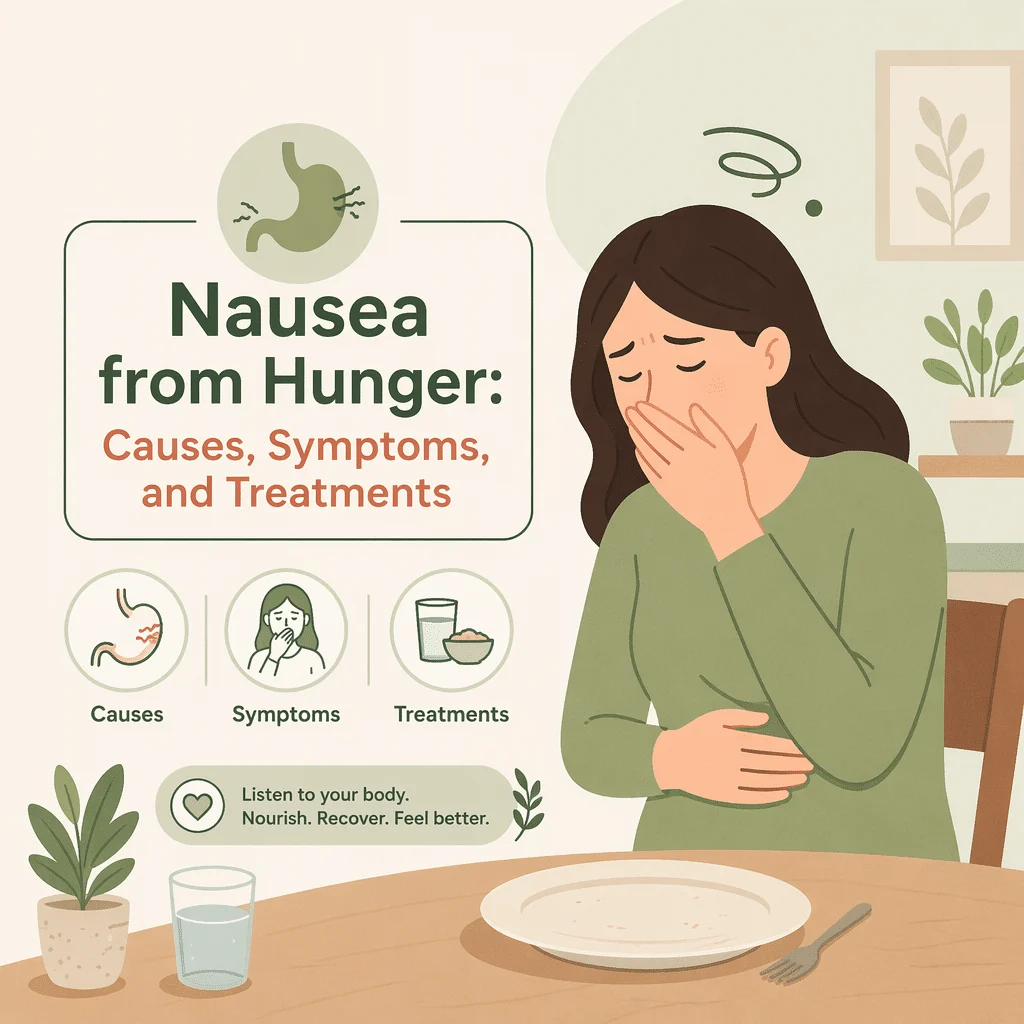
Nausea from hunger is that queasy, slightly sick feeling that creeps in when you have gone too long without eating. It is common, it is usually harmless, and it often fades within minutes of a small snack. Even so, feeling sick when you are hungry can be confusing, because hunger and nausea seem to pull in opposite directions and yet arrive together. This article explains why an empty stomach can turn your appetite into queasiness, what stomach acid, the hunger hormone ghrelin, and blood sugar have to do with it, and how to find quick relief. You will also learn simple, positive ways to prevent it, and the warning signs that mean your nausea is pointing to something a doctor should check.
What is nausea from hunger?
Nausea from hunger is the unsettled, sometimes stomach-churning sensation that can appear when your body is running low on fuel. Many people notice it when they skip breakfast, push a meal back by a few hours, or get busy and forget to eat. Instead of a simple growl, the empty stomach produces a wave of queasiness that can come with lightheadedness, irritability, or a faint headache.
For most healthy people this is a normal signal, not a sign of illness. It is your body’s way of insisting that it is time to eat. The feeling typically eases soon after food arrives. What matters is understanding why it happens, so you can respond calmly and know when the pattern is worth a closer look.
Is it normal to feel sick when you are hungry?
Yes. Occasional queasiness when you are very hungry is a common experience and rarely a cause for concern. It becomes worth investigating when it is frequent, severe, tied to other symptoms, or when eating no longer settles it. Later in this guide you will find a clear list of those red flags.
Why does an empty stomach make you feel sick?
Several things happen at once when your stomach has been empty for a while. Acid keeps being produced, the hunger hormone climbs, and blood sugar can drift down. Any one of these can nudge you toward nausea, and together they explain why an empty stomach can feel so unpleasant.
Stomach acid with nothing to digest
Your stomach makes acid to break down food. When there is no meal to work on, that acid can slosh against the stomach lining and irritate it, producing a burning or queasy feeling. The stomach also contracts as it empties, and these contractions, often felt as hunger pangs, can add to the sense of nausea. A small, bland snack usually gives the acid something to do and calms the sensation quickly.
Ghrelin, the hunger hormone
Ghrelin is a hormone made mainly in the stomach that rises before meals and tells your brain it is time to eat. As ghrelin climbs, it drives strong hunger signals and stimulates stomach movement. For some people those intense signals feel less like appetite and more like nausea, especially first thing in the morning when the stomach has been empty overnight. The Cleveland Clinic describes ghrelin as the body’s main hunger signal, and its rise and fall is a normal part of your daily eating rhythm.
Low blood sugar and reactive hypoglycemia
When you have not eaten, the glucose in your blood can drift below your comfortable range. Because your brain relies on a steady glucose supply, the body responds by releasing stress hormones such as adrenaline, which can trigger nausea, shakiness, sweating, and a racing heart. The Mayo Clinic even lists hunger or nausea among the early warning signs of low blood sugar. Our blood-marker library breaks down the causes and symptoms of abnormal blood glucose.
A related pattern is reactive hypoglycemia, a dip in blood sugar that shows up a few hours after eating, often after a meal heavy in fast sugars. The quick rise and fall can leave you feeling shaky and queasy even though you ate recently. If these post-meal dips keep happening, a doctor may check your insulin levels with a blood test.
| Why it happens | What is going on in your body | What tends to help |
|---|---|---|
| Stomach acid | Acid is still produced but has no food to work on, so it can irritate the stomach lining | A small, bland snack and a few sips of water |
| Rising ghrelin | The hunger hormone climbs and stirs up stomach contractions that can feel like nausea | Eating on a regular schedule before you are ravenous |
| Low blood sugar | Glucose dips and the body releases stress hormones that cause nausea, shakiness, and sweating | Complex carbohydrates paired with some protein |
| Hunger contractions | The empty stomach squeezes, producing pangs that some people feel as cramping and queasiness | Eating slowly and steadily rather than waiting until very hungry |
Common triggers: skipped meals, dieting, and hard workouts
Hunger nausea does not appear at random. It usually follows a stretch where your body burned through its available fuel without a top-up. Recognizing your personal triggers is the first step to heading it off.
Skipping meals and long gaps between eating
The most common trigger is simply going too long without food. A missed breakfast, a skipped lunch during a busy shift, or a very late dinner can all leave the stomach empty long enough to turn hunger into nausea. The overnight fast is why the feeling is often strongest in the morning.
Dieting and eating too little
Cutting back on food without planning balanced meals can leave you under-fueled and queasy. The goal is not to eat less and push through, but to nourish your body regularly. Spreading steady, satisfying meals and snacks across the day keeps blood sugar and hunger hormones on an even keel and helps prevent the dips that lead to nausea. If you are changing how you eat for health reasons, a registered dietitian or your doctor can help you do it in a way that keeps you comfortable.
Intense exercise on an empty stomach
Hard exercise raises the body’s demands and can lower blood sugar, especially if you train before eating. Vigorous activity also changes the appetite hormones in your gut, which is one reason a tough workout can leave you feeling queasy rather than hungry. A light snack beforehand, such as a banana or a small handful of oats, often prevents this. Not drinking enough can deepen the queasiness, so it helps to understand how dehydration affects the body.
What hunger nausea feels like
Hunger nausea rarely arrives alone. Because it is driven by an empty stomach, rising ghrelin, and shifting blood sugar, it usually travels with a small cluster of other sensations. Common ones include:
- A queasy or churning stomach, sometimes with a hollow, gnawing ache
- Hunger pangs or audible stomach growling
- Lightheadedness or feeling faint
- Shakiness, weakness, or trembling hands
- Irritability or difficulty concentrating, sometimes called being hangry
- A mild headache
- Sweating or a slightly racing heartbeat
The telling feature of hunger nausea is timing: it builds as the hours since your last meal stretch on, and it usually settles within about fifteen to thirty minutes of eating. On a truly empty stomach, a few people bring up bitter yellow-green fluid; we explain the causes of vomiting bile. If your queasiness instead peaks in the evening, we also cover the causes of nighttime nausea.
Quick relief: how to settle hunger nausea now
When hunger nausea strikes, the aim is to raise your blood sugar gently and give your stomach acid something to work on, without overwhelming an already unsettled stomach. These steps usually help within minutes:
- Eat something small and bland first, such as a few crackers, a slice of toast, a banana, or plain rice. Heavy, greasy, or very sweet foods can make queasiness worse at first.
- Follow it with a balance of complex carbohydrates and protein, for example whole-grain toast with peanut butter or yogurt with oats, to keep blood sugar steady rather than spiking and crashing.
- Sip water or an oral rehydration drink slowly. Gulping large amounts can add to nausea.
- Try ginger, as ginger tea or a small piece of crystallized ginger, which many people find calming for a queasy stomach.
- Eat slowly and sit upright for a few minutes afterward, giving your stomach time to catch up.
If nausea is severe or you feel close to fainting, sit or lie down safely, have a fast source of sugar such as fruit juice, and let someone know how you feel.
How to prevent nausea from hunger
Preventing hunger nausea comes down to keeping your body steadily fueled and hydrated so that blood sugar and hunger hormones never swing too far. Regular, balanced eating is the foundation, and it is a positive habit rather than a restriction.
- Eat at regular intervals and try not to skip meals, especially breakfast after the long overnight fast.
- Build meals around complex carbohydrates, protein, and fiber, which release energy slowly and keep you fuller for longer.
- Keep a simple snack on hand, such as nuts, fruit, or whole-grain crackers, for the gaps between meals or a busy day.
- Limit meals that are mostly fast sugars, which can set up the rise-and-crash pattern behind reactive hypoglycemia.
- Stay hydrated across the day, since even mild dehydration can amplify nausea. To check the minerals involved, a lab can run a full electrolyte panel.
- Eat a small snack before intense exercise, and refuel afterward.
These habits smooth out the peaks and valleys that cause queasiness, and they support steady energy, better concentration, and a more comfortable stomach overall.
When hunger nausea points to something else
Most hunger nausea is a harmless signal that eases with food. Sometimes, though, nausea that seems linked to an empty stomach is actually a clue to another condition. The table below shows patterns that suggest a different cause worth discussing with a clinician.
| Possible cause | Clues that point to it |
|---|---|
| Gastritis or peptic ulcer | Burning or gnawing upper-belly pain, sometimes worse on an empty stomach and briefly eased by food |
| GERD (acid reflux) | Heartburn, a sour taste, cough, or nausea that is worse lying down or after meals |
| Pregnancy (morning sickness) | Nausea alongside a missed period, often worse when the stomach is empty |
| Diabetes or blood sugar problems | Frequent low-sugar episodes, extreme thirst, unexplained weight change, or known diabetes |
| Anxiety | Nausea tied to worry or stress, often with a racing heart or a knot in the stomach |
| Migraine | Nausea with headache, sensitivity to light or sound, or visual aura |
When to see a doctor
Contact a healthcare professional if your hunger nausea is frequent or severe, if eating no longer relieves it, or if it comes with any of these warning signs:
- Vomiting that will not stop, or vomit that is bloody or looks like coffee grounds
- Severe or persistent upper-belly pain
- Fainting, confusion, or a pounding heart during episodes
- Unintended weight loss or a lasting drop in appetite
- Frequent shakiness and sweating that ease only after eating, which can suggest low blood sugar
- Nausea with a possible pregnancy, or symptoms that disrupt daily life
Frequent heartburn or a sour taste can signal acid reflux and its symptoms. If low-sugar spells are frequent, your clinician may request a fasting blood glucose test or suggest a blood test for diabetes. To see your average blood sugar over recent months, doctors often order an HbA1c blood test.
Latest scientific advances
Scientists are still mapping exactly why an empty stomach can feel nauseating, but recent research helps explain the hormones and blood sugar behind it. Here is what a few studies found, translated into plain language.
Exercise can quiet appetite and leave you queasy
A 2024 systematic review, which is a study that carefully pools the results of many earlier trials, examined how exercise changes appetite in people with prediabetes or type 2 diabetes. It found that activity tends to reduce appetite rather than increase it, alongside shifts in the gut hormones that govern hunger. What this means for you: a hard workout on an empty stomach can flip the usual hunger signal into queasiness, which is why a light snack beforehand often keeps the stomach settled.
The hunger hormone response is personal
A 2025 study measured appetite hormones, including ghrelin, before and after cycling in younger and older adults. Some hormone responses differed between the age groups, even when people reported feeling similar levels of hunger. What this means for you: the connection between hunger, ghrelin, and nausea is not identical for everyone, so the eating rhythm that keeps one person steady may need small adjustments for another.
True low blood sugar without diabetes is real but uncommon
A 2025 review of low blood sugar in people without diabetes explained that doctors confirm a genuine case only when three things line up: a low glucose reading, symptoms at that same moment, and relief once glucose returns to normal, a pattern known as Whipple’s triad. What this means for you: occasional hunger nausea is rarely a sign of dangerous low blood sugar, yet repeated or severe episodes deserve proper testing rather than guesswork.
Glossary of key terms
| Term | Definition |
|---|---|
| Ghrelin | A hormone made mainly in the stomach that rises before meals and signals hunger to the brain; nicknamed the hunger hormone. |
| Blood glucose | The sugar carried in your blood that your cells use for energy; also called blood sugar. |
| Hypoglycemia | A blood sugar level that is lower than normal, which can cause shakiness, sweating, hunger, and nausea. |
| Reactive hypoglycemia | A dip in blood sugar that occurs a few hours after eating, often after a meal high in fast sugars. |
| Gastric acid | The strong acid the stomach makes to break down food; it can irritate an empty stomach. |
| Gastritis | Inflammation of the stomach lining that can cause pain, nausea, and indigestion. |
| Peptic ulcer | An open sore in the lining of the stomach or the upper small intestine. |
| GERD | Gastroesophageal reflux disease, when stomach acid flows back into the food pipe and causes heartburn and nausea. |
| Satiety | The comfortable feeling of fullness that signals the end of a meal. |
| Electrolytes | Minerals such as sodium and potassium that keep fluids balanced and nerves working. |
Frequently asked questions
Is feeling sick when hungry a sign of diabetes?
Not usually. Occasional queasiness when you are very hungry is common in healthy people and simply means your body wants fuel. Diabetes becomes a consideration when low-sugar symptoms are frequent and come with signs such as extreme thirst, frequent urination, unexplained weight change, or fatigue. If that describes you, a clinician can test your blood sugar and advise you. A one-off wave of hunger nausea that eases after a snack is rarely a red flag on its own.
Why do I feel sick if I do not eat every few hours?
Some people are simply more sensitive to the drop in blood sugar and the rise in the hunger hormone that follow an empty stomach. If your meals are heavy in fast sugars, you may also experience a rise-and-crash pattern that leaves you queasy a few hours later. Eating balanced meals with protein, fiber, and complex carbohydrates, plus a small snack between meals, usually keeps these swings, and the nausea, in check.
How can I stop feeling sick when I am hungry right now?
Start with a small, bland food such as crackers, toast, or a banana, then follow with a mix of complex carbohydrates and protein to steady your blood sugar. Sip water slowly rather than gulping, and try ginger tea if plain food feels like too much. Sitting upright and eating slowly gives your stomach time to settle. Most hunger nausea eases within about fifteen to thirty minutes of eating.
Why is hunger nausea often worse in the morning?
Overnight, you go many hours without food, so by morning your stomach is empty, stomach acid has been building, ghrelin is high, and blood sugar may be at its lowest point of the day. That combination makes queasiness more likely before breakfast. Eating a balanced breakfast, even a small one, usually settles it. If morning nausea is persistent or unrelated to hunger, it is worth mentioning to your doctor.
Can you feel hungry and nauseous at the same time during pregnancy?
Yes. In early pregnancy, many people find that an empty stomach makes nausea worse, so hunger and queasiness can appear together, sometimes called morning sickness even though it can happen at any time. Small, frequent snacks and keeping something bland by the bed often help. If nausea is severe, stops you from keeping fluids down, or worries you, contact your healthcare provider.
What foods help prevent nausea from hunger?
Foods that release energy slowly are best. Think complex carbohydrates such as oats, whole-grain bread, and brown rice, paired with protein such as eggs, yogurt, beans, or nuts, and plenty of fiber from fruit and vegetables. These keep blood sugar steady and you fuller for longer. Keeping a simple snack on hand for busy stretches, and drinking enough water, rounds out an approach that heads off hunger nausea before it starts.
Sources
- Mayo Clinic — Hypoglycemia: Symptoms and causes, 2023 — mayoclinic.org
- Cleveland Clinic — Ghrelin (the hunger hormone), 2026 — my.clevelandclinic.org
- MedlinePlus, U.S. National Library of Medicine — Hypoglycemia (Low Blood Sugar) — medlineplus.gov
- National Institute of Diabetes and Digestive and Kidney Diseases (NIDDK) — Low Blood Glucose (Hypoglycemia) — niddk.nih.gov
- Konitz C, Schwensfeier L, Predel HG, Brinkmann C — The Influence of Acute and Chronic Exercise on Appetite and Appetite Regulation in Patients with Prediabetes or Type 2 Diabetes Mellitus (systematic review) — Nutrients, 2024 — doi.org/10.3390/nu16081126
- Hochsmann C, Heselton HJ, Beckford SE, et al. — Age-Related Differences in the Appetite-Regulating Hormone Response to Exercise — Current Developments in Nutrition, 2025 — doi.org/10.1016/j.cdnut.2025.107491
- Looi E, Lawler HM — Non-Diabetic Hypoglycemia: Evaluation and Management in Adults — Journal of Clinical Medicine, 2025 — doi.org/10.3390/jcm14134393
Further reading
- Fasting before a blood test
- Diarrhea after fasting: causes and treatments
- Glycated hemoglobin and blood sugar control
- Ovulation nausea: symptoms and causes
- Perimenopause nausea: causes and treatments
Understand your lab results with AI DiagMe
Because nausea from hunger so often traces back to blood sugar, seeing your own numbers can bring real peace of mind. If your doctor has ordered tests such as a fasting blood glucose, an HbA1c, or an electrolyte panel, AI DiagMe helps you read them in plain language and understand what each value means for your energy and appetite. One convenient blood draw covers a comprehensive metabolic panel, which checks glucose and key minerals together. It is built to help you understand your results, not to diagnose a condition or replace the advice of your doctor.
Get your results interpreted in minutes