










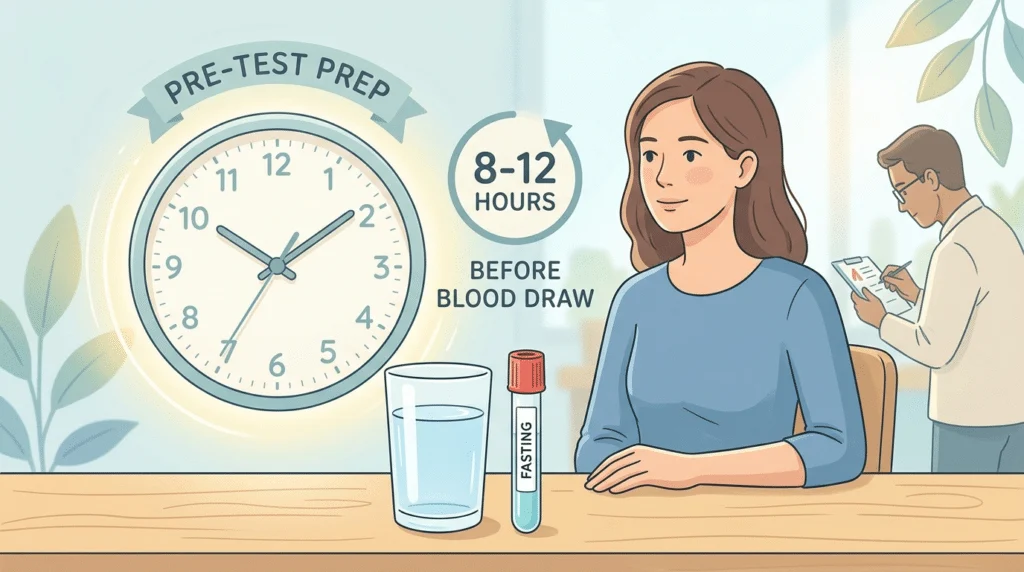
Fasting before a blood test simply means not eating or drinking anything except plain water for a set number of hours before your sample is taken. If your doctor or lab has asked you to fast, you probably have practical questions: how long you need to go without food, whether you can still drink water or coffee, whether to take your usual medicines, and what happens if you slip up. This guide answers all of those questions in plain language. You will learn how long fasting usually lasts, which blood tests actually need it (and which do not), exactly what you can and cannot consume, and how to handle special situations such as diabetes or pregnancy. The goal is to help you walk into your appointment prepared and calm.
This article is for general information and does not replace medical advice. Always follow the instructions from your own doctor or laboratory, and ask them to interpret your results.
The short version:
- Most fasting blood tests need 8 to 12 hours with nothing but plain water.
- Water is allowed and even encouraged — it keeps you hydrated and makes the blood draw easier.
- Not every test needs fasting; common ones that often do are cholesterol and blood sugar tests.
- Keep taking your regular medicines with water unless your provider tells you otherwise.
- Rules vary, so always follow the exact instructions your lab or doctor gives you.
What does fasting before a blood test actually mean?
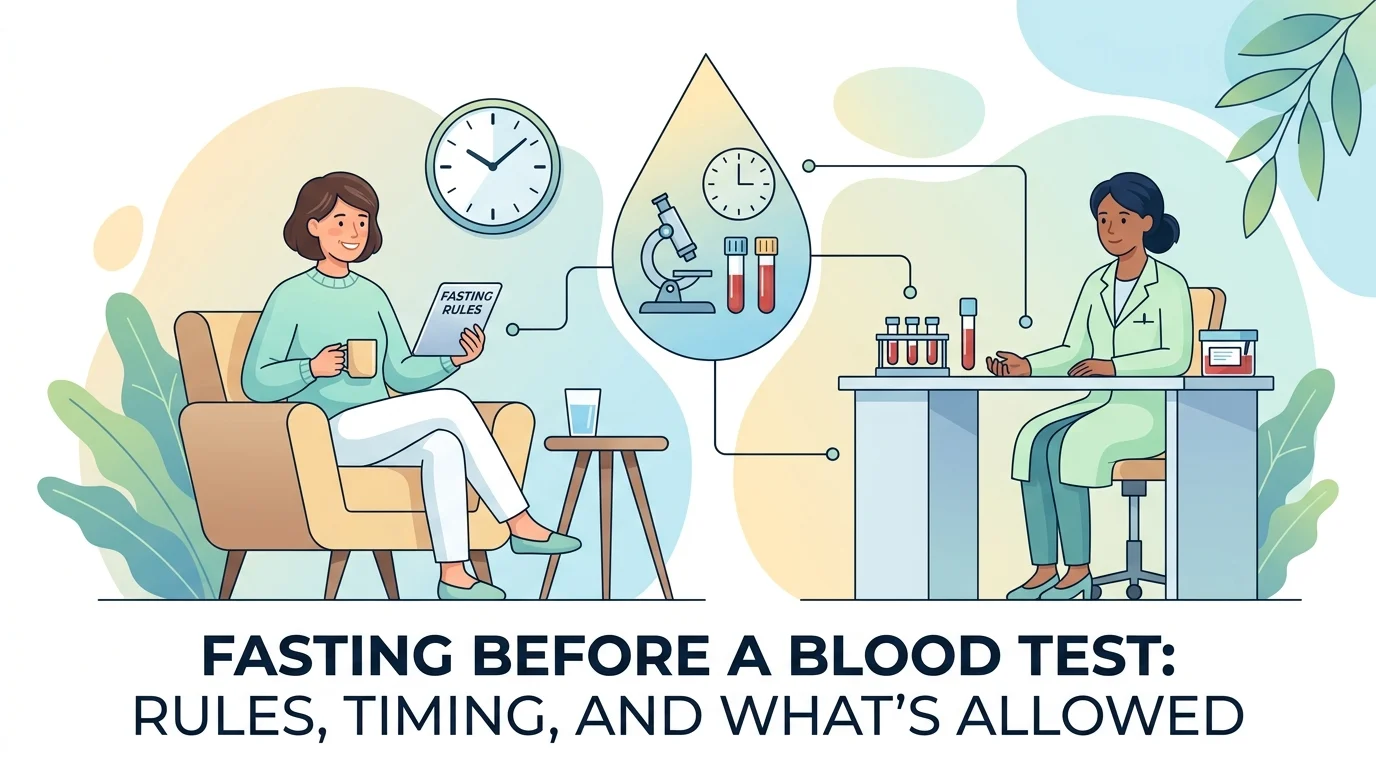
When your provider asks you to fast, it means you should eat and drink nothing but plain water for a certain time before the test. Cleveland Clinic and the U.S. National Library of Medicine both describe fasting the same way: water only, for a set number of hours, so that recent meals do not change your results.
The reason is straightforward. When you eat or drink, your bloodstream absorbs sugar, fat, and protein from that food. Those nutrients temporarily shift the levels of the very substances some tests are trying to measure. Fasting gives a cleaner baseline, so the result reflects your body’s normal state rather than your last snack.
It helps to remember that not every blood test needs this step. Fasting is only useful for certain tests, which is why your instructions matter more than any general rule. If you are also trying to make sense of the numbers on your report, our guide on how to read your blood test results walks through what reference ranges and the “H” and “L” flags mean.
How long should you fast before a blood test?
For most fasting tests, the standard window is 8 to 12 hours. The exact length depends on the test, and your provider will tell you the number to aim for. Blood sugar tests often need about 8 hours, while a full set of triglyceride or cholesterol values may call for closer to 12.
The easiest approach is to book your appointment early in the morning. That way, most of your fasting time happens while you are asleep. For example, if you finish dinner at 8 p.m. and your test is at 8 a.m., you have already fasted for 12 hours without much effort.
Is fasting longer than 12 hours better?
No. Going far beyond the time your provider asked for does not make your results more accurate. In fact, very long fasts can leave you dehydrated and may cause small stress-related shifts in some values. They can also make you feel faint during the blood draw. Stick to the window you were given rather than stretching it to 16 or 24 hours, and keep drinking water throughout.
Which blood tests need fasting — and which don’t?
Whether you need to fast comes down to the specific test. Some markers change quickly after a meal, so they are measured on an empty stomach. Many others are not affected by food at all.
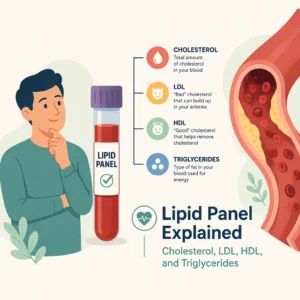
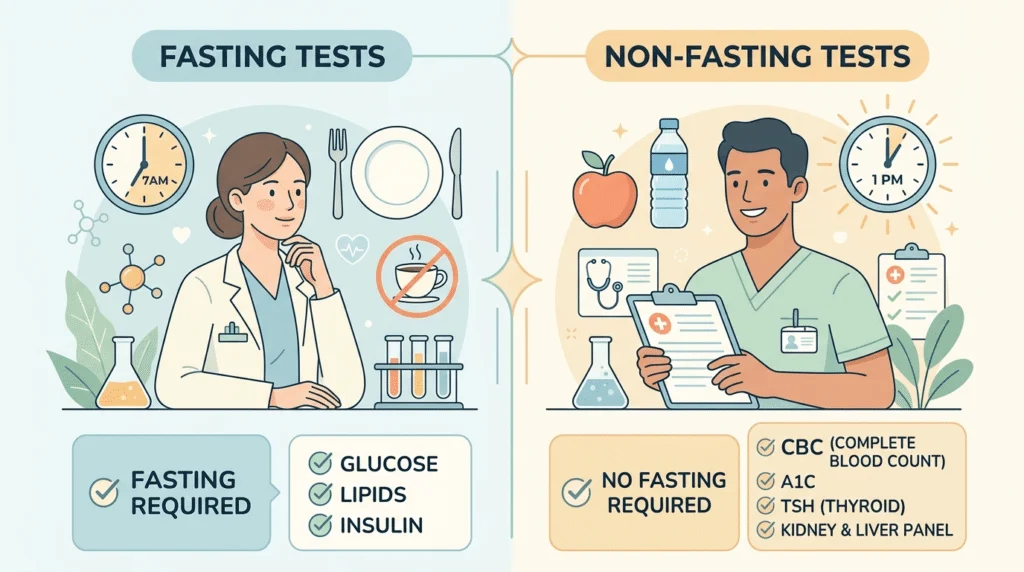
Tests that commonly require fasting include a fasting blood glucose (blood sugar) test, a lipid panel (cholesterol test), and especially triglycerides, which are the most meal-sensitive of the lipids. A comprehensive metabolic panel often involves fasting because it contains a glucose measurement, and certain liver function tests or a fasting insulin test may also be done on an empty stomach.
Plenty of tests do not need fasting. A complete blood count (CBC) and an HbA1c (which reflects your average blood sugar over about three months) are not affected by your last meal, and most thyroid and hormone tests do not require it either.
One thing has shifted in recent years: the cholesterol test. Major cardiology guidelines now accept a non-fasting lipid sample for most people, reserving fasting mainly for those whose triglycerides are already known to be high. A non-fasting sample is more convenient and reflects how your blood looks on a normal day. Even so, if your lab or doctor specifically asks you to fast for it, follow that instruction.
| Blood test | Is fasting usually needed? | Typical fasting window |
|---|---|---|
| Fasting blood glucose (blood sugar) | Yes | About 8 hours |
| Lipid panel / cholesterol | Sometimes (often not anymore) | 9–12 hours if requested |
| Triglycerides on their own | Often | About 12 hours |
| Basic or comprehensive metabolic panel | Sometimes (because of the glucose part) | 8–12 hours |
| Some liver function tests | Sometimes | 8–12 hours |
| Fasting insulin | Yes | About 8 hours |
| Complete blood count (CBC) | No | None |
| HbA1c (A1c) | No | None |
| Most thyroid and hormone tests | Usually no | Follow your instructions |
What can you eat or drink while fasting before a blood test?
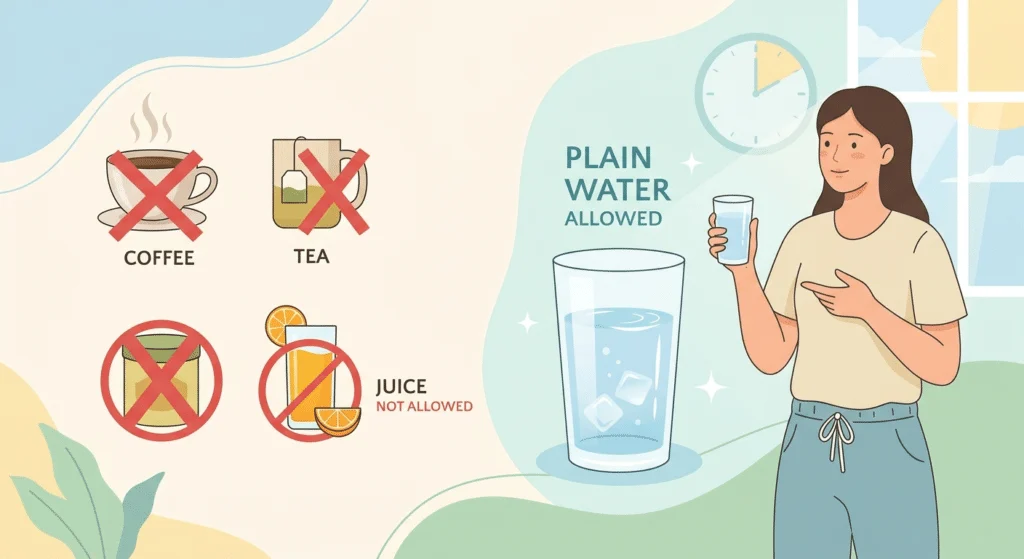
The simple rule is: plain water only. Everything else can introduce sugar, fat, or other substances that change your results or break the fast.
Water: yes, and it helps
You can and should drink plain water while fasting. Healthcare providers actually encourage it. Staying hydrated keeps more fluid in your veins, which makes it easier for the phlebotomist — the professional who draws your blood — to find a vein and collect the sample. Plain water has no calories or sugar, so it does not affect the test. Just keep it plain: skip water with lemon, flavoring, or sweeteners.
Coffee, tea, and other drinks
It is best to avoid coffee and tea during the fast, even black and unsweetened. Caffeine is a mild diuretic, meaning it makes you urinate more and can leave you slightly dehydrated, which makes the blood draw harder. It can also nudge how your body handles sugar. Juice, soda, milk, smoothies, and energy drinks all clearly break a fast and should be avoided. Some labs are more relaxed about black coffee than others, so if it matters to you, ask yours directly rather than guessing.
Gum, mints, smoking, and vaping
A few non-food habits can also affect results. Avoid chewing gum or mints during the fast, even sugar-free ones, because chewing can stimulate your digestion. Do not smoke or vape before the test, since nicotine can change some readings. It is also wise to avoid alcohol the night before, especially for liver and triglyceride tests, where you may be asked to skip it for longer.
Should you take your medications and supplements?
This is one of the most important questions, and the safety message is clear: do not stop your regular medicines on your own. Cleveland Clinic, the NHS, and the National Library of Medicine all advise the same thing — unless your provider tells you otherwise, keep taking your prescribed medications during a fast, usually with a small sip of water.
People often ask about specific medicines, such as blood pressure tablets or thyroid medication like levothyroxine. As a general rule these are continued, but some tests have special timing instructions, so it is worth confirming with the person who ordered the test. Stopping an essential medicine without guidance can be more harmful than any effect on your results.
Supplements deserve a quick word too. Tell your provider about anything you take, including vitamins. Some supplements, such as high-dose biotin, can interfere with certain blood tests. If you are unsure, ask whether to pause non-essential supplements for a day or two before the test. When in doubt, raise these questions at least a full day ahead so you have time to prepare properly.
What happens if you eat or break your fast by accident?
Mistakes happen, and the most important step is simply to be honest. If you eat or drink something other than water before a fasting test, tell the lab staff or your provider before the blood is drawn. They need to know so they can interpret your results correctly.
In practice, eating beforehand can push some values out of their true range. Triglycerides and blood sugar are the most affected, so a meal can make those numbers look higher than your real baseline. Depending on the test, your provider may decide to go ahead and note that you were not fasting, or ask you to reschedule for accurate results.
One thing not to do is try to “improve” your results by eating unusually healthy meals or skipping normal food in the days before. The point of the test is to capture your typical pattern, so changing your habits just for the appointment defeats the purpose.
Special situations: diabetes, pregnancy, children, and older adults
General rules cover most people, but a few groups need extra care.
If you have diabetes, fasting while still taking glucose-lowering medicine or insulin can push your blood sugar too low, a problem called hypoglycemia. Clinicians warn that this can cause faintness or confusion, which is risky if you are driving to the lab. Ask your care team how to handle medication and timing, schedule your test early, and bring a snack to eat the moment the draw is done. In some cases your provider may prefer a non-fasting approach.
During pregnancy, routine blood sugar screening usually does not require fasting; the first-step glucose challenge is taken after a sugary drink, not after a fast. A follow-up glucose tolerance test does involve fasting. Our overview of blood tests during pregnancy explains how these screenings fit together across the trimesters.
For children, fasting windows are often shorter. Book an early appointment, bring water and a snack for afterward, and keep them distracted while they wait. For older adults, the main concerns are hydration and feeling lightheaded, so drinking water and choosing an early slot both help.
A simple checklist before your fasting blood test
Use this quick list to prepare:
- Confirm whether you actually need to fast for your specific test.
- Ask for the exact number of fasting hours required.
- Schedule the test early in the morning so you sleep through most of the fast.
- Have your last normal meal before the fasting window starts.
- Drink plain water during the fast to stay hydrated.
- Keep taking your regular medicines with water unless told otherwise.
- Pack a snack and a drink to have right after the blood draw.
- Bring a list of your medicines and supplements.
- Tell the staff if you ate or drank anything other than water.
When to check with your provider or lab
It is worth confirming your instructions a day ahead if you have diabetes, are pregnant, take several medicines, tend to feel faint during blood draws, or simply are not sure whether to fast at all. A quick question removes the guesswork and helps make sure your results are accurate the first time.
Glossary
- Complete blood count (CBC): A common blood test that measures red cells, white cells, and platelets. It does not require fasting.
- Comprehensive metabolic panel (CMP): A group of blood tests that checks organs such as the kidneys and liver, along with blood sugar. Because of the glucose part, it sometimes requires fasting.
- Diuretic: A substance that makes you urinate more. Caffeine has a mild diuretic effect, which is one reason coffee is discouraged before a fasting test.
- Fasting blood glucose: A blood sugar test taken after at least 8 hours without food, used to screen for and monitor diabetes.
- Fasting blood test: Any blood test for which you must avoid food and all drinks except plain water for a set time beforehand.
- HbA1c (A1c): A test that reflects your average blood sugar over the past two to three months. It does not require fasting.
- Hypoglycemia: Low blood sugar, which can cause faintness or confusion. People with diabetes who fast while taking certain medicines are at higher risk.
- Lipid panel: A blood test, also called a cholesterol test, that measures fats such as cholesterol and triglycerides.
- Phlebotomist: The healthcare professional trained to draw blood for testing.
- Triglycerides: A type of fat in the blood that is highly sensitive to recent meals, which is why fasting is often advised when they are measured on their own.
Frequently asked questions
Can I brush my teeth before a fasting blood test?
For most routine fasting blood tests, brushing your teeth is fine. Toothpaste is not swallowed in any meaningful amount, so it does not break your fast. Just avoid swallowing it, and skip mouthwash that contains sugar. A few specialized tests come with stricter preparation rules, so if your instructions specifically mention not brushing or rinsing, follow them. When you are unsure, a quick check with the lab clears it up.
Can I take vitamins or supplements before a fasting blood test?
Tell your provider about any vitamins or supplements you take, because some can affect specific results. High-dose biotin, for example, is known to interfere with certain tests. For routine fasting, many people are advised to hold non-essential supplements until after the draw, but this is best confirmed with the person who ordered the test. Do not stop prescribed medicines on your own — that is a separate matter and should always be guided by your provider.
Can I exercise before a fasting blood test?
It is generally best to avoid strenuous exercise right before a fasting blood test. Hard workouts can temporarily change some blood values, and health bodies advise against exercising during the fasting period itself. Light movement, such as walking to your appointment, is fine. If you normally train in the morning, consider doing your blood draw first and saving the workout for afterward, when you can also eat and rehydrate.
Can I drink sparkling or flavored water before a fasting blood test?
Stick to plain, still water only. Flavored, sweetened, or lemon-infused waters can contain sugars or artificial sweeteners that may affect your results, so they are not a safe substitute. Sparkling water without any additives is a grey area, and labs differ on it, so the simplest choice is plain water. If you are tempted by anything else, ask your lab whether it is allowed rather than risking a repeat test.
What should I eat the night before a fasting blood test?
Eat your usual, balanced meal before the fasting window begins, then stop eating and drink only water. There is no need to load up or, on the other hand, to eat unusually “clean” meals to improve your numbers. The test is meant to reflect your normal pattern, so dramatic changes the night before can be misleading. Finishing dinner a little earlier simply makes an overnight fast easier to complete.
How long do fasting blood test results take?
Fasting does not change how quickly results come back; turnaround depends on the test and the laboratory. Many routine results, such as a basic blood sugar or cholesterol check, are ready within a few hours to a few days. More specialized tests can take longer. For a fuller breakdown by test type, see our guide on how long blood test results take, and contact your provider if results are later than expected.
Sources
- Fasting for a Blood Test — MedlinePlus, U.S. National Library of Medicine (NIH)
- What Are the Rules for Fasting for Blood Work? — Cleveland Clinic
- Blood tests: how to prepare — NHS
Further reading
- How to read your blood test results
- How long do blood test results take?
- Lipid panel explained: cholesterol, LDL, HDL, and triglycerides
- Comprehensive metabolic panel: how to read your results
- Fasting blood glucose: your complete guide to interpretation
Understand your lab results with AI DiagMe
Fasting correctly is only the first step — the report you get back still has to make sense. AI DiagMe helps you understand common results in plain language, including your cholesterol test (lipid panel), fasting blood sugar (glucose), and liver tests. It is built to help you understand your numbers and prepare better questions for your appointment, not to diagnose you or replace your doctor. Upload your results and see what they could mean.
➡️ Get your results interpreted in minutes