








La nefropatía por IgA, también conocida como enfermedad de Berger, es una enfermedad renal crónica en la que un anticuerpo llamado inmunoglobulina A se acumula en los pequeños filtros de los riñones y provoca inflamación. Es una de las causas más comunes de glomerulonefritis primaria en todo el mundo, aunque muchas personas la tienen durante años sin presentar síntomas y la descubren solo cuando un examen general de orina (EGO) de rutina muestra sangre o proteínas. Como los riñones pueden perder función de manera lenta y silenciosa, entender esta enfermedad a tiempo marca una diferencia real. En este artículo aprenderás qué es la nefropatía por IgA, por qué se desarrolla, los síntomas y estudios de laboratorio que la sugieren, cómo los médicos confirman el diagnóstico, y los tratamientos —incluidas varias opciones nuevas— que hoy ayudan a proteger la función renal.
¿Qué es la nefropatía por IgA (enfermedad de Berger)?
La nefropatía por IgA es una enfermedad de los glomérulos, las aproximadamente un millón de unidades microscópicas de filtración que tiene cada riñón y que se encargan de limpiar los desechos y el exceso de líquido de la sangre. En esta condición, una forma anormal de inmunoglobulina A (IgA) —un anticuerpo que el sistema inmune normalmente usa para proteger el revestimiento del intestino y las vías respiratorias— se agrupa y se deposita en los glomérulos. Estos depósitos desencadenan inflamación que, con el tiempo, puede cicatrizar los filtros y reducir la capacidad de los riñones para funcionar correctamente. Una revisión de 2026 publicada en JAMA describe la nefropatía por IgA como una de las enfermedades glomerulares primarias más comunes en el mundo y una causa importante de insuficiencia renal en adultos jóvenes, lo que explica por qué es tan importante detectarla a tiempo.
La enfermedad fue descrita por primera vez por el médico francés Jean Berger en 1968, razón por la cual todavía se le llama enfermedad de Berger. El Instituto Nacional de Diabetes y Enfermedades Digestivas y Renales la clasifica como una enfermedad renal autoinmune, lo que significa que el sistema inmunológico daña por error los propios tejidos del cuerpo.
Cómo la enfermedad afecta los filtros del riñón
Los investigadores suelen describir la nefropatía por IgA como un proceso paso a paso, conocido a veces como el modelo de los cuatro golpes: el cuerpo produce una versión mal formada de IgA, el sistema inmunológico genera anticuerpos contra ella, estos se unen en grupos más grandes llamados complejos inmunes, y dichos grupos se alojan en los glomérulos y desencadenan inflamación. El resultado es que la sangre y las proteínas, que los filtros sanos retienen en el torrente sanguíneo, comienzan a escaparse hacia la orina. Esta fuga es la razón por la que la enfermedad suele detectarse primero en un examen general de orina (EGO) y no a través de síntomas evidentes.
¿Qué causa la nefropatía por IgA?
Rara vez existe una sola causa. La nefropatía por IgA se desarrolla a partir de una combinación de predisposición hereditaria y factores desencadenantes del sistema inmunológico. Algunas familias tienen genes que aumentan la probabilidad de producir IgA anormal, por lo que la enfermedad a veces se presenta en varios miembros de una misma familia. El sistema inmunológico del intestino también parece tener un papel central, ya que los episodios de sangre visible en la orina suelen aparecer después de infecciones de garganta, senos paranasales o intestinos.
Los médicos distinguen entre la nefropatía por IgA primaria, que aparece por sí sola, y las formas secundarias relacionadas con otras enfermedades como la enfermedad celíaca, la enfermedad hepática crónica o la enfermedad inflamatoria intestinal. Una condición estrechamente relacionada, la vasculitis por IgA (antes llamada púrpura de Henoch-Schönlein), implica el mismo tipo de depósitos de IgA, pero también afecta la piel, las articulaciones y el intestino.
¿Quién tiene mayor riesgo?
- Edad: se diagnostica con mayor frecuencia entre la adolescencia tardía y los treinta años, aunque puede aparecer a cualquier edad.
- Sexo: en muchas regiones se diagnostica con mayor frecuencia en hombres que en mujeres.
- Origen étnico: se reporta con más frecuencia en personas de ascendencia del este asiático y europea, y es menos común en personas de ascendencia africana.
- Antecedentes familiares: tener un familiar cercano con una enfermedad glomerular aumenta el riesgo.
Síntomas y señales tempranas
Para muchas personas, la nefropatía por IgA no causa ningún síntoma, por lo que a veces se descubre por casualidad durante un chequeo de rutina o un estudio de salud para seguro o embarazo. Cuando sí aparecen señales, generalmente reflejan el escape de sangre y proteínas a través de los filtros dañados.
La señal más reconocible es la sangre visible que puede teñir la orina de color rosa, rojo o café oscuro (como refresco de cola), con frecuencia uno o dos días después de un resfriado o dolor de garganta. Con mayor frecuencia, un examen general de orina (EGO) de rutina detecta sangre microscópica en la orina. Cuando los filtros presentan fugas más importantes, el mismo estudio puede revelar proteína en la orina, lo que puede hacer que se vea espumosa, y algunas personas notan hinchazón en las piernas, los tobillos o alrededor de los ojos. La pérdida abundante y sostenida de proteínas también puede causar albúmina baja en la sangre, lo que contribuye a esa hinchazón. El aumento de la presión arterial es otra señal frecuente e importante.
Cuándo consultar a tu médico
Consulta a un profesional de la salud si notas alguno de los siguientes síntomas, especialmente si persisten:
- Orina de color rosa, rojo, café o como refresco de cola.
- Orina que se mantiene espumosa o con burbujas de un día para otro.
- Hinchazón nueva en los tobillos, pies, manos o cara.
- Lecturas de presión arterial repetidamente elevadas.
- Cansancio inusual o disminución en la cantidad de orina que produces.
Estos signos no confirman la nefropatía por IgA por sí solos, pero vale la pena revisarlos, porque una evaluación temprana le da a los riñones la mejor oportunidad de protección.
¿Cómo se diagnostica la nefropatía por IgA?
El diagnóstico generalmente comienza con estudios simples y de fácil acceso, y avanza hacia una biopsia renal cuando el panorama no está claro. El primer paso suele ser un examen general de orina (EGO), y muchos pacientes encuentran útil revisar una guía completa para entender el examen general de orina. El laboratorio analiza la muestra en busca de glóbulos rojos y proteínas, los dos hallazgos que con mayor frecuencia generan sospecha.
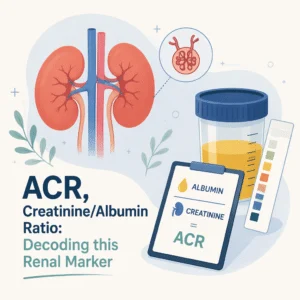
Al microscopio, el técnico también puede detectar cilindros de glóbulos rojos, pequeños cilindros que se forman cuando el sangrado proviene de los propios filtros y no de la vejiga. Para medir la pérdida de proteínas, el laboratorio reporta una relación proteína-creatinina en orina y también mide la creatinina presente en la orina. Un solo análisis de sangre puede cubrir un panel de función renal completo y revisar anticuerpos de inmunoglobulina A circulantes, aunque un resultado normal de IgA no descarta la enfermedad.
Los médicos también miden y monitorean presión arterial alta, y descartan otras causas de sangre en la orina. Primero se excluye una infección de vías urinariascomún, y un examen general de orina (EGO) también puede detectar glóbulos blancos en la orina que indican una infección. La única manera de confirmar con certeza la nefropatía por IgA es mediante una biopsia renal, en la que el médico extrae una pequeña muestra de tejido del riñón y la examina para detectar depósitos de IgA. Los hallazgos de la biopsia se clasifican con un sistema estándar (conocido como MEST-C) que ayuda a predecir cómo puede evolucionar la enfermedad.
Qué revelan los estudios clave
| Prueba | Qué evalúa | Lo que puede indicar un resultado anormal |
|---|---|---|
| Examen general de orina para detectar sangre (hematuria) | Glóbulos rojos en la orina, visibles o microscópicos | Irritación o sangrado en los filtros del riñón, una característica típica de la nefropatía por IgA |
| Cociente proteína/creatinina en orina | Cuánta proteína se filtra hacia la orina en una sola muestra | Valores más altos indican mayor daño en los filtros y un riesgo más elevado de progresión |
| Creatinina sérica y TFGe | Qué tan bien los riñones eliminan los desechos de la sangre | Un aumento de creatinina o una disminución del FGe sugiere una reducción de la función renal |
| Presión arterial | La presión dentro de los vasos sanguíneos, incluidos los del riñón | Lecturas persistentemente elevadas pueden ser tanto consecuencia como causa de mayor daño renal |
Tratamiento y terapias más recientes
No existe una cura única para la nefropatía por IgA, pero el tratamiento ha avanzado rápidamente y el objetivo es claro: reducir la cantidad de proteína en la orina, controlar la presión arterial y preservar la función renal el mayor tiempo posible. El manejo se adapta según cuánta proteína pierde la persona y qué tan rápido está cambiando su función renal.
Cuidado básico para todos
- Control de la presión arterial, ya que mantenerla en un rango saludable protege los filtros renales. Esto comienza con el manejo de la presión arterial alta mediante medicamentos y cambios en el estilo de vida.
- Bloqueo del sistema renina-angiotensina con inhibidores de la ECA o ARA II, medicamentos que reducen la presión arterial y, de manera importante, disminuyen la fuga de proteínas.
- Inhibidores de SGLT2, un grupo de medicamentos desarrollados originalmente para la diabetes que ahora se usan para frenar la progresión de muchas enfermedades renales crónicas.
- Medidas cotidianas como reducir el consumo de sal, no fumar, mantenerse activo y alcanzar un peso saludable.
Opciones específicas y dirigidas a la enfermedad
Cuando la pérdida de proteínas sigue siendo alta a pesar del tratamiento básico, los médicos pueden agregar terapias dirigidas más directamente al proceso inmunitario. Una forma de liberación dirigida del esteroide budesonida (comercializada como Tarpeyo) está diseñada para actuar en la parte del intestino donde se produce la IgA defectuosa. En casos seleccionados, se pueden considerar otras terapias enfocadas en el sistema inmunitario y, históricamente, corticosteroides de mayor alcance, siempre evaluando los beneficios frente a los efectos secundarios. La siguiente sección analiza las más recientes de estas opciones y lo que muestra la investigación actual.
Últimos avances científicos en la nefropatía por IgA
En los últimos años, la perspectiva de la nefropatía por IgA se ha transformado, yendo más allá del simple control de la presión arterial hacia tratamientos que atacan la enfermedad desde su origen. Los resúmenes a continuación traducen los hallazgos de ensayos recientes a un lenguaje sencillo, con una nota sobre lo que cada uno puede significar para los pacientes. Estos son resultados de investigación, no consejos médicos personales; tu nefrólogo puede explicarte qué se adapta a tu situación.
Un esteroide de acción localizada en el intestino
Lo que encontraron los investigadores: en un ensayo de fase 3 llamado NefIgArd, una forma de liberación dirigida de budesonida —una cápsula diseñada para liberar el medicamento donde se produce la IgA anormal— ayudó a proteger la función renal durante dos años en comparación con el tratamiento estándar. Lo que esto significa para ti: ofrece una manera de calmar la enfermedad en su probable punto de origen en el intestino, con menos efectos generales en el cuerpo que los esteroides más antiguos.
Medicamentos que reducen la presión dentro de los filtros renales
Lo que encontraron los investigadores: una clase de medicamentos llamados antagonistas de los receptores de endotelina relaja los vasos sanguíneos del riñón y reduce la fuga de proteínas. En un ensayo de fase 3, el medicamento atrasentan disminuyó la proteína en la orina en personas que ya recibían tratamiento estándar. Lo que esto significa para ti: menos proteína en la orina es una de las señales más claras de que los riñones están siendo mejor protegidos.
Calmar el sistema del complemento inmunitario
Lo que encontraron los investigadores: una parte del sistema inmunitario llamada vía del complemento contribuye a impulsar la inflamación en la nefropatía por IgA. En un ensayo de fase 3, el inhibidor del complemento iptacopan redujo la proteína en la orina. Lo que esto significa para ti: es una forma más dirigida de frenar un brazo específico del ataque inmunitario, en lugar de suprimir la inmunidad de manera general.
Reducir el anticuerpo defectuoso desde su origen
Lo que encontraron los investigadores: los medicamentos más nuevos apuntan a proteínas de señalización (conocidas como APRIL y BAFF) que le indican al cuerpo que produzca la IgA anormal. Un análisis intermedio de un ensayo de fase 3 de sibeprenlimab, publicado en 2025, mostró una reducción de proteína en la orina. Lo que esto significa para ti: estos tratamientos intentan atacar la causa raíz, aunque el enfoque aún se está confirmando en estudios más prolongados.
Mayor protección renal y un nuevo paradigma de tratamiento
Los especialistas en riñón combinan cada vez más varias de estas herramientas, y revisiones publicadas en 2025 describen un cambio hacia un tratamiento más temprano y por capas que combina el cuidado fundamental, como los inhibidores de SGLT2, con medicamentos específicos para la enfermedad. La investigación avanza rápido: se están probando otros agentes en estudios activos, incluido un ensayo en reclutamiento de felzartamab (llamado PREVAIL) y un programa de fase 3 en curso para sibeprenlimab (VISIONARY). Si te interesa, pregúntale a tu nefrólogo si un ensayo clínico podría ser una opción para ti.
Pronóstico, seguimiento y vida con nefropatía por IgA
El curso de la nefropatía por IgA varía mucho de una persona a otra. Muchas personas mantienen una función renal estable durante décadas, mientras que un número menor progresa hacia insuficiencia renal con el paso de los años. Las señales más importantes para el pronóstico son la cantidad de proteína en la orina, si la presión arterial está controlada y cómo cambia la función renal medida por la TFGe con el tiempo. Los médicos evalúan estos factores en conjunto, sin depender de un solo estudio, y los revisan en cada consulta para detectar cambios importantes a tiempo.
Mantenerse un paso adelante de la enfermedad
Dado que la enfermedad puede ser silenciosa, el seguimiento regular es más importante que los síntomas llamativos. La mayoría de las personas son monitoreadas periódicamente con análisis de orina y sangre para controlar la proteína, la creatinina y el FGe, además de mediciones de presión arterial en casa o en el consultorio. Revisar estos valores como una tendencia, en lugar de reaccionar ante un resultado aislado, da la imagen más clara de la salud renal.
Hábitos del día a día que ayudan
- Toma los medicamentos para la presión arterial y para proteger los riñones tal como te los recetaron, incluso cuando te sientas bien.
- Modera el consumo de sal en tu dieta y pregunta si necesitas ajustar tu ingesta de proteínas.
- Evita el uso regular de analgésicos antiinflamatorios (AINEs) a menos que tu médico los apruebe.
- Trata rápidamente las infecciones de garganta y otras infecciones, y mantén al día las vacunas recomendadas.
- Lleva tus resultados de laboratorio a tus citas para que tú y tu equipo médico puedan monitorear la tendencia juntos.
Glosario de términos clave
| Término | Definición |
|---|---|
| Nefropatía por IgA | También conocida como enfermedad de Berger; una enfermedad renal en la que el anticuerpo inmunoglobulina A se acumula en los filtros del riñón y provoca inflamación. |
| Inmunoglobulina A (IgA) | Un anticuerpo producido por el sistema inmunológico que normalmente ayuda a defender el revestimiento del intestino y las vías respiratorias. |
| Glomérulo (plural glomérulos) | Una de aproximadamente un millón de pequeñas unidades de filtración en cada riñón que limpian la sangre y forman la orina. |
| Hematuria | Sangre en la orina, que puede ser visible (de color rojo o café oscuro, como refresco de cola) o microscópica (detectable solo bajo el microscopio). |
| Proteinuria | Proteína en la orina, que a menudo la hace ver espumosa, y es una señal de que los filtros están dejando pasar lo que no deben. |
| TFGe (tasa de filtración glomerular estimada) | Un número calculado a partir de un análisis de creatinina en sangre que estima qué tan bien filtran los riñones. |
| Creatinina | Un producto de desecho de los músculos que los riñones sanos eliminan; los niveles en sangre aumentan cuando el filtrado se vuelve más lento. |
| Biopsia de riñón | Un procedimiento en el que se extrae una pequeña muestra de tejido del riñón para examinarla bajo el microscopio y confirmar el diagnóstico. |
| Bloqueo del SRA (inhibidores de la ECA y ARA II) | Medicamentos para la presión arterial que también reducen la proteína en la orina y ayudan a proteger los riñones. |
| Enfermedad renal crónica (ERC) | Una reducción a largo plazo de la función renal a la que la nefropatía por IgA puede llevar con el tiempo. |
Preguntas frecuentes sobre la nefropatía por IgA
¿La nefropatía por IgA es una enfermedad autoinmune?
Sí. Las autoridades de salud clasifican la nefropatía por IgA como una enfermedad renal autoinmune. El sistema inmunológico produce una forma anormal del anticuerpo inmunoglobulina A y luego genera otros anticuerpos en su contra. Juntos forman complejos inmunes que se depositan en los filtros del riñón y causan inflamación. Esto es diferente a una infección renal, aunque los brotes de sangre visible en la orina suelen aparecer después de una infección en otra parte del cuerpo, como una faringitis.
¿Cuál es la esperanza de vida con nefropatía por IgA?
El pronóstico varía mucho de una persona a otra. Muchas personas viven una vida normal con función renal estable, especialmente cuando la proteína en la orina es baja y la presión arterial está bien controlada. Un grupo más pequeño avanza hacia insuficiencia renal a lo largo de muchos años y puede llegar a necesitar diálisis o un trasplante. La cantidad de proteína en la orina y la tendencia de la TFGe con el tiempo son de los indicadores más útiles, por eso el seguimiento a largo plazo es tan importante.
¿La nefropatía por IgA es lo mismo que la púrpura de Henoch-Schönlein?
Están estrechamente relacionadas, pero no son idénticas. Ambas involucran depósitos del mismo tipo anormal de IgA. La nefropatía por IgA afecta principalmente los riñones, mientras que la vasculitis por IgA (el nombre más reciente de la púrpura de Henoch-Schönlein) también afecta la piel con un sarpullido, y con frecuencia las articulaciones y el intestino. Algunos médicos las consideran manifestaciones distintas de un mismo proceso subyacente. Cuando la vasculitis por IgA compromete los riñones, los cambios observados en la biopsia pueden ser muy similares a los de la nefropatía por IgA.
¿Existen nuevos tratamientos para la nefropatía por IgA?
Sí, y esta es un área de investigación especialmente activa. Además de los medicamentos tradicionales para reducir la presión arterial y la proteína en la orina, las opciones más recientes incluyen una forma de budesonida dirigida al intestino, inhibidores de SGLT2, antagonistas de los receptores de endotelina e inhibidores del complemento, y se están estudiando otros medicamentos para reducir los anticuerpos en ensayos clínicos en curso. No todos los tratamientos son adecuados para todas las personas, por lo que un nefrólogo decide según cuánta proteína pierdes y cómo va evolucionando tu función renal.
¿Existe una dieta especial para la nefropatía por IgA?
No existe una dieta única que cure la enfermedad, pero las elecciones alimentarias pueden apoyar la salud de los riñones. Una dieta baja en sal ayuda a controlar la presión arterial y reducir la retención de líquidos, y a algunas personas se les recomienda moderar el consumo de proteínas según su función renal. Si hay inflamación o enfermedad renal avanzada, un nutriólogo puede sugerir ajustar el potasio o el fósforo. Cualquier cambio en la dieta debe ser personalizado, por lo que es mejor revisarlo con tu equipo de salud en lugar de seguir reglas generales.
¿Qué tan común es la nefropatía por IgA?
La nefropatía por IgA se considera una de las formas más comunes de glomerulonefritis primaria, el grupo de enfermedades que dañan directamente los filtros del riñón. Se diagnostica en todo el mundo, pero aparece con mayor frecuencia en algunas poblaciones, incluidas personas de ascendencia del este asiático y europea. Dado que muchas personas no presentan síntomas, el número real de afectados probablemente es mayor que el de casos formalmente diagnosticados, y algunos solo se detectan durante estudios realizados por otra razón.
Fuentes
- National Institute of Diabetes and Digestive and Kidney Diseases (NIDDK) — IgA Nephropathy — niddk.nih.gov
- Mayo Clinic — IgA nephropathy (Berger disease): Symptoms and causes — mayoclinic.org
- National Kidney Foundation — IgA Nephropathy (IgAN) — kidney.org
- Stoneman S, et al. — IgA Nephropathy in Adults: A Review — JAMA, 2026 — doi.org/10.1001/jama.2025.25020
- Lafayette R, et al. — Efficacy and safety of a targeted-release formulation of budesonide in primary IgA nephropathy (NefIgArd), 2-year results — The Lancet, 2023 — doi.org/10.1016/S0140-6736(23)01554-4
- Heerspink HJL, et al. — Atrasentan in Patients with IgA Nephropathy — New England Journal of Medicine, 2024 — doi.org/10.1056/NEJMoa2409415
- Perkovic V, et al. — Alternative Complement Pathway Inhibition with Iptacopan in IgA Nephropathy — New England Journal of Medicine, 2024 — doi.org/10.1056/NEJMoa2410316
- Perkovic V, et al. — Sibeprenlimab in IgA Nephropathy, interim analysis of a phase 3 trial — New England Journal of Medicine, 2025 — doi.org/10.1056/NEJMoa2512133
- Floege J, et al. — Treatment of patients with IgA nephropathy: a call for a new paradigm — Kidney International, 2025 — doi.org/10.1016/j.kint.2025.01.014
- ClinicalTrials.gov — Felzartamab in Adults With IgA Nephropathy (PREVAIL), NCT06935357, 2025 — clinicaltrials.gov/study/NCT06935357
- ClinicalTrials.gov — Sibeprenlimab in Immunoglobulin A Nephropathy (VISIONARY), NCT05248646 — clinicaltrials.gov/study/NCT05248646
Lecturas recomendadas
- Resultados del examen general de orina (EGO): guía para entenderlos
- Panel de función renal: cómo leer tus estudios de sangre renales
- Hematuria (sangre en la orina): causas y síntomas
- Proteína en la orina: causas, síntomas y riesgos
- Inmunoglobulina A (IgA): Entiende tu análisis de sangre
Entiende tus resultados de laboratorio con AI DiagMe
El diagnóstico de la nefropatía por IgA suele comenzar con números en un reporte de laboratorio, como proteína y sangre en la orina, creatinina y eGFR. AI DiagMe te ayuda a leer esos resultados relacionados con los riñones en un lenguaje claro y sencillo, para que puedas entender qué significa cada valor y preparar mejores preguntas para tu consulta. Está diseñado para ayudarte a entender tus resultados, no para diagnosticar enfermedades ni reemplazar a tu médico. Cualquier decisión sobre estudios o tratamiento siempre debe tomarse con un profesional de la salud calificado.
Obtén la lectura de tus resultados en minutos