






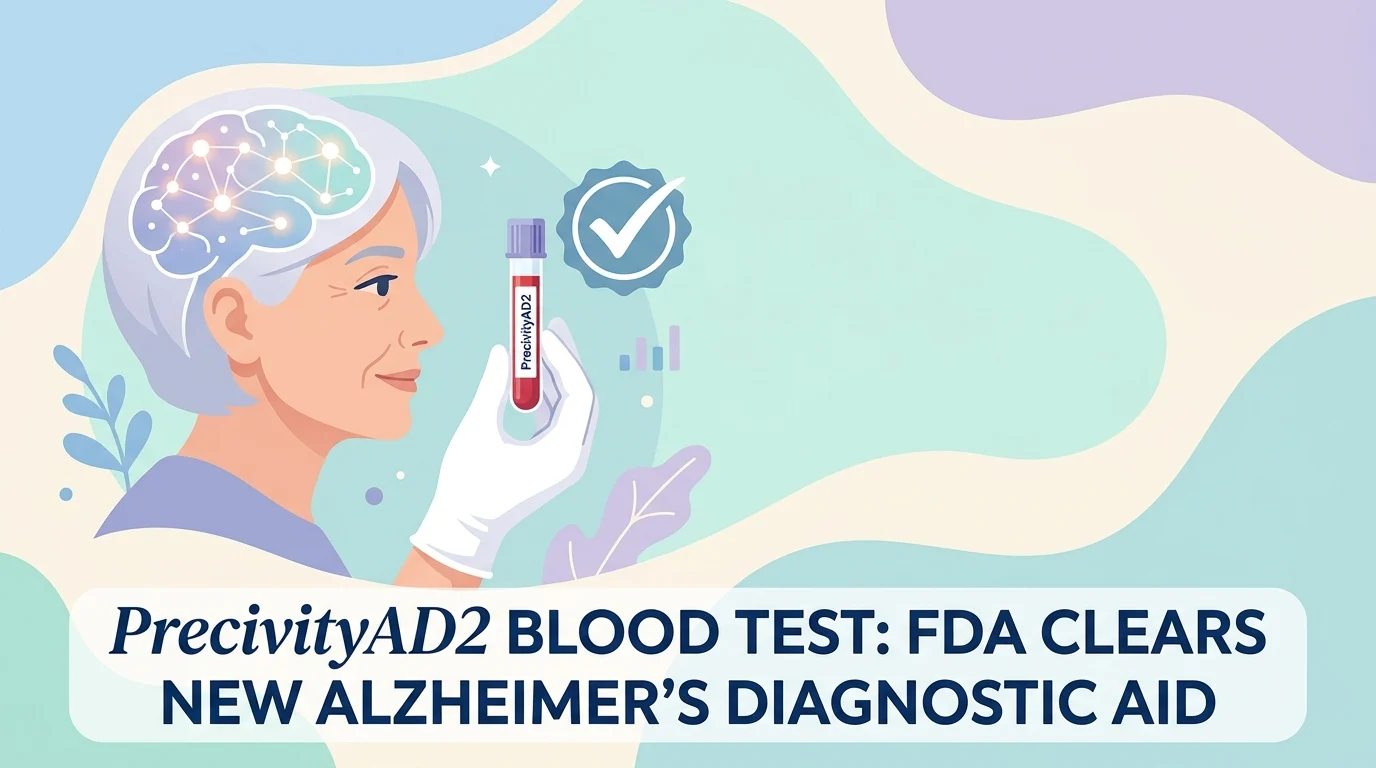
การตรวจเลือดสำหรับโรคอัลไซเมอร์ที่ชื่อว่า PrecivityAD2 เพิ่งได้รับการอนุมัติจากสำนักงานคณะกรรมการอาหารและยาของสหรัฐอเมริกา (FDA) เปิดทางให้แพทย์มีวิธีที่ง่ายขึ้นในการตรวจหาสัญญาณทางชีววิทยาของโรคอัลไซเมอร์ในผู้ใหญ่ที่มีอาการผิดปกติด้านความจำหรือการคิดอยู่แล้ว การอนุมัติดังกล่าวซึ่งรายงานในต้นเดือนกันยายน 2026 เพิ่มตัวเลือกที่ใช้เทคโนโลยี mass spectrometry เข้าสู่กลุ่มการตรวจเลือดที่กำลังเติบโตอย่างรวดเร็ว ซึ่งสามารถตรวจพบการสะสมของคราบอะไมลอยด์ในสมองได้โดยไม่ต้องเจาะน้ำไขสันหลังหรือทำ PET scan
สำหรับผู้ที่เคยเห็นพ่อแม่หรือคู่ชีวิตต้องต่อสู้กับปัญหาความจำ ข่าวที่ว่าการเจาะเลือดธรรมดาอาจแทนที่การเจาะน้ำไขสันหลังหรือการสแกนสมองราคาแพงได้นั้นถือเป็นเรื่องน่ายินดีอย่างยิ่ง บทความนี้จะอธิบายว่ามีอะไรเปลี่ยนแปลงไปบ้าง PrecivityAD2 แตกต่างจากการตรวจเลือดโรคอัลไซเมอร์ตัวอื่นที่มีอยู่ในตลาดอย่างไร และผลการตรวจบอกอะไรได้และบอกอะไรไม่ได้กับผู้ป่วย
FDA เพิ่งอนุมัติอะไร
PrecivityAD2 ผลิตโดย C2N Diagnostics และพัฒนาต่อยอดจากงานวิจัยของ Washington University School of Medicine ในเมืองเซนต์หลุยส์ มีวัตถุประสงค์เพื่อใช้กับผู้ใหญ่อายุ 40 ปีขึ้นไปที่มีสัญญาณหรืออาการของการถดถอยทางสติปัญญาอยู่แล้ว ไม่ใช่การตรวจคัดกรองสำหรับคนที่มีสุขภาพดีและไม่มีอาการใดๆ และไม่สามารถวินิจฉัยโรคอัลไซเมอร์ได้ด้วยตัวเองเพียงอย่างเดียว แต่เป็นเครื่องมือสนับสนุนการประเมินทางคลินิกที่ครอบคลุมมากขึ้น ซึ่งรวมถึงการประเมินความจำ การทำกิจวัตรประจำวัน และสาเหตุอื่นที่อาจทำให้เกิดความสับสน เช่น ปัญหาต่อมไทรอยด์ การขาดวิตามิน หรือผลข้างเคียงจากยา
การทดสอบนี้วัดอัตราส่วนของโปรตีนอะไมลอยด์เบตา (Aβ42 และ Aβ40) ร่วมกับโปรตีนเทาสองรูปแบบ (p-tau217 และเทารวม) ในตัวอย่างเลือด โดยใช้แมสสเปกโตรเมทรีความละเอียดสูง แทนที่จะเป็นวิธีอิมมูโนแอสเสย์แบบแอนติบอดีที่การทดสอบคู่แข่งบางรายใช้ ในการศึกษาตรวจสอบความถูกต้องทางคลินิกที่สนับสนุนการอนุมัติ ซึ่งครอบคลุมผู้ใหญ่ 1,142 รายที่มีอาการทางสติปัญญา ค่าพยากรณ์ผลบวกของการทดสอบอยู่ที่ 97.6% และค่าพยากรณ์ผลลบอยู่ที่ 93.1% เมื่อเปรียบเทียบกับการสแกน PET อะไมลอยด์และการตรวจน้ำไขสันหลัง
PrecivityAD2 เปรียบเทียบกับการตรวจเลือดโรคอัลไซเมอร์อื่นๆ อย่างไร
PrecivityAD2 ไม่ใช่การตรวจเลือดโรคอัลไซเมอร์รายแรกที่วางจำหน่ายในตลาด FDA อนุมัติ Lumipulse G pTau217/β-Amyloid 1-42 Plasma Ratio ของ Fujirebio ในเดือนพฤษภาคม 2025 และการทดสอบ Elecsys pTau217 ของ Roche และ Eli Lilly ตามมาในเดือนสิงหาคม 2026 ทั้งสามรายการอาศัยพื้นฐานทางชีววิทยาเดียวกัน นั่นคือการเปลี่ยนแปลงของโปรตีนอะไมลอยด์และเทาที่สะสมขึ้นหลายปีก่อนที่อาการจะปรากฏชัด แต่ใช้เทคนิคห้องปฏิบัติการและค่าอ้างอิงที่แตกต่างกัน
| การตรวจ | วิธีการ | ได้รับการอนุมัติ | กลุ่มอายุ |
|---|---|---|---|
| PrecivityAD2 (C2N Diagnostics) | แมสสเปกโตรเมทรี | กันยายน 2026 | อายุ 40 ปีขึ้นไป |
| Lumipulse G pTau217/Aβ1-42 (Fujirebio) | อิมมูโนแอสเซย์ (Immunoassay) | พฤษภาคม 2025 | อายุ 55 ปีขึ้นไป |
| Elecsys pTau217 (Roche/Eli Lilly) | อิมมูโนแอสเซย์ (Immunoassay) | สิงหาคม 2026 | อายุ 55 ปีขึ้นไป |
การทดสอบเหล่านี้ไม่มีรายการใดทดแทนการตรวจประเมินทางคลินิกอย่างครบถ้วนได้ การ ประเมินโรคอัลไซเมอร์อย่างครอบคลุม ยังคงต้องอาศัยการทดสอบความสามารถทางสติปัญญา การซักประวัติอย่างละเอียด และการตัดสาเหตุอื่นของการสูญเสียความจำออกไป ซึ่งเป็นสิ่งที่แพทย์ดำเนินการเช่นกันเมื่อตรวจสอบ อาการและสาเหตุของภาวะสมองเสื่อม.
เหตุใดเรื่องนี้จึงสำคัญในขณะนี้
การยืนยันพยาธิสภาพของอะไมลอยด์แต่เดิมต้องอาศัยการสแกน PET สมอง ซึ่งมีค่าใช้จ่ายสูงและเกี่ยวข้องกับรังสี หรือการเจาะน้ำไขสันหลัง ซึ่งเป็นหัตถการที่รุกล้ำร่างกาย การตรวจเลือดช่วยลดอุปสรรคลงได้อย่างมาก ซึ่งมีความสำคัญเนื่องจากยารักษาโรคอัลไซเมอร์รุ่นใหม่ที่มุ่งเป้าไปที่อะไมลอยด์ได้ผลดีที่สุดเมื่อเริ่มใช้ตั้งแต่เนิ่นๆ วิธีที่รวดเร็วและประหยัดกว่าในการยืนยันการเปลี่ยนแปลงทางชีววิทยาอาจช่วยย่นระยะเวลาระหว่างอาการที่น่าเป็นห่วงครั้งแรกกับการส่งต่อไปยังผู้เชี่ยวชาญ
อย่างไรก็ตาม ค่าพยากรณ์ขึ้นอยู่กับความน่าจะเป็นที่ผู้ป่วยจะมีพยาธิสภาพของโรคอัลไซเมอร์เป็นอย่างมาก ในผู้ที่ไม่มีอาการทางสติปัญญา การทดสอบเดียวกันนี้จะให้ข้อมูลที่มีประโยชน์น้อยกว่ามาก ซึ่งนั่นคือเหตุผลที่ PrecivityAD2 ถูกจำกัดให้ใช้เฉพาะกับผู้ป่วยที่มีอาการและกำลังรับการประเมินจากผู้เชี่ยวชาญ แทนที่จะนำเสนอเป็นเครื่องมือคัดกรองทั่วไป
เมื่อใดควรพบแพทย์
การหลงลืมเป็นครั้งคราวเป็นเรื่องปกติและมักไม่ใช่สัญญาณของโรคอัลไซเมอร์ ควรนัดพบแพทย์เพื่อรับการประเมินเมื่อปัญหาด้านความจำหรือการคิดเริ่มส่งผลกระทบต่อกิจวัตรประจำวัน เช่น การจัดการเรื่องการเงิน การนัดหมาย หรือการทำตามสูตรอาหารที่คุ้นเคย หรือเมื่อคนในครอบครัวสังเกตเห็นการเปลี่ยนแปลงด้านการตัดสินใจหรือบุคลิกภาพ แพทย์เวชปฏิบัติทั่วไปสามารถสั่ง การตรวจเลือดเบื้องต้น รวมถึงการตรวจระดับวิตามิน B12และ การตรวจการทำงานของต่อมไทรอยด์เนื่องจากภาวะขาดสารอาหารและความผิดปกติของต่อมไทรอยด์สามารถแสดงอาการคล้ายกับภาวะสมองเสื่อมและรักษาได้
ความก้าวหน้าทางวิทยาศาสตร์ล่าสุด
งานวิจัยอิสระในช่วงสามปีที่ผ่านมาสนับสนุนแนวโน้มการวินิจฉัยโรคอัลไซเมอร์ด้วยการตรวจเลือดที่กำลังขยายตัว การศึกษากลุ่มตัวอย่างในปี 2024 ที่ตีพิมพ์ใน JAMA Neurology พบว่าการตรวจ plasma p-tau217 immunoassay สามารถระบุความผิดปกติของ amyloid และ tau pathology ได้อย่างแม่นยำสูง ใกล้เคียงกับการตรวจน้ำไขสันหลัง และการใช้ค่าอ้างอิงแบบสามช่วงช่วยลดความจำเป็นในการตรวจยืนยันเพิ่มเติมได้ประมาณ 80% [Ashton et al., 2024] พูดง่ายๆ คือ สำหรับผู้ป่วยส่วนใหญ่ ผลการตรวจเลือดเพียงอย่างเดียวมีความชัดเจนเพียงพอที่จะไม่ต้องทำการตรวจที่รุกล้ำร่างกายมากกว่าเป็นครั้งที่สอง
ในปี 2025 สมาคมอัลไซเมอร์ได้ออกแนวปฏิบัติทางคลินิกฉบับแรกเกี่ยวกับไบโอมาร์กเกอร์จากเลือด โดยสรุปว่าการตรวจที่มีความไว (sensitivity) อย่างน้อย 90% และความจำเพาะ (specificity) 75% สามารถนำมาใช้ตัดสินว่าใครควรได้รับการตรวจเพิ่มเติม และการตรวจที่ให้ผลดีที่สุดสามารถทดแทนการสแกน PET หรือการวิเคราะห์น้ำไขสันหลังได้ในสถานพยาบาลเฉพาะทาง แนวปฏิบัตินี้ยังเตือนด้วยว่าการตรวจที่มีจำหน่ายในท้องตลาดไม่ทั้งหมดผ่านเกณฑ์ดังกล่าว ดังนั้นผลการตรวจควรได้รับการแปลผลโดยแพทย์ที่มีประสบการณ์ด้านความผิดปกติของความจำเสมอ ไม่ควรอ่านผลเพียงลำพัง
การทบทวนวรรณกรรมอย่างเป็นระบบและการวิเคราะห์อภิมานขนาดใหญ่ในปี 2025 ที่ตีพิมพ์ใน The Lancet Neurology ได้รวบรวมข้อมูลจากผู้เข้าร่วมกว่า 29,000 คนใน 113 การศึกษา และพบว่า plasma p-tau217 ซึ่งเป็นกลุ่มไบโอมาร์กเกอร์ที่ PrecivityAD2 ตรวจวัดด้วยเช่นกัน เป็นตัวบ่งชี้จากเลือดที่ให้ผลดีที่สุดในการระบุพยาธิสภาพของโรคอัลไซเมอร์ โดยมีทั้งความไวและความจำเพาะอยู่ที่ประมาณ 88% ผู้เขียนระบุว่ายังจำเป็นต้องมีการศึกษาในสภาพแวดล้อมจริง นอกเหนือจากกลุ่มตัวอย่างวิจัยที่ควบคุมอย่างเข้มงวด เพื่อยืนยันว่าการตรวจเหล่านี้ให้ผลดีเพียงใดในการปฏิบัติทางคลินิกในชีวิตประจำวัน ซึ่งเป็นข้อควรระวังที่สมเหตุสมผลก่อนจะถือว่าผลการตรวจเลือดครั้งเดียวเป็นคำตอบสุดท้าย
อภิธานศัพท์
| คำศัพท์ | ความหมาย |
|---|---|
| คราบอะไมลอยด์ | กลุ่มก้อนของโปรตีน amyloid-beta ที่สะสมระหว่างเซลล์สมองและเป็นลักษณะเด่นของโรคอัลไซเมอร์ |
| p-tau217 | รูปแบบเฉพาะของโปรตีนเทา (tau) ที่เพิ่มสูงขึ้นในเลือดและน้ำไขสันหลังเมื่อมีการเปลี่ยนแปลงในสมองที่เกี่ยวข้องกับโรคอัลไซเมอร์ |
| แมสสเปกโตรเมทรี | เทคนิคการตรวจในห้องปฏิบัติการที่แม่นยำ ซึ่งใช้ระบุและวัดปริมาณโปรตีนเฉพาะชนิดในปริมาณน้อยมากจากตัวอย่าง |
| การสแกน PET เพื่อตรวจหาอะไมลอยด์ | การตรวจภาพสมองที่ใช้สารกัมมันตรังสีเพื่อมองเห็นคราบอะไมลอยด์โดยตรง |
| ค่าพยากรณ์ผลบวก | ความน่าจะเป็นที่ผู้ที่มีผลการตรวจเป็นบวกจะมีภาวะที่ตรวจหาอยู่จริง |
| การตรวจน้ำไขสันหลัง (CSF) | การวิเคราะห์ของเหลวที่เก็บผ่านการเจาะน้ำไขสันหลัง เพื่อวัดระดับโปรตีนที่เกี่ยวข้องกับโรคอัลไซเมอร์ |
คำถามที่พบบ่อย
การตรวจ PrecivityAD2 เหมาะสำหรับทุกคนที่มีความกังวลเรื่องความจำหรือไม่?
ไม่ใช่ การตรวจนี้มีไว้สำหรับผู้ใหญ่อายุ 40 ปีขึ้นไปที่มีสัญญาณหรืออาการของภาวะความสามารถทางสติปัญญาถดถอยอยู่แล้ว และกำลังได้รับการประเมินโดยแพทย์ ไม่ได้มีไว้เพื่อคัดกรองผู้ที่มีสุขภาพดีและไม่มีอาการใดๆ และค่าการทำนายผลจะมีความน่าเชื่อถือน้อยกว่าในกลุ่มนั้น
การตรวจเลือดนี้สามารถวินิจฉัยโรคอัลไซเมอร์ได้ด้วยตัวเองหรือไม่?
ไม่ได้ การตรวจนี้ช่วยยืนยันว่ามีแนวโน้มที่จะมีคราบอะไมลอยด์อยู่หรือไม่ ซึ่งสนับสนุนการวินิจฉัย แต่การประเมินอย่างครบถ้วนยังต้องอาศัยประวัติทางคลินิก การทดสอบความสามารถทางสติปัญญา และการแยกแยะภาวะอื่นๆ ออกไป เช่น ภาวะซึมเศร้า ความผิดปกติของการนอนหลับ หรือการขาดวิตามิน ซึ่งอาจทำให้เกิดอาการคล้ายกันได้
การตรวจ PrecivityAD2 แตกต่างจากการตรวจเลือดสำหรับโรคอัลไซเมอร์รุ่นก่อนอย่างไร?
การตรวจนี้ใช้เทคนิคแมสสเปกโตรเมทรี (mass spectrometry) แทนวิธีอิมมูโนแอสเซย์ (immunoassay) ที่ใช้ในการตรวจของ Fujirebio และ Roche/Eli Lilly ทั้งสามวิธีวัดไบโอมาร์กเกอร์อะไมลอยด์และเทาที่เกี่ยวข้องกัน และแนวทางปัจจุบันถือว่าทั้งสามมีความแม่นยำในระดับที่ใกล้เคียงกันเมื่อผ่านการตรวจสอบความถูกต้องอย่างเหมาะสม
ประกันสุขภาพครอบคลุมค่าใช้จ่ายในการตรวจนี้หรือไม่?
การตัดสินใจเรื่องความคุ้มครองขึ้นอยู่กับบริษัทประกันและพื้นที่ การได้รับการรับรองจาก FDA มักทำให้ห้องปฏิบัติการและระบบสุขภาพสามารถขอเบิกค่าใช้จ่ายได้ง่ายขึ้น แต่ผู้ป่วยควรยืนยันความคุ้มครองกับบริษัทประกันและแพทย์ผู้สั่งตรวจก่อนทำการตรวจ
ควรทำอย่างไรหากกังวลเรื่องความจำ?
เริ่มต้นด้วยการพูดคุยกับแพทย์ประจำตัว ซึ่งสามารถทบทวนอาการ สั่งตรวจเลือดเบื้องต้นเพื่อแยกแยะสาเหตุที่แก้ไขได้ และส่งต่อไปยังผู้เชี่ยวชาญด้านความจำหากจำเป็น ควรนำตัวอย่างที่เป็นรูปธรรมของการเปลี่ยนแปลงด้านความจำหรือการคิดมาด้วย โดยเฉพาะจากคนที่รู้จักคุณดี
แหล่งอ้างอิง
- สำนักงานคณะกรรมการอาหารและยาแห่งสหรัฐอเมริกา (U.S. FDA) — FDA รับรองการตรวจเลือดชนิดแรกที่ใช้ในการวินิจฉัยโรคอัลไซเมอร์ ปี 2025 — fda.gov
- สถาบันแห่งชาติด้านผู้สูงอายุ (NIH) — โรคอัลไซเมอร์ได้รับการวินิจฉัยอย่างไร? ปี 2026 — nia.nih.gov
- MedlinePlus (NIH/NLM) — โรคอัลไซเมอร์ ปี 2026 — medlineplus.gov
- N. Ashton et al. — ความแม่นยำในการวินิจฉัยของการตรวจวัดภูมิคุ้มกันพลาสมา Phosphorylated Tau 217 สำหรับพยาธิสภาพโรคอัลไซเมอร์, JAMA Neurology, 2024 — consensus.app
- S. Palmqvist et al. — แนวปฏิบัติทางคลินิกของสมาคมอัลไซเมอร์ว่าด้วยการใช้ไบโอมาร์กเกอร์จากเลือด, Alzheimer’s & Dementia, 2025 — consensus.app
- J. Therriault et al. — การตรวจเลือด Phosphorylated Tau เพื่อวินิจฉัยโรคอัลไซเมอร์: การทบทวนอย่างเป็นระบบและการวิเคราะห์อภิมาน, The Lancet Neurology, 2025 — consensus.app
อ่านเพิ่มเติม
- โรคอัลไซเมอร์: อาการ ระยะของโรค และการวินิจฉัย
- ภาวะสมองเสื่อม: อาการ สาเหตุ ประเภท และการวินิจฉัย
- การตรวจคัดกรองมะเร็งหลายชนิดพร้อมกัน: การทดลองปี 2026 พบอะไรบ้าง
- การตรวจเลือดวิตามินบี 12: วิธีอ่านผลของคุณ
- การตรวจเลือด TSH: วิธีอ่านผลการทำงานของต่อมไทรอยด์
ทำความเข้าใจผลตรวจของคุณด้วย AI DiagMe
ผลตรวจเลือดที่เต็มไปด้วยตัวย่อที่ไม่คุ้นเคยอาจทำให้สับสนพอๆ กับอาการทางสติปัญญาเลยทีเดียว ไม่ว่าจะเป็นค่า p-tau217 ratio ระดับวิตามินบี 12 หรือผลตรวจไทรอยด์ที่แพทย์สั่งเพื่อตรวจสอบปัญหาด้านความจำ AI DiagMe ช่วยให้คุณเข้าใจความหมายของแต่ละตัวเลขด้วยภาษาที่เข้าใจง่าย โดยไม่ได้แทนที่การวินิจฉัยของแพทย์
รับการแปลผลตรวจภายในไม่กี่นาที