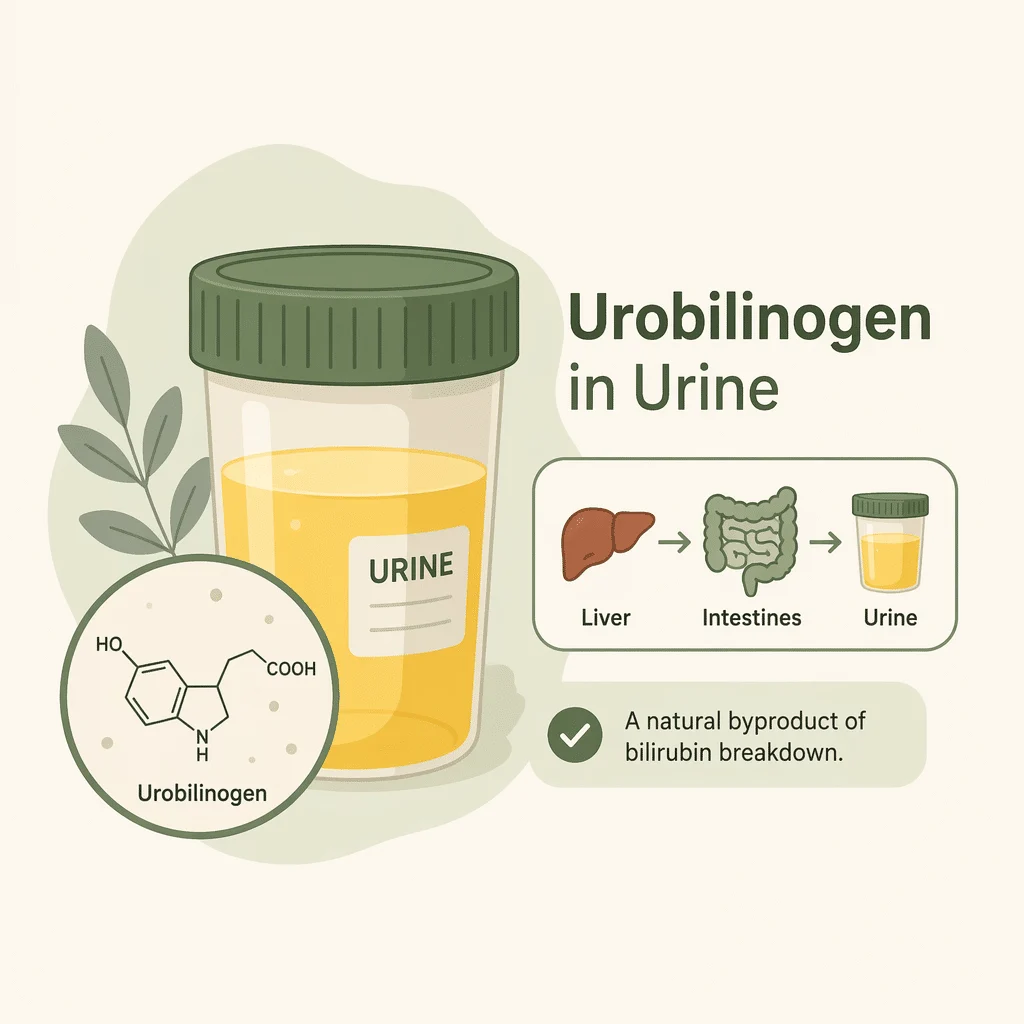
Urobilinogenul din urină este una dintre valorile chimice mici de pe o bandă reactivă pentru urină și este printre cele mai puțin înțelese. Spre deosebire de aproape orice altceva de pe acea bandă, o cantitate mică este normală și de așteptat la persoanele sănătoase. Este una dintre zonele reactive de pe un sumar de urină standard, iar ghidul nostru despre rezultatele sumarului de urină și cum să le citești acoperă restul testului.
În acest articol vei afla de unde provine de fapt urobilinogenul, de ce o cantitate mică este normală în urină, ce poate indica un rezultat crescut și ce poate indica un rezultat absent, de ce acest pad specific este nesigur și care teste răspund cu adevărat la întrebare. Pe scurt: o valoare izolată anormală a urobilinogenului, la o persoană fără simptome și cu analize de sânge normale, de cele mai multe ori nu înseamnă nimic.
Ce este urobilinogenul și de unde provine
Urobilinogenul nu este produs de ficatul tău sau de rinichii tăi. Este produs de bacteriile din intestinul tău. Urmărind lanțul de la început până la sfârșit, restul acestui articol devine mult mai ușor de citit.
Globulele roșii trăiesc aproximativ patru luni. Când se uzează, organismul le descompune și recuperează fierul. Ce rămâne din pigmentul roșu din interiorul lor devine bilirubină, un pigment galben-portocaliu rezultat din metabolism.
Bilirubina călătorește prin sânge până la ficat. Ficatul îi atașează o moleculă de zahăr, ceea ce o face solubilă în apă, apoi o elimină în bilă. Bila coboară prin canalele biliare, trece pe lângă vezica biliară și ajunge în intestinul subțire.
Odată ce bilirubina ajunge în intestinul gros, bacteriile intestinale încep să acționeze asupra ei. Ele îndepărtează molecula de zahăr și reduc pigmentul, iar produsul acestei reacții este urobilinogenul. Nicio altă structură din organism nu îl produce.
De ce scaunul este maro și urina este galbenă
Cea mai mare parte a urobilinogenului produs în intestin nu îl părăsește niciodată. Este transformat în continuare în stercobilină și este eliminat prin scaun — acesta este motivul pentru care scaunul normal are culoarea maro. De aceea, culoarea scaunului tău contează atât de mult mai târziu în acest articol: atunci când bila încetează să mai ajungă, pigmentul maro nu mai este produs.
O mică parte din urobilinogen este reabsorbită prin peretele intestinal în fluxul sanguin. Cea mai mare parte revine la ficat și este trimisă din nou prin bilă, un circuit cunoscut sub numele de circulație enterohepatică. O mică cantitate scapă de ficat, ajunge la rinichi și este filtrată în urină. În contact cu aerul și lumina, se oxidează în urobilină, unul dintre pigmenții care dau urinei culoarea galbenă.
Prin urmare, o urmă de urobilinogen în urină nu reprezintă o scurgere sau o anomalie. Este capătul firesc al unui lanț lung și normal, și unul dintre motivele pentru care urina are culoare.
De ce o cantitate mică este normală și cum diferă de bilirubina din urină
Majoritatea bandeletelor reactive raportează urobilinogenul în miligrame pe decilitru, folosind un set fix de blocuri de culoare: de obicei 0,2, 1, 2, 4 și 8 mg/dL. Multe bandelete etichetează cel mai mic bloc drept „normal" în loc de zero, deoarece metoda chimică nu poate distinge cu precizie o urmă sănătoasă de absența completă a substanței.
Acest lucru contează, deoarece foarte mulți oameni caută ce înseamnă un urobilinogen de 0,2. Pe majoritatea bandeletelor, 0,2 mg/dL reprezintă blocul normal. Este rezultatul așteptat la o persoană sănătoasă, nu unul ușor anormal. Un rezultat de 1,0 mg/dL se încadrează tot în intervalul pe care multe laboratoare îl consideră normal, iar valorile de referință diferă de la un producător la altul, deci intervalul tipărit pe propriul tău buletin de analize este cel care se aplică în cazul tău.
Pătrățelul pentru bilirubină de lângă el este cel mai informativ
Chiar lângă urobilinogen, pe aceeași bandeletă, se află pătrățelul pentru bilirubină, iar cele două se comportă în mod opus. Bilirubina nu ar trebui să fie detectabilă în urină deloc. Orice bilirubină detectabilă în urină este anormală și indică o problemă la nivelul ficatului sau al căilor biliare, ceea ce o face un indicator mult mai util decât o valoare neobișnuită a urobilinogenului.
Dacă ambele paduri sunt marcate sau dacă doar bilirubina este pozitivă, investigațiile ulterioare includ de obicei analize de sânge precum bilirubina totală și directă și nu prin bandeletă.
Ce poate însemna un rezultat crescut al urobilinogenului
Un rezultat crescut al urobilinogenului are două mecanisme posibile, plus o explicație foarte obișnuită care nu are nicio legătură cu o boală.
Producție crescută de bilirubină
Dacă globulele roșii se distrug mai repede decât de obicei, se produce mai multă bilirubină, mai multă ajunge în intestin, se produce mai mult urobilinogen și mai mult apare în urină. Distrugerea accelerată a globulelor roșii se numește hemoliză. Poate fi ereditară, ca în sferocitoza ereditară sau deficitul de G6PD, sau dobândită, cum ar fi atunci când sistemul imunitar atacă globulele roșii sau o valvă cardiacă mecanică le deteriorează.
Hemoliza rareori se manifestă doar printr-un test cu bandelete. De obicei apare împreună cu simptome de anemie: oboseală, paloare, dificultăți de respirație la efort, uneori o nuanță gălbuie a ochilor și urină mai închisă la culoare. Dimensiunea globulelor roșii, raportată ca MCV scăzut sau MCV crescut, este unul dintre primele lucruri pe care un medic le analizează pentru a stabili cauza.
Un ficat care nu procesează ceea ce îi revine
Celălalt mecanism este un ficat care nu poate reprocesa urobilinogenul care îi revine prin circuitul enterohepatic. Ce scapă ajunge în schimb la rinichi. Hepatita, fie virală, autoimună sau legată de consumul de alcool, și ciroza pot provoca ambele acest lucru, la fel ca și leziunile cauzate de un medicament sau un supliment, dar și supraîncărcarea cu fier în hemocromatoză.
Din nou, citirea unei bandelete nu este modul în care se pune acest diagnostic. Problemele hepatice sunt evaluate prin analize de sânge precum ALT, AST și mai largul panel de funcție hepatică, și, acolo unde este relevant, prin teste pentru hepatită, cum ar fi anti-HCV și antigen HBs.
O probă concentrată
Cea mai frecventă explicație dintre toate este și cea mai puțin îngrijorătoare. O probă deshidratată și concentrată crește aparent nivelul aproape tuturor valorilor măsurate pe bandeletă, inclusiv al urobilinogenului. Un tranzit intestinal lent poate și el să-l ridice ușor, oferind bacteriilor intestinale mai mult timp să acționeze. Niciuna dintre acestea nu reprezintă o boală.
Ce poate însemna un rezultat absent sau scăzut al urobilinogenului
Paradoxal, constatarea care oferă informații mai specifice este cea scăzută, deoarece există cu adevărat o singură modalitate prin care urobilinogenul poate înceta să fie produs.
Când bila nu poate ajunge în intestin
Dacă bila nu poate ajunge din ficat în intestin, bilirubina nu mai ajunge niciodată acolo, bacteriile intestinale nu au nimic de prelucrat și nu se produce urobilinogen. Această blocare se numește colestază sau obstrucție biliară. Poate fi cauzată de un calcul biliar blocat în canalul biliar, de cicatrizări care au îngustat canalul sau de o tumoare a pancreasului ori a canalului biliar care apasă asupra acestuia.
Tabloul clinic care însoțește această situație merită descris clar, deoarece el este cel care conduce de fapt la un diagnostic: scaune palide, de culoarea argilei, împreună cu urină închisă la culoare și îngălbenirea albului ochilor sau a pielii. Scaunul își pierde pigmentul brun pentru că acesta nu mai este produs, iar urina se închide la culoare deoarece bilirubina care nu poate fi eliminată prin intestin este eliminată prin rinichi. Dacă observi această combinație, este nevoie de o evaluare promptă, nu la următoarea ta consultație de rutină.
Antibioticele recente și probele vechi
Există o explicație mult mai frecventă și complet benignă pentru un rezultat scăzut sau absent. Antibioticele cu spectru larg reduc bacteriile intestinale care produc urobilinogenul. După o cură recentă, un rezultat scăzut este de așteptat și nu spune nimic despre ficatul tău.
Cealaltă explicație frecventă este proba în sine. Urobilinogenul se degradează la expunerea la lumină și la temperatura camerei, astfel că o probă care a stat într-o mașină caldă sau pe pervaz poate da un rezultat scăzut pur și simplu pentru că substanța s-a degradat înainte ca bandeleta să o atingă. Acesta este singurul detaliu de recoltare care contează cu adevărat pentru acest câmp: du proba la laborator rapid și ferește-o de lumina directă.
De ce bandeleta pentru urobilinogen nu este un test de încredere
Acesta este aspectul care de obicei nu este menționat și este cel mai util lucru de știut dacă o singură săgeată pe un buletin de analize te-a îngrijorat.
Bandeleta pentru urobilinogen are sensibilitate și specificitate limitate. Este o potrivire de culoare față de blocuri tipărite, nu o măsurătoare. Se degradează la expunerea la lumină și la temperatura camerei și dă rezultate nesigure pe o probă care a stat. Este influențată de gradul de aciditate sau alcalinitate al probei, de aceea pH-ul urinei este citit alături de acesta, iar nitritul din probă poate suprima reacția și poate produce un rezultat fals scăzut. Sângele vizibil în probă interferează puternic cu mai multe zone ale bandeletei, inclusiv cu cea pentru urobilinogen.
Medicamentele adaugă un alt nivel de complexitate. Fenazopiridinul, folosit pentru disconfortul urinar, colorează urina în portocaliu intens și poate denatura complet citirea culorii. Antibioticele sulfonamide și anumite alte medicamente pot crește fals valoarea. Urina puternic colorată, indiferent de cauză, face citirea mai dificilă. Dacă iei un medicament care ar putea influența rezultatul, spune-i medicului care a solicitat testul; nu îl opri din proprie inițiativă.
Din toate aceste motive, mai multe organisme de laborator și evaluatori de metode au pus la îndoială dacă urobilinogenul merită locul său pe bandeletă, iar unele laboratoare au încetat să îl raporteze. Consecința practică pentru tine este simplă: un urobilinogen anormal izolat, fără simptome și cu analize de sânge normale, nu înseamnă de cele mai multe ori nimic.
Ce înseamnă de obicei rezultatul tău și ce analize răspund la întrebare
Tabelul de mai jos prezintă situațiile care apar cel mai des. Este un ghid de proporție, nu un diagnostic.
| Ce arată rezultatul | Ce înseamnă de obicei | Ce să faci |
|---|---|---|
| O cantitate mică detectată, de exemplu 0,2 mg/dL | Rezultatul normal așteptat | Nimic. Acesta este aspectul unui rezultat sănătos |
| Ușor crescut, fără simptome, analize de sânge normale | Cel mai adesea o probă concentrată sau limitele zonei de reacție în sine | Menționează-l la următoarea consultație; o repetare pe o probă proaspătă rezolvă de obicei problema |
| Crescut, însoțit de oboseală, paloare sau lipsă de aer | Ridică întrebarea privind o distrugere accelerată a globulelor roșii | Consultați un medic. O hemogramă completă și markerii de hemoliză oferă răspunsul |
| Crescut la o persoană cu boală hepatică cunoscută | Poate reflecta o eliminare redusă de către ficat | Semnalați-l echipei care vă urmărește deja, în loc să acționați pe cont propriu |
| Absent sau scăzut, cu scaune decolorate, urină închisă la culoare și ochi galbeni | Sugerează că bila nu ajunge în intestin | Solicitați o evaluare medicală prompt, fără să așteptați o programare de rutină |
| Absent sau scăzut după antibiotice recente sau într-o probă care a stat prea mult | Frecvent, benign și așteptat | Menționați acest lucru când se revizuiește rezultatul; de obicei, o repetare pe o probă proaspătă este suficientă |
Analizele care răspund cu adevărat la întrebare
Urobilinogenul nu este folosit singur pentru a diagnostica nimic. Când o problemă hepatică este cu adevărat în discuție, răspunsurile vin din sânge: bilirubina totală și directă, ALT, AST, fosfataza alcalină și GGT, interpretate împreună, nu pe rând.
Când întrebarea privește o distrugere accelerată a globulelor roșii, panelul include o hemogramă completă cu reticulocite, LDH și haptoglobina, plus examinarea frotiului de sânge. Acolo unde se suspectează o obstrucție, investigațiile imagistice preiau rolul principal: mai întâi o ecografie a ficatului și a căilor biliare, apoi investigații mai detaliate dacă este necesar.
O precauție cât timp așteptați răspunsurile. Produsele comercializate ca detoxifianți sau cure de curățare a ficatului sunt suplimente alimentare, nu medicamente, și sunt mult mai puțin strict reglementate. Unele suplimente pe bază de plante și suplimente alimentare sunt ele însele o cauză recunoscută de afectare hepatică. Dacă un supliment se află pe lista ta, menționează-l medicului tău în loc să mai adaugi unul.
Când să ceri ajutor medical
Majoritatea valorilor anormale ale urobilinogenului reprezintă zgomot de fond. Acestea sunt situațiile care nu sunt, și niciuna dintre ele nu ar trebui ignorată pe motiv că zona de reacție este nesigură.
Solicitați îngrijire medicală fără întârziere dacă aveți oricare dintre următoarele.
- Îngălbenirea albului ochilor sau a pielii
- Scaune palide, de culoarea lutului, împreună cu urină închisă la culoare
- Durere abdominală severă, mai ales în partea superioară dreaptă, însoțită de febră
- Vărsături cu sânge sau scaune negre, ca smoala
- Confuzie sau somnolență neobișnuită la o persoană cu boală hepatică cunoscută
- Dificultăți de respirație cu paloare și urină închisă la culoare, care pot indica o distrugere rapidă a globulelor roșii
În afara acestor situații, un rezultat al urobilinogenului care se află în afara intervalului de referință merită totuși menționat medicului tău, mai ales dacă te simți rău, dacă persistă la o probă repetată sau dacă și alți markeri din același buletin sunt semnalați. Liniștirea și ignorarea nu sunt același lucru.
Cele mai recente progrese științifice în testarea urobilinogenului
Cercetările publicate după 2023, identificate prin PubMed, au evoluat în două direcții simultan: o înțelegere mult mai bună a modului în care se formează urobilinogenul și o analiză mai precisă a comportamentului benzii reactive din testul cu dipstick.
S-a demonstrat că bacteriile intestinale dețin enzima cheie
Ce s-a descoperit: cercetătorii au descris bilirubin reductaza, enzima bacteriană din intestin care transformă bilirubina în urobilinogen, și au identificat care specii intestinale o conțin.
Ce înseamnă asta pentru tine: explică la nivel mecanic de ce orice perturbare a bacteriilor intestinale — în special un tratament recent cu antibiotice — poate scădea valoarea urobilinogenului tău fără ca ficatul sau căile biliare să aibă vreo problemă.
Ruta bilirubinei a fost cartografiată de la un capăt la altul
Ce s-a descoperit: o analiză din 2025 a urmărit bilirubina de la descompunerea globulelor roșii prin ficat, în bilă, în intestin și înapoi în circulație, inclusiv momentul în care microbiomul o transformă în urobilinogen și urobilină.
Ce înseamnă asta pentru tine: urobilinogenul din urină reprezintă capătul îndepărtat al unui lanț lung. Multe lucruri obișnuite de-a lungul acestui lanț pot influența rezultatul, ceea ce explică în mare parte de ce funcționează slab ca test de sine stătător.
Sângele din probă perturbă banda de urobilinogen
Ce s-a descoperit: o evaluare de laborator a unui strip standard cu zece parametri a arătat că urina vizibil sângeroasă a cauzat interferențe semnificative pe mai multe zone reactive, inclusiv pe cea pentru urobilinogen, și că centrifugarea probei nu a eliminat problema.
Ce înseamnă asta pentru tine: dacă proba ta conținea sânge vizibil, inclusiv sânge menstrual, rezultatul urobilinogenului nu trebuie luat ca atare. Merită să menționezi acest lucru persoanei care a recoltat proba.
Întârzierea modifică unele componente ale probei mai mult decât altele
Ce s-a descoperit: un studiu mic a testat urina în mod repetat timp de șase ore la temperatura camerei. Celulele și cilindrii urinari s-au modificat vizibil în acest interval, în timp ce majoritatea citirilor de pe zonele chimice reactive, inclusiv urobilinogenul, s-au menținut mai stabile decât era de așteptat.
Ce înseamnă asta pentru tine: o întârziere scurtă nu compromite automat rezultatul. Urobilinogenul se degradează totuși la expunere prelungită și la lumină, așa că o probă proaspătă testată prompt rămâne cel mai sigur mod de a obține un rezultat pe care să te poți baza.
Măsurarea precisă este explorată în bolile hepatice
Ce s-a descoperit: un studiu de metabolomică care a comparat sângele și urina persoanelor cu ciroză și a voluntarilor sănătoși a identificat urobilinogenul și urobilina printre puținele substanțe care difereau în ambele fluide.
Ce înseamnă asta pentru tine: urobilinogenul oferă informații reale despre funcția hepatică și biliară. Dar cercetarea îl măsoară cu instrumente de laborator, nu cu un bloc de culoare pe un strip. Tocmai de aceea un rezultat de pe bandeleta urinară este un semnal că trebuie investigat mai departe, nu un răspuns în sine.
Întrebări frecvente
Este normal să ai urobilinogen în urină?
Da. O cantitate mică de urobilinogen în urină este normală și așteptată la persoanele sănătoase, deoarece bacteriile intestinale îl produc zilnic, iar o parte din el este reabsorbită și eliminată de rinichi. Aceasta este diferența față de zona pentru bilirubină de pe același strip, unde orice rezultat detectabil este anormal. Majoritatea stripurilor etichetează cel mai mic bloc drept normal, nu zero. Prin urmare, a vedea o valoare a urobilinogenului în buletinul tău de analize nu este, în sine, un semn că ceva nu este în regulă.
Ce înseamnă urobilinogen 0,2 în urină?
Pe majoritatea benzilor reactive, 0,2 mg/dL este cel mai mic bloc tipărit și reprezintă rezultatul normal. Nu înseamnă că a fost detectată o cantitate mică acolo unde nu ar trebui să existe nimic; înseamnă că valoarea se situează acolo unde este de așteptat o lectură sănătoasă. Unii producători folosesc 1,0 mg/dL ca limită superioară a normalului. Deoarece blocurile și valorile de referință diferă de la o bandă la alta, intervalul de referință tipărit pe propriul tău buletin de analiză este cel cu care trebuie să compari, nu o valoare găsită online.
Ce înseamnă urobilinogenul crescut în urină?
Poate indica faptul că se produce mai multă bilirubină, de obicei pentru că globulele roșii se descompun mai repede decât normal, sau că ficatul nu elimină urobilinogenul care îi revine. Poate reflecta și o probă concentrată din cauza unei deshidratări ușoare sau o particularitate a benzii de testare. Singur, un rezultat crescut nu pune niciun diagnostic. Ceea ce contează este imaginea de ansamblu: dacă ai simptome și ce arată analizele de sânge.
Ar trebui să mă îngrijorez dacă am o singură valoare anormală a urobilinogenului?
De obicei, nu. Zona reactivă pentru urobilinogen are o sensibilitate și specificitate limitate, se degradează la lumină și căldură, reacționează la aciditatea probei și poate fi influențată de medicamente sau de prezența sângelui în probă. O valoare anormală izolată la o persoană care se simte bine și are analize de sânge normale reflectă adesea limitele testului, nu o problemă reală. Menționează acest lucru medicului tău și întreabă dacă merită să repeți analiza pe o probă proaspătă, dar o singură săgeată pe un buletin de analiză este rareori semnul unei probleme grave.
Ce înseamnă un rezultat negativ sau absent al urobilinogenului?
Cel mai adesea înseamnă că proba a stat prea mult sau a fost expusă la lumină, ori că ai luat recent antibiotice cu spectru larg care au redus bacteriile intestinale ce produc urobilinogen. Ambele situații sunt benigne. Rezultatul care contează cu adevărat este cel absent, însoțit de scaune palide, de culoarea argilei, urină închisă la culoare și îngălbenirea ochilor sau a pielii, deoarece această combinație sugerează că bila nu ajunge în intestin și necesită o evaluare medicală promptă.
Pot medicamentele sau alimentele să îmi modifice rezultatul urobilinogenului?
Da. Fenazopiridinul colorează urina în portocaliu intens și poate face zona reactivă ilizibilă. Antibioticele sulfonamide și alte medicamente pot crește fals valoarea, în timp ce nitritul din probă o poate scădea fals. Antibioticele cu spectru larg o reduc prin acțiunea asupra bacteriilor intestinale. Consumul mare de lichide diluează proba, iar deshidratarea o concentrează. Spune-i medicului care a solicitat analiza ce medicamente iei și nu opri niciodată din proprie inițiativă un medicament prescris din cauza unui rezultat pe bandă reactivă.
Glosar de termeni cheie
| Termen | Definiție |
|---|---|
| Urobilinogen | O substanță incoloră produsă de bacteriile intestinale din bilirubină; o cantitate mică ajunge în mod normal în urină |
| Urobilina | Substanța în care se transformă urobilinogenul când este expus la aer și lumină; unul dintre pigmenții care dau urinei culoarea galbenă |
| Bilirubină | Pigmentul galben-portocaliu produs când globulele roșii uzate sunt descompuse |
| Bilă | Lichidul produs de ficat care transportă bilirubina și sărurile biliare în intestin |
| Circulația enterohepatică | Circuitul prin care substanțele absorbite din intestin se întorc la ficat și sunt eliminate din nou prin bilă |
| Hemoliză | Distrugerea globulelor roșii mai rapidă decât normalul |
| Colestaza | Reducerea sau blocarea fluxului de bilă din ficat în intestin |
| Icter | Îngălbenirea pielii și a albului ochilor cauzată de acumularea de bilirubină |
| Bandeletă reactivă | Bandeleta de plastic cu zone reactive chimice care își schimbă culoarea când este introdusă în urină |
Surse
- National Institute of Diabetes and Digestive and Kidney Diseases. Liver Disease.
- National Institute of Diabetes and Digestive and Kidney Diseases. Gallstones.
- MedlinePlus Medical Encyclopedia, National Library of Medicine. Urine – abnormal color.
- LiverTox: Clinical and Research Information on Drug-Induced Liver Injury. National Institute of Diabetes and Digestive and Kidney Diseases, NCBI Bookshelf.
- National Center for Complementary and Integrative Health. Milk Thistle: Usefulness and Safety.
- Vitek L, Tiribelli C. Gut microbiota and bilirubin metabolism: unveiling new pathways in health and disease. Trends in Molecular Medicine, 2025.
- Kipp ZA, Pauss SN, Martinez GJ, Hinds TD, Lee WH. Bilirubin Hepatic and Intestinal Transport and Catabolism: Physiology, Pathophysiology, and Benefits. Antioxidants, 2025.
- Robinson JL, Bharti V. Evaluation of hemoglobin interference thresholds for chemical urinalysis panels. Clinical Biochemistry, 2026.
- Parikh PC, Souza SD, Obeid W. Changes in the composition of urine over six hours using urine dipstick analysis and automated microscopy. BMC Nephrology, 2025.
- Li X, Wang R, Zhou H, Li R, Chang H, Shi S. Serum-urine metabolic integration via UPLC-QTOF/MS uncovers shared pathway biomarkers for cirrhosis diagnosis. Frontiers in Medicine, 2026.
Lectură suplimentară
- Rezultatele sumarului de urină: ghid de interpretare
- Testul bilirubinei directe: înțelege-ți rezultatele
- Reticulocite: ghidul complet al analizei tale de sânge
- Cristale în urină: cauze și riscuri
- Creatinina urinară: ghid și interpretare
Un rezultat al urobilinogenului are sens doar alături de celelalte valori din jur: bilirubina, ALT, AST, fosfataza alcalină și hemoleucograma completă. AI DiagMe îți explică raportul pe înțelesul tău și îți arată cum se leagă aceste cifre între ele, astfel încât să ajungi la consultație cu întrebări mai bune. Te ajută să îți înțelegi rezultatele; nu pune diagnostice și nu înlocuiește medicul tău.
Înțelege-ți rezultatele analizelor cu AI DiagMe
Obține interpretarea rezultatelor în câteva minute