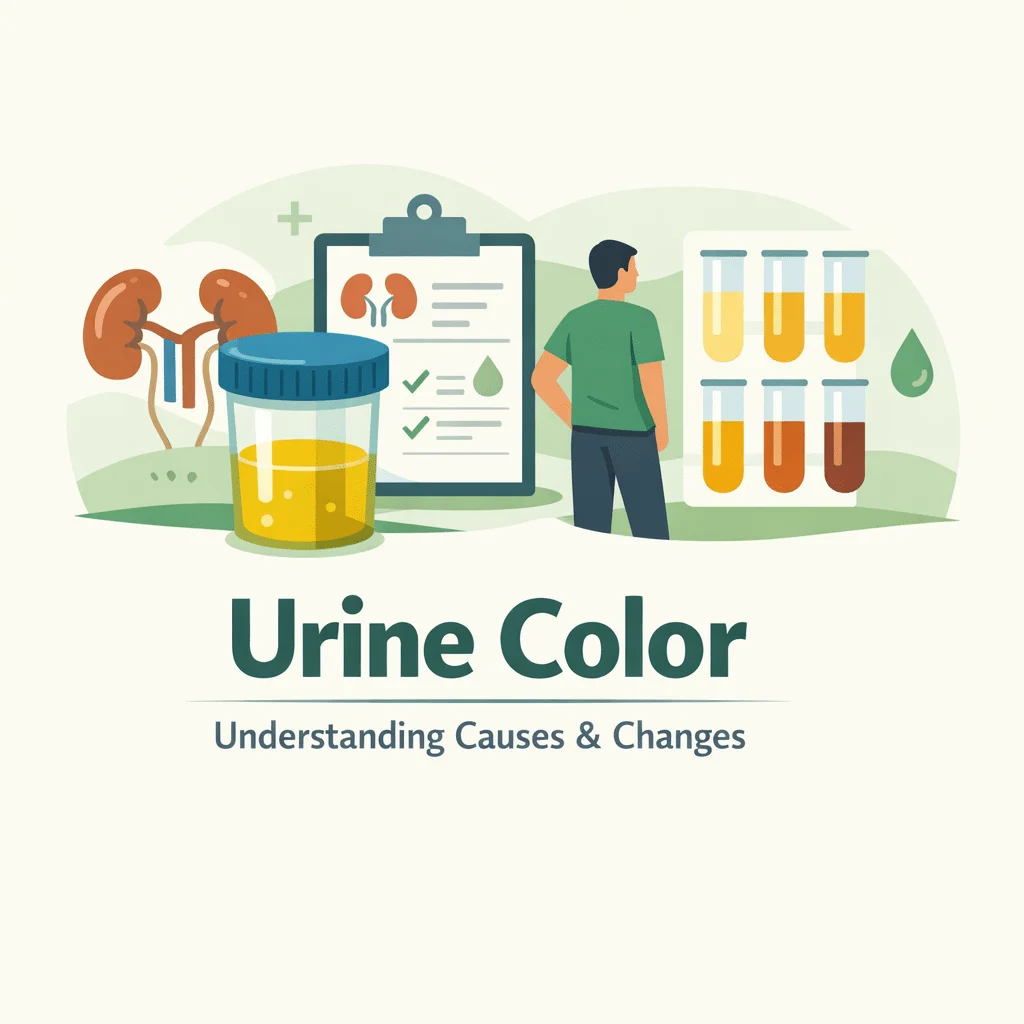
Culoarea urinei se schimbă pe parcursul zilei, iar în cele mai multe cazuri asta nu înseamnă altceva decât cât ai băut și când. Uneori, însă, poate semnala ceva mai important. În acest articol vei afla ce indică fiecare nuanță – de la galben-pai deschis și chihlimbar închis, până la galben neon, portocaliu, roșu, maro, verde și chiar violet –, care culori pot fi explicate de o salată cu sfeclă roșie sau de un medicament nou, și care necesită un apel la medic chiar astăzi. Vei găsi și un ghid vizual nuanță cu nuanță, plus o listă scurtă cu situații care necesită atenție în aceeași zi. Culoarea este un semnal că merită să privești mai atent. Prin ea însăși, nu reprezintă niciodată un diagnostic.
Ce îți spune culoarea urinei și ce nu poate ea să îți spună
Pigmentul din spatele culorii galbene
Urina își datorează culoarea galbenă caracteristică urocromului, un pigment rezultat în urma reciclării globulelor roșii uzate. Rinichii elimină zilnic o cantitate relativ constantă din acest pigment, dizolvat în apa disponibilă. Dacă bei suficientă apă, cantitatea fixă de pigment se diluează în mai mult lichid, iar urina devine mai deschisă la culoare. Dacă bei puțin, pigmentul se concentrează și urina se închide la culoare. Acest mecanism simplu explică majoritatea variațiilor zilnice pe care le observă o persoană sănătoasă.
Culoarea este un semnal, nu un test
Ochiul nu poate stabili singur o cauză. O urină închisă la culoare poate reflecta opt ore de somn sau un canal biliar blocat – și cele două arată identic. Roșul poate fi sânge sau poate fi sfecla roșie de aseară. Când o nuanță ridică un semn de întrebare, răspunsul vine din laborator, iar echipa noastră explică analiza chimică a unei probe de urină. O bandeletă de testare detectează globulele roșii cu mult înainte ca urina să pară roz, motiv pentru care o probă cu aspect normal nu anulează niciodată una îngrijorătoare.
Un tehnician poate examina și sedimentul probei la microscop, iar noi descriem particulele în formă de tub formate în tubii renali.
Scala de hidratare, de la galben-pai deschis la chihlimbar închis
Unde se situează de obicei urina sănătoasă
De-a lungul unei zile normale, majoritatea oamenilor au urina între un galben pai foarte deschis și un galben mediu. Prima probă după o noapte de somn este cea mai închisă la culoare, deoarece rinichii concentrează urina pe parcursul nopții pentru a economisi apă; acesta este un proces fiziologic normal, nu un semnal de alarmă. Apreciază culoarea urinei tale în raport cu gama pe care o observi personal pe parcursul unei săptămâni, nu în comparație cu o nuanță ideală, deoarece alimentația, clima și medicamentele influențează toate valoarea de referință.
Urina care rămâne închisă la culoare după o zi în care ai băut lichide în mod regulat merită atenție, mai ales dacă apare și gura uscată, amețeală la ridicarea în picioare sau o cantitate mult mai mică de urină decât de obicei. Pierderea de lichide afectează atât circulația, cât și rinichii, iar biblioteca noastră acoperă legătura dintre deshidratare și tensiunea arterială.
Limitele reale ale evaluării hidratării după culoarea urinei
Tabelele de culori sunt populare pentru că nu costă nimic, dar sunt imprecise. Lumina, recipientul și adâncimea probei pot schimba citirea. Vitaminele, coloranții alimentari și unele medicamente anulează complet semnalul de hidratare, iar o singură probă reflectă ultima oră sau două, nu întreaga săptămână.
De ce galbenul neon este aproape întotdeauna din cauza vitaminelor
Un galben fluorescent strident îngrijorează mulți oameni, însă este una dintre cele mai inofensive modificări posibile. Riboflavina, o vitamină din grupul B, este intens galbenă și se stochează cu greu în organism, astfel că surplusul este eliminat direct prin urină. Multivitaminele, complexele de vitamina B și băuturile energizante o produc toate, iar culoarea dispare la una-două zile după întreruperea lor. Ghidul nostru prezintă rolul și testarea vitaminei B12.
Un grafic al culorilor urinei, nuanță cu nuanță
Tabelul de mai jos prezintă ce observă cel mai des oamenii, explicațiile obișnuite și inofensive, cauzele medicale care merită luate în considerare și cât de repede ar trebui verificată fiecare nuanță.
| Nuanța observată | Explicații comune și inofensive | Posibile cauze medicale | Când să mergi la medic |
|---|---|---|---|
| Pal, aproape transparent | Un volum mare de lichid băut rapid; cafea sau bere | Rar, o problemă hormonală sau diabet | Doar dacă există volume mari constante și sete |
| Galben pai până la galben deschis | Urină normală, hidratare bună | Niciuna; acesta este intervalul obișnuit | Nu este necesară nicio acțiune |
| Galben închis până la chihlimbariu | Prima urină de dimineață; o zi călduroasă; efort fizic intens | Pierdere continuă de lichide prin vărsături, diaree sau febră | Dacă rămâne închisă la culoare după o zi de hidratare normală |
| Galben neon strălucitor | Vitaminele din grupul B, în special riboflavina | Niciuna; excesul este pur și simplu eliminat | Nu este necesară nicio acțiune; dispare în una-două zile |
| Portocaliu | Fenazopiridinã; rifampicină; sulfasalazină; beta-caroten în exces | Pigment biliar pe care ficatul nu îl elimină | În aceeași săptămână, mai repede dacă apar ochi galbeni sau scaune decolorate |
| Roșu sau roz | Sfeclă roșie, mure, rubarbă; rifampicină; sânge menstrual în probă | Sânge din orice segment al tractului urinar: infecție, calculi, prostată, boală renală, tumoră | Urgent, la orice vârstă, chiar și o singură dată, chiar și fără durere |
| Maro, culoarea ceaiului sau a colei | Fasole fava; metronidazol, nitrofurantoină; deshidratare severă | Descompunere musculară după efort extrem; boală hepatică sau a căilor biliare | În aceeași zi după un antrenament intens sau dacă există dureri musculare |
| Galben-verzui sau verde-albăstrui | Coloranți alimentari; albastru de metilen; propofol; amitriptilină | Anumite infecții bacteriene | În aceeași săptămână dacă nu există o explicație, mai repede dacă apare febră |
| Violet, în punga de cateter | Niciuna; nu apare într-o probă proaspătă | Sindromul pungii de urină violet, o reacție bacteriană cu pigment | În aceeași zi, pentru a putea fi testată urina |
| Tulbure sau lăptos | O probă foarte concentrată; cristale care se formează pe măsură ce urina se răcește; secreții | Infecție urinară sau calculi renali | În aceeași săptămână, sau în aceeași zi dacă apare febră sau durere de spate |
| Cu spumă sau bule | Un jet puternic; un vas de toaletă curățat recent | Proteine care se scurg prin filtrele renale | În aceeași lună dacă apare la fiecare urinare |
Două reguli fac tabelul mai sigur. O explicație inofensivă este valabilă doar dacă este cu adevărat prezentă: sfecla explică urina roz dacă ai mâncat sfeclă, altfel nu. Și momentul apariției contează mai mult decât intensitatea culorii.
Urină roșie, roz, maro și de culoarea colei
Când roșul vine de la alimente sau medicamente
Sfecla roșie este vinovatul clasic, iar aproximativ una din șapte persoane prezintă o colorație roz convingătoare după o porție normală. Murele și ruba fac ceva similar. Dintre medicamente, rifampicina, un antibiotic folosit pentru tuberculoză, colorează urina în roșu-portocaliu intens, iar fenazopiridinul, luat pentru senzația de arsură în timpul unei infecții de vezică urinară, produce același efect. Dacă un medicament ți-a schimbat culoarea urinei, spune-i persoanei care ți l-a prescris și nu îl opri niciodată din proprie inițiativă.
Când roșul înseamnă sânge
Este nevoie de o cantitate surprinzător de mică de sânge pentru a colora o vezică urinară plină, motiv pentru care culoarea roșie sau roz vizibilă poate însoți la fel de ușor ceva minor sau ceva grav. Infecțiile, calculii renali, prostata mărită, inflamația rinichiului și tumorile se manifestă toate în acest mod, iar aspectul în sine nu le diferențiază. Sângerarea nedureroasă nu este un semn liniștitor. Prezentăm cauzele și investigațiile pentru sânge în urină.
Sfatul este simplu. Sângele vizibil în urină, la orice vârstă, chiar și un singur episod, chiar și fără durere, și chiar dacă proba următoare pare normală, necesită o evaluare medicală promptă. Nu aștepta să vezi dacă se mai întâmplă. Investigațiile pot include imagistică, o examinare a interiorului vezicii urinare și o analiză de laborator pentru celule anormale. Ghidul nostru acoperă examinarea microscopică a celulelor eliminate în urină.
O explicație inofensivă merită menționată: sângele menstrual în probă. Spune acest lucru atunci când se recoltează proba și repetă testul dacă există vreo îndoială.
Urină maro sau de culoarea colei după efort fizic intens
Urina maro după un efort neobișnuit de intens sau neobișnuit, mai ales unul cu mult alergat în coborâre, este tiparul pe care trebuie să îl cunoști. Mușchii deteriorați eliberează mioglobină, o proteină care stochează oxigenul, în sânge; rinichii o filtrează, iar aceasta colorează urina în culoarea ceaiului tare. Aceasta este rabdomioliza, iar riscul privește rinichii, nu mușchii. Biblioteca noastră explică ce înseamnă un rezultat crescut al mioglobinei.
Urina de culoare maro închis după un efort intens, mai ales însoțită de dureri musculare disproporționate față de efortul depus, slăbiciune sau o cantitate vizibil mai mică de urină decât de obicei, necesită îngrijire de urgență și trebuie evaluată în aceeași zi, nu amânată.
Urină maro din cauza ficatului și a medicamentelor
Când ficatul sau căile biliare nu elimină pigmentul biliar, acesta se revarsă în urină și o închide la culoare, spre nuanțe de cola sau ceai tare. Combinația care contează este urina închisă la culoare plus scaunele neobișnuit de deschise la culoare plus o tentă gălbuie a pielii sau a albului ochilor. Explicăm ce reflectă un rezultat al bilirubinei totale. Un ghid complementar acoperă cum să citești un panel hepatic.
Mai multe medicamente închid culoarea urinei fără a fi periculoase, printre care metronidazolul, nitrofurantoina și unele antimalarice. Fasolea fava poate face același lucru, iar deshidratarea severă singură poate duce urina la un maro închis. Din nou, consultă medicul prescriptor înainte de a opri tratamentul.
Urina portocalie, verde, albastră și mov
Portocaliu
Portocaliul are trei explicații obișnuite și una care merită atenție. Fenazopiridinul colorează urina într-un portocaliu intens în câteva ore și este de departe cea mai frecventă cauză; rifampicina și sulfasalazina produc același efect. Un consum ridicat de beta-caroten poate da o tentă portocalie, iar concentrarea simplă a urinei poate împinge culoarea chihlimbar spre portocaliu. Explicația care trebuie luată în serios este pigmentul biliar, iar semnul distinctiv este contextul în care apare: scaune deschise la culoare, mâncărime sau îngălbenirea ochilor.
Galben-verzui și verde-albăstrui
Nuanțele de verde și verde-albăstrui sunt izbitoare și, de obicei, banale. Coloranții alimentari sunt o cauză frecventă. Albastrul de metilen, folosit ca colorant medical, este inconfundabil. Propofol-ul, un anestezic utilizat pe scară largă, colorează urina în verde la unele persoane după operație, iar amitriptilina, indometacina și cimetidina au fost raportate că produc același efect. Unele infecții bacteriene modifică și ele culoarea urinei, de obicei însoțite de febră, senzație de arsură sau nevoia urgentă de a urina.
Culoarea mov în punga de cateter
Culoarea mov nu apare practic niciodată într-o probă de urină proaspăt recoltată. Aceasta apare în tubulatura și punga persoanelor cu catetere pe termen lung, unde bacteriile transformă un compus derivat din triptofanul alimentar în pigmenți roșii și albaștri care se combină și dau culoarea mov. Aspectul este alarmant, dar în sine nu este periculos; totuși, semnalează o infecție urinară și trebuie raportat în aceeași zi.
Urina tulbure și spumoasă – când textura contează mai mult decât culoarea
Tulbure sau lăptos
Tulbureala este mai puțin o schimbare de culoare și mai mult o schimbare a ceea ce transportă urina. O probă foarte concentrată arată adesea tulbure, iar cristalele care se formează pe măsură ce urina se răcește o pot tulbura fără să aibă vreo semnificație. Sperma, secrețiile vaginale sau mucusul pot produce același efect; ghidul nostru acoperă motivele pentru care apare mucus în urina. Varianta care necesită atenție este urina tulbure însoțită de febră, senzație de arsură, urgență urinară sau durere în flanc, care indică o posibilă infecție. Am tratat separat semnificația bacteriilor găsite în urină.
Cu spumă sau bule
Orice jet de urină produce bule. Distincția importantă de reținut este cea dintre spuma care se risipește în mai puțin de un minut și o spumă fină, persistentă, care rămâne la suprafață de fiecare dată. Spuma persistentă poate fi primul semn exterior că proteinele scapă prin filtrele rinichilor, ceea ce contează mai ales la persoanele cu diabet sau tensiune arterială ridicată. Viteza jetului și un vas de toaletă curățat recent pot produce o spumă inofensivă, așa că testul constă în repetare. Într-un alt articol analizăm cauzele și semnificația urinei spumoase.
Ce spun cercetările recente despre culoarea urinei
Culoarea urinei a fost studiată serios, mai ales la sportivi și la persoanele care lucrează în aer liber, deoarece este cel mai ieftin mod de a verifica hidratarea.
O singură probă oferă informații mai bune decât o zi întreagă
Într-un studiu din 2025, 73 de adulți tineri au colectat fiecare probă de urină pe parcursul a două zile, în timp ce cercetătorii au comparat o diagramă de culori tipărită cu un model de culoare tridimensional. Ambele metode au clasificat destul de bine o probă proaspătă ca diluată sau concentrată, dar ambele au dat rezultate mai slabe pe parcursul a 24 de ore complete. Ce înseamnă asta pentru tine: o singură probă este un instantaneu rezonabil, nu o notă pentru întreaga zi, iar o primă urină de dimineață de culoare închisă nu este dovada unei deshidratări cronice.
O analiză din 2024 privind metodele neinvazive de evaluare a hidratării a plasat scalele de culoare alături de senzorii de compoziție corporală și măsurătorile cardiace, concluzionând că niciuna nu este suficient de precisă de una singură. Ce înseamnă asta pentru tine: citește proba la lumină bună, într-un recipient de culoare deschisă, și combină culoarea urinei cu senzația de sete și frecvența cu care mergi la toaletă.
Urina de culoarea colei după efort fizic extrem este rară, dar reală
O analiză sistematică din 2024 a adunat 15 studii pe alergători de ultra-distanță pe trasee montane, în total 348 de atleți. Markerii de leziuni musculare au crescut semnificativ după aceste curse, mai ales pe traseele cu coborâri lungi, deoarece alergatul la vale solicită mușchii mai mult decât urcatul. Totuși, rabdomioliza de efort confirmată a fost diagnosticată la un singur alergător din toate acele studii. Ce înseamnă asta pentru tine: mușchii dureroși după un efort intens sunt ceva obișnuit, dar mușchii dureroși însoțiți de urină de culoare maro-închis nu sunt, iar această combinație necesită o consultație în aceeași zi.
De ce sângele vizibil este tratat ca un semnal de alarmă
O analiză clinică din 2025 privind gestionarea sângelui în urină a subliniat un aspect clar: sângele vizibil este în sine un semn de alarmă, iar riscul vine de obicei din întârziere, nu din sângerare. Ce înseamnă asta pentru tine: urina vizibil roșie, roz sau de culoarea colei merită o programare promptă, chiar dacă s-a întâmplat o singură dată și nu a durut nimic.
Două schimbări de culoare surprinzătoare cu explicații simple
Într-un studiu mic din 2026, fiecare adolescent care lua mesalamină, un antiinflamator intestinal frecvent utilizat, a observat că proba de urină devenea maro în momentul în care se adăuga înălbitor de uz casnic. Ce înseamnă asta pentru tine: dacă iei mesalamină și apa din vasul de toaletă devine maro după curățare, este vorba de o reacție cu produsul de curățenie, nu de sângerare, așa că menționează acest lucru medicului care ți-a prescris tratamentul, în loc să oprești medicamentul.
Sindromul pungii de urină violet este suficient de bine cunoscut încât are propriul nume și o serie constantă de rapoarte de caz publicate la persoane cu catetere pe termen lung. Ce înseamnă asta pentru tine: colorarea în violet a pungii de cateter este un semnal medical, nu o defecțiune tehnică, și necesită un apel telefonic în aceeași zi.
Când să mergi la medic pentru o schimbare a culorii urinei
Consultați un medic în aceeași zi
- Orice nuanță vizibilă de roșu, roz sau cola care ar putea fi explicată de prezența sângelui, indiferent dacă există sau nu durere.
- Urină maro după efort fizic intens, mai ales dacă este însoțit de dureri musculare, slăbiciune sau cantitate redusă de urină.
- Urină închisă la culoare cu scaune decolorate, mâncărime sau îngălbenirea pielii sau a ochilor.
- Orice schimbare de culoare însoțită de febră, frisoane sau durere în spate ori în lateral.
- Colorare violet sau albastră în punga unui cateter urinar.
- Eliminarea aproape deloc de urină pe parcursul unei zile.
Programează o consultație de rutină
- Urină tulbure care reapare în mod repetat.
- Spumă persistentă la aproape fiecare urinare, care nu se dispersează.
- Urină care rămâne închisă la culoare chiar și după o zi întreagă de hidratare.
- O nuanță portocalie sau verde pe care niciun aliment, supliment sau medicament nu o explică.
- O schimbare apărută după începerea unui nou tratament prescris.
De obicei se rezolvă de la sine
- Galben aprins după un multivitamin, un supliment de complex B sau o băutură energizantă.
- Roz după sfeclă roșie, mure sau rubarbă, care dispare în una-două zile.
- O primă urină de dimineață de culoare închisă care se deschide la culoare după ce bei ceva.
- Urină foarte deschisă la culoare după consumul rapid al unui volum mare de lichide.
- Spumă ușoară formată dintr-un jet puternic, care dispare pe măsură ce o privești.
Adu trei informații la programare: când a apărut schimbarea, ce altceva s-a schimbat în același timp — inclusiv medicamente noi, suplimente și alimente — și dacă te doare ceva. Aceste răspunsuri scurtează investigația mai mult decât nuanța în sine.
Întrebări frecvente
Ce culoare a urinei este periculoasă?
Nicio nuanță nu este periculoasă în sine, dar trei necesită acțiune rapidă. Culoarea roșie sau roz vizibilă, care ar putea fi explicată prin prezența sângelui, necesită o programare urgentă la orice vârstă. Culoarea maro sau ca de cola după efort fizic intens, mai ales însoțită de dureri musculare sau de o cantitate redusă de urină, necesită îngrijire medicală în aceeași zi. Urina închisă la culoare alături de scaune decolorate și ochi galbeni indică o problemă la nivelul ficatului sau al căilor biliare și nu trebuie ignorată. Orice altceva, inclusiv galbenul aprins, portocaliul cauzat de un medicament cunoscut și rozul după sfeclă roșie, este mult mai frecvent explicat de alimentație, suplimente sau un tratament prescris decât de o boală.
Urina închisă la culoare înseamnă întotdeauna deshidratare?
Nu. Deshidratarea este cel mai frecvent motiv, iar urina închisă la culoare care se deschide în câteva ore după ce bei normal este aproape întotdeauna din această cauză. Dar pigmentul biliar din problemele hepatice sau ale căilor biliare, mioglobina din mușchii lezați, sângele și o serie de medicamente pot întuneca urina independent de cât ai băut. Testul care face diferența este simplu: rehidratează-te normal timp de o zi. Dacă culoarea revine la intervalul tău obișnuit, deshidratarea a explicat-o. Dacă rămâne închisă, altceva este cauza, și asta merită investigat.
Poate o diagramă a culorii urinei să îmi spună dacă am o infecție?
Nu în mod fiabil. Infecțiile urinare produc adesea urină tulbure și uneori un miros mai puternic, dar multe infecții lasă culoarea complet normală, iar multe probe tulburi nu au nicio legătură cu o infecție. Simptomele contează mult mai mult decât nuanța: senzație de arsură, urgență la urinat, urinat frecvent sau durere în partea de jos a abdomenului ori a spatelui. O infecție se confirmă prin testarea probei, nu prin privirea la ea, deci o diagramă poate sugera o întrebare, dar nu o poate rezolva.
Poate culoarea urinei să indice o problemă hepatică?
Poate ridica această posibilitate. Când ficatul sau căile biliare nu elimină pigmentul biliar, acesta trece în urină și o închide spre maro sau portocaliu intens. Ceea ce face acest tipar recognoscibil este ceea ce îl însoțește: scaune care devin palide sau de culoarea argilei, mâncărime și o nuanță gălbuie a pielii sau a albului ochilor. Urina închisă la culoare în sine, fără acești însoțitori, este mult mai probabil să fie cauzată de concentrație. Analizele de sânge sunt cele care lămuresc întrebarea.
De ce urina mea este galben aprins?
Aproape întotdeauna vitaminele din grupul B. Riboflavina este un pigment galben intens fluorescent; organismul stochează foarte puțin din ea, iar surplusul ajunge direct în urină la câteva ore după un supliment sau o băutură energizantă fortificată. Efectul poate fi suficient de pronunțat încât să pară artificial. Este inofensiv, nu spune nimic despre rinichii tăi și dispare în una-două zile de la oprirea suplimentului. Dacă nu iei nimic care să explice această culoare, menționeaz-o la următoarea consultație, fără să-ți faci griji.
Cât timp ar trebui să dureze o schimbare a culorii urinei înainte să sun pe cineva?
Depinde în totalitate de nuanță. Roșu, roz, maro-cola și violet nu au o perioadă de așteptare; sună la primul episod. Galbenul neon, portocaliul ușor de la un medicament cunoscut și rozul după sfeclă pot fi urmărite în mod rezonabil câteva zile pentru a vedea dacă dispar. Urina tulbure, spuma persistentă și urina închisă la culoare fără explicație care durează mai mult de aproximativ o săptămână de hidratare normală merită o programare fără grabă. Când apar simptome precum febră, durere sau reducerea cantității de urină, perioada de așteptare se încheie imediat.
Glosar de termeni cheie
| Termen | Definiție |
|---|---|
| Urocromul | Pigmentul galben care dă urinei culoarea sa obișnuită, rămas după ce organismul descompune globulele roșii vechi. Se mai numește și urobilină. |
| Hematurie | Sânge în urină. Se numește hematurie macroscopică sau vizibilă când o poți vedea, și hematurie microscopică când doar un laborator o poate detecta. |
| Mioglobină | O proteină care stochează oxigenul în mușchi. Când mușchiul este lezat, aceasta se scurge în sânge, trece în urină și o poate colora în maro. |
| Rabdomioliza | Descompunerea rapidă a țesutului muscular care eliberează conținutul său în sânge. Poate leza rinichii și necesită îngrijire urgentă. |
| Bilirubină | Un pigment portocaliu-galben format când globulele roșii sunt reciclate. Ficatul îl elimină în mod normal; când se acumulează, poate închide culoarea urinei și îngălbeni pielea. |
| Fenazopiridinа | Un medicament luat pe perioade scurte pentru a calma senzația de arsură în timpul unei infecții urinare. Colorează urina în portocaliu aprins în mod sigur. |
| Porfiria | Un grup de afecțiuni ereditare rare care afectează modul în care organismul produce componenta pigmentară a hemoglobinei. Unele forme pot închide culoarea urinei spre roșu-maro după ce aceasta stă la lumină. |
| Proteinurie | Proteinele se scurg în urină deoarece filtrele rinichilor nu le rețin. Spuma persistentă poate fi un prim semn vizibil. |
| Sindromul pungii de urină violet | O colorare izbitoare în violet sau albastru a pungii unui cateter urinar, cauzată de bacterii care transformă un compus alimentar în pigmenți colorați. |
| Diuretic | Orice substanță care determină rinichii să elimine mai multă apă, inclusiv unele medicamente, dar și cafeaua și alcoolul. |
Surse
- Mayo Clinic — Culoarea urinei: simptome și cauze, 2025. mayoclinic.org
- MedlinePlus, Biblioteca Națională de Medicină — Urina: culoare anormală, 2024. medlineplus.gov
- Institutul Național pentru Diabet și Boli Digestive și Renale — Hematurie (sânge în urină), 2024. niddk.nih.gov
- Institutul Național pentru Securitate și Sănătate Ocupațională, CDC — Semne și simptome ale rabdomiolizei, 2024. cdc.gov
- Freire R, Schott KD, Butterick B, et al. — Un model de culoare 3D raportează culoarea urinei similar cu un grafic de culori tipărit, cu acuratețe similară în determinarea unei concentrații scăzute față de una ridicată a urinei — Performance Nutrition, 2025. PubMed
- Tahar A, Zrour H, Dupont S, Pozdzik A — Abordări non-invazive pentru evaluarea hidratării: o revizuire a literaturii — Urolithiasis, 2024. PubMed
- Lecina M, Castellar-Otín C, García-Giménez A, Pradas F — Rabdomioliză de efort și curse ultra-trail: o revizuire sistematică ce evidențiază impactul semnificativ al încărcăturii excentrice — Muscles, 2024. PubMed
- Szymkiewicz S — Semnificația clinică, diagnosticul diferențial și managementul inițial al hematuriei în urgență și în ambulatoriu — Cureus, 2025. PubMed
- Zifman E, Schujovitzky D, Galai T — Efectul acidului hipocloros asupra culorii urinei la pacienții pediatrici cu colită ulcerativă tratați cu mesalamină — Minerva Gastroenterology, 2026. PubMed
- Pallath AM, Gopan G, Anoop TM — Sindromul pungii de urină violet — Clinical Medicine (London), 2023. PubMed
Lectură suplimentară
- Cum să citești un raport complet de sumar de urină
- Ce indică celulele epiteliale într-o probă de urină
- Cum se interpretează rezultatele electroliților urinari
- Calculii renali: cauze, simptome și tratamente
- Cum să înțelegi rezultatul unui test de droguri din urină
Înțelege-ți rezultatele analizelor cu AI DiagMe
O schimbare a culorii urinei este întrebarea, iar un raport de laborator este de obicei răspunsul. AI DiagMe îți citește acel raport pe înțelesul tău, fie că este vorba de un examen de urină care caută sânge, proteine sau infecție, un profil hepatic care verifică bilirubina și enzimele hepatice, sau un marker muscular precum mioglobina după un efort intens. Te ajută să înțelegi ce înseamnă valorile și pe care dintre ele le va urmări medicul tău. Nu pune diagnostice și nu înlocuiește medicul.
Obține interpretarea rezultatelor în câteva minute