






Aambeien zijn opgezwollen bloedvaten in en rondom de anus en het onderste deel van het rectum. Ze zijn een van de meest voorkomende redenen waarom volwassenen bloedverlies, jeuk of ongemak opmerken tijdens de stoelgang. Het is ook een van de minst besproken aandoeningen, omdat het gebied privé aanvoelt en soms een beetje gênant is. Die stilte is jammer, want aambeien zijn uiterst gewoon, meestal onschadelijk en goed te behandelen zodra je begrijpt wat er aan de hand is. In dit artikel lees je wat aambeien zijn, waarom ze ontstaan, hoe je inwendige van uitwendige aambeien onderscheidt, welke behandelingen echt helpen en wanneer bloedverlies nader onderzoek verdient in plaats van een gok. Onderweg leggen we ook uit welke laboratoriumtests van belang kunnen zijn als klachten niet vanzelf verdwijnen.
Wat zijn aambeien?
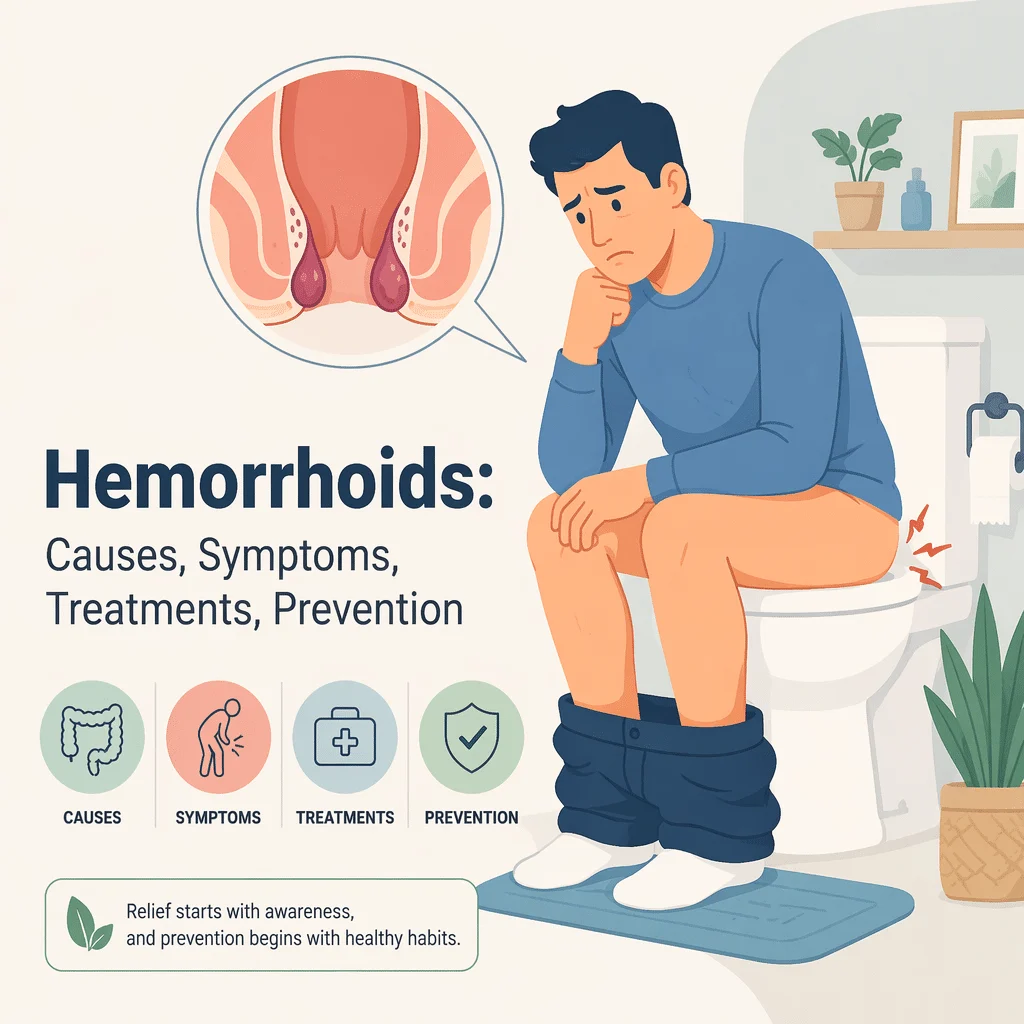
Iedereen heeft aambeienweefsel. Dit zijn normale kussentjes van bloedvaten, bindweefsel en kleine spiervezels die in het anaalkanaal zitten en helpen bij de controle over de stoelgang. Problemen ontstaan wanneer deze kussentjes opzwellen, uitrekken of uit hun positie glijden. Wanneer mensen zeggen dat ze “aambeien hebben,” bedoelen ze deze opgezwollen, klachtengevende versie van een verder normale anatomie.
Artsen onderscheiden aambeien op basis van waar ze zich vormen ten opzichte van de dentatielijn, een onzichtbare grens in het anaalkanaal die weefsel met veel pijnzenuwen scheidt van weefsel met weinig. Dat ene detail verklaart waarom sommige aambeien pijn doen en andere niet, en het bepaalt welke behandeling waarschijnlijk het beste werkt.
Inwendige aambeien
Inwendige aambeien ontstaan boven de dentatielijn, in het rectum, waar weinig pijngevoelige zenuwen aanwezig zijn. Daardoor veroorzaken ze vaak pijnloos bloedverlies in plaats van pijn. Het meest voorkomende teken is helderrood bloed op het toiletpapier, op de ontlasting of druppelend in de toiletpot. Grotere inwendige aambeien kunnen buiten de anus uitpuilen, een verschijnsel dat prolaps wordt genoemd.
Uitwendige aambeien
Externe aambeien ontstaan onder de tandlijn, onder de gevoelige huid rondom de aarsopening. Omdat deze huid rijk is aan zenuwen, jeuken, zwellen en doen externe aambeien vaker pijn. Als er een bloedstolsel in ontstaat, spreekt men van een getromboseerde aambeien, wat plotselinge, scherpe pijn en een harde paarse bult kan veroorzaken. Veel mensen hebben gemengde aambeien, wat betekent dat zowel intern als extern weefsel tegelijk betrokken is.
| Functie | Interne aambeien | Externe aambeien |
|---|---|---|
| Locatie | Boven de tandlijn, binnenin het rectum | Onder de tandlijn, onder de huid rondom de anus |
| Typische klachten | Pijnloos helder rood bloedverlies; prolaps (uitpuilend weefsel) | Jeuk, zwelling, een gevoelige bult; pijn als er een stolsel ontstaat |
| Pijn | Meestal pijnloos (weinig zenuwuiteinden) | Vaak pijnlijk (huid heeft veel zenuwuiteinden) |
| Hoe het wordt onderzocht | Anoscopie of tijdens een darmonderzoek | Zichtbaar bij uitwendige inspectie |
Interne aambeien worden ook ingedeeld naar graad, die aangeeft in hoeverre ze prolaberen. De gradering is belangrijk omdat die vaak bepaalt of eenvoudige thuisbehandeling voldoende is of dat een poliklinische ingreep nodig is.
| Graad | Wat het betekent |
|---|---|
| Graad I | Puilen licht uit maar prolaberen niet; kunnen bloeden |
| Graad II | Prolaberen bij persen maar schuiven vanzelf terug |
| Graad III | Prolaberen en moeten met de hand teruggeplaatst worden |
| Graad IV | Blijven geprolabeerd en kunnen niet teruggeplaatst worden |
Waardoor ontstaan aambeien? Veelvoorkomende oorzaken en risicofactoren
Aambeien ontstaan wanneer de druk in de anale kussens herhaaldelijk toeneemt, waardoor de bloedvaten en het weefsel dat ze op hun plaats houdt worden uitgerekt. De meeste oorzaken zijn terug te voeren op één principe: alles wat dag na dag de druk in het bekken en de anale regio verhoogt, vergroot de kans op aambeien.
Dagelijkse gewoonten en druk
Persen op het toilet is de klassieke uitlokkende factor, vooral wanneer dit wordt veroorzaakt door constipatie of harde ontlasting. Lang zitten, inclusief langdurig op het toilet zitten met een telefoon, zorgt ervoor dat bloed zich ophoopt in het gebied. Een vezelarm dieet, te weinig water drinken en zwaar tillen verhogen allemaal dezelfde soort druk. Chronische diarree kan het weefsel net zo veel irriteren als constipatie.
Levensfasen en gezondheidsproblemen
Zwangerschap is een bekende oorzaak, omdat de groeiende baarmoeder op de bekkenaderen drukt en hormonen de vaatwanden verslappen; veel gevallen treden op in het derde trimester of na de bevalling. Veroudering verzwakt het steunweefsel, waardoor aambeien met elk decennium vaker voorkomen. Obesitas en een familiale aanleg voor zwakke vaatwanden verhogen het risico. Rond de leeftijd van 50 jaar heeft bijna de helft van de volwassenen op enig moment last gehad van aambeien, aldus de American College of Gastroenterology.
Symptomen en tekenen van aambeien
De symptomen van aambeien hangen sterk af van of ze inwendig, uitwendig of gemengd zijn. Het herkennen van het patroon helpt je te beoordelen hoe urgent de situatie is en welke verlichtingsmaatregelen zinvol zijn.
Bloeding, jeuk en ongemak
Pijnloos, helderrood bloedverlies is het kenmerk van inwendige aambeien. Uitwendige aambeien veroorzaken vaker jeuk, een vol gevoel, zwelling en pijn die erger wordt bij zitten. Sommige mensen merken slijm, huidirritatie of een zacht knobbeltje bij de aarsopening. Klachten flakkeren vaak een paar dagen op en zakken dan weer weg, wat de reden is dat veel opflakkeringen nooit bij een arts terechtkomen.
Getromboseerde aambeien
Wanneer er een bloedstolsel ontstaat in een uitwendige aambei, kan de pijn snel opkomen en hevig aanvoelen. Een getromboseerde aambei verschijnt meestal als een hard, blauwachtig knobbeltje dat gevoelig is bij aanraking. De pijn bereikt vaak een hoogtepunt binnen de eerste twee of drie dagen en neemt daarna af naarmate het lichaam het stolsel opneemt. Ernstige of toenemende pijn is een reden om snel een arts te raadplegen, omdat vroege behandeling sneller verlichting kan bieden.
Diagnose: waarom niet elk rectaal bloedverlies aambeien zijn
De diagnose aambeien begint meestal met een gesprek over je klachten en een lichamelijk onderzoek. Het belangrijkste punt in dit hele artikel is eenvoudig: bloedverlies via de anus is een symptoom, geen diagnose. Aambeien zijn de meest voorkomende oorzaak, maar anale fissuren, ontstekingen, poliepen en, minder vaak, kanker kunnen er in eerste instantie hetzelfde uitzien. Omdat meerdere aandoeningen hetzelfde teken vertonen, is het de moeite waard even onze uitgebreide gids te lezen over rectale bloeding.
Hoe artsen aambeien onderzoeken
Artsen bevestigen aambeien door het gebied te bekijken en, bij inwendige aambeien, door gebruik te maken van een kort verlicht kijkbuisje dat een anoscooop wordt genoemd. Een onderzoek met een gehandschoende vinger, bekend als het digitaal rectaal onderzoek, controleert op knobbeltjes en gevoeligheid. Als het bloedingspatroon ongewoon is, of als je andere risicofactoren hebt, kan je arts een coloscopie aanbevelen, waarmee een vroeg stadium van darmkanker kan worden opgespoord voordat het ernstige problemen veroorzaakt.
De aanwijzingen in je symptomen begrijpen
De kleur en het tijdstip van bloedverlies geven aanwijzingen. Helderrood bloed dat de ontlasting bedekt of in de toiletpot druppelt, wijst op de anale regio, terwijl donkere, teerachtige ontlasting duidt op bloedverlies hoger in het spijsverteringskanaal; onze gids legt uit wat de oorzaak is van zwarte vlekjes in de ontlasting. Als ontsteking een zorg is, kan een ontlastingstest fecaal calprotectinemeten, wat helpt om een prikkelbare darm patroon te onderscheiden van een inflammatoire darmziekte.
Wanneer een arts raadplegen
De meeste aambeienopstoten zijn veilig thuis te behandelen. Toch zijn er tekenen waarbij je beter een afspraak maakt in plaats van af te wachten, vooral om andere oorzaken van bloedverlies uit te sluiten. Raadpleeg een arts als je een van de volgende dingen opmerkt:
- Bloedverlies dat langer dan een week aanhoudt, steeds terugkomt of hevig is
- Zwarte, teerachtige of donkerrode ontlasting, wat kan wijzen op bloeding hoger in het maagdarmkanaal
- Een verandering in je normale stoelgang, de dikte van je ontlasting, of nieuwe klachten van obstipatie of diarree
- Voor het eerst rectaal bloedverlies, zeker als je ouder bent dan 45
- Een persoonlijke of familiegeschiedenis van darmkanker, poliepen of inflammatoire darmziekte
- Bloedverlies in combinatie met onverklaarbaar gewichtsverlies, vermoeidheid, duizeligheid of bleekheid
- Ernstige anale pijn, of een harde knobbel die snel erger wordt
Aanhoudend of hevig bloedverlies kan zich langzaam opstapelen. Over meerdere maanden kunnen kleine, herhaalde verliezen stilletjes leiden tot een ijzertekort anemie. Als het bloedverlies aanzienlijk is, kan je arts een volledig bloedbeeld aanvragen om te zien of je rode bloedcellen zijn aangetast. Bloedonderzoek achteraf laat vaak een laag ferritinezien, het eiwit dat je ijzervoorraden weerspiegelt. Voor een vollediger beeld kan je arts ook een panel voor ijzeronderzoek.
Behandeling: van thuiszorg tot ingrepen
De behandeling van aambeien verloopt stapsgewijs. Bijna iedereen begint met eenvoudige maatregelen, en slechts een minderheid heeft uiteindelijk een ingreep of operatie nodig. Het doel is de klachten verlichten en, minstens even belangrijk, de druk wegnemen die het probleem heeft veroorzaakt.
Thuiszorg en leefstijlaanpassingen
De eerste aanpak is dezelfde als de preventie van aambeien: meer vezels, meer water en niet persen. Een warm zitbad — een paar centimeter lauw water gedurende tien tot vijftien minuten — verlicht krampen en pijn. Vrij verkrijgbare crèmes, hamameliskompressen en korte kuren met medicinale zalven kunnen jeuk en zwelling kalmeren, al behandelen ze de symptomen en niet de oorzaak. Voorzichtig reinigen en lang op het toilet zitten vermijden helpt het weefsel ook te herstellen.
Poliklinische ingrepen
Als inwendige aambeien blijven bloeden of prolaberen ondanks goede thuiszorg, lossen snelle poliklinische ingrepen het probleem vaak op zonder operatie. Rubberband-ligatie is de meest gebruikte methode: de arts plaatst een klein elastiekje aan de basis van een inwendige aambeien, waardoor de bloedtoevoer wordt afgesneden en de aambeien binnen enkele dagen krimpt en afvalt. Andere opties zijn sclerotherapie, waarbij een oplossing wordt ingespoten om het bloedvat te laten samentrekken, en technieken op basis van warmte of laser. Deze ingrepen duren slechts enkele minuten en vereisen doorgaans geen verdoving.
Operatie bij gevorderde gevallen
Een klein deel van de aambeien, meestal grote, prolaberende gevallen van graad III of IV, heeft een operatie nodig. Hemorroïdectomie verwijdert het weefsel en biedt de meest duurzame resultaten, vooral bij gemengde aandoeningen. Nieuwere methoden zijn gericht op het verminderen van de bloedtoevoer naar de aambeien of het optillen van prolabeerd weefsel met minder hersteldagen. Een colorectaal chirurg kan de methode afstemmen op uw anatomie, uw klachten en uw algehele gezondheid.
Aambeien voorkomen
Preventie draait grotendeels om het beschermen van uw stoelganggewoonten. Streef naar 25 tot 35 gram vezels per dag uit groenten, fruit, peulvruchten en volkoren granen, en verhoog dit geleidelijk om gasvorming te vermijden. Drink voldoende water zodat de ontlasting zacht blijft. Reageer snel op de aandrang om naar het toilet te gaan in plaats van het op te houden, en houd toiletbezoeken kort. Regelmatige beweging, van wandelen tot gestructureerde lichaamsbeweging, houdt het spijsverteringsstelsel actief en vermindert de druk in de bekkenaderen.
Omdat persen de rode draad is, loont het om constipatie aan te pakken als preventieve maatregel. Een handig hulpmiddel zoals de Bristol-schaal kan u helpen uw ontlastingsconsistentie bij te houden en problemen vroeg op te sporen. Als constipatie hardnekkig is, kan een vezelpreparaat of een ontlastingsverzachter, gekozen in overleg met uw apotheker of arts, de vicieuze cirkel doorbreken voordat de aambeien terugkeren.
Recente wetenschappelijke ontwikkelingen
Het onderzoek naar aambeien van de afgelopen drie jaar heeft zich minder gericht op spectaculaire nieuwe behandelingen en meer op het goed uitvoeren van de basisprincipes: nauwkeurige diagnose, behandeling afstemmen op het individu, en weten wanneer bloedverlies nader onderzoek vereist. Dit is wat recent onderzoek in begrijpelijke taal toevoegt.
Een review uit 2025 in JAMA benadrukte hoe veelvoorkomend het probleem is, met een schatting dat aambeienziekte ongeveer 10 miljoen mensen in de Verenigde Staten treft, en bevestigde opnieuw de indeling in interne, externe en gemengde aambeien die de behandeling stuurt. Wat dit voor u betekent: uw type aambeien en uw klachten, niet één standaardbehandeling, moeten leidend zijn voor het plan dat u samen met uw arts kiest.
Twee recente chirurgische reviews bevestigden een aanpak van “zo min mogelijk invasief als eerste stap”. Een review uit 2025 concludeerde dat goede zorg begint met het aanpakken van beïnvloedbare risicofactoren, zoals persen en weinig vezels, voordat wordt overgegaan tot ingrepen, terwijl een review uit 2023 benadrukte dat zelfs specialisten goedaardige anorectale aandoeningen slechts in ongeveer zeven van de tien gevallen correct identificeren. Wat dit voor u betekent: leefstijlmaatregelen komen oprecht op de eerste plaats en werken vaak, en een goed onderzoek is belangrijker dan zelfdiagnose, omdat vergelijkbare aandoeningen gemakkelijk verward kunnen worden.
Ook de preventiewetenschap heeft zich verder ontwikkeld. In 2024 publiceerde de American Society of Colon and Rectal Surgeons bijgewerkte richtlijnen voor de behandeling van chronische obstipatie, de belangrijkste oorzaak van persen. Wat dit voor u betekent: obstipatie aanpakken met vezels, voldoende vocht en regelmatige stoelgang is geen volkswijsheid, maar wordt ondersteund door actuele specialistische richtlijnen en beschermt tegen terugkerende opflakkeringen.
Tot slot blijven onderzoekers dezelfde voorzichtige kanttekening plaatsen bij bloedverlies. Uit een studie uit 2023 bleek dat rectaal bloedverlies een van de meest voorkomende eerste symptomen van colorectale kanker is bij volwassenen onder de 50 jaar, een groep waarbij het aantal gevallen toeneemt. Wat dit voor u betekent: ga er niet van uit dat jong zijn een ernstige oorzaak uitsluit, en beschouw nieuw of aanhoudend bloedverlies als reden om u te laten onderzoeken, ook als aambeien de meest waarschijnlijke verklaring zijn.
Glossarium
| Termijn | Definitie |
|---|---|
| Anaalkanaal | Het korte laatste deel van het spijsverteringskanaal dat eindigt bij de anus, waar de hemorroïdale kussens zich bevinden. |
| Tandlijn (linea dentata) | De grens in het anaalkanaal die de pijngevoelige huid scheidt van het minder gevoelige rectaalslijmvlies. |
| Prolaps | Wanneer een interne hemorroïde door de anusopening naar buiten puilt. |
| Gethromboseerde hemorroïde | Een externe hemorroïde met een bloedstolsel erin, die vaak plotselinge pijn en een harde bult veroorzaakt. |
| Anoscopie | Een snel onderzoek met een kort verlicht buisje om interne hemorroïden en het onderste deel van het rectum te bekijken. |
| Digitaal rectaal onderzoek | Een onderzoek met een gehandschoende vinger waarbij het anaalkanaal wordt gecontroleerd op knobbels, gevoeligheid en andere afwijkingen. |
| Zitbad | Zitten in een paar centimeter warm water om pijn en zwelling rond de anus te verlichten. |
| Rubberband-ligatie | Een poliklinische ingreep waarbij een interne hemorroïde met een klein elastiekje wordt afgebonden, zodat deze inkrimpt en afvalt. |
| Ferritine | Een bloedproteïne die aangeeft hoeveel ijzer het lichaam in voorraad heeft. |
| Volledig bloedbeeld | Een veelgebruikt bloedonderzoek (volledig bloedbeeld) dat rode bloedcellen, witte bloedcellen en bloedplaatjes meet en bloedarmoede kan signaleren. |
veelgestelde vragen
Hoe zien aambeien eruit?
Dat hangt af van het type. Externe aambeien kunnen eruitzien als zachte of harde bultjes rondom de anusopening, soms blauwachtig als er een bloedstolsel is gevormd. Interne aambeien zijn van buitenaf meestal niet zichtbaar, tenzij ze prolaberen; in dat geval verschijnen ze als vochtig roze weefsel dat uit de anus puilt. Veel mensen zien hun aambeien helemaal niet en merken alleen helder rood bloed op het toiletpapier of een vol gevoel. Als een bult hard is, snel groeit of hevig bloedt, laat het dan onderzoeken in plaats van het zelf te proberen te beoordelen.
Hoe kunt u aambeien thuis behandelen?
De meeste opvlammingen verbeteren binnen een week of twee met eenvoudige maatregelen: eet meer vezels, drink meer water en vermijd persen of lang op het toilet zitten. Warme zitbaden meerdere keren per dag verlichten de pijn, en vrij verkrijgbare crèmes of witch hazel-doekjes kunnen jeuk en zwelling kalmeren. Koude kompressen helpen bij een pijnlijke uitwendige knobbel. Deze maatregelen verlichten de klachten en geven het geïrriteerde weefsel de tijd om te herstellen, maar ze werken het best als je ook de onderliggende oorzaak aanpakt — meestal constipatie en persen.
Helpen zitbaden echt bij aambeien?
Ja, voor het comfort. Een zitbad — een kwartier zitten in een paar centimeter lauw water — ontspant de anale spieren, verbetert de doorbloeding en verlicht jeuk en pijn. Het is een van de meest aanbevolen thuismaatregelen en is vooral prettig na een stoelgang of bij een pijnlijke uitwendige aambeien. Een zitbad laat een grote of prolaberende inwendige aambeien niet krimpen, maar het maakt het dagelijkse ongemak een stuk draaglijker terwijl andere maatregelen hun werk doen.
Helpt meer vezels eten bij aambeien?
Vezels zijn een van de meest effectieve middelen die je hebt. Door de ontlasting zachter en omvangrijker te maken, verminderen vezels het persen dat aambeien veroorzaakt — wat na verloop van tijd zowel bloedverlies als ongemak verlicht. Streef naar 25 tot 35 gram per dag via voeding, en voer dit geleidelijk op met voldoende water om een opgeblazen gevoel te vermijden. Als voeding alleen niet genoeg is, kan een vezelpreparaat helpen. Dit is tegelijk preventie én behandeling, en daarom beginnen artsen hier bijna altijd mee.
Wanneer is bloedverlies door aambeien ernstig?
Af en toe helder rood bloedverlies bij bekende aambeien is meestal geen noodgeval. Bloedverlies wordt zorgwekkend als het hevig is, langer dan een week aanhoudt, steeds terugkeert, of gepaard gaat met donkere of teerachtige ontlasting, een verandering in de stoelgang, gewichtsverlies of vermoeidheid. Bloedverlies dat voor het eerst optreedt na je 45e moet altijd worden onderzocht. Dit betekent niet dat er iets ernstigs aan de hand is, maar in deze situaties moet een arts de oorzaak bevestigen in plaats van zomaar aan te nemen dat het aambeien zijn.
Verdwijnen aambeien vanzelf, en komen ze terug?
Milde aambeien verdwijnen vaak vanzelf binnen een paar dagen zodra het persen stopt, en veel mensen hebben af en toe een opvlammering die zonder behandeling overgaat. Aambeien kunnen echter terugkomen zodra de druk die ze veroorzaakte opnieuw optreedt, dus blijvende verlichting hangt af van vaste gewoonten: vezels, voldoende drinken, beweging en niet persen. Grotere of hogere-graad aambeien verdwijnen minder snel volledig en kunnen een ingreep bij de arts vereisen, maar ook dan verminderen goede darmgewoonten de kans op terugkeer.
Bronnen
- National Institute of Diabetes and Digestive and Kidney Diseases (NIDDK). Hemorrhoids. niddk.nih.gov
- MedlinePlus, U.S. National Library of Medicine. Hemorrhoids. medlineplus.gov
- Mayo Clinic. Hemorrhoids — Symptoms and causes. mayoclinic.org
- American College of Gastroenterology. Hemorrhoids and Fissures. gi.org
- Ashburn JH. Hemorrhoidal Disease: A Review. JAMA, 2025. doi.org/10.1001/jama.2025.13083
- Egawa F, Gologorsky RC. Hemorrhoids. Surgical Clinics of North America, 2025. doi.org/10.1016/j.suc.2025.08.003
- Akinmoladun O, Oh W. Management of Hemorrhoids and Anal Fissures. Surgical Clinics of North America, 2023. doi.org/10.1016/j.suc.2023.11.001
- Alavi K, Thorsen AJ, Fang SH, Burgess PL, et al. The ASCRS Clinical Practice Guidelines for the Evaluation and Management of Chronic Constipation. Diseases of the Colon & Rectum, 2024. doi.org/10.1097/DCR.0000000000003430
- Skalitzky MK, Zhou PP, Goffredo P, Guyton K, et al. Characteristics and symptomatology of colorectal cancer in the young. Surgery, 2023. doi.org/10.1016/j.surg.2023.01.018
Verder lezen
- Lees onze volledige gids over rectale bloeding.
- Ontdek de symptomen, onderzoeken en behandelingen van darmkanker.
- Bekijk hoe je een volledig bloedbeeld.
- Begrijp de tekenen en diagnose van anemie.
- Ontdek de oorzaken en behandeling van een laag ferritine.
Begrijp uw laboratoriumresultaten met AI DiagMe.
Als rectaal bloedverlies hevig of herhaald is, of gepaard gaat met vermoeidheid, kan een eenvoudig bloedonderzoek nagaan of je genoeg bloed verliest om je ijzerwaarden te beïnvloeden, en ijzerstudies kunnen aantonen of je voorraden te laag worden. AI DiagMe helpt je om resultaten zoals een volledig bloedbeeld, ferritine of een ijzerpanel in begrijpelijke taal te lezen, zodat je een beter onderbouwd gesprek met je arts kunt voeren. Het is bedoeld om je te helpen je uitslagen te begrijpen; het stelt geen diagnose van aambeien en vervangt geen medisch onderzoek.
Ontvang binnen enkele minuten een interpretatie van uw resultaten.