





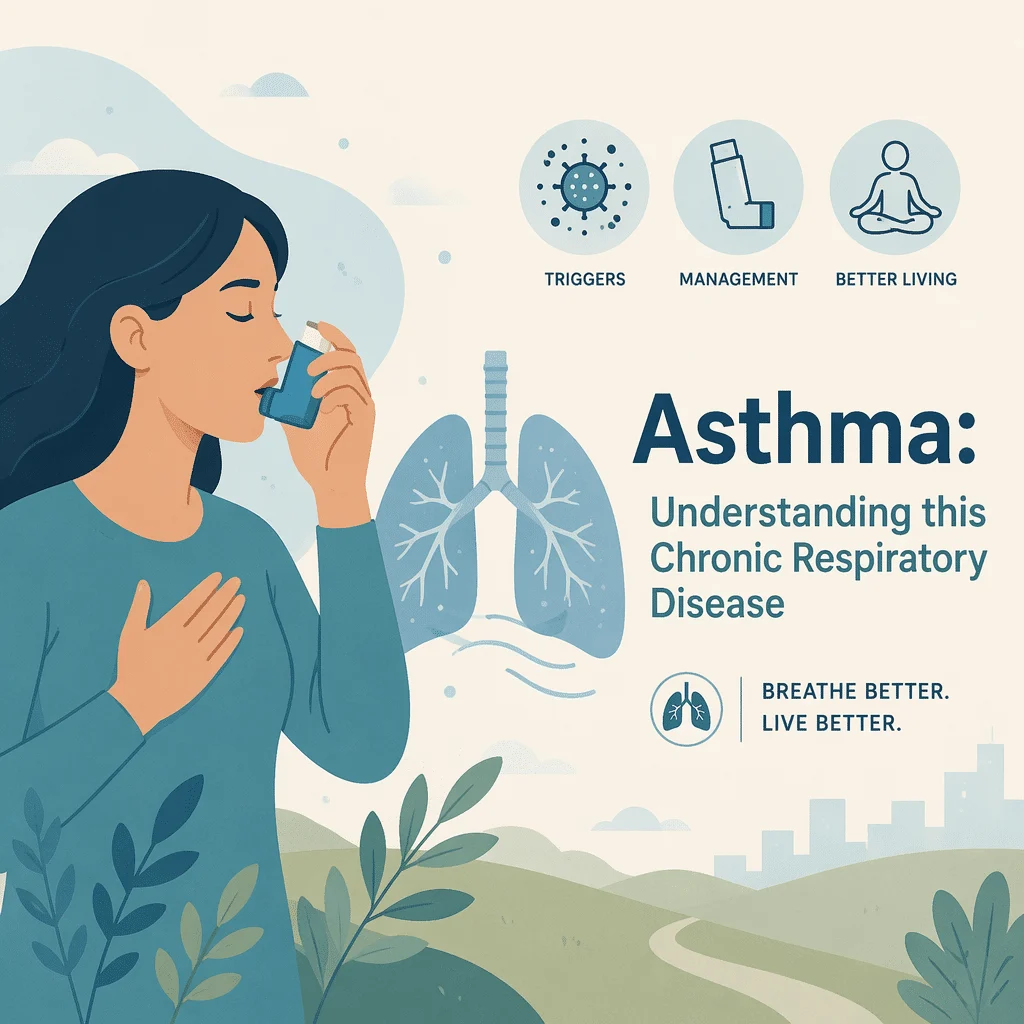
Astma is een veelvoorkomende, chronische longaandoening waarbij de luchtwegen ontstoken en gezwollen raken en snel reageren op prikkels, waardoor ademen soms moeilijker gaat. Volgens de Centers for Disease Control and Prevention heeft ongeveer 1 op de 13 mensen in de Verenigde Staten er last van, zowel jonge kinderen als oudere volwassenen. Het goede nieuws is dat astma bij de meeste mensen goed onder controle te houden is met het juiste behandelplan. Moderne zorg maakt steeds vaker gebruik van eenvoudige bloed- en ademtests die laten zien welk type ontsteking achter uw klachten zit. In dit artikel leest u wat astma is, welke symptomen en uitlokkende factoren u in de gaten moet houden, hoe artsen de diagnose stellen en welke behandelingen — van dagelijkse inhalatoren tot nieuwere gerichte injecties — tegenwoordig worden gebruikt. U ziet ook hoe biomarkers zoals bloedeosinofielen, IgE en uitgeademd stikstofmonoxide helpen om de behandeling te personaliseren.
Wat is astma?
Astma is een chronische aandoening van de bronchiën, de vertakte luchtwegen die lucht in en uit uw longen transporteren. Bij astma blijft de binnenwand van deze luchtwegen licht ontstoken, ook tussen klachten door. Wanneer iets de luchtwegen prikkelt, gebeuren er doorgaans drie dingen tegelijk: de wanden zwellen op, de spieren eromheen trekken samen en de luchtwegen produceren extra slijm. Samen vernauwen deze processen de doorgang voor lucht en veroorzaken ze het bekende gevoel dat u niet vrij kunt ademen.
Een belangrijk kenmerk van astma is dat deze vernauwing meestal omkeerbaar is. De luchtwegen kunnen vanzelf of met medicatie weer opengaan, wat astma onderscheidt van sommige andere longaandoeningen. Klachten komen en gaan vaak, en veel mensen hebben lange perioden met weinig of geen problemen, zeker wanneer hun aandoening goed wordt behandeld.
Waarom de luchtwegen overreageren
Bij mensen met astma behandelt het immuunsysteem onschadelijke stoffen — zoals pollen, stof of koude lucht — als bedreigingen. Deze overreactie houdt de luchtwegen gevoelig, een toestand die artsen bronchiale hyperreactiviteit noemen. De onderliggende ontsteking is het eigenlijke doel van de langetermijnbehandeling; daarom is het kalmeren ervan belangrijker dan alleen het verlichten van klachten op het moment dat ze optreden.
Astmasymptomen en waarschuwingssignalen
Astmasymptomen verschillen van persoon tot persoon en kunnen in de loop van de tijd veranderen. De vier meest voorkomende zijn: piepende ademhaling (een fluitend geluid bij het uitademen), een hoest die vaak erger is 's nachts of vroeg in de ochtend, kortademigheid en een gevoel van druk of beklemming op de borst. Sommige mensen hoesten voornamelijk; anderen merken klachten alleen tijdens inspanning of bij een verkoudheid.
Hoe een astma-aanval aanvoelt
Een astma-aanval, of opvlamming, is een snelle verslechtering van de klachten doordat de luchtwegen verder vernauwen. De ademhaling wordt snel en moeizaam, het hoesten of piepen neemt toe, en een noodinhaler biedt minder verlichting dan normaal. Ernstige aanvallen zijn een medisch noodgeval. Kortademigheid kan ook andere oorzaken hebben die niets met de longen te maken hebben; lees bijvoorbeeld onze gids over kortademigheid na het eten.
Wat veroorzaakt astma? Oorzaken en risicofactoren
Astma heeft niet één enkele oorzaak. Het ontstaat door een combinatie van genen en omgeving, en de klachten worden vervolgens uitgelokt door triggers die per persoon verschillen. Je eigen triggers leren kennen is een van de nuttigste stappen om astma onder controle te houden.
Veelvoorkomende triggers
- Allergenen zoals huisstofmijt, pollen, schimmel en huidschilfers van huisdieren
- Luchtweginfecties, waaronder verkoudheid en griep
- Irriterende stoffen zoals tabaksrook, luchtvervuiling, sterke geuren en koude, droge lucht
- Lichaamsbeweging, vooral bij koud weer
- Sterke emoties, stress en zelfs lachen
- Bepaalde medicijnen en, voor sommige mensen, stof of chemicaliën op de werkvloer
Luchtweginfecties verdienen extra aandacht, omdat ze tot de meest voorkomende triggers van opflammingen behoren. Het is daarom handig om vóór elk griepseizoen onze gids over influenza en de bijbehorende complicaties door te nemen.
Wie heeft meer kans op astma?
Risicofactoren zijn onder meer een familiegeschiedenis van astma of allergieën, andere allergische aandoeningen zoals eczeem of hooikoorts, blootstelling aan rook, obesitas en luchtweginfecties op jonge leeftijd. Veel mensen met astma hebben ook aanhoudende neus- en sinusklachten; lees onze gids over sinusinfecties om dat verband beter te begrijpen.
Type 2-ontsteking in begrijpelijke taal uitgelegd
Artsen beschrijven astma steeds vaker aan de hand van het type ontsteking dat eraan ten grondslag ligt. Het meest voorkomende patroon heet type 2-ontsteking (ook wel aangeduid als “T2-hoog”). Eenvoudig gezegd is dit een allergische immuunreactie waarbij het lichaam extra hoeveelheden van bepaalde witte bloedcellen en signaalstoffen aanmaakt die de luchtwegen ontsteken.
Twee spelers staan centraal in dit proces. De eerste is een witte bloedcel die eosinofiel wordt genoemd; deze hoopt zich op in de luchtwegen en veroorzaakt zwelling. Lees onze uitgebreide gids over eosinofielen en wat ze onthullen in uw bloedonderzoek. De tweede is immunoglobuline E, of IgE, het antilichaam dat allergische reacties aanstuurt. IgE maakt deel uit van een bredere familie van antilichaameiwitten; lees ook ons overzicht van de antilichaameiwitten die gammaglobulinen worden genoemd. Omdat deze markers meetbaar zijn, geven ze artsen een kijkje in wat er in uw luchtwegen gebeurt, zonder dat er direct onderzoek nodig is.
Niet alle astma is van het type 2. Sommige mensen hebben 'type 2-laag' astma, waarbij andere cellen zoals neutrofielen een grotere rol spelen. Lees onze gids over neutrofielen in uw bloedonderzoek om te zien hoe deze witte bloedcel verschilt. Een andere met allergie verband houdende witte bloedcel komt aan bod in onze gids over basofielen en allergische reacties. Steeds vaker bepaalt het patroon dat u heeft welke behandeling wordt gekozen.
Hoe astma wordt vastgesteld: van spirometrie tot biomarkers
Er bestaat geen enkele test voor astma. Een diagnose combineert uw medische voorgeschiedenis, een lichamelijk onderzoek en ademhalingstests, soms ondersteund door bloed- en adem-biomarkers die de onderliggende ontsteking in kaart brengen.
Longfunctietests
De belangrijkste ademhalingstest is spirometrie: een eenvoudige, pijnloze meting van hoeveel lucht u kunt uitademen en hoe snel. Artsen herhalen de test vaak na een bronchusverwijder (een geneesmiddel dat de luchtwegen ontspant) om te zien of uw luchtstroom verbetert — een belangrijke aanwijzing voor astma. Een verwant hulpmiddel voor thuis, de piekstroommeter, houdt de dagelijkse veranderingen in uw ademhaling bij.
Bloed- en adem-biomarkers
Biomarkers voegen een extra laag toe. Een eosinofielentellinguit het bloed, onderdeel van een routinematig volledig bloedbeeld, laat zien hoeveel allergische ontsteking aanwezig is. Bekijk wat een volledig bloedpanel omvat om te zien waar dit in past. Totaal IgE en allergeen-specifiek IgE onthullen een allergische aanleg en kunnen specifieke triggers aanwijzen. Een nieuwere ademtest, FeNO, meet een gas dat stijgt wanneer de luchtwegen type 2-ontsteking vertonen. In de gerichte updates van de Amerikaanse astmarichtlijnen uit 2020 erkende het National Heart, Lung, and Blood Institute FeNO-testen als een nuttige aanvulling in bepaalde situaties. Ter vergelijking kunt u ook onze gids over de ontstekingsmarker CRP lezen — hoewel CRP een algemene marker is en niet specifiek voor astma.
Als u niet zeker weet welk bloedonderzoek u heeft ontvangen, kunt u de twee veelgebruikte bloedtesten vergelijken die bekendstaan als het CBC en het CMP. De onderstaande tabel geeft een overzicht van de testen die het vaakst worden gebruikt om de ontsteking achter astma te begrijpen.
| Test | Wat het meet | Wat een verhoogde waarde kan betekenen | Voorbeeld |
|---|---|---|---|
| Aantal eosinofielen in het bloed | Een witte bloedcel die verband houdt met allergische, type 2-ontsteking | Meer eosinofiele luchtwegontsteking en een hoger risico op een aanval | Bloed |
| Totaal IgE | Het totale niveau van het allergie-antilichaam immunoglobuline E | Een allergische aanleg die kan helpen bij de keuze voor bepaalde biologicals | Bloed |
| Allergeen-specifiek IgE | IgE gericht op één specifiek allergeen, zoals huisstofmijt, kat of pollen | Sensibilisatie voor die specifieke trigger | Bloed |
| FeNO (uitgeademd stikstofmonoxide) | Een gas in de adem dat stijgt bij type 2-ontsteking | Actieve luchtwegontsteking en mogelijke respons op steroïden | Adem |
| Spirometrie | Hoeveel en hoe snel u kunt uitademen | Luchtwegobstructie die verbetert na gebruik van een luchtwegverwijder | Ademhalingstest |
Hoe astma wordt behandeld en onder controle gehouden
De behandeling van astma heeft twee doelen: symptomen snel verlichten wanneer ze optreden en, nog belangrijker, de onderliggende ontsteking kalmeren zodat opvlammingen zeldzaam worden. De meeste mensen gebruiken inhalatoren, die het medicijn rechtstreeks naar de luchtwegen brengen met weinig bijwerkingen voor het hele lichaam.
Noodmedicatie- en onderhoudsinhaler
Snelwerkende (nood)inhalatoren bevatten een luchtwegverwijder die tijdens klachten of een aanval de vernauwe luchtwegen binnen enkele minuten opent. Onderhoudsinhaler, meestal met een inhalatiecorticosteroïd, worden regelmatig gebruikt om de ontsteking op de lange termijn te verminderen. Actuele richtlijnen geven steeds vaker de voorkeur aan inhalatoren die een ontstekingsremmend middel combineren met een noodmedicatie, in plaats van uitsluitend op een noodmedicatie te vertrouwen. De juiste inhalatietechniek, vaak met een voorzetkamer, maakt een wezenlijk verschil in hoe goed het medicijn werkt.
Wanneer biologicals worden overwogen
Een minderheid van de mensen heeft ernstig astma dat ondanks correct gebruik van inhalatoren niet onder controle komt. Bij velen van hen is type 2-ontsteking de oorzaak — en dat is waar biologicals een rol spelen. Een biological is een in het laboratorium gemaakt antilichaam, toegediend via injectie, dat één specifiek molecuul blokkeert dat de ontsteking aandrijft. Goedgekeurde opties richten zich op IgE (omalizumab), het signaaleiwit interleukine-5 of zijn receptor (mepolizumab en benralizumab), en de interleukine-4- en interleukine-13-route (dupilumab). Artsen kiezen op basis van uw biomarkers, met name bloedeosinofielen en IgE, en dat is waarom testen zo belangrijk is. Gespecialiseerde organisaties zoals de American Academy of Allergy, Asthma & Immunology patiëntinformatie publiceren over deze behandelingen, die altijd worden voorgeschreven en gevolgd door een specialist.
Dagelijks leven met astma
De meeste mensen met astma leiden een volledig en actief leven. De sleutel is een schriftelijk astma-actieplan, opgesteld samen met je arts, dat aangeeft welke medicijnen je dagelijks moet nemen, hoe je verslechtering van de controle herkent en wat je precies moet doen tijdens een aanval.
Dagelijks zelfmanagement
- Neem je onderhoudsmedicatie elke dag, ook als je je goed voelt
- Leer je persoonlijke triggers kennen en vermijd ze
- Houd je noodinhalator altijd bij je
- Laat je inhalatietechniek controleren door een apotheker of verpleegkundige
- Houd je vaccinaties up-to-date, want infecties kunnen een astma-aanval uitlokken
- Ga regelmatig op controle zodat je behandeling indien nodig kan worden aangepast
Wanneer moet u spoedeisende medische hulp zoeken?
Bel de hulpdiensten of ga naar de dichtstbijzijnde spoedeisende hulp als jij of iemand anders een van deze tekenen van een ernstige astma-aanval vertoont:
- Ernstige kortademigheid, of zo kortademig dat je geen volledige zinnen kunt uitspreken
- Een noodinhalator die niet helpt, of die binnen een paar uur opnieuw nodig is
- Lippen of vingertoppen die blauw of grijs worden
- Snelle ademhaling waarbij de borst of ribben naar binnen trekken, vooral bij een kind
- Slaperigheid, verwardheid of ongewone uitputting
Maak een gewone, niet-urgente afspraak als je je noodinhalator meer dan twee keer per week gebruikt, 's nachts wakker wordt door klachten, of merkt dat astma je activiteiten beperkt — dit zijn allemaal tekenen dat je astma beter onder controle kan worden gebracht.
Recente wetenschappelijke ontwikkelingen
Onderzoek van de afgelopen jaren heeft de astmazorg nauwkeuriger gemaakt, vooral voor mensen met type 2-ontsteking. Hier zijn enkele bevindingen in begrijpelijke taal.
Een grote analyse uit 2025 combineerde de controlegroepen van 22 klinische onderzoeken — een meta-analyse, dat wil zeggen een studie die veel eerdere onderzoeken samenvoegt — en bevestigde dat twee eenvoudige markers helpen voorspellen wie het meeste risico loopt op een astma-aanval: het aantal eosinofielen in het bloed en het stikstofmonoxidegehalte in de uitgeademde lucht (FeNO). Het risico was het hoogst wanneer beide tegelijk verhoogd waren. Wat dit voor jou betekent: deze snelle en eenvoudige tests kunnen een verhoogd risico vroeg signaleren, zodat je behandeling kan worden versterkt vóórdat er een aanval optreedt. De onderzoekers beoordeelden dit bewijs als van hoge kwaliteit.
Een gezondheidstechnologiebeoordeling uit 2024 onderzocht hoe goed de FeNO-ademtest presteert. De conclusie was dat het toevoegen van FeNO aan standaardtests de nauwkeurigheid van een astmadiagnose verbetert en, wanneer gebruikt om de behandeling te sturen, waarschijnlijk het aantal opstoten en de behoefte aan orale steroïden vermindert. Wat dit voor u betekent: een eenvoudige ademtest kan helpen astma te bevestigen en stabieler te houden, hoewel deze naast andere tests wordt gebruikt en niet op zichzelf staat.
Artsen delen astma nu in op basis van patronen, of fenotypes, met behulp van een reeks markers — bloedeosinofielen, totaal en allergeen-specifiek IgE, en FeNO. Een review uit 2025 beschreef hoe deze aanpak van “type 2-hoog versus type 2-laag” helpt om elke persoon te koppelen aan de behandeling die het meest waarschijnlijk werkt. Wat dit voor u betekent: uw biomarkerresultaten zijn niet zomaar getallen; ze helpen een plan op maat te maken voor uw vorm van astma.
Voor ernstig astma waarbij dagelijkse steroïdtabletten nodig zijn, bleek uit een gepoolde analyse uit 2024 van zeven gerandomiseerde onderzoeken dat drie biologische injecties — benralizumab, dupilumab en mepolizumab — mensen hielpen hun steroïdtabletten te verminderen of te stoppen, terwijl het astma onder controle bleef. Wat dit voor u betekent: als u ernstig type 2-astma heeft, kunnen gerichte injecties uw afhankelijkheid van orale steroïden en de bijwerkingen daarvan verminderen. Dit zijn specialistische behandelingen, gekozen met uw biomarkers in gedachten.
Reviews over ernstig astma beschrijven nu een ambitieus doel dat klinische remissie wordt genoemd — lange periodes zonder aanvallen, stabiele ademhaling en weinig klachten — wat steeds beter haalbaar wordt door het juiste biologicum te koppelen aan de biomarkers van elke persoon. Wat dit voor u betekent: zelfs ernstig astma is steeds beter beheersbaar met een gepersonaliseerd, testgestuurd plan, samen opgesteld met uw medisch team.
Glossarium
| Termijn | Definitie |
|---|---|
| Luchtwegen (bronchiën) | De vertakkende buizen die lucht de longen in en uit voeren. |
| Bronchiale hyperreactiviteit | Een neiging van de luchtwegen om overmatig te reageren en samen te trekken als reactie op prikkels. |
| Bronchusverwijder | Een geneesmiddel dat de spieren rondom de luchtwegen ontspant om ze snel te openen. |
| Inhalatiecorticosteroïd | Een ontstekingsremmend geneesmiddel dat dagelijks wordt ingeademd en na verloop van tijd de ontsteking in de luchtwegen kalmeert. |
| Eosinofiel | Een type witte bloedcel dat betrokken is bij allergische reacties en type 2-luchtwegontsteking. |
| Immunoglobuline E (IgE) | Het antilichaam dat allergische reacties aanstuurt; het kan in het bloed worden gemeten. |
| FeNO (fractioneel uitgeademd stikstofmonoxide) | Een ademtest die een gas meet dat verband houdt met type 2-luchtwegontsteking. |
| Spirometrie | Een ademhalingstest die meet hoeveel en hoe snel u kunt uitademen. |
| Type 2-ontsteking | Een veelvoorkomend, allergisch patroon van luchtwegontsteking, aangedreven door eosinofielen en verwante signalen. |
| Biologisch geneesmiddel | Een in het laboratorium gemaakt antilichaam, toegediend via injectie, dat één specifiek molecuul blokkeert dat ontsteking veroorzaakt. |
Veelgestelde vragen
Is astma erfelijk?
Astma wordt niet op een eenvoudige manier doorgegeven, maar genen spelen wel een rol. Als een ouder of broer of zus astma heeft, of als je allergische aandoeningen hebt zoals eczeem of hooikoorts, is de kans groter. Genen werken samen met de omgeving, dus een erfelijke aanleg betekent niet dat je automatisch astma krijgt. Blootstellingen in de vroege kindertijd, infecties en allergenen bepalen mede of het zich ontwikkelt.
Kun je sporten met astma?
Ja. De meeste mensen met goed gecontroleerd astma kunnen en mogen actief blijven, en veel topsporters hebben astma. Sommige mensen merken klachten tijdens het sporten, vooral in koude, droge lucht. Goed opwarmen, door de neus ademen en een noodinhaler gebruiken vóór inspanning — als je arts dat aanraadt — kan helpen. Als sporten regelmatig klachten veroorzaakt, is dat vaak een teken dat je dagelijkse controle opnieuw bekeken moet worden.
Verdwijnt astma met de leeftijd?
Astma kan in de loop van een leven veranderen. Bij sommige kinderen nemen de klachten af tijdens de puberteit, hoewel de onderliggende aanleg kan blijven en later terugkomen. Bij volwassenen is astma meestal een langdurige aandoening die wordt beheerd in plaats van genezen. Het goede nieuws is dat de meeste mensen met de juiste behandeling en begeleiding hun klachten jarenlang onder controle kunnen houden.
Wat is het verschil tussen allergisch en eosinofiel astma?
Ze overlappen elkaar. Allergisch astma wordt uitgelokt door specifieke allergenen en is gekoppeld aan het IgE-antilichaam. Eosinofiel astma wordt gekenmerkt door een hoog aantal eosinofielen, een type witte bloedcel dat samenhangt met type 2-ontsteking. Iemand kan beide kenmerken tegelijk hebben. Artsen gebruiken bloedonderzoek en soms FeNO om te bepalen welk patroon aanwezig is, omdat dit de behandelkeuzes bepaalt.
Kan een bloedtest astma aantonen?
Niet op zichzelf. Geen enkel bloedonderzoek bevestigt astma. De diagnose is voornamelijk gebaseerd op je klachten en ademhalingstests zoals spirometrie. Bloedwaarden zoals het aantal eosinofielen en IgE, samen met de FeNO-ademtest, geven waardevolle informatie over het type ontsteking en helpen de behandeling te personaliseren. Ze ondersteunen de diagnose en het beleid, maar vervangen de klinische beoordeling niet.
Is astma te genezen?
Er is nog geen genezing voor astma, maar het is goed behandelbaar. Met een dagelijks onderhoudsmedicijn, bewustzijn van uitlokkende factoren en een duidelijk actieplan bereiken de meeste mensen een goede controle — dat wil zeggen weinig klachten en zelden een aanval. Bij ernstig astma kunnen nieuwere biologische behandelingen het aantal aanvallen sterk verminderen. Het doel van moderne zorg is langdurige controle en, steeds vaker, langere perioden zonder klachten.
Bronnen
- Centers for Disease Control and Prevention — Astma — https://www.cdc.gov/asthma/index.html
- National Heart, Lung, and Blood Institute (NHLBI) — Astma — https://www.nhlbi.nih.gov/health/asthma
- American Academy of Allergy, Asthma & Immunology (AAAAI) — Astma: Symptomen, Diagnose, Behandeling & Therapie — https://www.aaaai.org/conditions-treatments/asthma
- Meulmeester FL, et al. — Inflammatoire en klinische risicofactoren voor astma-aanvallen (ORACLE2): een meta-analyse op patiëntniveau van controlegroepen uit 22 gerandomiseerde onderzoeken — The Lancet Respiratory Medicine, 2025 — https://doi.org/10.1016/S2213-2600(25)00037-2
- Ontario Health (Quality) — Meting van gefractioneerd uitgeademd stikstofmonoxide voor de diagnose en behandeling van astma: een Health Technology Assessment — Ontario Health Technology Assessment Series, 2024 — https://pmc.ncbi.nlm.nih.gov/articles/PMC11423898/
- Grunwell JR, Fitzpatrick AM — Astmafenotypen en biomarkers — Respiratory Care, 2025 — https://doi.org/10.1089/respcare.12352
- Phinyo P, et al. — Werkzaamheid en veiligheid van biologicals bij astma dat afhankelijk is van orale corticosteroïden: een systematische review en netwerk-meta-analyse — The Journal of Allergy and Clinical Immunology: In Practice, 2024 — https://doi.org/10.1016/j.jaip.2023.11.007
- Pelaia C, et al. — Ernstig type-2-astma: pathofysiologie en behandeling met biologicals — Expert Review of Respiratory Medicine, 2024 — https://doi.org/10.1080/17476348.2024.2380072
Verder lezen
- Eosinofielen: alles over deze belangrijke bloedcellen
- Gids voor volledig bloedonderzoek: wat zit er in een compleet bloedpanel
- Immunoglobuline G (IgG): wat betekent uw bloedtest?
- Serum tryptase: wat betekent deze bloedtest bij allergie?
- Sinusinfectie: symptomen, oorzaken en behandelingen
Begrijp uw laboratoriumresultaten met AI DiagMe.
Ontvang binnen enkele minuten een interpretatie van uw resultaten.
Als u astma heeft, bevatten uw bloed- en ademtests nuttige aanwijzingen over de ontsteking achter uw klachten. AI DiagMe helpt u de uitslag te begrijpen — zoals uw eosinofielentelling in het bloed, totaal en allergeen-specifiek IgE, en een volledig bloedbeeld — en legt in begrijpelijke taal uit wat elke waarde betekent. Het is een hulpmiddel om uw uitslagen te begrijpen en betere vragen voor te bereiden voor uw afspraak — het stelt geen diagnose en vervangt uw arts niet.