





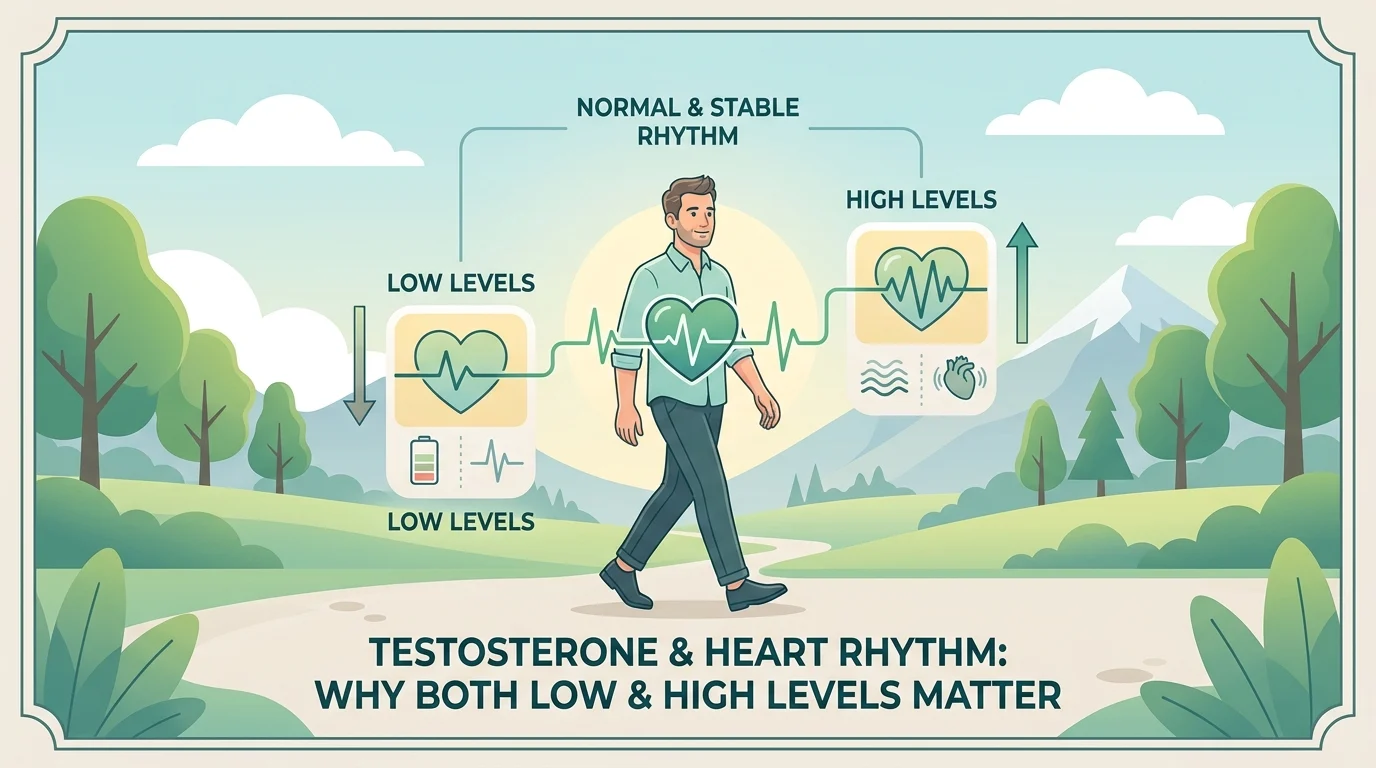
أعادت مراجعة علمية نُشرت في الأول من سبتمبر 2026 في مجلة Journal of the Endocrine Society وتناقلتها الصحافة الطبية في الرابع من الشهر نفسه، صياغةَ العلاقة بين التستوستيرون ونظم القلب من جديد. كان الاعتقاد السائد لسنوات بسيطًا: يُظن أن انخفاض التستوستيرون يرفع خطر الإصابة بالرجفان الأذيني، وهو أكثر اضطرابات ضربات القلب شيوعًا. غير أن هذه المراجعة الجديدة تُجادل بأن العلاقة ليست خطًّا مستقيمًا البتة، بل هي منحنى على شكل حرف U، إذ يظهر الخطر عند كلا طرفَي النطاق. في هذا المقال ستتعرف على ما توصلت إليه المراجعة، ولماذا تتعارض الدراسات، وكيف تُقاس نتيجة التستوستيرون فعليًا، وما الذي يغيّره هذا كله أو لا يغيّره لمن يحمل تقرير مختبر في يده.
ما كشفته المراجعة الجديدة
بحث ثلاثة أطباء قلب من مركز جامعة كانساس الطبي ومركز VA الطبي في كانساس سيتي في قواعدَي بيانات MEDLINE وEmbase عن كل ما نُشر حول التستوستيرون والعلاج بالتستوستيرون والرجفان الأذيني، ثم حاولوا التوفيق بين النتائج. وخلاصة استنتاجهم أن الأدلة تتقارب نحو منحنى على شكل حرف U: يبدو أن الرجال في الطرف المنخفض والرجال في الطرف المرتفع من نطاق التستوستيرون كلاهما أمام احتمال أعلى للإصابة بضربات قلب غير منتظمة، في حين يبدو وسط النطاق الفسيولوجي المنطقةَ الأكثر هدوءًا.
يذهب المؤلفون خطوة أبعد ويقترحون أن مستوى التستوستيرون الكلي في حدود 350 إلى 550 نانوغرام/ديسيلتر قد يقابل أدنى خطر مُلاحَظ. هذا الرقم يستحق القراءة بعناية؛ فهو مقترح مستخلص من بيانات موجودة، وليس هدفًا موثَّقًا، ولم تختبر أي تجربة سريرية حتى الآن ما إذا كان توجيه الرجل نحو هذا النطاق يمنع فعلًا الإصابة بالرجفان الأذيني.
التستوستيرون ونظم القلب: لماذا تتعارض الدراسات
سيجد أي شخص يقارن العناوين حول هذا الموضوع تناقضات صريحة، وهي تناقضات حقيقية وليست مجرد أخطاء في التغطية الإعلامية. فقد أفاد تحليل أجري على بيانات UK Biobank لنحو 180,000 رجل بأن الرجال الذين يبلغ مستوى التستوستيرون الكلي لديهم 300 نانوغرام/ديسيلتر أو أكثر كانوا أقل عرضة للإصابة بالرجفان الأذيني مقارنةً بمن هم دون هذا المستوى. في المقابل، توصّل تحليل منفصل شمل ما يقارب 4,600 رجل بصحة جيدة تجاوزوا السبعين من العمر إلى نتيجة معاكسة عند الطرف الأعلى من النطاق: إذ كان الرجال في الخُمسَين الأعلى من توزيع التستوستيرون يواجهون ضعف خطر الإصابة مقارنةً بالمجموعة الوسطى.
يمكن أن يكون كلا الأمرين صحيحاً في آنٍ واحد إذا كان المنحنى ينحني. فدون مستوى معين يرتفع الخطر، وفوق مستوى معين يرتفع مجدداً، وبينهما يستقر. هذا هو بالضبط الشكل الذي يصفه مراجعة عام 2026، وهو ما يفسّر سبب توصّل الدراسات الفردية التي تتناول جزءاً واحداً فقط من النطاق إلى استنتاجات تبدو متضاربة. يمكن للقراء الراغبين في الاطلاع على الخلفية السريرية مراجعة دليل انخفاض التستوستيرون لدى الرجال و دليل ارتفاع التستوستيرون لدى الرجال.
يُضيف العلاج طبقةً أخرى من التعقيد. فقد كشف تحليل تلوي جمع بيانات 106 تجربة خاضعة للتحكم بالدواء الوهمي عن غياب إشارة واضحة وشاملة تربط العلاج بالتستوستيرون بالرجفان الأذيني، في حين رصدت تجربة كبيرة صُمِّمت تحديداً لقياس السلامة القلبية الوعائية مزيداً من حالات الرجفان الأذيني لدى الرجال الخاضعين للعلاج. والخلاصة الأمينة هي أن الصورة لا تزال غير محسومة، وقد شدّدت الجهات التنظيمية بالفعل صياغة التحذيرات على هذه المنتجات، كما هو موضّح في المقال حول التغييرات الأخيرة على بطاقات تحذير FDA.
ما الذي يقيسه فعلاً فحص التستوستيرون
جزء من الالتباس يعود إلى الفحص ذاته. فمعظم التستوستيرون المتداول في الدم مرتبط بالبروتينات وغير متاح بيولوجياً، لذا يمكن الحصول على ثلاثة أرقام مختلفة من العينة ذاتها وهي لا تعني الشيء نفسه. للاطلاع على الأساس البيولوجي، يمكن للقراء فتح دليل فحص التستوستيرون في الدم.
| القياس | ما الذي يرصده | لماذا يهم هذا هنا |
|---|---|---|
| إجمالي هرمون التستوستيرون | الهرمون المرتبط بالبروتينات مضافاً إليه الجزء الحر؛ وهو النوع الأكثر طلباً في الفحوصات | الأرقام 300 نانوغرام/ديسيلتر و350-550 نانوغرام/ديسيلتر المذكورة في الأبحاث تشير إلى هذا الرقم |
| هرمون التستوستيرون الحر | الجزء الهرموني غير المرتبط بأي بروتين ناقل | قد يبدو طبيعياً حين يكون الإجمالي منخفضاً، أو العكس، وذلك تبعاً لمستويات البروتين الناقل |
| التستوستيرون الحيوي المتاح | الهرمون الحر مضافاً إليه الجزء المرتبط ارتباطاً خفيفاً | يُطلب أحياناً حين تتعارض القيمتان الأوليان مع الصورة السريرية |
ثمة نقطتان عمليتان جديرتان بالذكر. يتفاوت مستوى التستوستيرون على مدار اليوم، وعادةً ما يُسحب الدم لقياسه في الصباح، كما أن قيمةً منخفضةً واحدة لا تُعتمد في الغالب إلا بعد إعادة الفحص. تتباين القيم المرجعية أيضاً من مختبر إلى آخر، لذا قد يكون مقارنة النتيجة برقم وارد في مقال إخباري أمراً مضللاً. يمكن للقراء الراغبين في فهم الجانب المتعلق بالبروتين الحامل الاطلاع على شرح مستويات SHBG.
ما الذي لا يتغير بهذا
المراجعة العلمية هي تلخيص للدراسات القائمة، وليست تجربةً جديدة، ولا تحمل ثقل التوجيهات الطبية الرسمية. لا شيء فيها يقول إن رجلاً لديه مستوى تستوستيرون 600 نانوغرام/ديسيلتر ينبغي له أن يسعى إلى خفضه، أو أن أي شخص يتلقى علاجاً موصوفاً يجب أن يوقفه أو يعدّل جرعته. يطالب المؤلفون أنفسهم بانتقاء دقيق للمرضى، واستهداف مستويات وسطى بدلاً من الذروة، واستخدام تركيبات مستقرة ومتابعة منظمة، وهذه كلها قرارات تعود إلى الطبيب المعالج.
تجدر الإشارة أيضاً إلى أن الرجفان الأذيني له محركات أكثر رسوخاً بكثير من الهرمونات. تُدرج سلطات الصحة العامة ضمن أبرز أسبابه: التقدم في السن، وارتفاع ضغط الدم، والسمنة، والسكري، وقصور القلب، والأمراض المزمنة في الكلى، وفرط نشاط الغدة الدرقية، وانقطاع التنفس أثناء النوم، والتدخين، والإفراط في تناول الكحول، إذ يرتبط ارتفاع ضغط الدم وحده بنحو حالة من كل خمس. يُفحص عمل الغدة الدرقية بصفة خاصة بشكل روتيني عند ظهور اضطراب في النظم، ويمكن للقراء الاطلاع على شرح فحص TSH في الدم. كذلك تؤدي الشوارد دوراً مهماً، ولهذا كثيراً ما يراجع الأطباء دليل فحص البوتاسيوم في الدم و دليل فحص المغنيسيوم في الدم إلى جانب تقييم اضطرابات النظم. تحدث بعض اضطرابات النظم أيضاً بالتزامن مع حالة أخرى تماماً، وهو ما يُوضَّح في مقال الرجفان الأذيني والأمراض التكاثرية النقوية.
أحدث التطورات العلمية
إلى جانب المراجعة الرئيسية، ثمة ثلاثة نتائج حديثة تساعد على فهم هذا الجدل، ويسهل استيعاب كل منها بمجرد ترجمتها من لغة البحث العلمي إلى لغة مبسطة.
تأتي الأولى من تحليل لاحق لتجربة كبرى أُجريت على رجال مسنين أصحاء، أي أن الباحثين عادوا إلى بيانات سبق جمعها وطرحوا عليها سؤالاً جديداً. طوّر الرجال الذين ينتمون إلى الخُمسين الأعلى في توزيع التستوستيرون اضطراباً في نظم القلب بمعدل يبلغ ضعف ما لدى الرجال في الخُمس الأوسط تقريباً، وذلك على مدى نحو أربع سنوات ونصف. ما يعنيه هذا بالنسبة لك: نتيجة مرتفعة ضمن الحدود الطبيعية لا تُعدّ مطمئنة تلقائياً لدى الرجل المسن، وهي دافع للحوار مع الطبيب لا سبب للقلق.
الثانية مستمدة من دراسة على مجموعة سكانية كبيرة جداً، تُتابَع على مدار الزمن، مع استخدام أسلوب جيني يعتمد على الاختلافات الوراثية للكشف عن العلاقة السببية لا مجرد التزامن. وقد ارتبط انخفاض إجمالي التستوستيرون إلى ما دون 300 نانوغرام/ديسيلتر بضعف وظيفة الحجرة العلوية اليسرى للقلب وزيادة معدل الرجفان الأذيني، في حين أظهر الرجال الذين يتلقون العلاج التعويضي معدلاً أعلى من هذا الاضطراب في النظم. ما يعنيه هذا بالنسبة لك: النتيجة المنخفضة فعلاً ليست مجرد مسألة مظهرية، وبدء العلاج قرار له جانب يتعلق بصحة القلب.
الثالثة هي نمذجة مختبرية لا بيانات مرضى. أنشأ الباحثون محاكاة حاسوبية للخلايا المسؤولة عن تكوين الأنسجة الندبية في الأذينين، وهما الحجرتان العلويتان للقلب، ووجدوا أن التستوستيرون يبدو أنه يُخفف بعض هذا التندب. ما يعنيه هذا بالنسبة لك: يقدم هذا تفسيراً منطقياً لسبب كون المستويات المنخفضة جداً غير مفيدة، لكن المحاكاة فرضية وليست دليلاً، ولم يُختبر ذلك على البشر بعد.
عبر الدراسات الثلاث، تتفاوت درجة الموثوقية ولا تُقدم أيٌّ منها إجابة نهائية. والخيط المشترك بينها هو أن المستويات المتوسطة تبدو أكثر أماناً من الطرفين، وأن هذا لا يزال استنتاجاً أولياً ينتظر التأكيد.
متى يجب التحدث إلى الطبيب
نتيجة هرمونية ليست هي الإشارة التي ينبغي أن تدفع أحداً إلى طبيب القلب؛ الأعراض هي ما يدفع إلى ذلك. تصف الهيئات الطبية الرجفان الأذيني بأنه ضربات قلب غير منتظمة قد تسبب خفقاناً، أو إحساساً بارتجاف أو دقات قوية في الصدر، أو ضيق تنفس غير معتاد، أو دوخة، أو انزعاج في الصدر، أو إرهاق شديد، وتشير إلى أنه قد يكون صامتاً تماماً ويُكتشف بالصدفة عند إجراء رسم قلب روتيني.
- احجز موعداً طبياً في حال الشعور بخفقان القلب، أو نبض يبدو غير منتظم، أو ضيق تنفس جديد عند بذل مجهود خفيف، أو إرهاق غير مبرر.
- اطلب الرعاية الطارئة فوراً في حال ألم الصدر، أو الإغماء، أو ضيق تنفس حاد، أو ضعف مفاجئ أو صعوبة في الكلام، إذ قد تكون هذه علامات على سكتة دماغية.
- أثر هذا الموضوع قبل البدء بالعلاج بالتستوستيرون أو الاستمرار فيه إذا كان لديك تاريخ مرضي مع اضطرابات النظم، أو قصور القلب، أو تاريخ عائلي قوي للرجفان الأذيني.
- اسأل عما تم فحصه أيضاً، إذ إن نتائج الغدة الدرقية والكلى والشوارد تُعدّ جزءاً من التقييم المعياري لنظم القلب؛ وهذا الجانب من الفحوصات مفصّل في نظرة عامة على لوحة وظائف الكلى.
مسرد المصطلحات
| شرط | تعريف |
|---|---|
| الرجفان الأذيني (AFib) | أكثر اضطرابات نظم القلب شيوعاً التي تُعالَج، وفيه تنبض الحجرتان العلويتان للقلب بشكل سريع وغير منتظم بدلاً من الإيقاع الطبيعي. |
| اضطراب نظم القلب | أي ضربات قلب أسرع أو أبطأ من الطبيعي، أو غير منتظمة. |
| إجمالي هرمون التستوستيرون | إجمالي التستوستيرون المرتبط بالبروتين وغير المرتبط به في عينة الدم، ويُعبَّر عنه عادةً بالنانوغرام لكل ديسيليتر (ng/dL). |
| هرمون التستوستيرون الحر | الجزء الصغير من التستوستيرون غير المرتبط ببروتين ناقل، والقادر على التأثير مباشرةً في الأنسجة. |
| علاقة على شكل حرف U | نمط يكون فيه الخطر مرتفعاً عند الطرفين الأدنى والأعلى من القياس، وأدناه في المنتصف. |
| العلاج بالتستوستيرون البديل (TRT) | التستوستيرون الموصوف طبياً على شكل جل أو حقن أو صياغات أخرى، عند تأكيد وجود نقص في مستواه. |
| قصور الغدد التناسلية | نقص مؤكد في التستوستيرون، يُشخَّص بناءً على الأعراض وانخفاض قياسات الدم المتكررة. |
| تحليل لاحق للبيانات | تساؤل جديد يُطرح على بيانات جُمعت لغرض مختلف، مما يجعل النتيجة مؤشِّرة لا قاطعة. |
| مجموعة الدراسة | مجموعة من الأشخاص يُتابَعون على مدار الزمن لرصد من يُصاب بحالة معينة. |
| تخطيط القلب الكهربائي (ECG) | تسجيل غير مؤلم للنشاط الكهربائي للقلب، وهو الفحص الذي يُشخِّص الرجفان الأذيني فعلياً. |
الأسئلة الشائعة
هل يُسبِّب ارتفاع التستوستيرون الرجفان الأذيني؟
لم تُثبت أي دراسة حتى الآن أنه يُسبِّب هذا الاضطراب في ضربات القلب. ما تُظهره البيانات هو ارتباط، وجزئي فحسب في نطاق معين: لدى الرجال الأكبر سناً، ارتبطت النتائج في أعلى أخماس التوزيع بمعدل أعلى من حالات الرجفان الأذيني الجديدة. والارتباط لا يعني السببية، والمراجعة الصادرة عام 2026 صريحة في أن الأدلة لا تزال غير متسقة. نتيجة مرتفعة واحدة لدى رجل لا تظهر عليه أعراض لا تُشكِّل تشخيصاً لأي شيء.
هل يجب أن أطلب فحص التستوستيرون للتحقق من صحة قلبي؟
لا. التستوستيرون ليس فحصاً للكشف المبكر عن أمراض القلب، ولا توصي به أي هيئة طبية لهذا الغرض. يُطلب هذا الفحص عند ظهور أعراض أو علامات تشير إلى خلل هرموني. أما إذا كان القلق يتعلق بنظم القلب، فإن تخطيط القلب الكهربائي هو الفحص المناسب، وعادةً ما تُراجَع نتائج الغدة الدرقية والكلى والشوارد إلى جانبه.
ما هو المستوى الطبيعي للتستوستيرون لدى الرجل؟
تتفاوت النطاقات المرجعية بين المختبرات وتتغير مع التقدم في السن، ولهذا ينبغي قراءة النتائج مقارنةً بالنطاق المطبوع في تقريرك الخاص لا بأرقام مقتبسة من مصادر أخرى. كما تنخفض المستويات تدريجياً مع العمر، وقد تكون القيمة المنخفضة لرجل في الثلاثين طبيعيةً تماماً في السبعين. وتُعطي عينات الصباح المتكررة من المختبر ذاته الصورة الأكثر دقةً وموثوقية.
أتلقى علاجاً بالتستوستيرون. هل يجب أن أوقفه بعد هذه المراجعة؟
ليس على أساس مراجعة علمية. إيقاف العلاج الموصوف أو تغييره قرارٌ طبي، والتغييرات المفاجئة قد تحمل عواقبها الخاصة. توصية المراجعة ذاتها تميل إلى المتابعة الدقيقة وتحقيق مستويات متوسطة بدلاً من إيقاف العلاج. اطرح هذا السؤال على الطبيب المعالج، لا سيما إذا كنت تعاني من خفقان أو لديك تاريخ مرضي مع اضطرابات النظم.
لماذا تقول مقالات مختلفة أشياء متعارضة حول هذا الموضوع؟
لأنها في الغالب تصف أجزاء مختلفة من المنحنى ذاته، أو تدرس فئات سكانية مختلفة. الدراسات التي تركز على المستويات المنخفضة تجد أن انخفاض التستوستيرون يرتبط بزيادة خطر الرجفان الأذيني؛ أما الدراسات التي تركز على الرجال الأكبر سناً ذوي المستويات المرتفعة فتجد العكس. وتُضيف التجارب المتعلقة بالعلاج الموصوف سؤالاً ثالثاً مختلفاً عن السؤالين الأولين. يُعدّ النموذج على شكل حرف U محاولةً للجمع بين كل هذه النتائج.
هل يمكن لفحص الدم أن يخبرني إذا كان نظم قلبي غير منتظم؟
لا. يُشخَّص الرجفان الأذيني عن طريق تخطيط القلب الكهربائي (ECG)، الذي يسجّل النشاط الكهربائي للقلب، وليس عن طريق عينة الدم. تُستخدم فحوصات الدم للبحث عن الأسباب المساهمة كفرط نشاط الغدة الدرقية، أو ضعف وظائف الكلى، أو اضطراب الشوارد، وكذلك لتوجيه العلاج بعد تأكيد التشخيص.
مصادر
- Maligireddy AR, Barua ST, Barua RS. Association of testosterone and testosterone replacement therapy with atrial fibrillation: an updated review. Journal of the Endocrine Society, 2026. https://doi.org/10.1210/jendso/bvag180
- Tran C, et al. Testosterone and the risk of incident atrial fibrillation in older men: further analysis of the ASPREE study. eClinicalMedicine, 2024. سجل الدراسة
- Cho S, et al. Association of serum testosterone levels with left atrial size, function, and risk of atrial fibrillation in adult men: observational and Mendelian randomization analyses. European Heart Journal, 2024. سجل الدراسة
- Corona G, et al. Cardiovascular safety of testosterone replacement therapy in men: an updated systematic review and meta-analysis. Expert Opinion on Drug Safety, 2024. سجل الدراسة
- Khorasani N, Morotti S, Saucerman JJ, Dobrev D, Grandi E. Computational modeling identifies protective mechanisms of estrogen and testosterone against atrial fibrosis. American Journal of Physiology – Heart and Circulatory Physiology, 2026. https://doi.org/10.1152/ajpheart.00249.2026
- Centers for Disease Control and Prevention. About Atrial Fibrillation, 2024. cdc.gov
- MedlinePlus, National Library of Medicine. Testosterone Levels Test. medlineplus.gov
- Cleveland Clinic. Testosterone Test: What It Is, How It’s Done and Results. my.clevelandclinic.org
للمزيد من القراءة
- تحليل الهرمونات الذكرية: ما الذي يقيسه؟
- تحليل LH الدموي: كيف تقرأ نتائجك
- مؤشرات القلب: شرح التروبونين وـBNP وـCK
- فحص BNP في الدم: ما معنى نتائجك
- فحص التروبونين في الدم: ماذا يعني ارتفاع النتيجة
افهم نتائج مختبرك باستخدام AI DiagMe
قيمة هرمونية منفردة نادراً ما تجيب عن السؤال الذي يدور في ذهن القارئ فعلاً، وهو ما يعنيه هذا الرقم بالنسبة له. يقرأ AI DiagMe تقرير المختبر في سياقه الكامل، ويشرح بلغة بسيطة ما يشير إليه مستوى التستوستيرون الكلي، أو TSH، أو البوتاسيوم، أو مؤشرات الكلى، والنتائج التي تستحق مناقشتها مع الطبيب. يساعدك على فهم نتائجك؛ لكنه لا يضع تشخيصاً ولا يُغني عن طبيبك.
احصل على تفسير نتائجك في دقائق