







Blood Tests for Fatigue: 1 in 6 U.S. Adults Are Frequently Tired, CDC Says

目录

Blood tests for fatigue: nurse drawing a blood sample from a tired patient's arm in a clinic

⚕️ 本文仅供参考,不能替代医疗建议。请务必咨询医生以解读您的检查结果。.

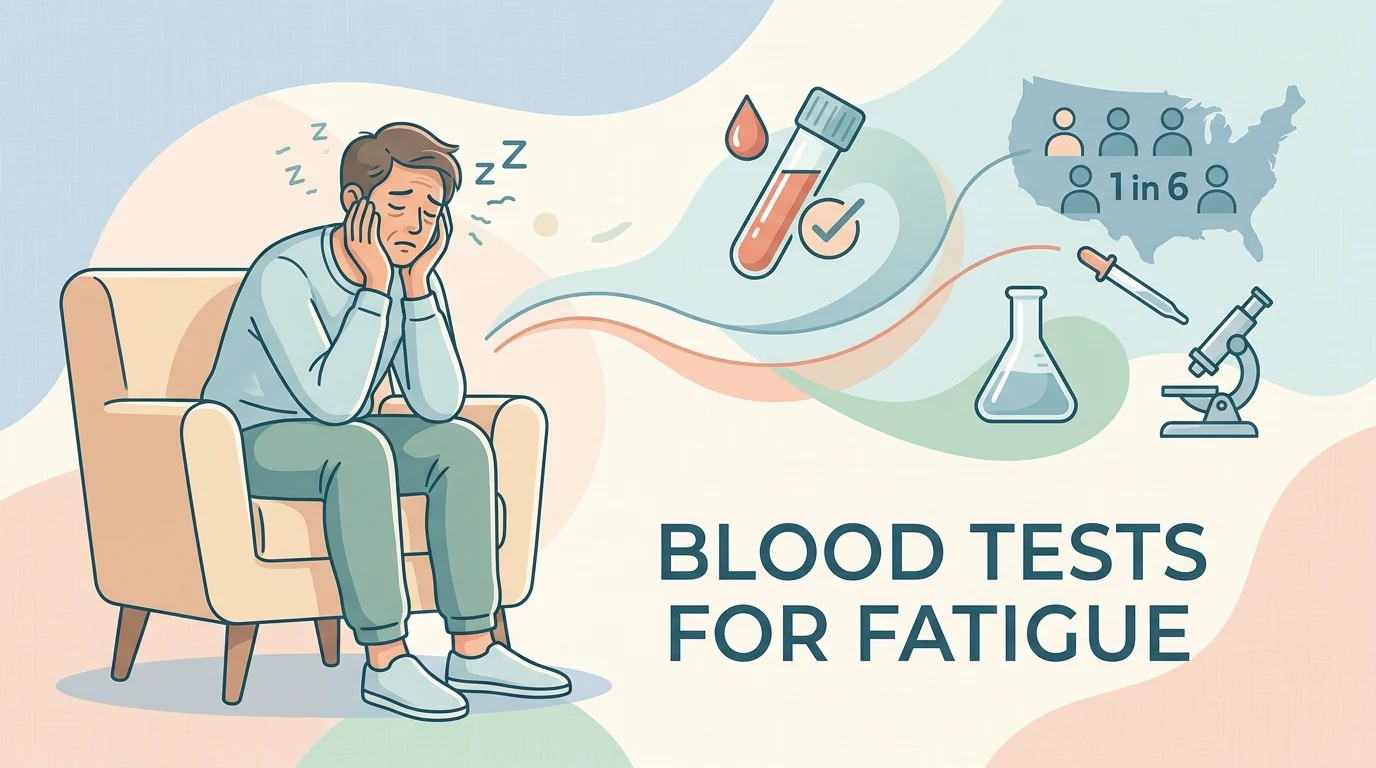
Blood tests for fatigue are among the most common lab requests in primary care, and a new federal report shows why. On September 3, 2026, the CDC’s National Center for Health Statistics (NCHS) published its first nationally representative picture of fatigue symptoms in U.S. adults. In 2024, 16.6% of adults felt very tired or exhausted most days or every day, and women (20.0%) were affected far more often than men (13.0%). Frequent fatigue also traveled with trouble concentrating, anxiety, depression and limits at work.

Fatigue is a symptom, not a diagnosis, and a survey cannot say what is causing it. In this article you’ll learn what the CDC report actually measured, which blood tests doctors order first when someone is tired all the time, how often those tests come back abnormal, and what recent research says about hidden causes such as iron deficiency without anemia.

What the new CDC report found

The report draws on the 2024 National Health Interview Survey, a household survey of 31,917 adults. Nearly three quarters (71.5%) had felt very tired or exhausted at least some days in the previous three months: 54.9% on some days, 10.7% on most days and 5.9% every day. The last two groups make up the 16.6% with “frequent fatigue.”

The pattern was not what many people expect. Frequent fatigue was most common in younger adults (19.5% at ages 18 to 34) and least common after 65 (12.9%), and it rose as family income fell. Among people with frequent fatigue, one in five said it lasted all day, and 38.8% described it as intense.

Fatigue rarely comes alone

Adults with frequent fatigue were much more likely to report other difficulties: 69.6% had symptoms of anxiety, 46.1% had trouble remembering or concentrating, and 45.0% had symptoms of depression, roughly three times the rate seen in other adults. More than one in three (36.0%) said fatigue limited the kind or amount of work they could do.

The authors are clear about the limits of their data. The survey is cross-sectional and self-reported, so it cannot tell whether fatigue causes these difficulties or shares an underlying cause with them. It also says nothing about medical causes. That gap is precisely where laboratory testing comes in.

Blood tests for fatigue: what doctors order first

There is no single “fatigue test.” Primary-care guidance in Europe and the U.S. converges on a small first-line panel that screens for the treatable causes most likely to be missed: anemia, iron deficiency, thyroid disease, diabetes, inflammation, and liver or kidney problems. The updated German family-medicine guideline on tiredness, for example, recommends blood glucose, a full blood count, an inflammation marker (ESR or CRP), liver enzymes and TSH as basic tests, with anything else ordered only for a specific reason.

测试它测量的是什么Fatigue-related causes it can reveal
全血细胞计数(CBC)Red cells, hemoglobin, white cells, plateletsAnemia, infection, blood disorders
Ferritin (with iron studies if needed)铁矿Iron deficiency, with or without anemia
促甲状腺激素Thyroid regulationUnderactive or overactive thyroid
空腹血糖或糖化血红蛋白(HbA1c)当前血糖及近三个月的血糖水平Prediabetes, diabetes
CRP (or ESR)Infection, inflammatory or autoimmune disease
Liver enzymes (ALT, AST, GGT)Liver cell stressFatty liver, hepatitis, alcohol, medication effects
Creatinine, eGFR and electrolytesKidney filtration, sodium, potassium, calciumKidney disease, dehydration, mineral imbalances
Vitamin B12 (and folate)Vitamin statusDeficiency in vegans, older adults, people on metformin or acid blockers
维生素D(25-OH)Vitamin D reserveSevere deficiency; the link with everyday fatigue is weaker than often claimed

Each line of this panel has its own reference article on this site. To decode the first test, read 全血细胞计数指南. If iron is in question, explore our low ferritin explainer我们的铁代谢检查项目指南. For the thyroid, see our normal thyroid levels guide, and for blood sugar, consult our HbA1c normal range guide.

Tests added case by case

Depending on your history, a doctor may add a celiac antibody test, creatine kinase (muscle symptoms), a morning cortisol, hepatitis or HIV serology, or a pregnancy test. Sleep apnea, depression and medication side effects are diagnosed by questions and examination rather than by blood, which is why a normal panel never closes the case.

How often do these tests actually find something?

A 2025 audit from a UK laboratory network answered this with real numbers. Out of 16,889 primary-care requests marked “tired all the time” or “fatigue,” a full blood count was ordered in 89% of cases, kidney function in 83%, liver tests and TSH in 80%, and CRP in 66%. Ferritin, by contrast, was requested in only 9.4% of cases.

The abnormal rates tell a different story: ferritin was outside the reference range in 26% of the people who had it measured, liver tests in 25%, the blood count in 23%, kidney function in 15%, CRP in 14% and TSH in 10%. In other words, the test most likely to be abnormal was one of the least ordered. If you are a woman with periods, a frequent blood donor or on a restrictive diet, it is reasonable to ask whether ferritin is on your requisition.

Two cautions apply: an “abnormal” flag is not the same as the cause of your fatigue, since many mild deviations are incidental, and the audit measures findings, not outcomes.

When your blood tests are normal but you are still exhausted

This is the most common scenario, and it is not a dead end. A 2024 cohort study of 304,914 English primary-care patients with new fatigue ranked the diagnoses that followed. Depression, respiratory infections, insomnia and other sleep disturbances, and thyroid disorders (in women) topped the list. Cancer was uncommon overall, but in men aged 70 and older it became one of the leading explanations, which supports targeted investigation in that group.

When the panel is clean, the next questions are about sleep quality, snoring and breathing pauses, mood, alcohol, physical activity, and every medication and supplement you take. To go further on two frequent culprits, read our sleep apnea overviewour depression guide.

Reading your results without false alarms

Three rules help. First, reference intervals are statistical: about one healthy person in twenty falls slightly outside a “normal” range on any given test, so a single borderline value rarely means disease. Second, look for patterns rather than isolated numbers: low hemoglobin with small red cells and low ferritin points to iron deficiency, a raised TSH with a low free T4 points to hypothyroidism, and a normal CBC with low ferritin is iron deficiency before anemia. Third, confirm before acting: a mildly elevated TSH or a borderline HbA1c is usually rechecked a few weeks later before any treatment decision.

If liver enzymes are the surprise, read our liver function tests guide. For kidney values and electrolytes, open 我们的肾功能检查指南, and for inflammation, check our high CRP levels guide.

When to see a doctor quickly

  • Fatigue that persists for two weeks or more despite rest, better sleep and a reasonable diet.
  • Fatigue that appears suddenly, or in someone over 65, or with unexplained weight loss, fever or night sweats.
  • Fatigue with shortness of breath, chest pain, an irregular or racing heartbeat, or fainting: call emergency services.
  • Black or bloody stools, vomiting blood, or heavy menstrual bleeding.
  • Low mood, loss of interest, or thoughts of self-harm: seek help the same day.

最新科学进展

Recent studies sharpen the picture of what blood tests can and cannot do for a tired patient. Here is what they found and what it changes for you.

The 2025 UK audit described above showed that ferritin, abnormal in about one in four people tested, was ordered in fewer than one in ten. What this means for you: a “complete” panel is not always complete, and asking about iron stores is a legitimate question, especially for women.

The 2024 English cohort of more than 300,000 adults with new fatigue found that depression, infections, sleep problems and thyroid disease were the conditions most often diagnosed afterward, while cancer mattered mainly in men over 70. What this means for you: normal blood results should redirect attention to sleep and mood rather than to endless additional tests.

A 2025 meta-analysis (a pooled analysis of 18 studies, about 1,400 participants) found that iron supplementation improved fatigue, anxiety and physical well-being in menstruating adults and young people who were iron-deficient but not anemic, and did nothing in people whose iron was normal. What this means for you: iron deficiency can cause symptoms before hemoglobin drops, but supplementing without a ferritin test is unlikely to help and can be harmful.

A small 2025 randomized trial (the IRONWOMAN study, 26 active women) found that correcting non-anemic iron deficiency with intravenous iron improved fatigue scores within four weeks. What this means for you: the result is preliminary and applies to a specific group, but it reinforces the value of measuring ferritin rather than guessing.

Finally, the 2023 update of the German family-medicine guideline on tiredness confirmed that a short basic panel (glucose, blood count, inflammation marker, liver enzymes, TSH) is the evidence-based starting point, with further tests only when the story points somewhere specific. What this means for you: a targeted panel, interpreted in context, beats a long list of tests.

词汇表

学期定义
全血细胞计数(CBC)A test that counts and sizes red cells, white cells and platelets and measures hemoglobin, the oxygen-carrying protein.
铁蛋白A protein that stores iron; its blood level reflects the body’s iron reserve. It can rise during inflammation even when iron is low.
Non-anemic iron deficiencyLow iron stores (low ferritin) while hemoglobin is still normal; it can already cause fatigue.
TSH(促甲状腺激素)The pituitary hormone that drives the thyroid; it rises when the thyroid is underactive and falls when it is overactive.
糖化血红蛋白Glycated hemoglobin, a measure of average blood sugar over the previous two to three months.
CRP(C反应蛋白)A liver protein that rises within hours when there is inflammation or infection anywhere in the body.
肾小球滤过率 (eGFR)Estimated glomerular filtration rate, a calculation from creatinine that estimates how well the kidneys filter blood.
NHISThe National Health Interview Survey, the CDC’s continuous household survey used for the September 2026 fatigue report.

常见问题解答

What blood tests are done for fatigue?

Most doctors start with a complete blood count, ferritin, TSH, fasting glucose or HbA1c, CRP, liver enzymes, and creatinine with electrolytes. Vitamin B12, vitamin D, celiac antibodies, creatine kinase, cortisol or infection tests are added when your history suggests them. The goal is to catch treatable causes such as anemia, iron deficiency, thyroid disease and diabetes, not to test for everything.

Why am I tired all the time when my blood tests are normal?

Normal results are common and reassuring: they make anemia, thyroid disease, diabetes and major organ problems unlikely. The most frequent explanations at that point are poor or fragmented sleep, sleep apnea, depression or anxiety, medication side effects, alcohol, inactivity, or a post-infectious state such as long COVID. A structured conversation with your doctor about sleep, mood and medications is usually the most productive next step.

What are the best blood tests for fatigue in women?

The same first-line panel applies, but ferritin deserves particular attention because menstrual blood loss makes iron deficiency common, and it can cause fatigue before anemia appears. TSH also matters, since thyroid disorders are several times more frequent in women. Pregnancy testing and, when relevant, a check for heavy menstrual bleeding complete the picture.

Can high or low blood pressure cause fatigue?

High blood pressure itself usually causes no symptoms, but some blood pressure medicines can cause tiredness, and hypertension often coexists with sleep apnea, kidney disease or thyroid problems that do. Low blood pressure can cause fatigue and lightheadedness, especially with dehydration, anemia or adrenal problems. In both situations, the standard fatigue panel plus a review of your medications is the right approach.

Can a blood test detect depression or burnout?

No. There is no blood marker for depression, anxiety or burnout. Blood tests are used to rule out physical conditions that mimic or worsen them, such as hypothyroidism, anemia or vitamin B12 deficiency. The diagnosis itself relies on validated questionnaires and a clinical interview. The CDC report is a reminder of how often fatigue and mood symptoms occur together.

Do I need to fast before blood tests for fatigue?

Only if fasting glucose or a lipid panel is included; HbA1c, CBC, ferritin, TSH, CRP, liver and kidney tests do not require fasting. Ferritin and TSH are best measured when you are not acutely ill, because infection raises ferritin and can temporarily shift TSH. Morning sampling is preferred if cortisol is part of the panel.

来源

延伸阅读

利用 AI DiagMe 了解您的实验室结果

A fatigue panel comes back as a dense list of numbers, flags and reference ranges. AI DiagMe reads your blood count, ferritin, thyroid, blood sugar, inflammation and liver and kidney markers together and explains, in plain language, what is normal, what deserves a closer look and what to ask your doctor. It helps you understand your results; it does not diagnose, and it never replaces a medical consultation.

几分钟内即可获得结果解读

作者

  • AI DiagMe

    AI DiagMe团队汇聚了医生、临床专家和医学编辑。我们的文章由健康传播专业人士撰写,并由我们科学委员会的医生进行审核和验证。该委员会由在血液科、内分泌科和全科等专科领域执业的医院医生组成。负责编辑工作的Julien Priour拥有巴黎高等商学院(HEC Paris)的MBA学位,并曾在法国国家可持续发展研究所(IRD,FUN-MOOC,2026)接受过科学写作和出版方面的培训。每篇文章都基于最新的临床指南和同行评审的医学出版物。.

    电子邮件 网站

相关文章