



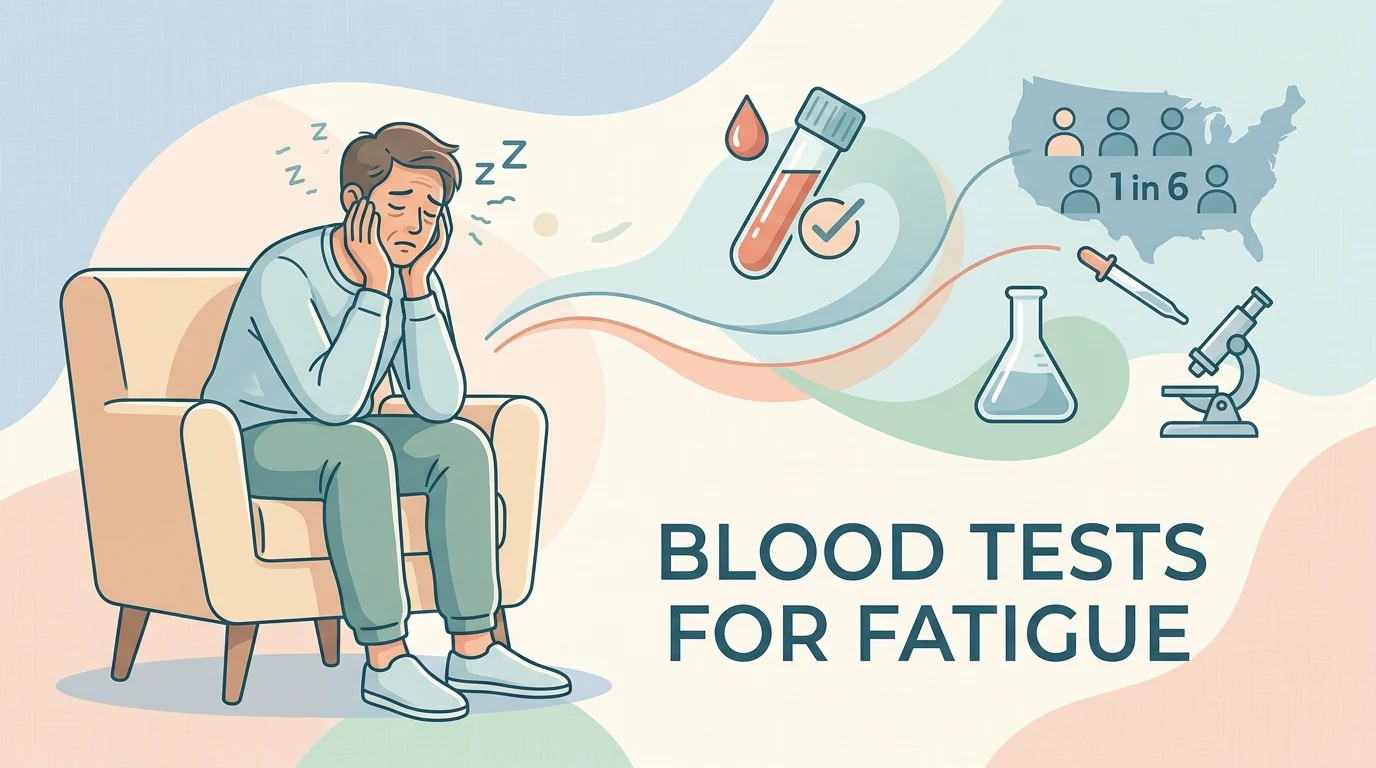
As análises ao sangue para a fadiga estão entre os pedidos laboratoriais mais comuns nos cuidados de saúde primários, e um novo relatório federal explica porquê. A 3 de setembro de 2026, o Centro Nacional de Estatísticas de Saúde (NCHS) do CDC publicou o primeiro retrato representativo a nível nacional dos sintomas de fadiga em adultos nos EUA. Em 2024, 16,6% dos adultos sentiam-se muito cansados ou exaustos na maioria dos dias ou todos os dias, sendo as mulheres (20,0%) afetadas com muito mais frequência do que os homens (13,0%). A fadiga frequente surgiu também associada a dificuldades de concentração, ansiedade, depressão e limitações no trabalho.
A fadiga é um sintoma, não um diagnóstico, e um inquérito não permite determinar a sua causa. Neste artigo, ficará a saber o que o relatório do CDC mediu efetivamente, quais as análises ao sangue que os médicos pedem em primeiro lugar quando alguém está sempre cansado, com que frequência esses resultados apresentam alterações, e o que a investigação mais recente diz sobre causas ocultas como a deficiência de ferro sem anemia.
O que revelou o novo relatório do CDC
O relatório baseia-se no Inquérito Nacional de Saúde de 2024, um inquérito domiciliário a 31 917 adultos. Quase três quartos (71,5%) tinham-se sentido muito cansados ou exaustos pelo menos alguns dias nos três meses anteriores: 54,9% em alguns dias, 10,7% na maioria dos dias e 5,9% todos os dias. Os dois últimos grupos constituem os 16,6% com “fadiga frequente”.
O padrão não era o que muitas pessoas esperariam. A fadiga frequente era mais comum nos adultos mais jovens (19,5% entre os 18 e os 34 anos) e menos comum após os 65 anos (12,9%), e aumentava à medida que o rendimento familiar diminuía. Entre as pessoas com fadiga frequente, uma em cada cinco afirmou que durava o dia todo, e 38,8% descreveram-na como intensa.
A fadiga raramente surge sozinha
Os adultos com fadiga frequente tinham muito mais probabilidade de referir outras dificuldades: 69,6% apresentavam sintomas de ansiedade, 46,1% tinham dificuldades de memória ou concentração, e 45,0% apresentavam sintomas de depressão — cerca de três vezes a taxa observada nos restantes adultos. Mais de um em cada três (36,0%) afirmou que a fadiga limitava o tipo ou a quantidade de trabalho que conseguia realizar.
Os autores são claros quanto às limitações dos seus dados. O inquérito é transversal e baseado em autorrelato, pelo que não permite determinar se a fadiga causa estas dificuldades ou se partilha com elas uma causa subjacente comum. Também não fornece qualquer informação sobre causas médicas. É precisamente nessa lacuna que entram as análises laboratoriais.
Análises ao sangue por fadiga: o que os médicos pedem em primeiro lugar
Não existe uma única «análise à fadiga». As orientações de medicina geral e familiar na Europa e nos EUA convergem num pequeno painel de primeira linha que rastreia as causas tratáveis com maior probabilidade de passar despercebidas: anemia, deficiência de ferro, doença da tiroide, diabetes, inflamação e problemas hepáticos ou renais. A atualizada diretriz alemã de medicina familiar sobre cansaço recomenda, por exemplo, a glicemia, um hemograma completo, um marcador de inflamação (VS ou PCR), enzimas hepáticas e TSH como análises básicas, sendo qualquer outra pedida apenas por uma razão específica.
| Exame | O que mede | Causas relacionadas com fadiga que pode revelar |
|---|---|---|
| Hemograma completo (HC) | Glóbulos vermelhos, hemoglobina, glóbulos brancos, plaquetas | Anemia, infeção, doenças do sangue |
| Ferritina (com estudo do ferro se necessário) | Reservas de ferro | Deficiência de ferro, com ou sem anemia |
| TSH | Regulação da tiroide | Tiroide hipoativa ou hiperativa |
| Glicemia em jejum ou HbA1c | Açúcar no sangue agora e ao longo de três meses | Pré-diabetes, diabetes |
| PCR (ou VS) | Inflamação | Infeção, doença inflamatória ou autoimune |
| Enzimas hepáticas (ALT, AST, GGT) | Lesão das células hepáticas | Fígado gordo, hepatite, álcool, efeitos de medicamentos |
| Creatinina, TFGe e eletrólitos | Filtração renal, sódio, potássio, cálcio | Doença renal, desidratação, desequilíbrios minerais |
| Vitamina B12 (e folato) | Estado vitamínico | Deficiência em veganos, adultos mais velhos, pessoas a tomar metformina ou antiácidos |
| Vitamina D (25-OH) | Reserva de vitamina D | Deficiência grave; a relação com a fadiga do dia a dia é mais fraca do que habitualmente se afirma |
Cada linha deste painel tem o seu próprio artigo de referência neste site. Para perceber a primeira análise, leia o nosso guia completo sobre hemograma. Se o ferro estiver em causa, explore o nosso guia sobre ferritina baixa e o nosso guia do painel de estudos do ferro. Para a tiroide, consulte o nosso guia sobre os valores normais da tiroide, e para a glicemia, consulte o nosso guia sobre os valores normais de HbA1c.
Análises adicionadas caso a caso
Dependendo do seu historial, o médico pode acrescentar um teste de anticorpos para a doença celíaca, creatina quinase (em caso de sintomas musculares), cortisol matinal, serologia para hepatite ou VIH, ou um teste de gravidez. A apneia do sono, a depressão e os efeitos secundários de medicamentos são diagnosticados através de perguntas e exame clínico, e não por análises ao sangue — razão pela qual um painel normal nunca fecha o caso.
Com que frequência é que estas análises detetam realmente alguma coisa?
Uma auditoria de 2025 realizada por uma rede de laboratórios do Reino Unido respondeu a esta questão com dados reais. De 16 889 pedidos em cuidados de saúde primários assinalados como “cansaço constante” ou “fadiga”, foi solicitado um hemograma completo em 89% dos casos, função renal em 83%, provas hepáticas e TSH em 80%, e PCR em 66%. A ferritina, por sua vez, foi pedida em apenas 9,4% dos casos.
As taxas de resultados alterados contam uma história diferente: a ferritina estava fora dos valores de referência em 26% das pessoas a quem foi doseada, as provas hepáticas em 25%, o hemograma em 23%, a função renal em 15%, a PCR em 14% e a TSH em 10%. Por outras palavras, a análise com maior probabilidade de estar alterada foi uma das menos pedidas. Se é mulher com menstruação, dadora frequente de sangue ou segue uma dieta restritiva, é razoável perguntar se a ferritina consta da sua requisição.
Há duas ressalvas a ter em conta: um resultado “alterado” não é o mesmo que a causa da sua fadiga, uma vez que muitos desvios ligeiros são achados incidentais; além disso, a auditoria mede achados, não resultados clínicos.
Quando as suas análises ao sangue são normais mas continua exausto
Este é o cenário mais comum, e não é um beco sem saída. Um estudo de coorte de 2024 com 304 914 doentes de cuidados de saúde primários em Inglaterra com fadiga recente classificou os diagnósticos que se seguiram. A depressão, as infeções respiratórias, a insónia e outras perturbações do sono, e as doenças da tiroide (nas mulheres) encabeçaram a lista. O cancro foi pouco frequente no geral, mas nos homens com 70 anos ou mais tornou-se uma das principais explicações, o que justifica uma investigação dirigida nesse grupo.
Quando o painel está limpo, as perguntas seguintes incidem sobre a qualidade do sono, o ressonar e as pausas respiratórias, o humor, o álcool, a atividade física e todos os medicamentos e suplementos que toma. Para aprofundar dois culpados frequentes, leia o nosso artigo sobre apneia do sono e o nosso guia sobre depressão.
Leia os seus resultados sem alarmes desnecessários
Três regras ajudam. Primeiro, os intervalos de referência são estatísticos: cerca de uma em cada vinte pessoas saudáveis fica ligeiramente fora do intervalo «normal» num determinado exame, pelo que um valor isolado na fronteira raramente significa doença. Segundo, procure padrões em vez de números isolados: hemoglobina baixa com glóbulos vermelhos pequenos e ferritina baixa aponta para deficiência de ferro; uma TSH elevada com T4 livre baixa aponta para hipotiroidismo; e um hemograma normal com ferritina baixa é deficiência de ferro antes de anemia. Terceiro, confirme antes de agir: uma TSH ligeiramente elevada ou uma HbA1c na fronteira é habitualmente repetida algumas semanas depois antes de qualquer decisão de tratamento.
Se as enzimas hepáticas são a surpresa, leia o nosso guia sobre análises da função hepática. Para valores renais e eletrólitos, consulte o nosso guia sobre o painel de função renal, e para inflamação, veja o nosso guia sobre PCR elevada.
Quando consultar um médico rapidamente
- Cansaço que persiste duas semanas ou mais apesar de descanso, melhor sono e uma alimentação razoável.
- Cansaço que surge de forma súbita, ou numa pessoa com mais de 65 anos, ou acompanhado de perda de peso inexplicada, febre ou suores nocturnos.
- Cansaço com falta de ar, dor no peito, batimento cardíaco irregular ou acelerado, ou desmaio: ligue para os serviços de emergência.
- Fezes negras ou com sangue, vómitos com sangue, ou hemorragia menstrual abundante.
- Humor deprimido, perda de interesse ou pensamentos de autolesão: procure ajuda no próprio dia.
Últimos avanços científicos
Estudos recentes clarificam o que as análises ao sangue conseguem e não conseguem fazer por um doente com cansaço. Eis o que descobriram e o que isso muda para si.
A auditoria britânica de 2025 descrita acima mostrou que a ferritina, alterada em cerca de uma em cada quatro pessoas analisadas, foi pedida em menos de uma em cada dez. O que isto significa para si: um painel «completo» nem sempre é completo, e perguntar sobre as reservas de ferro é uma questão legítima, especialmente para as mulheres.
O estudo inglês de 2024, com mais de 300 000 adultos com cansaço recente, concluiu que a depressão, as infecções, os problemas de sono e a doença da tiróide eram as condições diagnosticadas com mais frequência a seguir, enquanto o cancro era relevante principalmente em homens com mais de 70 anos. O que isto significa para si: resultados de análises normais devem redirecionar a atenção para o sono e o humor, em vez de levar a uma série interminável de exames adicionais.
Uma meta-análise de 2025 (uma análise conjunta de 18 estudos, com cerca de 1.400 participantes) concluiu que a suplementação de ferro melhorou a fadiga, a ansiedade e o bem-estar físico em adultos e jovens com menstruação que tinham deficiência de ferro mas não tinham anemia, e não produziu qualquer efeito em pessoas com níveis de ferro normais. O que isto significa para si: a deficiência de ferro pode causar sintomas antes de a hemoglobina baixar, mas tomar suplementos sem fazer um teste de ferritina dificilmente ajuda e pode ser prejudicial.
Um pequeno ensaio clínico aleatorizado de 2025 (o estudo IRONWOMAN, com 26 mulheres ativas) concluiu que a correção da deficiência de ferro sem anemia com ferro intravenoso melhorou os índices de fadiga em quatro semanas. O que isto significa para si: o resultado é preliminar e aplica-se a um grupo específico, mas reforça a importância de medir a ferritina em vez de adivinhar.
Por fim, a atualização de 2023 da orientação clínica alemã de medicina familiar sobre o cansaço confirmou que um painel básico e breve (glicose, hemograma, marcador de inflamação, enzimas hepáticas, TSH) é o ponto de partida baseado em evidências, com análises adicionais apenas quando o quadro clínico aponta para algo específico. O que isto significa para si: um painel direcionado, interpretado em contexto, é mais eficaz do que uma longa lista de análises.
Glossário
| Termo | Definição |
|---|---|
| Hemograma completo (HC) | Uma análise que conta e mede os glóbulos vermelhos, os glóbulos brancos e as plaquetas, e mede a hemoglobina, a proteína responsável pelo transporte de oxigénio. |
| Ferritina | Uma proteína que armazena ferro; o seu nível no sangue reflete as reservas de ferro do organismo. Pode aumentar durante uma inflamação mesmo quando o ferro está baixo. |
| Deficiência de ferro sem anemia | Reservas de ferro baixas (ferritina baixa) com hemoglobina ainda normal; pode já causar fadiga. |
| TSH (hormona estimulante da tiroide) | A hormona hipofisária que estimula a tiroide; sobe quando a tiroide está hipoativa e desce quando está hiperativa. |
| HbA1c | Hemoglobina glicada, uma medida da média de açúcar no sangue nos dois a três meses anteriores. |
| PCR (proteína C reativa) | Uma proteína hepática que sobe em poucas horas quando existe inflamação ou infeção em qualquer parte do organismo. |
| TFGe | Taxa de filtração glomerular estimada, um cálculo a partir da creatinina que estima a eficiência com que os rins filtram o sangue. |
| NHIS | O National Health Interview Survey, o inquérito domiciliar contínuo dos CDC utilizado para o relatório sobre fadiga de setembro de 2026. |
Perguntas frequentes
Que análises ao sangue se fazem para investigar o cansaço?
A maioria dos médicos começa com um hemograma completo, ferritina, TSH, glicemia em jejum ou HbA1c, PCR, enzimas hepáticas e creatinina com eletrólitos. A vitamina B12, a vitamina D, os anticorpos da doença celíaca, a creatina quinase, o cortisol ou os testes de infeção são acrescentados quando a sua história clínica o justifica. O objetivo é identificar causas tratáveis como anemia, deficiência de ferro, doença da tiroide e diabetes, e não fazer todos os testes possíveis.
Por que estou sempre cansado se as minhas análises ao sangue estão normais?
Resultados normais são frequentes e tranquilizadores: tornam improvável a existência de anemia, doença da tiroide, diabetes ou problemas graves de órgãos. As explicações mais comuns nesse caso são sono insuficiente ou fragmentado, apneia do sono, depressão ou ansiedade, efeitos secundários de medicamentos, álcool, sedentarismo ou um estado pós-infecioso como a COVID longa. Uma conversa estruturada com o seu médico sobre o sono, o humor e os medicamentos é, geralmente, o passo seguinte mais útil.
Quais são as melhores análises ao sangue para o cansaço nas mulheres?
O mesmo painel de primeira linha se aplica, mas a ferritina merece atenção especial, porque as perdas de sangue menstruais tornam a deficiência de ferro muito comum, podendo causar cansaço antes de surgir anemia. O TSH também é importante, uma vez que as doenças da tiroide são várias vezes mais frequentes nas mulheres. O teste de gravidez e, quando relevante, a avaliação de hemorragia menstrual abundante completam o quadro.
A tensão arterial alta ou baixa pode causar cansaço?
A tensão arterial alta em si geralmente não causa sintomas, mas alguns medicamentos para a tensão podem provocar cansaço, e a hipertensão coexiste frequentemente com apneia do sono, doença renal ou problemas da tiroide que o causam. A tensão arterial baixa pode provocar cansaço e tonturas, especialmente em caso de desidratação, anemia ou problemas das suprarrenais. Em ambas as situações, o painel habitual de avaliação do cansaço, juntamente com uma revisão dos seus medicamentos, é a abordagem correta.
Uma análise ao sangue consegue detetar depressão ou burnout?
Não. Não existe nenhum marcador sanguíneo para a depressão, a ansiedade ou o burnout. As análises ao sangue servem para excluir condições físicas que as imitam ou agravam, como o hipotiroidismo, a anemia ou a deficiência de vitamina B12. O diagnóstico em si baseia-se em questionários validados e numa entrevista clínica. O relatório do CDC recorda com que frequência o cansaço e os sintomas de humor surgem em conjunto.
Preciso de estar em jejum antes das análises ao sangue para o cansaço?
Apenas se a glicemia em jejum ou um painel lipídico estiver incluído; HbA1c, hemograma, ferritina, TSH, PCR, análises hepáticas e renais não requerem jejum. A ferritina e o TSH são melhor avaliados quando não está com uma doença aguda, pois a infeção eleva a ferritina e pode alterar temporariamente o TSH. A colheita matinal é preferível se o cortisol fizer parte do painel.
Fontes
- Young NAE, Weeks JD, Elgaddal N — Fatigue Among Adults Age 18 and Older: United States, 2024 — National Health Statistics Reports No. 221, CDC/NCHS, September 3, 2026: https://www.cdc.gov/nchs/data/nhsr/nhsr221.pdf
- Mayo Clinic — Fatigue: causes and when to see a doctor, 2026: https://www.mayoclinic.org/symptoms/fatigue/basics/causes/sym-20050894
- Cleveland Clinic — Fatigue: causes and treatment, 2023: https://my.clevelandclinic.org/health/symptoms/21206-fatigue
- Handjiev S, et al. — ‘Tired all the time’: what general practitioners request and find in patients with tiredness/fatigue, an audit against the NICE clinical knowledge summary — Annals of Clinical Biochemistry, 2025: https://consensus.app/papers/details/38c0dde848f95e658294df3e0baae2c7/
- White B, Zakkak N, Renzi C, et al. — Underlying disease risk among patients with fatigue: a population-based cohort study in primary care — British Journal of General Practice, 2024: https://doi.org/10.3399/BJGP.2025.0093
- Kornder N, Baum E, Maisel P, Lindner N — Tiredness/fatigue: S3 guideline update — Zeitschrift für Allgemeinmedizin, 2023: https://doi.org/10.1007/s44266-023-00045-z
- Fiani D, Chahine S, Zaboube M, et al. — Psychiatric and cognitive outcomes of iron supplementation in non-anemic children, adolescents, and menstruating adults: a meta-analysis and systematic review — Neuroscience and Biobehavioral Reviews, 2025: https://doi.org/10.1016/j.neubiorev.2025.106372
- Dugan C, Peeling P, Buissink P, et al. — Effect of intravenous iron therapy on exercise performance, fatigue scores and mood states in iron-deficient recreationally active females of reproductive age (IRONWOMAN trial) — British Journal of Sports Medicine, 2025: https://doi.org/10.1136/bjsports-2024-108240
Leitura complementar
- Anemia: sintomas, causas e análises
- Vitamina B12 baixa: sintomas, causas e tratamentos
- Vitamina D 5.000 UI: o que diz a evidência
- Hipotiroidismo: compreender e tratar
- Hemograma vs painel metabólico completo: perceber as duas análises
Perceba os seus resultados de análises com o AI DiagMe
Um painel de análises para a fadiga devolve uma lista densa de números, sinalizações e valores de referência. O AI DiagMe lê em conjunto o seu hemograma, ferritina, tiróide, glicemia, inflamação e marcadores hepáticos e renais, e explica em linguagem simples o que está normal, o que merece atenção e o que deve perguntar ao seu médico. Ajuda-o a compreender os seus resultados; não faz diagnósticos e nunca substitui uma consulta médica.
Obtenha a interpretação dos seus resultados em minutos