







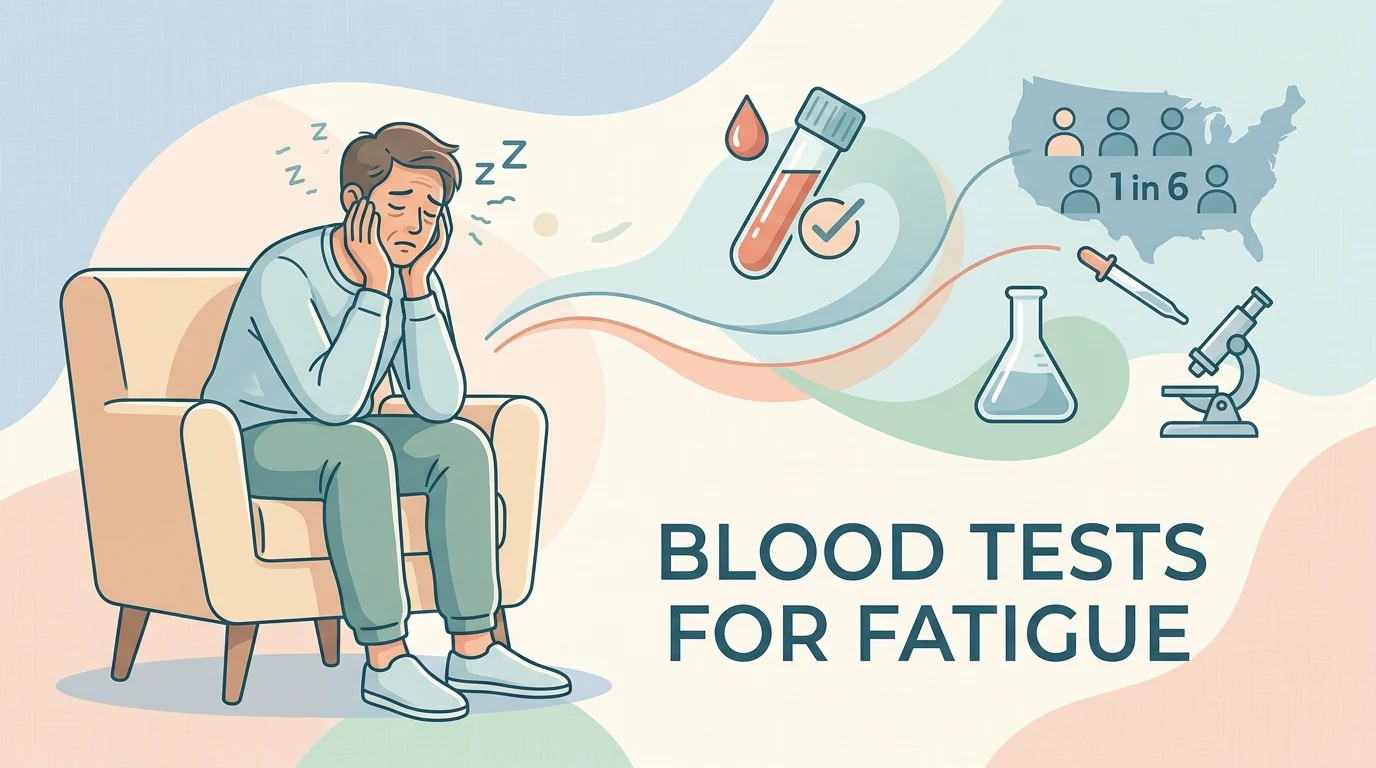
피로에 대한 혈액 검사는 일차 진료에서 가장 흔히 요청되는 검사 중 하나이며, 새로운 연방 보고서가 그 이유를 잘 보여줍니다. 2026년 9월 3일, CDC 산하 국립보건통계센터(NCHS)는 미국 성인의 피로 증상에 관한 최초의 전국 대표 통계를 발표했습니다. 2024년에는 성인의 16.6%가 대부분의 날 또는 매일 매우 피곤하거나 극도로 지친 느낌을 받았으며, 여성(20.0%)이 남성(13.0%)보다 훨씬 더 많은 영향을 받았습니다. 잦은 피로는 집중력 저하, 불안, 우울증, 업무 능력 저하와도 함께 나타났습니다.
피로는 진단명이 아닌 증상이며, 설문 조사만으로는 원인을 알 수 없습니다. 이 글에서는 CDC 보고서가 실제로 무엇을 측정했는지, 항상 피곤한 사람에게 의사들이 가장 먼저 처방하는 혈액 검사는 무엇인지, 그 검사에서 이상 소견이 나오는 빈도는 어느 정도인지, 그리고 빈혈 없는 철분 결핍과 같은 숨겨진 원인에 대해 최근 연구가 무엇을 말하는지 알아봅니다.
새로운 CDC 보고서의 주요 내용
이 보고서는 31,917명의 성인을 대상으로 한 가구 설문 조사인 2024년 국가건강인터뷰조사(National Health Interview Survey)를 바탕으로 합니다. 응답자의 거의 4분의 3(71.5%)이 지난 3개월 동안 적어도 며칠은 매우 피곤하거나 극도로 지친 느낌을 받았다고 답했습니다. 구체적으로는 54.9%가 가끔, 10.7%가 대부분의 날, 5.9%가 매일 그런 느낌을 받았습니다. 마지막 두 그룹이 '잦은 피로'에 해당하는 16.6%를 구성합니다.
그 양상은 많은 사람들의 예상과 달랐습니다. 잦은 피로는 젊은 성인(18~34세, 19.5%)에서 가장 흔했고, 65세 이후(12.9%)에서 가장 적었으며, 가구 소득이 낮을수록 증가했습니다. 잦은 피로를 경험한 사람들 중 5명 중 1명은 하루 종일 피로가 지속된다고 답했으며, 38.8%는 피로가 심하다고 표현했습니다.
피로는 혼자 오지 않는다
잦은 피로를 경험하는 성인은 다른 어려움도 함께 겪을 가능성이 훨씬 높았습니다. 69.6%는 불안 증상을 보였고, 46.1%는 기억력 저하나 집중력 문제를 겪었으며, 45.0%는 우울 증상을 보였는데, 이는 다른 성인에 비해 약 3배 높은 수치입니다. 3명 중 1명 이상(36.0%)은 피로로 인해 할 수 있는 일의 종류나 양이 제한된다고 답했습니다.
저자들은 자신들의 데이터의 한계를 명확히 밝히고 있습니다. 이 설문조사는 단면 연구이자 자기 보고 방식이기 때문에, 피로가 이러한 어려움을 유발하는지 아니면 공통된 원인을 공유하는지 알 수 없습니다. 또한 의학적 원인에 대해서도 아무런 정보를 제공하지 않습니다. 바로 이 공백을 채워주는 것이 혈액 검사입니다.
피로 원인을 찾는 혈액 검사: 의사가 먼저 확인하는 항목들
'피로 검사'라는 단일 검사는 존재하지 않습니다. 유럽과 미국의 일차 진료 지침은 놓치기 쉬운 치료 가능한 원인들—빈혈, 철분 결핍, 갑상선 질환, 당뇨병, 염증, 간 또는 신장 문제—을 선별하는 소규모 1차 검사 패널로 수렴됩니다. 예를 들어, 독일의 최신 가정의학 피로 진료 지침은 기본 검사로 혈당, 전혈구 검사, 염증 지표(ESR 또는 CRP), 간 효소 수치, TSH를 권장하며, 그 외 검사는 특정 이유가 있을 때만 추가로 시행하도록 권고합니다.
| 검사 항목 | 측정 대상 | 이 검사로 확인할 수 있는 피로 관련 원인 |
|---|---|---|
| 전혈구 검사(CBC) | 적혈구, 헤모글로빈, 백혈구, 혈소판 | 빈혈, 감염, 혈액 질환 |
| 페리틴(필요 시 철분 검사 포함) | 철분 저장량 | 빈혈 동반 여부와 관계없이 철분 결핍 |
| TSH | 갑상선 기능 조절 | 갑상선 기능 저하 또는 항진 |
| 공복 혈당 또는 당화혈색소(HbA1c) | 현재 혈당 및 최근 3개월간의 혈당 | 당뇨 전단계, 당뇨병 |
| CRP(또는 ESR) | 염증 | 감염, 염증성 또는 자가면역 질환 |
| 간 효소 수치(ALT, AST, GGT) | 간세포 손상 | 지방간, 간염, 알코올, 약물 부작용 |
| 크레아티닌, eGFR 및 전해질 | 신장 여과 기능, 나트륨, 칼륨, 칼슘 | 신장 질환, 탈수, 미네랄 불균형 |
| 비타민 B12(및 엽산) | 비타민 상태 | 채식주의자, 고령자, 메트포르민 또는 위산 억제제 복용자에서의 결핍 |
| 비타민 D(25-OH) | 비타민 D 보유량 | 심각한 결핍; 일상적인 피로와의 연관성은 흔히 알려진 것보다 약합니다 |
이 패널의 각 항목에 대한 개별 참고 문서가 이 사이트에 있습니다. 첫 번째 검사를 이해하려면 다음을 읽어보세요 전혈구 검사(CBC) 완전 가이드. 철분이 문제라면 다음을 확인하세요 페리틴 수치 낮음 설명 자료 및 철분 검사 패널 가이드. 갑상선에 대해서는 다음을 참고하세요 갑상선 수치 정상 범위 안내, 혈당에 대해서는 다음을 확인하세요 당화혈색소(HbA1c) 정상 범위 안내.
상황에 따라 추가되는 검사
병력에 따라 의사가 셀리악병 항체 검사, 크레아틴 키나아제(근육 증상), 아침 코르티솔, 간염 또는 HIV 혈청 검사, 또는 임신 검사를 추가할 수 있습니다. 수면 무호흡증, 우울증, 약물 부작용은 혈액 검사가 아닌 문진과 진찰로 진단되기 때문에, 검사 결과가 정상이더라도 원인 규명이 끝난 것은 아닙니다.
이 검사들이 실제로 이상 소견을 발견하는 빈도는 얼마나 될까요?
영국의 한 검사실 네트워크가 2025년에 실시한 감사에서 실제 수치로 이 질문에 답했습니다. '항상 피곤함' 또는 '피로'로 표시된 1차 진료 요청 16,889건 중 전혈구검사(CBC)는 89%에서, 신장 기능 검사는 83%에서, 간 기능 검사와 TSH는 80%에서, CRP는 66%에서 처방되었습니다. 반면 페리틴은 단 9.4%의 경우에만 요청되었습니다.
비정상 비율을 보면 이야기가 달라집니다. 페리틴을 측정한 사람 중 26%에서 기준 범위를 벗어났고, 간 기능 검사는 25%, 혈구 검사는 23%, 신장 기능 검사는 15%, CRP는 14%, TSH는 10%였습니다. 다시 말해, 비정상으로 나올 가능성이 가장 높은 검사가 가장 적게 처방된 검사 중 하나였습니다. 생리를 하는 여성이거나, 헌혈을 자주 하거나, 제한적인 식단을 유지하고 있다면 처방전에 페리틴이 포함되어 있는지 확인해 보는 것이 합리적입니다.
두 가지 주의 사항이 있습니다. '비정상' 표시가 피로의 원인과 반드시 같은 것은 아닙니다. 경미한 수치 이상은 우연한 발견인 경우가 많기 때문입니다. 또한 이 감사는 검사 결과를 측정한 것이지, 치료 결과를 측정한 것이 아닙니다.
혈액 검사 결과가 정상인데도 여전히 극도로 피곤할 때
이것은 가장 흔한 상황이며, 막다른 길이 아닙니다. 새로 피로를 호소한 영국 1차 진료 환자 304,914명을 대상으로 한 2024년 코호트 연구에서 이후 내려진 진단 순위를 분석했습니다. 우울증, 호흡기 감염, 불면증 및 기타 수면 장애, 갑상선 질환(여성의 경우)이 상위를 차지했습니다. 암은 전체적으로 드물었지만, 70세 이상 남성에서는 주요 원인 중 하나가 되었으며, 이는 해당 그룹에서 집중적인 검사가 필요함을 뒷받침합니다.
검사 결과가 모두 정상이라면, 다음으로 확인해야 할 것은 수면의 질, 코골이와 수면 중 호흡 정지, 기분 상태, 음주, 신체 활동, 그리고 복용 중인 모든 약물과 보충제입니다. 자주 문제가 되는 두 가지 원인에 대해 더 알아보려면 다음을 읽어보세요. 수면 무호흡증 개요 및 우울증 가이드.
불필요한 걱정 없이 검사 결과 이해하기
세 가지 원칙이 도움이 됩니다. 첫째, 기준 범위는 통계적 개념입니다. 건강한 사람 20명 중 약 1명은 특정 검사에서 '정상' 범위를 약간 벗어날 수 있으므로, 경계선상의 단일 수치가 질병을 의미하는 경우는 드뭅니다. 둘째, 개별 수치보다 전체적인 패턴을 살펴보세요. 헤모글로빈 수치가 낮고 적혈구가 작으며 페리틴도 낮다면 철 결핍을 시사하고, TSH가 높고 유리 T4가 낮다면 갑상선 기능 저하증을 가리키며, CBC는 정상이지만 페리틴이 낮다면 빈혈 이전 단계의 철 결핍입니다. 셋째, 조치를 취하기 전에 확인하세요. 경미하게 상승한 TSH나 경계선상의 당화혈색소(HbA1c)는 보통 치료 결정을 내리기 전에 몇 주 후에 재검사합니다.
간 효소 수치가 예상치 못하게 나왔다면 다음을 읽어보세요. 간 기능 검사 가이드. 신장 수치와 전해질에 대해서는 신장 기능 패널 가이드를 참고하시고, 염증 수치는 CRP 수치 높음 가이드.
빨리 병원을 찾아야 할 때
- 충분한 휴식, 수면 개선, 적절한 식단에도 불구하고 2주 이상 피로가 지속되는 경우.
- 피로가 갑자기 나타나거나, 65세 이상인 경우, 또는 원인 불명의 체중 감소·발열·야간 발한이 동반되는 경우.
- 피로와 함께 호흡 곤란, 흉통, 불규칙하거나 빠른 심박수, 또는 실신이 나타나는 경우: 즉시 응급 서비스에 연락하세요.
- 검거나 혈변이 나오거나, 피를 토하거나, 생리 출혈이 심한 경우.
- 우울한 기분, 흥미 상실, 또는 자해에 대한 생각이 드는 경우: 당일 바로 도움을 받으세요.
최신 과학적 발전
최근 연구들은 피로를 호소하는 환자에게 혈액 검사가 무엇을 알 수 있고 무엇을 알 수 없는지를 더욱 명확히 보여주고 있습니다. 주요 연구 결과와 그것이 여러분에게 의미하는 바를 정리했습니다.
앞서 언급한 2025년 영국 감사 결과에 따르면, 검사를 받은 사람 4명 중 1명꼴로 페리틴 수치가 비정상이었음에도 불구하고, 실제로 페리틴 검사를 받은 사람은 10명 중 1명도 채 되지 않았습니다. 이것이 여러분에게 의미하는 바: “종합” 검사라도 항상 모든 항목을 포함하지는 않으므로, 특히 여성이라면 철분 저장량 검사에 대해 의사에게 물어보는 것이 당연한 권리입니다.
2024년 영국에서 새롭게 피로를 호소한 성인 30만 명 이상을 대상으로 한 코호트 연구에서, 이후 가장 많이 진단된 질환은 우울증, 감염, 수면 장애, 갑상선 질환이었으며, 암은 주로 70세 이상 남성에서만 유의미하게 나타났습니다. 이것이 여러분에게 의미하는 바: 혈액 검사 결과가 정상이라면, 끝없이 추가 검사를 받기보다는 수면과 기분 상태에 주의를 기울이는 것이 더 도움이 됩니다.
2025년 메타분석(18개 연구, 약 1,400명을 종합 분석)에 따르면, 빈혈은 없지만 철분이 부족한 생리 중인 성인과 청소년에게 철분 보충제를 투여했을 때 피로, 불안, 신체적 건강이 개선된 반면, 철분 수치가 정상인 사람에게는 효과가 없었습니다. 이것이 여러분에게 의미하는 바: 철분 결핍은 헤모글로빈이 떨어지기 전에도 증상을 유발할 수 있지만, 페리틴 검사 없이 무작정 철분을 보충하는 것은 효과가 없을 뿐 아니라 오히려 해로울 수 있습니다.
2025년에 진행된 소규모 무작위 대조 시험(IRONWOMAN 연구, 활동적인 여성 26명)에서, 빈혈이 없는 철분 결핍 여성에게 정맥 주사로 철분을 보충했을 때 4주 이내에 피로 점수가 개선되었습니다. 이것이 여러분에게 의미하는 바: 이 결과는 예비적인 수준이며 특정 집단에만 해당되지만, 추측에 의존하기보다 페리틴 수치를 직접 측정하는 것이 얼마나 중요한지를 다시 한번 확인시켜 줍니다.
마지막으로, 2023년에 개정된 독일 가정의학 가이드라인(피로 관련)에서는 기본 검사 패널(혈당, 혈구 수, 염증 지표, 간 효소, TSH)이 근거 중심의 출발점이며, 추가 검사는 특정 원인이 의심될 때만 시행한다고 확인했습니다. 이것이 의미하는 바는 다음과 같습니다. 긴 검사 목록보다 맥락에 맞게 해석된 맞춤형 패널이 훨씬 효과적입니다.
용어 설명
| 용어 | 정의 |
|---|---|
| 전혈구 검사(CBC) | 적혈구, 백혈구, 혈소판의 수와 크기를 측정하고, 산소를 운반하는 단백질인 헤모글로빈 수치를 확인하는 검사입니다. |
| 페리틴 | 철분을 저장하는 단백질로, 혈중 수치는 체내 철분 저장량을 반영합니다. 철분이 부족한 상태에서도 염증이 있으면 수치가 올라갈 수 있습니다. |
| 빈혈이 없는 철 결핍 | 헤모글로빈은 정상이지만 철분 저장량이 낮은 상태(페리틴 저하)로, 이 단계에서도 이미 피로감이 나타날 수 있습니다. |
| TSH (갑상선 자극 호르몬) | 갑상선을 자극하는 뇌하수체 호르몬으로, 갑상선 기능이 저하되면 수치가 올라가고 항진되면 내려갑니다. |
| 당화혈색소(HbA1c) | 당화혈색소로, 지난 2~3개월간의 평균 혈당 수준을 나타내는 지표입니다. |
| CRP (C-반응성 단백) | 체내 어딘가에 염증이나 감염이 생기면 몇 시간 안에 수치가 올라가는 간 유래 단백질입니다. |
| eGFR (추정 사구체여과율) | 크레아티닌 수치를 이용해 계산하는 추정 사구체 여과율로, 신장이 혈액을 얼마나 잘 걸러내는지를 나타냅니다. |
| NHIS | 미국 질병통제예방센터(CDC)가 실시하는 지속적인 가구 조사인 국가건강인터뷰조사로, 2026년 9월 피로 보고서에 활용된 자료입니다. |
자주 묻는 질문
피로할 때 어떤 혈액 검사를 받나요?
대부분의 의사는 전혈구 검사(CBC), 페리틴, TSH, 공복 혈당 또는 당화혈색소(HbA1c), CRP, 간 효소, 크레아티닌 및 전해질 검사를 기본으로 시작합니다. 병력에 따라 비타민 B12, 비타민 D, 셀리악병 항체, 크레아틴 키나제, 코르티솔, 또는 감염 관련 검사가 추가될 수 있습니다. 목표는 빈혈, 철 결핍, 갑상선 질환, 당뇨병 등 치료 가능한 원인을 찾는 것이지, 모든 항목을 검사하는 것이 아닙니다.
혈액 검사 결과가 정상인데 왜 항상 피곤한가요?
검사 결과가 정상으로 나오는 경우는 흔하며, 이는 빈혈, 갑상선 질환, 당뇨병, 주요 장기 이상의 가능성이 낮다는 것을 의미하므로 안심할 수 있습니다. 이 경우 가장 흔한 원인으로는 수면 부족이나 수면 분절, 수면 무호흡증, 우울증 또는 불안, 약물 부작용, 음주, 운동 부족, 또는 롱 코비드와 같은 감염 후 상태 등이 있습니다. 수면, 기분, 복용 약물에 대해 의사와 체계적으로 상담하는 것이 보통 가장 효과적인 다음 단계입니다.
여성에게 피로 원인을 찾기 위한 혈액 검사로는 어떤 것이 있나요?
동일한 1차 검사 패널이 적용되지만, 월경 출혈로 인해 철 결핍이 흔하고 빈혈이 나타나기 전에 피로를 유발할 수 있으므로 페리틴에 특별한 주의가 필요합니다. 갑상선 질환이 여성에게 수배 더 자주 발생하므로 TSH도 중요합니다. 임신 검사와, 해당되는 경우 과다 월경 여부 확인을 통해 전체적인 그림을 완성할 수 있습니다.
혈압이 높거나 낮으면 피로가 생길 수 있나요?
고혈압 자체는 대개 증상을 일으키지 않지만, 일부 혈압약은 피로감을 유발할 수 있으며, 고혈압은 수면 무호흡증, 신장 질환, 갑상선 문제 등 피로를 일으키는 질환과 함께 나타나는 경우가 많습니다. 저혈압은 특히 탈수, 빈혈, 부신 문제가 있을 때 피로와 어지러움을 유발할 수 있습니다. 두 경우 모두 표준 피로 검사 패널과 복용 중인 약물 검토가 적절한 접근 방법입니다.
혈액 검사로 우울증이나 번아웃을 발견할 수 있나요?
아닙니다. 우울증, 불안, 번아웃을 나타내는 혈액 지표는 없습니다. 혈액 검사는 갑상선 기능 저하증, 빈혈, 비타민 B12 결핍처럼 이러한 증상을 모방하거나 악화시키는 신체적 원인을 배제하는 데 사용됩니다. 진단 자체는 검증된 설문지와 임상 면담을 통해 이루어집니다. CDC 보고서는 피로와 기분 증상이 얼마나 자주 함께 나타나는지를 상기시켜 줍니다.
피로 관련 혈액 검사 전에 공복을 유지해야 하나요?
공복 혈당이나 지질 패널이 포함된 경우에만 공복이 필요합니다. HbA1c, 전혈구 검사(CBC), 페리틴, TSH, CRP, 간 및 신장 검사는 공복이 필요하지 않습니다. 페리틴과 TSH는 급성 질환 상태가 아닐 때 측정하는 것이 좋은데, 감염이 페리틴을 높이고 TSH를 일시적으로 변화시킬 수 있기 때문입니다. 코르티솔이 패널에 포함된 경우 오전 채혈이 권장됩니다.
출처
- Young NAE, Weeks JD, Elgaddal N — Fatigue Among Adults Age 18 and Older: United States, 2024 — National Health Statistics Reports No. 221, CDC/NCHS, September 3, 2026: https://www.cdc.gov/nchs/data/nhsr/nhsr221.pdf
- Mayo Clinic — Fatigue: causes and when to see a doctor, 2026: https://www.mayoclinic.org/symptoms/fatigue/basics/causes/sym-20050894
- Cleveland Clinic — Fatigue: causes and treatment, 2023: https://my.clevelandclinic.org/health/symptoms/21206-fatigue
- Handjiev S, et al. — ‘Tired all the time’: what general practitioners request and find in patients with tiredness/fatigue, an audit against the NICE clinical knowledge summary — Annals of Clinical Biochemistry, 2025: https://consensus.app/papers/details/38c0dde848f95e658294df3e0baae2c7/
- White B, Zakkak N, Renzi C, et al. — Underlying disease risk among patients with fatigue: a population-based cohort study in primary care — British Journal of General Practice, 2024: https://doi.org/10.3399/BJGP.2025.0093
- Kornder N, Baum E, Maisel P, Lindner N — Tiredness/fatigue: S3 guideline update — Zeitschrift für Allgemeinmedizin, 2023: https://doi.org/10.1007/s44266-023-00045-z
- Fiani D, Chahine S, Zaboube M, et al. — 빈혈이 없는 어린이, 청소년 및 월경 중인 성인에서 철분 보충제의 정신과적·인지적 결과: 메타분석 및 체계적 문헌고찰 — Neuroscience and Biobehavioral Reviews, 2025: https://doi.org/10.1016/j.neubiorev.2025.106372
- Dugan C, Peeling P, Buissink P, et al. — 가임기 철분 결핍 여성 운동 참여자에서 정맥 내 철분 치료가 운동 수행 능력, 피로 점수 및 기분 상태에 미치는 영향 (IRONWOMAN 임상시험) — British Journal of Sports Medicine, 2025: https://doi.org/10.1136/bjsports-2024-108240
추가 읽을거리
- 빈혈: 증상, 원인 및 검사
- 비타민 B12 수치 저하: 증상, 원인 및 치료
- 비타민 D 5,000 IU: 근거 자료가 말하는 것
- 갑상선 기능 저하증: 이해와 치료
- 일반 혈액 검사 vs 종합 대사 패널: 두 가지 검사 이해하기
AI DiagMe로 내 검사 결과 이해하기
피로 패널 검사 결과는 숫자, 이상 표시, 참고 범위가 빽빽하게 나열된 목록으로 돌아옵니다. AI DiagMe는 혈구 수, 페리틴, 갑상선, 혈당, 염증, 간 및 신장 수치를 함께 분석하여 정상인 항목, 좀 더 살펴봐야 할 항목, 의사에게 물어볼 사항을 쉬운 말로 설명해 드립니다. 검사 결과를 이해하는 데 도움을 드리며, 진단을 내리거나 의료 상담을 대체하지 않습니다.