








































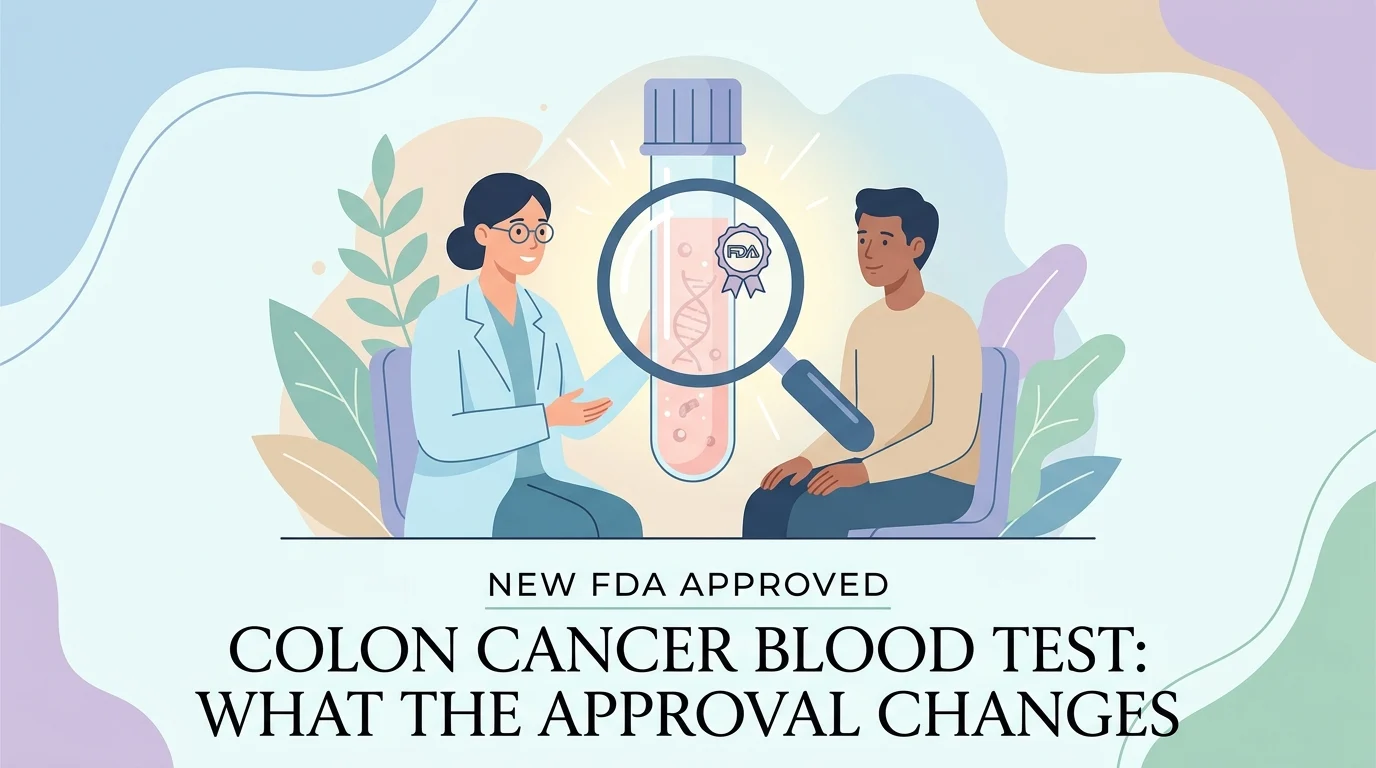
2026년 7월 27일, 미국 식품의약국(FDA)은 대장암 검진을 위한 두 번째 혈액 검사인 SimpleScreen CRC를 승인했습니다. 이 검사는 Freenome이 개발했으며, 올가을부터 Abbott이 미국 내에서 상용화할 예정입니다. 대장내시경이나 대변 검사를 미뤄온 분들에게는 일반 채혈만으로 대장암을 확인할 수 있다는 소식이 간편한 지름길처럼 들릴 수 있습니다. 하지만 더 중요한 것은 이 검사가 무엇을 발견하고 무엇을 놓치는지입니다. 이 글에서는 이번 승인이 실제로 무엇을 의미하는지, 결과를 어떻게 해석하는지, 그리고 혈액 검사가 기존에 권장되는 검진 방법들과 어떻게 함께 활용될 수 있는지 설명합니다.
FDA가 7월 27일 승인한 내용
이번 승인은 45세 이상의 성인 중 평균 위험군에 해당하고, 증상이 없으며, 의료 제공자의 의뢰를 받은 경우를 대상으로 하는 검진 검사에 적용됩니다. 이 검사는 200개 이상의 기관에서 48,000명 이상의 성인을 등록한 전향적 연구를 통해 평가되었으며, 참가자 모두 대장내시경 검사를 받아 혈액 검사 결과와 실제 소견을 비교할 수 있었습니다. 승인 라벨에서 주목해야 할 두 가지 사항이 있습니다. 양성 결과는 진단이 아니라 대장내시경 예약을 권고하는 신호입니다. 또한 이 검사는 증상이 없는 사람을 위한 검진 도구이며, 직장 출혈, 지속적인 배변 습관 변화, 원인 불명의 체중 감소 등의 증상이 있는 경우에는 검진 키트가 아닌 의학적 평가가 필요합니다. 이 검사를 고려하고 있다면, 먼저 대장암이 어떻게 발견되고 병기가 결정되는지를 이해한 다음, 마치 혈액 검사 결과를 확인하듯 전체적인 맥락 속에서 결과를 해석하는 것이 도움이 됩니다.
대장암 혈액 검사의 원리
종양은 혈류 속으로 아주 작은 DNA 조각을 방출합니다. 이 조각들은 세포 안이 아닌 혈액 속에 자유롭게 떠다니기 때문에 '세포 유리 DNA(cell-free DNA)'라고 부릅니다. 이런 종류의 선별 검사는 대장 종양이 있을 때 나타나는 특정 패턴을 이 조각들에서 찾아냅니다. 이는 많은 분들이 검사 결과지에서 이미 접해 보셨을 종양 표지자와는 다른 역할을 합니다. CEA 및 CA 19-9 는 주로 이미 진단된 암을 추적하는 데 사용되며, 건강한 사람에게서 암을 찾는 목적으로는 쓰이지 않습니다. 이 차이는 종양 표지자전체 범주를 관통하는 핵심 개념입니다. 다중 암 조기 발견 검사 도 같은 기술을 기반으로 하며 최근 뉴스에서 자주 언급되고 있지만, 단일 암 선별 검사는 더 좁고 명확한 질문에 답하는 검사입니다.
이 검사가 발견할 수 있는 것과 놓칠 수 있는 것
대장암 선별 검사는 두 가지 역할을 합니다. 치료 효과가 가장 좋은 초기 단계에서 암을 발견하는 것, 그리고 암으로 발전하기 전에 제거할 수 있는 천천히 자라는 전암성 용종을 찾아내는 것입니다. 혈액 검사는 첫 번째 역할에서는 훨씬 뛰어나지만, 두 번째 역할에서는 상대적으로 부족합니다. 임상 검증 연구에서 이 계열의 검사는 대장암 약 10건 중 8건을 발견했지만, 대장내시경이나 우수한 대변 검사라면 발견할 수 있는 진행성 전암성 병변은 약 8건 중 1건 정도만 찾아냈습니다. 특이도는 약 10명 중 9명 수준으로, 심각한 이상이 없는 사람 10명 중 약 1명은 양성 결과가 나와 확인을 위한 대장내시경이 필요할 수 있습니다. 그렇다고 이 검사가 쓸모없다는 뜻은 아닙니다. 다만 혈액 검사 결과가 정상이라면 현재 암이 없다는 점에서는 안심할 수 있지만, 8년 후에 문제가 될 수도 있는 용종에 대해서는 정보가 훨씬 제한적이라는 의미입니다. 한편, 일반 혈액 검사에서 원인 불명의 빈혈이 발견되면 의사가 장을 살펴보는 대표적인 이유가 되므로, 빈혈 검사가 어떻게 이루어지는지 와 해당 검사가 전혈구 검사(CBC) 무엇을 알 수 있고 무엇을 알 수 없는지 이해해 두는 것이 도움이 됩니다. 대변 기반 검사인 분변 칼프로텍틴 는 또 다른 질문에 답하는 검사이며, 단 하나의 정상 범위를 벗어난 수치 는 최종 판정이 아니라 추가 확인이 필요하다는 신호입니다.
최신 연구 결과
최근 연구의 세 가지 흐름이 전문가들이 동시에 기대와 신중함을 갖는 이유를 설명해 줍니다. 첫째, 2025년 JAMA에 발표된 이 검사의 임상 검증 연구는 앞서 언급한 패턴을 확인했습니다. 이미 존재하는 암은 비교적 잘 발견하지만, 진행된 전암성 병변에는 여전히 한계가 있다는 것입니다. 2024년 New England Journal of Medicine에서 검증된 최초의 승인된 혈액 검사도 동일한 양상을 보였습니다. 둘째, 2025년 독일의 대규모 검진 코호트를 대상으로 한 비교 연구에서 혈액 검사와 유럽 전역에서 사용되는 대변 면역화학 검사를 나란히 비교했을 때, 전암성 병변 발견에서는 대변 검사가 명확히 앞섰습니다. 2024년의 모델링 연구는 이 결론의 실용적인 측면을 도출했습니다. 혈액 검사가 대변 검진과 동등한 효과를 내려면 훨씬 더 많은 사람들이 검진에 참여하도록 유도해야 한다는 것입니다. 셋째, 실제로 혈액 검사는 그런 역할을 하는 것으로 보입니다. 2024년에 발표된 무작위 대조 시험에서, 이미 대변 검사 키트를 거부했던 성인들에게 혈액 검사를 대안으로 제시했더니 실제로 검진을 받은 비율이 약 두 배로 늘었습니다. 미국암학회는 2026년 가이드라인 개정에서 이 모든 내용을 검토한 뒤 합리적인 결론에 도달했습니다. 혈액 검사는 권장되지만 우선 선택지는 아니며, 더 효과적인 검사를 거부하거나 끝까지 완료하지 못하는 사람들에게 가장 적합하다는 것입니다. 이것이 여러분에게 의미하는 바는 간단합니다. 가장 좋은 검진 방법은 실제로 받을 수 있는 검사이며, 솔직히 아무것도 하지 않는 것이 현실적인 대안이라면 혈액 검사는 충분히 의미 있는 선택입니다.
대장암 혈액 검사 결과, 당황하지 않고 이해하기
검진 결과는 진단이 아니라 하나의 신호입니다. 아래 표를 통해 차분하게 생각해 보세요.
| 해당 상황 | 가능한 의미 | 합리적인 다음 단계 |
|---|---|---|
| 혈액 검사 결과 양성(이상 소견) | 양성 결과의 대부분은 암이 아닌 것으로 밝혀지지만, 그 신호는 반드시 확인해야 합니다 | 가능한 한 빨리, 이상적으로는 6개월 이내에 대장내시경을 예약하세요 |
| 결과는 음성이지만 검진 시기가 된 경우 | 현재 암에 대해서는 안심할 수 있지만, 전암성 용종에 대한 민감도는 낮습니다 | 권장 검진 주기를 지키고, 담당 의사와 함께 다른 검사 방법도 다시 검토해 보세요 |
| 출혈이나 배변 습관의 지속적인 변화 같은 증상이 있는 경우 | 이 경우는 더 이상 일반적인 검진 상황이 아닙니다 | 검진 검사를 직접 신청하기보다는 의료진을 찾아 진료를 받으세요 |
| 가족력, 염증성 장 질환 또는 이전에 용종이 발견된 경우 | 평균보다 위험도가 높으므로 검진 기준이 달라집니다 | 본인의 병력에 맞는 대장내시경 일정에 대해 의사와 상담해 보세요 |
이 검사가 실제로 적합한 사람
가장 적합한 대상자는 45세 이상이고 평균 위험군에 속하며 증상이 없는 사람으로, 대장내시경이나 대변 검사를 권유받았음에도 반복적으로 두 가지 모두 받지 않은 경우입니다. 이런 분에게는 정기 진료 시 혈액 채취 한 번으로 이론상의 검진 계획이 실제 검진으로 이어질 수 있습니다. 반면 가장 적합하지 않은 대상자는 증상이 있는 분, 이미 평균 이상의 위험군에 속하는 분, 그리고 대장내시경이나 대변 검사를 기꺼이 받으려는 분입니다. 이러한 검사들이 암 전 단계 병변을 훨씬 더 확실하게 발견하기 때문입니다. 어떤 방법을 선택하든 모든 경우에 적용되는 한 가지 원칙이 있습니다. 대장내시경이 아닌 검사에서 양성 결과가 나왔을 때, 이후 대장내시경 검사를 실제로 받아야만 검진으로서의 의미가 있다는 것입니다. 보험 적용 여부도 실제 결정에 영향을 미칩니다. 이번 승인으로 해당 검사가 혈액 기반 대장암 검진에 대한 메디케어 기준을 충족하게 되었으며, 가을부터는 이용 가능한 곳이 더 넓어질 것으로 예상됩니다.
용어 설명
- 세포 유리 DNA(cell-free DNA): 혈액 속을 떠다니는 작은 DNA 조각으로, 일부는 종양에서 유래합니다.
- 진행성 암 전 단계 병변(advanced precancerous lesion): 크기가 크거나 그 외 우려되는 특성을 가진 용종으로, 그대로 두면 암으로 발전할 가능성이 있는 병변입니다.
- 민감도(sensitivity): 해당 질환이 실제로 있는 사람을 검사가 정확하게 양성으로 판별하는 비율입니다.
- 특이도(specificity): 해당 질환이 없는 사람에게서 검사가 정확하게 음성으로 나오는 비율입니다.
- 대변 면역화학 검사(fecal immunochemical test, FIT): 대변에서 잠혈을 검출하는 검사로, 대부분의 조직적 검진 프로그램의 핵심 검사로 활용됩니다.
- 평균 위험군(average risk): 증상이 없고, 대장암이나 진행성 용종에 대한 개인력 또는 가족력이 없으며, 염증성 장 질환도 없는 경우입니다.
자주 묻는 질문
혈액 검사로 대장암 검진을 위한 대장내시경을 대체할 수 있나요?
우선적으로 권장되는 방법은 아닙니다. 혈액 검사는 이미 존재하는 암의 대부분을 발견하지만, 진행성 암 전 단계 용종의 상당수를 놓칩니다. 대장내시경과 대변 검사가 암을 단순히 발견하는 것을 넘어 예방할 수 있는 것도 바로 이 단계에서입니다. 현재 가이드라인에서는 혈액 검사를 우선 권장 검사를 받지 않으려는 분들을 위한 대안으로 위치시키고 있으며, 양성 결과가 나오면 여전히 대장내시경 검사로 이어집니다.
대장암 혈액 검사는 얼마나 정확한가요?
승인에 사용된 연구에서 이 계열의 검사는 대장암의 약 10명 중 8명을 발견했으며, 진행성 질환이 없는 사람의 약 10명 중 9명에서 음성으로 나타났습니다. 약점은 진행성 암 전 단계 병변으로, 약 8명 중 1명 정도만 발견합니다. 따라서 정확도는 이 검사에 어떤 검진 역할을 기대하느냐에 따라 전적으로 달라집니다.
새로 승인된 검사는 누가 받을 수 있으며, 언제부터 가능한가요?
이 검사는 의료 제공자의 의뢰를 받은 평균 위험군의 45세 이상 성인을 대상으로 하며, 미국 내 상용화는 2026년 가을부터 시작될 예정입니다. 증상이 있는 분이나 가족력, 염증성 장 질환, 이전 용종으로 인해 고위험군에 해당하는 분에게는 적합하지 않습니다.
혈액 검사 결과가 양성으로 나오면 어떻게 되나요?
다음 단계는 대장내시경 검사이며, 가급적 6개월 이내에 받는 것이 좋습니다. 양성 선별 결과가 반드시 암을 의미하는 것은 아닙니다. 양성 결과는 진단이 아니라 검사 과정을 완료해야 할 이유로 이해하는 것이 바람직합니다. 대장내시경을 받지 않으면 선별 검사가 미완성으로 끝나고 대부분의 이점을 잃게 됩니다.
출처
- Shaukat A, Burke CA, Chan AT, et al. Clinical Validation of a Circulating Tumor DNA-Based Blood Test to Screen for Colorectal Cancer. JAMA, 2025;334(1):56-63. doi.org/10.1001/jama.2025.7515
- Chung DC, Gray DM, Singh H, et al. A Cell-free DNA Blood-Based Test for Colorectal Cancer Screening. New England Journal of Medicine, 2024;390(11):973-983. doi.org/10.1056/NEJMoa2304714
- Wolf AMD, Hoffman RM, Walter LC, et al. Colorectal cancer screening: an update to the American Cancer Society guideline, 2026. CA: A Cancer Journal for Clinicians, 2026;76(3):e70083. doi.org/10.3322/caac.70083
- Seum T, Hoffmeister M, Brenner H. Cell-free DNA blood-based test compared to fecal immunochemical test for colorectal cancer screening. Cancer Communications, 2025. consensus.app
- Coronado GD, et al. Blood-based colorectal cancer screening in an integrated health system: a randomised trial of patient adherence. Gut, 2024. consensus.app
- Ladabaum U, et al. Comparative Effectiveness and Cost-Effectiveness of Colorectal Cancer Screening With Blood-Based Biomarkers (Liquid Biopsy) vs Fecal Tests or Colonoscopy. Gastroenterology, 2024. consensus.app
- 미국암학회. 대장암 선별 검사 지침. cancer.org
- Newitt P. FDA approves 2nd blood-based CRC screening test. Becker’s ASC, July 27, 2026. beckersasc.com
추가 읽을거리
- 대장암: 증상, 선별 검사 및 치료
- CEA 혈액 검사: 결과 읽는 방법
- 다중 암 조기 발견 검사: 임상시험 결과
- 혈액 검사 결과 읽는 법: 쉬운 가이드
- 빈혈: 증상, 원인 및 검사
AI DiagMe로 내 검사 결과 이해하기
검진 결과지는 모든 항목이 쉬운 말로 설명될 때 훨씬 편하게 받아들일 수 있습니다. AI DiagMe는 CEA, CA 19-9, 전혈구검사(CBC) 같은 수치들이 전체적으로 무엇을 의미하는지 파악할 수 있도록 도와줍니다. 그래서 결과지를 단순히 불안한 숫자 하나로 보는 것이 아니라, 하나의 일관된 그림으로 이해하고 진료 시 적절한 질문을 준비해 갈 수 있습니다. 결과를 이해하고 진료를 준비하는 데 도움을 드리며, 진단을 내리거나 의사를 대신하지 않습니다. 몇 분 안에 명확한 결과 해석 받기.