
































Sugar-free gum, mints, and “no added sugar” snacks often rely on xylitol, a sugar alcohol that many people consider a safe swap for sugar. A new analysis presented at the European Society of Cardiology (ESC) Congress in August 2026 adds to a growing concern about xylitol heart risk: people with higher xylitol levels in their blood had more heart attacks, strokes, and deaths over time. The finding is a warning signal, not proof that xylitol causes harm. This article explains what the study actually showed, what it cannot tell us, and which routine blood tests help you keep an eye on your heart health.
What the new xylitol study found
The results were presented by Dr. Marco Witkowski of Charité University Hospital in Berlin and released by the ESC on August 26, 2026. The team looked at two large groups of adults and measured xylitol in their blood. They then followed who went on to have a major cardiovascular event, defined as a heart attack, a stroke, or death.
The higher the blood xylitol, the higher the rate of events, a pattern researchers call a dose-response relationship. The link remained after accounting for age, sex, body weight, high blood pressure, diabetes, and blood lipids.
| Group studied | Follow-up | Reported result (highest vs. lowest xylitol group) |
|---|---|---|
| Canadian Longitudinal Study on Aging | About 6 years | 57% higher risk of a major cardiovascular event |
| EPIC-Norfolk (United Kingdom) | About 30 years | 18% higher risk of a major cardiovascular event |
| Both groups combined | Non applicabile | 17,710 participants in total |
Professor Dan Atar of the ESC Communication Committee summed up the message: “As with all observational studies, causalities are difficult to infer, but this work shows that further studies are mandated.”
What is xylitol and where is it found?
Xylitol is a sugar alcohol, also called a polyol. It tastes about as sweet as sugar with fewer calories, which is why it appears in sugar-free chewing gum, mints, some candies, certain toothpastes, and some baked goods or protein products labeled “no sugar added.” Your body also makes small amounts of it naturally.
That last point matters for interpreting the data. A blood xylitol level reflects both what you eat and what your body produces, and the new study measured blood levels rather than asking people exactly how much xylitol they consumed.
Why this is a warning sign, not proof
The study is observational. It shows that two things travel together, not that one causes the other. Several limits are worth keeping in mind:
- People who choose sugar-free products are often already managing weight, blood sugar, or heart risk, which can distort the comparison even after statistical adjustment.
- A single blood measurement may not reflect long-term intake.
- Results shown at a congress are usually considered preliminary until they are published and reviewed by independent experts in a journal.
It is also worth noting what the World Health Organization (WHO) does and does not cover. Its 2023 guideline advises against using non-sugar sweeteners to control weight, but it explicitly excludes sugar alcohols such as xylitol from its scope. There is therefore no official WHO position on xylitol heart risk.
Latest scientific advances: what earlier research adds
This is not the first signal. In 2024, researchers at the Cleveland Clinic published work in the European Heart Journal. They first searched widely for compounds in the blood of people undergoing cardiac evaluation, and xylitol stood out as linked to later heart events. Lab experiments then showed that xylitol made platelets, the cell fragments that help blood clot, more reactive, and a small group of volunteers who drank a xylitol-sweetened beverage showed the same effect. What it changes for you: it offers a plausible biological explanation, but the human test was tiny and short.
A similar story played out for erythritol, another sugar alcohol, in a 2023 Nature Medicine paper. A later review in the journal Nutrients urged caution, arguing that erythritol may partly be a marker of disturbed metabolism rather than a cause of harm, and that long-term trials are missing. A 2025 genetic analysis using a method called Mendelian randomization, which uses natural gene variations as a kind of built-in experiment, pointed toward a possible role for erythritol in heart disease and stroke, while stressing that more work is needed. What it changes for you: the signal keeps appearing across different methods, yet no randomized trial has tested whether eating xylitol actually causes heart events.
Is xylitol safe? What to do in practice
No health authority has declared xylitol unsafe, and the science is still unsettled. In the 2024 Cleveland Clinic announcement, lead researcher Dr. Stanley Hazen advised people to “try to avoid it, especially consuming it in large amounts,” and to prefer whole foods. The same source noted that xylitol in toothpaste is not a concern because toothpaste is not swallowed.
A reasonable approach looks like this:
- Check ingredient lists on gum, mints, “sugar-free” sweets, and protein snacks, where xylitol often hides.
- Keep portions modest instead of consuming sugar-free products all day.
- If you already have heart disease, diabetes, or take blood thinners, ask your clinician whether sugar alcohols make sense for you.
Sugar alcohols are also poorly absorbed in the gut, so larger amounts can cause gas, bloating, or loose stools in some people.
Cosa possono e cosa non possono rivelarti gli esami del sangue
A xylitol blood level is measured with specialized laboratory methods in research settings and is not part of standard lab panels. You cannot walk into a lab and check your xylitol the way you check your cholesterol. What you can do is monitor the established markers of cardiovascular risk, which are far more informative than any single sweetener.
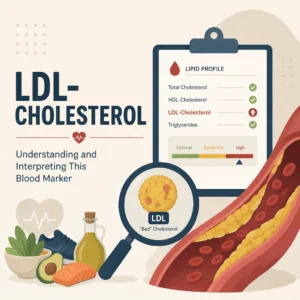
- A cholesterol test, called a lipid panel, measures LDL, HDL, total cholesterol, and triglycerides. Review the lipid panel explained in plain language.
- Blood sugar markers matter because diabetes and prediabetes raise heart risk. Check our report on A1C and heart risk in prediabetes.
- Advanced markers such as apoB give a finer picture when risk is unclear. Explore the advanced lipid panel and apoB.
- Inflammation and clotting-related markers can add context. Read our complete CRP inflammation marker guide.
Whether you need to fast before these tests depends on the test, so see la nostra guida al digiuno prima di un esame del sangue prima del tuo appuntamento.
Quando è opportuno consultare il medico
Talk to your doctor if you have a personal or family history of heart disease or stroke, diabetes, high cholesterol, or high blood pressure and you regularly consume sugar-free products, or if you are unsure which blood tests you are due for. Do not change prescribed medication on your own because of a news report.
Call 911 or your local emergency number right away for chest pain or pressure, sudden shortness of breath, sudden weakness or numbness on one side of the body, facial drooping, or trouble speaking.
Glossario
- Sugar alcohol (polyol): a sweetener such as xylitol, erythritol, or sorbitol that has fewer calories than sugar and is only partly absorbed.
- Major adverse cardiovascular event: a combined measure that counts death, heart attack, or stroke.
- Piastrine: small blood cell fragments that clump together to form clots.
- Studio osservazionale: research that follows people over time without assigning them a treatment, so it can show links but not prove cause.
- Quartile: one quarter of a group ranked from lowest to highest, used to compare the top quarter with the bottom one.
- pannello lipidico: a blood test that measures cholesterol and triglycerides.
FAQ
Is xylitol safe?
The evidence is still developing. Observational studies and a small human experiment suggest a possible link with clotting and cardiovascular events, but no trial has proven that xylitol causes them. Many experts call for more research and advise moderation.
Is xylitol in toothpaste or chewing gum a problem?
The Cleveland Clinic team said toothpaste is not a concern because it is spit out. Gum is different because the sweetener mixes with saliva that you swallow. How much gum contributes to blood levels has not been established by these studies.
What are the common side effects of xylitol?
Digestive effects such as gas, bloating, and loose stools are the most common, especially with larger amounts, because sugar alcohols are only partly absorbed.
Is xylitol the same as erythritol?
They are different sugar alcohols, but earlier research from the same Cleveland Clinic group found a similar signal for both, which is why they are often discussed together.
Can a blood test measure my xylitol level?
Not in routine care. It is measured with specialized methods in research. Standard tests such as a lipid panel and blood sugar markers are the practical way to assess cardiovascular risk.
Should I stop eating xylitol completely?
There is no official recommendation to do so. A cautious approach is to limit large or daily amounts and discuss it with your clinician if you have heart disease or diabetes.
Fonti
- European Society of Cardiology press release, August 2026: Xylitol may increase the risk of cardiovascular events
- Cleveland Clinic newsroom, June 2024: Artificial sweetener linked to increased risk for cardiovascular events
- World Health Organization, 2023: guideline on non-sugar sweeteners
- MedlinePlus (NIH): Cholesterol levels test
- Witkowski et al., European Heart Journal, 2024: Xylitol is prothrombotic and associated with cardiovascular risk
- Witkowski et al., Nature Medicine, 2023: The artificial sweetener erythritol and cardiovascular event risk
- Mazi and Stanhope, Nutrients, 2023: Elevated erythritol, a marker of metabolic dysregulation or contributor to cardiometabolic disease?
- Sun et al., Medicine, 2025: Role of erythritol in coronary heart disease, ischemic stroke, and venous thromboembolism, a Mendelian randomization analysis
Altri articoli
- Piano europeo di screening cardiovascolare: cosa significa
- Screening lipoproteina(a): nuove linee guida 2026
- Piastrine alte o basse: valori normali e cause
- Devi essere a digiuno per un esame del sangue? Nuovo studio
Scopri cosa dicono i tuoi esami del sangue con AI DiagMe
Have a lipid panel or other lab results and want to know what they mean for your heart? Scopri i tuoi referti con AI DiagMe.