











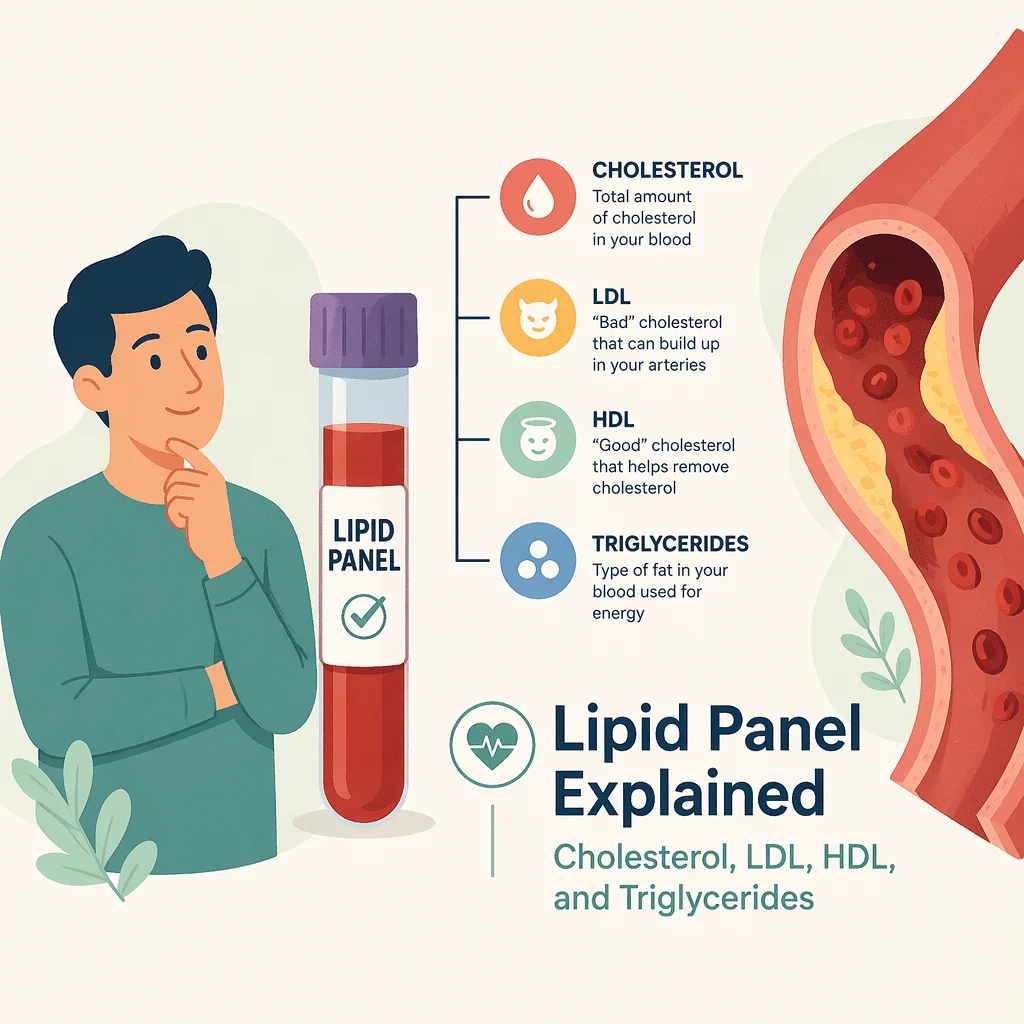
A lipid panel is a common blood test that measures the main fats in your blood: total cholesterol, LDL (“bad”) cholesterol, HDL (“good”) cholesterol, and triglycerides. Doctors use it to estimate your risk of heart disease and stroke, and to see how lifestyle changes or medicines are working. If you have just received your results and the numbers look confusing, you are not alone. This article explains, in plain language, what each value means, what counts as a normal or high range, whether you need to fast before the test, the difference between a standard and an advanced panel, and how to read your report. You will also learn when an unusual result is worth a conversation with your doctor.
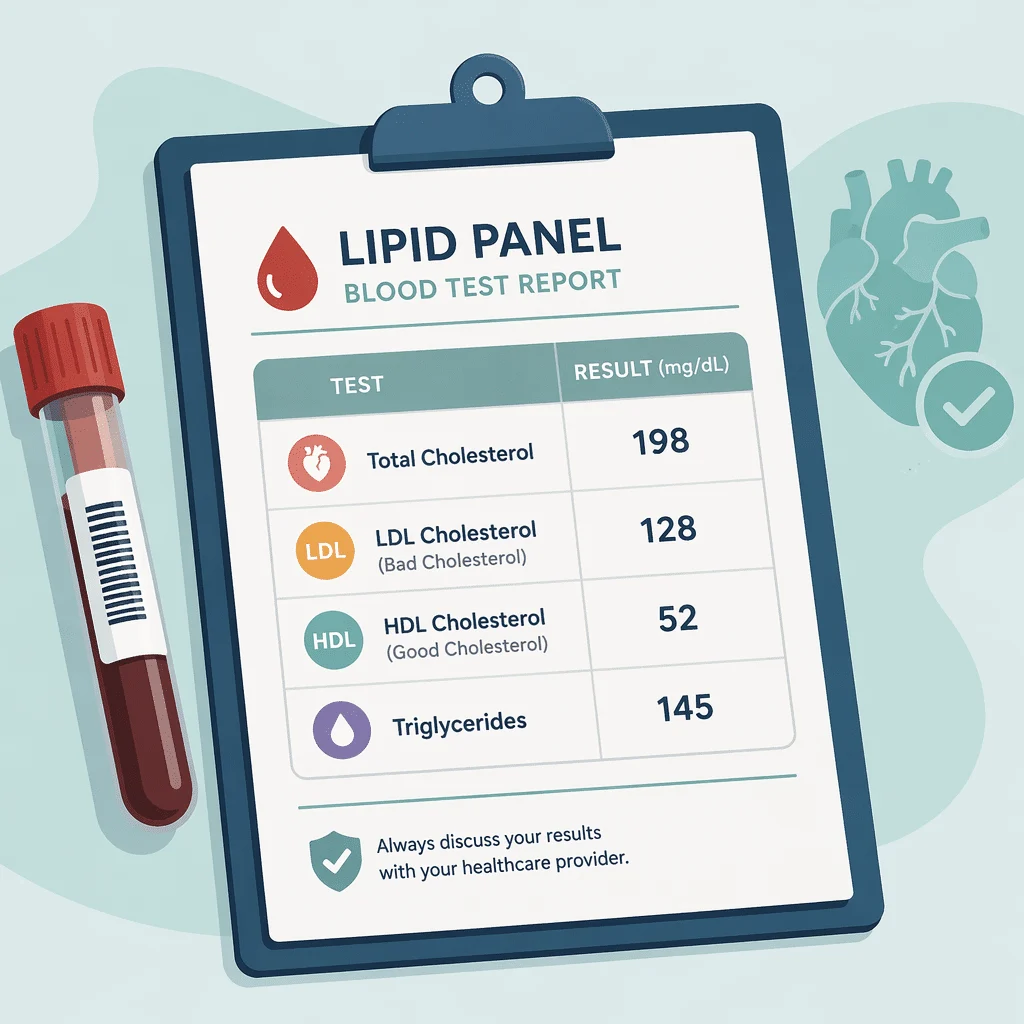
What is a lipid panel?
A lipid panel — also called a lipid profile or, more simply, a cholesterol test — is a routine blood test that measures the fatty substances (lipids) circulating in your blood. Lipids are essential: your body uses cholesterol to build cell walls and make hormones, and it uses triglycerides for energy. Problems begin when certain levels are too high or too low.
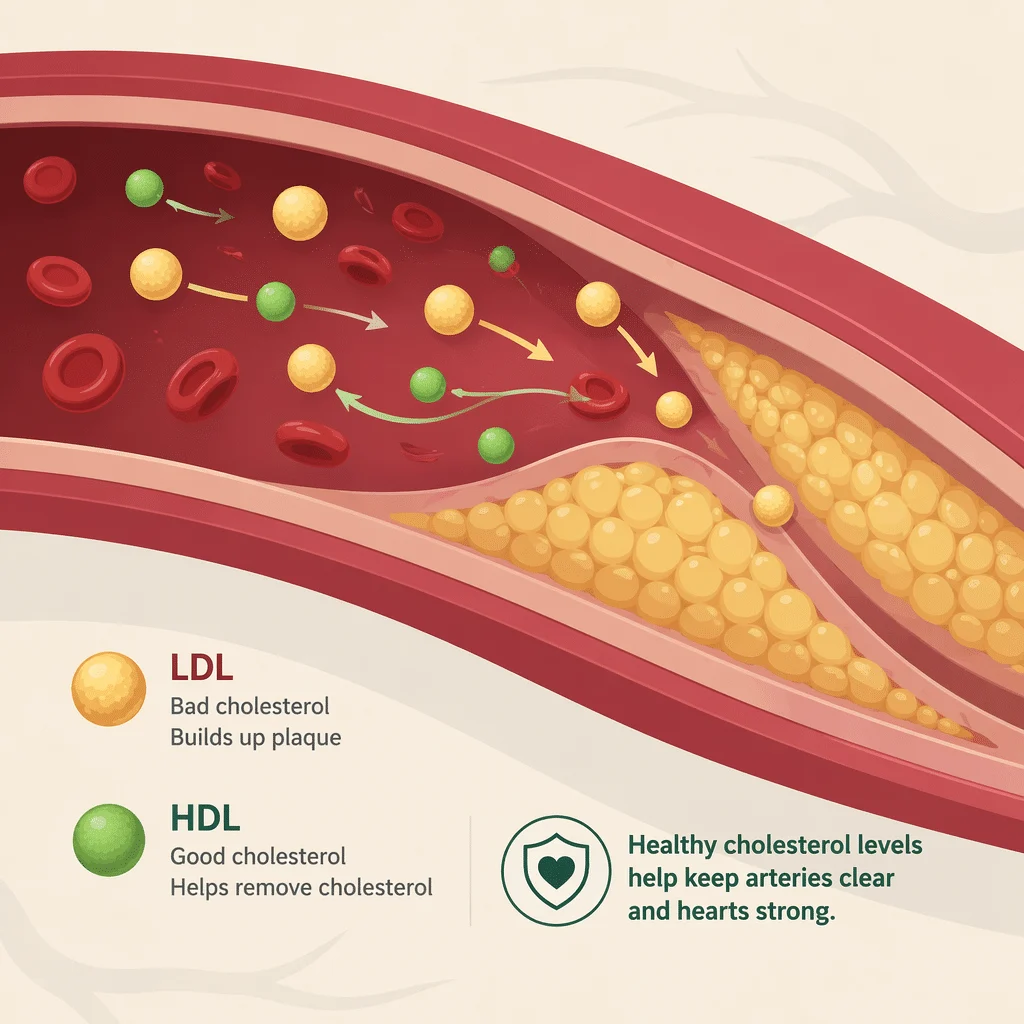
The test gives your healthcare provider a snapshot of your cardiovascular health. Too much of the harmful types, or too little of the protective type, can let fatty deposits build up inside your arteries over time. That buildup raises the risk of heart attack, stroke, and narrowed arteries in the legs.
Doctors usually order a lipid panel for one of three reasons: routine screening in an otherwise healthy adult, monitoring someone already known to have abnormal cholesterol, or checking how well a treatment such as a statin or a change in diet is working. A family history of early heart disease or high cholesterol is a common reason to test sooner. It is one of the most frequently ordered blood tests, and you may see it on its own or bundled into a wider checkup panel.
Why does a lipid panel matter?
Cholesterol and triglyceride problems usually cause no symptoms for years. That is exactly why a lipid panel is useful: it can flag rising risk long before a heart attack or stroke, while there is still time to act. Decades of research link higher LDL and non-HDL cholesterol with the slow narrowing of arteries that leads to cardiovascular disease.
The numbers also guide prevention. They feed into the cardiovascular risk estimates your doctor uses to decide whether healthy habits alone are enough, or whether medication might help. Just as importantly, repeating the panel over months and years shows whether those steps are actually working. Because the test is simple and widely available, it remains one of the most practical ways to catch a hidden problem early, when small changes can still make a large difference.
What does a lipid panel measure? The four key numbers
A standard lipid panel reports four core values, usually in milligrams per deciliter (mg/dL) in the United States. Some labs add extra calculations, such as VLDL, non-HDL cholesterol, or a cholesterol ratio.
Total cholesterol
Total cholesterol is the overall amount of cholesterol in your blood, combining the different types. It is a useful headline figure, but on its own it does not tell the whole story, because it lumps together both harmful and protective cholesterol. Our guide to the total cholesterol test breaks down how this number is built.
LDL cholesterol (“bad” cholesterol)
LDL (low-density lipoprotein) is often called “bad” cholesterol because it is the main type that deposits cholesterol in artery walls, forming plaque. For most people, a lower LDL means lower cardiovascular risk. On many reports LDL is calculated from your other values rather than measured directly, which is one reason triglycerides matter (more on that below). You can read more about healthy targets in our article on normal LDL levels.
HDL cholesterol (“good” cholesterol)
HDL (high-density lipoprotein) is the protective, “good” cholesterol. It helps carry excess cholesterol back to the liver to be cleared from the body. Here, higher is generally better, and a low HDL is treated as a risk factor. If your result is low, our guide on low HDL cholesterol explains common causes and ways to raise it, and the HDL cholesterol test page covers the basics.
Triglycerides
Triglycerides are a type of fat your body stores for energy. High levels often go hand in hand with extra weight, a diet high in sugar or refined carbohydrates, heavy alcohol use, or poorly controlled diabetes. Very high triglycerides can also inflame the pancreas. See our overview of the triglycerides blood test and what to do about a high triglyceride level.
Beyond these four, your report may show VLDL cholesterol (a triglyceride-rich particle, usually estimated as triglycerides divided by five — see high VLDL levels), non-HDL cholesterol (total cholesterol minus HDL, which captures all the harmful particles in one number), or a cholesterol ratio. Our piece on the cholesterol ratio explains how that single figure is used.
Lipid panel normal ranges (and what counts as high)
The table below shows the general adult reference ranges most U.S. labs use, in mg/dL. Treat them as a starting point, not a verdict: your personal targets depend on your overall risk. Someone who already has heart disease or diabetes, for example, is usually given a much lower LDL goal than a healthy young adult.
| Marker | Desirable | Borderline | High / concerning |
|---|---|---|---|
| Total cholesterol | Below 200 | 200–239 | 240 or above |
| LDL (“bad”) | Below 100 | 130–159 | 160 or above (190+ is very high) |
| HDL (“good”) | 60 or above (protective) | 40–59 | Below 40 (men) or below 50 (women) |
| Triglycerides | Below 150 | 150–199 | 200–499 (500+ is very high) |
| Non-HDL cholesterol | Below 130 | 130–159 | 160 or above |
An LDL of 100 to 129 mg/dL is usually labelled “near optimal.” Outside the United States, results may appear in millimoles per litre (mmol/L); the risk categories are the same, only the scale differs.
A result outside these ranges does not automatically mean you are ill. Many everyday factors can nudge the numbers, and a single test is less meaningful than the trend over time. Your provider reads these values together with your age, blood pressure, blood sugar, weight, smoking status, and family history before deciding whether anything needs to change.
What to expect during the lipid panel test
A lipid panel is a quick, routine blood draw. A healthcare professional cleans a spot on your arm, inserts a small needle into a vein, and collects a sample into one or more tubes. You may feel a brief sting, and the whole process usually takes only a few minutes. Afterward, you can return to your normal activities straight away.
No special recovery is needed. Some people notice minor bruising or tenderness where the needle went in, which fades within a day or two. Results are typically ready within one to a few days, depending on the laboratory, and your provider will share them through a patient portal, by phone, or at a follow-up visit. If you were asked to fast beforehand, you can eat and drink normally as soon as the sample is taken.
Do you need to fast for a lipid panel?
This is one of the most common questions about the test — and the answer has shifted in recent years.
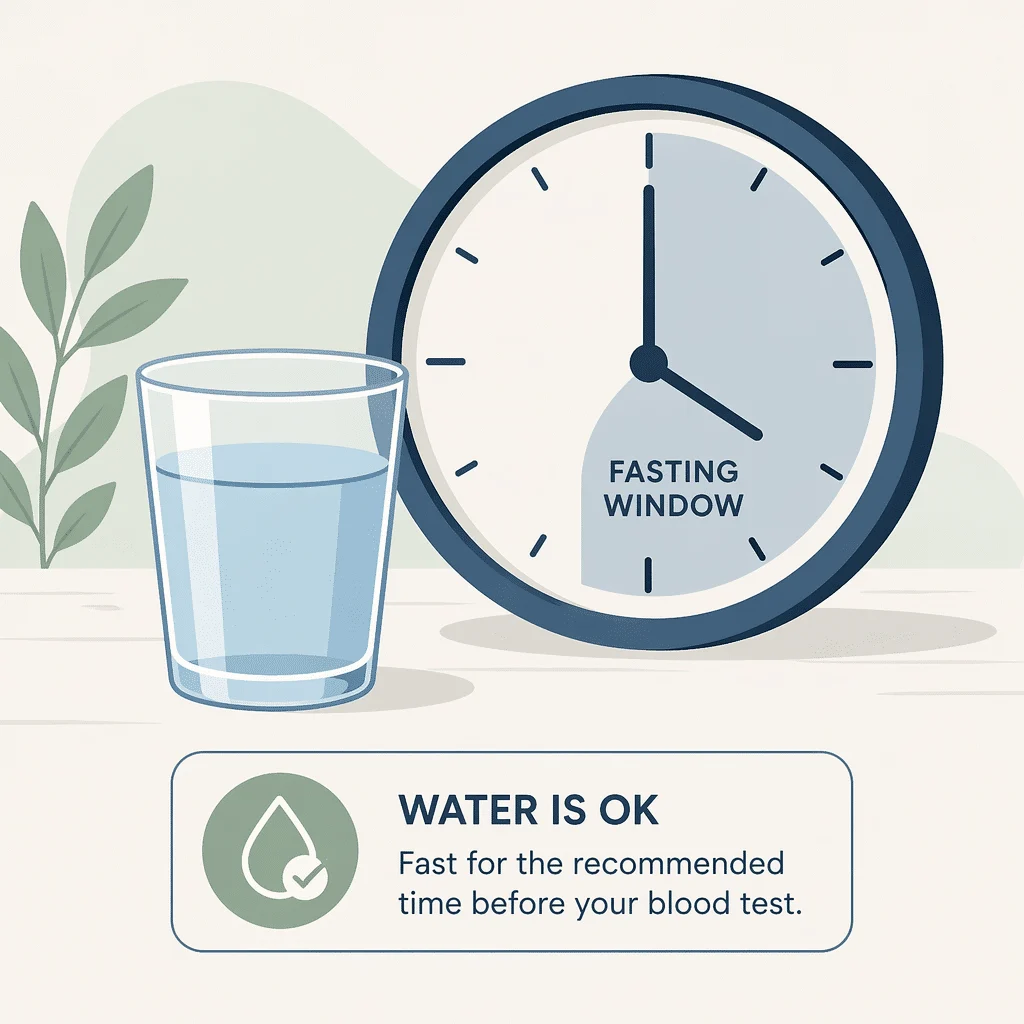
For a long time, the standard advice was to fast for 9 to 12 hours before a lipid panel, taking only water and your usual medicines. Fasting was thought to give more consistent triglyceride and calculated-LDL results.
More recent guidance has relaxed this. The 2026 American College of Cardiology and American Heart Association dyslipidemia guideline states that a non-fasting lipid profile is acceptable for most people, and that fasting is mainly recommended when triglycerides are already known to be high. Non-fasting samples are more convenient, reflect how your blood looks during a normal day, and make it easier to test regularly.
What actually changes if you do not fast? Triglycerides (and the LDL value calculated from them) can run modestly higher after a meal, while HDL and total cholesterol barely move. The practical takeaway: follow the instructions your lab or doctor gives you. If you are asked to fast, drink water and take your regular medications unless you are told otherwise.
Standard vs. advanced lipid panel
A standard lipid panel is enough for most routine screening. An advanced lipid panel adds extra markers that some clinicians use to refine heart-risk estimates, especially when the standard results are borderline or do not seem to match a person’s risk.
| Feature | Standard lipid panel | Advanced lipid panel |
|---|---|---|
| Total, LDL, HDL, triglycerides | Yes | Yes |
| VLDL, non-HDL, cholesterol ratio | Often | Yes |
| ApoB (atherogenic particle count) | No | Usually |
| Lipoprotein(a), or Lp(a) | No | Often |
| LDL particle number and size | No | Sometimes |
| Inflammation marker (hs-CRP) | No | Sometimes |
| Best for | Routine screening and monitoring | Refining risk in selected cases |
Two of these extra tests are getting attention. ApoB counts the number of cholesterol-carrying particles that can clog arteries, which can be revealing when LDL looks “normal” but the overall risk seems high. Lipoprotein(a) is a largely inherited particle that standard panels miss; it is usually measured just once in a lifetime. If your doctor suggests going beyond the basics, our guide to the advanced lipid panel explains what these markers add. Doctors most often consider advanced testing for people with a strong family history of early heart disease, borderline standard results, or a high apparent risk despite a “normal” LDL. Advanced testing is a clinical decision, not a routine upgrade for everyone.
How to read your lipid panel results
Most lab reports follow the same layout. Each marker has its own row showing your result, the unit (mg/dL), and a reference range. A flag such as “H” (high) or “L” (low) marks any value outside that range. For instance, an LDL result of 165 mg/dL would usually be flagged “H,” because it sits above the desirable level.
A few habits make the report easier to interpret. First, look at the pattern, not just one number: a high LDL alongside a low HDL and high triglycerides is a more meaningful picture than any single value. Second, remember that LDL is often calculated; if your triglycerides are very high (around 400 mg/dL or more), the lab may measure LDL directly instead. Third, non-HDL cholesterol is a handy summary, because it captures every harmful particle in one figure.
Reference ranges can differ slightly between laboratories, so compare your result against the range printed on your own report rather than one you found elsewhere. If a value is flagged, there is no need to panic: note it, look at any earlier results for comparison, and raise it at your next appointment so it can be understood in context.
When to talk to your doctor
A lipid panel is a screening and monitoring tool. It points to risk; it does not, by itself, diagnose a disease, and most results are read as part of a bigger picture rather than as an emergency. Even so, some results deserve a prompt conversation with a healthcare professional:
- Any value clearly outside the reference range, especially an LDL of 190 mg/dL or higher, which can signal an inherited cholesterol disorder.
- Triglycerides of 500 mg/dL or above, because very high levels can trigger inflammation of the pancreas and need timely attention.
- A repeat or worsening abnormal result over time, rather than a one-off reading.
- A personal or family history of early heart attack, stroke, or high cholesterol.
- Existing conditions such as diabetes, high blood pressure, or known high cholesterol, where targets are stricter.
Your doctor will read the numbers alongside your full health picture and decide whether lifestyle steps, further testing, or medication make sense. If you have chest pain, shortness of breath, or other warning signs, seek medical care right away rather than waiting for a blood test.
Glossary
- Apolipoprotein B (ApoB): A protein found on cholesterol-carrying particles that can build up in arteries. It reflects the number of harmful particles, not just the amount of cholesterol.
- Atherosclerosis: The gradual buildup of fatty plaque inside artery walls, which narrows the vessels and raises the risk of heart attack and stroke.
- HDL cholesterol: High-density lipoprotein, the “good” cholesterol that helps remove excess cholesterol from the blood.
- LDL cholesterol: Low-density lipoprotein, the “bad” cholesterol that is the main contributor to artery plaque.
- Lipoprotein(a), or Lp(a): A mostly inherited, LDL-like particle that can raise cardiovascular risk and is not measured by a standard panel.
- Non-HDL cholesterol: Total cholesterol minus HDL; a single number that captures all the potentially harmful cholesterol.
- Total cholesterol: The overall amount of cholesterol in the blood, combining harmful and protective types.
- Triglycerides: A type of fat stored for energy; high levels are linked to heart disease and, when very high, to pancreas inflammation.
- VLDL cholesterol: Very-low-density lipoprotein, a triglyceride-rich particle usually estimated from your triglyceride level.
Frequently asked questions
Is a lipid panel the same as a cholesterol test?
In everyday use, yes. “Lipid panel,” “lipid profile,” and “cholesterol test” usually refer to the same blood test that measures total cholesterol, LDL, HDL, and triglycerides. The wording on a lab order can vary, but the core measurements are the same. Occasionally “cholesterol test” is used loosely for a single measurement, while “lipid panel” always implies the full set of values. If you are unsure exactly which markers were checked, look at the list of results on your report or ask the lab.
Is a lipid panel the same as an A1c test?
No. They measure different things and, although often ordered together, they are separate tests. A lipid panel looks at the fats in your blood to estimate heart-disease risk. An A1c (or HbA1c) test reflects your average blood sugar over the past two to three months and is used to screen for and monitor diabetes. Because diabetes and abnormal cholesterol frequently occur together, your doctor may request both. You can learn more in our guide to the HbA1c normal range.
Does a lipid panel check your liver?
Not directly. A lipid panel measures blood fats, not liver function. Liver health is assessed with a different blood test that looks at liver enzymes such as ALT and AST. There is an indirect link, however: the liver processes cholesterol, and some liver conditions can affect lipid levels. If your doctor wants to check both, they will usually order a separate liver panel alongside your lipid panel.
How often should you get a lipid panel?
It depends on your age, risk factors, and family history, so your provider’s advice comes first. As a general guide, the U.S. Centers for Disease Control and Prevention suggests healthy adults be screened roughly every four to six years, with more frequent testing if you have risk factors such as diabetes, high blood pressure, obesity, or a family history of high cholesterol. Screening often starts in childhood or the teenage years, with a first check commonly recommended between ages 9 and 11.
Can pregnancy raise lipid panel results?
Yes. Cholesterol and triglyceride levels normally rise during pregnancy to support the growing baby, and they usually return to baseline a few weeks after delivery. Because of this, routine cholesterol screening is generally not done during pregnancy, and any results taken at that time are read with the pregnancy in mind. If you are pregnant or recently gave birth, mention it so your provider can interpret your numbers in context.
What does an abnormal lipid panel result mean?
An “abnormal” or flagged value simply means a number falls outside the laboratory’s reference range — it is not a diagnosis on its own. Many factors can shift the results, including a recent meal, an illness, certain medicines, or normal variation. What matters is the overall pattern, the trend across more than one test, and your other risk factors. Your doctor uses all of this together to decide whether the result calls for lifestyle changes, repeat testing, or treatment.
Sources
- Cholesterol Levels — MedlinePlus (U.S. National Library of Medicine)
- Lipid Panel — Cleveland Clinic
- LDL and HDL Cholesterol and Triglycerides — Centers for Disease Control and Prevention
Further reading
- LDL cholesterol: understanding and interpreting the marker
- HDL cholesterol test: the “good” cholesterol explained
- Triglycerides blood test: what your level means
- Cholesterol ratio explained: meaning and risks
- Advanced lipid panel: ApoB, Lp(a), and deeper heart-risk testing
Understand your lab results with AI DiagMe
Your lipid panel is only useful once you understand what the numbers mean for you. AI DiagMe helps you make sense of common results — such as your cholesterol test (lipid panel), blood sugar markers like A1c, and liver enzymes — by turning a confusing report into clear, plain-language explanations. It is built to help you understand your results and prepare better questions for your appointment, not to diagnose you or replace your doctor. Upload your results and see what they could mean.
➡️ Get your results interpreted in minutes