








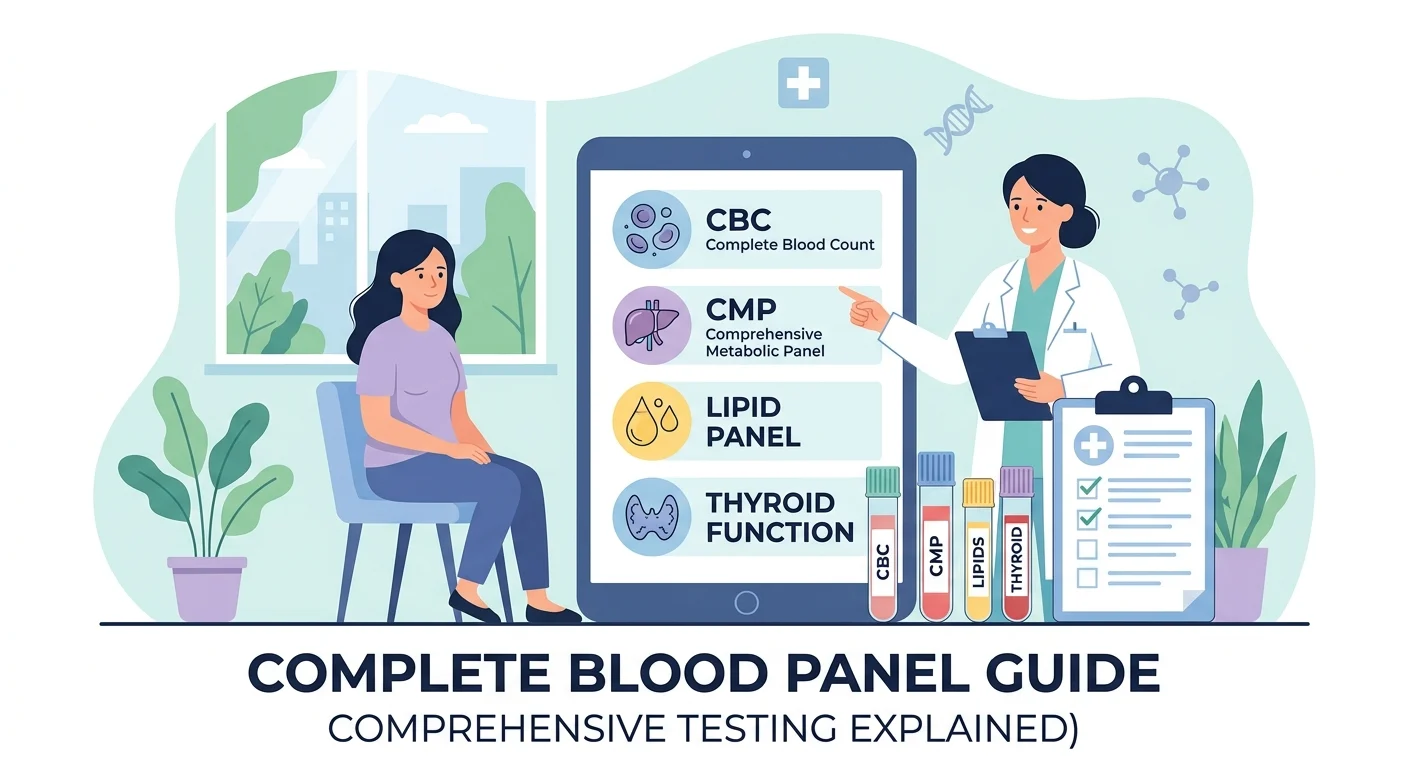
A full blood panel is a group of blood tests ordered together to give a broad picture of your health from a single blood draw. If your doctor has requested one, or you have just received a report full of abbreviations, you may be wondering what is actually being measured and what the numbers mean. This guide explains, in plain language, what a full blood panel includes, how the main tests fit together, how to read your results, and when a value is worth following up. You will also find a quick-reference table of the core panels, practical advice on fasting and timing, and a list of results that usually call for a conversation with your doctor. Nothing here replaces medical advice, but it should help you walk into that conversation better informed.

What is a full blood panel?
A full blood panel is not a single test. It is a bundle of separate laboratory tests run on one blood sample, chosen to screen several body systems at once. The exact mix depends on your doctor, your age, your symptoms, and your risk factors, which is why two people can both get a “full panel” and receive slightly different reports. Bundling tests this way is efficient: one needle, one visit, and a set of numbers that can be read together to reveal patterns a single test would miss.
The terms can be confusing. “Full blood panel,” “complete blood work,” and “complete blood panel” are everyday phrases rather than one fixed medical test. In practice they usually point to the same idea: a wide screening built from a few standard panels. If you want a step-by-step walkthrough of any report you receive, our guide on how to read your blood test results breaks down the layout used by virtually every laboratory.
A full blood panel is most often used for a routine check-up, to investigate vague symptoms such as fatigue, or to monitor a known condition over time. It is a screening tool, not a diagnosis. Abnormal numbers point your doctor toward the next question to ask, rather than giving a final answer on their own.
What a full blood panel includes
Most full blood panels are built from three core tests, often with a few extras added on top. Together, the core trio covers around 30 individual measurements, looking at your blood cells, organ function, electrolyte balance, blood sugar, and cholesterol.
Complete blood count (CBC)
The complete blood count is the most frequently ordered blood test and the foundation of almost every panel. It looks at the cells circulating in your blood: red blood cells, white blood cells, and platelets. The report also includes hemoglobin (the oxygen-carrying protein), hematocrit (the share of your blood made up of red cells), and red cell indices such as MCV, MCH, and RDW that describe the size and content of your red cells.
A CBC can flag anemia, signs of infection, and clotting problems. In broad terms, a low red cell count or hemoglobin can point toward anemia, a raised white cell count often accompanies infection, and low platelets can affect how your blood clots. Our detailed complete blood count guide explains each line.
Comprehensive metabolic panel (CMP)
The comprehensive metabolic panel is a set of 14 tests that check your body’s chemistry and how key organs are working. It measures blood sugar (glucose), kidney markers such as creatinine and BUN, liver enzymes such as ALT and AST, proteins like albumin, and electrolytes such as sodium and potassium. Because it touches several systems, the CMP often does the heavy lifting in a full panel, and an unexpected result here is frequently the first hint that prompts a more focused follow-up test. If your report flags the liver or kidney sections, our liver function tests and kidney function panel guides go deeper. To see how it differs from the blood count, read our CBC vs CMP comparison.
Lipid panel
The lipid panel measures the main fats in your blood: total cholesterol, LDL (“bad”) cholesterol, HDL (“good”) cholesterol, and triglycerides. Doctors use it to estimate your risk of heart disease and stroke and to see whether diet, exercise, or medication is working. Because cholesterol responds strongly to those changes, the lipid panel is one of the tests doctors repeat most often to track progress. Our lipid panel guide explains healthy ranges and what each value means.
Common add-on tests
Beyond the core three, doctors frequently add tests based on your age, symptoms, and history. Common extras include a thyroid test, usually TSH, which flags an under- or over-active thyroid; an HbA1c test that shows average blood sugar over roughly three months; iron studies such as ferritin to investigate fatigue or anemia; an inflammation marker like CRP; and vitamin levels such as vitamin D or B12. These add-ons turn a standard screen into a more tailored picture. Which extras you receive is worth checking, since it explains why your panel may look longer or shorter than someone else’s.
Full blood panel components at a glance
The table below summarizes the panels most often bundled into a full blood panel, what each one checks, and why it is ordered. Your own report may include some, all, or only a few of these, depending on what your doctor ordered and the reason for the test.
| Panel | What it checks | Common markers on the report | Why it is ordered |
|---|---|---|---|
| Complete blood count (CBC) | Blood cells | Red cells, white cells, platelets, hemoglobin, hematocrit, MCV, MCH, RDW | Screens for anemia, infection, and clotting issues |
| Comprehensive metabolic panel (CMP) | Organ function and chemistry | Glucose, sodium, potassium, calcium, BUN, creatinine, albumin, ALT, AST, bilirubin | Checks kidneys, liver, blood sugar, and electrolyte balance |
| Lipid panel | Blood fats | Total cholesterol, LDL, HDL, triglycerides | Estimates heart disease and stroke risk |
| Thyroid test | Thyroid activity | TSH, sometimes T4 | Flags an under- or over-active thyroid |
| HbA1c | Long-term blood sugar | HbA1c (percentage) | Detects or monitors diabetes over about three months |
| Iron studies | Iron status | Ferritin, serum iron, transferrin, TIBC | Investigates fatigue, hair loss, or anemia |
What a full blood panel can and cannot tell you
A full blood panel is a powerful screening tool, but it has clear limits. Knowing them helps you read your results calmly and avoid both false alarms and false reassurance.
What it does well is give an early, wide-angle view of your general health. It can flag anemia, signs of infection, raised blood sugar, high cholesterol, and early strain on the liver or kidneys, often before you notice any symptoms. Caught early, many of these findings are easier to act on.
What it cannot do is diagnose a specific disease on its own, or check everything. A routine panel does not include cancer screening, most infections, hormone levels, or vitamin status unless those tests are deliberately added. A normal panel is reassuring, but it does not guarantee that nothing is wrong, and a single abnormal value rarely confirms a diagnosis. The panel’s real job is to point your doctor toward the right next step, whether that is a repeat test, an added test, or simply keeping an eye on things.
How to read your full blood panel results
Every full blood panel report follows the same basic structure. Each test sits on its own line with your result, the unit of measurement, and a reference range, which is the band of values considered typical for a healthy population. Results outside that band are often flagged with an “H” (high) or “L” (low).
A flagged value is a prompt to look closer, not a verdict. Reference ranges are built from averages, so a number slightly outside the band can be normal for you, and laboratories sometimes use slightly different ranges. Age, sex, pregnancy, hydration, recent meals, exercise, and medications can all nudge a result.
It also helps to compare like with like. Because laboratories can use different methods, a result is best read against that lab’s own reference range, printed right beside your value. Comparing your number to a range from a different lab, or one you found online, can be misleading.
The most useful habit is to read your panel as a pattern rather than chasing one outlier. A single borderline value usually matters far less than several related markers moving in the same direction. That bigger-picture view is exactly what your doctor brings, and it is the gap a clear interpretation of your results can help close before your appointment.
How to prepare: fasting and timing
Some tests in a full blood panel are more accurate when you fast beforehand. Blood sugar and the lipid panel are the usual reasons a laboratory asks you not to eat. As a general rule, fasting means no food or drinks other than water for 8 to 12 hours before the draw. Your laboratory’s own instructions always take priority, since the exact window can vary from one test to another.
A few practical tips make the visit smoother. Keep drinking water, because being well hydrated makes the blood draw easier. Tell the person taking your blood about any medicines or supplements you take, since some can affect results. And if your doctor has not specified fasting, it is fine to ask whether you need to, rather than guessing.
Timing also matters for certain markers. Hormones and iron can vary across the day, so your doctor may ask for a morning sample. Following the preparation instructions you are given is the single best way to get a result that reflects your true baseline.
How often should you get a full blood panel?
There is no single schedule that fits everyone. For a healthy adult with no symptoms, a broad screen is commonly done as part of a periodic check-up rather than every few months. Testing too often can produce borderline results that cause worry without changing anything.
How frequently you need a full blood panel depends on your situation. People managing a chronic condition such as diabetes, high cholesterol, or a thyroid disorder are usually tested more often to track how treatment is working. New or worsening symptoms are another reason to test, regardless of when your last panel was. Age and personal risk factors also play a part, as some conditions become more common over time.
The practical answer is to let the purpose drive the timing. Your doctor can recommend an interval based on your history and any results that need watching, which is far more useful than a fixed calendar rule. If you are unsure, bring your most recent report to your next appointment and ask whether and when a repeat makes sense.
When your results need follow-up: signs to watch
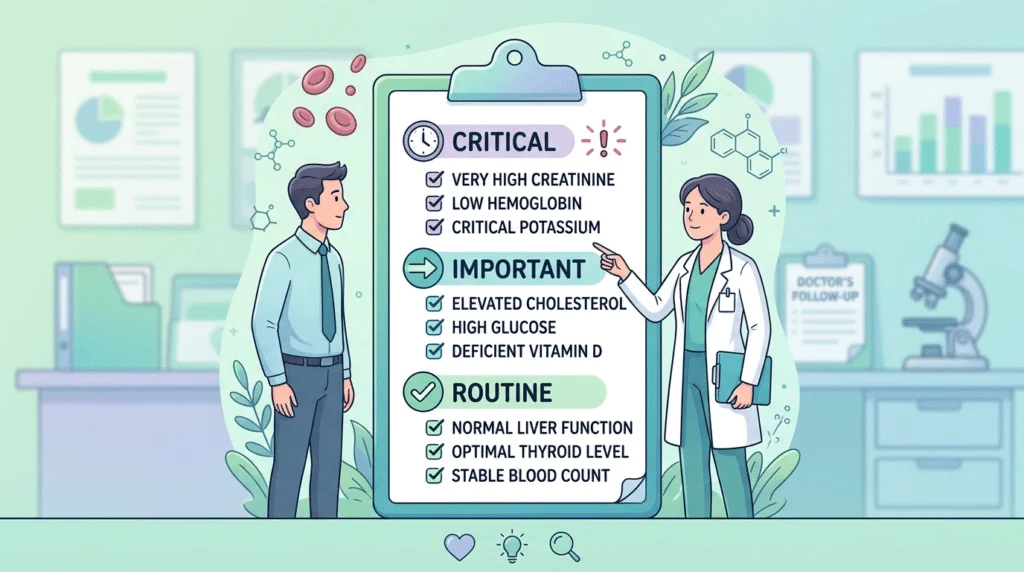
Most results from a full blood panel are reassuring or only mildly outside the range. A few situations, however, deserve a prompt conversation with the clinician who ordered the test:
- A value flagged high or low that sits well outside the reference range, especially if it stays abnormal on a repeat test.
- An abnormal result alongside symptoms such as severe fatigue, chest pain, breathlessness, or unexplained weight loss.
- A new or rising result on a test used to monitor a condition you already have.
- Several related markers abnormal at once, which suggests a pattern rather than a one-off blip.
- Any result your laboratory labels as a “critical” or “panic” value.
- Results in a child, an older adult, or during pregnancy, where normal ranges differ and need expert interpretation.
If you have severe or sudden symptoms, do not wait for a routine appointment; seek urgent medical care. For everything else, the safest step is to share the full report with your doctor and ask what, if anything, needs to happen next. Avoid self-diagnosing from a single number on the page.
Glossary
- CBC (complete blood count): A common test measuring red cells, white cells, platelets, and related values such as hemoglobin and hematocrit.
- CMP (comprehensive metabolic panel): A group of 14 tests checking blood sugar, kidney and liver function, proteins, and electrolytes.
- eGFR (estimated glomerular filtration rate): A calculation that estimates how well your kidneys filter waste from the blood.
- Electrolytes: Minerals such as sodium and potassium that help control fluid balance, nerves, and muscles.
- HbA1c (glycated hemoglobin): A test reflecting your average blood sugar over roughly the previous three months.
- Hematocrit: The percentage of your blood volume made up of red blood cells.
- Lipid panel: A blood test measuring cholesterol and triglycerides to estimate cardiovascular risk.
- MCV (mean corpuscular volume): The average size of your red blood cells, used to help classify types of anemia.
- Reference range: The band of values considered typical for a healthy population, used to flag results as high or low.
- TSH (thyroid-stimulating hormone): A hormone measured to check whether your thyroid is working normally.
Frequently asked questions
Is a full blood panel the same as a complete blood count (CBC)?
No. A complete blood count is just one test within a full blood panel. The CBC looks specifically at your blood cells, while a full blood panel bundles the CBC together with other tests, such as a comprehensive metabolic panel and a lipid panel, to screen several body systems at once. If your doctor ordered only a CBC, you have had one part of a broader screen rather than the whole thing. Checking the test names listed on your report is the easiest way to see exactly which panels were included.
How much does a full blood panel cost?
The cost varies widely depending on where you live, which tests are included, and whether the panel is covered by insurance or a public health system. A panel with more add-on tests, such as thyroid, iron studies, or vitamins, generally costs more than the core three tests alone. Because pricing is so dependent on local arrangements, the most reliable figures come from your clinic, laboratory, or insurer. It is reasonable to ask for an estimate before testing and to confirm which tests are actually being ordered.
Can a full blood panel detect cancer?
A full blood panel is a general health screen, not a cancer test. It can sometimes reveal clues, such as unusual blood cell counts or abnormal liver markers, that prompt a doctor to investigate further. However, a normal panel does not rule cancer out, and an abnormal result usually has a more common, non-cancer explanation. Specific cancers are diagnosed with targeted tests and imaging, not a routine panel. If you have symptoms that worry you, discuss them directly with your doctor rather than relying on a screening result.
Is testosterone included in a standard full blood panel?
Usually not. Sex hormones such as testosterone are not part of the core CBC, metabolic panel, or lipid panel, so a standard full blood panel does not normally include them. Testosterone and other hormones are added only when there is a specific reason, such as investigating fatigue, low libido, or fertility questions. If you want a hormone checked, mention it when the panel is ordered so it can be added deliberately rather than assumed to be there.
Can children and pregnant people have a full blood panel?
Yes, blood panels are used at every life stage, but the interpretation changes. Normal reference ranges differ for children and shift during pregnancy, so a value that is unusual for one group can be entirely expected in another. For this reason, results in children and during pregnancy should always be read by a clinician familiar with the relevant ranges. The blood draw itself is the same routine procedure; it is the way the numbers are interpreted that needs extra context.
How long do full blood panel results take?
For most routine tests, results are ready within a few hours to a few days, though the honest answer depends on the specific tests, the laboratory, and how your results are delivered. A complete blood count can come back the same day, while more specialised add-on tests may take longer. Our guide on how long blood test results take breaks down typical turnaround times and explains when it is reasonable to follow up if your results seem delayed.
Sources
- What You Need to Know About Blood Testing — MedlinePlus (NIH)
- Blood Tests — National Heart, Lung, and Blood Institute (NIH)
- Blood tests — NHS
Further reading
- How to read your blood test results
- CBC vs CMP: understanding the tests
- Complete blood count (CBC): how to read your results
- Comprehensive metabolic panel (CMP): how to read it
- How long do blood test results take?
Understand your lab results with AI DiagMe
You now know what a full blood panel includes, but a page of numbers can still feel like a foreign language. AI DiagMe helps you make sense of a report covering your complete blood count, metabolic panel (kidney and liver markers), lipid panel (cholesterol), and add-ons like thyroid or iron, putting each value in plain words. It is built to help you understand your results and prepare for your appointment, not to diagnose or replace your doctor. Upload your report and see your numbers explained clearly.
➡️ Get your results interpreted in minutes