

























Raportul colesterolului este un număr din buletinul tău de analize împărțit la altul și este probabil cea mai puțin utilă cifră de pe pagină. Este o prescurtare, iar ghidurile moderne privind colesterolul au depășit în mare măsură această abordare: deciziile de tratament din Statele Unite se bazează pe valorile absolute ale colesterolului și pe un risc cardiovascular estimat, nu pe un raport.
În acest articol vei afla care sunt cele trei rapoarte pe care le poți întâlni și ce împarte fiecare la ce, de ce un raport liniștitor poate ascunde un LDL crescut, ce folosesc ghidurile din SUA în schimb, cum îți calculezi colesterolul non-HDL din propriul buletin de analize, ce adaugă apolipoproteina B și lipoproteina(a), de ce un HDL crescut nu este garanția de siguranță pe care pare să o ofere și care rezultate necesită îngrijire urgentă.
Ce este raportul colesterolului și cele trei variante pe care le poți întâlni
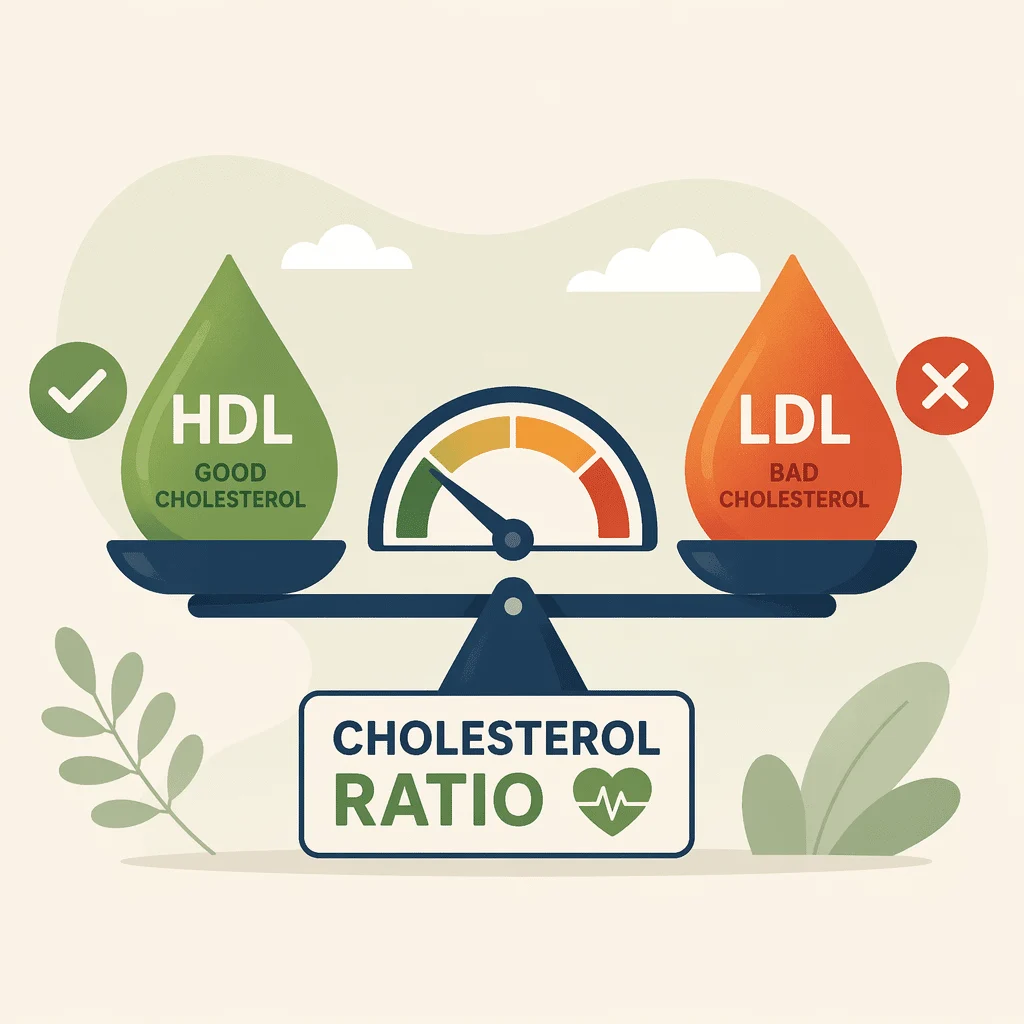
Un profil lipidic măsoară colesterolul total, HDL, LDL și trigliceridele. Un raport ia două dintre aceste valori și le împarte una la cealaltă. Nu se măsoară nimic nou; calculul comprimă două informații într-una singură. Există trei variante care circulă, iar laboratoarele le raportează inconsecvent.
Colesterolul total față de HDL
Acesta este colesterolul total împărțit la colesterolul HDL. Dacă colesterolul tău total este de 200 mg/dL și HDL-ul este de 50 mg/dL, raportul este 4,0. Este varianta cel mai des tipărită pe buletinele de analize din SUA, uneori etichetată CHOL/HDL.
LDL față de HDL
Acesta este colesterolul LDL împărțit la colesterolul HDL. Nu include colesterolul transportat în particulele bogate în trigliceride, deci descrie o imagine mai îngustă decât varianta total-față-de-HDL.
Trigliceride față de HDL
Acesta împarte trigliceridele la colesterolul HDL. Este folosit mai puțin ca măsură a colesterolului și mai mult ca un semnal aproximativ al rezistenței la insulină, și este raportul cel mai influențat de ce ai mâncat ieri, deoarece nivelurile trigliceridelor și intervalele lor de referință variază rapid în funcție de mese și de consumul de alcool.
În fiecare caz, un raport mai mic este menit să semnaleze că o parte mai mică din colesterolul tău se află în particule care se depun în pereții arterelor, față de cele care îl transportă departe. Un raport mai mare semnalează contrariul. Aceasta este toată ideea și tocmai aici apar problemele.
De ce un raport bun al colesterolului poate ascunde un LDL ridicat
Un raport este o fracție, iar HDL se află la numitor. Orice crește HDL trage deci raportul în jos și îl face să pară mai bun, chiar și atunci când colesterolul care generează cu adevărat plăcile arteriale nu s-a modificat deloc.
Să luăm două persoane testate la același laborator în aceeași dimineață. Prima are un colesterol total de 240 mg/dL, un HDL de 80 mg/dL și un LDL de 145 mg/dL: total împărțit la HDL dă 3,0, pe care majoritatea tabelelor îl consideră liniștitor. A doua are un colesterol total de 190 mg/dL, un HDL de 40 mg/dL și un LDL de 130 mg/dL: total împărțit la HDL dă 4,75, pe care aceleași tabele îl semnalează ca îngrijorător.
Prima persoană are LDL-ul mai mare, 145 față de 130. Prima persoană are și colesterolul non-HDL mai mare, 160 față de 150. La cei doi indicatori care urmăresc particulele ce formează plăcile de aterom, persoana cu raportul flatant transportă mai mult, nu mai puțin. HDL-ul generos a înfrumusețat pur și simplu fracția.
Acest lucru contează deoarece raportul nu este ceea ce tratează nimeni. Deciziile se bazează pe valoarea absolută a LDL-ului și pe riscul tău global estimat; ce înseamnă un rezultat sănătos al LDL-ului este explicat în ghidul nostru despre niveluri normale ale LDL și intervale sănătoase. Ideea de reținut este mai simplă: un raport poate evolua într-o direcție liniștitoare fără ca nimic important să se fi îmbunătățit.
Ce folosesc cu adevărat ghidurile pentru a decide
Timp de ani de zile, îngrijirea colesterolului în SUA s-a bazat pe ghidul multisocietăților AHA/ACC din 2018 privind colesterolul din sânge, care combina o valoare absolută a colesterolului LDL cu o estimare a riscului pe 10 ani din Ecuațiile Cohortei Reunite, publicate în 2013.
La sfârșitul anului 2023, Asociația Americană a Inimii a publicat ecuațiile PREVENT, prescurtare de la Predicting Risk of cardiovascular disease EVENTs (Predicția Riscului de Evenimente ale Bolilor Cardiovasculare). Acestea sunt specifice sexului, fără clasificare rasială, se aplică pentru vârste între 30 și 79 de ani și estimează riscul pe 10 ani și pe 30 de ani de boală cardiovasculară totală, adică evenimente aterosclerotice plus insuficiență cardiacă. Un aspect esențial este că au adăugat funcția renală, măsurată ca rată de filtrare glomerulară estimată, alături de vârstă, tensiune arterială, fumat, diabet și colesterol. Dacă te-ai întrebat vreodată de ce un cardiolog este interesat de rezultatele BUN și creatininei, iată de ce.
Apoi, în martie 2026, ACC, AHA și nouă societăți partenere au publicat un Ghid privind Managementul Dislipidemiei care retrage și înlocuiește oficial ghidul privind colesterolul din sânge din 2018. Evaluarea riscului se realizează acum cu scorul PREVENT-ASCVD, oferind riscul pe 10 ani și, pentru adulții cu vârste între 30 și 59 de ani, riscul pe 30 de ani; Ecuațiile Cohortei Reunite nu mai sunt instrumentul de referință. Ghidul recomandă, de asemenea, măsurarea lipoproteinei(a) cel puțin o dată în viață, susține testarea selectivă a apolipoproteinei B și reintroduce obiective de tratament exprimate ca LDL colesterol, colesterol non-HDL și apolipoproteină B în cazuri selectate.
Observă ce lipsește. Niciun raport nu apare în acel cadru. HDL-ul intră ca număr de sine stătător, alături de colesterolul total, nu ca numitor. Rezultatele tale de glucoză, tensiunea arterială, fumatul și funcția renală au o importanță pe care niciun raport nu o poate exprima.
Ce a înlocuit în mare măsură rapoartele: non-HDL, apoB și Lp(a)
Dacă raportul este un instrument imprecis, trei valori mai bune i-au luat locul. Două s-ar putea să fie deja în profilul lipidic; unul pe care îl poți calcula singur.
Colesterolul non-HDL, valoarea pe care o poți calcula singur
Colesterolul non-HDL reprezintă colesterolul total minus colesterolul HDL. Aceasta este întreaga formulă, iar Institutul Național pentru Inimă, Plămâni și Sânge îl include printre valorile suplimentare utile pe care le oferă un panel lipidic.
Ceea ce îl face mai bun decât un raport este ce surprinde. Scăzând HDL-ul, rămâne colesterolul din fiecare particulă care se poate depune în peretele arterial: LDL, dar și lipoproteinele cu densitate foarte mică și intermediară, particulele reziduale și lipoproteina(a). Este o sumă, nu o fracție, astfel că un HDL generos nu îl poate masca, și nu necesită recoltare pe nemâncate.
NHLBI descrie un profil lipidic sănătos ca având colesterolul non-HDL sub 130 mg/dL, cu HDL de cel puțin 40 mg/dL la bărbați și 50 mg/dL la femei. Ținta ta personală depinde de riscul tău global și este stabilită împreună cu medicul tău, nu citită de pe un tabel.
Apolipoproteina B, numărul de particule
Fiecare particulă aterogenă poartă exact o moleculă de apolipoproteină B pe suprafața sa. Măsurarea apolipoproteina B numără, prin urmare, particulele în loc să cântărească colesterolul din interiorul lor.
Acest lucru contează deoarece particulele variază în funcție de cantitatea de colesterol pe care o transportă. Cineva poate avea o valoare modestă a LDL-ului, transportată într-un număr mare de particule mici, sărace în colesterol: valoarea LDL pare acceptabilă, numărul de particule nu. Această neconcordanță se numește discordanță și este mai frecventă când trigliceridele sunt crescute sau în sindromul metabolic, tocmai acolo unde colesterolul LDL subestimează riscul.
Lipoproteina(a), cea pe care o moștenești
Lipoproteina(a) este o particulă asemănătoare LDL-ului, cu o proteină suplimentară atașată. Nivelul tău este determinat aproape în totalitate de genele pe care le moștenești. NHLBI precizează că este puțin probabil să se modifice semnificativ din copilărie până la bătrânețe, motiv pentru care dieta, exercițiile fizice și pierderea în greutate nu îl influențează în mod semnificativ.
Deoarece nivelul este stabil pe tot parcursul vieții, o singură măsurătoare rezolvă de obicei problema, aceasta fiind logica din spatele recomandării din 2026 de a verifica lipoproteina(a) o dată la vârsta adultă. NHLBI precizează că un medic poate recomanda această analiză dacă ai antecedente familiale de accident vascular cerebral sau boli de inimă apărute timpuriu, sau dacă nu îți cunoști istoricul familial.
De ce HDL-ul nu este pur și simplu colesterolul „bun"
Eticheta de „colesterol bun" este cel mai persistent mit depășit din domeniul lipidelor și este exact ceea ce un raport flatant întărește.
Relația dintre HDL și rezultatele clinice nu este liniară. Este în formă de U. HDL scăzut este asociat cu rezultate mai proaste, după cum era de așteptat. Dar HDL foarte ridicat este, de asemenea, asociat cu o mortalitate totală și cardiovasculară mai mare, nu mai mică. Asocierea devine nefavorabilă atât la capătul superior al intervalului, cât și la cel inferior.
Alte două categorii de dovezi indică același lucru. Medicamentele concepute pentru a crește HDL-ul, inclusiv preparatele cu niacină și inhibitorii proteinei de transfer a esterilor de colesterol, nu au reușit în mare parte să reducă evenimentele cardiovasculare, în ciuda creșterii valorii numerice. Iar studiile de randomizare mendeliană, care testează dacă un HDL genetic mai ridicat se traduce prin mai puține evenimente, nu au susținut un efect protector cauzal.
Nimic din toate acestea nu înseamnă că HDL-ul este lipsit de importanță. Înseamnă că raționamentul „HDL-ul meu este ridicat, deci sunt bine" nu se susține, iar un raport care arată bine este unul dintre principalele lucruri care îl încurajează.
Cum să-ți citești propriul buletin de analize lipidice în mod rațional
Înainte de a trage concluzii dintr-un singur set de analize, merită să știi trei aspecte practice.
Postul nu mai este o cerință de rutină. O probă fără post este acceptabilă pentru majoritatea testelor de screening, iar colesterolul non-HDL poate fi măsurat atât pe nemâncate, cât și după masă. Unele clinici solicită totuși un post de 8 până la 12 ore, iar o probă recoltată pe nemâncate este preferată atunci când trigliceridele sunt ridicate, așa că întreabă ce se aplică în cazul tău.
Rezultatele variază și de la o recoltare la alta. Variația biologică, o boală recentă, schimbările de greutate, consumul de alcool și ora din zi pot influența valorile lipidelor, astfel că un profil lipidic anormal este de obicei repetat înainte de a lua orice decizie.
În plus, lipidele nu există izolat. Hipotiroidismul netratat crește LDL-ul, motiv pentru care un Testul TSH însoțește adesea profilul lipidic, alături de teste ale funcției hepatice. Inflamația cronică, urmărită cu valori crescute ale PCR, se asociază cu probleme metabolice, la fel ca și gută și, la unii bărbați, testosteron crescut. Tabelul de mai jos traduce tiparele pe care oamenii le întâlnesc cel mai des.
| Ce arată raportul tău | Ce înseamnă de fapt | Ce să întrebi medicul tău |
|---|---|---|
| Un raport bun, dar LDL este crescut | Un HDL generos la numitor înfrumusețează fracția. Încărcătura de particule care formează plăcile nu s-a schimbat. | Care sunt valorile mele absolute ale LDL și non-HDL și cum arată riscul meu estimat? |
| Un raport slab cauzat în principal de trigliceride crescute | Trigliceridele ridică colesterolul total și sunt adesea asociate cu un HDL scăzut, astfel că raportul se înrăutățește din motive care nu țin doar de LDL. | Trigliceridele mele influențează acest rezultat și ar trebui repetată analiza pe nemâncate? |
| Un raport bun cu un HDL foarte ridicat | Un HDL foarte ridicat nu este un avantaj. Asocierea cu mortalitatea are formă de U, iar capătul superior al intervalului nu este protector. | HDL-ul meu ridicat schimbă ceva în modul în care interpretezi restul profilului meu lipidic? |
| LDL normal cu apoB crescut sau trigliceride crescute | Discordanță clasică. Numărul de particule aterogene poate fi mai mare decât sugerează valoarea colesterolului. | Ar adăuga ceva util măsurarea apolipoproteinei B în cazul meu? |
| O lipoproteină(a) crescută | În mare parte ereditară și stabilă pe tot parcursul vieții. Nu este influențată de dietă, exerciții fizice sau schimbări de greutate. | Schimbă asta evaluarea mea globală a riscului și ar trebui ca rudele mele să fie testate? |
Suplimente, orez roșu fermentat și ce arată dovezile
Orezul roșu fermentat merită o descriere sobră și obiectivă, nu o recomandare în niciun sens.
Este obținut prin fermentarea unei mucegăi, de obicei Monascus purpureus, pe orez. În funcție de tulpină și de condițiile de fermentare, poate conține substanțe numite monacoline. Una dintre ele, monacolina K, este structural identică cu statina prescrisă lovastatin. O capsulă de orez roșu fermentat care conține monacolină K în cantitate semnificativă este, din punct de vedere chimic, o statină.
Problema este că nimeni nu cunoaște doza exactă. Centrul Național pentru Sănătate Complementară și Integrativă (NCCIH) raportează o analiză din 2017 a 28 de mărci de orez roșu fermentat din marile lanțuri de retail din SUA: niciuna nu menționa conținutul de monacolină K pe etichetă, două nu conțineau deloc această substanță, iar dintre cele 26 care o conțineau, cantitatea varia de peste 60 de ori, de la 0,09 la 5,48 mg per 1.200 mg de produs. NCCIH adaugă că produsele cu monacolină K în cantitate semnificativă prezintă aceleași efecte asupra mușchilor, rinichilor și ficatului și aceleași interacțiuni medicamentoase ca statinele, și că unele sunt contaminate cu citrinină, o substanță toxică pentru rinichi. FDA consideră că orezul roșu fermentat cu lovastatin adăugat sau în concentrație crescută nu poate fi comercializat legal ca supliment alimentar.
Pe scurt: este o statină la o doză necunoscută, fără prescripție sau monitorizare. Aceasta este o descriere, nu un sfat.
Și alte afirmații despre suplimente merită aceeași sobrietate. Sterolii și stanolii vegetali și fibrele solubile au efecte modeste, măsurabile, asupra colesterolului. Preparatele cu omega-3 acționează în principal asupra trigliceridelor, iar dovezile diferă semnificativ între formulările cu prescripție și uleiul de pește fără prescripție. Prezentarea noastră despre suplimente pentru colesterol, beneficii și riscuri trece în revistă fiecare afirmație în parte. Spune-i medicului care îți prescrie tratamente despre orice supliment iei, deoarece interacțiunile sunt reale.
Când să faci analize și când să ceri îngrijire urgentă
Colesterolul ridicat nu produce simptome, așa că singurul mod de a-ți cunoaște valorile este să le măsori. CDC recomandă majorității adulților sănătoși să se testeze o dată la patru până la șase ani, mai frecvent în cazul bolilor de inimă, diabetului sau unui istoric familial relevant.
Unele situații nu sunt de rutină. Dacă un rezultat lipidic apare împreună cu simptome, simptomele au prioritate: markeri cardiaci precum troponina sunt cei pe care îi măsoară un spital atunci când există îngrijorarea că se produce un eveniment în acel moment, nu un risc pe parcursul următorului deceniu.
Solicită îngrijire de urgență, nu o repetare a analizei de sânge, dacă se aplică oricare dintre cele de mai jos.
- Durere sau presiune în piept, mai ales însoțită de dificultăți de respirație, transpirații, greață sau durere care iradiază spre maxilar sau braț. Sună la 112.
- Slăbiciune bruscă pe o parte a corpului, căderea unui colț al gurii sau dificultăți de vorbire ori de înțelegere a vorbirii. Sună la 112.
- Durere crampoidă în gambă care apare la mers și cedează la repaus. Solicită o evaluare medicală promptă.
- O valoare foarte mare a trigliceridelor însoțită de dureri abdominale, din cauza riscului de pancreatită. Solicită îngrijire medicală urgentă.
Separat, un istoric familial de infarct miocardic sau accident vascular cerebral la o vârstă neobișnuit de tânără, sau tendoane îngroșate la nivelul tendonului lui Ahile ori al articulațiilor degetelor (xantoame tendinoase), pot indica hipercolesterolemie familială, o afecțiune ereditară. Ambele justifică o evaluare, iar rudele pot necesita screening.
Cele mai recente progrese științifice în testarea colesterolului
Cinci descoperiri din ultimii trei ani se remarcă.
Un nou ghid american a înlocuit cadrul vechi. În martie 2026, ACC, AHA și nouă societăți partenere au publicat un Ghid privind Managementul Dislipidemiei, retragând ghidul din 2018 privind colesterolul sanguin. Riscul este acum estimat cu scorul PREVENT-ASCVD în locul Ecuațiilor Cohortei Reunite, lipoproteina(a) este recomandată cel puțin o dată în viață, iar testarea apolipoproteinei B este susținută selectiv. Ce înseamnă asta pentru tine: cadrul pe care îl folosește medicul tău include valori absolute și un scor de risc, fără niciun raport de colesterol.
Două persoane cu valori identice ale LDL-ului nu prezintă același risc. O analiză UK Biobank pe aproape 294.000 de adulți fără boli cardiovasculare, urmăriți pe o perioadă mediană de unsprezece ani, a arătat că, pentru orice valoare dată a LDL-ului, non-HDL-ului sau trigliceridelor, apolipoproteina B varia considerabil între indivizi, iar cei cu valori mai mari au avut mai multe evenimente cardiovasculare. Niciunul dintre cei trei indicatori, au concluzionat autorii, nu este un substitut adecvat pentru apolipoproteina B. Ce înseamnă asta pentru tine: valoarea LDL-ului tău descrie greutatea colesterolului, nu câte particule îl transportă.
O analiză sistematică a tranșat comparația. Analizând cincisprezece studii de discordanță care acopereau peste 590.000 de participanți tratați și netratați, apolipoproteina B s-a dovedit un marker mai precis al riscului aterosclerotic decât colesterolul LDL în fiecare comparație directă și mai precis decât colesterolul non-HDL în majoritatea cazurilor. Ce înseamnă asta pentru tine: dacă un medic recomandă testarea apolipoproteinei B, aceasta aduce informații reale în plus, nu este un test suplimentar de dragul testului.
HDL foarte ridicat nu este un avantaj. O analiză realizată pe aproape 430.000 de participanți din UK Biobank, urmăriți pe o perioadă mediană de aproape paisprezece ani, a pus în relație colesterolul HDL cu primele zece cauze de deces. Asocierile au avut o formă de U pentru mai multe dintre ele, inclusiv boala cardiacă ischemică, diabetul și bolile renale, iar un HDL extrem de ridicat a fost asociat cu un risc mai mare de deces din mai multe cauze. Autorii au argumentat că modul în care funcționează HDL-ul contează mai mult decât cantitatea acestuia. Ce înseamnă asta pentru tine: un HDL ridicat nu reprezintă o marjă de siguranță, iar un raport care pare bun din această cauză nu este un motiv de liniște.
Lipoprotein(a) adaugă informații relevante chiar și când scorul de risc pare bun. Un studiu care a combinat datele din Multi-Ethnic Study of Atherosclerosis și UK Biobank, cu peste 314.000 de participanți, a arătat că ecuațiile PREVENT au funcționat bine în general, inclusiv la persoanele cu lipoprotein(a) crescut. Totuși, lipoprotein(a) crescut a rămas asociat independent cu rate mai mari de evenimente și a îmbunătățit modest predicția, mai ales la capătul inferior și de graniță al riscului calculat. Ce înseamnă asta pentru tine: un scor de risc liniștitor nu exclude un risc moștenit pe care un singur test îl poate identifica.
Întrebări frecvente
Ce înseamnă un raport bun al colesterolului?
Nu există o valoare a raportului care să determine tratamentul tău, de aceea această întrebare nu are un răspuns satisfăcător. Cifre precum „sub 4" sau „sub 3,5" circulă pe scară largă în diverse tabele, dar nu reprezintă praguri de tratament în ghidurile actuale din SUA, iar ghidul de dislipidemie din 2026 nu folosește deloc un raport. Direcția este și ea ușor de interpretat greșit: deoarece HDL se află la numitor, un HDL ridicat îmbunătățește raportul fără a modifica încărcătura de particule care formează plăcile de aterom. Dacă vrei un singur număr de urmărit, urmărește colesterolul non-HDL și discută cu medicul tău despre LDL-ul absolut și riscul tău estimat.
Un HDL ridicat este întotdeauna bun?
Nu. Relația dintre HDL și rezultatele clinice este în formă de U, nu liniară. Un HDL scăzut este asociat cu rezultate mai proaste, dar și un HDL foarte ridicat a fost legat, în cohorte mari, de o mortalitate generală și cardiovasculară mai mare. Medicamentele care au reușit să crească HDL nu au redus în mare parte evenimentele cardiovasculare, iar studiile genetice nu au confirmat un efect protector cauzal. HDL este un marker util, dar nu este un scut, iar raționamentul „am HDL ridicat, deci sunt bine" nu este corect.
Trebuie să fiu pe nemâncate pentru un test de colesterol?
De obicei, nu. O probă recoltată fără post este acceptabilă pentru screening-ul de rutină, iar colesterolul non-HDL poate fi măsurat indiferent dacă ai mâncat sau nu. Unele clinici solicită totuși un post de 8 până la 12 ore, iar o probă recoltată pe nemâncate este de obicei preferată atunci când trigliceridele sunt ridicate sau când valoarea LDL calculată trebuie să fie cât mai precisă. Răspunsul practic este să întrebi clinica ce condiții impune înainte de a merge, deoarece dacă te prezinți în starea greșită înseamnă, de obicei, că trebuie să te întorci.
Cum calculez colesterolul meu non-HDL?
Scade colesterolul HDL din colesterolul total. Ambele valori se găsesc în buletin, ambele sunt în aceleași unități, iar rezultatul este colesterolul tău non-HDL. Dacă colesterolul total este 210 mg/dL și HDL este 55 mg/dL, non-HDL este 155 mg/dL. Această simplă scădere surprinde colesterolul din fiecare particulă capabilă să se depună în peretele arterial, inclusiv resturile și lipoprotein(a) — ceea ce îți spune mai mult decât LDL singur sau orice raport.
Raportul meu s-a schimbat între două analize. Înseamnă ceva?
De multe ori, nu prea mult. Valorile lipidice variază de la o recoltare la alta din motive obișnuite: o boală recentă, alcoolul, o schimbare în greutate, ora din zi sau chiar cât timp ai stat jos înainte de recoltare. Deoarece un raport combină două cifre variabile, fluctuează mai mult decât oricare dintre ele separat, ceea ce îl face să pară mai dramatic decât este în realitate. O singură modificare este rareori luată în considerare pentru a acționa. Medicii repetă de obicei un profil lipidic înainte de a trage concluzii și se uită la valorile absolute, nu la raport.
Ar trebui să cer un test pentru apoB sau lipoproteina(a)?
Sunt întrebări rezonabile de ridicat, iar ghidul american din 2026 susține măsurarea lipoproteinei(a) cel puțin o dată la vârsta adultă și testarea selectivă a apolipoproteinei B. Apolipoproteina B este cel mai utilă atunci când trigliceridele sunt crescute, în sindromul metabolic sau când rezultatul LDL pare acceptabil, dar ceva din tabloul clinic nu se potrivește. Lipoproteina(a) merită determinată o dată, deoarece este moștenită și stabilă. Dacă vreuna dintre ele schimbă ceva în cazul tău este o discuție pentru medicul tău, nu o decizie de luat dintr-un grafic.
Glosar de termeni cheie
| Termen | Definiție |
|---|---|
| Raportul colesterolului | O valoare lipidică împărțită la alta, cel mai adesea colesterolul total împărțit la colesterolul HDL. Un rezumat, nu o măsurătoare. |
| Aterogen | Capabil să contribuie la formarea plăcilor în pereții arteriali. Folosit pentru a descrie LDL și alte particule care transportă apolipoproteina B. |
| Colesterol non-HDL | Colesterolul total minus colesterolul HDL. Surprinde colesterolul din fiecare particulă aterogenă și nu necesită post alimentar. |
| Apolipoproteina B (apoB) | O proteină transportată câte una de fiecare particulă aterogenă, astfel că măsurarea ei numără particulele în loc să cântărească colesterolul din ele. |
| Lipoproteina(a) | O particulă similară LDL al cărei nivel este în mare parte moștenit și stabil pe parcursul vieții, și pe care schimbările de stil de viață nu îl modifică semnificativ. |
| Discordanță | O discrepanță între doi markeri lipidici, cum ar fi un colesterol LDL acceptabil alături de o apolipoproteină B ridicată. |
| Ecuațiile PREVENT | Ecuații de risc ale Asociației Americane a Inimii, publicate în 2023, care estimează riscul cardiovascular pe 10 și 30 de ani și includ funcția renală. |
| Ecuațiile Pooled Cohort | Ecuațiile de risc din 2013 utilizate de ghidul american de colesterol din 2018, înlocuite acum de PREVENT în ghidul de dislipidemie din 2026. |
| Monacolina K | Un compus găsit în unele produse din orez roșu fermentat, identic din punct de vedere structural cu statina prescrisă lovastatină. |
| Hipercolesterolemia familială | O afecțiune ereditară care provoacă colesterol foarte ridicat încă de la naștere, semnalată uneori de boli de inimă apărute timpuriu în familie sau de xantoame tendinoase. |
Surse
- National Heart, Lung, and Blood Institute. Blood Cholesterol: Diagnosis
- Centers for Disease Control and Prevention. Testing for Cholesterol
- National Center for Complementary and Integrative Health. Red Yeast Rice: What You Need To Know
- American Heart Association. Calculatorul online AHA PREVENT
- Blumenthal RS, Morris PB, et al. 2026 ACC/AHA/AACVPR/ABC/ACPM/ADA/AGS/APhA/ASPC/NLA/PCNA Guideline on the Management of Dyslipidemia. Circulation. 2026
- Abramov D, Minhas AMK, Shapiro MD, et al. Primary Prevention of Dyslipidemia: 10 Practice-Changing Takeaways from the 2026 ACC/AHA Multisociety Guideline. Current Atherosclerosis Reports. 2026
- Khan SS, Matsushita K, Sang Y, et al. Development and Validation of the American Heart Association’s PREVENT Equations. Circulation. 2024
- Sniderman AD, Dufresne L, Pencina KM, et al. Discordance among apoB, non-high-density lipoprotein cholesterol, and triglycerides: implications for cardiovascular prevention. European Heart Journal. 2024
- Sehayek D, Cole J, Bjornson E, et al. ApoB, LDL-C, and non-HDL-C as markers of cardiovascular risk. Journal of Clinical Lipidology. 2025
- Soffer DE, Marston NA, Maki KC, et al. Rolul apolipoproteinei B în managementul clinic al riscului cardiovascular la adulți: un consens clinic de experți al Asociației Naționale de Lipidologie. Journal of Clinical Lipidology. 2024
- Shi S, Lin Z, Song Y, et al. Asocierea colesterolului HDL cu primele 10 cauze de deces. European Journal of Preventive Cardiology. 2025
- Bhatia HS, Ambrosio M, Razavi AC, et al. Ecuațiile AHA PREVENT și lipoproteina(a) pentru evaluarea riscului cardiovascular: perspective din studiile MESA și UK Biobank. JAMA Cardiology. 2025
- Razavi AC, Mehta A, Jain V, et al. Colesterolul HDL în evaluarea riscului de boală cardiovasculară aterosclerotică: explorarea și explicarea curbei în formă de U. Current Cardiology Reports. 2023
- Endo Y, Fujita M, Ikewaki K. Funcțiile HDL: stadiul actual și perspective de viitor. Biomolecules. 2023
Lectură suplimentară
- Testul colesterolului total: ghid complet pentru înțelegerea rezultatelor
- Testul colesterolului HDL și ce înseamnă cu adevărat colesterolul bun
- Înțelegerea colesterolului HDL scăzut, cauze și riscuri
- Profil lipidic avansat, apoB și riscul cardiovascular
- Colesterol mărit: înțelege-l, previno-l, acționează
Înțelege-ți rezultatele analizelor cu AI DiagMe
Un buletin de analize lipidice conține colesterol total, LDL, HDL, trigliceride și adesea colesterol non-HDL, în unități și abrevieri care rareori se explică de la sine. AI DiagMe transformă acele valori în limbaj simplu, ca să înțelegi ce s-a măsurat și să ajungi la consultație cu întrebări mai bune. Nu pune diagnostice, nu evaluează riscul tău cardiovascular și nu înlocuiește medicul tău.
Obține interpretarea rezultatelor în câteva minute