Nivelurile normale de LDL se numără printre cele mai căutate valori din medicina de laborator și printre cele mai înțelese greșit. Punctul de plecare sincer este incomod: nu există un singur nivel normal de LDL valabil pentru toată lumea. Aceeași valoare care este nesemnificativă la o persoană sănătoasă de 30 de ani poate reprezenta o țintă activă de tratament pentru cineva care a suferit deja un infarct. În acest articol vei afla ce măsoară de fapt testul LDL, ce spun benzile convenționale și de unde provin, de ce ținta ta personală depinde de riscul tău cardiovascular global și nu de o limită universală, de ce colesterolul non-HDL și apolipoproteina B descriu adesea riscul mai bine decât LDL-ul singur, de ce o valoare de 190 mg/dL sau mai mare ridică o întrebare importantă pentru rudele tale de sânge și ce să faci cu rezultatul pe care îl ai în mână.
Ce este colesterolul LDL și ce măsoară testul
Colesterolul este o substanță ceroasă, asemănătoare grăsimii, de care organismul tău are nevoie pentru a construi membranele celulare și a produce hormoni. Nu se dizolvă în sânge, așa că circulă în interiorul unor particule numite lipoproteine. Lipoproteinele cu densitate mică, sau LDL, sunt principalii transportori care livrează colesterolul către țesuturi.
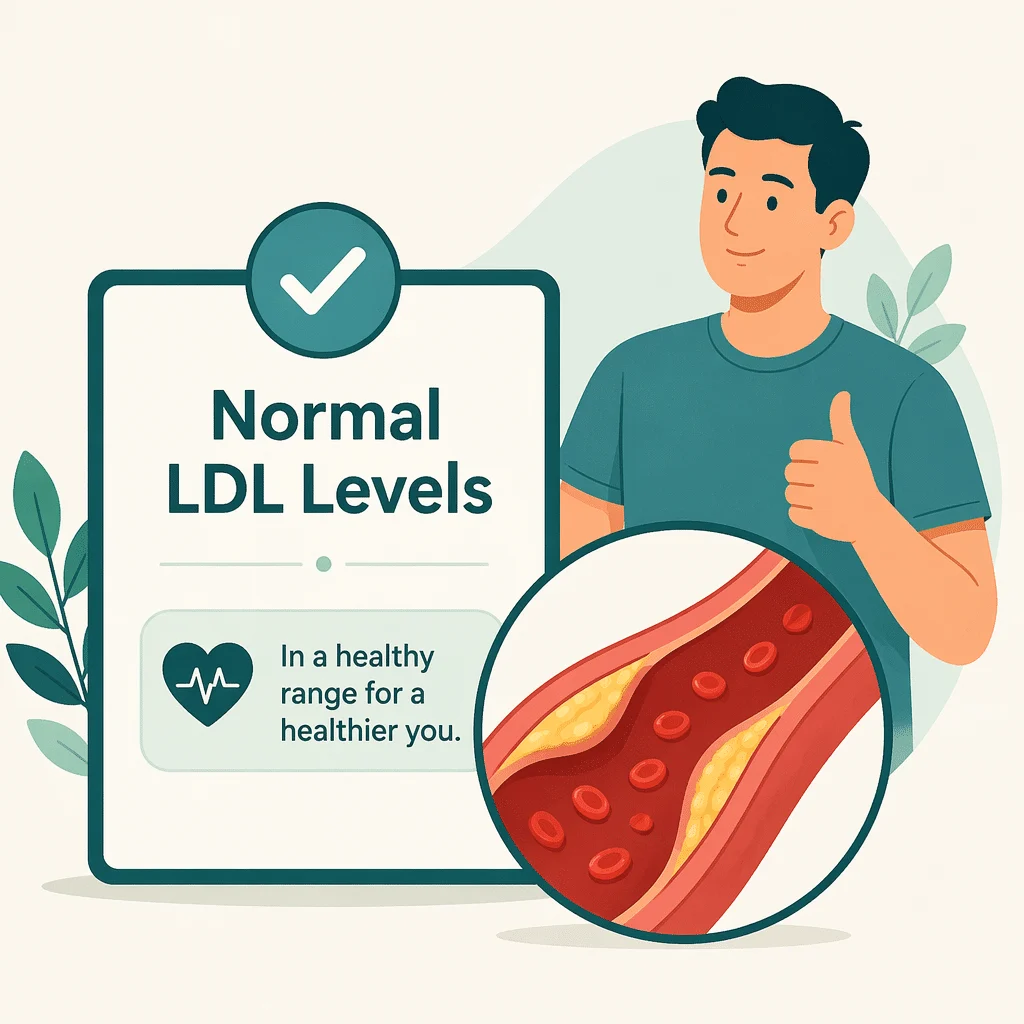
Când există mai mult LDL în circulație decât are nevoie organismul, unele dintre aceste particule se depun în pereții arterelor. De-a lungul anilor, depozitele devin plăci aterosclerotice, iar placa este procesul de bază din spatele majorității infarctelor și al multor accidente vasculare cerebrale. De aceea LDL este descris, în termeni simpli, drept colesterolul „rău".
Numărul din analizele tale nu reprezintă un număr de particule. „Colesterolul LDL" măsoară cantitatea de colesterol transportată în interiorul particulelor tale LDL, exprimată în miligrame pe decilitru (mg/dL) în Statele Unite. Majoritatea țărilor din afara SUA raportează în milimoli pe litru (mmol/L); pentru conversie, împarte valoarea în mg/dL la aproximativ 38,7. Astfel, 100 mg/dL înseamnă aproximativ 2,6 mmol/L, iar 190 mg/dL înseamnă aproximativ 4,9 mmol/L.
LDL-ul nu apare aproape niciodată singur. Face parte dintr-un profilul lipidic, alături de colesterolul total, Colesterol HDL și trigliceridele. Acești însoțitori nu sunt decorativi. Așa cum vei vedea, ei schimbă ce înseamnă de fapt valoarea ta de LDL.
Benzile convenționale pentru LDL și originea lor
Benzile pe care majoritatea laboratoarelor le tipăresc alături de rezultatul tău provin din Programul Național de Educație privind Colesterolul și sunt preluate în ghidurile actuale ACC/AHA privind colesterolul. Biblioteca Națională de Medicină, pe baza materialelor NHLBI, le prezintă după cum urmează.
| Bandă LDL (mg/dL) | Cum se numește | Ce înseamnă de obicei | Ce NU înseamnă prin sine |
|---|---|---|---|
| Sub 100 | Optim | Risc aterogen scăzut pentru majoritatea adulților cu risc mediu | Nu înseamnă că ești în afara oricărui risc; persoanelor cu boli cardiovasculare existente li se recomandă adesea valori-țintă mult sub aceasta |
| 100 până la 129 | Aproape optim / peste optim | Frecvent în populația generală | Nu înseamnă „bine pentru tine"; aceeași valoare are o semnificație diferită la 25 de ani față de 65 de ani |
| 130 până la 159 | La limita superioară | Un semnal să privești imaginea completă a riscului tău | Nu indică prin sine o boală și nu indică prin sine că este nevoie de vreun tratament |
| 160 până la 189 | Crescută | Necesită o evaluare clinică adecvată | Nu îți spune cauza, care poate fi genetică, legată de tiroidă, de rinichi sau de stilul de viață |
| 190 și peste | Foarte ridicat | Ridică suspiciunea unui tulburări ereditare de colesterol și necesită o evaluare medicală promptă | Nu reprezintă în sine un diagnostic; confirmarea sau excluderea unei afecțiuni ereditare necesită consultul unui medic |
Citește acel tabel ca pe o hartă a populației, nu ca pe un verdict personal. Aceste categorii au fost concepute pentru a descrie distribuția colesterolului în rândul populației și pentru a oferi medicilor un limbaj comun. Nu au fost niciodată gândite ca obiective individuale. Ghidurile moderne s-au îndepărtat decisiv de pragurile universale și abordează acum managementul LDL în funcție de riscul cardiovascular absolut și de o serie de factori care amplifică riscul. Intervalul în care se încadrează valoarea ta reprezintă începutul conversației, nu sfârșitul ei.
De ce ținta ta de LDL depinde de riscul tău global
Două persoane pot ieși din același laborator cu un LDL identic de 135 mg/dL și pot primi sfaturi complet diferite — și ambii medici pot avea dreptate.
Prima are 32 de ani, nu a fumat niciodată, are tensiunea arterială normală și niciun antecedent familial de boală cardiacă precoce. Pentru ea, 135 mg/dL se încadrează într-un interval care merită urmărit în timp.
Al doilea are 61 de ani, are diabet de tip 2, tensiune arterială crescută și un stent montat acum trei ani. Pentru el, același 135 mg/dL este cu mult peste nivelul pe care echipa sa medicală și l-ar dori.
Ceea ce îi diferențiază nu este valoarea colesterolului. Sunt toate celelalte aspecte: vârsta, sexul, tensiunea arterială, fumatul, diabetul, funcția renală, inflamația, istoricul familial și dacă boala aterosclerotică este deja prezentă. Medicii combină acești factori într-o estimare a riscului absolut pe parcursul următorului deceniu — și tot mai mult pe durata întregii vieți — și decid apoi ce nivel de LDL este adecvat pentru acea persoană specifică.
Factorii care amplifică riscul completează calculatoarele principale și pot influența o decizie la limită: antecedente familiale puternice de boală cardiacă prematură, boală cronică de rinichi, afecțiuni inflamatorii cronice, anumite origini etnice, complicații ale sarcinii precum preeclampsia, trigliceride persistent crescute și un nivel ridicat de proteina C reactivă cu înaltă sensibilitate (hs-CRP). Unele cauze ale LDL crescut sunt și complet reversibile odată identificate. Tiroida hipoactivă este un exemplu clasic, motiv pentru care un Testul TSH este verificat adesea atunci când colesterolul este neașteptat de mare.
Tocmai de aceea, transformarea intervalelor într-un exercițiu de autoevaluare este o greșeală. Valoarea ta nu poate fi interpretată fără a lua în considerare restul datelor tale de sănătate.
De ce valoarea LDL singură este incompletă
Chiar lăsând riscul deoparte, colesterolul LDL este un rezumat imperfect al pericolului care circulă în sângele tău. Trei lucruri merită înțelese.
Colesterolul non-HDL oferă o imagine mai completă
Colesterolul non-HDL este o simplă aritmetică: colesterolul total minus colesterolul HDL. Ce rămâne este colesterolul transportat de fiecare particulă aterogenă, nu doar LDL, inclusiv resturile lipoproteinelor bogate în trigliceride. Când trigliceridele sunt crescute, aceste resturi prezintă un risc real pe care valoarea LDL îl omite în tăcere. Colesterolul non-HDL nu necesită un test de sânge suplimentar și apare deja pe multe analize moderne.
ApoB numără particulele
Fiecare particulă lipoproteică aterogenă poartă exact o moleculă de apolipoproteină B. Astfel, măsurarea ApoB numără efectiv câte astfel de particule ai, nu cât colesterol este înghesuit în ele. Două persoane cu același colesterol LDL pot avea numere de particule destul de diferite, iar cea cu mai multe particule prezintă, în general, un risc mai mare. Acest lucru contează cel mai mult când trigliceridele sunt crescute, în diabet și în sindromul metabolic. ApoB este din ce în ce mai disponibil ca parte a unui profil lipidic avansat.
LDL-ul tău poate fi calculat, nu măsurat direct
Acesta este lucrul pe care aproape nimeni nu ți-l spune. Timp de decenii, majoritatea laboratoarelor nu au măsurat LDL-ul direct. Îl estimau pe baza colesterolului total, HDL-ului și trigliceridelor, folosind ecuația Friedewald, o formulă din anii 1970. Funcționează rezonabil de bine în intervalul mediu și devine nesigură exact în situațiile care contează cel mai mult: când trigliceridele sunt crescute și când LDL-ul este cu adevărat scăzut. Laboratoarele moderne recurg din ce în ce mai mult la măsurarea directă sau la ecuații mai noi, precum Martin-Hopkins sau Sampson. Dacă rezultatul tău pare surprinzător, să întrebi cum a fost calculat LDL-ul tău este o întrebare perfect îndreptățită.
Un LDL de 190 mg/dL sau mai mare: întrebarea despre colesterolul moștenit
Un LDL egal sau mai mare de 190 mg/dL (aproximativ 4,9 mmol/L) la un adult este diferit ca natură, nu doar ca grad. Dieta și stilul de viață produc rareori singure valori atât de mari. Acest nivel ridică întrebarea hipercolesterolemiei familiale, o afecțiune moștenită care afectează capacitatea organismului de a elimina LDL din sânge.
Hipercolesterolemia familială nu este rară. Afectează aproximativ 1 din 250 de persoane, ceea ce o face una dintre cele mai frecvente afecțiuni genetice grave din medicină. Deoarece colesterolul a fost ridicat încă de la naștere, nu doar din vârsta mijlocie, expunerea cumulativă a arterelor este mult mai mare, iar netratată, aceasta implică un risc pe viață semnificativ crescut de boli cardiace precoce. Este, de asemenea, substanțial subdiagnosticată. Cercetările publicate în Implementation Science Communications notează că până la 80% dintre persoanele cu această afecțiune rămân nediagnosticate, iar majoritatea celor diagnosticate sunt subtratate.
Pot apărea și semne fizice, deși mulți oameni nu au niciunul: tendoane îngroșate la nivelul tendonului lui Ahile sau al articulațiilor degetelor (xantoame tendinoase), depozite de colesterol pe pleoape sau un inel palid în jurul corneei la persoane sub 45 de ani.
De ce contează asta pentru rudele tale
Acesta este cel mai important lucru de reținut de pe această pagină. Hipercolesterolemia familială se transmite după un tipar autosomal dominant, ceea ce înseamnă că fiecare rudă de gradul întâi a unei persoane afectate — adică fiecare părinte, frate sau soră și copil — are aproximativ o șansă din două de a o moșteni și ea.
Din acest motiv, un diagnostic confirmat declanșează un proces numit screening în cascadă: rudelor li se oferă sistematic un test de colesterol și, uneori, teste genetice, extinzându-se treptat în arborele genealogic. Este una dintre puținele situații din medicina adultului în care rezultatul analizei de sânge a unei persoane influențează direct ce ar trebui să se întâmple cu familia sa. Dacă un medic îți menționează hipercolesterolemia familială, întrebarea „cine altcineva din familia mea ar trebui testat?" este exact cea potrivită de pus.
Lipoproteina(a): măsurătoarea de care ai nevoie o singură dată
Lipoproteina(a), scrisă de obicei Lp(a), este o particulă asemănătoare LDL-ului, cu o proteină suplimentară atașată. Nu face parte dintr-un profil lipidic standard și se comportă diferit față de tot ce este descris în acest articol: nivelul tău este determinat aproape în întregime de genele moștenite, rămâne în mare parte stabil pe parcursul vieții și răspunde cu greu la dietă, exerciții fizice sau medicamentele care scad LDL-ul.
Deoarece este determinată genetic și stabilă, organismele profesionale recomandă din ce în ce mai mult măsurarea ei o singură dată în viață, nu în mod repetat. Un nivel crescut de Lp(a) este frecvent, afectând o minoritate semnificativă a populației, și poate însemna că calculatoarele convenționale de risc subestimează riscul real pe termen lung al unei persoane. Chiar dacă în prezent nu există un tratament aprobat care să vizeze specific scăderea acesteia, un document de consens al Societății Europene de Ateroscleroză argumentează practic utilitatea cunoașterii nivelului tău: acesta schimbă cât de agresiv trebuie gestionat fiecare alt factor de risc modificabil. Dacă testul este potrivit pentru tine este o discuție pe care trebuie să o ai cu medicul tău.
A jeun sau nu: contează?
În cele mai multe cazuri, nu. Testarea lipidelor fără post este acum acceptată de principalele ghiduri pentru evaluarea de rutină a riscului și este considerabil mai ușoară pentru pacienți. Colesterolul total, HDL și colesterolul non-HDL se modifică foarte puțin după masă.
Trigliceridele cresc după masă și, deoarece multe laboratoare calculează LDL-ul pe baza trigliceridelor, o probă recoltată fără post poate influența ușor valoarea LDL calculată. O probă recoltată à jeun poate fi solicitată atunci când trigliceridele sunt semnificativ crescute, când o valoare precisă a LDL-ului va ghida o decizie terapeutică sau când se investighează o tulburare lipidică ereditară. Respectă instrucțiunile laboratorului sau ale medicului tău și notează pe formular dacă ai mâncat.
Ce urmează și când să mergi la medic
Un singur profil lipidic este o fotografie de moment. Colesterolul variază în funcție de o boală recentă, sarcină, funcția tiroidiană, consum de alcool, modificări de greutate și metoda de laborator, astfel că un rezultat neașteptat este de obicei repetat înainte de a trage concluzii.
Medicul va confirma de obicei rezultatul, va lua un istoric familial detaliat, va verifica dacă există afecțiuni care cresc secundar LDL-ul, cum ar fi probleme tiroidiene, renale sau probleme hepatice, uită-te la întregul profil, inclusiv trigliceridele și colesterolul non-HDL, verifică diabetul cu un Testul HbA1c, și abia apoi estimează riscul tău global și discută ce, dacă este cazul, ar trebui schimbat.
Un lucru merită spus clar. Deciziile privind inițierea, oprirea sau modificarea oricărui medicament pentru scăderea lipidelor, inclusiv a statinelor, aparțin medicului prescriptor, care îți cunoaște istoricul complet. Nimic din ce citești online, aici sau în altă parte, nu este un motiv pentru a modifica o prescripție. Dacă ai nelămuriri legate de un medicament pe care îl iei, discută-le cu medicul care ți l-a prescris, în loc să acționezi pe cont propriu.
Solicită asistență medicală de urgență, indiferent de valoarea LDL-ului tău:
- Durere sau presiune în piept, durere care iradiază spre braț, gât sau mandibulă, ori dificultăți de respirație la efort. Sună la serviciile de urgență dacă simptomele sunt severe, noi sau persistente.
- Slăbiciune bruscă, căderea feței, dificultăți de vorbire sau pierderea echilibrului.
- Un LDL de 190 mg/dL sau mai mare, ori un colesterol total foarte ridicat, necesită o consultație medicală promptă, nu o abordare de tip „așteptăm să vedem".
- Antecedente familiale de infarct miocardic sau accident vascular cerebral înainte de 55 de ani la bărbați sau 65 de ani la femei, ori o rudă diagnosticată cu hipercolesterolemie familială.
- Tendoane ale lui Ahile sau tendoane ale articulațiilor degetelor îngroșate, depozite de colesterol pe pleoape sau un inel palid în jurul corneei la o persoană sub 45 de ani. Acestea sunt semne fizice care pot indica hipercolesterolemie familială.
- Durere crampoidă în gambe la mers, care cedează la repaus.
Cele mai recente progrese științifice în testarea LDL
Cercetările publicate între 2023 și 2026 au clarificat mai multe dintre aspectele de mai sus.
Modul în care se calculează LDL influențează cine este clasificat ca risc scăzut
O comparație sistematică a 23 de ecuații diferite pentru calculul LDL față de metoda de referință de laborator, folosind rezultate lipidice clinice de la peste cinci milioane de pacienți, a arătat că ecuația Martin-Hopkins a clasificat rezultatele în categoria corectă cel mai frecvent, în timp ce ecuația Friedewald, utilizată de mult timp, a avut performanțe mai slabe. Remarcabil, aproximativ unul din cinci pacienți al căror LDL calculat prin Friedewald era sub 70 mg/dL a fost reclasificat în sus de ecuația mai precisă. Ce înseamnă asta pentru tine: dacă LDL-ul tău a fost calculat și nu măsurat direct, mai ales dacă trigliceridele tale sunt crescute, valoarea din buletin are o marjă de incertitudine care merită menționată medicului tău.
ApoB depășește atât LDL-ul, cât și colesterolul non-HDL
O revizuire sistematică din 2025 publicată în Journal of Clinical Lipidology a analizat 15 studii de discordanță care acoperă peste 590.000 de participanți, folosind metode statistice concepute special pentru a separa markerii care se modifică de obicei împreună. ApoB a fost un marker mai precis al riscului aterosclerotic decât colesterolul LDL în fiecare studiu care i-a comparat, și mai precis decât colesterolul non-HDL în majoritatea cazurilor. Ce înseamnă asta pentru tine: LDL-ul este un punct de plecare rezonabil, dar nu este ultimul cuvânt, iar întrebarea dacă ApoB ar adăuga informații utile în situația ta este perfect justificată.
Același LDL poate ascunde numere de particule foarte diferite
O analiză a aproape 294.000 de adulți din UK Biobank, urmăriți pe o perioadă mediană de 11 ani, a evidențiat o variație mare a ApoB la persoanele cu aceeași valoare a colesterolului LDL și diferențe semnificative ale ratei evenimentelor cardiovasculare la 10 ani între cei aflați la extremele acestei variații. Ce înseamnă asta pentru tine: două rezultate LDL identice nu garantează același risc, ceea ce este încă un motiv pentru care o singură valoare, privită izolat, nu este suficientă.
Hipercolesterolemia familială rămâne un diagnostic ratat
Interviuri cu 21 de pacienți și 17 medici, publicate în 2024, au evidențiat o confuzie răspândită cu privire la ceea ce diferențiază această afecțiune de hipercolesterolemia obișnuită și au identificat screeningul familial în cascadă ca un pas care adesea nu se realizează. Un protocol de studiu din 2026 publicat în Public Health Genomics testează acum strategii structurate de comunicare familială în medicina primară, tocmai pentru a reduce acest decalaj. Ce înseamnă asta pentru tine: dacă se ridică posibilitatea unui colesterol crescut ereditar, nu presupune că rudele tale vor fi contactate automat. Întreabă.
Lipoproteina(a) a intrat în evaluarea de rutină
O revizuire de consens a Societății Europene de Ateroscleroză a abordat obiecția frecventă „de ce să-l măsor dacă nu pot să-l scad?" și a explicat cum cunoașterea nivelului de Lp(a) ar trebui să schimbe managementul tuturor celorlalți factori de risc, împreună cu un calculator de risc care reflectă efectul său asupra riscului pe parcursul vieții. Ce înseamnă asta pentru tine: o singură măsurare a Lp(a) poate merita discutată cu medicul tău, mai ales dacă în familia ta au apărut boli de inimă la vârste tinere.
Glosar
| Termen | Definiție |
|---|---|
| Colesterol LDL | Colesterolul transportat în interiorul particulelor de lipoproteine cu densitate mică, principalul transportor care depune colesterolul în pereții arterelor. |
| Colesterol non-HDL | Colesterolul total minus colesterolul HDL; surprinde colesterolul din toate particulele care dăunează arterelor, nu doar LDL-ul. |
| Apolipoproteina B (ApoB) | O proteină prezentă o singură dată pe fiecare particulă lipoproteică care dăunează arterelor, astfel că măsurarea ei numără efectiv acele particule. |
| Ecuația Friedewald | O formulă din anii 1970 care estimează LDL pe baza colesterolului total, HDL și trigliceridelor; mai puțin fiabilă când trigliceridele sunt crescute sau LDL-ul este scăzut. |
| Ecuația Martin-Hopkins | O metodă mai nouă de estimare a LDL care ajustează calculul în funcție de profilul lipidic individual și este mai precisă decât ecuația Friedewald. |
| Hipercolesterolemia familială | O afecțiune ereditară care afectează aproximativ 1 din 250 de persoane, cauzând un LDL foarte ridicat pe tot parcursul vieții și un risc cardiovascular crescut pe termen lung. |
| Screening în cascadă | Testarea sistematică a rudelor de sânge ale unei persoane diagnosticate cu o afecțiune ereditară, extinzând cercul treptat în familie. |
| Lipoproteina(a) | O particulă asemănătoare LDL-ului al cărei nivel este determinat genetic și rămâne stabil pe tot parcursul vieții; de obicei se măsoară o singură dată, nu repetat. |
| Xantom tendinos | Depozite de colesterol care îngroașă tendoanele, clasic la nivelul tendonului lui Ahile sau al articulațiilor degetelor; semn fizic al hipercolesterolemiei ereditare. |
| Ateroscleroză | Acumularea treptată de placă grasă în interiorul pereților arterelor, care îngustează arterele și stă la baza infarctului miocardic și a accidentului vascular cerebral. |
Întrebări frecvente
Care este un nivel bun de LDL pentru mine în mod specific?
Nu există un răspuns universal, iar orice sursă care îți oferă unul fără să îți cunoască istoricul simplifică prea mult lucrurile. Nivelul potrivit de LDL pentru tine depinde de riscul tău cardiovascular global: vârsta, tensiunea arterială, fumatul, diabetul, funcția renală, istoricul familial și, mai ales, dacă ai deja o boală arterială stabilită. Cineva care a suferit un infarct va primi de obicei o țintă mult mai mică decât cineva de aceeași vârstă fără niciun factor de risc. Intervalele tipărite pe buletinul tău de analize descriu o populație; ținta ta este o decizie clinică luată de cineva care îți cunoaște tabloul complet. Prezintă rezultatul acelei persoane în loc să încerci să te evaluezi singur după un tabel.
Este nivelul meu de LDL periculos?
Un număr în sine nu este periculos sau sigur; este doar un element dintr-o estimare a riscului. Acestea fiind spuse, unele rezultate necesită atenție mai rapidă decât altele. Un LDL de 190 mg/dL sau mai mare la un adult, sau un istoric familial puternic de infarct sau accident vascular cerebral înainte de 55 de ani la bărbați sau 65 de ani la femei, justifică o consultație medicală promptă, nu o simplă supraveghere. Simptomele primează întotdeauna în fața cifrelor: durerea în piept, dificultatea de respirație la efort sau simptomele asemănătoare unui AVC necesită evaluare imediată, indiferent ce arată colesterolul tău. În afara acestor situații, pasul următor util este o discuție, nu un verdict.
Ar trebui să iau un supliment pentru a scădea LDL-ul?
Merită să abordezi acest subiect cu discernământ. Suplimentele comercializate pentru colesterol nu sunt reglementate la standardul medicamentelor, iar calitatea dovezilor variază considerabil. Unul merită un avertisment specific de siguranță: orezul roșu fermentat conține monacolină K, un compus chimic identic cu statina prescrisă lovastatină. Cantitatea prezentă variază imprevizibil între produse și nu este indicată în mod fiabil pe etichetă, ceea ce înseamnă că poți lua o doză necunoscută dintr-un medicament fără supraveghere medicală sau monitorizare, inclusiv în paralel cu o statină prescrisă. Discută orice iei sau intenționezi să iei cu medicul sau farmacistul tău și menționează suplimentele la consultații, chiar dacă nu le consideri medicamente.
Poate fi LDL-ul meu prea scăzut?
LDL foarte scăzut nu reprezintă de obicei o problemă în sine, iar persoanele aflate sub tratament intensiv pentru scăderea lipidelor ajung în mod obișnuit la valori mult sub banda „optimă" fără niciun efect negativ. LDL neașteptat de scăzut la o persoană care nu urmează niciun tratament este o altă situație și poate reflecta uneori o problemă de fond, cum ar fi hipertiroidismul, malnutriția, malabsorbția, o boală hepatică sau o afecțiune ereditară rară. Merită menționat unui medic, în loc să presupui că mai scăzut înseamnă întotdeauna mai bine.
Cât de des ar trebui să îmi verific colesterolul?
Frecvența depinde de vârsta și riscul tău, nu de un interval universal valabil pentru toți. Recomandările generale din SUA sugerează un prim control în copilărie, apoi la fiecare patru până la șase ani pentru adulții cu risc scăzut, cu testări mai frecvente pentru persoanele cu diabet, boli cardiovasculare cunoscute, istoric familial de colesterol ridicat sau care urmează un tratament pentru scăderea lipidelor. După orice schimbare a tratamentului, retestarea are loc de obicei în câteva luni. Medicul tău va stabili un interval potrivit situației tale.
De ce diferă rezultatul meu LDL între două laboratoare?
Există mai multe motive, și niciunul dintre ele nu indică neapărat o eroare. Laboratoarele pot folosi metode diferite — unele măsoară LDL direct, altele îl calculează pe baza altor valori, folosind ecuații diferite. Variația biologică de la o zi la alta este reală. Dacă ai mâncat sau nu, o boală recentă, o schimbare în greutate sau o modificare a medicației pot influența valoarea. Acesta este unul dintre motivele pentru care medicii urmăresc tendințele pe mai multe rezultate, în loc să reacționeze la un singur număr, și de ce compararea valorilor din laboratoare diferite trebuie făcută cu atenție.
Surse
- National Heart, Lung, and Blood Institute (NIH) — Ce este colesterolul din sânge?
- MedlinePlus, National Library of Medicine — LDL: Colesterolul “rău”
- Enciclopedia Medicală MedlinePlus — Hipercolesterolemie familială
- Centers for Disease Control and Prevention — Despre colesterol
- Samuel C, Park J, Sajja A, et al. Accuracy of 23 Equations for Estimating LDL Cholesterol in a Clinical Laboratory Database of 5,051,467 Patients. Global Heart, 2023. https://doi.org/10.5334/gh.1214
- Sehayek D, Cole J, Björnson E, et al. ApoB, LDL-C, and non-HDL-C as markers of cardiovascular risk. Journal of Clinical Lipidology, 2025. https://doi.org/10.1016/j.jacl.2025.05.024
- Sniderman AD, Dufresne L, Pencina KM, et al. Discordance among apoB, non-high-density lipoprotein cholesterol, and triglycerides: implications for cardiovascular prevention. European Heart Journal, 2024. https://doi.org/10.1093/eurheartj/ehae258
- Pettit AR, Klaiman T, Kersting RC, et al. A qualitative study of perceptions of the care pathway for familial hypercholesterolemia: screening, diagnosis, treatment, and family cascade screening. Implementation Science Communications, 2024. https://doi.org/10.1186/s43058-024-00670-0
- Morgan KM, Walters NL, Gabriel J, et al. The IMPACT-FH Renewal Protocol: Evaluating FH Cascade Testing Implementation in Primary Care. Public Health Genomics, 2026. https://doi.org/10.1159/000552982
- Kronenberg F, Mora S, Stroes ESG, et al. Frequent questions and responses on the 2022 lipoprotein(a) consensus statement of the European Atherosclerosis Society. Atherosclerosis, 2023. https://doi.org/10.1016/j.atherosclerosis.2023.04.012
Lectură suplimentară
- Colesterol LDL: definiție, valori și analiză de sânge
- Testul de colesterol HDL: înțelegerea colesterolului „bun"
- Înțelegerea nivelurilor normale ale trigliceridelor și intervalele de referință
- Testul ApoB din sânge și riscul de boli cardiovasculare
- Raportul colesterolului explicat: semnificație și riscuri
Înțelege-ți rezultatele analizelor cu AI DiagMe
O valoare a LDL are mult mai mult sens alături de HDL-ul tău, trigliceridele și colesterolul non-HDL. AI DiagMe transformă aceste cifre în limbaj simplu, astfel încât să poți vedea cum se leagă între ele și să ajungi la consultație cu întrebări mai bune. Te ajută să îți înțelegi rezultatele; nu pune diagnostice și nu înlocuiește medicul tău.
Obține interpretarea rezultatelor în câteva minute