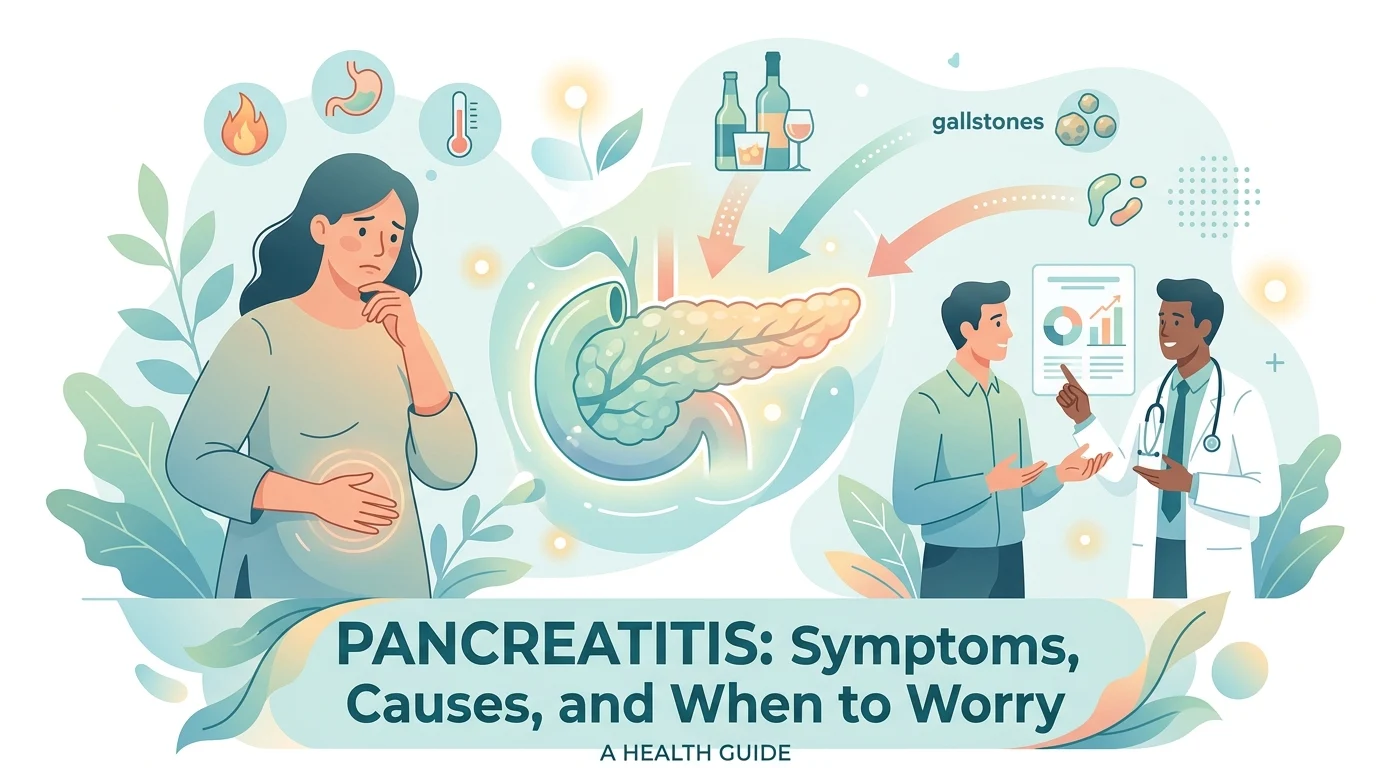
Pancreatitis is inflammation of the pancreas, the organ behind your stomach that makes digestive enzymes and the hormone insulin. It can flare up suddenly and pass in a few days, or it can simmer for years and slowly damage the gland. The most common warning sign is steady pain in the upper belly, often spreading to the back. In this article you will learn how to recognize the symptoms, what triggers the acute and chronic forms, which blood tests doctors use, how it is treated, and the clear warning signs that mean you should seek emergency care.
What is pancreatitis?
Your pancreas sits high in the abdomen, tucked behind the stomach. It has two main jobs: it makes digestive enzymes that break down food in the small intestine, and it makes hormones such as insulin that control blood sugar. Two of those enzymes, amylase and lipase, are the values doctors look at first when pancreatitis is suspected. To understand what each enzyme reveals, see our guide to the amylase and lipase blood tests. Acute pancreatitis is one of the most common digestive reasons for hospital admission in the United States, so while the word sounds alarming, it is a condition doctors recognize and treat often.
Pancreatitis happens when those enzymes switch on too early, while they are still inside the pancreas, and begin to digest the gland itself. This “self-digestion” causes swelling, pain, and tissue injury. Doctors divide the condition into two broad types: acute pancreatitis, which comes on fast and usually heals, and chronic pancreatitis, which develops slowly and leaves lasting scarring.
Acute vs. chronic pancreatitis
The two forms share an organ and a name, but they behave very differently. The table below summarizes the key contrasts.
| Feature | Acute pancreatitis | Chronic pancreatitis |
|---|---|---|
| Onset | Sudden, over hours | Gradual, over months to years |
| Duration | Days to a few weeks | Lifelong, with flare-ups |
| Most common causes | Gallstones, heavy alcohol use | Long-term heavy alcohol use, smoking, genetic factors |
| Reversible? | Pancreas usually heals fully | Permanent scarring builds up |
| Typical pain | Intense, constant upper-belly pain | Recurring pain, sometimes with pain-free spells |
| Long-term effects | Often none after recovery | Digestion problems, diabetes, weight loss |
| Main blood clue | Amylase and lipase rise sharply | Enzymes may be normal; stool tests show low elastase |
Acute pancreatitis
Acute pancreatitis starts abruptly and is the form most likely to send someone to the hospital. Most people have a mild attack and recover within a week with rest, fluids, and pain relief. About one in five cases becomes severe, with tissue death or organ stress that needs intensive care. The encouraging news is that the gland usually returns to normal once the trigger is removed.
Chronic pancreatitis
Chronic pancreatitis is the slow-burn version. Repeated or ongoing inflammation gradually replaces healthy tissue with scar tissue, so the pancreas makes fewer enzymes and less insulin over time. As enzyme output falls, fat is no longer absorbed properly, and the result can be greasy, hard-to-flush stools that float; for that symptom, read our guide to fatty stool. Falling insulin output can also lead to diabetes — see our guide to diabetes. Years of inflammation modestly raise the long-term risk of pancreatic cancer — read our guide to pancreatic cancer.
Pancreatitis symptoms: what it feels like
The hallmark of pancreatitis is pain in the upper-middle or upper-left belly. People often describe it as a deep, boring ache that radiates straight through to the back. The pain tends to be worse after eating, especially fatty meals, and worse when lying flat. Many people find some relief by sitting up and leaning forward or curling into a ball.
Other common symptoms include:
- Nausea and vomiting that does not relieve the pain
- A tender, sometimes swollen abdomen
- Fever and a rapid heartbeat
- Bloating and loss of appetite
Pain location is broadly similar in men and women, though some women first notice it more toward the left side or describe it as severe indigestion. Chronic pancreatitis can be quieter: some people have long stretches with little pain and only notice weight loss, oily stools, or new diabetes as the gland wears down. A severe attack, sometimes called necrotizing pancreatitis, can add a fast pulse, low blood pressure, breathlessness, or confusion, all of which are medical emergencies.
How pancreatitis pain differs from ordinary stomach upset
Not every bellyache is pancreatitis. Heartburn and indigestion usually ease with antacids and sit higher, behind the breastbone. Gallbladder attacks tend to peak in the upper-right side after fatty food and then settle. Pancreatitis pain is typically more severe, more constant, centered higher in the middle of the abdomen, and it often bores through to the back rather than staying in one spot. Pain that is intense, lasts for hours, and comes with repeated vomiting deserves prompt medical attention.
What causes pancreatitis?
Two causes account for the large majority of cases: gallstones and heavy alcohol use. Gallstones are hard deposits that can slip out of the gallbladder and block the duct where bile and pancreatic juice drain, backing enzymes up into the pancreas. Gallstones can also damage the gallbladder itself in some cases — read our guide to gallbladder rupture.
Beyond those two, several other triggers are well recognized:
- Very high triglycerides, a type of blood fat, can set off an attack; to learn more, see our guide to high triglyceride levels.
- High blood calcium is another recognized trigger — see our guide to the total calcium blood test.
- Certain medicines, including some used for diabetes, blood pressure, and infections.
- The scope procedure ERCP (endoscopic retrograde cholangiopancreatography), which is also used to treat blocked ducts.
- An immune-driven form, autoimmune pancreatitis, belongs to a wider family of conditions — explore our guide to autoimmune disease.
- Inherited gene changes, smoking, abdominal injury, and certain infections.
In a meaningful share of cases no cause is found, which doctors call idiopathic pancreatitis.
Can you lower your risk?
You cannot prevent every case, but you can reduce several major triggers. Drinking little or no alcohol is the single biggest step, because heavy use is a leading cause of both the acute and chronic forms. Keeping triglycerides in a healthy range, treating gallstones when they cause symptoms, and not smoking all help. If you take a medicine known to affect the pancreas, your doctor weighs that risk against its benefits rather than stopping it on a hunch.
How is pancreatitis diagnosed?
Diagnosis usually rests on three pillars: symptoms, blood tests, and imaging. Doctors typically diagnose acute pancreatitis when a lipase or amylase level is at least three times the upper limit of normal alongside typical pain. Lipase is the more specific marker; to see what high readings suggest, read our guide to lipase levels.
Blood work does more than confirm the diagnosis; it helps gauge severity and hunt for the cause. Doctors often repeat key labs over the first day or two, because values such as inflammation markers, kidney function, and blood concentration can show whether an attack is settling or worsening. Rising inflammation can flag a more serious course — see our guide to high CRP levels. A complete blood count, kidney values, and blood sugar round out the picture. When gallstones are suspected, doctors check the liver enzymes at the same time — read our guide to liver function tests. Imaging, usually an ultrasound, CT scan, or MRI, shows swelling, fluid collections, gallstones, or tissue death. If lab reports feel overwhelming, start with the basics and see our guide to reading blood test results.
How is pancreatitis treated?
Treatment depends on the type and severity, but the goals are to rest the pancreas, control pain, and fix the underlying cause.
For a mild acute attack, care is supportive: intravenous fluids, pain medicine, and anti-nausea drugs. Doctors used to keep patients fasting for days, but current practice favors restarting normal eating early, often within 24 to 48 hours, as soon as it is tolerated. Most people with acute pancreatitis are admitted to the hospital for a short stay, so the team can watch for complications and keep them comfortable while the inflammation settles. If gallstones caused the attack, the gallbladder is usually removed before discharge or soon after to prevent a repeat. Severe or necrotizing cases may need intensive care and, if infected tissue develops, a stepwise approach using drains or minimally invasive procedures before any surgery.
Chronic pancreatitis is managed for the long term. Stopping alcohol and smoking is central. When the gland no longer makes enough enzymes, replacement enzyme capsules taken with meals (pancreatic enzyme replacement therapy) improve digestion, and fat-soluble vitamins are monitored and topped up. Pain management, blood-sugar control, and, in selected people, endoscopic or surgical procedures complete the plan.
Whatever the type, follow-up aims to prevent the next attack: treating the cause, reviewing any medicines that may contribute, and building lasting changes around alcohol, weight, and blood fats.
Latest scientific advances
Pancreatitis care has changed noticeably in the past few years. The studies below were identified through PubMed and are presented with the usual caution: guidelines and large pooled analyses carry more weight than single small studies, and a research finding is not the same as a personal recommendation. Only your own doctor can apply these ideas to your situation.
Gentler fluids and earlier food. Major 2023–2025 guidelines, including the American College of Gastroenterology guideline (Tenner and colleagues, DOI) and the International Association of Pancreatology 2025 update (DOI), now favor moderate, goal-directed fluid replacement over the older “aggressive” approach, along with early oral or tube feeding and no routine preventive antibiotics. A 2023 Mayo Clinic review summarizing recent practice-changing trials reached the same conclusions (DOI).
GLP-1 weight and diabetes drugs. Many people worry about whether medicines such as semaglutide (Ozempic, Wegovy) cause pancreatitis. A 2025 systematic review and meta-analysis of 55 randomized trials and more than 106,000 participants found that this drug class did not raise the risk of pancreatitis overall, although it did modestly increase gallstones (Chiang and colleagues, DOI). This is reassuring, but monitoring continues, and gallstones can themselves trigger an attack.
Earlier surgery for chronic pain. A 2023 systematic review in JAMA Surgery reported that, for chronic pancreatitis, surgery controlled long-term pain better than endoscopy, and that operating earlier (within three years of symptoms) produced better outcomes than waiting (Cohen and Kent, DOI). These decisions remain highly individual.
Recognizing exocrine pancreatic insufficiency (EPI). A 2023 American Gastroenterological Association expert review set out how to spot and treat EPI: a low stool elastase test supports the diagnosis, enzyme capsules are dosed with meals, and fat-soluble vitamins are tracked over time (Whitcomb and colleagues, DOI).
Preventing pancreatitis after ERCP. The most common complication of the ERCP procedure is pancreatitis itself. Updated 2023 guidelines confirm that rectal anti-inflammatory suppositories and temporary pancreatic-duct stents lower that risk (Mukai and colleagues, DOI), and a large 2024 meta-analysis mapped which patients are most vulnerable (Beran and colleagues, DOI).
When to worry: warning signs that need urgent care
Most mild attacks improve quickly, but pancreatitis can turn serious fast, so it pays to know the red flags. Seek emergency care or call your local emergency number if you have any of the following:
- Severe, constant upper-belly pain that will not ease
- Vomiting that stops you from keeping fluids down
- Fever and chills together with abdominal pain
- A racing heartbeat, breathlessness, or feeling faint
- Yellowing of the skin or the whites of the eyes (jaundice)
- A swollen, very tender abdomen
- Confusion or unusual drowsiness
These can signal a severe attack, an infection, a blocked bile duct, or organ stress, all of which need prompt hospital treatment. When in doubt, it is always safer to be assessed than to wait at home.
Glossary
| Term | Definition |
|---|---|
| Acute pancreatitis | Sudden inflammation of the pancreas that usually settles within days to weeks once the cause is treated. |
| Amylase | A digestive enzyme made by the pancreas; a high blood level can point to pancreatitis. |
| Chronic pancreatitis | Long-term inflammation that scars the pancreas and slowly reduces its ability to make enzymes and insulin. |
| ERCP | Endoscopic retrograde cholangiopancreatography, a scope procedure used to examine and clear the bile and pancreatic ducts. |
| Exocrine pancreatic insufficiency (EPI) | A shortage of pancreatic digestive enzymes that leads to poor fat absorption and greasy stools. |
| Gallstones | Hard deposits from the gallbladder that can block the pancreatic duct and trigger acute pancreatitis. |
| Lipase | A fat-digesting pancreatic enzyme; a blood level several times above normal is the most specific sign of pancreatitis. |
| Necrotizing pancreatitis | A severe form in which part of the pancreas tissue dies, raising the risk of infection and complications. |
| Pancreatic pseudocyst | A fluid-filled sac that can form near the pancreas after an episode of inflammation. |
| Steatorrhea | Pale, oily, foul-smelling stools that float, caused by undigested fat. |
Frequently asked questions
Can you die from pancreatitis?
Most people with acute pancreatitis recover fully, and mild attacks are rarely life-threatening. The risk rises with severe or necrotizing pancreatitis, where part of the gland is damaged and complications such as infection or organ failure can develop. That is exactly why early medical care matters: getting fluids, pain control, and treatment of the cause early greatly improves the outcome. If you have severe pain, persistent vomiting, fever, or breathlessness, treat it as an emergency rather than waiting to see whether it passes.
Does pancreatitis go away on its own?
A mild acute attack often improves within a few days, but it should still be assessed by a doctor, because only testing can tell a mild case from a developing severe one and identify the cause. Leaving gallstones or heavy alcohol use unaddressed makes another attack likely. Chronic pancreatitis does not go away; the scarring is permanent. It can, however, be managed well with lifestyle changes, enzyme support, and pain care, so symptoms and complications stay under control.
Can chronic pancreatitis be cured?
There is no cure that reverses the scarring of chronic pancreatitis, but the condition can be controlled. Stopping alcohol and smoking slows further damage, enzyme capsules taken with meals improve digestion, and blood sugar is monitored because diabetes can develop. Pain is managed in steps, and some people benefit from endoscopic or surgical procedures. With consistent care, many people live well for years. The goal shifts from cure to protecting digestion, controlling pain, and preventing complications.
Can Ozempic or Wegovy cause pancreatitis?
This is a common concern. A large 2025 pooled analysis of randomized trials found that GLP-1 medicines such as semaglutide did not raise the overall risk of pancreatitis, though they did modestly increase gallstones, which can themselves trigger an attack. Pancreatitis is still listed as a rare possible side effect, so doctors usually pause these drugs if it is suspected. If you take one of these medicines and develop severe belly pain with vomiting, stop the drug and seek medical care promptly.
How long does pancreatitis last?
A mild acute attack usually settles within about one week, and many people feel much better within a few days of starting treatment. Severe or necrotizing cases can mean weeks in the hospital and a longer recovery. Chronic pancreatitis is, by definition, ongoing: people live with it long term and may have flare-ups that come and go. Recovery time also depends on the cause; removing gallstones or stopping alcohol helps prevent repeat episodes and shortens the overall course.
What foods should I avoid with pancreatitis?
During and just after an attack, doctors often advise a low-fat diet with small, frequent meals, because fatty food makes the pancreas work harder. Alcohol should be avoided completely, as it is a leading trigger and worsens damage. Fried foods, fatty meats, full-fat dairy, and rich desserts are the usual ones to limit. Staying well hydrated and eating lean proteins, vegetables, and whole grains is generally easier on the pancreas. Your own care team can tailor this to your situation.
Sources
- National Institute of Diabetes and Digestive and Kidney Diseases (NIDDK, NIH) — Symptoms & Causes of Pancreatitis: https://www.niddk.nih.gov/health-information/digestive-diseases/pancreatitis/symptoms-causes
- Mayo Clinic — Pancreatitis: Symptoms and causes: https://www.mayoclinic.org/diseases-conditions/pancreatitis/symptoms-causes/syc-20360227
- Cleveland Clinic — Pancreatitis: Symptoms, Causes & Treatment: https://my.clevelandclinic.org/health/diseases/8103-pancreatitis
Recent peer-reviewed studies identified through PubMed (used in “Latest scientific advances”):
- Tenner S, et al. American College of Gastroenterology Guidelines: Management of Acute Pancreatitis. Am J Gastroenterol. 2023. DOI
- International Association of Pancreatology. Revised Guidelines on Acute Pancreatitis 2025. Pancreatology. 2025. DOI
- Huang Y, Badurdeen DS. Acute Pancreatitis Review. Turk J Gastroenterol. 2023. DOI
- Chiang CH, et al. GLP-1 Receptor Agonists and Gastrointestinal Adverse Events: A Systematic Review and Meta-Analysis. Gastroenterology. 2025. DOI
- Cohen SM, Kent TS. Etiology, Diagnosis, and Modern Management of Chronic Pancreatitis: A Systematic Review. JAMA Surg. 2023. DOI
- Whitcomb DC, et al. AGA Clinical Practice Update on Exocrine Pancreatic Insufficiency. Gastroenterology. 2023. DOI
- Mukai S, et al. Clinical Practice Guidelines for post-ERCP pancreatitis 2023. Dig Endosc. 2025. DOI
- Beran A, et al. Predictors of Post-ERCP Pancreatitis: A Systematic Review and Meta-analysis. Clin Gastroenterol Hepatol. 2024. DOI
Further reading
- Read our guide to the amylase and lipase blood tests: https://aidiagme.com/blood-markers/amylase-and-lipase/
- See our guide to reading blood test results: https://aidiagme.com/blood-markers/read-blood-test-results/
- Explore our guide to high triglyceride levels: https://aidiagme.com/blood-markers/high-triglyceride-level-causes-risks-and-management/
- Read our guide to fatty stool: https://aidiagme.com/health-library/fatty-stool-causes-symptoms-and-treatment-guide/
- See our guide to pancreatic cancer: https://aidiagme.com/pathologies-and-diseases/pancreatic-cancer-understanding-diagnosing-treating/
Understand your lab results with AI DiagMe
If you have had blood work for belly pain, your report may include the pancreatic enzymes amylase and lipase, your blood fats (triglycerides), calcium, and inflammation markers such as CRP. Seeing those numbers without context can be confusing and stressful. AI DiagMe helps you understand what each value means in plain language, so you can have a more informed conversation with your doctor. It is a tool to help you understand your results, not a way to diagnose pancreatitis or replace medical care.
➡️ Get your results interpreted in minutes