








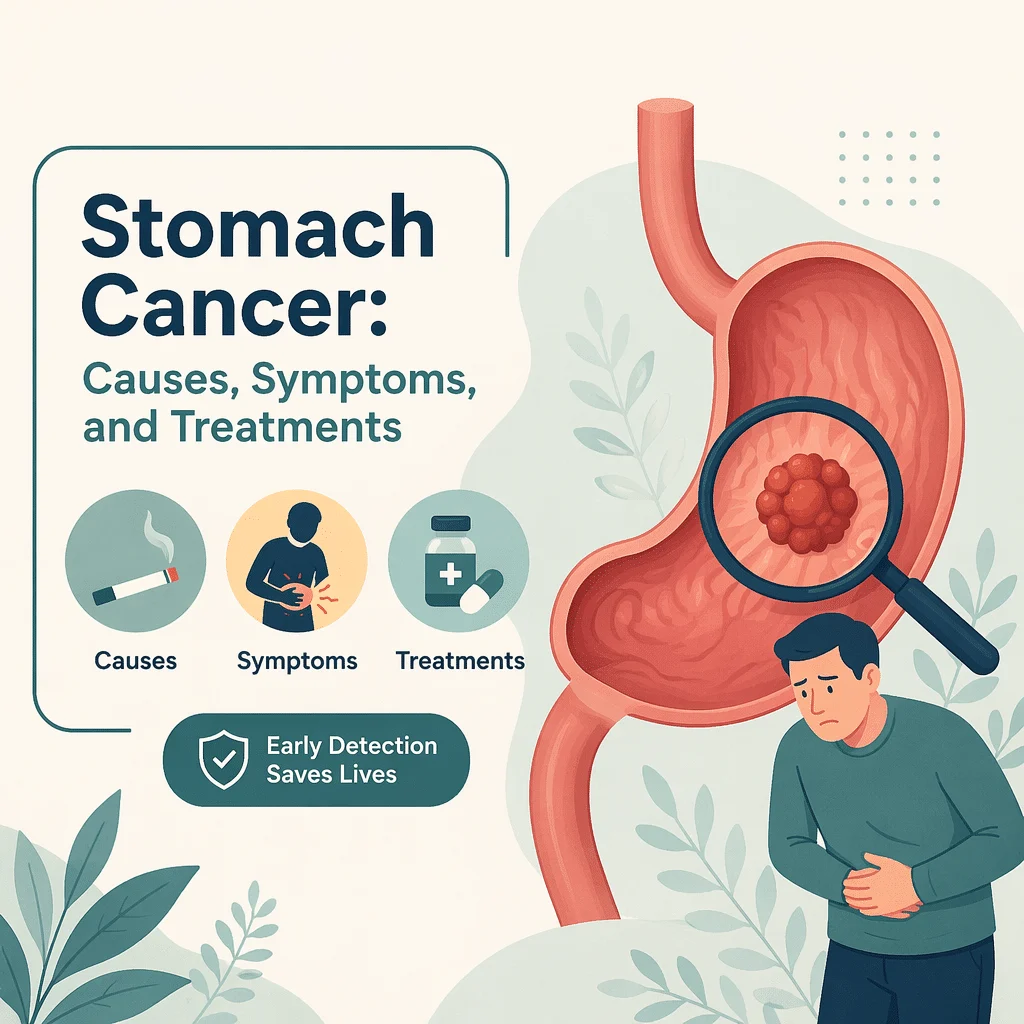
Kanker lambung, yang juga disebut kanker gaster, berkembang ketika sel-sel abnormal pada lapisan lambung mulai tumbuh tidak terkendali. Ini termasuk salah satu jenis kanker yang cukup umum di seluruh dunia, namun sering kali tidak menunjukkan gejala yang jelas pada tahap awal, di mana gejalanya bisa menyerupai gangguan pencernaan biasa. Karena itu, banyak kasus baru terdeteksi pada stadium yang lebih lanjut dari yang diharapkan dokter. Memahami bagaimana penyakit ini bermula, apa saja yang meningkatkan risiko Anda, dan tanda peringatan mana yang perlu diperhatikan dapat membantu Anda bertindak lebih cepat dan mengajukan pertanyaan yang tepat. Artikel ini menjelaskan apa itu kanker lambung, penyebab dan gejala utamanya, cara mendiagnosisnya, peran tes darah dalam prosesnya, serta pengobatan dan penelitian terbaru yang membentuk penanganan saat ini.
Apa itu kanker lambung?
Lambung adalah kantong berotot di bagian atas perut yang mencampur makanan dengan asam dan enzim sebelum meneruskannya ke usus halus. Dinding bagian dalamnya terdiri dari beberapa lapisan, dan lapisan terdalam yang disebut mukosa adalah tempat sebagian besar tumor bermula. Kanker lambung terbentuk ketika sel-sel pada lapisan ini mengalami perubahan DNA yang memungkinkan mereka berkembang biak tanpa kendali seperti biasanya. Pertumbuhannya sering kali lambat, dan sebuah tumor bisa berkembang selama bertahun-tahun sebelum menimbulkan masalah yang jelas.
Dokter terkadang membedakan tumor ini berdasarkan lokasi awalnya. Kanker di bagian atas lambung, dekat tempat pertemuan dengan kerongkongan, bisa berperilaku berbeda dari kanker di bagian bawah lambung. Lokasi ini memengaruhi gejala yang dirasakan seseorang maupun pengobatan yang paling efektif. Secara keseluruhan, kanker lambung sudah semakin jarang terjadi di banyak negara dalam beberapa dekade terakhir, sebagian karena infeksi Helicobacter pylori kini lebih sering ditemukan dan diobati, namun penyakit ini tetap serius dan sangat diuntungkan oleh penanganan dini.
Jenis-jenis kanker lambung
Menurut American Cancer Society, sekitar 90 hingga 95 persen kanker lambung adalah adenokarsinoma, artinya kanker ini bermula dari sel-sel kelenjar pada mukosa. Adenokarsinoma sering digambarkan sebagai tipe intestinal atau difus, suatu perbedaan yang mencerminkan tampilan dan penyebaran sel di bawah mikroskop. Bentuk yang lebih jarang meliputi tumor stroma gastrointestinal (GIST), tumor neuroendokrin atau karsinoid, serta limfoma lambung. Karena jenis-jenis ini ditangani dengan cara yang berbeda, mengidentifikasi jenis kanker yang tepat merupakan langkah awal yang penting.
Apa penyebab kanker lambung, dan siapa yang berisiko?
Jarang ada satu penyebab tunggal. Sebaliknya, kanker lambung biasanya merupakan hasil dari kombinasi berbagai faktor yang merusak lapisan lambung dan mengubah perilaku sel-selnya dari waktu ke waktu. Mengetahui faktor-faktor risiko ini dapat membantu Anda dan dokter memutuskan kapan perlu memberikan perhatian lebih.
Infeksi Helicobacter pylori
Faktor risiko terpenting yang diketahui adalah infeksi jangka panjang oleh Helicobacter pylori, bakteri umum yang hidup di lapisan lambung. Selama bertahun-tahun, bakteri ini dapat menyebabkan peradangan terus-menerus yang secara bertahap mendorong lapisan lambung menuju perubahan prakanker. Sebagian besar orang yang membawa bakteri ini tidak pernah mengembangkan kanker, namun perannya kini sudah terbukti dengan baik, dan membasmi infeksi ini menghilangkan salah satu risiko yang paling kuat dan dapat dicegah. Infeksi ini dapat dideteksi dengan tes napas, tinja, atau darah yang sederhana. Para peneliti menggambarkan proses bertahap di mana peradangan yang berlangsung lama pertama-tama menipiskan lapisan lambung — perubahan yang disebut gastritis atrofik — kemudian menyebabkan metaplasia intestinal, dan kadang-kadang berlanjut lebih jauh menuju kanker. Menemukan dan mengobati infeksi sejak dini dapat memutus rangkaian ini sebelum kerusakan serius terjadi.
Pola makan, merokok, dan gaya hidup
Pola makan yang banyak mengandung makanan asin, diasap, diasinkan, atau diproses serta rendah buah dan sayuran segar dikaitkan dengan risiko yang lebih tinggi. Merokok juga meningkatkan risiko secara signifikan, sementara konsumsi alkohol berlebihan dan kelebihan berat badan turut memperburuk keadaan. Refluks asam yang sudah berlangsung lama juga dapat menyebabkan batuk akibat refluks asam, dan refluks yang mencapai bagian atas lambung dikaitkan dengan kanker di area tersebut.
Usia, riwayat keluarga, dan kondisi medis
Risiko meningkat seiring bertambahnya usia, dan sebagian besar orang yang didiagnosis berusia di atas 60 tahun. Pria sedikit lebih sering terkena dibandingkan wanita. Kondisi tertentu, seperti gastritis kronis, anemia pernisiosa, polip lambung, atau riwayat operasi lambung sebelumnya, juga meningkatkan risiko. Sebagian kecil kasus bersifat turun-temurun melalui kondisi yang diwariskan, seperti kanker lambung difus herediter, yang dikaitkan dengan perubahan pada gen CDH1. Jika beberapa kerabat dekat pernah menderita kanker lambung atau kanker terkait, sampaikan hal ini kepada dokter Anda, yang mungkin akan menyarankan pemeriksaan lebih awal atau lebih sering.
Gejala dan tanda peringatan kanker lambung
Kanker lambung stadium awal sering kali tidak menimbulkan gejala sama sekali, atau hanya gejala samar yang mudah dikira sebagai masalah ringan. Seiring tumor berkembang, masalah yang lebih terasa dapat muncul. Gejala umum meliputi:
- Gangguan pencernaan, nyeri ulu hati, atau rasa tidak nyaman di perut bagian atas yang terus-menerus
- Merasa cepat kenyang, bahkan setelah makan dalam porsi kecil
- Mual, atau kesulitan menelan yang perlahan semakin memburuk
- Kehilangan nafsu makan dan penurunan berat badan tanpa sebab yang jelas
- Kelelahan yang terus-menerus, kadang akibat anemia yang disebabkan oleh perdarahan lambat
- Tinja berwarna hitam seperti ter, atau muntah yang mengandung darah
Gejala-gejala ini jauh lebih sering disebabkan oleh kondisi yang tidak berbahaya, seperti tukak lambung atau infeksi. Perdarahan di bagian atas saluran pencernaan biasanya membuat tinja berwarna hitam, sementara perdarahan di bagian bawah saluran pencernaan justru dapat menghasilkan pendarahan rektal. Intinya bukan untuk mengkhawatirkan satu episode gangguan pencernaan, melainkan untuk memperhatikan gejala yang menetap atau memburuk.
Kapan harus menemui dokter?
Buat janji dengan dokter jika salah satu dari hal berikut berlangsung lebih dari dua minggu, dan segera cari pertolongan medis jika Anda melihat tanda-tanda perdarahan:
- Gangguan pencernaan atau nyeri perut yang tidak membaik dengan penanganan biasa
- Kesulitan menelan yang baru muncul, atau makanan terasa tersangkut
- Penurunan berat badan yang tidak dapat dijelaskan atau hilangnya nafsu makan yang berkepanjangan
- Merasa kenyang setelah makan sedikit, minggu demi minggu
- Muntah darah, atau buang air besar dengan tinja berwarna hitam seperti ter
- Kelelahan yang tidak biasa, pucat, atau sesak napas yang bisa mengindikasikan anemia
Menemui dokter lebih awal bukan berarti Anda menderita kanker. Sebagian besar orang dengan gejala-gejala ini tidak mengidapnya. Namun pemeriksaan dini adalah cara terbaik untuk menemukan dan menangani penyebab serius apa pun selagi masih paling mudah ditangani.
Bagaimana kanker lambung didiagnosis
Alat utama untuk diagnosis adalah endoskopi saluran cerna atas, yang kadang disebut gastroskopi. Dokter memasukkan selang tipis dan fleksibel yang dilengkapi kamera melalui mulut untuk melihat langsung lapisan lambung. Jika ditemukan area yang mencurigakan, dokter mengambil sampel jaringan kecil yang disebut biopsi, agar dapat diperiksa di bawah mikroskop. Hanya biopsi yang dapat memastikan kanker dan mengidentifikasi jenisnya. Jika kanker ditemukan, pencitraan seperti CT scan, endoskopi ultrasonografi, atau PET scan membantu menunjukkan apakah kanker telah menyebar — proses yang dikenal sebagai metastasis. Penentuan stadium menggunakan sistem yang menggambarkan seberapa dalam tumor telah tumbuh dan apakah telah mencapai kelenjar getah bening di sekitarnya atau organ yang lebih jauh, dan endoskopi ultrasonografi dapat menunjukkan seberapa jauh tumor menembus dinding lambung. Penentuan stadium ini menjadi panduan pengobatan.
Peran tes darah dalam diagnosis
Tes darah tidak dapat mendiagnosis kanker lambung secara mandiri. Tidak ada tes darah yang dapat memastikan penyakit ini, dan hasil yang normal tidak berarti kanker dapat dikesampingkan. Yang dapat dilakukan oleh pemeriksaan darah adalah mendukung gambaran yang lebih luas: menandai faktor risiko, mengisyaratkan adanya perdarahan tersembunyi, atau membantu memantau kanker yang sudah diketahui. Untuk mencari kemungkinan kehilangan darah tersembunyi, dokter sering memerintahkan hitung sel darah lengkap (CBC). Perdarahan lambat dari tumor dapat menyebabkan anemia defisiensi besi, dan selama tindak lanjut dokter dapat memantau penanda tumor darah yang disebut antigen karsinoembrionik (CEA). Pada beberapa kanker pencernaan, dokter juga mengukur penanda darah CA 19-9. Tabel di bawah ini menunjukkan bagaimana tes-tes ini membantu, dan di mana batasannya.
| Tes darah | Apa yang dapat disarankan | Keterbatasan utama |
|---|---|---|
| Tes H. pylori (napas, tinja, atau darah) | Mendeteksi infeksi oleh faktor risiko bakteri utama | Hasil positif menandakan infeksi yang perlu diobati, bukan kanker |
| Hitung darah lengkap (CBC) | Dapat mengungkapkan anemia yang disebabkan oleh perdarahan lambat dari tumor | Anemia memiliki banyak penyebab; jumlah sel darah yang normal tidak menyingkirkan kemungkinan kanker |
| Pemeriksaan zat besi, termasuk feritin | Dapat menunjukkan kekurangan zat besi akibat kehilangan darah jangka panjang | Tidak spesifik; kadar zat besi rendah jauh lebih sering disebabkan oleh kondisi jinak |
| Penanda tumor (CEA, CA 72-4, CA 19-9) | Kadang digunakan untuk memantau kanker yang sudah diketahui atau pengobatannya | Sering kali normal pada tahap awal dan dapat meningkat akibat kondisi jinak; bukan tes skrining |
Bagaimana kanker lambung diobati
Pengobatan bergantung pada jenis kanker, lokasi kanker, seberapa jauh kanker telah menyebar, dan kondisi kesehatan penderita secara keseluruhan. Perawatan biasanya direncanakan oleh tim yang dapat mencakup ahli bedah, onkologis medis, onkologis radiasi, gastroenterologis, dan ahli gizi.
Operasi adalah pengobatan utama ketika kanker terdeteksi cukup awal untuk diangkat. Tumor yang sangat dini dan terbatas pada lapisan lambung terkadang dapat diangkat melalui endoskop, tanpa operasi terbuka. Lebih sering, sebagian atau seluruh lambung diangkat dalam operasi yang disebut gastrektomi, beserta kelenjar getah bening di sekitarnya. Kemoterapi dapat diberikan sebelum operasi untuk mengecilkan tumor, atau setelahnya untuk mengurangi risiko kekambuhan. Terapi radiasi digunakan dalam situasi tertentu, sering kali bersamaan dengan kemoterapi.
Untuk penyakit stadium lanjut, pengobatan berfokus pada pengendalian kanker dan meringankan gejala. Di sinilah obat-obatan bertarget yang lebih baru dan imunoterapi telah mengubah pilihan pengobatan dalam beberapa tahun terakhir, disesuaikan dengan biologi masing-masing tumor. Untuk beberapa kanker stadium lanjut, obat yang disebut ramucirumab, yang membatasi pasokan darah yang dibutuhkan tumor untuk tumbuh, dapat dikombinasikan dengan kemoterapi. Uji klinis juga layak untuk didiskusikan, karena dapat memberikan akses ke pendekatan yang lebih baru sebelum tersedia secara luas. Perawatan suportif, termasuk bantuan terkait nutrisi dan nyeri, merupakan bagian penting dari pengobatan di setiap tahap.
Kemajuan ilmiah terkini dalam kanker lambung
Penelitian tentang kanker lambung telah berkembang pesat, terutama seputar pencegahan dan pengobatan yang disesuaikan dengan biologi tumor. Berikut ini adalah temuan dari studi terbaru berkualitas tinggi, dalam bahasa yang mudah dipahami.
Membasmi H. pylori untuk menurunkan risiko
Tinjauan besar yang diterbitkan pada tahun 2023 memastikan bahwa Helicobacter pylori adalah penyebab kanker lambung yang dapat dicegah dan paling signifikan, serta bahwa mendeteksi dan membasmi infeksi ini dapat mengurangi risiko jangka panjang. Artinya bagi Anda: tes sederhana dapat mendeteksi bakteri ini, dan serangkaian antibiotik jangka pendek dapat membasminya, sehingga menghilangkan faktor risiko utama sebelum kerusakan ringan bertahun-tahun menumpuk. Jika Anda pernah mengalami tukak lambung atau memiliki riwayat keluarga dengan kanker lambung, ada baiknya Anda bertanya kepada dokter apakah pemeriksaan ini perlu dilakukan.
Obat pintar bertarget HER2
Beberapa kanker lambung memiliki salinan ekstra protein yang disebut HER2 di permukaannya. Obat terbaru, trastuzumab deruxtecan, bekerja seperti sistem pengiriman terarah: antibodi menemukan HER2 dan membawa muatan kemoterapi langsung ke sel-sel tersebut. Dalam uji klinis yang dilaporkan antara tahun 2023 dan 2025, obat ini membantu mengecilkan tumor pada orang-orang yang kankernya berkembang setelah pengobatan sebelumnya. Artinya bagi Anda: jika biopsi menunjukkan tumor bersifat HER2-positif, kini tersedia lebih banyak pilihan pengobatan yang lebih terarah dibandingkan beberapa tahun lalu, meskipun para dokter masih terus mengkonfirmasi cara terbaik penggunaannya.
Imunoterapi masuk ke lini pertama pengobatan
Imunoterapi menggunakan obat-obatan yang membantu sistem kekebalan tubuh mengenali dan menyerang kanker. Sejak tahun 2023, panduan dari American Society of Clinical Oncology mendukung penambahan obat seperti nivolumab atau pembrolizumab ke dalam kemoterapi untuk banyak kasus kanker lambung stadium lanjut dengan penanda tertentu. Artinya bagi Anda: dokter semakin sering menguji biologi tumor — misalnya penanda yang disebut PD-L1 — untuk mencocokkan setiap pasien dengan terapi yang paling mungkin memberikan manfaat.
Target baru yang disebut claudin 18.2
Para ilmuwan telah menemukan target lain yang disebut claudin 18.2 di permukaan banyak sel kanker lambung. Obat bernama zolbetuximab menempel pada target ini dan, dikombinasikan dengan kemoterapi, telah memperlambat waktu sebelum kanker memburuk pada orang-orang yang tumornya mengandung target tersebut. Artinya bagi Anda: pengujian biopsi untuk claudin 18.2 semakin menjadi salah satu cara untuk mempersonalisasi pengobatan, itulah sebabnya sampel jaringan yang diambil saat endoskopi sangat penting.
Mengurangi risiko dan menjalani hidup dengan kanker lambung
Anda tidak dapat mengubah usia atau gen Anda, tetapi beberapa langkah sehari-hari dapat menurunkan risiko. Mendeteksi dan mengobati Helicobacter pylori adalah salah satu cara yang paling efektif. Mayo Clinic dan pusat kesehatan lainnya juga menyarankan untuk banyak mengonsumsi buah dan sayuran, mengurangi makanan asin dan asap, serta tidak merokok. Perlu diketahui bahwa di Amerika Serikat, National Cancer Institute menyatakan tidak ada tes skrining standar untuk kanker lambung bagi orang dengan risiko rata-rata, sehingga memperhatikan gejala yang menetap tetap sangat penting.
Bagi mereka yang hidup dengan diagnosis ini, nutrisi yang baik, pemeriksaan rutin, dan dukungan emosional semuanya penting. Setelah operasi, makan dalam porsi kecil dan lebih sering biasanya diperlukan, dan ahli gizi dapat membantu. Karena sebagian atau seluruh lambung mungkin diangkat, beberapa orang membutuhkan suntikan vitamin B12 dan suplemen lain dalam jangka panjang, serta pemeriksaan rutin membantu mendeteksi kekambuhan sejak dini. Kunjungan tindak lanjut mungkin mencakup tes darah untuk memantau anemia atau melacak penanda tumor dari waktu ke waktu. Memahami arti angka-angka tersebut dapat membuat janji temu terasa tidak terlalu membebani dan membantu Anda berperan aktif dalam perawatan Anda.
Glosarium
| Ketentuan | Definisi |
|---|---|
| Lambung (Gastrik) | Berkaitan dengan lambung. Kanker gastrik adalah nama lain untuk kanker lambung. |
| Adenokarsinoma | Kanker yang bermula dari sel kelenjar pada lapisan organ, seperti mukosa lambung. Ini adalah jenis kanker lambung yang paling umum. |
| Helicobacter pylori | Bakteri umum yang dapat menginfeksi lapisan lambung dan, seiring waktu, meningkatkan risiko tukak lambung dan kanker lambung. |
| Endoskopi | Pemeriksaan menggunakan kamera tipis dan fleksibel yang dimasukkan melalui mulut untuk melihat lapisan lambung. Disebut juga gastroskopi. |
| Biopsi | Pengambilan sampel jaringan kecil agar dapat diperiksa di bawah mikroskop untuk memastikan diagnosis. |
| Penanda tumor | Zat yang diukur dalam darah yang dapat meningkat pada beberapa jenis kanker. Digunakan terutama untuk pemantauan, bukan untuk diagnosis. |
| HER2 | Protein yang ditemukan dalam jumlah lebih besar pada beberapa sel kanker. Tumor yang positif HER2 mungkin memberikan respons terhadap obat-obatan bertarget tertentu. |
| Claudin 18.2 | Protein pada permukaan banyak sel kanker lambung yang dirancang untuk dikenali oleh terapi bertarget yang lebih baru. |
| Imunoterapi | Pengobatan yang membantu sistem kekebalan tubuh sendiri untuk mengenali dan menyerang sel-sel kanker. |
| Metastasis | Penyebaran kanker dari tempat asalnya ke bagian tubuh lainnya. |
Pertanyaan yang sering diajukan
Apa saja tanda peringatan dini kanker lambung?
Kanker lambung stadium awal sering kali tidak menimbulkan gejala, atau hanya gejala ringan seperti gangguan pencernaan, mual ringan, atau cepat merasa kenyang. Karena gejala-gejala ini tumpang tindih dengan kondisi yang jauh lebih umum, mudah untuk diabaikan. Tanda-tanda yang perlu mendapat perhatian dokter meliputi gejala yang menetap atau memburuk selama beberapa minggu, penurunan berat badan tanpa sebab yang jelas, kesulitan menelan yang baru muncul, atau tanda-tanda perdarahan seperti tinja berwarna hitam atau muntah darah. Yang paling penting adalah memperhatikan pola gejala, bukan hanya satu kejadian tunggal.
Apakah tes darah dapat mendeteksi kanker lambung?
Tidak ada satu pun tes darah yang dapat mendiagnosis kanker lambung. Pemeriksaan darah dapat mendukung proses diagnosis, misalnya dengan mendeteksi anemia akibat perdarahan lambat atau dengan memantau penanda tumor pada seseorang yang sudah terdiagnosis, tetapi tidak dapat memastikan atau menyingkirkan penyakit ini. Diagnosis memerlukan endoskopi dan biopsi. Tes darah paling berguna untuk menemukan petunjuk awal yang mendorong pemeriksaan lebih lanjut serta untuk pemantauan selama dan setelah pengobatan.
Berapa angka harapan hidup penderita kanker lambung?
Angka harapan hidup sangat bervariasi dan sangat bergantung pada stadium saat diagnosis, jenis kanker, serta respons terhadap pengobatan. Secara umum, kanker lambung yang ditemukan lebih awal — saat masih terbatas di lambung — lebih mudah ditangani dibandingkan kanker yang sudah menyebar. Karena penyakit stadium awal sering kali menimbulkan sedikit gejala, banyak kasus baru ditemukan pada stadium lanjut. Itulah mengapa penting untuk memperhatikan gejala yang menetap. Tim medis Anda dapat memberikan angka yang sesuai dengan kondisi Anda secara individual.
Apakah kanker lambung bersifat turun-temurun?
Sebagian besar kanker lambung tidak bersifat keturunan. Namun, sebagian kecil kasus dikaitkan dengan kondisi genetik yang diturunkan dalam keluarga, seperti kanker lambung difus herediter, yang melibatkan perubahan pada gen CDH1. Memiliki satu anggota keluarga dengan kanker lambung sedikit meningkatkan risiko; memiliki beberapa anggota keluarga yang terkena, atau anggota keluarga yang didiagnosis pada usia muda, meningkatkan risiko lebih besar. Jika hal ini menggambarkan riwayat keluarga Anda, sampaikan kepada dokter, yang mungkin akan merekomendasikan konseling genetik atau pemeriksaan lebih awal.
Bagaimana cara mendeteksi kanker lambung?
Di Amerika Serikat, tidak ada program skrining rutin untuk kanker lambung pada orang dengan risiko rata-rata, menurut National Cancer Institute. Di beberapa negara dengan angka kejadian penyakit yang lebih tinggi, endoskopi digunakan sebagai alat skrining. Orang dengan risiko lebih tinggi — misalnya mereka dengan kondisi keturunan tertentu atau perubahan prakanker — mungkin ditawarkan pemeriksaan endoskopi secara berkala. Jika Anda merasa berisiko lebih tinggi, tanyakan kepada dokter Anda pemantauan apa yang tepat untuk Anda.
Apakah gejala kanker lambung berbeda pada wanita?
Gejala utama kanker lambung pada dasarnya sama pada wanita maupun pria: gangguan pencernaan, cepat merasa kenyang, penurunan berat badan, mual, dan kelelahan. Beberapa gejala, seperti rasa lelah akibat anemia, mungkin dikaitkan dengan penyebab lain sehingga dapat menunda penanganan. Panduan yang berlaku sama tanpa memandang jenis kelamin: gejala yang menetap, memburuk, atau disertai perdarahan sebaiknya segera diperiksa oleh dokter dan tidak dibiarkan begitu saja.
Sumber
- National Cancer Institute — Apa Itu Kanker Lambung? cancer.gov/types/stomach
- American Cancer Society — Kanker Lambung (Tentang, Jenis, Faktor Risiko, Deteksi, Pengobatan). cancer.org/cancer/types/stomach-cancer.html
- Mayo Clinic — Kanker lambung: Gejala dan penyebab. mayoclinic.org
- Thrift AP, Wenker TN, El-Serag HB — Beban global kanker lambung: tren epidemiologi, faktor risiko, skrining dan pencegahan — Nature Reviews Clinical Oncology, 2023. doi.org/10.1038/s41571-023-00747-0
- Malfertheiner P, dkk. — Infeksi Helicobacter pylori — Nature Reviews Disease Primers, 2023. doi.org/10.1038/s41572-023-00431-8
- Van Cutsem E, dkk. — Trastuzumab deruxtecan pada kanker lambung atau gastroesofageal junction stadium lanjut dengan HER2-positif (DESTINY-Gastric02) — The Lancet Oncology, 2023. doi.org/10.1016/S1470-2045(23)00215-2
- Trastuzumab Deruxtecan atau Ramucirumab plus Paclitaxel pada Kanker Lambung (DESTINY-Gastric04) — The New England Journal of Medicine, 2025. doi.org/10.1056/NEJMoa2503119
- Shah MA, dkk. — Imunoterapi dan Terapi Bertarget untuk Kanker Gastroesofageal Stadium Lanjut: Panduan ASCO — Journal of Clinical Oncology, 2023. doi.org/10.1200/JCO.22.02331
- Zolbetuximab-clzb: Menargetkan Claudin 18.2 pada Adenokarsinoma Lambung dan Gastroesofageal Stadium Lanjut — Annals of Pharmacotherapy, 2025. doi.org/10.1177/10600280251342801
Bacaan lebih lanjut
- Kanker kolorektal: penyebab, gejala, dan pengobatan
- Panel pemeriksaan zat besi: feritin, zat besi serum, TIBC, dan saturasi transferin
- Ferritin rendah: penyebab, gejala, dan pengobatan
- Kadar feritin tinggi: penyebab, gejala, dan risikonya
- CA 125: panduan memahami penanda darah ini
Pahami hasil lab Anda dengan AI DiagMe.
Tes darah tidak dapat mendiagnosis kanker lambung, tetapi memiliki peran pendukung yang nyata. Tes H. pylori dapat mendeteksi faktor risiko utama yang perlu ditangani, hitung darah lengkap dapat mengungkap anemia akibat perdarahan lambat, dan penanda tumor seperti CEA dapat membantu memantau kanker yang sudah diketahui. AI DiagMe membantu Anda memahami arti hasil-hasil ini dalam bahasa yang mudah dipahami, sehingga Anda dapat berdiskusi lebih terinformasi dengan dokter. Layanan ini tidak mendiagnosis penyakit dan tidak menggantikan saran medis.
Dapatkan interpretasi hasil Anda dalam hitungan menit.