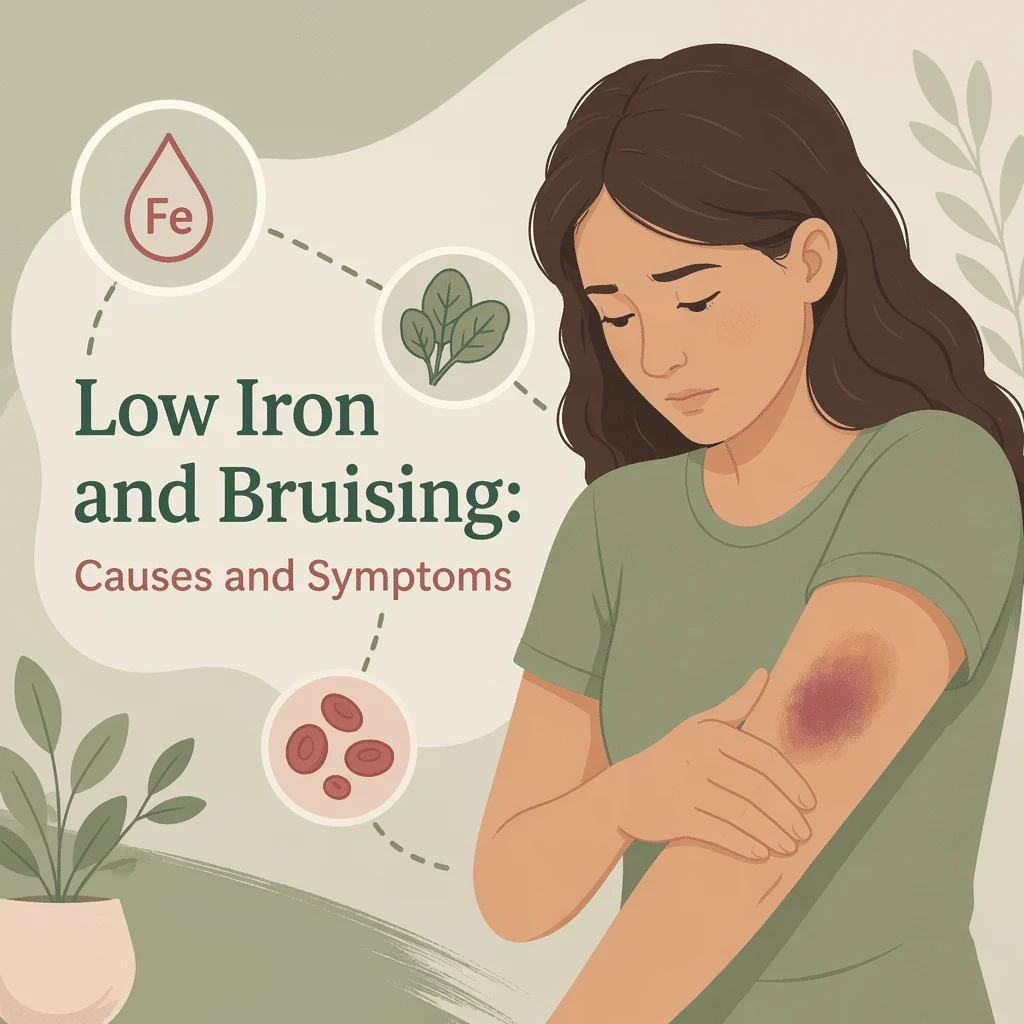
Fierul scăzut și vânătăile sunt două probleme care apar frecvent împreună în căutările online, iar explicația obișnuită oferită pentru această asociere este greșită. Deficiența de fier în sine nu provoacă vânătăi. Motivul pentru care cele două apar atât de des împreună este că o singură problemă de fond, cel mai frecvent o pierdere continuă de sânge, poate epuiza rezervele de fier și poate produce urme pe piele în același timp. Distingerea acestor fire este importantă, deoarece unul dintre ele se corectează ușor, iar celălalt indică uneori o tulburare de sângerare care necesită tratament. În acest articol vei afla ce susține cu adevărat dovezile, ce analize de sânge separă o problemă de fier de una de trombocite și ce combinații de simptome necesită atenție medicală promptă.
Fierul scăzut cauzează vânătăi? Răspunsul sincer
Nu. Nu există niciun mecanism stabilit prin care lipsa fierului ar face ca vasele mici de sânge să lase sânge să scape sau ar împiedica limitarea unei vânătăi. O vânătaie se formează atunci când sângele iese din capilarele deteriorate în țesutul înconjurător. Prevenirea acestei scurgeri depinde de trei lucruri: rezistența peretelui vascular, numărul de trombocite disponibile pentru a astupa breșa și proteinele de coagulare care stabilizează dopul. Fierul nu este un ingredient necesar în niciunul dintre aceste trei sisteme.
Această distincție nu este pur teoretică. Dacă accepți că fierul scăzut îți explică vânătăile, s-ar putea să iei un supliment de fier, să te simți mai bine pe măsură ce energia îți revine și să nu investighezi niciodată de ce faci vânătăi. Tratamentul cu fier corectează oboseala și anemia. Nu rezolvă o problemă de trombocite sau de coagulare, deoarece nu a existat niciodată o problemă de vânătăi legată de fier pe care să o corecteze.
Ce face cu adevărat deficiența de fier
Deficitul de fier provoacă în mod constant oboseală, dificultăți de respirație la efort, paloarea pielii, unghii fragile, căderea părului, sindromul picioarelor neliniștite și, uneori, o poftă de gheață sau alte substanțe necomestibile. Când devine suficient de sever pentru a cauza anemie, globulele roșii sunt produse mai mici și mai palide decât de obicei. Echipa noastră explică cauzele unui rezultat MCV scăzut, care este măsurătoarea ce surprinde această modificare.
De ce fierul scăzut și vânătăile apar totuși împreună
Legătura este reală, dar trece printr-o cauză comună, nu de la un simptom la celălalt. Ceva îți provoacă pierderi de sânge, iar pierderea de sânge face două lucruri în același timp: elimină fierul mai repede decât îl poate înlocui alimentația ta și poate fi un semn vizibil al unei tendințe de sângerare care se manifestă și pe piele.
Menstruații abundente
Aceasta este de departe cea mai frecventă cauză comună la persoanele care menstruează. Sângerările abundente sau prelungite epuizează treptat rezervele de fier. Dacă sângerarea abundentă este ea însăși cauzată de o tulburare de coagulare moștenită, aceeași tulburare produce și vânătăi ușoare. Rezultatul pare că fierul scăzut cauzează vânătăile, când de fapt o singură afecțiune le determină pe amândouă.
Sângerări în tractul digestiv
Pierderea lentă de sânge dintr-un ulcer, inflamație, polipi sau o tumoare poate fi complet invizibilă în scaun, dar poate drena suficient fier în câteva luni pentru a provoca anemie. Deficitul de fier inexplicabil la bărbați și la persoanele după menopauză este luat în serios tocmai din acest motiv și determină de obicei o investigare a tractului digestiv. Ghidul nostru explică ce înseamnă un rezultat calprotectină fecală când se suspectează o inflamație intestinală.
Absorbție deficitară și boli cronice
Unele persoane consumă suficient fier, dar nu îl pot absorbi. Boala celiacă este un exemplu clasic, iar deficitul de fier inexplicabil este uneori primul semn al acesteia. Ghidul nostru descrie semnele bolii celiace și ale intoleranței la gluten. Boala cronică de rinichi, afecțiunile inflamatorii și intervențiile chirurgicale pe stomac pot interfera cu aportul de fier în moduri similare. Acest articol explică principalele tipuri și simptome ale anemiei care apar pe aceste căi diferite.
Ce face deficitul de fier cu trombocitele tale
Dovezile indică ferm în direcția opusă față de afirmația populară. Deficiența de fier nu scade de obicei numărul de trombocite. De regulă, îl crește. Un număr mare de trombocite declanșat de o altă afecțiune se numește trombocitoză reactivă, iar deficiența de fier este unul dintre cei mai bine cunoscuți factori declanșatori. Deoarece trombocitele sunt celulele care te protejează de vânătăi, a avea mai multe în circulație nu reprezintă o cale plauzibilă spre apariția mai ușoară a vânătăilor.
O hemoleucogramă completă face această verificare simplă, deoarece același eșantion care relevă anemia microcitară raportează și numărul tău de trombocite. Echipa noastră explică cum să citești o hemogramă completă. Dacă trombocitele tale sunt normale sau crescute în timp ce hemoglobina este scăzută, fierul nu este explicația pentru vânătăile tale și altceva merită investigat.
Analizele de laborator care separă cele două probleme
Vânătăile și deficiența de fier sunt investigate cu teste diferite, iar combinația potrivită răspunde la ambele întrebări într-o singură vizită. Un ghid separat detaliază cauzele și tratamentul feritinei scăzute, cea mai utilă măsură a rezervelor tale de fier.
| Analiză | Ce măsoară | Ce stabilește |
|---|---|---|
| Hemoleucogramă completă (HLG) cu formulă leucocitară | Hemoglobina, dimensiunea globulelor roșii (VEM), numărul de trombocite, numărul de globule albe | Separă o problemă de fier de o problemă de trombocite dintr-un singur tub. Hemoglobina scăzută cu globule roșii mici indică o problemă de fier; un număr scăzut de trombocite indică altceva în întregime. |
| Feritină | Fierul stocat în organism | Cel mai sensibil marker al rezervelor de fier epuizate. Un rezultat scăzut confirmă deficiența de fier chiar și atunci când hemoglobina este încă normală. |
| Studii ale fierului (fier seric, CTLF, saturația transferinei) | Fierul care circulă în sânge și capacitatea de a-l transporta | Confirmă și rafinează rezultatul feritinei și este util atunci când inflamația face ca feritina să fie înșelătoare. |
| Screening de coagulare (TP, INR, aPTT) | Cât timp îi ia sângelui să se coaguleze | Se recomandă atunci când vânătăile sunt cu adevărat excesive. Depistează problemele factorilor de coagulare și efectul anticoagulantelor. |
| Panel pentru boala von Willebrand | Nivelul și activitatea factorului von Willebrand | Indicat atunci când există vânătăi ușoare de-a lungul vieții, însoțite de menstruații abundente, sângerări nazale sau sângerări după intervenții stomatologice sau naștere. |
| Frotiu de sânge periferic | Aspectul celulelor sanguine la microscop | Se solicită atunci când hemoleucograma este anormală pe mai mult de o linie celulară, pentru a identifica cauze precum leucemia. |
Feritina poate fi înșelătoare când inflamația este prezentă, deoarece crește în timpul bolii și poate masca rezervele epuizate. Acesta este momentul în care panelul extins își dovedește utilitatea. De asemenea, explicăm panoul complet al analizelor pentru fier. Dacă aspectul legat de vânătăi necesită investigații suplimentare, ghidul nostru descrie ce măsoară un panel de coagulare, și explicăm ce înseamnă rezultatele TP și INR.
Când vânătăile ușoare sunt un semnal de alarmă
Majoritatea vânătăilor sunt inofensive. Vânătăile de pe tibie și antebrațe, cele apărute după o lovitură uitată, precum și vânătăile care se înmulțesc odată cu vârsta sau în urma administrării regulate de aspirină, anticoagulante sau corticosteroizi sunt frecvente și, de obicei, benigne. Situațiile de mai jos sunt cele care necesită un consult medical, nu un supliment.
- Vânătăi apărute fără nicio lovitură pe care să ți-o amintești, mai ales pe trunchi, spate sau față
- Vânătăi neobișnuit de mari, reliefate sau cu aspect nodular
- Puncte roșii sau violacee minuscule pe piele, care sunt peteșii, nu vânătăi obișnuite
- Vânătăi însoțite de sângerări nazale frecvente, sângerări ale gingiilor sau sânge în urină ori în scaun
- Sângerare prelungită după tăieturi minore, intervenții stomatologice, naștere sau operații
- Antecedente familiale de vânătăi ușoare sau o tulburare de coagulare diagnosticată
- Vânătăi însoțite de febră, transpirații nocturne, dureri osoase sau scădere inexplicabilă în greutate
- Orice vânătaie nouă apărută după începerea unui nou medicament
Mergi la medic fără întârziere, nu aștepta, dacă vânătăile apar împreună cu peteșii, dacă sângerarea nu se oprește sau dacă te simți foarte rău. O analiză din 2024 publicată în American Family Physician privind sângerările și vânătăile recomandă același demers: mai întâi, o anamneză atentă a sângerărilor, apoi o hemoleucogramă completă și un test de coagulare pentru a decide cine are nevoie de trimitere la specialist.
Cauze obișnuite ale vânătăilor ușoare care nu au nicio legătură cu fierul
Atunci când vânătăile sunt investigate și analizele de sânge ies normale, explicația este de obicei una dintre cauzele comune de mai jos. Niciuna nu implică fierul, iar recunoașterea lor poate scuti de multă îngrijorare.
- Îmbătrânirea pielii. Pielea se subțiază odată cu vârsta și pierde o parte din stratul de grăsime care protejează vasele mici, astfel că aceeași lovitură lasă o urmă mai mare.
- Deteriorarea solară. Anii de expunere la radiații ultraviolete slăbesc pereții vaselor de pe antebrațe și dosul mâinilor, producând pete violacee plate care apar după un contact minim.
- Medicamentele. Aspirina, clopidogrelul, anticoagulantele și corticosteroizii — atât cei orali, cât și cei topici — cresc tendința la vânătăi. Acest lucru este de așteptat și nu trebuie să îngrijoreze, însă nu opri niciodată din proprie inițiativă un anticoagulant prescris de medic.
- Exercițiile fizice intense. Antrenamentele cu greutăți și sporturile de contact provoacă rupturi ale vaselor mici, care apar sub formă de vânătăi pe care nu ți le amintești.
- Sex și genetică. Unii oameni pur și simplu fac vânătăi mai ușor decât alții de-a lungul întregii vieți, fără nicio anomalie detectabilă.
Aceste cauze pot coexista cu deficiența de fier, tocmai de aceea cele două sunt adesea asociate. Un adult în vârstă care ia aspirină în doze mici și are totodată o sângerare gastrointestinală lentă va prezenta atât vânătăi, cât și fier scăzut — aspirina explică unele, iar sângerarea le explică pe celelalte.
Afecțiuni care provoacă cu adevărat ambele simptome
Un grup restrâns de afecțiuni produce într-adevăr atât fier scăzut, cât și vânătăi în același timp, și tocmai de aceea această combinație nu trebuie ignorată.
Boala von Willebrand este cea mai frecventă tulburare de sângerare moștenită și cea mai probabilă explicație. Lipsa factorului von Willebrand face ca trombocitele să adere mai greu acolo unde este nevoie, ceea ce provoacă vânătăi ușoare, sângerări nazale și menstruații abundente. Menstruațiile abundente duc apoi la epuizarea rezervelor de fier. Purpura trombocitopenică imună, în care sistemul imunitar distruge trombocitele, reprezintă o altă cale și provoacă direct vânătăi și peteșii. Leucemia se poate manifesta atât cu anemie, cât și cu vânătăi, deoarece perturbă producția normală a celulelor sanguine; acest articol explică ce poate arăta o analiză de sânge pentru leucemie. Boala hepatică avansată afectează producția de proteine de coagulare și coexistă adesea cu o alimentație deficitară. Deficiența severă de vitamina C slăbește pereții vaselor de sânge, iar noi analizăm și beneficiile și riscurile vitaminei C.
Corectarea deficienței de fier și la ce să te aștepți
Tratarea deficienței de fier are două etape, iar a doua este cel mai adesea omisă. Prima etapă înlocuiește fierul lipsă. A doua etapă identifică motivul pentru care fierul a scăzut, deoarece fierul care se pierde mai repede decât este înlocuit va scădea din nou odată ce suplimentele sunt oprite.
Înlocuirea se face de obicei mai întâi pe cale orală. Fierul se absoarbe mai eficient pe stomacul gol și alături de o sursă de vitamina C, în timp ce ceaiul, cafeaua, calciul și antiacidele luate în același timp reduc absorbția. Medicul tău îți va recomanda doza și schema de administrare, deoarece dozele mai mari și mai frecvente nu sunt întotdeauna mai eficiente și provoacă adesea mai multe efecte secundare digestive. Dieta singură rareori reface rapid rezervele epuizate, deși ajută la menținerea lor ulterior, iar ghidul nostru acoperă cele mai bune alimente bogate în fier pentru micul dejun.
Așteaptă-te ca procesul să dureze mai mult decât ți s-ar părea normal. Hemoglobina începe de obicei să se refacă în câteva săptămâni, moment în care energia revine, însă refacerea rezervelor de feritină durează câteva luni. Tocmai de aceea tratamentul continuă de obicei mult după ce te simți mai bine, și de aceea merită să repeți testul de feritină în loc să presupui că totul este rezolvat. Fierul intravenos este folosit atunci când comprimatele nu sunt tolerate, când absorbția este afectată sau când pierderile sunt mari. Pe tot parcursul tratamentului, vânătăile sunt urmărite ca o problemă separată, cu propriile teste, nu ca ceva ce se va rezolva odată cu tratamentul cu fier.
Cele mai recente progrese științifice
Cercetările recente au clarificat imaginea și indică în mod constant că deficitul de fier nu este o cauză a vânătăilor.
O analiză din 2026 publicată în European Journal of Haematology a examinat de ce deficitul de fier crește numărul de trombocite în loc să îl scadă, urmărind mecanismul prin care măduva osoasă reacționează atunci când fierul este insuficient. Concluzia practică este simplă: mecanismul invocat cel mai des pentru a explica vânătăile legate de fier funcționează în sens invers. Un studiu din 2025 a urmărit numărul de trombocite înainte și după suplimentarea cu fier și a constatat că valorile crescute au revenit spre normal odată ce rezervele de fier au fost refăcute, ceea ce susține aceeași concluzie.
Cercetătorii au analizat dacă lipsa fierului modifică subtil modul în care funcționează trombocitele, nu doar numărul lor. O analiză de laborator din 2024 a examinat aceste mecanisme în detaliu. Această cercetare se desfășoară în laborator, nu la patul pacientului, și nu a demonstrat că persoanele cu deficit de fier fac mai multe vânătăi în viața de zi cu zi, așa că este mai bine interpretată ca o întrebare deschisă, nu ca o concluzie pe care să acționezi.
Excepția rară a fost și ea documentată. Rapoarte de caz izolate, inclusiv unul publicat în 2026, descriu apariția unui număr foarte scăzut de trombocite alături de anemie feriprivă severă, cu recuperare după suplimentarea cu fier. Un raport de caz descrie ce s-a întâmplat la un singur pacient, nu ce se întâmplă de obicei, iar lecția practică este pur și simplu că numărul de trombocite trebuie verificat, nu presupus.
În ceea ce privește tulburările de coagulare, o recenzie educațională din 2024 a stabilit când și cum să se testeze boala von Willebrand la persoanele cu sângerări menstruale abundente, iar un studiu de cohortă din 2025 a confirmat cât de frecvent apar deficitul de fier și anemia la femeile cu menstruații abundente deja diagnosticate cu această afecțiune. Ce înseamnă asta pentru tine: menstruațiile abundente combinate cu vânătăile ușoare reprezintă un tipar recunoscut care merită menționat medicului, nu o simplă coincidență. Separat, o analiză din 2024 publicată în JAMA Network Open a arătat că pragul de feritină folosit de un laborator influențează cine primește diagnosticul de deficit de fier, motiv pentru care un rezultat aflat chiar la limita intervalului normal poate merita totuși discutat dacă simptomele tale corespund.
Glosar
| Termen | Definiție |
|---|---|
| Anemie | O lipsă de globule roșii sănătoase sau de hemoglobină în interiorul lor, care reduce cantitatea de oxigen pe care o poate transporta sângele tău. |
| Coagulare | Lanțul de reacții chimice care transformă sângele lichid într-un cheag solid. Problemele din acest lanț provoacă sângerări, nu deficit de fier. |
| Echimoză | Termenul medical pentru vânătaie: sânge care a ieșit din vasele mici și s-a răspândit sub piele. |
| Feritină | Proteina care stochează fierul în corpul tău. Măsurarea feritinei din sânge este cel mai bun indicator individual al rezervelor de fier pe care le ai. |
| Hemoglobină | Proteina care conține fier din interiorul globulelor roșii și care transportă oxigenul din plămâni către restul corpului tău. |
| VEM (volumul eritrocitar mediu) | Dimensiunea medie a globulelor tale roșii. Deficitul de fier le face mai mici decât normal, ceea ce se numește anemie microcitară. |
| Peteșii | Puncte roșii sau violacee minuscule pe piele, mai mici decât o vânătaie. Spre deosebire de vânătăile obișnuite, ele semnalează adesea un număr scăzut de trombocite și trebuie verificate prompt. |
| Trombocite | Fragmente celulare minuscule care se aglomerează pentru a astupa un vas de sânge deteriorat. Un număr scăzut de trombocite este o cauză reală a vânătăilor ușoare. |
| Trombocitoza reactivă | Un număr de trombocite care crește peste normal ca răspuns la o altă afecțiune. Deficitul de fier este unul dintre factorii declanșatori clasici. |
| Factorul von Willebrand | O proteină care ajută trombocitele să adere la peretele unui vas deteriorat. Lipsa ei provoacă cea mai frecventă tulburare de coagulare ereditară. |
Întrebări frecvente
Vânătăile sunt un semn al fierului scăzut?
Vânătăile nu sunt un simptom recunoscut al deficienței de fier și nu sunt folosite pentru a o diagnostica. Dacă faci vânătăi mai des decât de obicei și ai și fier scăzut, cea mai logică presupunere este că ambele indică o cauză comună, cum ar fi pierderea de sânge, nu că una a produs-o pe cealaltă. Simptomele care sugerează cu adevărat fierul scăzut sunt oboseala, dificultatea de respirație la efort, paloarea, unghiile fragile și poftele neobișnuite. Vânătăile alături de aceste simptome merită menționate medicului, deoarece acesta va verifica numărul de trombocite, nu va modifica tratamentul cu fier.
De ce atât de multe surse spun că fierul scăzut cauzează vânătăi?
Afirmația se răspândește pentru că asocierea este reală și ușor de observat. Cineva cu menstruații abundente poate avea plauzibil atât fier scăzut, cât și vânătăi frecvente, iar de la a observa această combinație la a presupune o legătură cauzală nu e decât un pas. Acel pas nu este susținut de dovezi. Deficiența de fier tinde să crească numărul de trombocite, nu să îl scadă, iar fierul nu are niciun rol dovedit în integritatea peretelui vascular sau în cascada coagulării.
Va opri administrarea de suplimente de fier vânătăile mele?
Fierul va corecta deficiența de fier și simptomele sale reale, dar nu există niciun motiv să te aștepți că va reduce vânătăile, deoarece deficiența de fier nu era cea care le cauza. Dacă vânătăile se ameliorează după ce începi să iei fier, explicația probabilă este că problema de bază, cum ar fi sângerările menstruale abundente, a fost tratată în același timp. Dacă vânătăile persistă sau se agravează în timp ce iei fier, acesta este un motiv să le investighezi, nu să crești doza.
Ce înseamnă vânătăile pe picioare dacă am fierul scăzut?
Vânătăile pe fluiere și coapse sunt cele mai frecvente locații pentru lovituri obișnuite și rareori reprezintă un motiv de îngrijorare în sine, indiferent de nivelul fierului tău. Localizarea contează mai puțin decât tiparul. Vânătăile pe trunchi, spate sau față fără o lovitură pe care să ți-o amintești sunt mai semnificative, la fel ca vânătăile însoțite de peteșii sau de sângerări ale gingiilor ori nasului. Dacă ai fierul scăzut și prezinți al doilea tipar, cere o analiză a numărului de trombocite.
Poate o anemie cauzată de altceva să îmi producă vânătăi?
Anemia în sine nu cauzează vânătăi, dar afecțiunile care produc anumite tipuri de anemie pot face acest lucru. Leucemia și insuficiența măduvei osoase reduc simultan globulele roșii și trombocitele, astfel că vânătăile apar alături de anemie. Bolile hepatice avansate afectează producția de proteine de coagulare. Distincția importantă este dacă sunt afectate doar globulele roșii — ceea ce sugerează o cauză nutrițională — sau dacă sunt afectate și trombocitele și globulele albe, caz în care este necesară o investigație promptă.
Ce analize să cer dacă am ambele probleme?
Hemoleucograma completă cu formulă leucocitară și nivelul feritinei sunt perechea logică de început, deoarece împreună arată dacă ai deficit de fier și dacă numărul de trombocite este normal. Dacă vânătăile sunt semnificative, se adaugă de obicei un test de coagulare. Testarea pentru boala von Willebrand este luată în considerare atunci când există un istoric de toată viața de vânătăi ușoare, menstruații abundente, sângerări nazale sau sângerări după intervenții stomatologice ori naștere, mai ales dacă sunt afectați și membri ai familiei.
Surse
- National Heart, Lung, and Blood Institute — Anemia prin deficit de fier — NIH — nhlbi.nih.gov
- Centers for Disease Control and Prevention — Despre boala von Willebrand — CDC — cdc.gov
- MedlinePlus Medical Encyclopedia — Sângerare în piele — U.S. National Library of Medicine — medlineplus.gov
- Facco JV et al. — Mecanismele trombocitozei în anemia feriprivă — European Journal of Haematology, 2026 — PubMed
- Talamo G et al. — Nivelurile trombocitelor înainte și după terapia de substituție cu fier la pacienții cu anemie feriprivă — Hematology, 2025 — PubMed
- Liu S et al. — Anemia feriprivă și disfuncția trombocitară: o analiză cuprinzătoare a mecanismelor subiacente — Life Sciences, 2024 — PubMed
- Bahloul L et al. — Trombocitopenie severă complicând anemia feriprivă: o provocare diagnostică? — The Journal of Applied Laboratory Medicine, 2026 — PubMed
- Perez Botero J — Boala von Willebrand și sângerările menstruale abundente: când și cum să testezi — Hematology, American Society of Hematology Education Program, 2024 — PubMed
- Myrin-Westesson L et al. — Prevalența sângerărilor menstruale abundente, a deficitului de fier, a anemiei feriprive și tratamentul la femeile cu boala von Willebrand: un studiu de cohortă — Research and Practice in Thrombosis and Haemostasis, 2025 — PubMed
- Sângerare și vânătăi: evaluare în medicina de familie — American Family Physician, 2024 — PubMed
- Praguri ale feritinei și diagnosticul deficitului de fier în medicina primară — JAMA Network Open, 2024 — PubMed
Lectură suplimentară
- Saturația transferinei explicată: valori și cauze
- Deficiența de folat: simptome, cauze și tratamente
- MCHC scăzut: cauze, simptome și tratamente
- Vitamina B12 scăzută: simptome, cauze și tratamente
- Feritina crescută: cauze, analize și ce să faci în continuare
Înțelege-ți rezultatele analizelor cu AI DiagMe
Dacă te confrunți în același timp cu fier scăzut și vânătăi, răspunsurile se găsesc de obicei în analizele pe care le ai deja. O hemogramă completă îți arată hemoglobina, dimensiunea globulelor roșii și numărul de trombocite dintr-o privire, iar nivelul de feritină îți spune cât fier ai în rezervă. AI DiagMe te ajută să citești acele valori pe înțelesul tău și să vezi care dintre ele ies din intervalul normal. Este conceput să te ajute să-ți înțelegi rezultatele și să pregătești întrebări mai bune pentru medic, nu să te diagnosticheze sau să înlocuiască doctorul tău.
Obține interpretarea rezultatelor în câteva minute