

























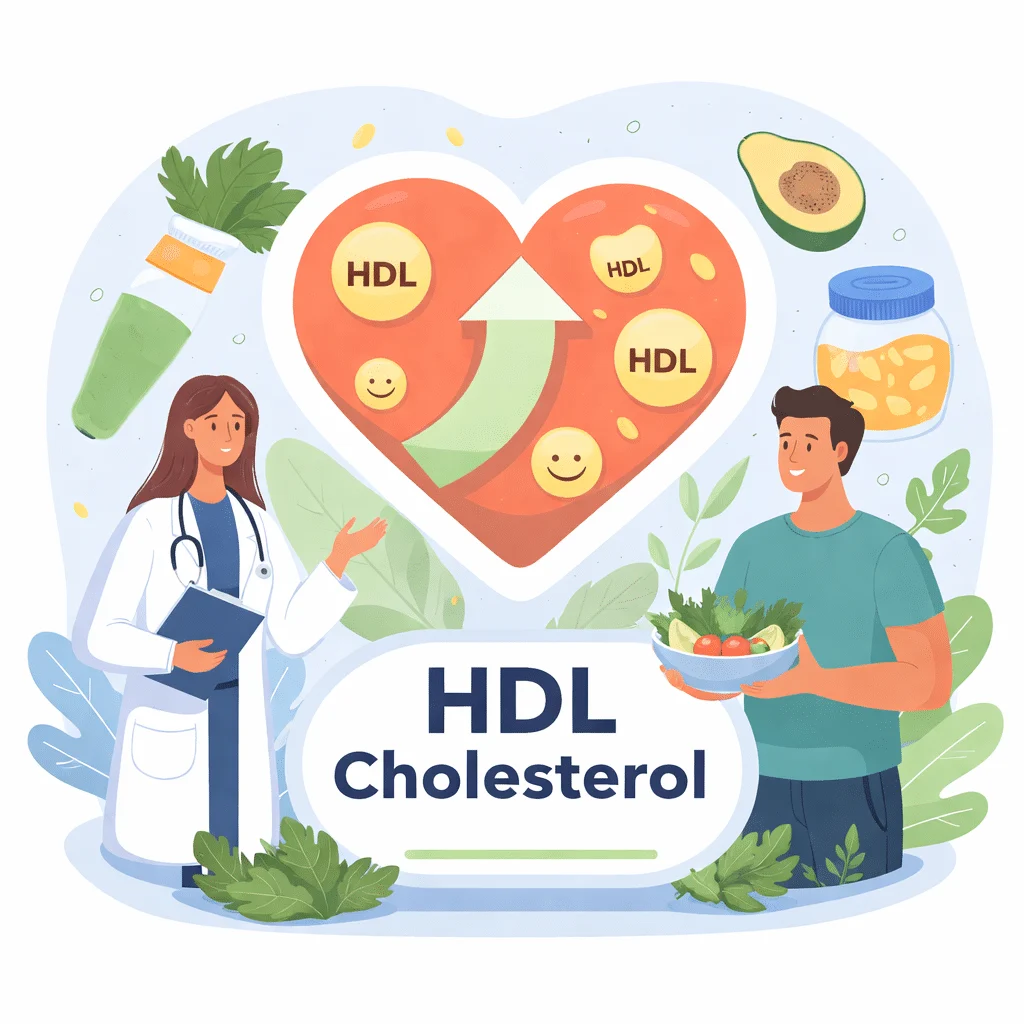
Un test de lipoproteine cu densitate mare măsoară colesterolul pe care corpul tău îl transportă înapoi la ficat pentru eliminare — de aceea clinicienii au numit HDL „colesterolul bun". Când primești rezultatele profilului lipidic, linia HDL primește adesea mai puțină atenție decât LDL, deși joacă un rol distinct în determinarea riscului tău cardiovascular. Înțelegerea valorii tale, a modului în care se încadrează în restul profilului și a ceea ce o influențează cu adevărat te poate ajuta să transformi o singură valoare de laborator într-o decizie utilă pentru sănătatea ta.
Acest ghid parcurge intervalele de referință, factorii care cresc sau scad HDL-ul și știința în evoluție despre motivul pentru care calitatea HDL poate conta la fel de mult ca valoarea numerică din buletinul tău de analize. Vei găsi, de asemenea, un glosar, întrebări frecvente și linkuri către alți markeri lipidici pe care îi poți explora în continuare.
Ce face colesterolul HDL în organism
Colesterolul în sine nu este dăunător. Celulele tale au nevoie de el pentru a construi membrane, a produce hormoni și a sintetiza vitamina D. Problema apare atunci când prea mult colesterol se acumulează în pereții arterelor. Particulele HDL preiau excesul de colesterol din țesuturi și vase de sânge și îl transportă la ficat, unde este reciclat sau eliminat din organism printr-un proces numit transport invers al colesterolului.
Deoarece această funcție de „curățare" ajută la limitarea formării plăcilor de aterom, nivelurile mai ridicate de HDL au fost asociate de mult timp cu rate mai scăzute de ateroscleroză și boli de inimă. HDL transportă, de asemenea, compuși antioxidanți și antiinflamatori care pot proteja peretele interior al vaselor de sânge — acesta este unul dintre motivele pentru care cercetătorii îl descriu ca multifuncțional, nu ca un simplu marker singular.
Cum funcționează testul de colesterol HDL
Testul HDL este de obicei solicitat ca parte a unui profil lipidic standard, alături de colesterolul total, colesterolul LDL și trigliceride. Majoritatea laboratoarelor recoltează sânge dintr-o venă a brațului, iar mulți medici permit acum efectuarea testului fără post alimentar, deoarece HDL și colesterolul total se modifică puțin după masă. Medicul tău îți va spune dacă este necesar postul alimentar pentru profilul tău specific, mai ales dacă se măsoară și trigliceridele.
Rezultatele sunt raportate în miligrame per decilitru (mg/dL). Deoarece o singură valoare poate fluctua în funcție de o boală recentă, consumul de alcool sau chiar ora din zi, mulți clinicieni preferă să analizeze un ghid complet de analize de sânge și să compari tendințele din două sau mai multe analize lipidice, în loc să evaluezi riscul cardiovascular pe baza unui singur rezultat.
Valori de referință pentru colesterolul HDL
Valorile de referință diferă ușor în funcție de laborator și de sex, deoarece femeile tind în mod natural să aibă niveluri mai ridicate de HDL decât bărbații. Tabelul de mai jos reflectă intervalele cel mai frecvent citate de laboratoarele din SUA și menționate în ghidurile naționale privind colesterolul.
| Nivel HDL (mg/dL) | Categorie | Ce înseamnă, în general |
|---|---|---|
| Sub 40 (bărbați) / Sub 50 (femei) | Scăzut | Considerat un factor de risc major pentru bolile de inimă în sine |
| 40-59 | Mediu | Acceptabil, deși valorile mai ridicate în acest interval sunt, în general, mai bune |
| 60 și peste | Protector | Asociat cu un risc cardiovascular mai scăzut la majoritatea persoanelor |
| Peste 80-100 | Foarte ridicat | Nu mai este considerat automat protector; discută cu medicul tău |
Aceste categorii reprezintă orientări generale, nu un diagnostic. Un medic care interpretează colesterolul tău HDL va lua în considerare și colesterolul total, valorile normale ale LDL pentru grupa ta de vârstă, trigliceridele, istoricul familial, tensiunea arterială și factorii legați de stilul de viață, înainte de a trage concluzii despre riscul tău cardiovascular.
Ce cauzează colesterolul HDL scăzut
Mai mulți factori pot scădea nivelul HDL. Fumatul reduce HDL și deteriorează peretele vaselor de sânge pe care HDL îl ajută să îl protejeze. Excesul de greutate corporală, în special în zona abdominală, este asociat cu un HDL mai scăzut și trigliceride mai ridicate. Un stil de viață sedentar, diabetul zaharat de tip 2 slab controlat și dietele bogate în carbohidrați rafinați pot contribui la o valoare mai mică. Unele medicamente, inclusiv steroizii anabolizanți și anumiți beta-blocante, pot reduce și ele colesterolul HDL. Un ghid dedicat analizează cauzele și riscurile colesterolului HDL scăzut mai în detaliu.
Genetica joacă și ea un rol important. Anumite afecțiuni ereditare reduc producția de HDL sau accelerează descompunerea acestuia, indiferent de dietă sau de obiceiurile de exercițiu fizic — acesta este unul dintre motivele pentru care două persoane cu stiluri de viață similare pot avea valori HDL foarte diferite.
Ce crește colesterolul HDL
Exercițiul aerobic regulat este una dintre cele mai eficiente metode de a crește colesterolul HDL, cu efecte observate chiar și după activitate moderată, cum ar fi mersul alert practicat de câteva ori pe săptămână. Renunțarea la fumat produce o creștere măsurabilă a HDL în câteva săptămâni. Înlocuirea grăsimilor saturate și a carbohidraților rafinați cu grăsimi nesaturate din surse precum uleiul de măsline, nucile și peștele gras tinde să îmbunătățească profilul lipidic general, inclusiv HDL, contribuind totodată la menținerea nivelurilor normale ale trigliceridelor și a intervalelor de referință.
Uleiurile vegetale împart opiniile: vezi ce spune dovezile despre uleiul de floarea-soarelui.
Consumul moderat de alcool a fost asociat istoric cu valori mai mari ale HDL, însă marile organizații de sănătate nu recomandă începerea consumului de alcool din acest motiv, deoarece alcoolul prezintă alte riscuri pentru sănătate care depășesc orice beneficiu modest asupra lipidelor. Pierderea în greutate, atunci când greutatea corporală depășește intervalul sănătos, tinde de asemenea să crească HDL, reducând în același timp trigliceridele și colesterolul LDL.
De ce grăsimile saturate și HDL sunt mai complicate decât par la prima vedere
Dietele bogate în grăsimi saturate, din surse precum unt, carne roșie grasă și lactate integrale, tind să crească atât colesterolul LDL, cât și colesterolul HDL în același timp. Timp de mulți ani, acest lucru a creat confuzie cu privire la efectele nocive ale grăsimilor saturate, deoarece o valoare creștea odată cu valoarea pe care oamenii încercau să o scadă. Cercetările actuale arată că ceea ce înlocuiește grăsimile saturate contează mai mult decât orice valoare lipidică izolată. Înlocuirea grăsimilor saturate cu grăsimi nesaturate sau carbohidrați bogați în fibre este asociată cu reducerea riscului cardiovascular, în timp ce înlocuirea lor cu amidon rafinat și zahăr adăugat, în general, nu este. Această nuanță explică de ce medicul tău analizează întregul profil lipidic și tiparul alimentar împreună, în loc să reacționeze la HDL sau LDL în mod izolat.
Cum se corelează HDL cu ceilalți markeri lipidici
Colesterolul HDL rareori spune întreaga poveste de unul singur. Un testul colesterolului total reflectă suma HDL, LDL și o fracție din trigliceride, astfel că o valoare izolată a HDL are nevoie de acest context mai larg. Un test de colesterol LDL măsoară particulele care transportă colesterolul spre țesuturi și, în exces, contribuie direct la formarea plăcilor de aterom — de aceea medicii se concentrează adesea pe scăderea colesterolului LDL chiar și atunci când HDL pare favorabil. Valorile crescute ale trigliceridelor și riscurile asociate acestora însoțesc frecvent un HDL scăzut, iar această combinație este un marker recunoscut al riscului metabolic.
Unii medici calculează și un raport al colesterolului explicat în raport cu riscul global împărțind colesterolul total la HDL, ceea ce poate adăuga un context util dincolo de oricare dintre valori luate separat. Pentru o analiză mai detaliată a riscului la nivel de particule, un profil lipidic avansat care măsoară apolipoproteina B adaugă principalul marker proteic pentru particulele care înfundă arterele, alături de apolipoproteina A1, proteina principală transportată de particulele HDL. Compararea rezultatului apolipoproteinei A1 cu apolipoproteina B poate uneori evidenția un risc pe care un profil lipidic standard îl ratează.
Progrese științifice recente în cercetarea HDL
Viziunea tradițională trata colesterolul HDL ca fiind uniform protector: cu cât valoarea era mai mare, cu atât mai bine. Cercetările mai recente complică această imagine în două moduri importante. În primul rând, studii de cohortă de mari dimensiuni au identificat o relație în formă de U între colesterolul HDL și mortalitate. Conform unui studiu publicat în JAMA Cardiology, niveluri foarte ridicate de colesterol HDL, peste aproximativ 80 mg/dL, au fost asociate paradoxal cu o mortalitate crescută din toate cauzele și cu mortalitate cardiovasculară la persoanele cu boală coronariană existentă, independent de variantele genetice comune legate de HDL crescut. O analiză conexă din The Journal of Clinical Endocrinology and Metabolism a concluzionat în mod similar că colesterolul HDL nu este un factor protector universal, menționând că medicamentele concepute special pentru a crește colesterolul HDL nu au reușit să reducă evenimentele cardiovasculare în studiile clinice.
În al doilea rând, cercetătorii pun din ce în ce mai mult accent pe funcția HDL, nu pe cantitatea acestuia. O măsurătoare numită capacitatea de eflux a colesterolului, care urmărește cât de eficient elimină particulele HDL colesterolul din celule, s-a dovedit a prezice boala cardiovasculară independent de nivelul colesterolului HDL în sine. Cercetări publicate în Circulation au arătat că particulele HDL mai mici sunt adesea mai eficiente în acest proces de eliminare a colesterolului decât cele mai mari, deoarece modificările structurale ale proteinei de suprafață le permit să interacționeze mai eficient cu transportorul celular care exportă colesterolul. Luate împreună, aceste cercetări sugerează că modul în care funcționează HDL-ul tău, nu doar cantitatea pe care o ai, poate conta în cele din urmă mai mult pentru protecția cardiovasculară.
Ghidul privind dislipidemia din 2026 și ce s-a schimbat
În martie 2026, American College of Cardiology și American Heart Association au publicat un ghid comun actualizat privind managementul dislipidemiei, înlocuind recomandările anterioare din 2018. Actualizarea recomandă ca toți adulții să aibă lipoprotein(a) măsurată cel puțin o dată în cadrul evaluării riscului cardiovascular, introduce screeningul universal al lipidelor pentru copiii cu vârste între 9 și 11 ani și orientează calculul riscului spre ecuațiile PREVENT mai noi, în locul ecuațiilor Pooled Cohort mai vechi. Țintele de tratament pentru LDL-C au fost, de asemenea, înăsprite, cu obiective sub 100 mg/dL în general și sub 70 mg/dL pentru persoanele cu risc crescut sau cu un eveniment cardiovascular anterior.
Ghidul nu stabilește o nouă valoare numerică țintă pentru HDL, reflectând aceeași înțelegere în evoluție descrisă mai sus: colesterolul HDL rămâne util pentru evaluarea globală a riscului, însă recomandările actuale nu tratează creșterea colesterolului HDL ca un obiectiv terapeutic în sine. Dacă rezultatele tale fac referire la ghidul actualizat, întreabă medicul tău cum afectează modificările calculul riscului tău personal, mai ales dacă lipoproteina(a) nu a fost verificată anterior.
Când să vorbești cu medicul tău
Prezintă rezultatele medicului tău dacă colesterolul HDL este sub 40 mg/dL, dacă trigliceridele sunt crescute în același timp sau dacă ai antecedente personale sau familiale de boli de inimă apărute la vârstă tânără. Merită o discuție și dacă colesterolul HDL este neobișnuit de mare, având în vedere cercetările mai recente privind valorile foarte ridicate. Dacă vreo parte a raportului tău conține coduri sau abrevieri necunoscute, un ghid al abrevierilor din analizele de laborator te poate ajuta să descifrezi restul documentului. Medicul tău poate interpreta colesterolul HDL în contextul întregului profil lipidic, al tensiunii arteriale, glicemiei, greutății și antecedentelor familiale, pentru a estima riscul tău cardiovascular real, fără a se baza pe o singură valoare izolată.
Glosar
| Termen | Definiție |
|---|---|
| HDL (lipoproteine cu densitate mare) | O particulă care transportă colesterolul din țesuturi înapoi la ficat pentru eliminare |
| Transportul invers al colesterolului | Procesul prin care HDL transportă excesul de colesterol din celule și vase de sânge |
| Capacitatea de eflux a colesterolului | O măsură funcțională a eficienței cu care particulele HDL elimină colesterolul din celule |
| Apolipoproteina A1 | Principala proteină structurală găsită pe particulele HDL |
| Ateroscleroză | Acumularea de plăci în pereții arterelor, care poate îngusta sau bloca fluxul sanguin |
| Profil lipidic | Un test de sânge care măsoară colesterolul total, LDL, HDL și trigliceridele împreună |
Întrebări frecvente
Un colesterol HDL mai mare este întotdeauna mai bun?
Nu neapărat. Deși un colesterol HDL cuprins între aproximativ 60 și 80 mg/dL este considerat în general protector, cercetările au identificat o relație în formă de U, în care un colesterol HDL foarte ridicat, peste aproximativ 80–100 mg/dL, poate fi asociat cu un risc crescut de mortalitate la anumite populații. Discută cu medicul tău orice rezultat neobișnuit de mare, în loc să presupui că mai mult înseamnă întotdeauna mai bine.
Pot crește rapid colesterolul HDL?
Modificările semnificative ale colesterolului HDL necesită de obicei săptămâni sau luni de obiceiuri constante, inclusiv exerciții aerobice regulate, renunțarea la fumat și îmbunătățirea calității grăsimilor din alimentație. Nu există o metodă sigură de a crește colesterolul HDL peste noapte, iar suplimentele promovate pentru creșteri rapide ale HDL nu au, în general, dovezi științifice solide care să le susțină.
Trebuie să fiu pe nemâncate înainte de testul pentru colesterolul HDL?
Mulți furnizori nu mai solicită post pentru HDL și colesterolul total în mod specific, deoarece aceste valori se modifică puțin după masă. Totuși, dacă panelul tău include și trigliceride, furnizorul tău poate recomanda în continuare un post de 9 până la 12 ore înainte. Urmează instrucțiunile specifice ale furnizorului tău.
Ce nivel al colesterolului HDL este considerat periculos de scăzut?
Un nivel al colesterolului HDL sub 40 mg/dL la bărbați sau sub 50 mg/dL la femei este clasificat în general ca scăzut și este tratat ca un factor de risc independent pentru bolile de inimă, mai ales când este combinat cu trigliceride crescute sau colesterol LDL ridicat.
Testul pentru colesterolul HDL necesită un ac?
Da. Colesterolul HDL se măsoară dintr-o probă de sânge, recoltată de obicei dintr-o venă a brațului, ca parte a unui profil lipidic standard. Procedura este scurtă și implică aceleași riscuri minore ca orice recoltare de sânge de rutină.
Cât de des ar trebui testat colesterolul HDL?
Majoritatea adulților sănătoși sunt testați o dată la patru până la șase ani, începând din tinerețe, deși persoanele cu factori de risc precum diabet, obezitate, fumat sau antecedente familiale de boli de inimă sunt testate de obicei mai frecvent. Medicul tău va stabili un program personalizat în funcție de rezultatele tale și de riscul general.
Surse
- Centers for Disease Control and Prevention. LDL and HDL Cholesterol and Triglycerides. https://www.cdc.gov/cholesterol/about/ldl-and-hdl-cholesterol-and-triglycerides.html
- MedlinePlus (National Library of Medicine). HDL: The Good Cholesterol. https://medlineplus.gov/hdlthegoodcholesterol.html
- Cleveland Clinic. HDL: Why It’s Good Cholesterol. https://my.clevelandclinic.org/health/articles/24395-hdl-cholesterol
- Liu C, et al. Association Between High-Density Lipoprotein Cholesterol Levels and Adverse Cardiovascular Outcomes in High-risk Populations. JAMA Cardiology, 2022. https://doi.org/10.1001/jamacardio.2022.0912
- Razavi AC, et al. Does Elevated High-Density Lipoprotein Cholesterol Protect Against Cardiovascular Disease? The Journal of Clinical Endocrinology and Metabolism, 2023. https://doi.org/10.1210/clinem/dgad406
- He Y, et al. Flipped C-Terminal Ends of APOA1 Promote ABCA1-Dependent Cholesterol Efflux by Small HDLs. Circulation, 2023. https://doi.org/10.1161/CIRCULATIONAHA.123.065959
- American Heart Association / American College of Cardiology. 2026 Guideline on the Management of Dyslipidemia. https://www.ahajournals.org/doi/10.1161/CIR.0000000000001423
Lectură suplimentară
- Colesterol LDL: înțelege și interpretează acest marker din sânge
- Testul colesterolului total: ghid complet pentru înțelegerea rezultatelor
- Trigliceridele: Cum să îți înțelegi analizele de sânge
- Apolipoproteina A1: niveluri crescute, scăzute și normale
- Panelul lipidic avansat: ghidul tău pentru sănătatea inimii și rezistența la stres
Colesterolul tău HDL este doar o piesă dintr-un tablou mai amplu, care include întregul profil lipidic, stilul de viață și factorii tăi personali de risc. Să înțelegi fiecare valoare dintr-un buletin de analize poate părea copleșitor atunci când îl citești singur acasă.
Înțelege-ți rezultatele analizelor cu AI DiagMe
Obține interpretarea rezultatelor în câteva minute