








































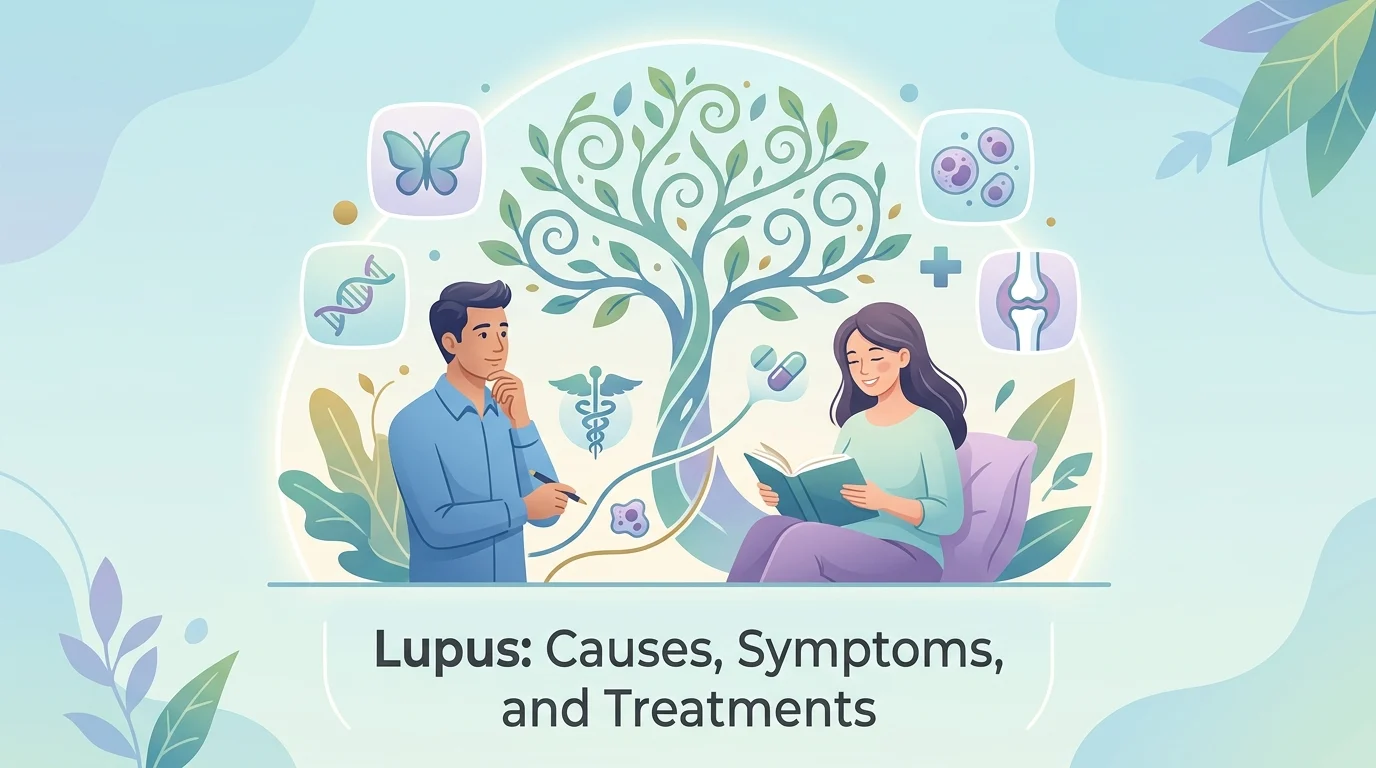
What is lupus? It is a chronic autoimmune disease — meaning the immune system, which normally fights infection, mistakenly attacks the body’s own healthy tissue. This causes inflammation that can affect the skin, joints, kidneys, blood, heart, lungs, and brain. Lupus tends to come and go: symptoms can flare for a while, then quiet down during periods called remission. Because those symptoms overlap with many other conditions, lupus is often hard to recognize, and it is frequently picked up through abnormal blood and urine tests. This article explains, in plain language, what lupus is, what causes it, the symptoms to watch for, how doctors diagnose it, and the treatments that help people stay well — plus the newest research reshaping care. There is no cure yet, but with the right treatment many people with lupus live full, active lives.
What is lupus? An autoimmune disease, explained
Lupus is short for systemic lupus erythematosus (SLE), the most common form of the disease. In an autoimmune disease, the body produces antibodies — proteins the immune system normally uses to target germs — that turn against its own cells instead. In lupus, these are often antinuclear antibodies (ANA), which react against material inside the body’s own cell nuclei. The result is widespread inflammation that can affect one organ or several at once.
Lupus is not rare. An estimated 204,000 people in the United States live with SLE, and roughly 9 in 10 of them are women. It is most often diagnosed between the ages of 15 and 45, and it is more common in Black, Hispanic, Asian American, and Native American people, who also tend to have more serious organ involvement. Having a close relative with lupus or another autoimmune condition raises the risk, though most people with lupus have no affected family member. To see how lupus fits among related conditions, it helps to read this overview of autoimmune disease symptoms, causes, and treatments.
The main types of lupus
Not all lupus is the same. The four main forms differ in what they affect and how they behave.
| Type | What it affects | Key features |
|---|---|---|
| Systemic lupus erythematosus (SLE) | Multiple organs | The most common type; ranges from mild to severe |
| Cutaneous (skin) lupus | Mainly the skin | Includes discoid lupus (round, scarring patches) and sun-triggered rashes |
| Drug-induced lupus | Joints and general symptoms | Triggered by certain long-term medicines; usually fades after stopping the drug |
| Neonatal lupus | Newborns | Rare; linked to specific antibodies passed from mother to baby |
A visible rash is one of the most recognizable signs of skin involvement; you can learn more in this guide to skin rash causes, symptoms, and treatments.
What causes lupus?
The honest answer is that no single cause is known. Lupus develops from a mix of factors that, together, tip the immune system into attacking the body:
- Genetics. Certain inherited genes make some people more susceptible. This is why family history matters — but genes alone are not enough, and most people with lupus have no relative with the disease.
- Hormones. Because lupus is far more common in women of childbearing age, the female hormone estrogen is thought to play a role.
- Environmental triggers. In someone already predisposed, the disease can be set off by ultraviolet light from the sun, some viral infections, certain medicines (the cause of drug-induced lupus), and smoking.
Two common worries are worth answering directly. Lupus is not contagious — you cannot catch it from, or pass it to, another person. And while it can run in families, it is not handed down in a simple, predictable way like eye color. The immune malfunction behind it is shared with other conditions, which is why doctors often investigate the broader picture of autoimmune disease.
Lupus symptoms: from fatigue to the butterfly rash
Symptoms vary widely from person to person and can change over time, which is part of what makes lupus so hard to pin down. The most common include:
- Extreme tiredness (fatigue), often the most disabling symptom
- Joint pain, stiffness, and swelling — a form of arthritis
- A butterfly-shaped rash (called a malar rash) across the cheeks and nose that often worsens after sun exposure
- Skin sensitivity to sunlight
- Fever with no clear infection
- Painless sores in the mouth or nose
- Hair loss
- Fingers and toes that turn white or blue in the cold or under stress (Raynaud’s phenomenon)
- Swelling in the legs or around the eyes
The classic facial rash is striking, but many people with lupus never develop it, and skin changes can look different on darker skin. Comparing different rashes in this guide to skin rash can help you tell them apart.
Early signs, especially in women
Because early lupus often shows up as vague, everyday complaints — lingering fatigue, low-grade fever, achy joints, or a sun-sensitive rash — it is easy to mistake for stress, overwork, or another illness. In women of childbearing age, the combination of persistent joint pain, unusual fatigue, and a facial rash is a pattern that should prompt a conversation with a doctor.
Flares and remission
Lupus rarely stays the same day to day. Symptoms can intensify during a flare, then ease or disappear during remission. Flares can be mild or serious and are often unpredictable, though triggers such as sunlight, infections, and stress can set them off. Learning your personal warning signs is one of the most useful skills for living with lupus.
How is lupus diagnosed? The role of blood and urine tests
There is no single test that confirms lupus. Instead, a doctor — usually a rheumatologist, a specialist in joint and immune conditions — pieces together your symptoms, medical and family history, a physical exam, and a series of laboratory tests. Sometimes a small tissue sample (biopsy) of the skin or kidney is needed.
Lab tests are central to both diagnosis and ongoing monitoring. The table below shows the ones most often used.
| Test | What it looks at | Why it matters in lupus |
|---|---|---|
| Antinuclear antibodies (ANA) | Antibodies against the cell nucleus | Nearly everyone with lupus tests positive; a common first screen |
| Autoimmune panel | A group of autoantibodies | Helps distinguish lupus from other autoimmune diseases |
| Anti-dsDNA and anti-Sm antibodies | More specific lupus antibodies | Support the diagnosis and can track disease activity |
| Complement C3 and C4 | Immune proteins used up during inflammation | Low levels often signal active disease, especially in the kidneys |
| Complete blood count | Red cells, white cells, platelets | Lupus can cause anemia and low white-cell or platelet counts |
| Erythrocyte sedimentation rate (ESR) | General inflammation | Often raised during flares |
| Urinalysis and protein in urine | Kidney involvement | Protein or blood in urine can be an early sign of kidney damage |
| Kidney function panel | Creatinine, eGFR, urea | Checks how well the kidneys are filtering |
Because no single result is conclusive, doctors weigh the whole picture. This is also why a positive ANA test on its own does not mean you have lupus — many healthy people have a low-level positive ANA.
How lupus affects the body
Because lupus is systemic, its inflammation can reach almost any organ. Knowing where it tends to strike helps explain why monitoring matters.
- Kidneys. Inflammation of the kidneys, called lupus nephritis, is one of the most serious complications. It may cause no symptoms at first, which is why urine tests and the kidney function panel are checked regularly; foamy urine or protein in urine can be an early clue.
- Blood. Lupus can lower red cells (anemia), white cells, or platelets, which show up on a complete blood count.
- Heart and lungs. Inflammation can affect the lining around the heart or lungs, causing chest pain or breathlessness.
- Brain and nervous system. Some people experience headaches, memory or concentration problems (often called brain fog), mood changes, or, rarely, seizures.
- Blood clotting. Some people with lupus carry antibodies that raise the risk of blood clots, a situation that needs specific management.
Lupus treatments: controlling inflammation and protecting organs
There is no cure for lupus, but treatment has improved dramatically, and the goal today is clear: calm the immune attack, prevent flares, protect organs, and keep side effects — especially from steroids — as low as possible. Treatment is tailored to which parts of the body are involved and how active the disease is.
Common options include:
- Antimalarial medicine. Hydroxychloroquine is a cornerstone for almost everyone with lupus; it eases joint pain, rashes, and fatigue and helps prevent flares.
- Nonsteroidal anti-inflammatory drugs (NSAIDs). Used for pain, swelling, and fever.
- Corticosteroids. Drugs such as prednisone quickly reduce inflammation, usually at the lowest effective dose for the shortest time.
- Immunosuppressants. Medicines like mycophenolate, azathioprine, or methotrexate calm an overactive immune system, especially when organs are involved.
- Biologic therapies. Newer targeted drugs, including belimumab and anifrolumab, block specific parts of the immune response and are used in moderate to severe disease.
For lupus nephritis, doctors may add medicines that protect the kidneys, and treatment is guided closely by lab results.
Lifestyle and self-care
Daily habits make a real difference between flares:
- Protect your skin from the sun with clothing, a hat, and sunscreen, since ultraviolet light can trigger flares.
- Do not smoke.
- Stay active with regular, gentle exercise.
- Keep regular check-ups so problems are caught early.
- Stay up to date on vaccines, as some lupus medicines affect the immune system.
Living with lupus: what the outlook is really like
Questions about how serious lupus is — and whether it can be fatal — are among the most common, and they deserve a straight, calm answer. Decades ago, lupus carried a grim prognosis. Today, thanks to earlier diagnosis and better treatment, most people with lupus can expect a normal or near-normal life span and can work, exercise, and raise families.
That said, lupus is a serious disease that needs ongoing care. The greatest risks come from major organ involvement (especially the kidneys), cardiovascular disease, and infections, which is why steady treatment, regular monitoring, and not skipping medicines matter so much. With the disease under control, many women with lupus also have healthy pregnancies, ideally planned in advance with their care team.
When to see a doctor
See a healthcare professional if you notice a new, unexplained rash, ongoing fever, persistent joint pain, or extreme fatigue — especially in combination. Once you have a lupus diagnosis, contact your team promptly if you have warning signs of a flare or a serious complication, such as:
- A new or spreading rash, or sores that will not heal
- A fever that will not go away
- Chest pain or shortness of breath
- Swelling in the legs or foamy urine, which can point to kidney involvement
- Severe headache, confusion, or new vision changes
These can signal that the disease is active and that treatment may need adjusting.
Latest scientific advances
Research on lupus is moving quickly, shifting from broadly suppressing the immune system toward more precise approaches. The summary below reflects recent studies indexed in PubMed; it describes promising directions, not a settled cure.
The most talked-about advance is CAR-T cell therapy, an approach borrowed from cancer treatment in which a patient’s own immune cells (T cells) are re-engineered in a lab to remove the misbehaving, antibody-producing B cells — in effect, an immune reset. In a closely watched case series of 15 patients (a small, early-stage study that follows each person over time) published in the New England Journal of Medicine in 2024, all of the patients with lupus reached remission and were able to stop their usual lupus medicines, with mostly mild short-term side effects over a median follow-up of about 15 months. Reviews in Nature Reviews Rheumatology (2024) and Nature Reviews Drug Discovery (2025) describe this as a potential turning point while stressing important cautions: the numbers are still small, follow-up is short to medium, the treatment is demanding and carries real risks such as infections, and it is available only at specialized centers within research settings.
Alongside cell therapy, several targeted drugs have widened the toolkit. Biologics such as anifrolumab — which blocks a signaling molecule called type I interferon that helps drive lupus inflammation — and belimumab reflect the broader move toward treatments aimed at specific immune pathways rather than the whole system. For now, antimalarials and other established medicines remain the foundation of care, while these newer options are reserved for selected patients and continue to be studied. As always, only a doctor can judge whether a new treatment is right for an individual.
Glossary
| Term | Definition |
|---|---|
| Antinuclear antibodies (ANA) | Antibodies that target the body’s own cell nuclei; a positive test is common in lupus but can also occur in healthy people. |
| Autoimmune disease | A condition in which the immune system attacks the body’s own healthy tissue instead of germs. |
| Biologic therapy | A medicine made from living cells that blocks a specific part of the immune response, such as belimumab or anifrolumab. |
| Complement (C3 and C4) | Immune proteins that are used up during inflammation; low levels can signal active lupus. |
| Cutaneous lupus | A form of lupus that mainly affects the skin, including discoid lupus. |
| Flare | A period when lupus symptoms get worse before easing again. |
| Lupus nephritis | Inflammation of the kidneys caused by lupus, one of its more serious complications. |
| Malar rash | The butterfly-shaped rash across the cheeks and nose seen in some people with lupus. |
| Remission | A period when lupus is quiet and symptoms are minimal or absent. |
| Systemic lupus erythematosus (SLE) | The most common type of lupus, capable of affecting many organs at once. |
Frequently asked questions
Is lupus hereditary?
Lupus is not inherited in a simple, direct way. Certain genes can make a person more likely to develop it, and having a close relative with lupus or another autoimmune disease raises the risk slightly. Even so, most people with lupus have no family member with the disease, and genes alone do not cause it — environmental triggers and hormones also play a part. Relatives of someone with lupus do not need routine testing unless they develop symptoms.
Is lupus contagious?
No. Lupus cannot be passed from one person to another through contact, coughing, sharing food, or any other route. It is an autoimmune disease, which means it comes from within a person’s own immune system rather than from a germ. You cannot catch lupus or give it to someone else, including family members and partners.
Can men get lupus?
Yes. Although about 9 in 10 people with lupus are women, men can and do develop it. Lupus in men is sometimes diagnosed later because it is less expected, yet the symptoms, tests, and treatments are the same. Some studies suggest men may be more likely to have serious organ involvement, so prompt evaluation of unexplained joint pain, rashes, or fatigue is important.
Does lupus cause weight gain?
Lupus itself does not directly cause weight gain, but several related factors can. Corticosteroids such as prednisone, often used to control inflammation, can increase appetite and fluid retention. Fatigue and joint pain may also make staying active harder. If kidney involvement causes swelling, that can add water weight. Talking with your care team about diet, gentle exercise, and the lowest effective steroid dose can help.
Can lupus be cured?
There is no cure for lupus yet, but it can be managed well. Modern treatment aims to control inflammation, prevent flares, and protect organs, and many people reach long periods of remission with few symptoms. Research into approaches that reset the immune system, such as CAR-T cell therapy, is promising but still experimental. For now, ongoing treatment and monitoring keep the disease under control.
Can a single blood test confirm lupus?
No single blood test can diagnose lupus. A positive ANA test is common in lupus, but it also appears in many healthy people, so it is only a starting point. Doctors combine several tests — including more specific antibodies, complement levels, blood counts, and urine tests — with your symptoms, history, and physical exam. This is why interpreting the full set of results together matters so much.
Sources
- Lupus Basics — Centers for Disease Control and Prevention (CDC)
- Systemic Lupus Erythematosus (Lupus) — NIH National Institute of Arthritis and Musculoskeletal and Skin Diseases (NIAMS)
- Lupus: Symptoms and Causes — Mayo Clinic
- Müller F, et al. CD19 CAR T-Cell Therapy in Autoimmune Disease — A Case Series with Follow-up. New England Journal of Medicine, 2024 (via PubMed). DOI
- Schett G, et al. Advancements and challenges in CAR T cell therapy in autoimmune diseases. Nature Reviews Rheumatology, 2024 (via PubMed). DOI
- Scherlinger M, et al. Advances in the treatment of systemic lupus erythematosus. Nature Reviews Drug Discovery, 2025 (via PubMed). DOI
Further reading
- Antinuclear Antibodies (ANA): Understanding Your Blood Test
- Autoimmune Panel: ANA, RF and Anti-CCP Tests
- Autoimmune Disease: Symptoms, Causes, and Treatments
- Complement C3: Understanding Your Blood Test Results
- Kidney Function Panel: How to Read It
Understand your lab results with AI DiagMe
A lupus work-up often produces a long list of results — ANA, complement C3 and C4, a complete blood count, and urine tests for protein — that can be hard to make sense of on your own. AI DiagMe helps you understand what your blood, urine, and stool test results mean in clear, everyday language, with an analysis reviewed by a panel of doctors. It is built to help you prepare for your appointment and follow your health over time, not to diagnose lupus or replace your physician. If you have recent results in hand, you can see what they mean before your next visit.
➡️ Get your results interpreted in minutes