




























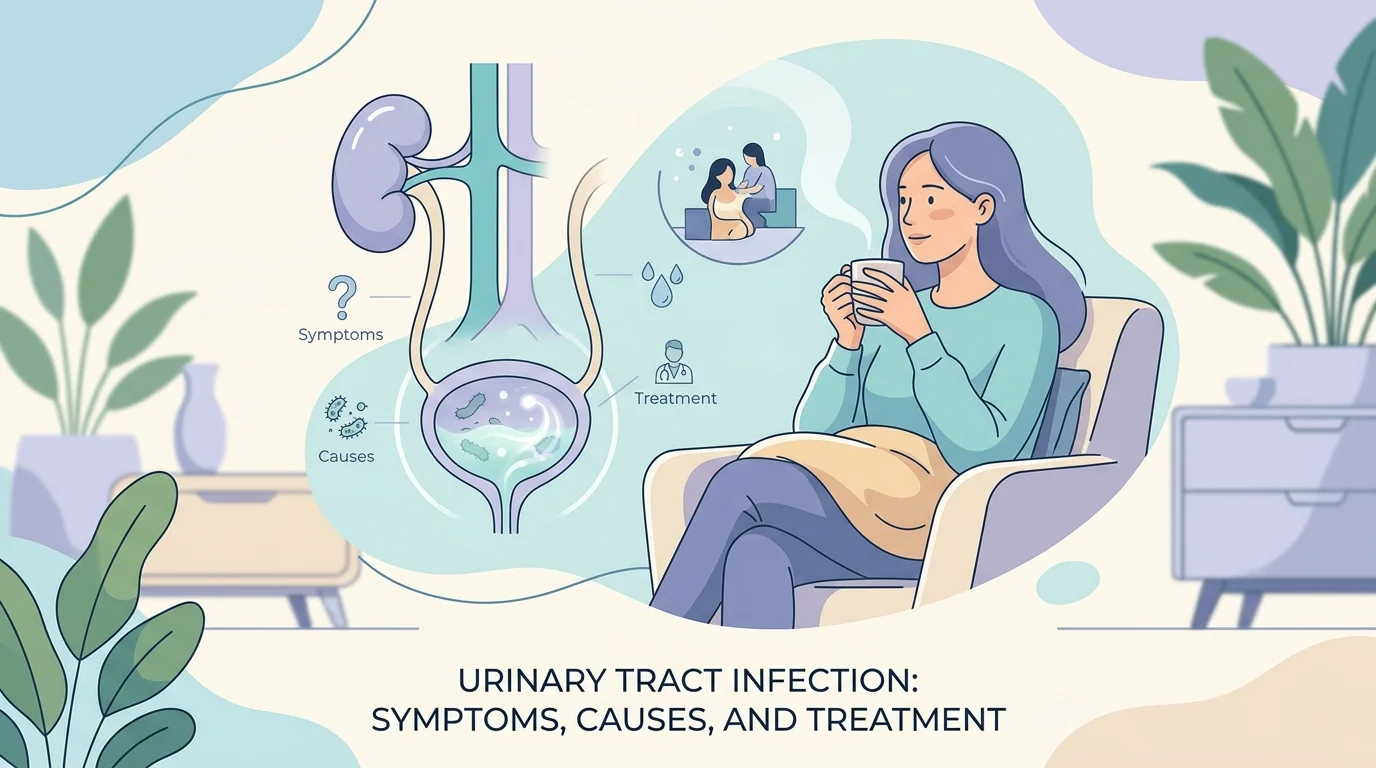
A urinary tract infection is one of the most common reasons adults see a doctor or visit a pharmacy, and it happens when bacteria infect part of the urinary system — most often the bladder. If you have burning when you urinate, a constant urge to go, or cloudy urine, this guide explains what is likely happening and what to do next. In this article you will learn what a urinary tract infection is, how to recognize the symptoms in women, men, and older adults, what causes it, how doctors diagnose and treat it, how to lower your risk, and what recent research has changed. The tone here is practical and factual: most lower urinary tract infections respond well to treatment when they are addressed early.
What is a urinary tract infection?
A urinary tract infection, often shortened to UTI, is an infection in any part of the urinary system. That system includes the kidneys, the ureters (the tubes from the kidneys to the bladder), the bladder, and the urethra (the tube that carries urine out of the body). Most infections affect the lower tract — the bladder and urethra — and are uncomfortable but rarely dangerous when treated. An infection that reaches a kidney is less common and more serious.
Most UTIs are caused by bacteria that normally live in the bowel. Escherichia coli, usually called E. coli, is responsible for the large majority of bladder infections. The bacteria travel up the urethra and multiply in the bladder, which triggers the inflammation behind the symptoms.
Lower versus upper urinary tract infections
Clinicians often name a UTI by where it sits. An infection of the urethra is called urethritis, an infection of the bladder is called cystitis, and an infection of a kidney is called pyelonephritis. Cystitis is by far the most common form. UTIs are very common overall: Cleveland Clinic notes that providers treat roughly 8 to 10 million people for UTIs each year in the United States, and that about half of women will have at least one in their lifetime. Men and children can also be affected, though less often.
Urinary tract infection symptoms
Symptoms depend on which part of the urinary tract is involved. A bladder infection, the most common type, usually causes lower urinary symptoms that build over a day or two.
- A burning feeling or pain when you urinate
- A strong, frequent urge to urinate, often passing only small amounts
- Pressure or cramping in the lower abdomen or pelvis
- Cloudy, strong-smelling, or discolored urine
- Urine that looks pink or red, which can signal blood
A kidney infection is more serious and tends to add whole-body symptoms. Seek care promptly if a UTI is accompanied by any of the following.
- Fever and chills
- Pain in the back or side, below the ribs
- Nausea or vomiting
Symptoms in older adults and other special cases
Symptoms are not always classic. Older adults may have few urinary symptoms and instead show new confusion or unsteadiness, so caution is warranted before assuming a UTI is the cause. Cloudy or dark urine on its own is not proof of infection, because color has many harmless explanations; read our guide to urine color changes. Likewise, visible blood always deserves attention even when a UTI is suspected; see our guide to blood in urine and hematuria.
What causes a UTI, and who is at higher risk
A UTI begins when bacteria from the skin or rectum reach the urethra and travel into the urinary tract. The body has natural defenses, but several factors make infection more likely. Many of these are ordinary parts of daily life rather than signs that something is wrong.
- Female anatomy, because a shorter urethra sits closer to the rectum
- Recent sexual activity
- Menopause and lower estrogen, which change the vaginal and urinary environment
- Some birth control methods, such as diaphragms and spermicides
- Pregnancy
- A urinary catheter or a recent urinary procedure
- Diabetes or a weakened immune system
- Incomplete bladder emptying, an enlarged prostate, or a blockage such as a stone
That last point links UTIs to other urinary conditions. Stones can irritate the lining and trap urine, which raises infection risk; see our guide to kidney stones. In men, UTIs are less common and are more often connected to the prostate or to an anatomical cause, so they usually deserve a closer look.
UTI or something else? Yeast infections, STIs, and look-alikes
Several conditions cause burning, urgency, or pelvic discomfort that can feel like a UTI, which is why testing matters. A vaginal yeast infection, for example, mainly causes itching and a thick discharge rather than the burning-on-urination pattern of cystitis. Yeast can also turn up in a urine sample without being the same thing as a bacterial UTI; compare our guide to yeast in urine. Some sexually transmitted infections inflame the urethra and mimic a UTI closely; read our overview of Ureaplasma infections. The table below sketches how these conditions usually differ.
| Condition | Typical symptoms | How it is usually confirmed |
|---|---|---|
| Urinary tract infection (bladder) | Burning when urinating, urgency, frequent small amounts, pelvic pressure | Urinalysis and, if needed, a urine culture |
| Vaginal yeast infection | Itching, irritation, thick discharge; little burning on urination | Pelvic exam and a vaginal swab |
| Sexually transmitted infection | Urethral burning or discharge, sometimes pelvic pain | Targeted swab or a urine DNA test |
| Kidney stone | Severe back or side pain, sometimes blood in urine | Imaging such as ultrasound or CT |
How a urinary tract infection is diagnosed
Diagnosis usually starts with a simple urine sample. A dipstick test gives results in minutes by checking for chemical clues of infection, and a laboratory can add a microscope exam and, when needed, a culture.
The dipstick screens for an enzyme released by white blood cells; see our guide to the leukocyte esterase urine test. It also checks for a chemical that many bacteria produce; read our explainer on nitrites in urine. Under the microscope, a technician can count the immune cells in the sample; explore our guide to leukocytes in urine. These findings are read together rather than one at a time.
| Urinalysis finding | What it may suggest |
|---|---|
| Leukocyte esterase positive | White blood cells are present, a sign of inflammation or infection |
| Nitrites positive | Bacteria that convert nitrate to nitrite are likely present |
| White blood cells (leukocytes) | An immune response within the urinary tract |
| Red blood cells (blood) | Irritation from infection, stones, or another cause |
| Bacteria seen | Possible infection, best confirmed with a culture |
A urine culture is the most definitive test. It grows the bacteria over a day or two, identifies the species, and shows which antibiotics will work — information that matters when symptoms are severe, recurrent, or not improving. Imaging such as an ultrasound or CT scan is reserved for selected cases, including suspected kidney involvement, repeated infections, or a possible blockage.
Urinary tract infection treatment and what to expect
Most UTIs are treated with a short course of antibiotics, and the right choice depends on your symptoms, your health, and local resistance patterns. Commonly used first-line options for a simple bladder infection include nitrofurantoin, trimethoprim-sulfamethoxazole, and fosfomycin; cephalexin or amoxicillin are used in some situations. Broader antibiotics such as fluoroquinolones are usually held in reserve. Whatever the prescription, finishing the full course matters, because stopping early can let the infection return.
Symptom relief can help while the antibiotic works. A urinary pain reliever containing phenazopyridine can ease burning, but it only masks discomfort and turns urine bright orange — it does not cure the infection. Drinking fluids supports recovery. A few situations differ in important ways: infections during pregnancy are treated promptly to protect parent and baby, UTIs in men often need a longer course, and a kidney infection may require urgent care or intravenous antibiotics. Minor bladder symptoms sometimes settle on their own, but fever, flank pain, or fast-worsening symptoms always warrant treatment.
How to prevent urinary tract infections
Prevention focuses on simple habits, especially for people who get infections often. No single step is guaranteed, but together they can lower the odds.
- Drink enough fluid through the day to keep urine pale
- Urinate after sexual activity
- Wipe from front to back
- Avoid douches, sprays, and powders that irritate the urethra
- Discuss changing a diaphragm or spermicide if you use one
Some preventive options need a clinician’s input. Cranberry products are a good example of nuance: ordinary cranberry juice has limited evidence, while cranberry extract supplements may modestly help some people. A prescription called methenamine hippurate is a non-antibiotic option that can reduce repeat infections, and vaginal estrogen can help postmenopausal women with recurrent UTIs. These choices belong in a conversation with your doctor.
When to see a doctor
Contact a healthcare professional if you have UTI symptoms, and seek prompt or urgent care if any of these apply.
- Fever, chills, or pain in your back or side, which can signal a kidney infection
- Blood in the urine
- Symptoms that do not improve within 48 to 72 hours of starting antibiotics
- Pregnancy, or a UTI in a man, which usually needs evaluation
- Two or more infections in six months, or three or more in a year
- Vomiting, inability to keep fluids down, or new confusion in an older adult
Latest scientific advances
Research on UTIs is moving quickly, and the points below summarize recent peer-reviewed work. According to articles retrieved from PubMed, the emphasis has shifted toward smarter diagnosis, fewer unnecessary antibiotics, and new prevention tools. This is general information, not medical advice, and each finding should be read in context.
The most authoritative recent update is the 2025 American Urological Association guideline on recurrent UTI in women, developed with the Canadian Urological Association and SUFU. It highlights the value of a negative urinalysis in ruling out infection, expands the menu of non-antibiotic prevention options, and encourages clinician judgment over reflexive antibiotic use to help curb resistance (J Urol, 2025; DOI).
Popular supplements are also being tested rigorously. A 2025 systematic review and meta-analysis of six randomized trials, covering more than 1,100 participants, found that D-mannose did not significantly reduce recurrent UTIs compared with control or antibiotics — a reminder that promising home remedies do not always hold up (J Bras Nefrol, 2025; DOI). An earlier 2024 review summarizing guideline evidence took a more favorable view of options such as vaginal estrogen and increased fluid intake, which shows how the evidence continues to evolve (Dtsch Arztebl Int, 2024; DOI).
Because antibiotic resistance is rising, scientists are also pursuing non-antibiotic strategies, including vaccines. A 2024 review in Nature Reviews Microbiology describes emerging approaches that target how bacteria attach to and persist in the bladder; one example studied for recurrent UTI is a sublingual bacterial vaccine known as MV140, which is not approved in the United States but remains under active investigation (Nat Rev Microbiol, 2024; DOI). These advances are encouraging, but they complement rather than replace today’s standard care.
Glossary
| Term | Definition |
|---|---|
| Urinary tract infection (UTI) | An infection in any part of the urinary system, most often the bladder. |
| Cystitis | Infection or inflammation of the bladder; the most common type of UTI. |
| Urethritis | Infection or inflammation of the urethra, the tube that carries urine out of the body. |
| Pyelonephritis | A kidney infection; a less common but more serious form of UTI. |
| E. coli | Escherichia coli, a gut bacterium that causes most bladder infections. |
| Urinalysis | A urine test that screens for infection clues such as white blood cells, nitrites, and blood. |
| Urine culture | A lab test that grows bacteria from urine to identify them and guide antibiotic choice. |
| Leukocyte esterase | An enzyme from white blood cells that, when found in urine, suggests inflammation or infection. |
| Nitrites | Chemicals that many urinary bacteria produce, used as a dipstick clue to infection. |
| Asymptomatic bacteriuria | Bacteria in the urine without symptoms, usually treated only in specific groups such as pregnancy. |
Frequently asked questions
How do I know if I have a UTI?
Common clues are burning when you urinate, a frequent and urgent need to go, passing only small amounts, and cloudy or strong-smelling urine. These symptoms point toward a bladder infection, but they overlap with other conditions, so a urine test is the only way to confirm it. If you also have fever, chills, or back pain, contact a clinician promptly, because those can signal a kidney infection.
Can men get urinary tract infections?
Yes. UTIs are less common in men because the urethra is longer, but they do occur, especially with age, an enlarged prostate, or a urinary catheter. Because a UTI in a man more often reflects an underlying cause, clinicians usually evaluate it carefully and may prescribe a longer course of treatment.
Is a urinary tract infection contagious?
A UTI itself is not passed from person to person like a cold, and you cannot catch someone else’s bladder infection. Sexual activity can move bacteria toward the urethra and raise the chance of a UTI, which is why urinating afterward is often suggested, but the infection is not transmitted the way a sexually transmitted infection is.
How is a UTI different from a yeast infection?
A UTI is a bacterial infection of the urinary tract and mainly causes burning during urination, urgency, and pelvic pressure. A vaginal yeast infection is fungal and mainly causes itching, irritation, and a thick discharge. They can feel similar at first, and a person can have both, so testing helps confirm which one is present before treatment.
Can a UTI go away without antibiotics?
Mild bladder symptoms occasionally settle on their own with rest and fluids, but many UTIs need antibiotics to clear fully, and waiting can let the infection spread. Antibiotics are clearly needed when you have fever, chills, back pain, vomiting, or symptoms that worsen. When in doubt, ask a clinician rather than waiting it out.
How long does a UTI take to clear with treatment?
Most people feel better within a few days of starting the right antibiotic. Simple bladder infections are often treated with short courses, while kidney infections and UTIs in men usually need longer. Finishing the full prescription is important even after symptoms ease, so the infection does not return.
Sources
- CDC — Urinary Tract Infection Basics
- Mayo Clinic — Urinary tract infection (UTI), symptoms and causes
- Cleveland Clinic — Urinary Tract Infections
- Ackerman AL, et al. Updates to Recurrent Uncomplicated Urinary Tract Infections in Women: AUA/CUA/SUFU Guideline. J Urol. 2025. DOI
- Vargas CEF, et al. Efficacy of D-mannose as prophylaxis of recurrent urinary tract infection: a systematic review and meta-analysis of randomized controlled trials. J Bras Nefrol. 2025. DOI
- Schmiemann G, et al. The Diagnosis, Treatment, and Prevention of Recurrent Urinary Tract Infection. Dtsch Arztebl Int. 2024. DOI
- Timm MR, Russell SK, Hultgren SJ. Urinary tract infections: pathogenesis, host susceptibility and emerging therapeutics. Nat Rev Microbiol. 2024. DOI
The research summaries above are based on articles retrieved from PubMed.
Further reading
- Kidney function panel: how to read it
- Creatinine: a blood marker for kidney function
- BUN (urea): understanding your test results
- Kidney stones: causes, symptoms, and treatments
- Urine color: understanding causes and changes
Understand your lab results with AI DiagMe
A urinary tract infection is often confirmed with simple tests, yet the report can be hard to read on your own. AI DiagMe helps you make sense of results such as a urinalysis, a urine culture, a kidney function panel, or your creatinine level, turning raw values into clear, plain-language context. It is built to help you understand your results and prepare questions for your clinician — it supports your doctor’s role and does not diagnose or replace medical care.
➡ Get your results interpreted in minutes