



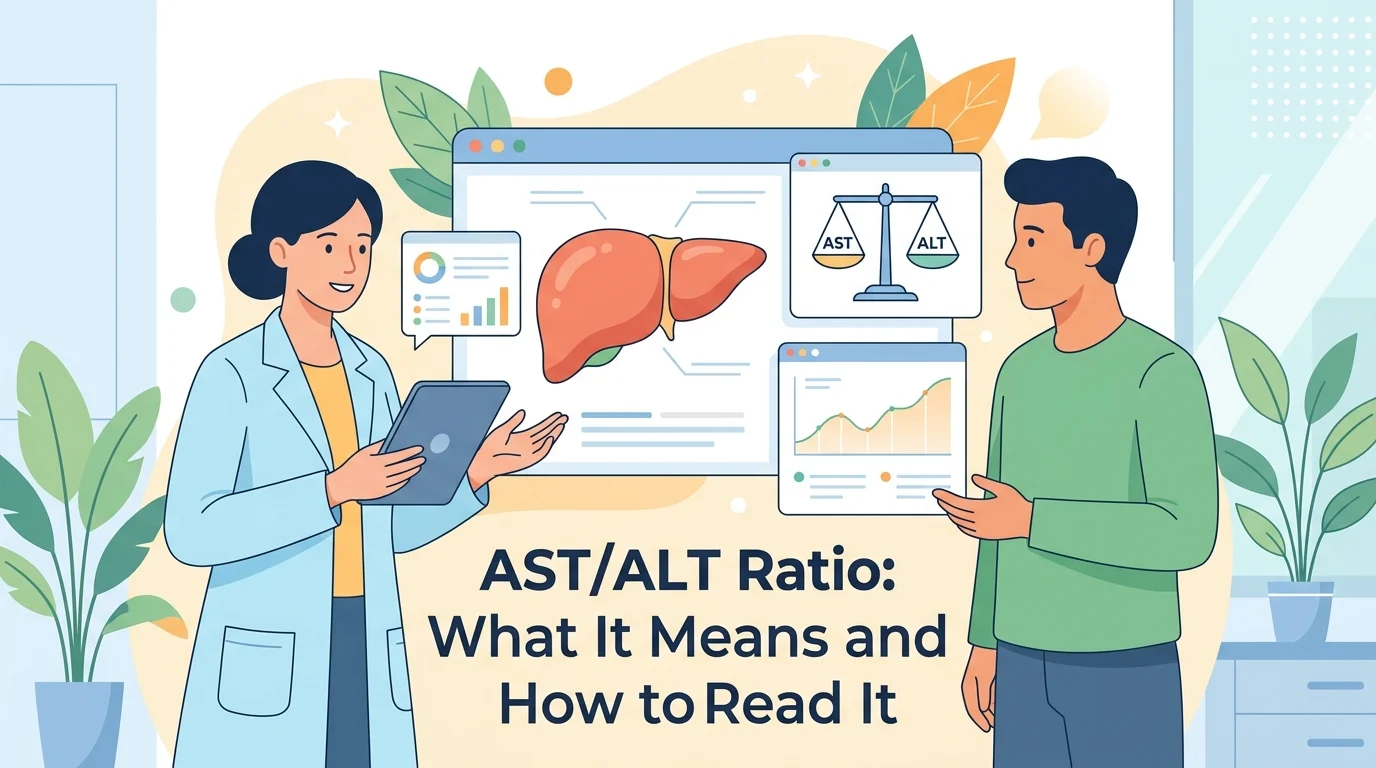
AST/ALT 비율은 두 가지 간 효소인 아스파르테이트 아미노전달효소(AST)와 알라닌 아미노전달효소(ALT)를 비교하여, 각각의 수치만으로는 알 수 없는 정보를 제공합니다. 이 비율을 처음 설명한 연구자의 이름을 따서 '드 리티스 비율'이라고도 하며, 단순히 AST를 ALT로 나눈 값입니다. 이 패턴은 간 손상의 원인을 추정하는 데 도움이 됩니다. 효소 중 하나 이상이 이미 상승한 경우에 가장 유용하며, 항상 개별 수치 및 나머지 간 기능 검사 결과와 함께 해석해야 합니다. 이 글에서는 비율을 계산하는 방법, 높거나 낮은 결과가 일반적으로 무엇을 의미하는지, 그리고 이 검사의 한계는 무엇인지 알아봅니다.
AST/ALT 비율이란 무엇인가요?
AST와 ALT는 간세포가 손상될 때 혈액으로 방출되는 효소입니다. ALT는 주로 간 안에 존재하기 때문에 간에 비교적 특이적인 반면, AST는 근육, 심장, 적혈구에서도 발견됩니다. 두 효소는 질환에 따라 서로 다른 속도로 누출되기 때문에, 두 효소의 비율은 기저 질환 과정에 대한 정보를 담고 있습니다. 각 효소에 대해 개별적으로 이해하려면 다음 가이드를 참고하세요: AST 정상 범위 및 ALT 수치 높음에 대한 가이드도 함께 확인하세요. 비율은 이 수치들을 보완하는 지표이지, 대체하는 것이 아닙니다.
AST/ALT 비율 계산 및 해석 방법
계산 방법은 간단합니다. AST 수치를 ALT 수치로 나누면 되며, 두 값 모두 같은 단위(U/L)를 사용해야 합니다. 예를 들어 AST가 60이고 ALT가 30이면 비율은 2.0이 됩니다. 건강한 사람의 경우 비율은 보통 1보다 약간 낮으며, 흔히 0.8 정도로 알려져 있습니다. 아래 표는 임상에서 참고하는 패턴을 보여주지만, 진단이 아닌 참고 지표로만 활용하세요.
| AST/ALT 비율 | 주로 시사하는 바 |
|---|---|
| 1 미만 (약 0.8) | 지방간(MASLD) 또는 초기 만성 바이러스성 간염 |
| 약 1 | 비특이적; 다른 간 검사 결과와 함께 해석 필요 |
| 1 초과 | 진행성 섬유화 또는 간경변으로의 진행 가능성 |
| 2 이상 | 특히 GGT가 높을 때 알코올성 간질환 강력 시사 |
온라인 AST/ALT 비율 계산기도 동일한 나눗셈을 수행하므로, 검사 결과지를 보고 직접 확인할 수 있습니다. 핵심 원칙은 적어도 하나의 효소 수치가 상승했을 때만 비율이 의미 있다는 것입니다. 두 수치가 모두 정상 하한 범위에 있을 때 나눗셈을 하면 걱정스러워 보이는 값이 나올 수 있지만, 실제로는 큰 의미가 없습니다.
AST/ALT 비율이 높으면 어떤 의미인가요?
비율이 2 이상이면 알코올성 간질환의 전형적인 징후입니다. 이 패턴에서는 ALT에 비해 AST가 불균형적으로 상승하는데, 이는 부분적으로 과도한 음주가 ALT 활성에 필요한 비타민(B6)을 고갈시키기 때문입니다. GGT 효소도 함께 높을 때 이 소견은 더욱 신뢰할 수 있습니다. 알코올성 간질환 연구에 따르면 대다수의 경우 비율이 1을 초과하며, 진행된 경우에는 대부분 2를 초과합니다.
만성 간질환이 있는 사람에서 비율이 1을 넘어 상승하면 진행성 섬유화로의 전환을 나타낼 수도 있습니다. 만성 B형 또는 C형 간염에서는 초기에 비율이 보통 1 미만이다가 간경변으로 진행될수록 1을 초과하는 경향이 있습니다. AST는 근육에도 존재하기 때문에, 비율이 높은 경우 간이 아닌 근육 손상을 반영하는 경우도 있습니다. 이것이 비율을 단독으로 해석하지 않는 이유 중 하나입니다. ALT도 함께 상승해 있다면, ALT 수치 높음 에서 더 다양한 원인을 확인하실 수 있습니다.
AST/ALT 비율이 낮으면 어떤 의미인가요?
1 미만의 비율은 현재 대부분의 지방간을 가리키는 명칭인 대사 기능 장애 관련 지방성 간질환(MASLD)에서 흔히 나타나는 양상으로, 이 경우 ALT가 AST보다 높게 나오는 경향이 있습니다. 만성 바이러스성 간염 초기에도 흔히 관찰됩니다. 낮은 비율은 일반적으로 높은 비율보다 안심할 수 있는 소견이지만, 특히 과체중이나 당뇨병 같은 대사 위험 인자와 함께 나타날 경우 이해할 필요가 있는 간 관련 문제를 시사합니다.
AST와 ALT가 정상이라면 이 비율이 의미가 있나요?
일상적인 임상에서 이 비율은 적어도 하나의 효소 수치가 상승했을 때만 해석합니다. 따라서 두 수치가 모두 정상인 상태에서 나온 두드러진 비율은 과도하게 해석하지 않는 것이 일반적입니다. 다만, 대규모 인구 연구에서 정상 범위 내에서도 비율이 상대적으로 높은 사람들이 장기적으로 다소 좋지 않은 예후를 보이는 경향이 있다는 결과가 나오고 있으며, 이는 우려의 이유가 아니라 현재 활발히 연구 중인 분야입니다. 실질적인 핵심은 AST 또는 ALT가 실제로 상승했는지를 먼저 확인하고, 경계선상의 양상이 있다면 전체적인 검사 결과와 함께 담당 의사와 상담하는 것입니다. 간 기능 검사.
최신 과학적 발전
최근 연구들은 De Ritis 비율의 적용 범위를 간을 넘어 더 넓은 위험 지표로 확장하고 있습니다. 쉽게 풀어 설명하면 다음과 같습니다.
2022년에 발표된 한 리뷰는 AST/ALT 비율 상승과 심혈관 질환의 연관성에 관한 근거들을 종합했습니다. 이 연구에 따르면 비율이 높을수록 장기적인 심장 질환 위험 및 사망 위험이 높아지며, 표준 위험 인자만으로는 충분히 포착되지 않는 기저 대사 문제를 반영할 수 있다고 합니다. 쉽게 말해, 이 비율은 심장대사 부담의 초기 간접 신호일 수 있습니다. 만성 신장 질환을 가진 미국 성인 2,700명 이상을 대상으로 한 2025년 연구도 비슷한 결론에 도달했습니다. 비율이 가장 높은 그룹은 가장 낮은 그룹에 비해 심혈관 원인을 포함한 사망 위험이 의미 있게 높았습니다. 2024년 임상 리뷰는 이러한 내용을 종합하여, 이 비율이 간, 심장, 근육 질환에 걸쳐 점점 더 예후적 가치를 인정받고 있는 간단하고 저비용의 지표라고 설명하면서도, 표준 참고 범위와 신중한 해석이 여전히 필요하다고 강조했습니다. 이는 계속해서 정교화되고 있는 연구 결과들이며, 이 비율은 독립적인 검사가 아닌 보조적인 단서로 남아 있습니다.
용어 설명
- AST/ALT 비율: 아스파르테이트 아미노전달효소(AST)를 알라닌 아미노전달효소(ALT)로 나눈 값으로, De Ritis 비율이라고도 합니다.
- AST(아스파르테이트 아미노전달효소): 간에서 주로 발견되지만 근육, 심장, 적혈구에도 존재하는 효소입니다.
- ALT(알라닌 아미노전달효소): 간에 더 특이적인 효소로, SGPT라고도 불립니다.
- De Ritis 비율: AST/ALT 비율의 역사적 명칭.
- GGT: 감마-글루타밀 전이효소(gamma-glutamyl transferase), 알코올 관련 간 손상을 확인하는 데 도움을 주는 효소.
- MASLD: 대사 기능 이상 관련 지방간 질환(metabolic dysfunction-associated steatotic liver disease), 현재 대부분의 지방간을 가리키는 공식 명칭.
- 간경변증(Cirrhosis): 간에 심각한 흉터 조직이 형성된 말기 상태.
자주 묻는 질문
AST/ALT 비율의 정상 범위는 얼마인가요? 건강한 사람의 경우 보통 1보다 약간 낮으며, 흔히 0.8 정도입니다. 이 비율은 두 효소 중 하나 이상이 상승했을 때 가장 중요한 의미를 가집니다.
AST/ALT 비율이 2 이상이면 무엇을 의미하나요? 특히 GGT 효소도 높을 때, 알코올 관련 간 질환을 강하게 시사합니다. 담당 의사 및 나머지 간 기능 검사 결과와 함께 확인해야 합니다.
비율이 1 미만이면 무엇을 의미하나요? ALT가 AST보다 높은 경향이 있는 지방간(MASLD) 및 초기 만성 바이러스성 간염의 전형적인 패턴입니다.
AST/ALT 비율은 어떻게 계산하나요? 같은 단위를 사용하여 AST 값을 ALT 값으로 나누면 됩니다. 예를 들어 AST가 48이고 ALT가 32이면 비율은 1.5가 됩니다.
간경변증에서 AST가 ALT보다 높은 이유는 무엇인가요? 흉터 조직이 진행될수록 간의 AST 제거 능력이 떨어지고 ALT 생성이 감소할 수 있어, 효소 수치 자체가 약간만 상승해 있어도 비율이 1을 초과하는 경우가 많습니다.
효소 수치가 정상이면 비율이 의미가 있나요? 임상적 판단에 있어서는 대부분 그렇지 않습니다. 두 수치가 모두 정상 범위 내에 있을 때 계산된 비율을 과도하게 해석해서는 안 되지만, 연구에 따르면 장기적으로 매우 미묘한 연관성이 있을 수 있습니다.
추가 읽을거리
출처
- Lala V, Zubair M, Minter DA. Liver Function Tests. StatPearls, NIH National Library of Medicine, 2023. https://www.ncbi.nlm.nih.gov/books/NBK482489/
- Cleveland Clinic. Alanine Transaminase (ALT) Blood Test. https://my.clevelandclinic.org/health/diagnostics/22028-alanine-transaminase-alt
- MedlinePlus, 미국 국립의학도서관(NIH). ALT 혈액 검사. https://medlineplus.gov/lab-tests/alt-blood-test/
- Ndrepepa G. De Ritis ratio and cardiovascular disease: evidence and underlying mechanisms. J Lab Precis Med, 2022. https://consensus.app/papers/details/e0f2d68b37d551fd9070630fc5ee6d38/
- Shaikh S, et al. Navigating Disease Management: A Comprehensive Review of the De Ritis Ratio in Clinical Medicine. Cureus, 2024. https://consensus.app/papers/details/74678c2339605ef998197abce7df99e6/
- Li Q, et al. Association between De-Ritis ratio (AST/ALT) and mortality in patients with chronic kidney disease. Scientific Reports, 2025. https://consensus.app/papers/details/5830a108a9d55ecbb12895401dd7fead/
AI DiagMe로 내 검사 결과 이해하기
AST/ALT 비율은 개인의 AST, ALT, GGT, 빌리루빈 수치와 함께 볼 때 가장 정확하게 이해할 수 있습니다. AI DiagMe는 업로드하신 검사 결과지를 분석하여 비율을 포함한 간 수치가 무엇을 의미하는지 알기 쉬운 언어로 설명해 드립니다. 덕분에 담당 의사에게 올바른 질문을 할 수 있습니다. AI DiagMe는 검사 결과를 이해하는 데 도움을 드리는 서비스이며, 질병을 진단하거나 의료 서비스를 대체하지 않습니다.