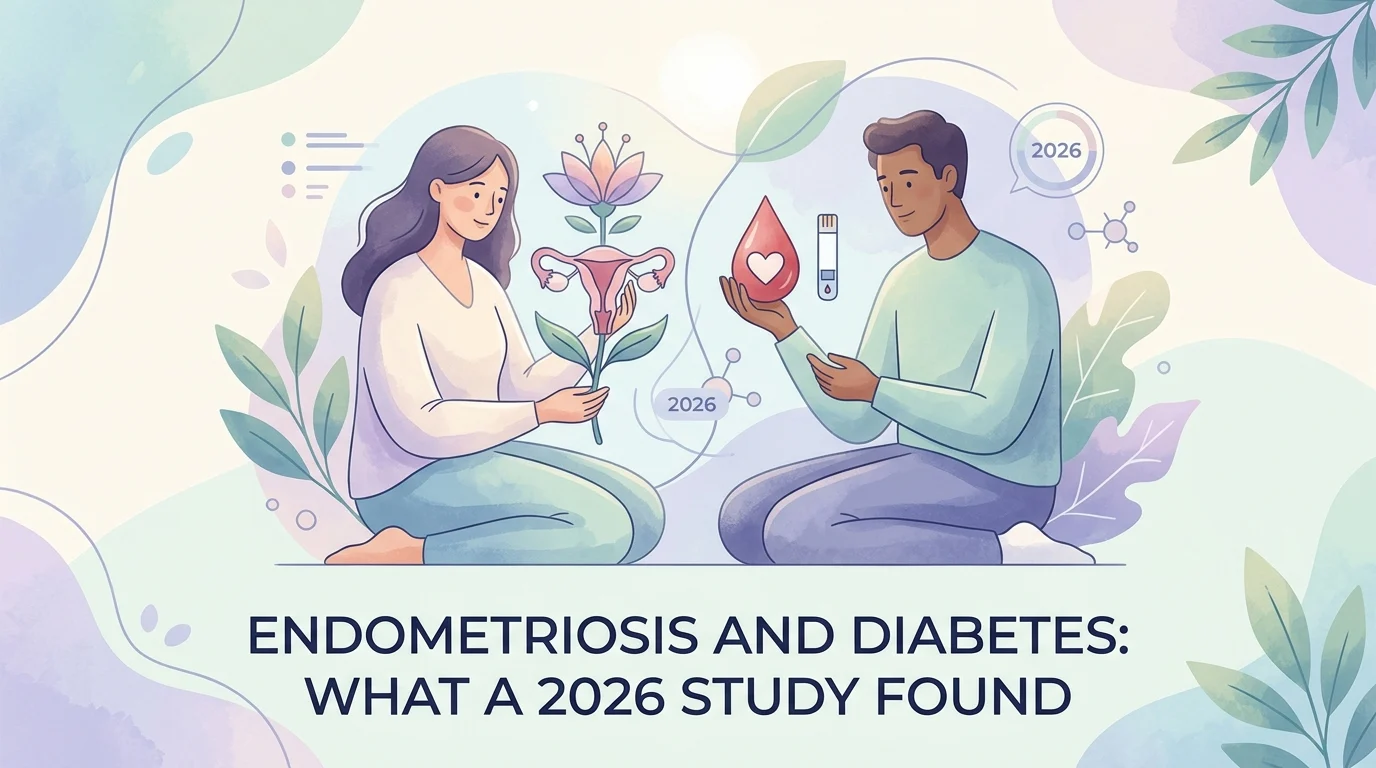
Mahdollinen yhteys endometrioosin ja diabeteksen välillä nousi uudelleen otsikoihin 14. elokuuta 2026, kun laaja yhdysvaltalainen kohorttitutkimus raportoi, että endometrioosia sairastavilla naisilla oli 46 % suurempi riski sairastua tyypin 2 diabetekseen. Diabetologia-lehdessä julkaistu tutkimus seurasi lähes 3 miljoonaa naista Utahissa 25 vuoden ajan. Se ei todista, että toinen sairaus aiheuttaa toisen, ja aiempi eurooppalainen tutkimus ei löytänyt tällaista yhteyttä lainkaan. Se herättää kuitenkin käytännöllisen kysymyksen kaikille, jotka elävät tämän sairauden kanssa: mitkä verikokeet kannattaa pitää silmällä? Tässä artikkelissa opit, mitä tutkimus todella mittasi, miksi näyttö on edelleen ristiriitaista ja mitä merkkiaineita lääkärit käyttävät aineenvaihdunnan terveyden seurantaan ajan mittaan.
Mitä uusi tutkimus raportoi
George Masonin yliopiston ja Utahin yliopiston tutkijat kokosivat väestöpohjaisen kohortin, johon kuului noin 2,9 miljoonaa syntymässä naiseksi määriteltyä henkilöä Utah Population Databasesta vuosien 1996 ja 2021 väliltä. Lähes 100 000 heistä sai endometrioosidigagnoosin keskimäärin lähes 11 vuoden seurannan aikana. Verrattuna naisiin, joilla sairautta ei ollut, heillä oli 46 % suurempi todennäköisyys saada myöhemmin tyypin 2 diabetesdiagnoosi.
Kolme yksityiskohtaa tekee löydöksestä mielenkiintoisemman kuin pelkkä otsikkoluku:
- Yhteys oli voimakkain lantion ulkopuolella sijaitsevassa endometrioosissa, jossa riski oli noin kaksi ja puoli kertaa suurempi.
- Se oli selvempi ennen vaihdevuosia kuin niiden jälkeen.
- Se oli selvempi naisilla, joiden painoindeksi pysyi alle 30:n – ryhmässä, jota ei yleensä pidetä suuririskisenä diabeteksen suhteen.
Tutkijat korostavat selvästi, että kyseessä on yhteys eikä osoitettu syy-seuraussuhde. He nostavat esiin myös muistamisen arvoisen rajoituksen: naiset, joita seurataan tiiviisti yhden sairauden vuoksi, testataan usein myös muiden sairauksien osalta, mikä voi suurentaa näennäistä yhteyttä.
Miksi näyttö on edelleen ristiriitaista
Tässä kohtaa huolellinen lukeminen on tärkeää. Ranskalainen prospektiivinen tutkimus, lähes 99 000 naisen E3N-kohortti, esitti saman kysymyksen eikä löytänyt lisääntynyttä tyypin 2 diabetesriskiä naisilla, joilla endometrioosi oli kirurgisesti vahvistettu. Kaksi suurta tutkimusta, kaksi erilaista vastausta.
Todennäköisin selitys on menetelmällinen. Vuoden 2026 tutkimuksessa endometrioosi jaettiin kliinisiin alatyyppeihin sen sijaan, että sitä olisi käsitelty yhtenä kokonaisuutena. Aiemmissa tutkimuksissa kaikki muodot yhdistettiin, mikä voi heikentää signaalia, joka esiintyy vain tietyissä alaryhmissä. Muut tutkimusryhmät ovat päätyneet samankaltaisiin tuloksiin ja raportoineet suuremmasta metabolisen oireyhtymän todennäköisyydestä sekä matalammasta HDL-kolesterolista naisilla, joilla on tämä sairaus. Kokonaisuutena kuva viittaa mahdolliseen, mutta vahvistamattomaan metaboliseen signaaliin — ei vakiintuneeseen totuuteen eikä syyhyn huoleen.
Mitä tulehduksella on tekemistä verensokerin kanssa
Endometrioosi on krooninen tulehduksellinen sairaus. Vuosia jatkuva tulehdus voi heikentää solujen kykyä reagoida insuliiniin, joka on hormoni, joka siirtää glukoosin pois verenkierrosta. Kun solut vastustavat insuliinia, haima kompensoi tuottamalla sitä enemmän. Verensokeri voi siksi näyttää normaalilta pitkään, samalla kun insuliinitasot nousevat huomaamatta – siksi yksittäinen hyvä glukoosiarvo ei aina kerro koko totuutta. Oheisartikkelimme selittää insuliiniresistenssiä normaalipainoisilla henkilöillä.
Tulehdusta voidaan myös mitata suoraan. Lääkärit tilaavat joskus C-reaktiivinen proteiini -testi, vaikka kohonnut tulos voi johtua monesta syystä eikä viittaa yksinään mihinkään tiettyyn sairauteen.
Mitkä verikoetestit seuraavat aineenvaihdunnan terveyttä
Mikään alla olevista testeistä ei diagnosoi endometrioosia, eikä mikään niistä ole sille spesifinen. Ne ovat vakiomarkkereita, joita lääkäri käyttää arvioidakseen, onko glukoosiaineenvaihdunta muuttumassa. Taulukossa esitetään, mitä kukin mittaa, sekä CDC:n julkaisemat viitearvot Yhdysvaltojen aikuisille.
| Testata | Mitä se mittaa | CDC:n viitearvot |
|---|---|---|
| Paastoverensokeri | Glukoosi yön yli kestäneen paaston jälkeen | Normaali 99 mg/dl tai alle; prediabetes 100–125; diabetes 126 tai yli |
| A1C | Keskimääräinen verensokeri viimeisten 2–3 kuukauden aikana | Normaali alle 5,7 %; prediabetes 5,7–6,4 %; diabetes 6,5 % tai yli |
| Glukoosirasituskoe | Glukoosi 2 tuntia sokerisen juoman jälkeen | Normaali 140 mg/dl tai alle; prediabetes 140–199; diabetes 200 tai yli |
| Paastoinsuliini ja C-peptidi | Kuinka paljon insuliinia haima tuottaa | Ei yhtä kansallista raja-arvoa; tulkitaan aina yhdessä glukoosin kanssa |
| Lipidipaneeli | Kolesteroli ja triglyseridit | Tulkitaan yhdessä glukoosin kanssa kokonaismetabolisen riskin arvioimiseksi |
Kullakin näistä on omat tulkintasääntönsä. Oppaamme käsittelevät glukoosin viitearvot ja mitä tulokset tarkoittavat, HbA1c-muunnostaulukko ja mitä C-peptidiarvo kertoo insuliinista. Laajemman kuvan saamiseksi katso diabeteksen verikoepaneeli, lipidipaneeli ja laajan aineenvaihduntapaneelin.
Milloin ottaa asia puheeksi lääkärin kanssa
Vuoden 2026 löydökset eivät luo uutta seulontasääntöä, eikä mikään terveysviranomainen tällä hetkellä suosittele ylimääräistä diabetestutkimusta pelkän endometrioosin perusteella. Ne tarjoavat kuitenkin hyvän syyn ottaa asia puheeksi. Voi olla aiheellista mainita se lääkärille, jos sinulla on endometrioosi ja jokin seuraavista pätee sinuun:
- Sinulle ei ole koskaan aikuisena tehty paastoglukoosikoetta tai HbA1c-testiä.
- Aiempi tulos oli prediabetesalueella, eikä sitä ole koskaan tarkistettu uudelleen.
- Sinulla oli raskausdiabetes jonkin raskauden aikana.
- Vanhemmallasi, sisaruksellasi tai lapsellasi on tyypin 2 diabetes.
- Huomaat lisääntynyttä janontunnetta, tiheämpää virtsaamistarvetta, selittämätöntä väsymystä tai hitaasti parantuvia haavoja.
Hormonaalinen yhteys on myös tärkeä, sillä estrogeeni vaikuttaa sekä endometrioosiin että verensokerin säätelyyn. Artikkeleissamme käsitellään naisten hormonipaneelia ja miten menopaussi muuttaa verensokeria. Kattava opas aiheesta endometrioosin oireet, diagnoosi ja hoito on paras lähtökohta itse sairauteen tutustumiseen.
Uusimmat tieteelliset edistysaskeleet
Tässä on tiivistetysti se, mitä tuore tutkimus lisää aiheeseen.
Elokuussa 2026 julkaistu Diabetologia-tutkimus on tähän mennessä laajin laatuaan. Sen keskeinen löydös: endometrioosia sairastavilla naisilla todettiin tyypin 2 diabetes useammin kuin naisilla, joilla sitä ei ole, ja ero oli suurin ryhmissä, joita pidetään yleensä pieninä riskiryhminä. Mitä tämä tarkoittaa sinulle: jos sinulla on endometrioosi, normaali paino ei automaattisesti tarkoita, ettei verensokeria kannata seurata. Tulos kaipaa vielä vahvistusta muissa väestöryhmissä.
Ranskalainen E3N-kohorttitutkimus – joukko naisia, joita seurattiin useiden vuosien ajan – päätyi päinvastaiseen johtopäätökseen eikä löytänyt lisääntynyttä riskiä. Mitä tämä tarkoittaa sinulle: tieteellinen näyttö on aidosti ristiriitainen, ja mikä tahansa artikkeli, joka väittää endometrioosin aiheuttavan diabetesta, menee pidemmälle kuin tutkimusnäyttö antaa myöten.
Kaksi muuta tutkimusta tarkasteli metabolista oireyhtymää, johon kuuluu kohonnut verensokeri, kohonneet triglyseridit ja matala HDL-kolesteroli. Molemmissa se todettiin useammin endometrioosia sairastavilla naisilla, ja yhdessä tutkimuksessa matala HDL oli noin kaksi kertaa yleisempää. Mitä tämä tarkoittaa sinulle: jos lääkärisi määrää lipidipaneelin glukoositestin ohella, se on järkevä yhdistelmä eikä suinkaan ylireagointia.
Mikään näistä tutkimuksista ei muuta endometrioosin hoitoa, eikä mikään niistä kuvaa verikoetta, jolla endometrioosi voitaisiin todeta. Ne tukevat yksinkertaisesti aineenvaihduntamarkkereiden seurantaa ajan mittaan.
Sanasto
| Termi | Määritelmä |
|---|---|
| Endometrioosi | Tila, jossa kohdun limakalvoa muistuttava kudos kasvaa kohdun ulkopuolella aiheuttaen usein kipua ja vaikuttaen joskus hedelmällisyyteen. |
| Kohorttitutkimus | Tutkimus, joka seuraa tiettyä ihmisryhmää pitkän ajan kuluessa ja selvittää, keille kehittyy jokin tietty sairaus. Se voi osoittaa yhteyksiä, mutta ei todista syy-seuraussuhdetta. |
| Insuliiniresistenssi | Tila, jossa solut reagoivat insuliiniin heikosti, jolloin haiman täytyy tuottaa sitä enemmän pitääkseen verensokerin normaalilla tasolla. |
| Prediabetes | Verensokeri on normaalia korkeampi, mutta ei vielä ylitä diabeteksen raja-arvoa. Tila on usein palautuva ruokavalion ja liikunnan muutoksilla. |
| HbA1c (A1C) | Glykoitunut hemoglobiini, verikokeen arvo, joka kuvastaa verensokerin keskimääräistä tasoa noin kolmen edellisen kuukauden ajalta. |
| Metabolinen oireyhtymä | Oireyhtymä, johon kuuluu kohonnut verensokeri, kohonneet triglyseridit, matala HDL-kolesteroli, korkea verenpaine ja suurentunut vyötärönympärys. |
| HDL-kolesteroli | Usein kutsutaan hyväksi kolesteroliksi – se auttaa kuljettamaan kolesterolia pois valtimoista. Matala HDL-taso on yhteydessä suurempaan sydän- ja verisuonitautiriskiin. |
| Premenopausaalinen | Kuvaa vuosia ennen vaihdevuosia, jolloin kuukautiskierto ja munasarjojen hormonituotanto ovat vielä käynnissä. |
Usein kysytyt kysymykset
Aiheuttaako endometrioosi tyypin 2 diabeteksen?
Yksikään tutkimus ei ole osoittanut näin. Vuoden 2026 tutkimus havaitsi, että nämä kaksi esiintyvät yhdessä odotettua useammin – kyse on siis yhteydestä, ei syy-seuraussuhteesta. Syy-seuraussuhteen osoittaminen vaatisi erilaisia tutkimusasetelmia, ja laaja ranskalainen kohorttitutkimus ei löytänyt yhteyttä lainkaan. Rehellinen yhteenveto on, että mahdollista yhteyttä tutkitaan edelleen eikä sitä ole todistettu.
Pitäisikö minun pyytää diabetestestiä, jos minulla on endometrioosi?
Virallista suositusta diabeteksen seulontaan endometrioosin vuoksi ei ole. Siitä huolimatta paastoglukoosin tai HbA1c-testin teettäminen on edullista, helposti saatavilla ja hyödyllistä useimmille aikuisille jossain vaiheessa. Jos sinulla on muita riskitekijöitä tai et ole koskaan käynyt testeissä, on täysin perusteltua ottaa asia puheeksi seuraavalla lääkärikäynnillä.
Voiko verikoe diagnosoida endometrioosin?
Ei tällä hetkellä. Diagnoosi perustuu oireisiin, gynekologiseen tutkimukseen, kuvantamiseen kuten ultraääneen tai magneettikuvaukseen sekä tarvittaessa laparoskopiaan. Verikokeiden arvot voivat tukea liitännäissairauksien arviointia, mutta mikään tavanomainen verikoe ei vahvista eikä sulje pois endometrioosia.
Miksi normaali paino oli tässä tutkimuksessa merkittävä tekijä?
Koska se oli yllättävää. Tyypin 2 diabeteksen riski kasvaa yleensä painoindeksin myötä, joten se, että vahvin signaali ilmeni naisilla, joiden BMI oli alle 30, on vastoin tavanomaista kaavaa. Yhtenä selityksenä on esitetty kroonista tulehdusta, joka vaikuttaa painosta riippumatta – mutta tätä ei ole osoitettu.
Mitä eroa on paastoglukoosilla ja HbA1c-arvolla?
Paastoglukoosi mittaa yhtä hetkeä yön yli kestäneen paaston jälkeen. A1C kuvaa kahden tai kolmen kuukauden keskiarvoa, eikä se vaadi paastoa. Lääkärit käyttävät usein molempia, koska toinen voi olla normaali toisen ollessa poikkeava.
Pienentääkö endometrioosin hoito diabetesriskiä?
Asiasta ei ole näyttöä suuntaan eikä toiseen. Yhdessäkään tutkimuksessa ei ole selvitetty, vaikuttaako endometrioosin hoito aineenvaihdunnan tuloksiin, joten kaikki väitteet tähän suuntaan olisivat spekulaatiota.
Lähteet
- Centers for Disease Control and Prevention — Diabetes Testing, 2024 — cdc.gov
- Office on Women’s Health, US Department of Health and Human Services — Endometriosis, 2025 — womenshealth.gov
- Eunice Kennedy Shriver National Institute of Child Health and Human Development (NICHD) — About Endometriosis — nichd.nih.gov
- Fuzak Nunziato M, Yan B, Schliep KC, et al. — Endometriosis subtypes and risk of type 2 diabetes: the ARCHES retrospective cohort study — Diabetologia, 2026 — doi.org/10.1007/s00125-026-06828-w
- Vaduva P, et al. — Association between endometriosis and risk of type 2 diabetes: results from the prospective E3N cohort — Maturitas, 2023 — consensus.app
- Li BJ, et al. — Association between endometriosis and metabolic syndrome: a cross-sectional study based on NHANES data — Gynecological Endocrinology, 2023 — consensus.app
- Saei Ghare Naz M, et al. — Cardio-metabolic risk profile of women with endometriosis: a population-based study — Endocrinology, Diabetes & Metabolism, 2024 — consensus.app
Lisälukemista
- Verikokeen tulosten lukeminen
- Verikoetulokset selitetty – viitearvot ymmärrettävästi
- Diabeteksen oireet, syyt ja hoito
- Matalan HDL-kolesterolin syyt ja riskit
- Mitä verkkopohjainen diabetesriskitesti oikeasti kertoo
Ymmärrä laboratoriotuloksiasi tekoälyn DiagMen avulla
Endometrioosin kanssa eläminen tarkoittaa usein vuosien varrella kertynyttä joukkoa laboratoriotuloksia – ilman, että aina tietää, mihin arvoihin kannattaa kiinnittää huomiota. AI DiagMe lukee laboratorioraporttisi ja selittää sen selkokielellä, mukaan lukien sellaiset arvot kuin paastoglukoosi, A1C, insuliini ja lipidiprofiili. Se auttaa sinua ymmärtämään, mitä olet katsomassa, ja valmistautumaan paremmin lääkärikäyntiäsi varten. Se ei tee diagnoosia eikä korvaa lääkäriäsi.
Tulkitse tuloksesi muutamassa minuutissa