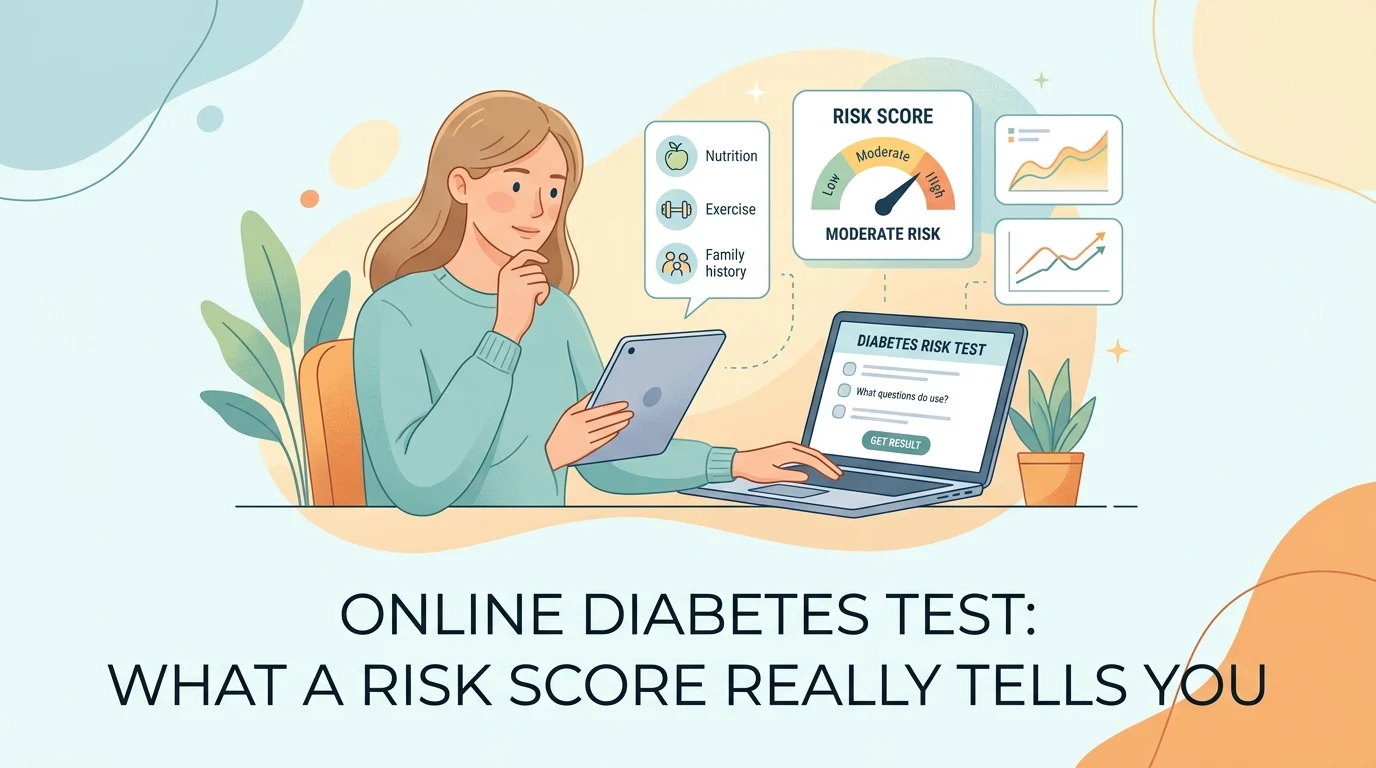
Online-diabetestesti, joka perustuu seitsemään kotona mitattavaan arvoon, herätti laajaa huomiota heinäkuun 2026 lopulla, kun tanskalaistutkijat julkaisivat seulontatyökalun, joka ei vaadi neulaa eikä laboratoriokäyntiä. MEDWACS-niminen malli kehitettiin Tanskan teknillisessä yliopistossa, ja se julkaistiin Journal of Clinical Epidemiology -lehdessä. Yllättävin mittaus on reiden pituus. Uutuuden taustalla on hyvin käytännöllinen ongelma: tyypin 2 diabetes on helppo diagnosoida, kun henkilö ylipäätään hakeutuu testattavaksi – mutta suuri osa ihmisistä ei koskaan tule ajatelleeksi pyytää testiä. Tässä artikkelissa kerrotaan, mitä uusi työkalu mittaa, miksi reiden pituus kertoo jotain verensokerista, missä kohtaa riskiarvio loppuu ja laboratoriodiagnoosi alkaa, sekä mitä tehdä, jos kyselylomake kertoo riskisi olevan korkea.
Mitä online-diabetestesti oikeasti mittaa
Tutkimusryhmä lähti liikkeelle kolmen vuosikymmenen terveystiedoista, jotka on kerätty Yhdysvaltain kansallisessa ravitsemus- ja terveystutkimuksessa (NHANES), ja seuloi lähes 3 700 muuttujaa. Seitsemän selvisi. Kaikki voidaan mitata kotona mittanauhalla, kylpyhuoneen vaa'alla ja tavallisella verenpainemittarilla.
- Ikä
- Seksi
- Painoindeksi
- Vyötärönympärys
- Olkavarren ympärys
- Reiden pituus
- Systolinen verenpaine
Huomaa, mitä puuttuu: ei verinäytettä, ei paastoa, ei ajanvarausta. Siinä on koko idea. Kuten työkalun päätutkija totesi, tyypin 2 diabetes on helppo diagnosoida verikokeen avulla – mutta jos et epäile sairastavasi sitä, et koskaan mene lääkäriin ottamaan koetta. Työkalu validoitiin erillisillä aineistoilla Yhdysvalloista ja Etelä-Koreasta, joissa se suoriutui suunnilleen yhtä hyvin kuin kliinisessä käytössä jo olevat riskikyselyt. Sitä ei ole vielä testattu tanskalaisella väestöllä.
Miksi reiden pituus päätyi malliin
Reisimittaus yllätti tutkijat itsensäkin, ja sille on kaksi uskottavaa selitystä. Ensimmäinen liittyy kehitykseen: reisiluun pituus heijastaa ravitsemusta ensimmäisten elinvuosien aikana, ja heikko varhainen ravitsemus hidastaa luuston kasvua hieman samalla kun se nostaa diabetesriskiä vuosikymmeniä myöhemmin. Toinen selitys on mekaaninen. Reisissä sijaitsee kehon suurin lihasryhmä, ja lihakset ovat se paikka, johon suurin osa verenkierrossa kiertävästä sokerista imeytyy aterian jälkeen. Vähäisempi lihasmassa jaloissa tarkoittaa pienempää kykyä poistaa sokeria verenkierrosta – tämä on yksi insuliiniresistenssin taustalla olevista mekanismeista.
Kyse on yhteydestä, ei syy-seuraussuhteesta. Lyhyt reisiliuu ei tee kenestäkään diabeetikkoa. Se vain tiivistää yhteen mittanauhan lukemaan useita asioita, joiden selvittämiseen tarvittaisiin muuten pitkä kyselylomake. Lukijat, jotka haluavat perehtyä taustalla olevaan fysiologiaan, voivat tutustua oppaaseemme, joka käsittelee insuliinin verikoetta ja mitä paastoarvot tarkoittavat.
Riskipisteet eivät ole diagnoosi
Tämä on tärkein kohta, ja juuri tässä kuluttajien sekaannus yleensä alkaa. Kyselylomake jakaa ihmiset ryhmiin “kannattaa testata nyt” ja “ei todennäköisesti vielä”. Laboratoriotutkimus kertoo, missä verensokerisi todella on. Nämä kaksi vastaavat eri kysymyksiin.
| Verkkopohjainen riskipisteytyslaskuri | Laboratorion verikoe |
|---|---|
| Arvioi todennäköisyyden kehon mittojen ja historian perusteella | Mittaa glukoosin tai glykoituneen hemoglobiinin suoraan |
| Ilmainen, välitön, toistettavissa kotona | Vaatii verinäytteen ja akkreditoidun laboratorion |
| Ei voi vahvistaa eikä sulkea pois diabetesta | Vahvistaa prediabeteksen tai diabeteksen määriteltyjen raja-arvojen perusteella |
| Hyödyllinen päätettäessä, kannattaako varata aika testiin | Hyödyllinen päätettäessä, mitä tehdään seuraavaksi kliinisesti |
Raja-arvot ovat kiinteät ja julkisesti saatavilla. CDC:n mukaan HbA1c alle 5,7 % on normaali, 5,7–6,4 % viittaa prediabetekseen ja 6,5 % tai enemmän viittaa diabetekseen. NIDDK lisää, että paastoplasmaglukoosiarvot 100–125 mg/dL ja kahden tunnin glukoosirasituskokeen arvo 140–199 mg/dL kuuluvat molemmat prediabeteksen alueelle. Mikään kotikysely ei tuota lukua näillä asteikoilla. Jos sinulla on tulokset käsissäsi, artikkelimme selittää paastoverensokeriarvot ja niiden tulkinta, ja aiheeseen liittyvä artikkeli käsittelee normaalit glukoositasot ja mitä poikkeavat tulokset tarkoittavat.
Uusimmat tieteelliset edistysaskeleet
Ei-invasiivinen riskipisteytysmenetelmä ei ole uusi, ja viimeisten kolmen vuoden aikana on hiljaa selkiytynyt, mitä se voi ja mitä se ei voi tarjota. Tässä on mitä viimeaikaiset tutkimukset kertovat, selkokielellä.
Islannissa vuonna 2023 tehdyssä perusterveydenhuollon tutkimuksessa yhdistettiin laajalti käytetty suomalainen diabetesriskipisteytysmenetelmä (Finnish Diabetes Risk Score) ja HbA1c-mittaus 220 aikuisella. Kyselylomake tunnisti prediabetestapauksia kohtuullisen hyvin, kun sille asetettiin sopiva raja-arvo. Se ei kuitenkaan voinut korvata verikoetta – varsinaiset prediabetestapaukset vahvistettiin vasta HbA1c-tuloksen perusteella. Mitä tämä tarkoittaa sinulle: pisteytysmenetelmä osoittaa suunnan, laboratorio antaa vastauksen.
Kahdessa muussa tutkimuksessa samaa kyselylomaketta testattiin Euroopan ulkopuolella. Vuonna 2023 julkaistussa kenialaisessa kansallisessa tutkimuksessa, johon osallistui hieman yli 4 000 aikuista, menetelmä toimi hyväksyttävästi diagnosoimattoman diabeteksen tunnistamisessa ja osoittautui hyödylliseksi myös ympäristöissä, joissa laboratoriokapasiteetti on rajallinen. Vuoden 2025 analyysi suuresta iranilaisesta seurantakohortista – joukosta ihmisiä, joita seurattiin pidemmän ajan – osoitti samankaltaisen kokonaistarkkuuden, mutta selkeän eron miesten ja naisten välillä. Tutkijat suosittelivat, että riskityökalut räätälöidään sukupuolen mukaan eikä niitä sovelleta kaikille samanlaisina. Mitä tämä tarkoittaa sinulle: nämä työkalut toimivat eri väestöissä, mutta ne eivät ole yhtä tarkkoja kaikille – se on yksi syy lisää siihen, miksi positiivinen tulos pitäisi viedä laboratorioon eikä jättää pelkäksi johtopäätökseksi.
Vuoden 2026 MEDWACS-tutkimus sopii tähän kuvaan pikemminkin kuin kumoaa sen. Sen anti on käytännöllisyys – seitsemän mittausta, ei paastoa, ei klinikalla käyntiä – sekä uusi ennustetekijä, jota ei aiemmin ollut käytetty. Sen tarkkuus asettuu olemassa olevien kyselylomakkeiden rinnalle eikä selvästi niiden yläpuolelle, ja tutkijat toteavat suoraan, että validointi muissa väestöissä on vielä tarpeen. Tämän alan tulokset pysyvät alustavina, kunnes ne toistetaan siinä ihmisryhmässä, joka työkalua käytännössä käyttää.
Milloin pyytää lääkäriltä verikoetta
Korkea pistemäärä verkkolomakkeella on kehotus toimia, ei hätätilanne. Ota tulos mukaasi vastaanotolle ja pyydä verensokerin mittausta, jos jokin seuraavista koskee sinua.
- Olet 45-vuotias tai vanhempi eikä verensokeriasi ole koskaan mitattu
- Olet nuorempi, mutta sinulla on ylipainoa jonkin muun riskitekijän ohella – kuten korkea verenpaine, lähisukulainen jolla on diabetes tai raskausdiabeteksen historia
- Aiempi tulos oli prediabetesalueella eikä sitä ole koskaan tarkistettu uudelleen
- Sinulla on jatkuvaa janontunnetta, tiheää virtsaamistarvetta, selittämätöntä laihtumista, näön sumentumista tai hitaasti parantuvia haavoja
Hakeudu samana päivänä hoitoon, jos sinulla on pahoinvointia ja oksentelua, syvää tai nopeaa hengitystä, hedelmäiseltä tuoksuvaa hengitystä, sekavuutta tai vatsakipua. Nämä voivat viitata diabeettiseen ketoasidoosiin, joka vaatii välitöntä hoitoa. Ennen ajanvarausta kannattaa tarkistaa verikokeen paastoamissäännöt, sillä paastoverensokerin tulos on pätevä vain, jos paasto on pidetty asianmukaisesti. Kun tutkimustulos saapuu, oppaamme selittää miten verikokeiden tuloksia luetaan, ja erillinen artikkeli käsittelee diabeteksen verikokeita, joilla diagnoosi vahvistetaan. Jos lääkärisi haluaa myös selvittää, kuinka kovasti haimasi työskentelee, selitämme HOMA-IR-insuliiniresistenssipistemäärä ja olemme käsitelleet insuliiniresistenssiä normaalipainoisilla henkilöillä.
Sanasto
| Termi | Määritelmä |
|---|---|
| HbA1c (A1C) | Sokerin peittämän hemoglobiinin osuus, joka kuvastaa keskimääräistä verensokeria noin kolmen kuukauden ajalta. |
| Paastoverensokeri | Verensokeri mitattuna vähintään kahdeksan tunnin paaston jälkeen; käytetään diabeteksen seulontaan ja diagnosointiin. |
| Prediabetes | Verensokeri, joka on normaalia korkeampi mutta alittaa diabeteksen rajan – usein palautuva tila. |
| Riskipisteet | Luku, joka arvioi jonkin tilan todennäköisyyttä henkilökohtaisten ominaisuuksien perusteella – ei mittaa itse tilaa. |
| Seulonta | Oireettomien henkilöiden tutkiminen, jotta jokin sairaus löydetään aiemmin kuin se muuten ilmenisi. |
| Ulkoinen validointi | Ennustetyökalun testaaminen erillisellä henkilöryhmällä kuin sillä, jota käytettiin sen kehittämiseen. |
| Insuliiniresistenssi | Tila, jossa solut reagoivat heikosti insuliiniin, jolloin elimistön on tuotettava sitä enemmän pitääkseen verensokerin kurissa. |
| FINDRISC | Suomalainen diabetesriskipisteytysmittari (Finnish Diabetes Risk Score), lyhyt kyselylomake, jota käytetään laajalti arvioimaan tyypin 2 diabeteksen kymmenen vuoden riskiä. |
Usein kysytyt kysymykset
Voiko verkkopohjainen diabetestesti diagnosoida diabeteksen?
Ei. Jokainen tunnustettu diagnostinen raja-arvo perustuu laboratoriotutkimukseen – HbA1c:hen, paastoplasmaglukoosiin tai oraalisen glukoosirasituskokeeseen. Kyselylomake arvioi, kuinka todennäköisesti sinulla on ongelma; se ei koskaan mittaa verensokeriasi. Korkea pistemäärä on syy järjestää testaus, eikä matala pistemäärä takaa, että glukoosisi on normaali – varsinkaan jos sinulla on oireita.
Kannattaako ilmainen verkkopohjainen diabetestesti tehdä?
Se voi olla hyödyllinen, jos käytät tulosta herätteenä. Validoidut kyselylomakkeet, kuten FINDRISC, ovat ilmaisia, vievät pari minuuttia ja ovat useiden kansallisten terveyselinten tarjoamia. Niiden arvo piilee siinä, että ne tavoittavat ihmiset, jotka eivät muuten harkitsisi testausta. Niiden rajoitus on se, että ne on suunniteltu väestötasolla, joten yksittäiseen tulokseen liittyy todellista epävarmuutta. Vältä työkaluja, jotka pyytävät maksua, lupaavat diagnoosin tai eivät kerro, mihin pistemäärään ne perustuvat.
Kuinka tarkkoja nämä kotidiabetestyökalut ovat?
Riittävän hyvä ihmisten luokitteluun, mutta ei riittävän tarkka yksilölliseen diagnosointiin. Euroopassa, Afrikassa ja Aasiassa tehdyissä tutkimuksissa vakiintuneet riskikyselyt erottavat suuremman riskin henkilöt pienemmän riskin henkilöistä useimmiten oikein, mutta ne jättävät joitakin tapauksia huomaamatta ja merkitsevät riskihenkilöiksi myös sellaisia, joilla ei lopulta ole ongelmia. Tarkkuus vaihtelee myös miesten ja naisten välillä sekä eri väestöryhmissä. Juuri siksi jokainen tämän alan tutkimus päättyy samaan suositukseen: vahvista tulos verikokeella.
Tarkoittaako normaalipaino, että minun ei tarvitse käydä testeissä?
Ei välttämättä. Painoindeksi on vain yksi tekijä monien joukossa, ja verensokeriongelmia esiintyy myös normaalipainoisilla ihmisillä – erityisesti silloin, kun lihasmassa on pieni tai suvussa on vahva diabeteshistoria. Ikä, vyötärönympärys, verenpaine ja sukuhistoria ovat kaikki itsenäisiä riskitekijöitä. Jos useampi niistä koskee sinua, kysy testauksesta riippumatta siitä, mitä vaaka näyttää.
Kuinka usein minun pitäisi käydä seulonnassa, jos tulokseni on normaali?
Tavallinen käytäntö on toistaa glukoositestaus yhden tai kolmen vuoden välein aikuisilla, joilla on riskitekijöitä, ja vuosittain niillä, joiden aiempi tulos osui prediabetesalueelle. Oma testausväli kannattaa sopia lääkärin kanssa, joka tuntee terveyshistoriasi – se riippuu iästä, sukuhistoriasta, painosta, verenpaineesta ja aiemmista tuloksista eikä mistään yksittäisestä luvusta.
Pitääkö minun paastota ennen diabetesseulontatestejä?
Se riippuu testistä. Paastoverensokeri edellyttää vähintään kahdeksan tunnin paastoa, jonka aikana saa juoda vain vettä. HbA1c-testi ei vaadi paastoa lainkaan ja se voidaan ottaa mihin vuorokauden aikaan tahansa – se on yksi syy, miksi sitä käytetään usein seulonnassa. Jos samalla kertaa tilataan useita testejä, kuten rasva-arvot verensokerimarkkereiden ohella, laboratorio saattaa silti pyytää paastoa.
Lähteet
- Centers for Disease Control and Prevention — A1C Test for Diabetes and Prediabetes, 2024 — cdc.gov
- National Institute of Diabetes and Digestive and Kidney Diseases (NIDDK) — Recommended Tests for Identifying Prediabetes — niddk.nih.gov
- Technical University of Denmark — The length of your upper leg could help detect diabetes, July 2026 — lehdistöuutisointi
- Yoo D, Maggiore U, Jolliet O — Enhancing prediabetes and diabetes detection through a machine learning-enabled self-assessment approach — Journal of Clinical Epidemiology, 2026 — PubMed
- Arnardóttir E et al. — Using HbA1c measurements and the Finnish Diabetes Risk Score to identify undiagnosed individuals and those at risk of diabetes in primary care — BMC Public Health, 2023 — täydellinen lähdeviite
- Mugume IB ym. — Suomalaisen diabetesriskipisteytysmenetelmän suorituskyky tunnistamattoman diabeteksen havaitsemisessa 18–69-vuotiailla kenialaisilla — PLOS ONE, 2023 — täydellinen lähdeviite
- Hamedi A ym. — Suomalaisen diabetesriskipisteytysmenetelmän suorituskyky tunnistamattoman tyypin 2 diabeteksen seulonnassa aiemmin diagnosoimattomilla aikuisilla: Kharameh-kohorttitutkimus, Iran — Primary Care Diabetes, 2025 — täydellinen lähdeviite
Lisälukemista
- A1C-muunnostaulukko: muunna A1C-arvosi keskimääräiseksi verensokeriksi
- Diabetes: oireet, syyt, diagnoosi ja hoito
- Kattava aineenvaihduntapaneeli: tulosten tulkinta
- Verikokeen viitearvot: selitetty viitetaulukko
- Paasto ennen verikoetta: säännöt, ajoitus ja mitä saa nauttia
Ymmärrä laboratoriotuloksiasi tekoälyn DiagMen avulla
Kyselylomake voi kertoa, että on aika käydä testeissä. Se ei kuitenkaan kerro, mitä tulokset tarkoittavat, kun ne saapuvat sähköpostiisi. AI DiagMe muuttaa sellaiset arvot kuin paastoverensokeri, pitkäaikainen sokeritasapaino (HbA1c) ja insuliini selkokieliseksi tiedoksi, jotta voit mennä vastaanotolle parempien kysymysten kanssa – ei lisääntyneellä ahdistuksella. Se on suunniteltu auttamaan sinua ymmärtämään tuloksesi, ei diagnosoimaan sinua tai korvaamaan lääkäriäsi.
Tulkitse tuloksesi muutamassa minuutissa