




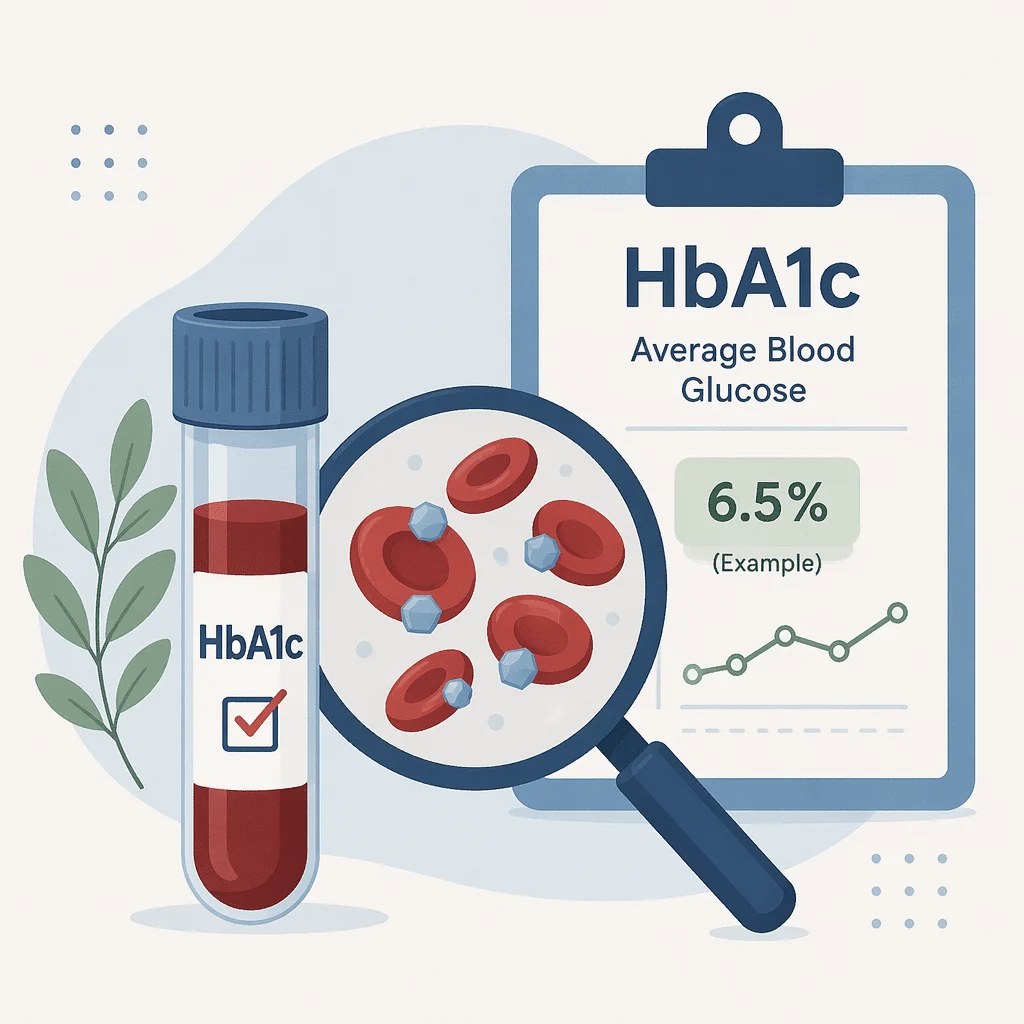
HbA1c-testi mittaa, kuinka suuri osa hemoglobiinistasi on sitoutunut glukoosiin. Se antaa lääkärille kuvan keskimääräisestä verensokeristasi noin kahden tai kolmen kuukauden ajalta. Toisin kuin paastoverensokeri, joka kuvaa yhtä hetkeä, tämä testi heijastaa pidempää kehityssuuntaa. Sitä käytetään sekä diabeteksen ja prediabeteksen diagnosointiin että jo todetun sairauden hoitotasapainon seurantaan. Tässä oppaassa kerrotaan, miten testi toimii, mitä luvut tarkoittavat ja miksi tulokset voivat joskus olla harhaanjohtavia henkilöillä, joilla on tiettyjä veri- tai munuaissairauksia. Lisäksi käsitellään, miten tavoitearvot ovat siirtymässä yksilöllisempään suuntaan – erityisesti iäkkäiden tai heikkokuntoisten potilaiden kohdalla.
Mitä HbA1c-testi oikeastaan mittaa
Punasoluissa on hemoglobiinia, joka on proteiini ja kuljettaa happea ympäri kehoa. Kun glukoosia kiertää verenkierrossa, osa siitä kiinnittyy hemoglobiiniin prosessissa, jota kutsutaan glykosylaatioksi. Tämä kiinnittyminen ei ole elimistön aktiivisesti säätelemä tapahtuma – se tapahtuu vähitellen ja pysyy punasolussa sen koko elinajan, joka on noin kolme kuukautta. Tämän vuoksi glykosyloidun hemoglobiinin osuus kasvaa suhteessa siihen, kuinka paljon glukoosia veressä on ollut.
Laboratorio ilmoittaa tuloksen prosentteina. Arvo 6,0 % tarkoittaa esimerkiksi, että 6 % mitatusta hemoglobiinista on sitoutunut glukoosiin. Joissakin maissa ja laboratorioissa arvo ilmoitetaan myös millimoolina moolia kohden (mmol/mol), mikä on yleisempää Yhdysvaltojen ulkopuolella. Koska punasolut uusiutuvat jatkuvasti, luku on liukuva keskiarvo eikä yksittäinen mittaustulos – ja se painottuu enemmän viimeisimpään 30 päivään kuin kolmen kuukauden takaiseen aikaan.
Miksi lääkäri määrää tämän testin
Lääkärit käyttävät HbA1c-testiä kahteen eri tarkoitukseen. Ensimmäinen on diagnosointi: seulotaan henkilöitä, joilla on diabeteksen riskitekijöitä, kuten ylipaino, vähäinen liikunta tai suvussa esiintyvä diabetes. Toinen on seuranta: jo diagnosoitujen potilaiden verensokeritasapainon seuranta yleensä kolmen tai kuuden kuukauden välein sen arvioimiseksi, toimiiko nykyinen hoito.
Testillä on käytännön etuja verrattuna päivittäisiin verensokerimittauksiin. Se ei vaadi paastoa, joten näyte voidaan ottaa mihin vuorokauden aikaan tahansa. Lisäksi se tasoittaa aterioiden, stressin tai sairauden aiheuttamia luonnollisia verensokerin vaihteluita, tarjoten vakaamman kuvan kuin yksittäinen verensokeriarvo. Tästä syystä siitä on tullut vakiintunut osa rutiiniveritutkimuksia ja keskeinen osa diabeteksen verikoe paneelia.
Miten tulkita HbA1c-tulostasi
Alla oleva taulukko näyttää viitearvot, joita useimmat yhdysvaltalaiset laboratoriot ja ammattijärjestöt käyttävät HbA1c-tulosten tulkitsemiseen. Nämä ovat yleisiä viitearvoja; oma lääkärisi saattaa asettaa eri tavoitearvon terveyshistoriasi perusteella.
| HbA1c-tulos | Kategoria | Arvioitu keskimääräinen glukoosi |
|---|---|---|
| Alle 5.7% | Normaali | Noin 90–115 mg/dl |
| 5.7% - 6.4% | Prediabetes | Noin 117–137 mg/dl |
| 6,5 % tai enemmän | Diabetes | 140 mg/dl tai enemmän |
| 7,0 % (yleinen hoitotavoite) | Hoidossa oleva diabetes | Noin 154 mg/dl |
Yksittäinen tulos kertoo harvoin koko tarinan. Useiden testien tuloksista muodostuva kehityssuunta yhdistettynä paastoverensokeriarvoihin ja oireisiin antaa paljon kattavamman kuvan kuin mikään yksittäinen luku yksinään. Jos olet opettelemassa lukemaan laboratorioraporttia yleisesti, oppaamme aiheesta lue verikokeiden tulokset käy läpi viitearvojen ja merkittyjen arvojen perusteet.
Milloin HbA1c-tulokset voivat olla harhaanjohtavia
HbA1c-testi perustuu oletukseen: punasolujen elinikä on ennustettavissa ja glukoosi sitoutuu hemoglobiiniin tasaisella, vakaalla nopeudella. Useat yleiset tilat rikkovat tämän oletuksen – tämä yksityiskohta puuttuu usein testin yleisistä selityksistä.
Anemia ja verenhukka
Kun punasolut tuhoutuvat normaalia nopeammin tai uusiutuvat tavallista tiheämmin, kuten tapahtuu joissakin anemia-muodoissa, glukoosia ehtii kertyä hemoglobiiniin vähemmän. Tämä voi painaa HbA1c-tuloksen keinotekoisesti alas, jolloin henkilön todellinen keskimääräinen verensokeri aliarvioidaan. Raudanpuutteen on sen sijaan joissakin tapauksissa todettu liittyvän virheellisesti kohonneisiin arvoihin. Tuoreilla verensiirroilla on samankaltainen vääristävä vaikutus, sillä siirrettyjen solujen glykosylaatiohistoria poikkeaa potilaan omista soluista.
Hemoglobinopatiat
Geneettiset tilat, jotka muuttavat hemoglobiinin rakennetta – kuten sirppisoluanemia ja talassemia – voivat häiritä joitakin HbA1c:n mittaamiseen käytettyjä laboratoriomenetelmiä. Tulokset voivat olla virheellisesti korkeat tai matalat riippuen kyseisestä variantista ja laboratorion käyttämästä menetelmästä. Myös henkilöt, joilla on hemoglobiinivariantti mutta ei sairauden oireita – kuten sirppisolupiirre – voivat joskus olla alttiita testausmenetelmän vaikutuksille, joten kaikista tunnetuista hemoglobiinivarianteista kannattaa mainita tutkimuksen määränneelle lääkärille.
Krooninen munuaissairaus
Pitkälle edennyt munuaissairaus lyhentää punasolujen elinikää ja siihen liittyy usein anemia – molemmat heikentävät HbA1c:n luotettavuutta. Munuaistoiminnan heikentyessä HbA1c:n näyttämän arvon ja henkilön todellisen keskimääräisen verensokerin välinen ero kasvaa, minkä vuoksi lääkärit, jotka hoitavat diabetesta merkittävien munuaisten toimintapaneeli -poikkeavuuksien rinnalla, tukeutuvat usein lisäseurantatyökaluihin pelkän HbA1c:n sijaan.
Raskaus
Raskaus nopeuttaa punasolujen uusiutumista ja muuttaa normaalia glukoosiaineenvaihduntaa, mikä voi laskea HbA1c-arvoa suhteessa todelliseen verensokerikuormitukseen – erityisesti toisella ja kolmannella raskauskolmanneksella. Tästä syystä raskausdiabeteksen seulonnassa ja seurannassa käytetään yleensä suoria glukoositestejä eikä pelkästään HbA1c:tä.
Vaihtoehdot silloin, kun HbA1c ei ole luotettava
Kun potilaan sairaushistoriaan kuuluu jokin yllä mainituista tiloista, lääkäreillä on käytettävissään muita menetelmiä. Jatkuva glukoosiseuranta mittaa verensokeria suoraan ja jatkuvasti, ohittaen ne punasoluihin liittyvät oletukset, joihin HbA1c perustuu. Fruktosamiiini heijastaa muiden veriproteiinien kuin hemoglobiinin glykosylaatiota, kattaa lyhyemmän kahden–kolmen viikon ajanjakson eikä ole riippuvainen punasolujen eliniästä; voit lukea lisää oppaastamme aiheesta fruktosamiiini tulokset. Glykosyloitu albumiini on samankaltainen vaihtoehto, jota käytetään yhä enemmän munuaissairauksien tutkimuksessa samoista syistä. Mikään näistä ei korvaa HbA1c:tä yleisessä käytössä, mutta kukin voi täyttää aukon silloin, kun HbA1c:n tiedetään olevan epätarkka tietylle potilaalle.
Yksilölliset tavoitearvot: yksi luku ei sovi kaikille
Kliiniset suositukset ovat siirtyneet pois yhdestä universaalista HbA1c-tavoitteesta. Noin 7 %:n tavoite on edelleen yleinen monille diabetesta sairastaville aikuisille, mutta ammattijärjestöt suosittelevat nykyään nimenomaisesti väljempiä tavoitteita iäkkäille, hauraille, muistisairaille tai lyhyemmän elinajan ennusteen omaaville henkilöille, joilla tiukan hoitotasapainon riskit – erityisesti matalan verensokerin jaksot – voivat ylittää hyödyt.
Tämä muutos heijastaa yksinkertaista kliinistä todellisuutta: intensiivisen verensokerinlaskun hyödyt komplikaatioiden ehkäisyssä näkyvät vasta vuosien kuluttua, kun taas vaarallisen hypoglykemiajakson riski on välitön. Hauraalle 85-vuotiaalle matalan verensokerin laukaisema kaatuminen voi aiheuttaa enemmän haittaa yhden iltapäivän aikana kuin vuosien lievästi kohonnut HbA1c. Nuoremmat, terveemmät potilaat, joilla on pidempi elinajan ennuste, hyötyvät yleensä edelleen tiukemmasta hoidosta, jolla pyritään ehkäisemään pitkäaikaiskomplikaatioita.
Poikkeavaan HbA1c-arvoon liittyvät tilat
Jatkuvasti kohonnut HbA1c viittaa useimmiten heikentyneeseen sokeriaineenvaihduntaan, mutta taustalla oleva syy vaihtelee.
- Tyypin 2 diabetes, johon liittyy insuliiniresistenssi yhdistettynä insuliinintuotannon asteittaiseen heikkenemiseen.
- Tyypin 1 diabetes, autoimmuunisairaus, joka tuhoaa haiman insuliinia tuottavat solut ja alkaa usein nopeammin.
- Raskausdiabetes, jonka laukaisevat raskauden aikaiset hormonaaliset muutokset, jotka heikentävät insuliiniherkkyyttä.
- Metabolinen oireyhtymä, joka on joukko riskitekijöitä – kuten vatsan alueen lihavuus, korkea verenpaine ja poikkeavat kolesteroliarvot – ja edeltää usein varsinaista diabetesdiagnoosia.
- Lääkevaikutukset: erityisesti pitkäaikainen kortikosteroidien käyttö voi nostaa verensokeria ja HbA1c-arvoa riippumatta taustalla olevasta diabeteksesta.
Epätavallisen matala HbA1c, alle noin 4 %, on harvinaisempi löydös ja voi viitata edellä kuvattuihin mittaustarkkuuden ongelmiin pikemminkin kuin poikkeuksellisen hyvään sokeritasapainoon – etenkin jos samaan aikaan esiintyy anemiaa tai muu syy punasolujen normaalia nopeammalle uusiutumiselle.
Milloin mennä lääkäriin
Useimmat HbA1c-tulokset on parasta käydä läpi tavallisella seurantakäynnillä, mutta tietyissä tilanteissa lääkäriin kannattaa hakeutua nopeammin.
- HbA1c-arvosi on noussut tai laskenut yli puoli prosenttiyksikköä edellisestä testistä ilman selvää syytä.
- Tuloksesi on 6,5 % tai enemmän, eikä sinulle ole vielä tehty virallista diabetesdiagnoosia.
- Sinulla on korkea HbA1c yhdistettynä oireisiin, kuten selittämättömään laihtumiseen, liialliseen janoon tai jatkuvaan väsymykseen.
- Olet raskaana tai suunnittelet raskautta, ja sinulla tai lähisukulaisellasi on diabeteshistoria.
- Tiedät tai epäilet, että sinulla on hemoglobiinivariantti, merkittävä anemia tai pitkälle edennyt munuaissairaus, ja haluat tietää, voiko HbA1c-tulokseesi luottaa sellaisenaan.
Uusimmat tieteelliset edistysaskeleet
HbA1c-mittauksen tarkkuutta ja tavoitearvoja koskeva tutkimus kehittyy jatkuvasti, ja useat viimeaikaiset tutkimukset selventävät tarkasti, missä tilanteissa testin rajoitukset käytännössä merkitsevät eniten.
PubMedin mukaan vuoden 2026 brittiläinen tutkimus, jossa seurattiin lähes 180 000 vähintään 65-vuotiasta tyypin 2 diabetesta sairastavaa aikuista, havaitsi kuolemanriskin olevan pienin HbA1c-arvon ollessa noin 6,5–7,4 %, ja riskin kasvavan sekä tätä matalammilla että korkeammilla arvoilla – tulos piti paikkansa kaikilla haurausasteilla (DOI-koodi). Sairaalaan joutumisen riski oli suurin henkilöillä, joiden HbA1c oli alle 6,5 %, ja tämä vaikutus oli voimakkain vaikeasti haurailla henkilöillä, joilla riski oli yli neljä kertaa suurempi kuin vastaavilla potilailla, joilla oli korkeammat arvot. Mitä tämä tarkoittaa sinulle: jos sinä tai perheenjäsenesi on iäkäs ja hauras, “matala” HbA1c ei automaattisesti ole hyvä merkki, ja arvojen aggressiivinen alentaminen voi tuoda enemmän haittaa kuin hyötyä – lääkärisi kanssa yhdessä asetettu yksilöllinen tavoitearvo on tärkeämpi kuin yhden luvun tavoittelu.
PubMedin mukaan vuoden 2025 tutkimus Diabetic Medicine -lehdessä selvitti, parantaisiko siirtyminen fruktosamiinin tai glykoidun albumiinin mittaamiseen tarkkuutta henkilöillä, joilla on HbA1c-arvoon tunnettuja vaikuttavia tiloja, kuten sirppisolupiirre, anemia tai munuaisten vajaatoiminta (DOI-koodi). Tutkijat havaitsivat, että anemia vääristää merkittävästi HbA1c:n ja todellisen keskimääräisen verensokeritason välistä suhdetta aiheuttaen aliarviointia, mutta sirppisoluominaisuus yksinään ei merkittävästi heikentänyt testin tarkkuutta. Mitä tämä tarkoittaa sinulle: kaikki hemoglobiinivariantit eivät aiheuta yhtä suurta tarkkuusriskiä, joten tarkka diagnoosi on tärkeämpi kuin yleinen luokittelu, ja anemiaan kannattaa kiinnittää erityistä huomiota tulosta tulkittaessa.
PubMedin mukaan vuoden 2026 tutkimuksessa, joka koski hemodialyysihoidossa olevia vaiheen 5 kroonista munuaistautia sairastavia henkilöitä, havaittiin, että HbA1c ei ennustanut luotettavasti sydän- ja verisuoniperäisen kuoleman riskiä tässä ryhmässä, kun taas glykoitunut albumiini – uudempi vaihtoehtoinen merkkiaine – osoitti paljon vahvemman ja johdonmukaisemman yhteyden huonoihin hoitotuloksiin (DOI-koodi). Mitä tämä tarkoittaa sinulle: jos hoidat diabetestasi pitkälle edenneen munuaistaudin rinnalla, erityisesti jos olet dialyysihoidossa, kysy hoitotiimiltäsi, antaisiko jokin vaihtoehtoinen merkkiaine HbA1c:n rinnalla tai sijasta tarkemman kuvan verensokerisi hallinnasta.
PubMedin mukaan vuoden 2024 katsaus World Journal of Diabetes -lehdessä tutki syitä siihen, miksi HbA1c:n luotettavuus heikkenee kroonisen munuaistaudin edetessä. Keskeisiksi tekijöiksi tunnistettiin anemia ja punasolujen lyhentynyt elinikä, ja jatkuva glukoosinseuranta nostettiin esiin keinona havaita reaaliaikaisia verensokerimalleja, jotka HbA1c voi tässä potilasryhmässä kokonaan ohittaa (DOI-koodi). Mitä tämä tarkoittaa sinulle: HbA1c:n tarkkuusongelma munuaistaudissa ei ole pieni tekninen yksityiskohta – se on niin hyvin dokumentoitu, että lääkärit rakentavat aktiivisesti vaihtoehtoisia seurantamenetelmiä sen ympärille.
PubMedin mukaan vuoden 2024 tutkimuksessa, joka koski singaporelaisia kotona asuvia ikääntyneitä, havaittiin, että tiukka verensokeritasapaino – määriteltynä vakiintuneiden hauraus-raihnaisuuteen perustuvien ohjeistorajojen mukaan – oli edelleen yleistä haurailla ja esihauraille osallistujilla, vaikka nykyiset suositukset puoltavat löysempiä tavoitearvoja tässä ryhmässä (DOI-koodi). Mitä tämä tarkoittaa sinulle: vaikka ohjeistot suosittelevat löysempää tavoitearvoa hauraille tai iäkkäille potilaille, hoitokäytäntö ei aina pysy perässä heti – kannattaa siis suoraan kysyä lääkäriltäsi, heijastaako nykyinen HbA1c-tavoitteesi kokonaisvaltaista terveydentilaasi eikä pelkästään diabetestasi.
Käytännön vinkkejä HbA1c:n hallintaan
Riippumatta siitä, mihin luokkaan tuloksesi kuuluu, pienet ja johdonmukaiset elämäntapamuutokset laskevat HbA1c-arvoa luotettavammin kuin lyhyet tehoponnistukset. Säännöllinen liikunta – noin 150 minuuttia kohtuullisen rasittavaa liikuntaa viikossa – parantaa kehon kykyä käyttää insuliinia tehokkaasti. Kun vähennät puhdistettua sokeria ja voimakkaasti prosessoituja hiilihydraatteja ja suosit kasviksia, vähärasvaista proteiinia ja täysjyväviljaa, verensokerisi pysyy tasaisempana koko päivän. Myös riittävällä unella ja stressinhallinnalla on mitattava vaikutus, sillä huono uni ja kroonisesti koholla olevat stressihormonit heikentävät insuliiniherkkyyttä.
Seurantatiheyden tulisi vastata tulostasi ja riskiprofiiliasi. Henkilöt, joiden HbA1c on normaali eikä heillä ole merkittäviä riskitekijöitä, tarvitsevat uusintatutkimuksen yleensä vain kahden tai kolmen vuoden välein. Prediabetesta sairastavat hyötyvät tyypillisesti tarkistuksesta kuuden tai kahdentoista kuukauden välein, ja diagnosoidun diabeteksen kanssa elävät testaavat arvon yleensä kolmen tai kuuden kuukauden välein sen mukaan, kuinka vakaassa hoitotasapainossa he ovat.
Sanasto
| Termi | Määritelmä |
|---|---|
| Glykaatio | Kemiallinen prosessi, jossa glukoosi kiinnittyy proteiiniin – kuten hemoglobiiniin – ilman entsyymien apua. |
| Hemoglobinopatia | Perinnöllinen sairaus, kuten sirppisoluanemia tai talassemia, joka muuttaa hemoglobiinin rakennetta. |
| Arvioitu keskimääräinen verensokeri (eAG) | Laskettu arvo, joka muuntaa HbA1c-prosentin likimääräiseksi keskimääräiseksi verensokerilukemaksi yksikössä mg/dL. |
| Fruktosamiini | Verimerkkiaine, joka kuvastaa muihin veren proteiineihin kuin hemoglobiiniin sitoutunutta glukoosia ja kattaa lyhyemmän kahden tai kolmen viikon ajanjakson. |
| Glykoitunut albumiini | Merkkiaine, joka mittaa albumiiniin – veren proteiiniin – sitoutunutta glukoosia; sitä käytetään HbA1c:n vaihtoehtona tietyissä munuaissairauksien yhteydessä. |
| Jatkuva glukoosiseuranta (CGM) | Puettava sensorijärjestelmä, joka seuraa glukoositasoja reaaliajassa vuorokauden ympäri. |
| Hauraus-raihnausoireyhtymä | Kliininen tila, jossa fysiologinen reservi on heikentynyt; arvioidaan usein iäkkäillä henkilöillä, ja se vaikuttaa siihen, miten hoidon riskit ja hyödyt punnitaan. |
| Hypoglykemia | Verensokerin lasku niin alas, että se aiheuttaa oireita, kuten vapinaa, sekavuutta tai pyörtymistä. |
| Prediabetes | Tila, jossa verensokeri on normaalia korkeampi, mutta ei vielä riittävän korkea täyttääkseen diabeteksen diagnoosikriteerin. |
Usein kysytyt kysymykset HbA1c-testistä
Pitääkö minun paastota ennen HbA1c-testiä?
Ei. Toisin kuin paastoverensokerikokeessa, HbA1c kuvastaa useiden kuukausien keskiarvoa eikä yhtä yksittäistä hetkeä, joten syöminen tai juominen ennen testiä ei vaikuta tulokseen merkittävästi. Tämä tekee siitä kätevän kokeen, jonka voi ottaa minkä tahansa tavanomaisen verinäytteenoton yhteydessä ilman erityistä valmistautumista.
Mitä HbA1c-arvo 5,8 % tarkoittaa?
5,8 %:n tulos on prediabeteksen alueella, joka ulottuu 5,7 %:sta 6,4 %:iin. Se viittaa siihen, että verensokeri on tavallista korkeampi, mutta ei ole vielä ylittänyt diabeteksen diagnosointiin käytettävää rajaa. Monet tällä tasolla olevat henkilöt voivat pienentää riskiään sairastua diabetekseen muuttamalla ruokavaliota ja lisäämällä liikuntaa, ja lääkäri saattaa suositella uusintatutkimusta kuuden tai kahdentoista kuukauden kuluttua.
Miten HbA1c lasketaan keskimääräisestä verensokerista?
Laboratoriot mittaavat glykoituneen hemoglobiinin todellisen prosenttiosuuden suoraan verinäytteestä sen sijaan, että laskisivat sen glukoosiarvoista. Kun HbA1c-prosentti on tiedossa, se voidaan kuitenkin muuntaa arvioiduksi keskimääräiseksi glukoosiksi vakiokaavan avulla – näin saadaan joidenkin laboratorioraporttien mg/dl-arvot.
Voivatko HbA1c ja paastoglukoosi antaa erilaisia tuloksia?
Kyllä, ja tämä on yleistä. Paastoglukoosi kuvastaa verensokeria yhdellä hetkellä, kun taas HbA1c heijastaa kahden tai kolmen kuukauden keskiarvoa, joten ne voivat olla ristiriidassa keskenään – erityisesti jos glukoosi on vaihdellut tai jos jokin punasoluihin vaikuttava tila vääristää HbA1c-arvoa. Kun tulokset ovat ristiriitaisia, lääkärit toistavat usein testauksen tai lisäävät toisen tyyppisen testin ennen diagnoosin tekemistä.
Onko HbA1c luotettava raskauden aikana?
Se on tavallista epäluotettavampi. Raskaus muuttaa punasolujen uusiutumista ja glukoosiaineenvaihduntaa tavalla, joka voi laskea HbA1c-arvoa suhteessa henkilön todelliseen glukoositasoon – erityisesti raskauden loppuvaiheessa. Tästä syystä raskausdiabetes seulotaan yleensä suoralla glukoosinsietokokeella eikä pelkällä HbA1c-mittauksella.
Mitä minun pitäisi tehdä, jos oma HbA1c-tavoitteeni ja lääkärini asettama tavoite eivät vastaa yleisiä suosituksia?
Yleiset suositukset ovat lähtökohta, eivät kaikille sopiva kiinteä sääntö. Lääkärisi saattaa asettaa erilaisen tavoitteen ikäsi, muiden terveydentilojen, matalan verensokerin riskin tai elinajanodotteen perusteella. Jos tavoite tuntuu epätavallisen löysältä tai tiukalta verrattuna lukemaasi tietoon, on täysin perusteltua pyytää lääkäriäsi selittämään juuri sinun tilanteeseesi liittyvä perustelu.
Yksittäisen veriarvon merkityksen ymmärtäminen on vasta ensimmäinen askel – kun näet, miten se sopii yhteen muiden tulostesi kanssa, kokonaiskuva selkiytyy usein huomattavasti. AI DiagMe on rakennettu auttamaan sinua ymmärtämään koko laboratorioraportti, ei vain yhtä lukua irrallaan, kääntämällä tekniset arvot selkokieleksi, josta voit keskustella luottavaisesti lääkärisi kanssa.
Ymmärrä laboratoriotuloksiasi tekoälyn DiagMen avulla
Tulkitse tuloksesi muutamassa minuutissa
Lisälukemista
- Verikokeiden viitearvot
- Täydellinen verenkuva
- Kattava aineenvaihduntapaneeli
- Verikokeet raskauden aikana
- Keskeisten verimerkkiaineiden lääketieteellinen sanasto
Lähteet
- CDC — A1C-testi diabeteksen ja prediabeteksen toteamiseksi — Centers for Disease Control and Prevention, 2024 — https://www.cdc.gov/diabetes/diabetes-testing/prediabetes-a1c-test.html
- MedlinePlus (National Library of Medicine) — Hemoglobiini A1C (HbA1c) -testi — U.S. National Institutes of Health, 2024 — https://medlineplus.gov/lab-tests/hemoglobin-a1c-hba1c-test/
- Harvard Health Publishing — Hemoglobiini A1c (HbA1c): Mitä sinun tulee tietää, jos sinulla on diabetes tai prediabetes tai olet vaarassa sairastua niihin — Harvard Medical School, 2024 — https://www.health.harvard.edu/diseases-and-conditions/hemoglobin-a1c-hba1c-what-to-know-if-you-have-diabetes-or-prediabetes-or-are-at-risk-for-these-conditions
- Crabtree TSJ, Aldafas R, Qureshi N, Gordon J, Vinogradova Y, Idris I — The use of the electronic frailty index to optimise HbA1c targets in older individuals with type 2 diabetes — Age and Ageing, 2026 — https://doi.org/10.1093/ageing/afag149
- Niwaha AJ, Balungi PA, McDonald TJ, Hattersley AT, Shields BM, Nyirenda MJ, Jones AG — Glycated albumin and fructosamine do not improve accuracy of glycaemic control assessment in patients with conditions reported to affect HbA1c reliability — Diabetic Medicine, 2025 — https://doi.org/10.1111/dme.70011
- Bulatovic A, Dimkovic N, Jelic S, Jankovic A, Damjanovic T, Todorov-Sakic V, Bjedov J, Stopic B, Djuric P, Naumovic R — Glycated Albumin and Cardiovascular Mortality in CKD Stage V Patients with Diabetes Mellitus: A Five-Year Follow-Up Study — International Journal of Molecular Sciences, 2026 — https://doi.org/10.3390/ijms27052215
- Veeranki V, Prasad N — Utilising continuous glucose monitoring for glycemic control in diabetic kidney disease — World Journal of Diabetes, 2024 — https://doi.org/10.4239/wjd.v15.i10.2006
- Tan LF, Merchant RA — Prevalence of tight glycemic control based on frailty status and associated factors in community-dwelling older adults — Postgraduate Medical Journal, 2024 — https://doi.org/10.1093/postmj/qgae077