




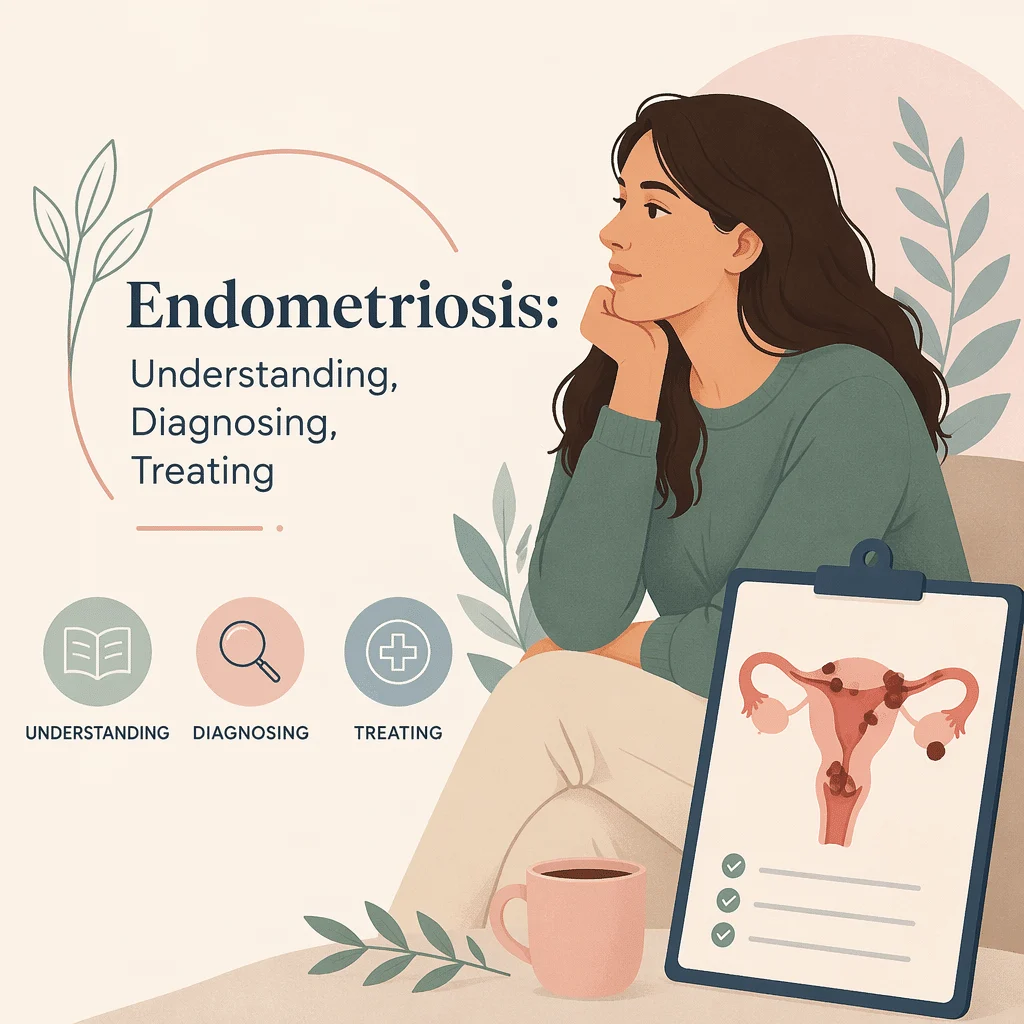
Endometriosis is a chronic condition in which tissue similar to the lining of the uterus grows in other parts of the body, most often inside the pelvis. It affects roughly 1 in 10 women and people assigned female at birth of reproductive age, yet it is widely misunderstood and often diagnosed years after symptoms first appear. If you live with painful periods, ongoing pelvic pain, or trouble getting pregnant, your experience is real and deserves to be taken seriously. In this article you’ll learn what endometriosis is, why it can be so hard to diagnose, how doctors confirm it with a clinical exam and imaging, and which treatments and lab tests genuinely help. We also explain what a blood test can and cannot tell you, so you can have a more informed conversation with your care team.
The consequences reach beyond the pelvis: see what a 2026 study found on endometriosis and diabetes.
What is endometriosis?
Endometriosis develops when tissue that resembles the endometrium, the lining shed during a period, settles and grows outside the uterus. Each month this tissue responds to hormones the way the uterine lining does: it thickens and bleeds. Because the blood has no way to leave the body, it triggers inflammation, and over time it can form cysts, scar tissue, and adhesions that bind pelvic organs together.
Most lesions appear on the ovaries, the fallopian tubes, and the tissue lining the pelvis. Less often, they involve the bowel or bladder. The condition is oestrogen-dependent, which means the hormone oestrogen fuels its activity, a fact that shapes many of the treatment choices described below.
Common types of endometriosis
- Superficial peritoneal endometriosis, the most common form, which affects the thin lining of the pelvis.
- Ovarian endometriomas, cysts filled with old blood that are sometimes called chocolate cysts.
- Deep infiltrating endometriosis, where lesions grow deeper below the surface and can involve the bowel or bladder.
A related condition, adenomyosis, occurs when similar tissue grows into the muscular wall of the uterus. The two frequently appear together. According to UK health agencies, endometriosis affects more than 1 in 10 women of reproductive age.
Symptoms and signs of endometriosis
The hallmark of endometriosis is pain that is out of proportion to what many people are told is normal period discomfort. Symptoms vary widely: some people have severe pain with only small lesions, whilst others have extensive disease and few complaints. Common symptoms include the following.
- Painful periods, known medically as dysmenorrhoea, which may begin before bleeding and last for several days.
- Chronic pelvic pain that continues between periods.
- Pain during or after sex.
- Painful bowel movements or urination, especially during menstruation.
- Heavy or irregular menstrual bleeding.
- Fatigue, bloating, nausea, and digestive changes.
- Difficulty getting pregnant.
Heavy periods can slowly drain your iron stores and lead to anaemia, which may explain persistent tiredness or breathlessness. If that pattern sounds familiar, you can read our anaemia symptoms and testing guide, and review our guide to low ferritin causes and treatment to see how it is evaluated.
When to see a doctor
Consider speaking with a healthcare professional if you notice any of the following:
- Period pain that stops you from working, studying, or handling daily activities.
- Pelvic pain that persists outside your period.
- Pain during sex, bowel movements, or urination.
- Trouble conceiving after 6 to 12 months of trying.
- Very heavy bleeding, or signs of anaemia such as fatigue, pale skin, or shortness of breath.
Getting help early matters. Pain that disrupts your life is not something you simply have to endure.
Why endometriosis is so often diagnosed late
One of the most frustrating features of endometriosis is the long gap between the first symptoms and a firm diagnosis. A major 2022 clinical review confirmed that this delay commonly stretches over several years, and other research puts the average at more than six years. Several factors feed this pattern.
- Period pain is often dismissed, by patients and clinicians alike, as simply normal.
- Symptoms overlap with other conditions such as irritable bowel syndrome, ovarian cysts, and pelvic infections.
- There is no simple blood test that can confirm or rule out the disease.
- The severity of symptoms does not reliably match the amount of disease seen on imaging or at surgery.
If you have felt unheard, you are not alone. A clear, dated record of your symptoms can help shorten the path to answers.
How endometriosis is diagnosed
Doctors diagnose endometriosis using a combination of your symptom history, a physical examination, and imaging. A growing body of evidence supports making a clinical diagnosis, and starting treatment, without surgery in many cases.
Clinical history and pelvic examination
Diagnosis usually starts with a detailed conversation about your pain, your cycle, and how symptoms affect daily life. During a pelvic exam, a clinician may feel for tenderness, nodules, or masses. A normal exam does not rule endometriosis out, but it helps guide the next steps.
Transvaginal ultrasound
Transvaginal ultrasound is usually the first imaging test. A small probe placed in the vagina gives a close view of the ovaries and pelvis and is particularly good at spotting endometriomas and signs of deeper disease. Because an endometrioma is a type of ovarian cyst, you can also consult our guide to ovarian cyst size and risks to understand how these are assessed.
Pelvic MRI
A pelvic MRI produces a detailed map of the pelvis and is especially helpful for planning surgery when deep endometriosis is suspected. It does not involve radiation. As with ultrasound, a normal MRI does not completely exclude the condition, particularly when lesions are small.
Laparoscopy
Laparoscopy is keyhole surgery that lets a surgeon look directly inside the pelvis and, if needed, take a biopsy. It was long considered the reference standard because it confirms the diagnosis with certainty. Today it is generally reserved for cases that need surgical treatment or remain unclear, rather than being required before any treatment can begin.
| Method | What it can show | Good to know |
|---|---|---|
| Pelvic exam | Tenderness, nodules, or masses in the pelvis | Can be normal even when endometriosis is present |
| Transvaginal ultrasound | Ovarian endometriomas and signs of deep disease | Usually the first imaging test and widely available |
| Pelvic MRI | A detailed map of deep lesions before surgery | Useful for planning; a normal scan does not rule endometriosis out |
| Laparoscopy | A direct view of lesions, with a biopsy if needed | The most definitive method, but it is surgery and no longer required to start treatment |
Blood tests and endometriosis: what they can and cannot do
Many people ask whether a blood test can diagnose endometriosis. The honest answer is that no single blood test can confirm or rule it out. Even so, laboratory tests play a genuine supporting role, helping doctors gauge the impact of the disease and rule out other explanations for your symptoms.
CA-125
CA-125 is a protein that can rise when the pelvic lining is inflamed. Levels are often higher in moderate to severe endometriosis, especially when endometriomas are present. But CA-125 is not a diagnostic test: it is frequently normal in milder disease and can be raised by many other conditions, including fibroids, pelvic infection, ordinary menstruation, and ovarian cancer. That is why guidelines do not recommend it to diagnose endometriosis. To understand how this marker is read, you can consult our guide to interpreting a CA-125 blood marker, and to see why it is not specific, you can also review our overview of ovarian cancer symptoms and testing.
Markers of inflammation and anaemia
Because endometriosis is an inflammatory condition, a marker such as C-reactive protein may be raised, though it is far too non-specific to diagnose the disease. More practically, heavy periods can deplete iron, so your doctor may order a full blood count and iron markers to check for anaemia. You can read our guide to the CRP inflammation marker, see our full blood count reading guide, and explore our iron studies panel explainer to learn what these involve.
Hormone and fertility tests
Endometriosis is oestrogen-dependent, and hormones influence both symptoms and treatment. Hormone tests do not diagnose endometriosis, but they help build a fuller picture, especially when fertility is a concern. You can review our female hormone panel guide, read our guide to reading oestradiol results, and see our fertility blood test panel guide for details on what each one measures.
Treatment and management options
There is no cure for endometriosis, but many treatments can control pain, slow the disease, and protect fertility. Care is most effective when it is tailored to your symptoms, your goals, and whether you hope to become pregnant. Most plans combine more than one approach.
Pain relief
Non-steroidal anti-inflammatory drugs, such as ibuprofen, are often the first step for period and pelvic pain. They work best when started early in a painful cycle, and they are usually combined with other treatments rather than used alone.
Hormonal therapy
Because oestrogen drives endometriosis, most medical treatments aim to calm hormonal activity. Options include combined hormonal contraceptives, progestogen-only treatments such as dienogest or a hormonal intrauterine device, and, for more resistant pain, medicines that lower oestrogen more strongly. These treatments reduce pain for many people, but symptoms can return once they are stopped.
Surgery
When pain is severe or fertility is affected, laparoscopic surgery can remove or destroy endometriosis lesions whilst preserving healthy tissue. Surgery often improves pain and, in some cases, fertility, though lesions and symptoms can return over time. Removing the uterus is reserved for selected situations and is not a guaranteed cure.
Fertility care
Endometriosis is a common cause of difficulty conceiving, but many people with the condition do become pregnant, with or without help. Depending on your situation, options range from surgery to assisted reproduction such as in vitro fertilisation. A fertility specialist can help you weigh up the timing and the choices.
Living with endometriosis
Endometriosis is a long-term condition, and day-to-day management matters as much as any single treatment. Many people find that a combination of regular medical follow-up, physical activity as tolerated, pelvic-floor physiotherapy, stress management, and good sleep helps them cope. There is no single diet that cures endometriosis, but an anti-inflammatory eating pattern may help some people feel better. Support from others who understand the condition can make a real difference, and a trusted care team helps you adjust your plan as your needs change over the years.
Latest scientific advances
Research into endometriosis is moving quickly. Here is what recent studies suggest, in plain language, and what it may mean for you.
Imaging is becoming more accurate
Modern ultrasound and MRI, when performed by trained specialists, are increasingly able to spot endometriosis without surgery. In a 2024 analysis that pooled many studies, a method called a meta-analysis, transvaginal ultrasound and MRI both correctly identified the large majority of ovarian endometriomas and rarely flagged them when they were absent. A 2025 clinical review reported that, in experienced hands, ultrasound can detect deep pelvic endometriosis in the great majority of cases. What this means for you: if your symptoms are suspicious, a skilled scan may point to a diagnosis and spare you an operation, although a normal scan does not completely rule the condition out.
Newer medicines for pain
A newer class of tablets called oral GnRH antagonists, medicines that lower oestrogen by dialling down hormone signals from the brain, has expanded the options for endometriosis pain. Drugs such as elagolix (Orilissa) and relugolix (part of Myfembree) are now approved in the United States. A 2022 pooled analysis of clinical trials found that these tablets meaningfully reduce period pain and pelvic pain, with benefits and side effects that grow with the dose. Because they lower oestrogen, higher doses can cause menopause-like effects such as hot flushes, which is why they are often paired with a small amount of add-back hormone. What this means for you: if standard hormonal options have not worked, there are now additional, well-studied choices to discuss with your doctor.
The search for a blood test
Scientists are actively working on a reliable, non-invasive test, from blood biomarkers to new laboratory models. As of today, however, reviews of the evidence confirm that no blood test is accurate enough to diagnose endometriosis on its own, and the disease’s links with chronic inflammation and the immune system are active areas of study. Research also shows that symptoms can return in up to half of patients after surgery, which is why long-term management is so important. What this means for you: promising tools are on the horizon, but for now, diagnosis still rests on your symptom history, a specialist examination, and imaging.
Glossary
| Term | Definition |
|---|---|
| Endometrium | The tissue that lines the inside of the uterus and is shed during a period. |
| Endometrioma | An ovarian cyst filled with old blood caused by endometriosis, sometimes called a chocolate cyst. |
| Adenomyosis | A related condition in which endometrium-like tissue grows into the muscular wall of the uterus. |
| Dysmenorrhoea | The medical term for painful periods. |
| Dyspareunia | The medical term for pain during or after sex. |
| Laparoscopy | Keyhole surgery that lets a surgeon look inside the pelvis through a small camera. |
| Transvaginal ultrasound | An imaging test that uses a probe placed in the vagina to view the pelvic organs. |
| CA-125 | A protein measured in blood that can rise with pelvic inflammation but cannot, on its own, diagnose endometriosis. |
| GnRH antagonist | A type of medicine that lowers oestrogen to help reduce endometriosis pain. |
Frequently asked questions
What causes endometriosis?
The exact cause is not fully understood. A leading explanation is retrograde menstruation, when menstrual blood flows backward through the fallopian tubes and carries endometrium-like cells into the pelvis. Genetics, immune function, and hormones also appear to play a part. Most experts believe several factors combine rather than one single cause. Importantly, endometriosis is not something you brought on yourself, and it is not caused by anything you did or did not do.
How do I know if I have endometriosis?
You cannot diagnose endometriosis on your own, but certain patterns raise suspicion: period pain that disrupts your life, pelvic pain between periods, pain during sex, or trouble conceiving. If these sound familiar, keep a simple diary of your symptoms and their timing, and share it with a doctor. A clinician can then use an examination and imaging to look for the condition and consider other possible causes.
Is there a blood test for endometriosis?
No blood test can currently diagnose endometriosis by itself. A marker called CA-125 may be higher in more advanced disease, but it is often normal in milder cases and can rise for many other reasons, so it is not used to confirm the condition. Blood tests are still useful for a different purpose: checking for anaemia from heavy bleeding and helping rule out other explanations for your symptoms. Researchers are working to develop a reliable non-invasive test.
Can endometriosis cause weight gain?
Endometriosis does not directly cause lasting weight gain, but some symptoms can make it feel that way. Bloating, sometimes called endo belly, can cause the abdomen to swell and feel fuller, and pain or fatigue may reduce physical activity. Some hormonal treatments can also affect appetite or fluid balance. If you notice a rapid or unexplained change in your weight, it is worth mentioning to your doctor so other causes can be considered.
Can endometriosis turn into cancer?
For the vast majority of people, endometriosis is not cancer and does not become cancer. Research shows only a small increase in the risk of certain ovarian cancers, and the overall risk for any individual remains low. This is a reason to stay in regular contact with your care team, not a reason to be alarmed. If you have concerns about your personal risk, your doctor can put it in context for you.
Can you get pregnant with endometriosis?
Yes. Although endometriosis is a common cause of difficulty conceiving, many people with the condition become pregnant, sometimes naturally and sometimes with medical help. Treatments such as surgery to remove lesions or assisted reproduction can improve the odds for some people. If you are planning a pregnancy, speaking with a doctor or fertility specialist early can help you understand your options and timing.
Sources
- Office on Women’s Health, U.S. Department of Health and Human Services. Endometriosis. https://www.womenshealth.gov/a-z-topics/endometriosis
- Eunice Kennedy Shriver National Institute of Child Health and Human Development (NICHD). Endometriosis. https://www.nichd.nih.gov/health/topics/endometriosis
- MedlinePlus, U.S. National Library of Medicine. Endometriosis. https://medlineplus.gov/endometriosis.html
- Horne AW, Missmer SA. Pathophysiology, diagnosis, and management of endometriosis. BMJ, 2022. https://doi.org/10.1136/bmj-2022-070750
- Avery JC, et al. Noninvasive diagnostic imaging for endometriosis part 2: MRI, nuclear medicine and computed tomography. Fertility and Sterility, 2024. https://doi.org/10.1016/j.fertnstert.2023.12.017
- Kanti FS, et al. Transvaginal ultrasound and MRI in the diagnosis of endometrioma: a systematic review and meta-analysis. Journal of Obstetrics and Gynaecology, 2024. https://doi.org/10.1080/01443615.2024.2311664
- Moise A, et al. Endometriosis and infertility: gynecological examination practical guide. Journal of Clinical Medicine, 2025. https://doi.org/10.3390/jcm14061904
- Yan H, et al. Oral gonadotropin-releasing hormone antagonists for treating endometriosis-associated pain: a systematic review and network meta-analysis. Fertility and Sterility, 2022. https://doi.org/10.1016/j.fertnstert.2022.08.856
- Buggio L, et al. Novel pharmacological therapies for the treatment of endometriosis. Expert Review of Clinical Pharmacology, 2022. https://doi.org/10.1080/17512433.2022.2117155
- Blanco LP, et al. Endometriosis and autoimmunity. Autoimmunity Reviews, 2025. https://doi.org/10.1016/j.autrev.2025.103752
- Garvey M. Endometriosis: future biological perspectives for diagnosis and treatment. International Journal of Molecular Sciences, 2024. https://doi.org/10.3390/ijms252212242
Further reading
- Read our guide to interpreting a CA-125 blood marker.
- See our complete blood count reading guide.
- Explore our anaemia symptoms and testing guide.
- Review our female hormone panel guide.
- Consult our guide to the FSH hormone test.
Understand your lab results with AI DiagMe
Get your results interpreted in minutes
Endometriosis has no single blood test, but the right lab results can still tell an important story. AI DiagMe helps you make sense of tests that often come up along the way, from a CA-125 result and a full blood count to ferritin and a hormone panel. It is built to help you understand your numbers and prepare better questions for your appointment. It does not diagnose endometriosis and never replaces your doctor, but it can turn a confusing report into clear, plain-language insight.